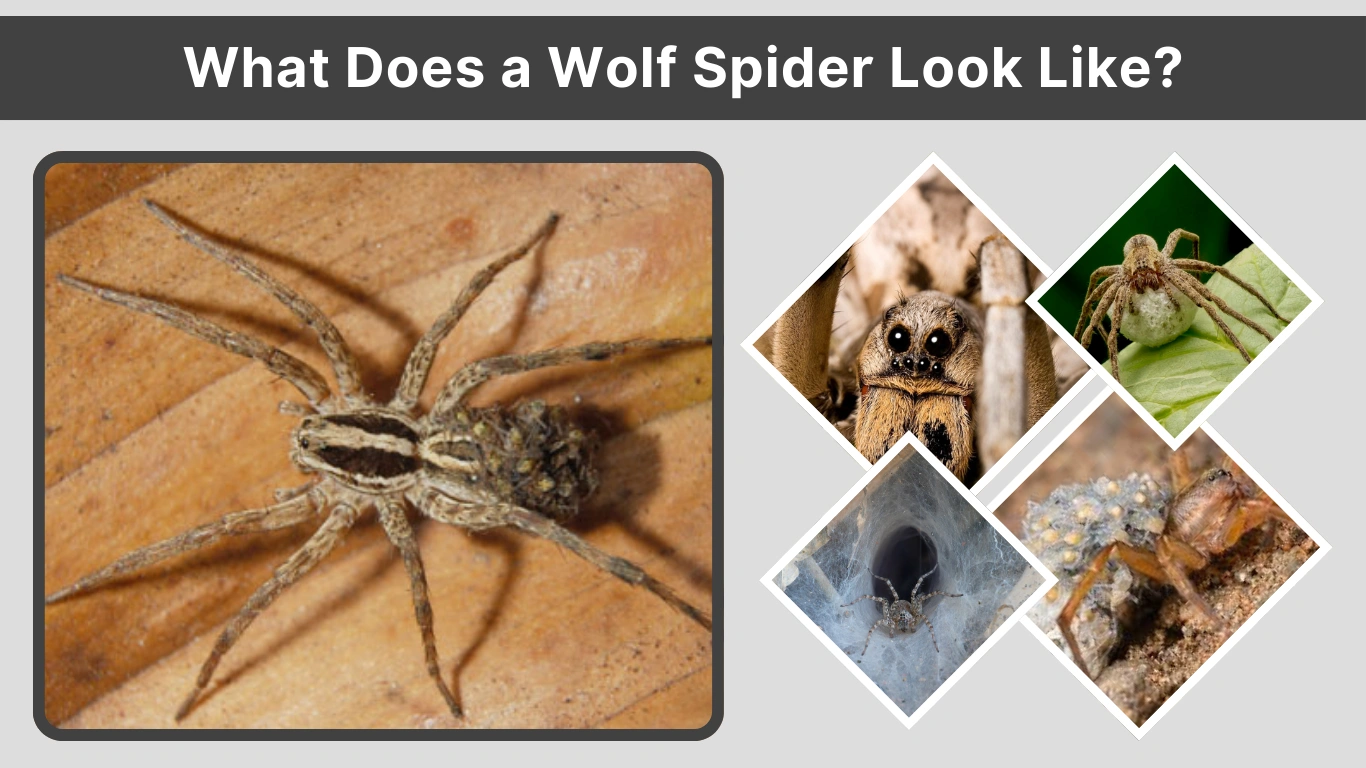
Wolf spiders are large, fast-moving spiders that often scare homeowners because of their size and hairy appearance. They are commonly mistaken for more dangerous spiders, especially the brown recluse. Correct identification is important to avoid unnecessary panic. This detailed identification guide explains exactly what a wolf spider looks like, including body size, color, markings, eye pattern, and behavioral clues.
Overview of Wolf Spiders
- Scientific family: Lycosidae
- Name meaning: “Wolf” refers to their hunting style
- Hunting method: Active hunters, do not rely on webs
- Habitat: Lawns, gardens, forests, basements, garages
- Activity level: Mostly nocturnal
Body Size and Shape
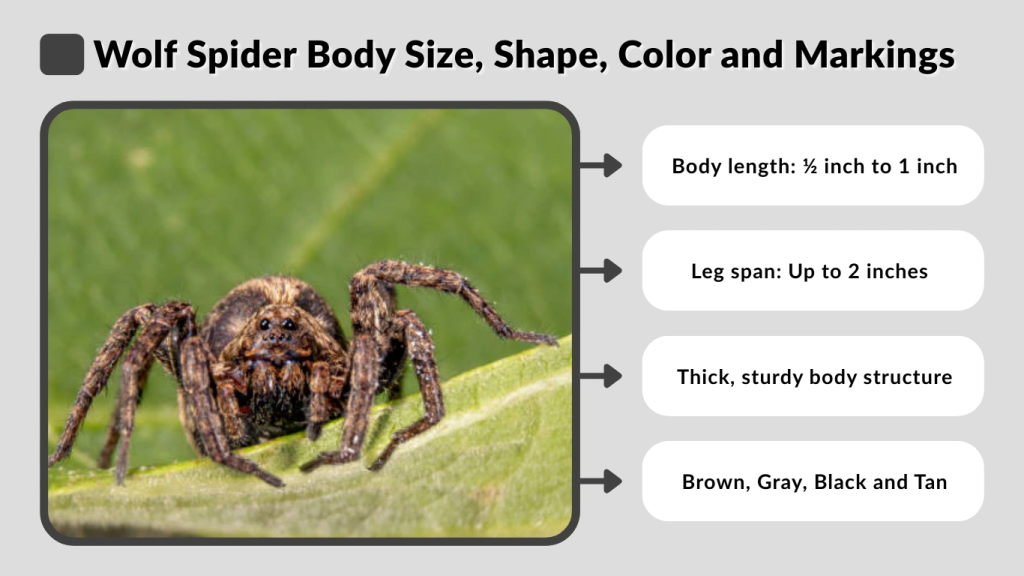
Wolf spiders vary in size depending on the species, but most are noticeably larger than common house spiders.
Typical size range:
- Body length: ½ inch to 1 inch
- Leg span: Up to 2 inches
- Females are larger than males
- Thick, sturdy body structure
They have a robust, low-to-the-ground posture that makes them appear powerful and compact rather than delicate or thin.
Color and Markings
Wolf spiders are masters of camouflage. Their coloring helps them blend into soil, grass, and leaf litter.
Common colors include:
- Brown
- Gray
- Black
- Tan
Typical markings:
- Dark stripe running down the back
- Lighter stripes along the sides
- Subtle chevron or mottled patterns
- No bright or flashy colors
Unlike some spiders, wolf spiders usually have earthy, muted tones.
Eye Arrangement (Most Important Identification Feature)
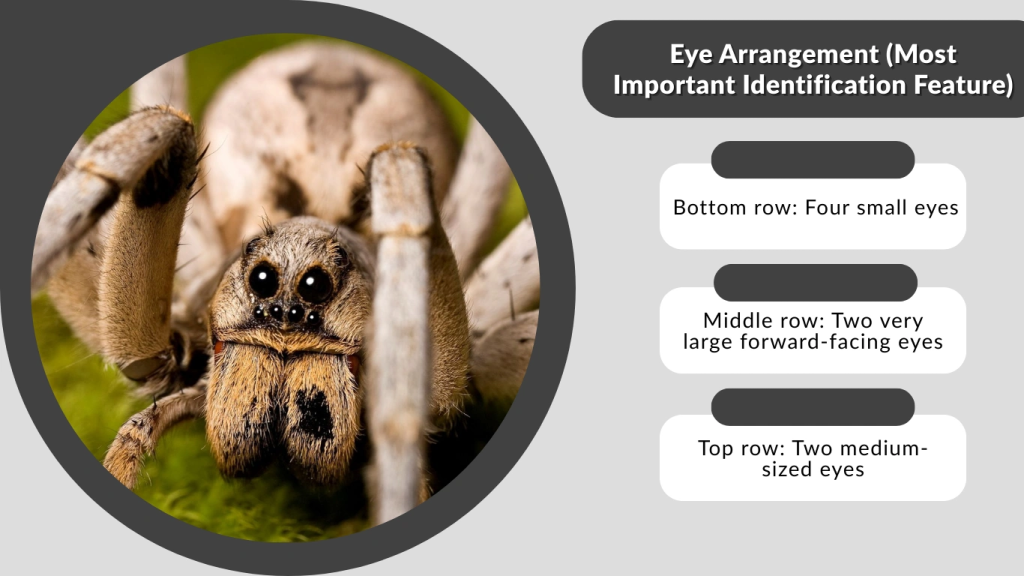
The eye pattern is the easiest and most reliable way to identify a wolf spider.
Wolf spiders have eight eyes arranged in three rows:
- Bottom row: Four small eyes
- Middle row: Two very large forward-facing eyes
- Top row: Two medium-sized eyes
The two large middle eyes are especially noticeable and reflect light at night. If you shine a flashlight across your lawn, you may see small glowing reflections — often wolf spiders.
Hair and Leg Appearance
Wolf spiders look hairy and rugged compared to smoother house spiders.
Leg and body features:
- Thick, strong legs
- Noticeable hair covering legs and body
- Spiny leg texture
- Legs built for running, not web-spinning
Their hairy appearance is one reason people sometimes mistake them for small tarantulas.
How Wolf Spiders Move
Movement is a key identification clue.
- Extremely fast runners
- Sudden, darting movements
- Do not hang in webs
- Often seen sprinting across floors or ground
They rely on speed and vision rather than webs to catch prey.
Male vs. Female Wolf Spiders
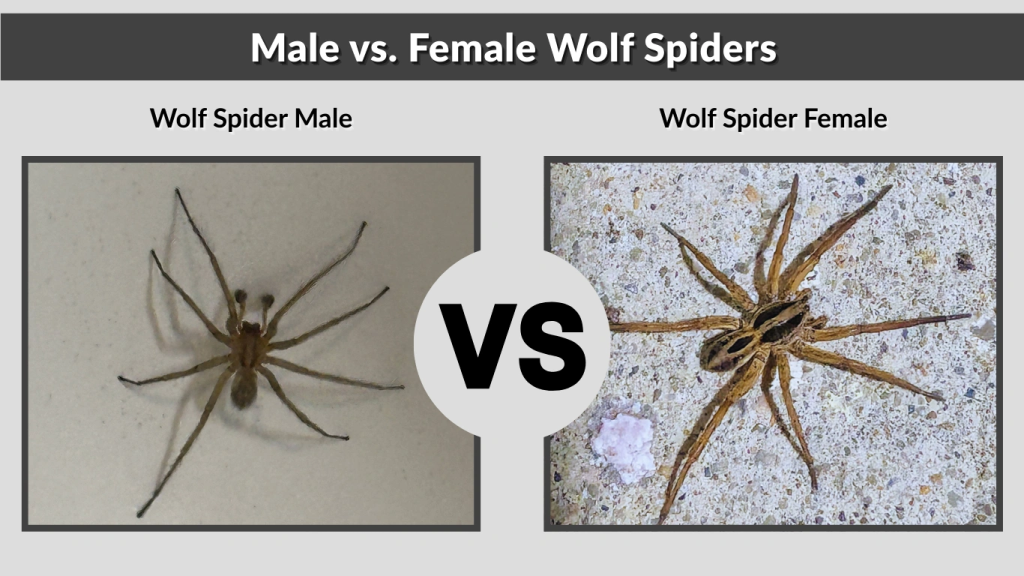
Female Wolf Spiders
- Larger body size
- Broader abdomen
- Carry round egg sacs attached to their spinnerets
- Often seen with baby spiders riding on their back
This maternal behavior is unique and very noticeable.
Male Wolf Spiders
- Slightly smaller
- More slender body
- Longer legs relative to body size
- Often wander more while searching for mates
Common Places You May See a Wolf Spider
Outdoors
- Lawns and grassy areas
- Gardens
- Under rocks
- Woodpiles
- Leaf litter
- Mulch beds
Indoors
- Basements
- Garages
- Near doorways
- Ground-level rooms
- Storage areas
They typically enter homes while hunting insects.
Wolf Spider vs. Similar-Looking Spiders
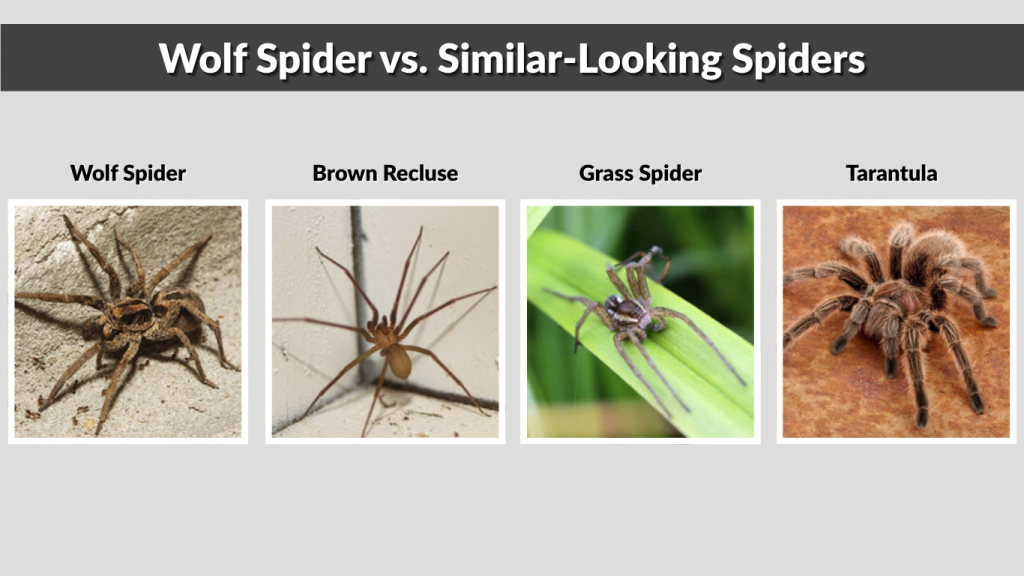
Misidentification is common. Here’s how to tell them apart:
Wolf Spider vs. Brown Recluse
- Wolf spiders have striped or patterned bodies
- Brown recluse spiders are solid brown
- Brown recluse has a violin-shaped marking
- Brown recluse has six eyes; wolf spiders have eight
Wolf Spider vs. Grass Spider
- Grass spiders build funnel-shaped webs
- Wolf spiders do not build trapping webs
- Grass spiders are more slender
- Wolf spiders are bulkier and hairier
Wolf Spider vs. Tarantula
- Tarantulas are much larger
- Tarantulas are heavier and slower
- Wolf spiders are smaller and faster
Behavioral Clues for Identification
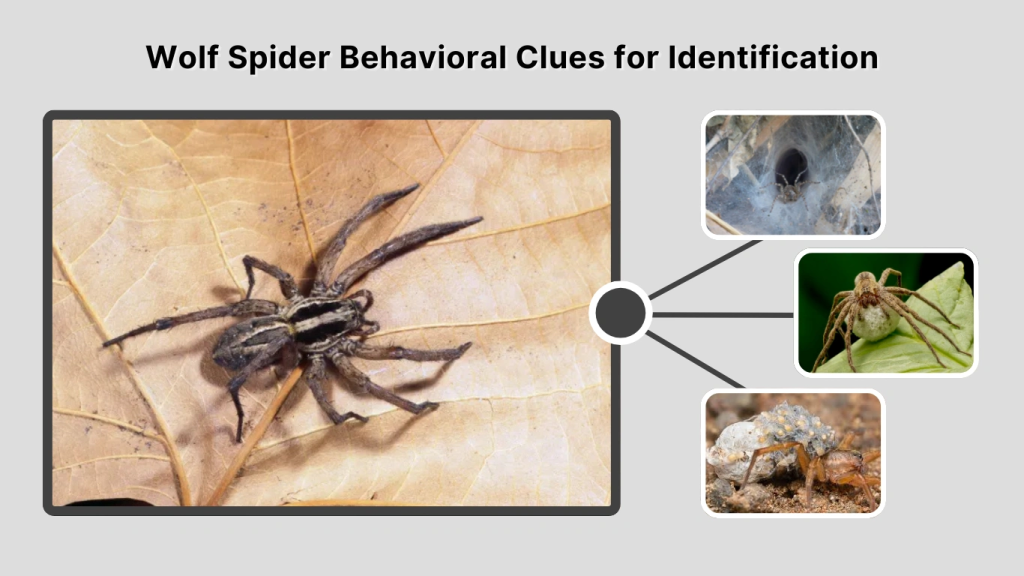
Behavior often helps confirm identification.
- Hunts prey instead of trapping it
- Freezes briefly when approached
- Active mostly at night
- Females carry egg sacs and spiderlings
- Reflective eyeshine in flashlight beams
If you see these behaviors, you are likely observing a wolf spider.
Quick Identification Checklist
Use this checklist to confirm:
- Large, hairy body
- Brown, gray, or tan coloring
- Dark stripe or subtle pattern on back
- Two large forward-facing eyes
- Fast, ground-running movement
- No visible web nearby
If most of these features match, it is probably a wolf spider.
FAQs
How can I tell if a spider is a wolf spider?
Look for a large, hairy spider with brown or gray coloring and two noticeably large forward-facing eyes. Wolf spiders run quickly across the ground and do not sit in webs. Their eye arrangement is the most reliable identification feature.
Do wolf spiders jump?
Wolf spiders primarily run rather than jump. While they can make short lunges to capture prey, they are not considered jumping spiders. Their speed on the ground is their main hunting advantage.
Are wolf spiders aggressive?
Wolf spiders are not aggressive toward humans. They usually flee when disturbed and bite only if trapped or directly handled. Most bites cause mild symptoms similar to a bee sting.
Why do wolf spider eyes glow at night?
Their eyes reflect light due to a special layer called the tapetum lucidum. This reflection improves night vision and causes the glowing effect when illuminated by a flashlight.