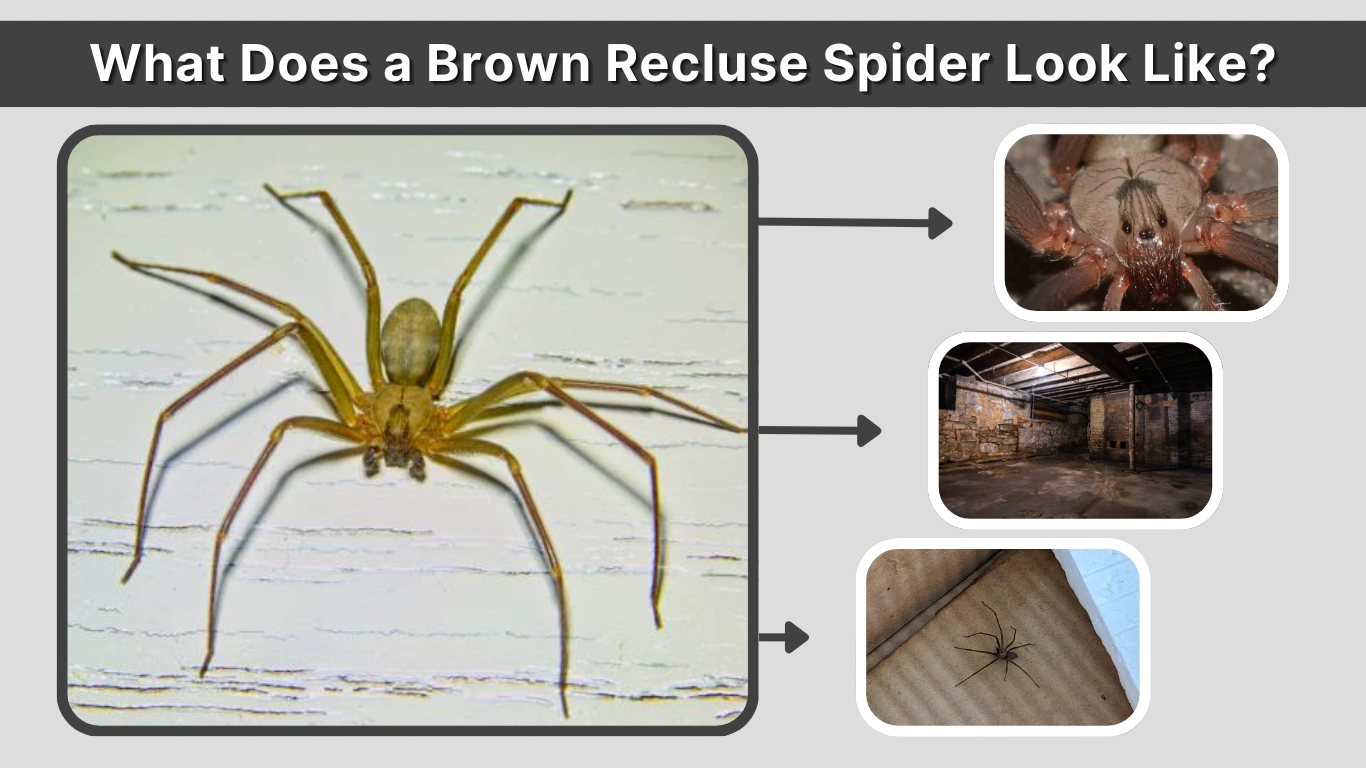
The brown recluse spider is one of the most talked-about spiders in North America, mainly because of its venomous bite and secretive behavior. Many people worry about encountering this spider, but the truth is that it is often misidentified. Numerous harmless spiders share similar colors and shapes, which leads to confusion. Learning how to correctly recognize a brown recluse spider can help reduce unnecessary fear and improve safety. In this guide, you’ll learn how to identify a brown recluse by its appearance, markings, body size, and other key characteristics.
Key Physical Features of a Brown Recluse Spider
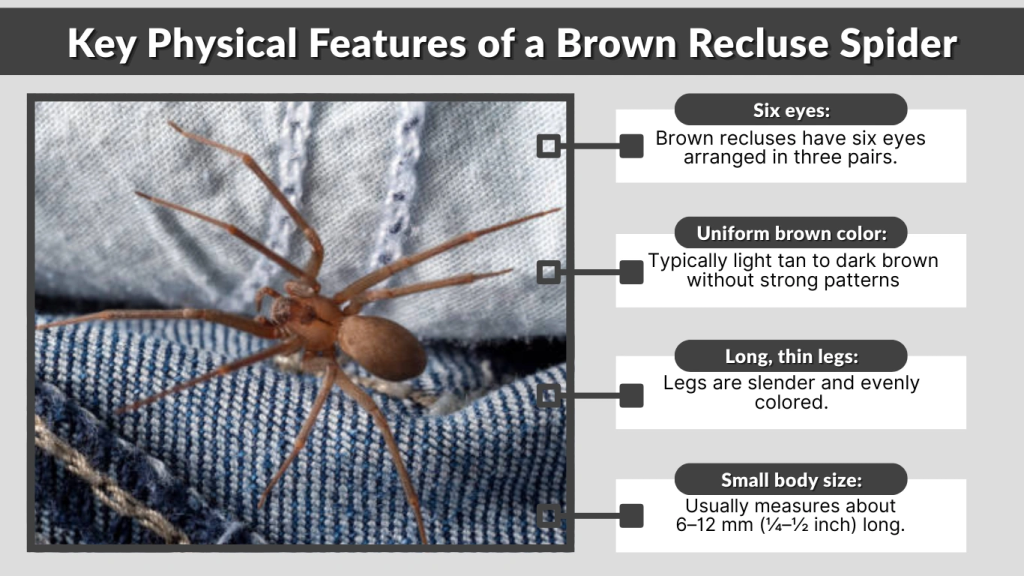
The brown recluse spider has several distinctive features that help separate it from many other brown-colored spiders. Although it may appear simple at first glance, certain physical traits make it easier to recognize when you know what to look for. These spiders usually have a smooth body, long thin legs, and a fairly uniform brown color. Their small size and subtle markings allow them to hide easily in dark or undisturbed places.
Below are some of the most important physical features used to identify a brown recluse spider:
- Violin-shaped marking: A dark violin or fiddle-shaped mark on the cephalothorax (front body section), with the neck pointing toward the abdomen.
- Six eyes: Unlike most spiders that have eight eyes, brown recluses have six eyes arranged in three pairs.
- Uniform brown color: Typically light tan to dark brown without strong patterns or stripes.
- Long, thin legs: Legs are slender and evenly colored, without noticeable banding or spines.
- Small body size: The body usually measures about 6–12 mm (¼–½ inch) long.
- Smooth body texture: The spider generally appears smooth rather than hairy.
These characteristics together help distinguish the brown recluse from many other spiders that are often mistaken for it.
The Violin-Shaped Marking (The “Fiddleback”)
One of the most famous identifying features of the brown recluse spider is the violin-shaped mark on its back. This marking has caused the spider to be commonly called the fiddleback spider.
Location of the Violin Mark
The violin-shaped marking is located on the spider’s cephalothorax, which is the front section of the body where the legs attach. The shape resembles a violin, with the wider portion near the spider’s head and the narrow “neck” pointing toward the abdomen.
This marking is usually darker than the rest of the body, making it easier to spot in good lighting. However, its visibility can vary depending on the individual spider.
Why the Marking Is Not Always Obvious
Although the violin shape is commonly mentioned in identification guides, it is not always easy to see. Younger spiders may have a lighter or less defined marking, and the overall body color can also affect how clearly it appears.
Lighting conditions also play a role. In dim environments, the marking may blend in with the spider’s body color. Additionally, some other spider species may have markings that look somewhat similar, which is why relying on this feature alone can lead to misidentification.
For accurate identification, it is best to consider the violin marking along with other characteristics, such as the spider’s eye pattern, body shape, and leg structure.
Brown Recluse Spider Size and Body Structure
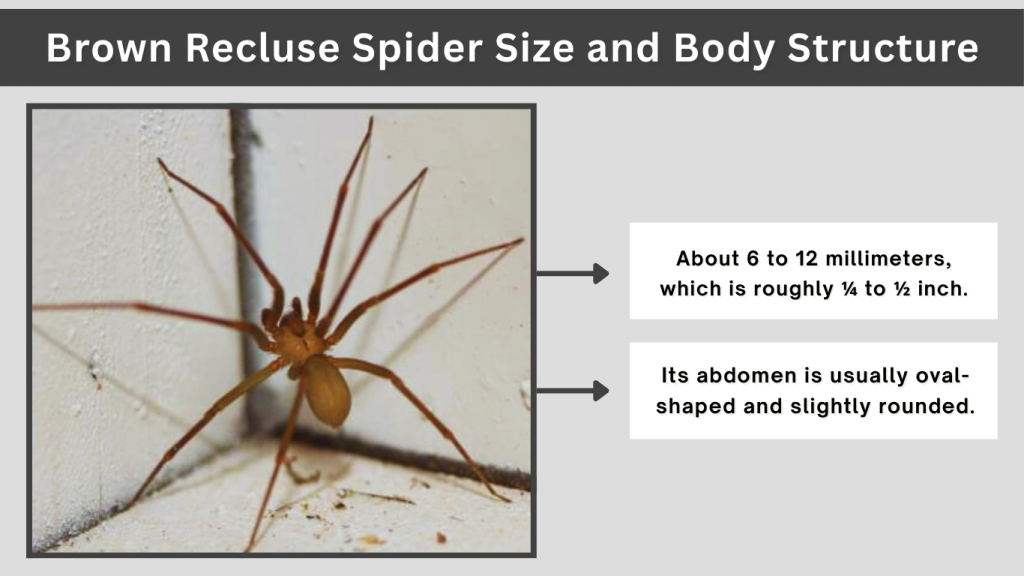
The size and body shape of a brown recluse spider can also help with identification. While it is not a large spider, its proportions and structure give it a distinctive appearance.
Body Size
A typical brown recluse spider has a body length of about 6 to 12 millimeters, which is roughly ¼ to ½ inch. This measurement refers only to the body and does not include the legs.
When the legs are included, the spider may appear significantly larger. Its long legs can make it look wider or more spread out than it actually is.
Despite its relatively small size, the spider’s shape and markings can make it noticeable when viewed up close.
Body Shape
The brown recluse has a simple and smooth body structure compared with many other spiders.
Its abdomen is usually oval-shaped and slightly rounded, with little to no visible patterns. The overall body appears fairly flat and compact, which helps the spider hide in narrow spaces such as cracks, boxes, or beneath objects.
Unlike many spiders that have hairy bodies, the brown recluse typically has a smooth, uniform appearance. This lack of hair and patterns is another clue that helps distinguish it from other species that may look similar at first glance.
Eye Arrangement – A Key Identification Trait
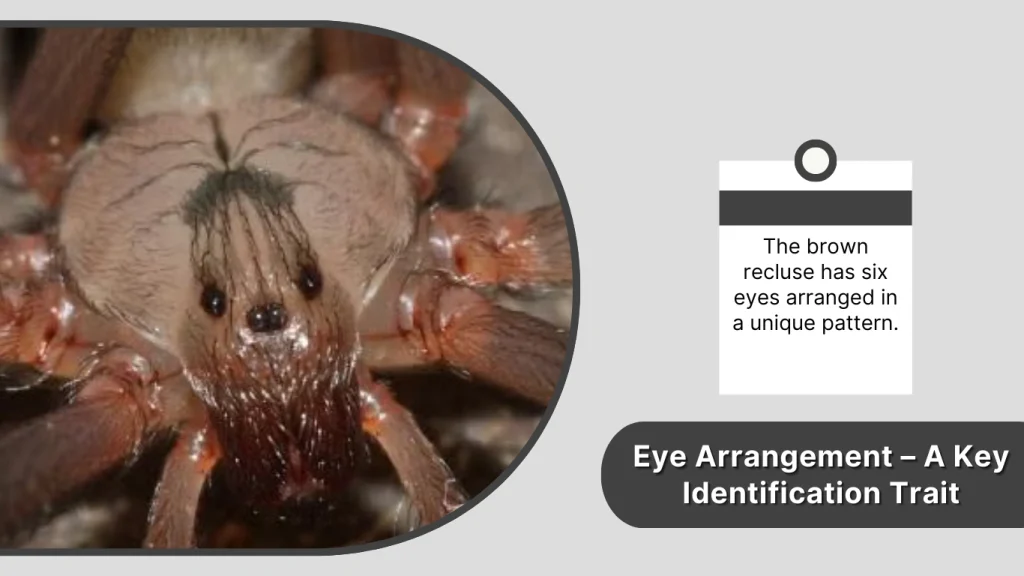
One of the most reliable ways to identify a brown recluse spider is by looking at its eye pattern. Unlike most spiders, which have eight eyes, the brown recluse has six eyes arranged in a unique pattern.
These six eyes are grouped into three pairs, forming a semicircle on the front of the spider’s head. Each pair sits slightly apart from the others, which creates a distinct arrangement that experts often use for identification.
Because the eyes are very small, this feature can be difficult to see without magnification. However, it remains one of the most important characteristics that separates brown recluse spiders from many other species.
For example, wolf spiders and many common house spiders have eight eyes arranged in multiple rows, making their eye patterns noticeably different from the brown recluse.
Color and Leg Characteristics
Another important part of identifying a brown recluse spider is examining its color and leg structure. While many spiders come in a variety of patterns and colors, the brown recluse typically has a more plain and uniform appearance.
Color Variations
The color of a brown recluse spider can vary slightly depending on age and environment. Most individuals fall within a range of light tan to dark brown.
Some spiders may appear yellowish-brown, while others may look slightly darker. However, they usually lack the bright markings or contrasting colors seen in other species.
The abdomen generally appears smooth and evenly colored, which makes it different from spiders that have stripes, spots, or other patterns.
Legs and Texture
The legs of a brown recluse spider are long, thin, and evenly colored. They usually match the body color or appear slightly lighter.
Unlike some spider species, brown recluse legs do not have visible bands, stripes, or thick spines. The legs also appear relatively smooth rather than heavily covered with hair.
Because the legs are long and slender, the spider may look larger when it moves or spreads its legs across a surface.
Where Brown Recluse Spiders Are Usually Found
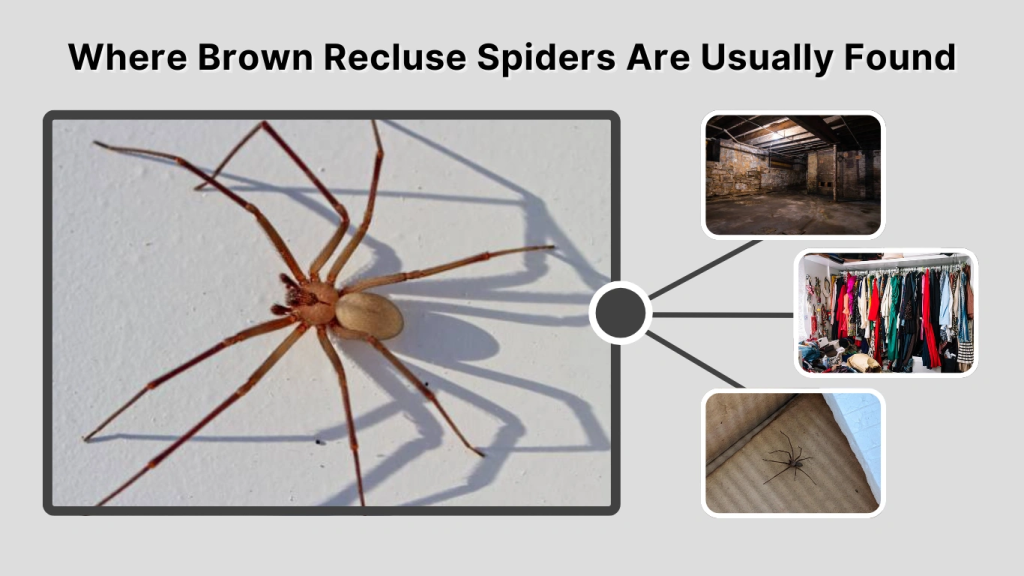
Understanding where brown recluse spiders live can also help with identification. These spiders prefer quiet, undisturbed environments where they can hide during the day.
Geographic Distribution
Brown recluse spiders are most commonly found in the central and southern regions of the United States. States such as Missouri, Arkansas, Kansas, Oklahoma, and parts of Texas are known to have larger populations.
Although reports occasionally appear in other areas, confirmed populations are usually limited to this region.
Typical Hiding Places
Because brown recluse spiders prefer dark and sheltered spaces, they often hide in places that people rarely disturb.
Common hiding locations include:
- Basements
- Closets
- Attics
- Storage boxes
- Cardboard containers
- Woodpiles
Inside homes, they may also hide behind furniture, inside shoes, or in piles of clothing that remain undisturbed for long periods.
Spiders Often Mistaken for Brown Recluses
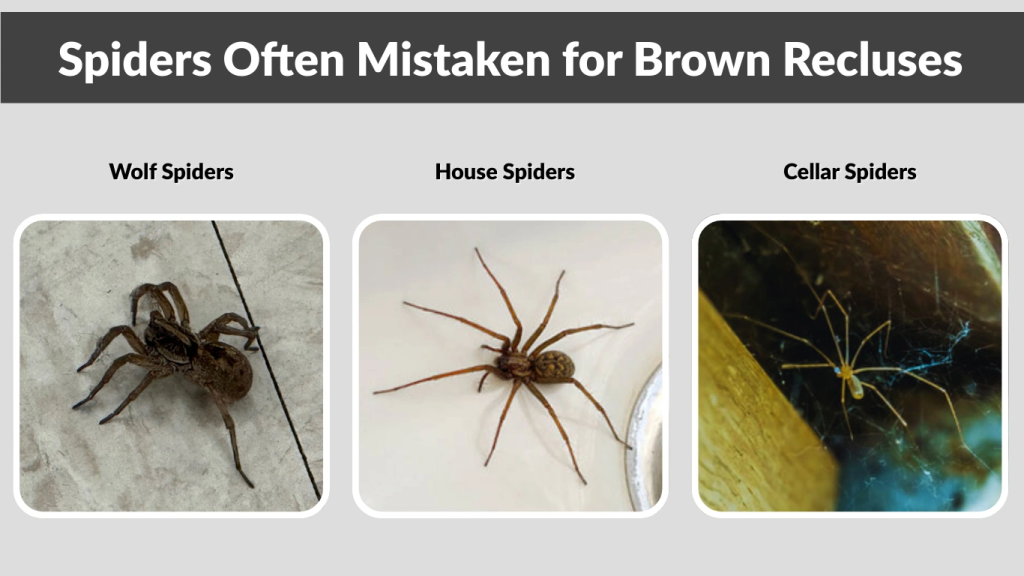
Many spiders are mistakenly identified as brown recluses because they share similar colors. However, most of these spiders are harmless and have different physical traits.
Wolf Spiders
Wolf spiders are frequently confused with brown recluses because of their brown color. However, wolf spiders are larger, hairier, and have eight eyes arranged in multiple rows. Their bodies also tend to be thicker and more robust.
House Spiders
Common house spiders may also resemble brown recluses at first glance. However, they usually have distinct patterns on their abdomen or legs, which brown recluses typically lack.
Cellar Spiders
Cellar spiders, sometimes called daddy longlegs, have extremely long legs and a very small body. Their body structure is quite different from the compact shape of a brown recluse.
How to Safely Identify a Brown Recluse Spider
If you believe you have seen a brown recluse spider, it is important to approach the situation carefully. These spiders are generally shy and avoid human contact, but handling them directly is not recommended.
A safer approach is to observe the spider from a distance and look for the key identification features discussed earlier, such as the violin marking, smooth body, and long thin legs.
Taking a clear photograph can also help with identification. Experts, pest control professionals, or local extension services may be able to confirm whether the spider is truly a brown recluse.
What to Do If You See a Brown Recluse Spider
If you encounter a brown recluse spider in your home, there is usually no need to panic. These spiders prefer to hide rather than attack.
Avoid touching the spider directly. If necessary, you can carefully trap it using a container and a piece of paper and release it outdoors or dispose of it safely.
If you notice multiple spiders or suspect an infestation, contacting a professional pest control service may be the best solution.
Tips to Prevent Brown Recluse Spiders in Your Home
Preventing brown recluse spiders from entering your home mostly involves reducing hiding places and sealing potential entry points.
Some helpful prevention steps include:
- Keeping storage areas organized and clutter-free
- Sealing cracks in walls, windows, and foundations
- Shaking out shoes and clothing before wearing them
- Moving woodpiles away from the house
- Using proper lighting in dark storage areas
These simple measures can make your home less attractive to spiders and reduce the chances of encountering them indoors.
FAQs
What is the easiest way to identify a brown recluse spider?
The easiest way to identify a brown recluse spider is by looking for the violin-shaped marking on its back and checking its eye pattern. Brown recluses have six eyes arranged in three pairs, while most spiders have eight. Their smooth brown body and long thin legs are also key identification clues.
Are brown recluse spiders always brown?
Brown recluse spiders are typically tan to dark brown, but their exact shade can vary. Some may appear yellowish-brown depending on lighting or age. However, they usually have a fairly uniform color and lack the strong patterns or stripes that many other spider species have.
How big is a brown recluse spider?
A brown recluse spider usually has a body length between 6 and 12 millimeters, which is about ¼ to ½ inch. When the legs are included, the spider may appear larger because its legs are long and thin.
Where do brown recluse spiders usually hide?
Brown recluse spiders prefer dark and quiet places where they are unlikely to be disturbed. Common hiding spots include basements, closets, attics, storage boxes, and woodpiles. They may also hide inside shoes, clothing, or cardboard boxes.
Are brown recluse spiders dangerous to humans?
Brown recluse spiders are venomous, and their bites can sometimes cause skin irritation or tissue damage. However, bites are relatively uncommon because these spiders tend to avoid human contact and usually bite only when they feel trapped or threatened.