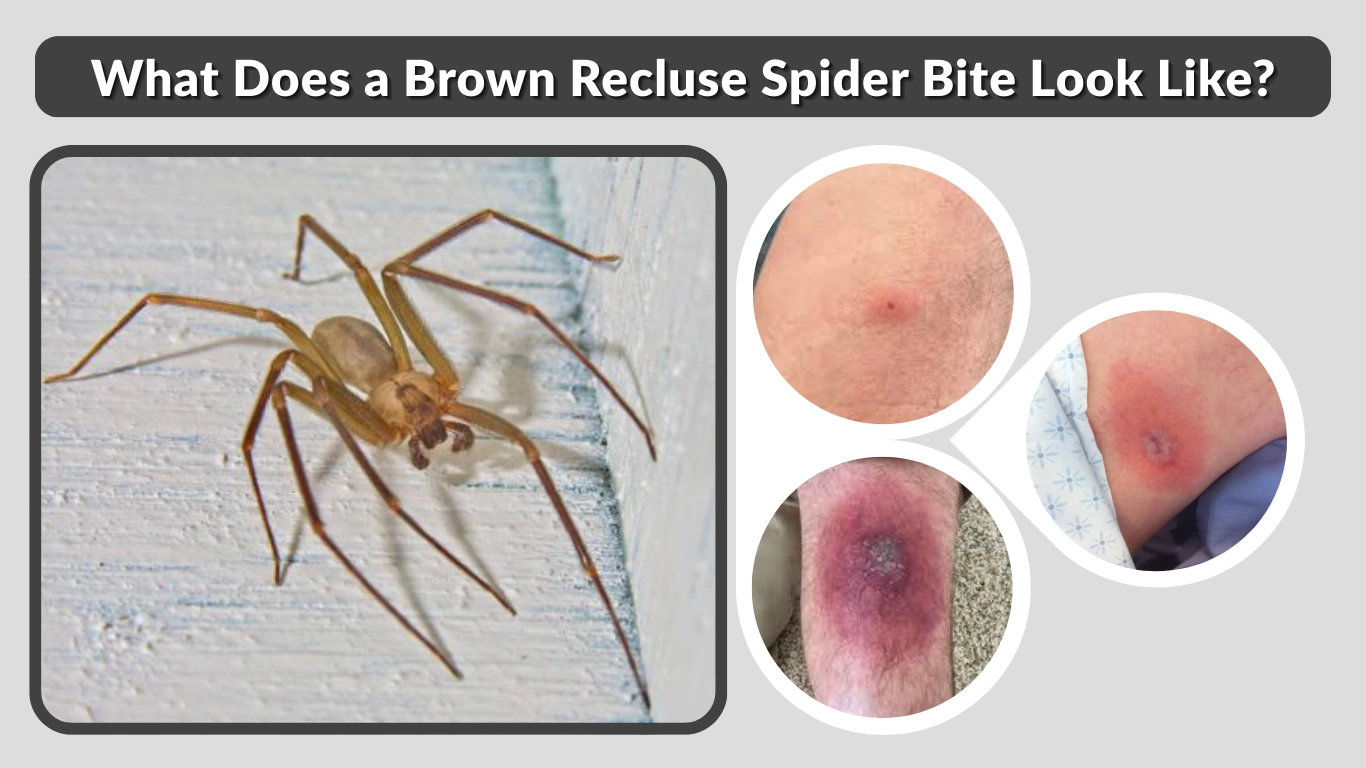
Many people search online for what a brown recluse spider bite looks like because these bites are often mistaken for common insect bites or skin infections. In the early stages, a brown recluse bite may appear harmless, but its appearance can change significantly over time. Understanding how a brown recluse spider bite looks initially, how it progresses, and what warning signs to watch for can help you respond quickly and avoid complications.
This article focuses on the visual appearance of a brown recluse spider bite, including early signs, changes within the first few days, and how the bite may look as it worsens.
What Does a Brown Recluse Spider Bite Look Like Initially?
A brown recluse spider bite often looks mild at first. In many cases, there is little to no immediate pain, which is why people may not notice the bite right away. The skin at the bite site may show a small red mark, a pale spot, or slight swelling. Some people describe the initial appearance as similar to a mosquito bite or a small pimple.
Because the spider’s venom works slowly, the early visual signs are usually subtle. There is typically no open wound at this stage, and itching or discomfort may be minimal.
What Does a Fresh Brown Recluse Spider Bite Look Like?
A fresh brown recluse spider bite usually appears as a flat or slightly raised area on the skin. The color may range from light pink to red, and the surrounding skin often looks normal. In some cases, the center of the bite may look pale or slightly sunken.
Pain is often absent or mild during the first few hours. Some people report a mild burning or stinging sensation, but this is not always present. Because of this, many fresh bites go unnoticed until later symptoms develop.
What Does a Brown Recluse Spider Bite Look Like in the First 24–48 Hours?
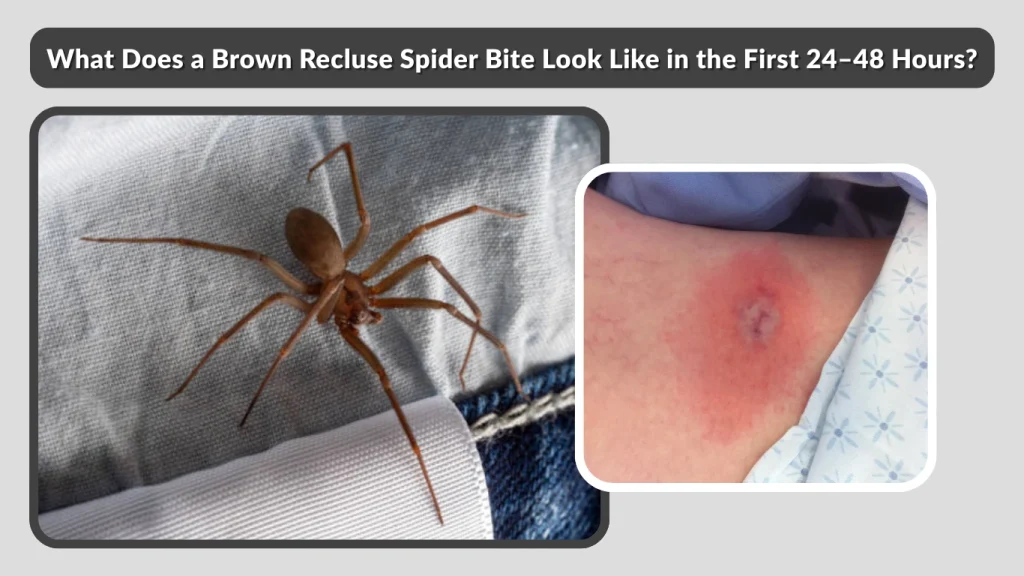
Within one to two days after the bite, visible changes often become more noticeable. The bite site may become increasingly red, tender, and swollen. Pain may develop or worsen during this period, especially as the venom begins to affect the surrounding tissue.
A blister may form at the center of the bite. This blister can be filled with clear fluid or blood and may eventually rupture. The skin around the bite may appear irritated, inflamed, or discolored.
Skin Color Changes and Blister Formation
One of the most recognizable changes during this stage is skin discoloration. The area may show a combination of red, white, and bluish or purple tones. Redness often spreads outward from the bite, while the center may become pale or darken over time.
Blister formation is a key sign that the bite is progressing. Not all brown recluse bites blister, but when they do, the blister can signal increasing tissue damage. Proper wound care at this stage is important to reduce the risk of infection.
The “Red, White, and Blue” Bite Pattern
Some brown recluse spider bites develop what is known as the “red, white, and blue” pattern. This includes redness around the bite, a white or pale area caused by reduced blood flow, and a blue or purple center that may indicate tissue damage.
This pattern does not appear in every case, but when it does, it can be a warning sign of a more serious reaction. Monitoring changes in color and size can help determine whether medical attention is needed.
Brown Recluse Spider Bite Stages (Visual Progression)
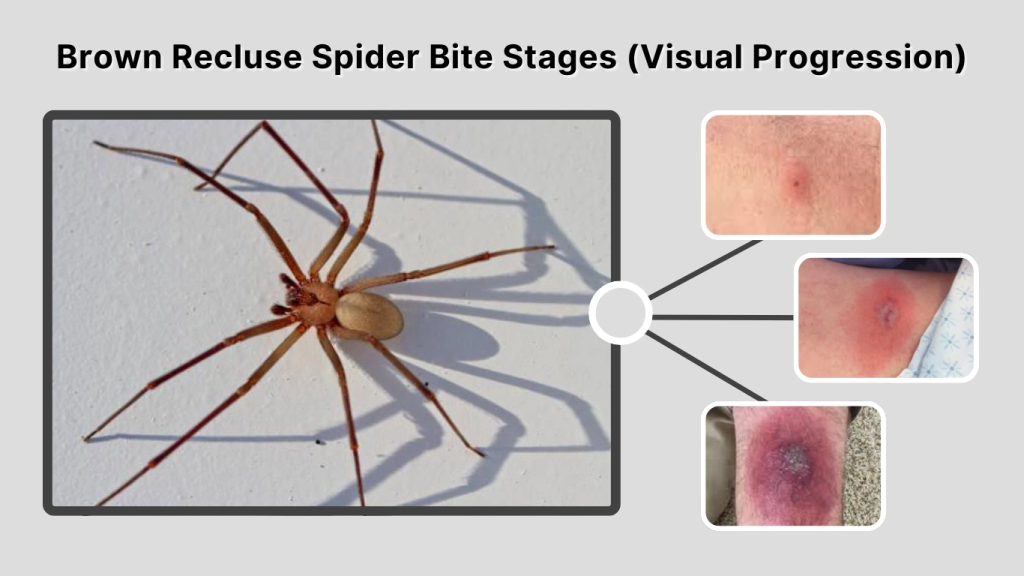
The appearance of a brown recluse spider bite typically follows a predictable pattern, although severity can vary from person to person. Understanding these stages can make it easier to recognize when a bite is healing normally or when it is becoming more serious.
Stage 1 – Early Bite Appearance
In the earliest stage, the bite appears as a small red or pale spot on the skin. Swelling is usually mild, and pain may be absent or minimal. At this point, the bite may look no different from a common insect bite, making it easy to overlook.
Stage 2 – Blistering and Tissue Damage
During the second stage, which usually develops within one to three days after the bite, the bite becomes more painful and noticeable. A blister often forms at the center of the bite and may be filled with clear fluid or blood. The surrounding skin may appear red and inflamed, while the center can turn bluish or purple.
At this stage, the bite may feel warm to the touch and tender. The blister may eventually rupture, leaving an open sore. Although this progression can look alarming, not every brown recluse spider bite advances beyond this point. Many begin to heal gradually with proper care.
Stage 3 – Necrosis and Ulcer Formation
In more severe cases, the venom causes necrosis, or death of the surrounding tissue. The skin in the center of the bite may turn dark brown or black and form a scab or ulcer. This open wound can deepen over time and may take weeks or months to heal.
Necrotic bites often leave scars once healing is complete. Because open ulcers are vulnerable to infection, medical supervision is important during this stage to prevent complications and ensure proper wound management.
What Does a Brown Recluse Spider Bite Look Like in Pictures?
Many people search for pictures of brown recluse spider bites to compare their symptoms. While images can be helpful for understanding how a bite may progress, they can also be misleading. Bites vary widely in appearance depending on the person, the amount of venom injected, and how quickly treatment begins.
Early-Stage Bite Picture Descriptions
Pictures of early brown recluse bites typically show small red or pale marks on the skin. These images often look similar to mosquito bites, pimples, or mild skin irritation. At this stage, there is usually no open wound or severe discoloration.
Advanced Bite Picture Descriptions
Images of more advanced bites may show blistering, darkened skin, or open ulcers. These pictures often highlight tissue damage and necrosis, which can appear frightening. It is important to remember that severe images represent a small percentage of cases and should not be used alone to diagnose a bite.
What Does a Spider Bite Look Like? Brown Recluse vs Other Bites
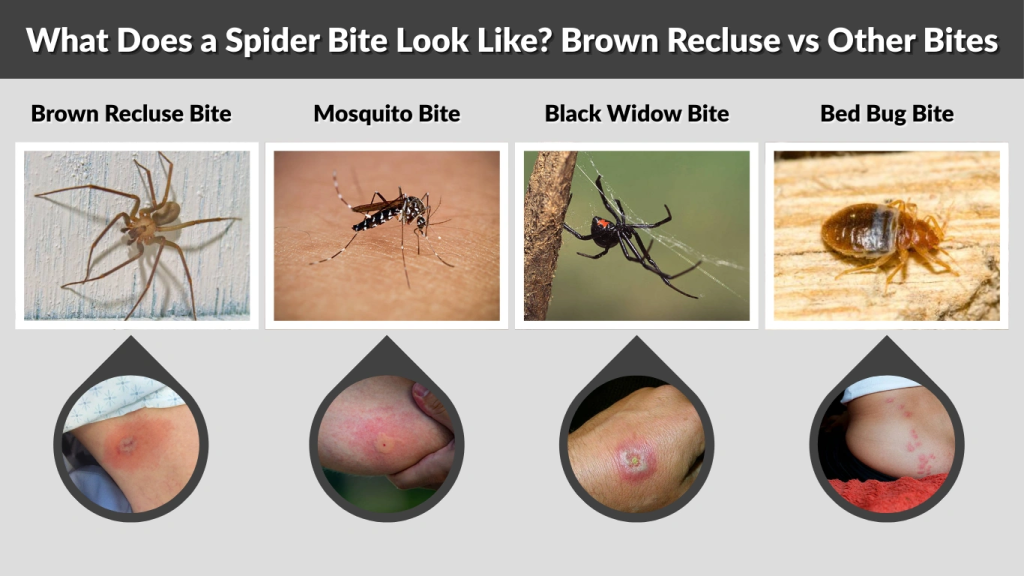
Brown recluse spider bites are frequently confused with other insect bites and skin conditions. Many bites and infections share similar symptoms, which makes accurate identification difficult without medical evaluation.
Brown Recluse Bite vs Mosquito or Bed Bug Bite
Mosquito and bed bug bites usually cause immediate itching and redness. Brown recluse bites, on the other hand, often have delayed pain and may worsen over time. Insect bites typically heal quickly, while brown recluse bites may progress into blisters or ulcers.
Brown Recluse Bite vs Skin Infection
Skin infections such as boils or abscesses often contain pus and may spread rapidly. Brown recluse bites usually begin as a single lesion and may develop tissue damage rather than pus-filled swelling. Because the two can look similar, professional evaluation is sometimes necessary.
Brown Recluse Bite vs Other Spider Bites
Most spider bites cause mild irritation and do not lead to significant skin damage. Brown recluse bites are unique because they can cause necrosis in some cases. Black widow bites, for example, typically cause muscle pain rather than skin damage.
Signs a Brown Recluse Bite Is Becoming Serious
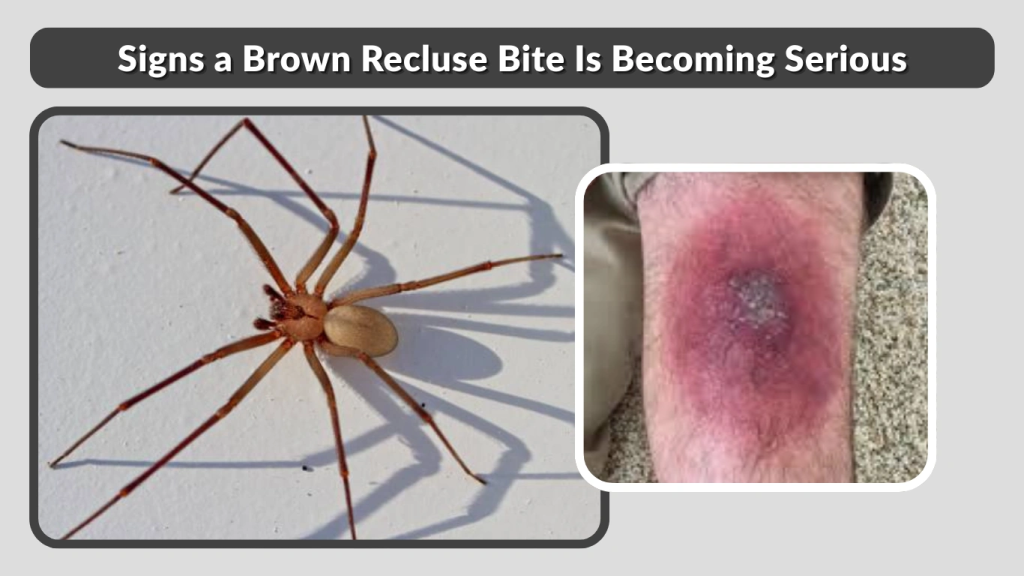
Certain visual and physical signs indicate that a brown recluse spider bite may require medical attention. These include a growing ulcer, increasing pain, spreading redness, or darkening skin at the center of the bite.
When the Bite Appearance Requires Medical Care
Seek medical care if the wound continues to enlarge, shows signs of infection such as pus or fever, or does not improve after several days. Children, older adults, and individuals with weakened immune systems should seek medical evaluation sooner.
How Long Does It Take for a Brown Recluse Bite to Show Symptoms?
Symptoms of a brown recluse spider bite often appear gradually. Visible changes may take several hours to a few days to develop. This delayed reaction is one reason these bites are frequently misidentified early on.
Common Myths About Brown Recluse Bite Appearance
One common myth is that all brown recluse bites turn black or cause severe wounds. In reality, most bites are mild. Another misconception is that you must see the spider to confirm a bite, when in fact many people never see the spider at all.
FAQs
What does a brown recluse spider bite look like at first?
At first, a brown recluse spider bite often looks like a small red or pale mark on the skin. Swelling is usually minimal, and pain may be mild or completely absent. This early appearance is why the bite is often mistaken for a mosquito bite or minor skin irritation.
What does a fresh brown recluse spider bite look like compared to other insect bites?
A fresh brown recluse spider bite is typically flat or slightly raised and does not itch much at first. Unlike mosquito or bed bug bites, which itch immediately, brown recluse bites often worsen slowly over time rather than improving quickly.
Do all brown recluse spider bites develop blisters or necrosis?
No, most brown recluse spider bites do not become severe. Only a small percentage develop blisters, ulcers, or necrosis. Many bites remain mild and heal without significant skin damage.
How long does it take for a brown recluse spider bite to change appearance?
Visible changes usually occur within 24 to 48 hours after the bite. Pain, blistering, or discoloration may develop during this time. In more severe cases, tissue damage can appear several days later.
Can pictures alone confirm a brown recluse spider bite?
No, pictures alone are not enough to confirm a brown recluse spider bite. Many skin conditions, infections, and insect bites look similar. A medical professional is often needed to make an accurate diagnosis based on symptoms and progression.