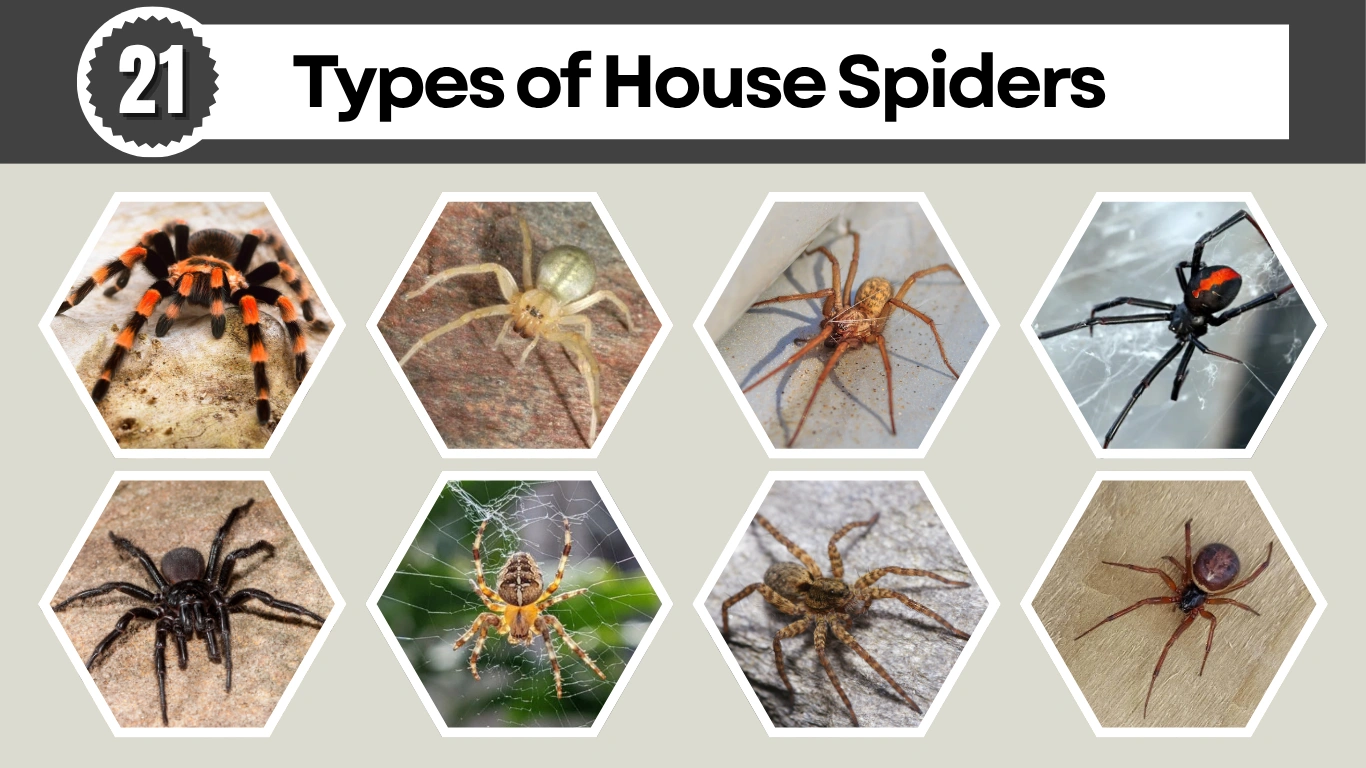
House spiders are some of the most common household guests worldwide, quietly living in basements, attics, and window corners. While their presence may cause concern, most are harmless and even helpful, feeding on unwanted insects. This guide explores 21 types of house spiders, detailing their identification features, habitats, diets, and potential bite risks to help you recognize and understand these eight-legged roommates.
1. Common House Spider
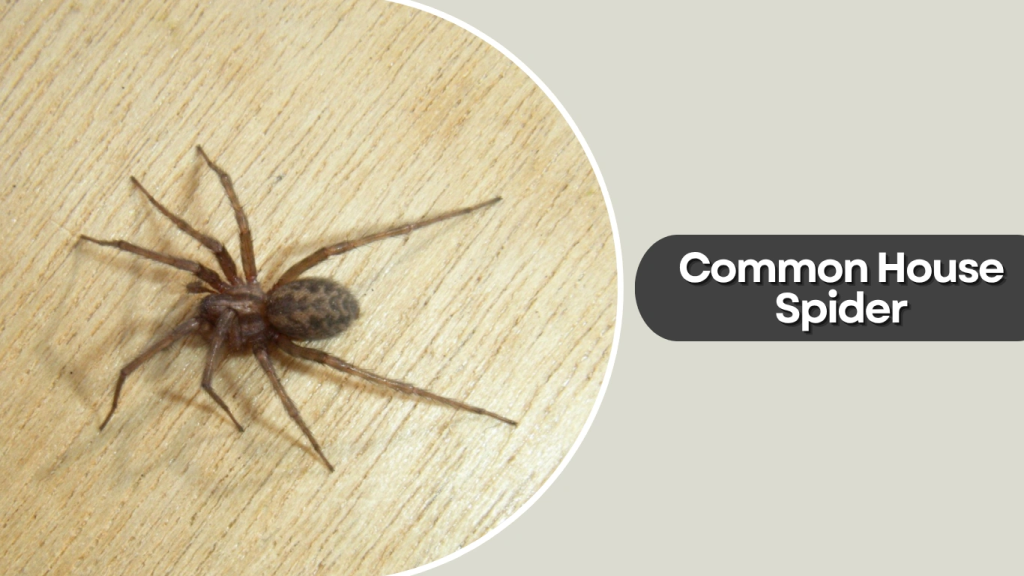
The common house spider (Parasteatoda tepidariorum) is one of the most widespread indoor spiders across North America, the U.K., and other temperate regions. Known for its messy cobwebs and shy nature, this small arachnid prefers quiet corners of homes, basements, and garages. It plays a crucial role in controlling insect populations indoors.
Identification
- Scientific Name: Parasteatoda tepidariorum
- Color: Yellowish-brown with darker markings on the abdomen
- Size: Females up to 6 mm; males slightly smaller
- Web Type: Irregular, tangled cobwebs in corners or ceilings
- Legs: Long and slender with darker bands
- Body Shape: Round abdomen and narrow cephalothorax
Habitat
Common house spiders thrive in human dwellings, especially areas with low disturbance such as attics, basements, and closets. They prefer dry, warm environments where they can easily spin webs to catch insects. Outdoors, they can be found in sheds, barns, and under eaves.
Bite & Risk
These spiders are not aggressive and rarely bite unless provoked. Their venom is mild and poses minimal risk to humans. A bite may cause slight redness or swelling, similar to a mosquito bite. However, individuals with sensitive skin should clean and monitor the bite area to avoid infection.
Diet & Lifecycle
Common house spiders feed on small insects such as flies, mosquitoes, and ants that get trapped in their webs. Females can live for about a year, while males typically live a few months. They lay egg sacs containing hundreds of spiderlings, ensuring constant indoor populations throughout the year.
2. Giant House Spider
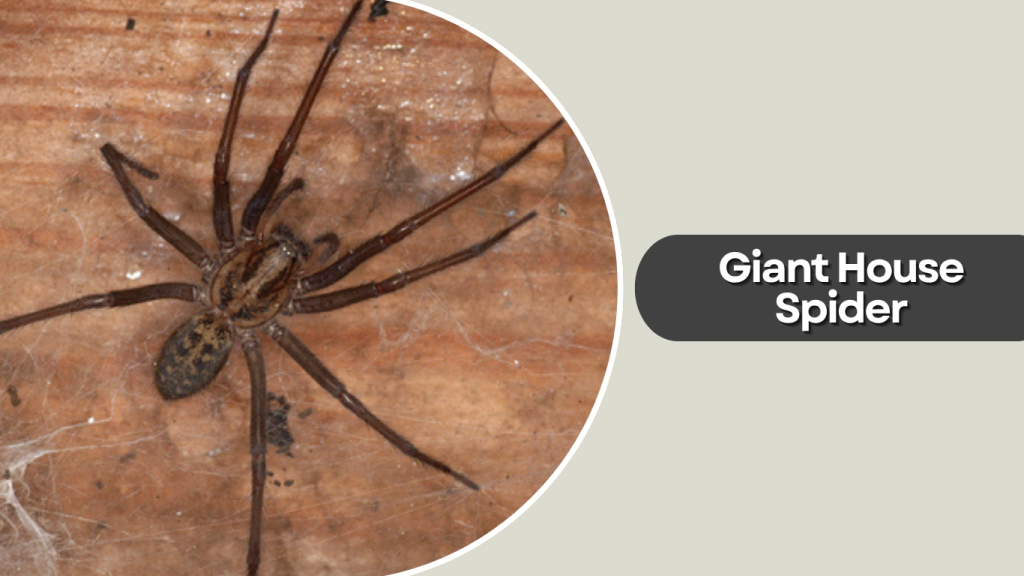
The giant house spider (Eratigena atrica) is one of the largest and fastest house spiders in Europe and North America. Commonly seen in autumn, these spiders wander indoors seeking warmth and mates. Despite their size, they are harmless and help control pest populations.
Identification
- Scientific Name: Eratigena atrica
- Color: Dark brown with lighter markings on the abdomen
- Size: Up to 18 mm in body length; leg span can exceed 4 inches
- Web Type: Funnel-shaped web in corners or basements
- Legs: Long, hairy, and powerful for fast movement
- Body Shape: Flat body with elongated legs
Habitat
Giant house spiders prefer dark, undisturbed indoor spaces such as basements, attics, and closets. Outdoors, they can be found under logs, rocks, and garden debris. During mating season, males are more active indoors, often seen running across floors and walls.
Bite & Risk
Although intimidating, giant house spiders are not dangerous to humans. Their bite is rare and generally causes mild irritation or redness. They usually flee when disturbed, using their speed to escape threats. Their venom is only effective on insects, not people.
Diet & Lifecycle
These spiders primarily hunt insects like flies, moths, and beetles. They live for about two to three years, with females often staying close to their webs. Males die shortly after mating, while females can produce multiple egg sacs each year.
3. Black House Spider
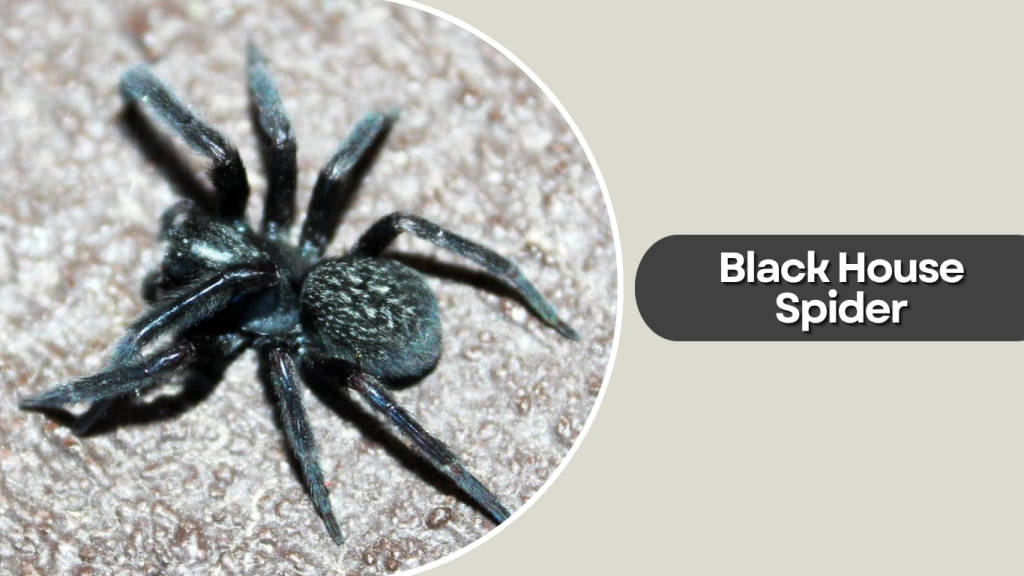
The black house spider (Badumna insignis) is a common household spider native to Australia but also found in parts of New Zealand and North America. Known for its dark color and funnel-shaped webs, it prefers sheltered areas in and around buildings.
Identification
- Scientific Name: Badumna insignis
- Color: Dark brown to black with a velvety appearance
- Size: Females up to 18 mm; males about 9 mm
- Web Type: Messy funnel web with a central retreat
- Legs: Strong, dark legs with fine hairs
- Body Shape: Compact and sturdy build
Habitat
Black house spiders inhabit window frames, wall crevices, sheds, and eaves. They favor areas with minimal disturbance, where they can spin dense webs to catch flies, moths, and mosquitoes. They are especially common in coastal and urban regions of Australia.
Bite & Risk
Their bite can cause localized pain, swelling, and nausea, but serious reactions are extremely rare. Black house spiders are shy and will not attack unless provoked. Cleaning the bite area and applying ice usually reduces symptoms effectively.
Diet & Lifecycle
These spiders feed on flying insects that get trapped in their webs. Females can live up to two years, remaining in the same web for most of their life. They produce several egg sacs per year, protecting their young within the retreat area of the web.
4. Brown Recluse
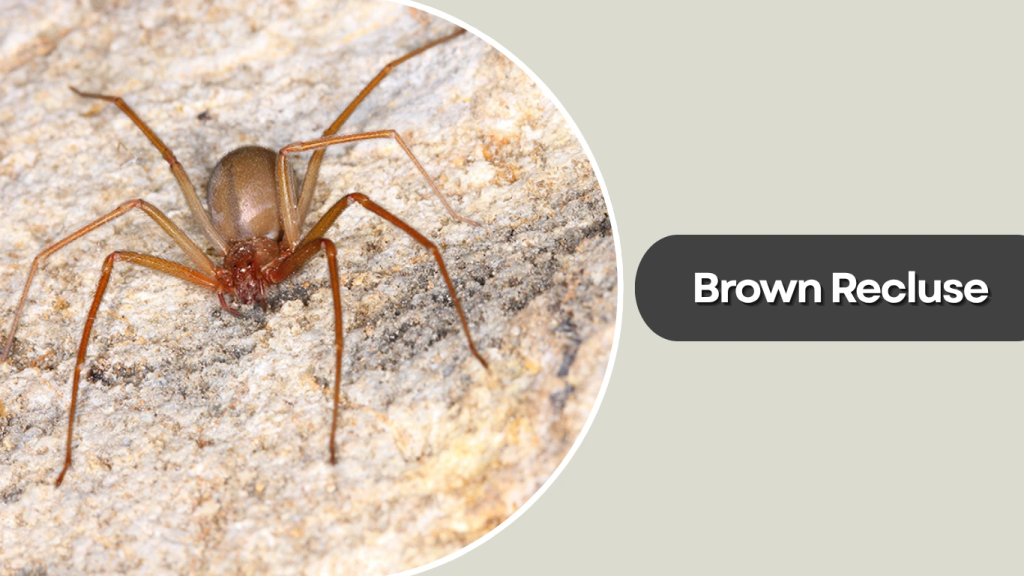
The brown recluse spider (Loxosceles reclusa) is one of the most recognized and feared house spiders in the United States. Known for its distinctive violin-shaped marking, it prefers dark, quiet areas inside homes. Despite its reputation, it only bites when threatened.
Identification
- Scientific Name: Loxosceles reclusa
- Color: Light to dark brown with a violin-shaped mark on the back
- Size: 6–12 mm body length
- Web Type: Irregular, thin webs used mainly as retreats
- Legs: Long and uniformly colored without bands or spines
- Body Shape: Small body with fine, short hairs
Habitat
Brown recluses thrive in dark, undisturbed indoor areas like basements, closets, and behind furniture. Outdoors, they inhabit woodpiles, sheds, and under debris. They are common across the central and southern United States, especially in warm, dry regions.
Bite & Risk
Their bite can be medically significant, sometimes causing necrotic skin lesions. Symptoms may include redness, blistering, and in rare cases, fever or nausea. Immediate medical attention is recommended if bitten. Despite this, bites are uncommon as they are non-aggressive.
Diet & Lifecycle
These spiders are nocturnal hunters feeding on cockroaches, ants, and other small insects. They can survive months without food or water. Females may live up to two years, laying several egg sacs annually, while males usually live for less than a year.
5. Cellar Spider
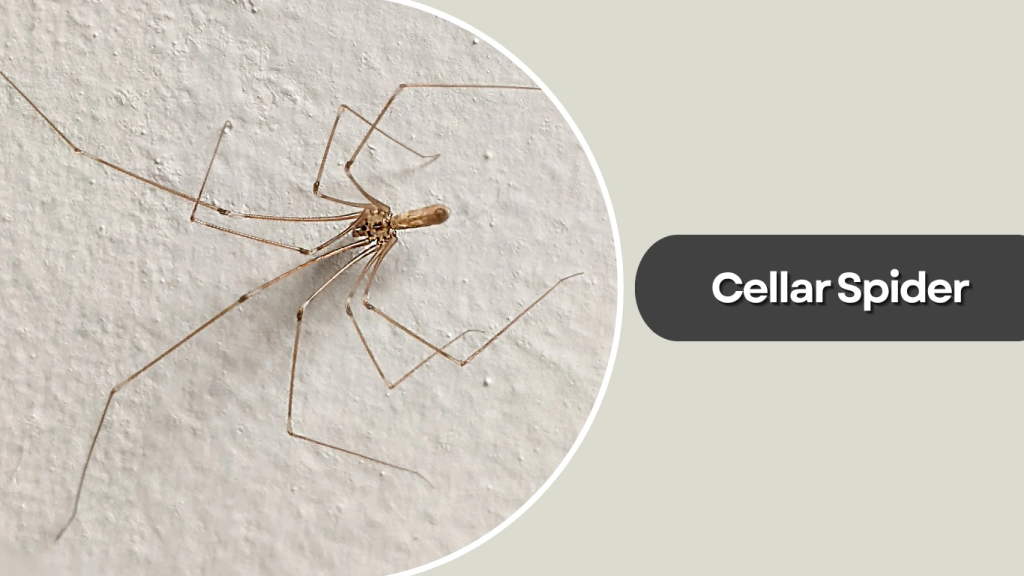
The cellar spider (Pholcus phalangioides), often called the “daddy long-legs spider,” is one of the most common indoor spiders worldwide. Recognizable by its long, thin legs and small body, it frequently occupies ceilings, basements, and garages.
Identification
- Scientific Name: Pholcus phalangioides
- Color: Pale gray or tan with a small rounded body
- Size: Body about 7–8 mm; leg span up to 2 inches
- Web Type: Loose, irregular webs in corners and ceilings
- Legs: Very long and slender
- Body Shape: Tiny body with elongated limbs
Habitat
Cellar spiders prefer cool, humid, and dim environments, such as basements, attics, and crawl spaces. They often hang upside down in their webs and thrive in indoor climates with stable temperatures. They are globally distributed, particularly in temperate regions.
Bite & Risk
Cellar spiders are harmless to humans. Though capable of biting, their fangs are too small to penetrate human skin effectively. They are non-aggressive and may shake their webs rapidly when disturbed as a defense behavior.
Diet & Lifecycle
They feed on mosquitoes, flies, and even other spiders. Known for cleaning up webs of other species, they are beneficial in homes. Their lifespan averages two years, and females can produce multiple egg sacs containing dozens of spiderlings each season.
6. Domestic House Spider
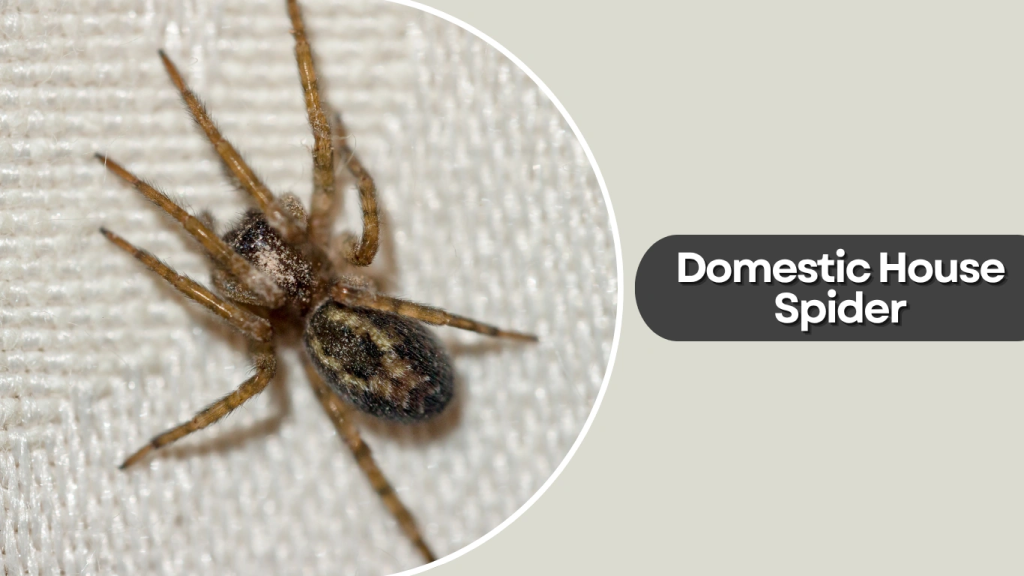
The domestic house spider (Tegenaria domestica) is one of the oldest and most widespread species living alongside humans. Often confused with the giant house spider, it is smaller but equally common in homes across Europe and North America.
Identification
- Scientific Name: Tegenaria domestica
- Color: Brownish with darker chevron patterns on the abdomen
- Size: Females up to 11 mm; males around 8 mm
- Web Type: Funnel-shaped webs built in corners or basements
- Legs: Long and hairy, suited for fast movement
- Body Shape: Elongated with a narrow cephalothorax
Habitat
Domestic house spiders prefer quiet, sheltered indoor areas such as basements, attics, and storerooms. They spin funnel webs where they hide at the narrow end, waiting for prey. They’re especially active during late summer when males search for mates indoors.
Bite & Risk
Their bite is not dangerous and rarely occurs. Symptoms are mild and may include redness or itching. These spiders are shy and typically retreat rather than attack. They play an important ecological role by reducing flying insect populations.
Diet & Lifecycle
Domestic house spiders feed on insects like flies, moths, and beetles that wander into their webs. Females can live up to three years, while males live about one year. Each female produces several egg sacs annually, maintaining a steady indoor population.
7. Hobo Spider
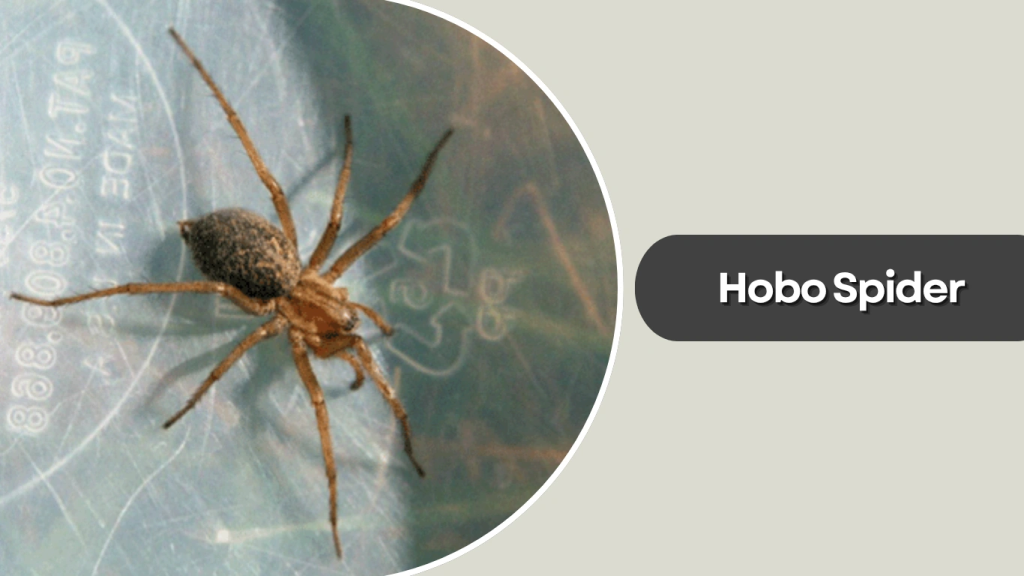
The hobo spider (Eratigena agrestis) is a ground-dwelling species commonly found in homes throughout the Pacific Northwest. Often mistaken for the brown recluse, it has similar coloring but lacks the violin marking. It builds funnel-shaped webs near floor level or wall crevices.
Identification
- Scientific Name: Eratigena agrestis
- Color: Brown with light chevron markings on the abdomen
- Size: 7–14 mm in body length
- Web Type: Funnel web with a horizontal sheet structure
- Legs: Long and robust for quick movement
- Body Shape: Flattened body suitable for crawling into tight spaces
Habitat
Hobo spiders prefer basements, window wells, and ground-level corners. Outdoors, they inhabit tall grass, wood piles, and rocks. They are more active in late summer and fall when seeking mates or warmth indoors.
Bite & Risk
Previously believed to be dangerous, hobo spiders are now known to have non-lethal bites. Most bites cause only mild irritation or swelling. They are defensive rather than aggressive, biting only if trapped or provoked.
Diet & Lifecycle
These spiders primarily feed on crawling insects like ants, beetles, and earwigs. They live for about two years, with females laying several egg sacs in protected areas. After mating, males die shortly after completing their reproductive role.
8. Jumping Spider
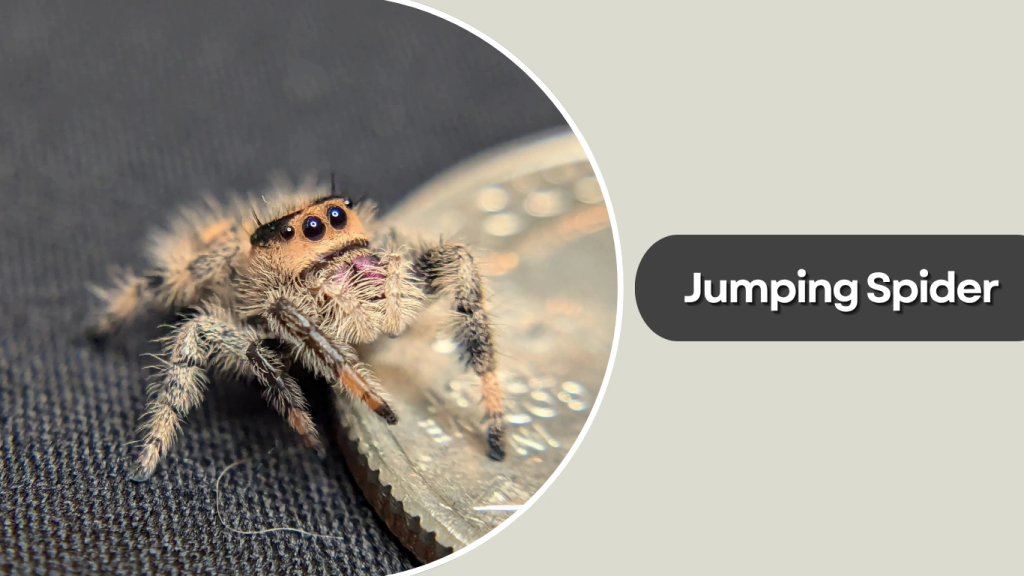
The jumping spider (family Salticidae) is a fascinating and active species known for its excellent vision and energetic movements. Found in nearly every home environment, these spiders are curious hunters that rely on agility rather than webs to catch prey.
Identification
- Scientific Name: Salticidae family
- Color: Varies—often black, brown, or metallic with iridescent scales
- Size: 4–15 mm depending on species
- Web Type: No hunting web; builds silk retreats for resting or eggs
- Legs: Short and sturdy, adapted for jumping
- Body Shape: Compact body with large forward-facing eyes
Habitat
Jumping spiders thrive in sunlit indoor areas such as windowsills, ceilings, and walls. Outdoors, they inhabit gardens, tree bark, and fences. They are common worldwide and adapt easily to both rural and urban environments.
Bite & Risk
Jumping spiders are non-aggressive and bite only if cornered. Their venom is weak and causes mild discomfort at worst—slight itching or redness. They are often more curious than fearful, sometimes watching humans from a safe distance.
Diet & Lifecycle
They prey on small insects like flies, moths, and ants, stalking and leaping on their targets with precision. Most live about a year, and females lay egg sacs protected in silk retreats. Their hunting ability makes them beneficial to households.
9. False Widow Spider
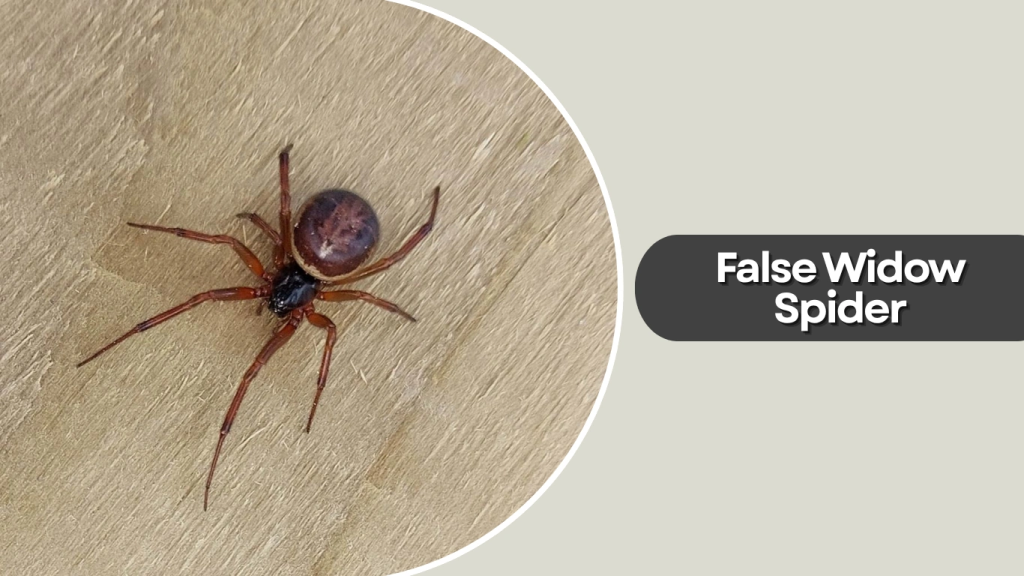
The false widow spider (Steatoda nobilis) is often mistaken for the dangerous black widow but is generally harmless. Native to Madeira and the Canary Islands, it has spread across Europe, the U.K., and North America, adapting well to human homes.
Identification
- Scientific Name: Steatoda nobilis
- Color: Dark brown to purplish with pale markings on the abdomen
- Size: Females up to 14 mm; males around 9 mm
- Web Type: Irregular cobwebs in dark corners
- Legs: Glossy and evenly colored
- Body Shape: Round, bulbous abdomen resembling a black widow
Habitat
False widow spiders favor attics, garages, sheds, and window frames, particularly in temperate climates. They spin messy webs close to the ground or ceilings and are more active during autumn when temperatures drop.
Bite & Risk
Though occasionally reported, their bite is mildly venomous, causing localized pain and redness similar to a bee sting. Severe reactions are rare. They do not seek confrontation and usually stay hidden unless disturbed.
Diet & Lifecycle
False widows feed on insects and other small spiders, sometimes even preying on web rivals. Females can live up to three years, producing multiple egg sacs each year. Their webs are often reused and expanded over time, forming dense silk networks.
10. Wolf Spider
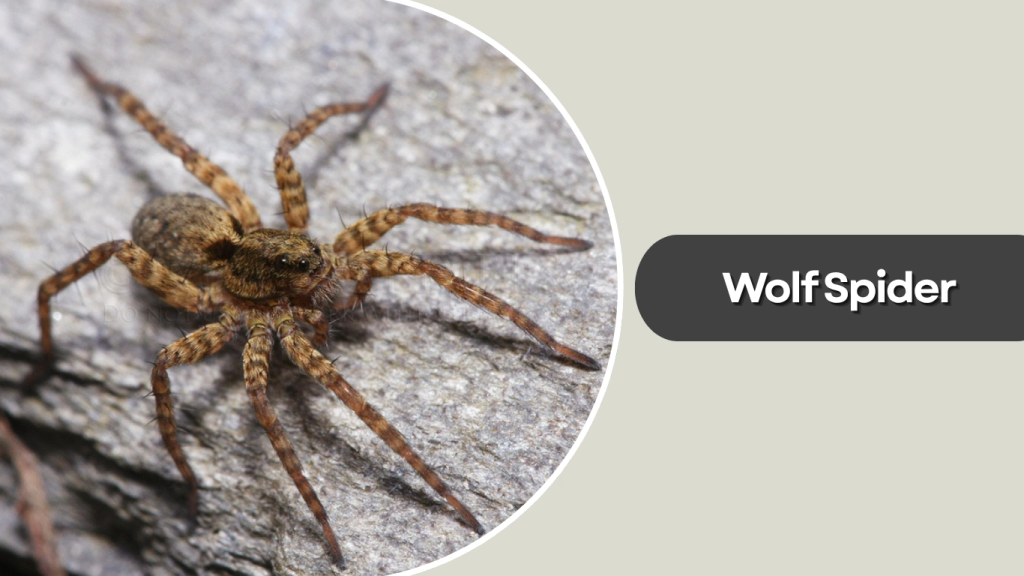
The wolf spider (family Lycosidae) is a fast, ground-dwelling hunter often mistaken for the brown recluse because of its size and color. Unlike web-building spiders, wolf spiders actively chase their prey, using speed and vision to catch insects in and around homes.
Identification
- Scientific Name: Lycosidae family
- Color: Brown or gray with distinct dark stripes on the cephalothorax
- Size: 10–35 mm depending on species
- Web Type: Does not build webs; hunts on foot
- Legs: Long, strong, and covered in fine hairs
- Body Shape: Stocky with a broad head and large eyes
Habitat
Wolf spiders prefer basements, garages, and gardens where they can roam freely. They live under leaves, stones, or wood piles outdoors and sometimes wander indoors seeking warmth or prey. They are commonly found throughout North America and Europe.
Bite & Risk
Their bite can cause mild swelling, redness, and itching, but it’s not dangerous. Wolf spiders are defensive and typically flee when approached. They do not spin webs to trap prey, making them less intrusive indoors.
Diet & Lifecycle
Wolf spiders eat beetles, ants, and other small ground insects. Females carry egg sacs attached to their spinnerets and later transport spiderlings on their backs. They live one to two years, helping control insect populations naturally.
11. Yellow Sac Spider
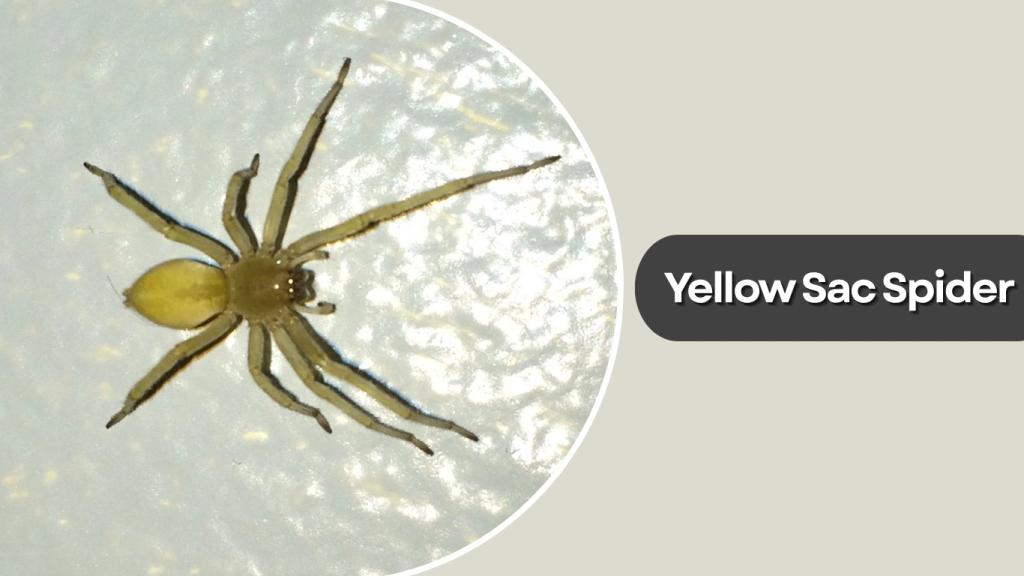
The yellow sac spider (Cheiracanthium inclusum) is a small but active house spider found across North America, Europe, and Australia. Recognizable by its pale yellow body, it often roams at night in search of prey and builds tiny silk sacs for resting during the day.
Identification
- Scientific Name: Cheiracanthium inclusum
- Color: Pale yellow, cream, or light green
- Size: 5–10 mm body length
- Web Type: Small silken sacs in corners, ceilings, or behind furniture
- Legs: Long, slender, and slightly translucent
- Body Shape: Elongated with a slightly pointed abdomen
Habitat
Yellow sac spiders prefer warm, dry indoor areas like wall corners, ceilings, and window frames. Outdoors, they hide in shrubs, leaf litter, and under stones. They often enter homes in the fall when temperatures drop.
Bite & Risk
Their bite can cause mild burning or itching, occasionally resulting in a small blister or sore. Though sometimes painful, it’s rarely serious. They bite defensively, often after being accidentally pressed against the skin during sleep.
Diet & Lifecycle
These spiders hunt small insects like ants, flies, and moths. Females lay egg sacs in their silk retreats, protecting them until spiderlings hatch. Their life expectancy ranges from one to two years, and they are active hunters rather than web builders.
12. Southern House Spider
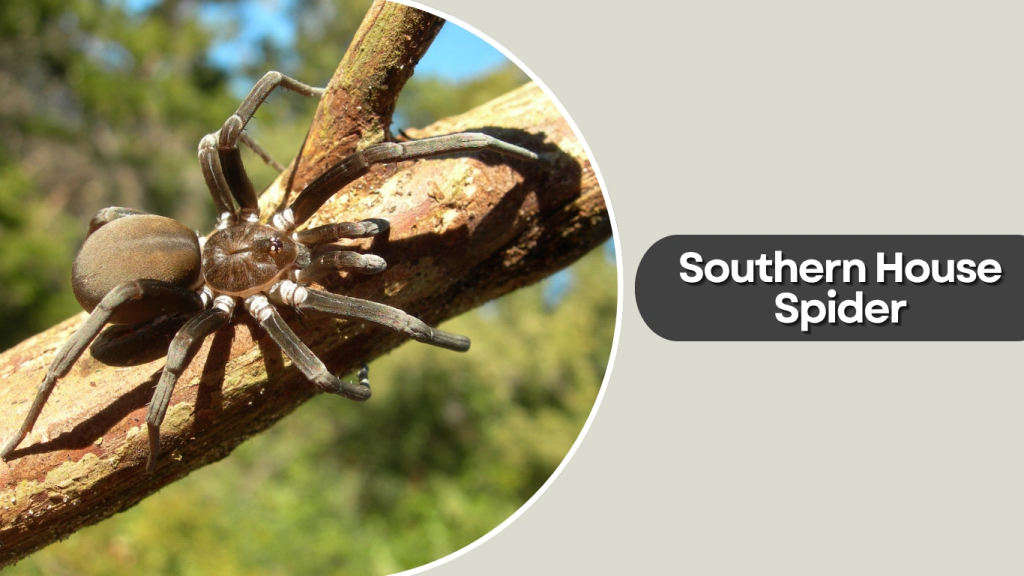
The southern house spider (Kukulcania hibernalis) is a large, dark-colored spider often mistaken for the brown recluse due to its similar body shape. Native to the southern United States, it is a harmless species that prefers warm, sheltered areas in homes and buildings.
Identification
- Scientific Name: Kukulcania hibernalis
- Color: Dark brown to black
- Size: Females up to 20 mm; males around 10–12 mm
- Web Type: Irregular, tangled webs with tube-like retreats
- Legs: Long, thin legs covered with fine hairs
- Body Shape: Flattened with elongated abdomen
Habitat
Southern house spiders thrive in cracks, crevices, and corners of walls, barns, and sheds. They favor warm climates and are commonly found in southeastern states like Florida, Georgia, and Texas. They are nocturnal, coming out at night to catch insects.
Bite & Risk
These spiders are not venomous to humans. Bites are extremely rare and typically cause only minor irritation. Their calm temperament and preference for staying hidden make them one of the least threatening household spiders.
Diet & Lifecycle
Southern house spiders feed on moths, cockroaches, and other small insects. Females can live several years and often stay in one web for life, while males wander in search of mates. They are beneficial predators in human environments.
13. Orb Weaver
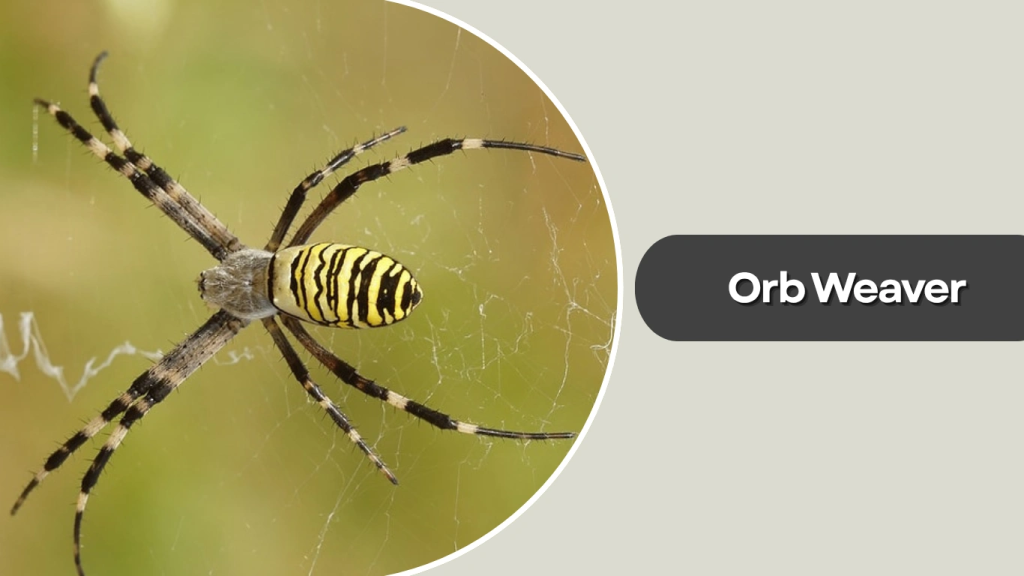
The orb weaver spider (family Araneidae) is famous for spinning large, circular webs often seen in gardens and around homes. Although mostly outdoor dwellers, they sometimes appear near porches and windows where light attracts insects.
Identification
- Scientific Name: Araneidae family
- Color: Varies—brown, yellow, orange, or black with unique patterns
- Size: 6–20 mm depending on species
- Web Type: Large, circular “orb” webs
- Legs: Long and spiny with distinct banding
- Body Shape: Round abdomen with noticeable markings
Habitat
Orb weavers prefer gardens, eaves, porches, and window corners, especially where insects gather. They’re found worldwide in temperate regions and sometimes enter homes through open windows during the summer and fall.
Bite & Risk
Their bite is harmless and rare, producing only slight stinging or redness. Orb weavers are gentle and avoid contact with humans. Their presence near homes helps reduce mosquito and fly populations.
Diet & Lifecycle
They prey on flying insects trapped in their sticky webs, rebuilding them daily. Females lay egg sacs in autumn and die shortly afterward, while spiderlings hatch in spring. Orb weavers typically live about one year, playing an essential role in natural pest control.
14. Garden Spider
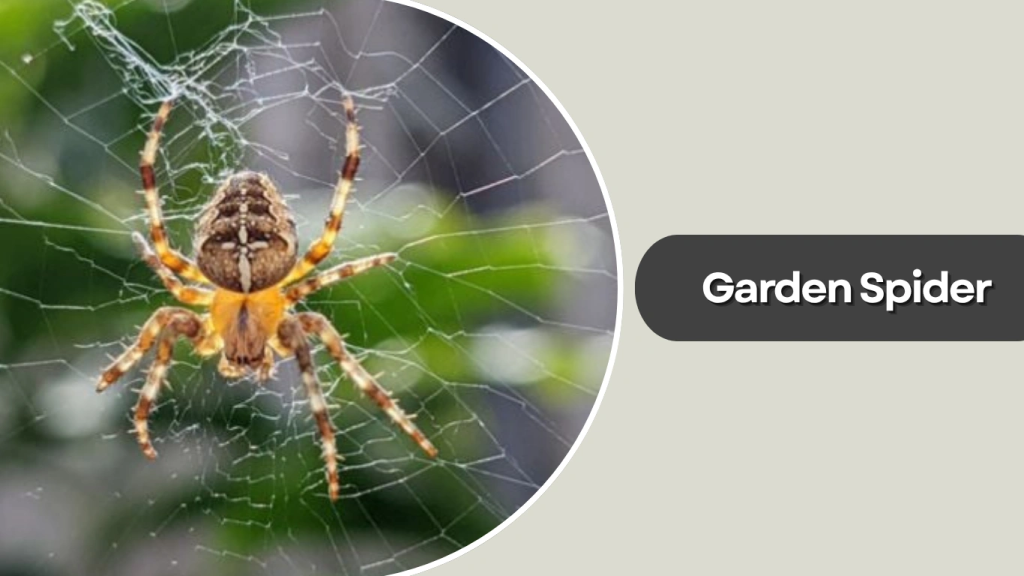
The garden spider (Argiope aurantia), also known as the yellow garden spider or writing spider, is a brightly colored arachnid commonly seen outdoors near homes. Recognized for its bold yellow and black markings, it spins large orb webs with a distinctive zigzag pattern called a stabilimentum.
Identification
- Scientific Name: Argiope aurantia
- Color: Yellow and black body with silver cephalothorax
- Size: Females up to 25 mm; males about 8 mm
- Web Type: Large circular webs with a zigzag center
- Legs: Long, banded legs often held in an “X” shape
- Body Shape: Rounded abdomen with striking coloration
Habitat
Garden spiders prefer sunny outdoor areas such as gardens, shrubs, and fences. They often build webs near human dwellings to take advantage of insect activity. They are found across North America and thrive in warm climates with plenty of vegetation.
Bite & Risk
Garden spiders are non-aggressive and rarely bite unless provoked. Their venom is weak and comparable to a bee sting, causing minor redness or swelling. They are beneficial for controlling pest insects in gardens and yards.
Diet & Lifecycle
They feed on flying insects like flies, moths, and grasshoppers. Females produce egg sacs in the fall, and spiderlings hatch in spring. Adult females die after reproduction, while males live shorter lives, typically only one season.
15. American House Spider
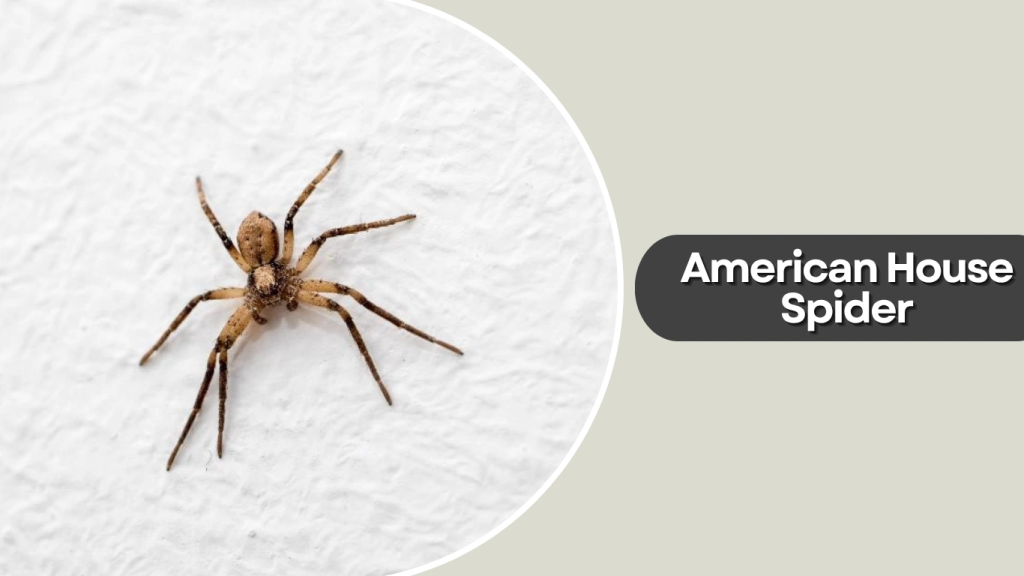
The American house spider (Parasteatoda tepidariorum) is one of the most common indoor spiders in North America. Often found in corners of rooms and basements, it builds messy cobwebs and is known for its tolerance of human environments.
Identification
- Scientific Name: Parasteatoda tepidariorum
- Color: Light brown to gray with darker markings
- Size: Females about 6 mm; males smaller
- Web Type: Irregular cobwebs in corners and ceilings
- Legs: Thin and long, lighter near the body
- Body Shape: Round abdomen with subtle patterns
Habitat
American house spiders live in attics, basements, windowsills, and garages. They thrive in quiet, sheltered spaces and rarely leave their webs once established. They are widespread throughout the U.S. and found year-round indoors.
Bite & Risk
Their bite is harmless to humans, producing only mild irritation if it occurs. They are shy and more likely to retreat than attack. Their venom is effective only on small insects, not humans.
Diet & Lifecycle
These spiders consume mosquitoes, flies, and ants that get trapped in their webs. Females can live for over a year, producing multiple egg sacs each season. Spiderlings disperse shortly after hatching, ensuring a steady indoor population.
16. Redback Spider
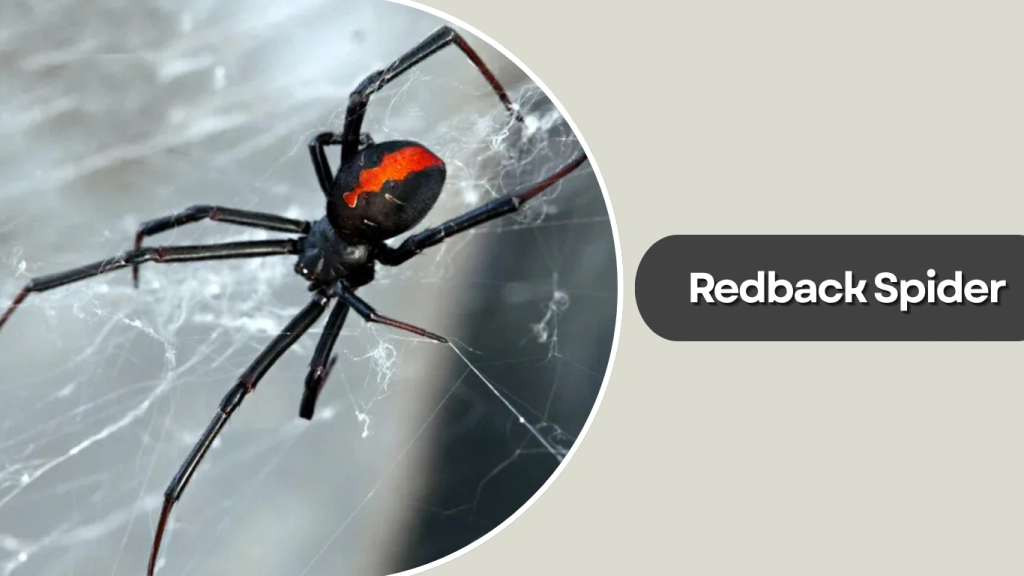
The redback spider (Latrodectus hasselti) is one of Australia’s most recognizable house spiders, related to the infamous black widow. Females have a distinctive red stripe on their abdomen, while males are smaller and less vivid. Despite their potent venom, redbacks are generally shy and reclusive.
Identification
- Scientific Name: Latrodectus hasselti
- Color: Shiny black body with a red or orange dorsal stripe
- Size: Females about 10 mm; males 3–4 mm
- Web Type: Irregular, sticky cobwebs
- Legs: Long, slender, and glossy
- Body Shape: Round, bulbous abdomen typical of widow spiders
Habitat
Redback spiders prefer warm, sheltered environments, such as sheds, garages, outdoor furniture, and under eaves. They are most common in Australia but have spread to parts of New Zealand and Asia. They thrive in dry conditions close to human dwellings.
Bite & Risk
Redback bites can be medically significant, causing pain, sweating, and nausea. However, fatalities are extremely rare due to the availability of antivenom. Only females are capable of delivering serious bites, and they bite defensively when threatened.
Diet & Lifecycle
They feed on insects, small lizards, and even other spiders. Females live for up to three years, producing multiple egg sacs annually. Males have short lifespans, often dying soon after mating. Redbacks play a useful role in controlling insect pests.
17. Funnel-Web Spider
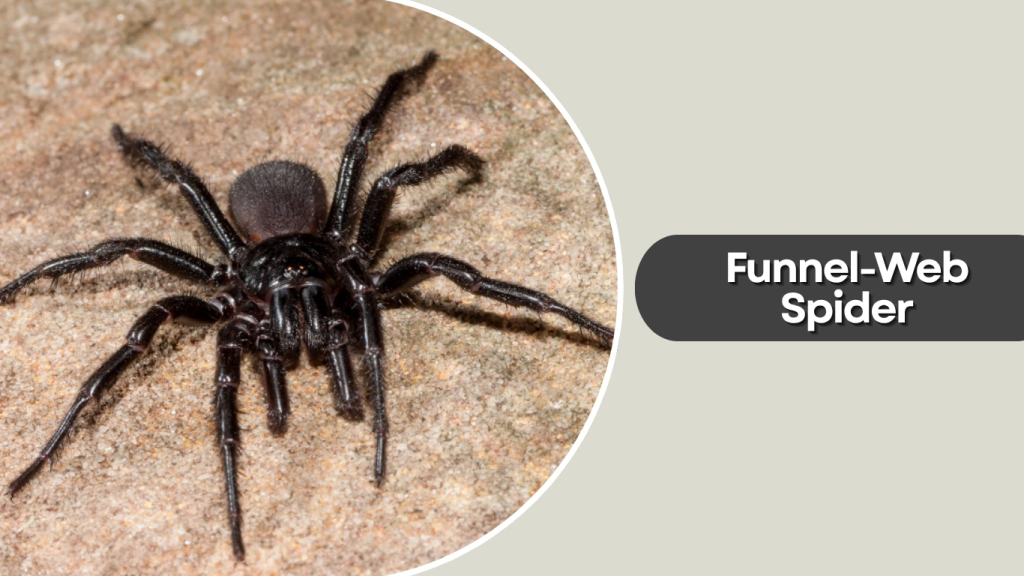
The funnel-web spider (Atrax robustus) is a highly venomous species native to Australia, known for its distinctive tunnel-shaped web. Though primarily outdoor dwellers, they occasionally enter homes during rainy weather or mating season in search of shelter.
Identification
- Scientific Name: Atrax robustus
- Color: Shiny black or dark brown
- Size: 10–50 mm depending on the species
- Web Type: Funnel-shaped silk tunnels
- Legs: Thick and glossy with strong fangs
- Body Shape: Robust body with pronounced cephalothorax
Habitat
Funnel-web spiders prefer humid, sheltered environments, such as under rocks, logs, or garden debris. In urban areas, they may hide in shoes, firewood, or outdoor structures. They are native mainly to eastern Australia, especially New South Wales.
Bite & Risk
Their bite is highly venomous, capable of causing severe symptoms such as muscle spasms and breathing difficulty. Medical help should be sought immediately after a bite. However, due to awareness and antivenom availability, fatalities are rare.
Diet & Lifecycle
Funnel-web spiders prey on insects, small reptiles, and even frogs. Males are more active during mating season and may wander into homes. Females can live up to 10 years, staying close to their webs, while males live only a few months after maturity.
18. Brown House Spider
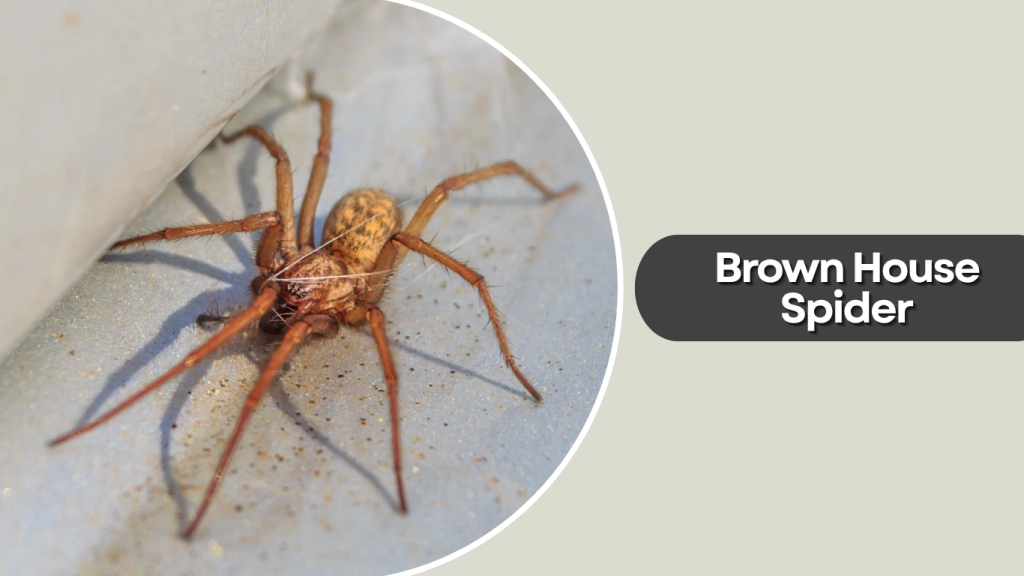
The brown house spider (Steatoda grossa) is a common household species often mistaken for the black widow due to its glossy appearance and body shape. However, it’s far less dangerous and is found in homes and buildings worldwide, especially in temperate regions.
Identification
- Scientific Name: Steatoda grossa
- Color: Dark brown to purplish with lighter markings on the abdomen
- Size: Females up to 10 mm; males smaller
- Web Type: Tangled, irregular cobwebs
- Legs: Glossy and evenly colored
- Body Shape: Round, bulbous abdomen similar to widow spiders
Habitat
Brown house spiders prefer quiet indoor spaces such as basements, attics, and behind furniture. They are also common outdoors under rocks, eaves, and fences. They often occupy old, dusty webs near windows or corners of rooms.
Bite & Risk
Their bite is mildly venomous but rarely serious. It may cause localized redness, swelling, or minor pain that subsides within a few days. These spiders are shy and prefer retreating into their webs when disturbed rather than attacking.
Diet & Lifecycle
They feed on insects and occasionally other spiders, including small web rivals. Females can live up to two years and produce several egg sacs annually. Males live for shorter periods, dying soon after mating. Their webs are often reused and expanded over time.
19. Daddy Long Legs
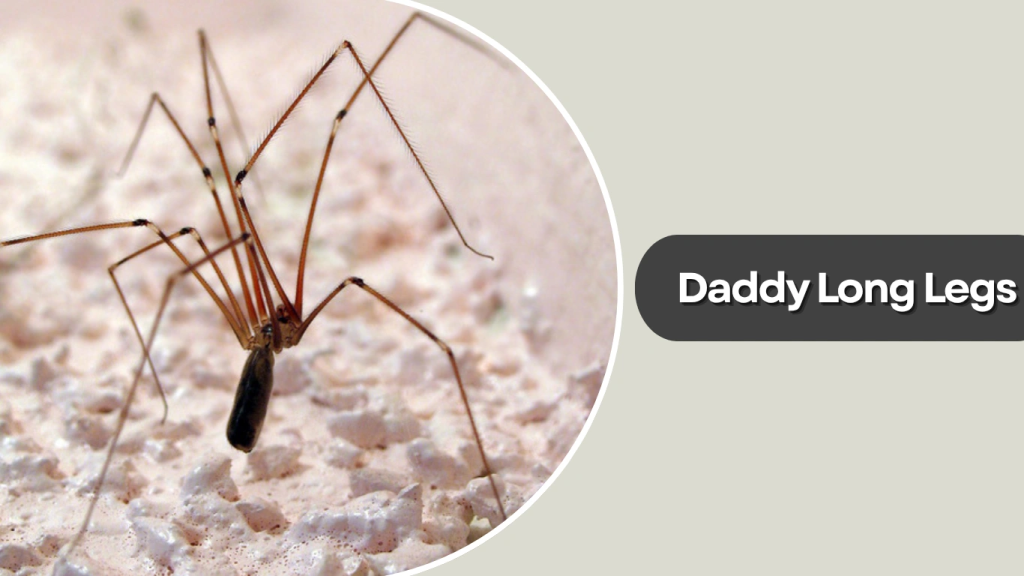
The daddy long legs spider (Pholcidae family) is a slender, long-legged arachnid that frequently inhabits ceilings and corners of homes. Known for its delicate build and shaky webs, it’s one of the most recognizable and harmless house spiders worldwide.
Identification
- Scientific Name: Pholcidae family
- Color: Pale brown or gray
- Size: Body length 2–10 mm; leg span up to 50 mm
- Web Type: Irregular, messy webs in ceilings and corners
- Legs: Extremely long and thin
- Body Shape: Small oval body with elongated limbs
Habitat
Daddy long legs spiders thrive in dark, quiet indoor areas, including basements, garages, and closets. They are also found in attics and under furniture. Their preference for stable indoor temperatures makes them common year-round residents.
Bite & Risk
Despite myths, these spiders are harmless to humans. Their fangs are too small to pierce skin effectively, and their venom is extremely mild. They may vibrate in their webs when disturbed, a behavior meant to confuse predators.
Diet & Lifecycle
They feed on mosquitoes, flies, and even other spiders, making them beneficial housemates. They can live up to two years, with females producing several egg sacs annually. Both sexes remain close to their webs and rarely wander far from their chosen spots.
20. Sac Spider
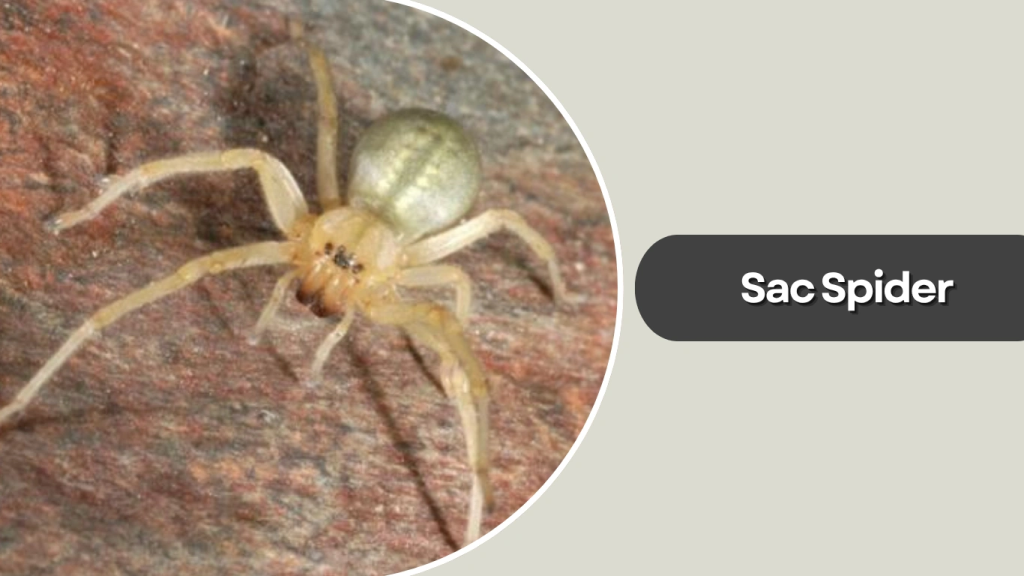
The sac spider (Clubionidae family) is a small, active hunter that often builds silk sacs for resting during the day, rather than constructing webs for prey. Found in homes across North America, Europe, and Australia, it’s a frequent nighttime wanderer on walls and ceilings.
Identification
- Scientific Name: Clubionidae family
- Color: Pale yellow, cream, or light brown
- Size: 5–10 mm body length
- Web Type: No web for catching prey; builds silk sacs for shelter
- Legs: Slender, slightly darker at the joints
- Body Shape: Elongated with smooth, glossy skin
Habitat
Sac spiders prefer indoor corners, ceilings, and behind furniture, often entering homes during cold months. Outdoors, they live under bark, leaves, and stones. They are active hunters that roam instead of waiting in webs.
Bite & Risk
Their bite may cause mild irritation, redness, or a burning sensation, but symptoms are short-lived. Though occasionally mistaken for more venomous spiders, sac spiders are harmless and not aggressive toward humans.
Diet & Lifecycle
Sac spiders feed on small insects, moths, and other spiders. Females lay egg sacs within their silken retreats, guarding them until hatching. They typically live for about one year, remaining active hunters throughout their lives.
21. Tarantula
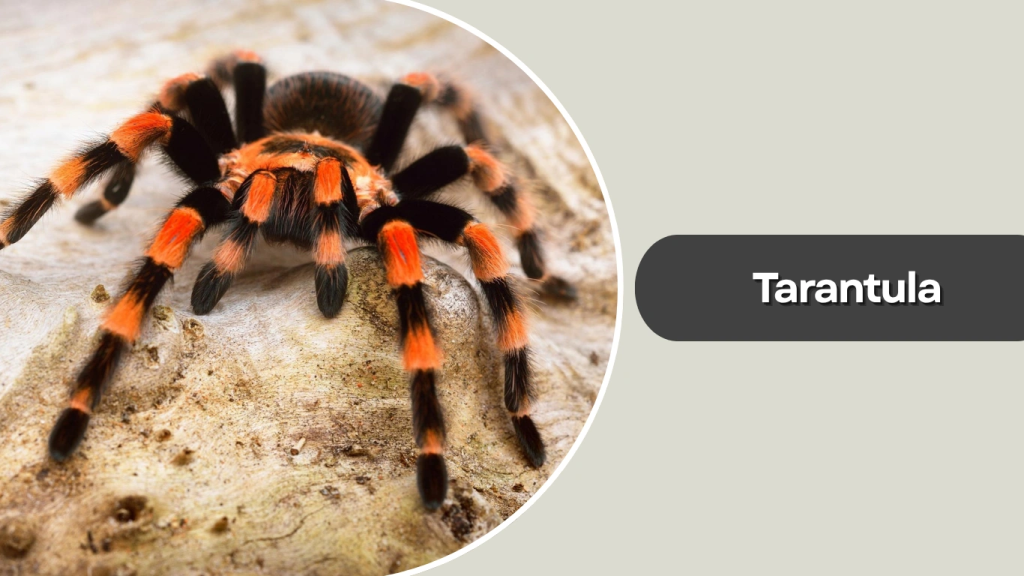
The tarantula (Theraphosidae family) is a large, hairy spider known for its intimidating size but calm temperament. Although typically outdoor dwellers, they may occasionally enter homes in warm regions such as the southwestern United States.
Identification
- Scientific Name: Theraphosidae family
- Color: Varies—brown, black, or reddish hues
- Size: Body up to 10 cm; leg span up to 25 cm
- Web Type: Ground burrows with silk lining, not aerial webs
- Legs: Thick, hairy legs designed for digging and defense
- Body Shape: Robust with a large, furry abdomen
Habitat
Tarantulas prefer dry, warm environments, such as deserts, grasslands, and forest floors. Occasionally, they may wander indoors seeking shelter or mates. They are most common in southwestern U.S. states like Arizona, Texas, and New Mexico.
Bite & Risk
Their bite is non-lethal to humans, causing mild pain similar to a bee sting. Tarantulas rely more on their size and defensive hairs than venom. They are slow-moving and rarely bite unless provoked.
Diet & Lifecycle
Tarantulas feed on insects, small rodents, and reptiles. They can live for decades—females up to 20 years or more, while males live a few years after maturity. They play an essential ecological role as both predator and prey in their environments.