
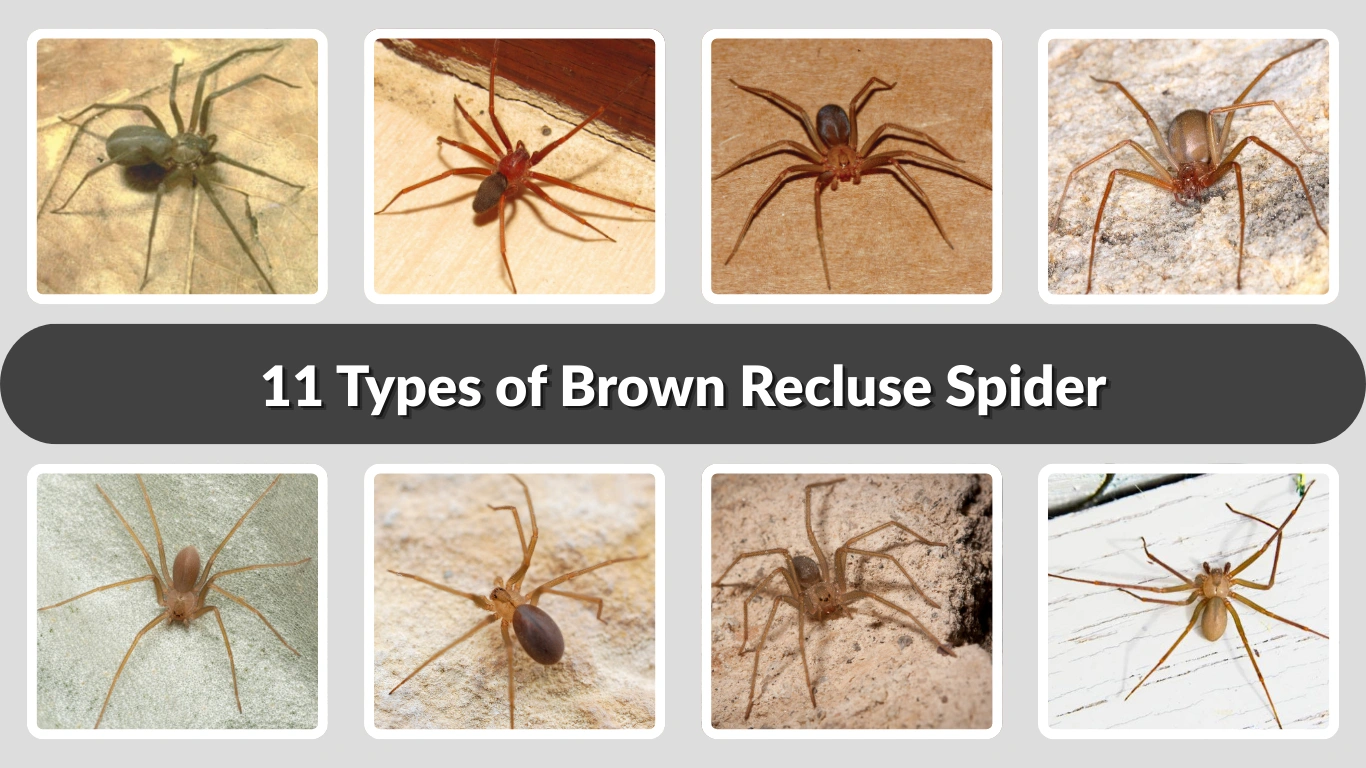
Brown recluse spiders belong to the genus Loxosceles, a group known for their distinctive violin-shaped marking and reclusive behavior. While the classic brown recluse (Loxosceles reclusa) is the most recognized species, there are many closely related spiders found in different parts of the world. These spiders typically prefer quiet, undisturbed places and are mostly active at night while hunting insects. Although they have a reputation for medically significant bites, encounters with humans are relatively uncommon. Understanding the different types of recluse spiders can help with proper identification, awareness, and reducing unnecessary fear about these secretive arachnids.
1. Loxosceles reclusa (Brown Recluse Spider)
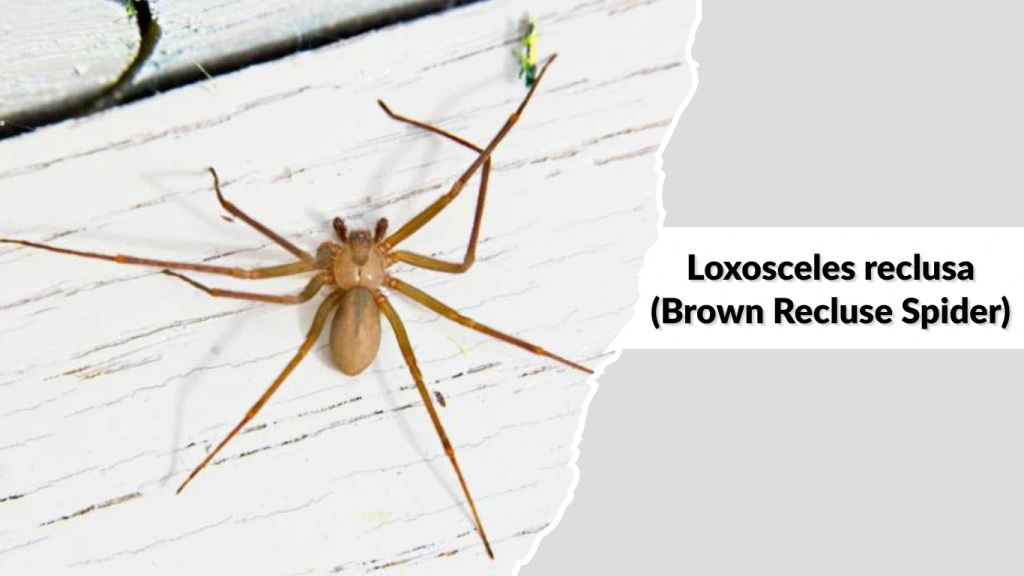
Loxosceles reclusa is the most well-known species commonly referred to as the brown recluse spider. Native to the United States, especially the Midwest and southern regions, this spider prefers quiet, undisturbed areas such as basements, closets, and woodpiles. It is known for its shy behavior and rarely bites unless provoked. Despite its reputation, encounters with humans are relatively uncommon.
Identification
- Light to medium brown body color
- Distinct dark violin-shaped marking on the cephalothorax
- Long, thin legs without noticeable spines
- Six eyes arranged in three pairs (unlike most spiders with eight eyes)
- Body length usually around 6–20 mm
Habitat
Loxosceles reclusa prefers dry, sheltered environments where it can remain hidden during the day. Common hiding spots include cardboard boxes, storage areas, attics, closets, and piles of wood. Indoors, they are often found in undisturbed places where insects are available for food.
Behavior
This spider is nocturnal and tends to avoid human contact. It usually comes out at night to hunt small insects rather than building elaborate webs to catch prey. The brown recluse relies on its venom to immobilize insects quickly before feeding.
Bite and Medical Importance
Although bites are uncommon, they can occur if the spider becomes trapped against the skin, such as in clothing or bedding. Some bites cause mild irritation, while others may lead to more serious skin reactions. However, severe reactions are relatively rare and often misattributed to this species.
2. Loxosceles deserta (Desert Recluse Spider)
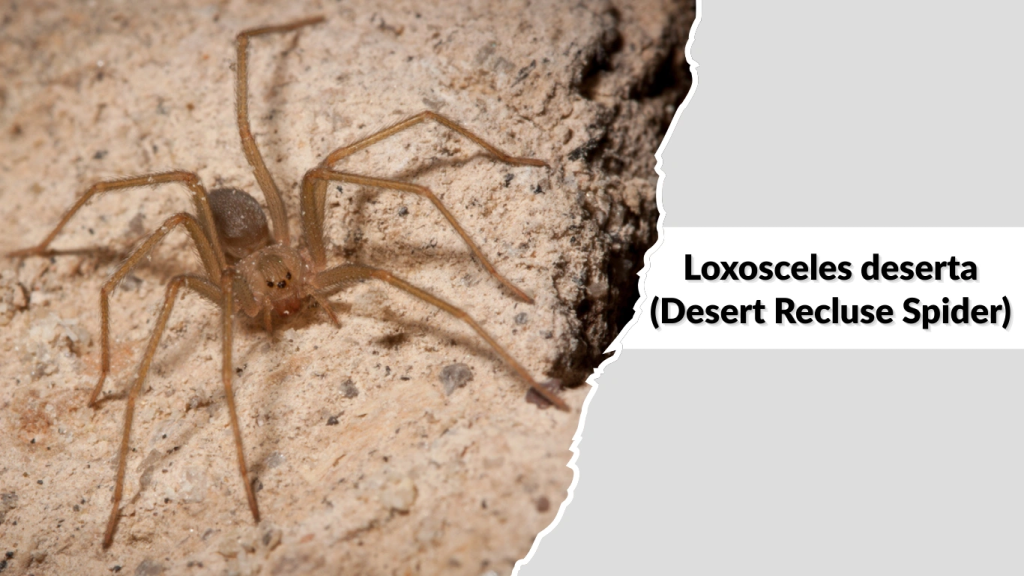
Loxosceles deserta, commonly known as the desert recluse spider, is closely related to the brown recluse but lives primarily in arid desert regions of the southwestern United States and northern Mexico. Like other recluse spiders, it is shy and avoids human interaction. It typically lives in quiet, dry environments where it can remain hidden during the day.
Identification
- Pale yellow to light brown body color
- Violin-shaped marking on the cephalothorax, though often lighter than in the brown recluse
- Six eyes arranged in three pairs
- Long, slender legs with fine hairs
- Body length usually around 7–12 mm
Habitat
The desert recluse prefers dry desert landscapes, rocky areas, and sandy environments. It often shelters under rocks, inside crevices, beneath logs, or in abandoned animal burrows. Occasionally, it may enter buildings in desert regions where quiet hiding places are available.
Behavior
This species is nocturnal and hunts at night rather than relying on webs to capture prey. It feeds mainly on small insects and other arthropods. During the day, it remains hidden in sheltered locations to avoid predators and harsh sunlight.
Bite and Medical Importance
Bites from Loxosceles deserta are rare because the spider tends to avoid humans. When bites do occur, the symptoms may resemble those of other recluse spiders, ranging from mild irritation to localized skin damage in more serious cases.
3. Loxosceles arizonica (Arizona Recluse Spider)
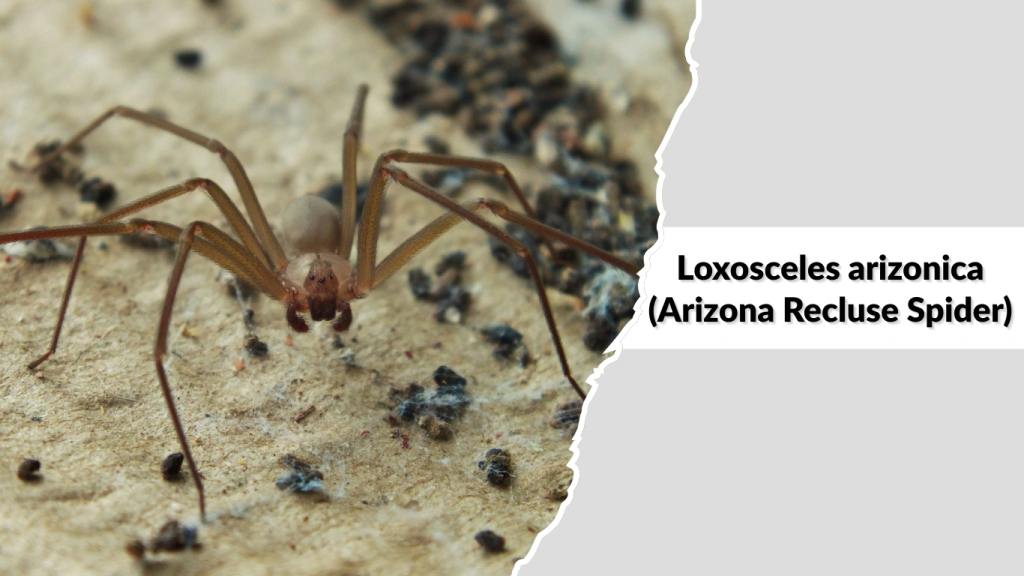
Loxosceles arizonica, commonly called the Arizona recluse spider, is found mainly in the desert regions of Arizona and nearby areas. It belongs to the same genus as the brown recluse and shares many similar characteristics. This spider is typically secretive and prefers to stay hidden in dry, undisturbed environments where it can hunt small insects at night.
Identification
- Light brown to yellowish-brown body
- Faint violin-shaped marking on the cephalothorax
- Six eyes arranged in three pairs
- Long, thin legs with fine hairs
- Body length usually around 6–12 mm
Habitat
The Arizona recluse prefers hot, dry desert habitats. It is commonly found under rocks, inside crevices, beneath logs, and in sheltered outdoor locations. In some cases, it may enter homes, garages, or storage areas where dark hiding places are available.
Behavior
This spider is primarily nocturnal and emerges at night to hunt for insects and other small arthropods. Instead of building webs to catch prey, it actively searches for food. During the day, it remains hidden to avoid predators and extreme heat.
Bite and Medical Importance
Bites from Loxosceles arizonica are uncommon because the spider avoids human contact. If a bite occurs, symptoms can range from mild redness and irritation to localized skin damage in rare cases, similar to other recluse spiders.
4. Loxosceles apachea (Apache Recluse Spider)
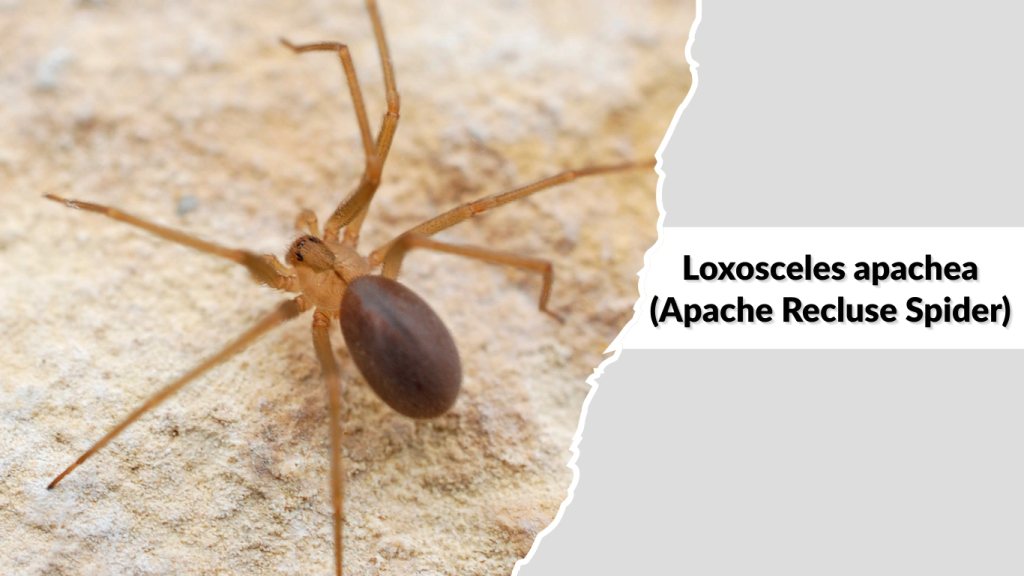
Loxosceles apachea, commonly known as the Apache recluse spider, is another member of the recluse spider family found mainly in the southwestern United States and parts of northern Mexico. Like other recluse spiders, it prefers secluded environments and is rarely seen because it spends most of its time hiding during the day and hunting at night.
Identification
- Light brown to tan body color
- Subtle violin-shaped marking on the cephalothorax
- Six eyes arranged in three pairs
- Long, slender legs with fine hairs
- Body length typically around 6–10 mm
Habitat
The Apache recluse usually inhabits dry regions such as deserts, rocky landscapes, and scrublands. It often hides beneath rocks, inside cracks, under logs, or in animal burrows. In some cases, it may also take shelter in sheds, garages, or other quiet structures.
Behavior
This spider is nocturnal and emerges after dark to hunt for small insects and arthropods. It does not rely on large webs to trap prey but instead actively searches for food. During daylight hours, it stays hidden in protected spaces.
Bite and Medical Importance
Bites from Loxosceles apachea are rare because the spider avoids contact with humans. If a bite happens, symptoms are usually mild but can sometimes resemble those caused by other recluse spiders, including localized irritation or skin reactions.
5. Loxosceles blanda (Bland Recluse Spider)
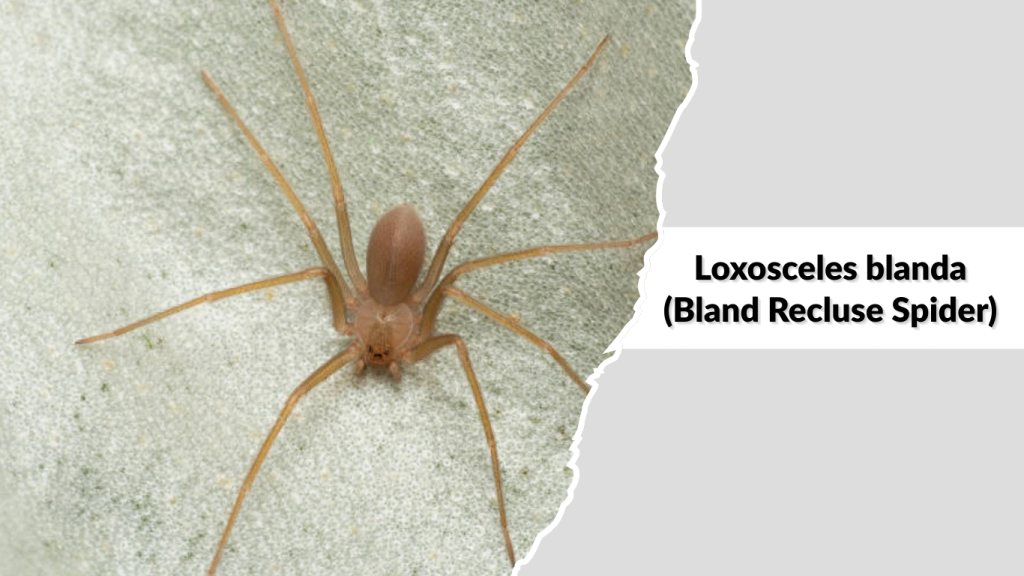
Loxosceles blanda is a lesser-known species of recluse spider found mainly in parts of Central America and Mexico. Like other members of the Loxosceles genus, it prefers secluded places and avoids human contact whenever possible. This spider spends most of its time hidden during the day and becomes active at night while searching for small insect prey.
Identification
- Pale brown to yellowish-brown body color
- Faint violin-shaped marking on the cephalothorax
- Six eyes arranged in three pairs
- Long, thin legs with fine hairs
- Body length typically around 6–11 mm
Habitat
Loxosceles blanda typically lives in warm, dry environments. It is often found under rocks, within cracks in walls, inside woodpiles, or in undisturbed areas of buildings. These spiders prefer locations that provide shelter and protection from predators.
Behavior
This species is nocturnal and hunts during the night. Instead of building complex webs to trap prey, it actively searches for insects and other small arthropods. During the daytime, it remains hidden in protected spaces.
Bite and Medical Importance
Bites from Loxosceles blanda are uncommon due to its shy and reclusive nature. When bites occur, symptoms are generally mild but may include redness, irritation, or localized skin reactions similar to other recluse spiders.
6. Loxosceles devia (Devia Recluse Spider)
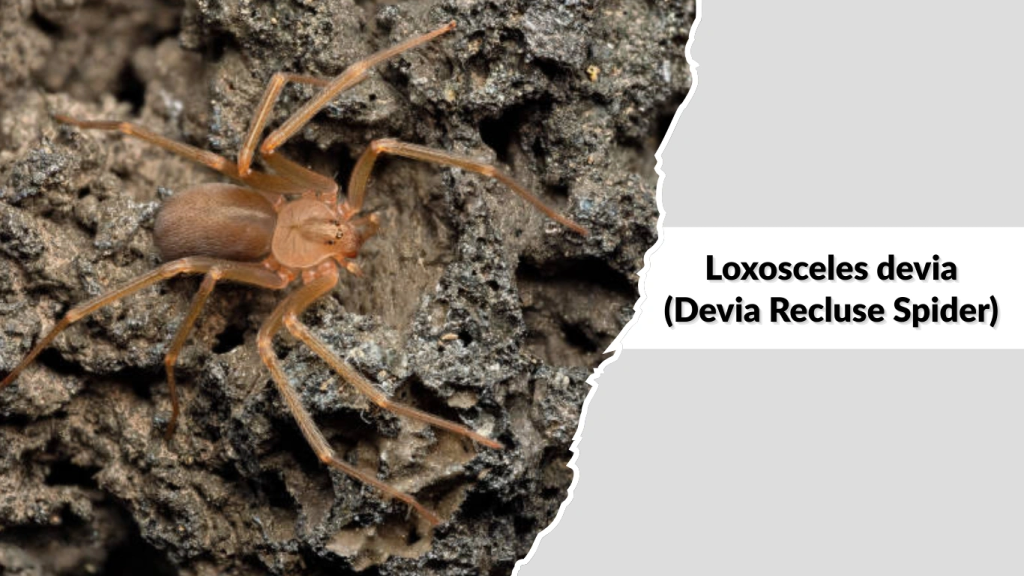
Loxosceles devia is a species of recluse spider found mainly in parts of South America. Like other members of the Loxosceles genus, it is secretive and prefers to stay hidden in undisturbed environments. This spider is rarely seen by humans because it spends most of the daytime resting in sheltered spots and becomes active at night to hunt insects.
Identification
- Light brown to tan body color
- Subtle violin-shaped marking on the cephalothorax
- Six eyes arranged in three pairs
- Long, slender legs with fine hairs
- Body length typically around 6–12 mm
Habitat
Loxosceles devia usually inhabits warm and dry regions where it can find quiet hiding places. It often shelters beneath rocks, inside cracks, under logs, or in woodpiles. In some cases, it may also be found inside buildings where undisturbed spaces are available.
Behavior
This spider is nocturnal and actively hunts small insects and arthropods at night. Rather than building large webs to capture prey, it searches for food while moving across the ground or other surfaces. During the day, it remains hidden to avoid predators.
Bite and Medical Importance
Bites from Loxosceles devia are uncommon because the spider avoids contact with people. If a bite does occur, symptoms may range from mild irritation and redness to localized skin reactions similar to those caused by other recluse spiders.
7. Loxosceles rufescens (Mediterranean Recluse Spider)
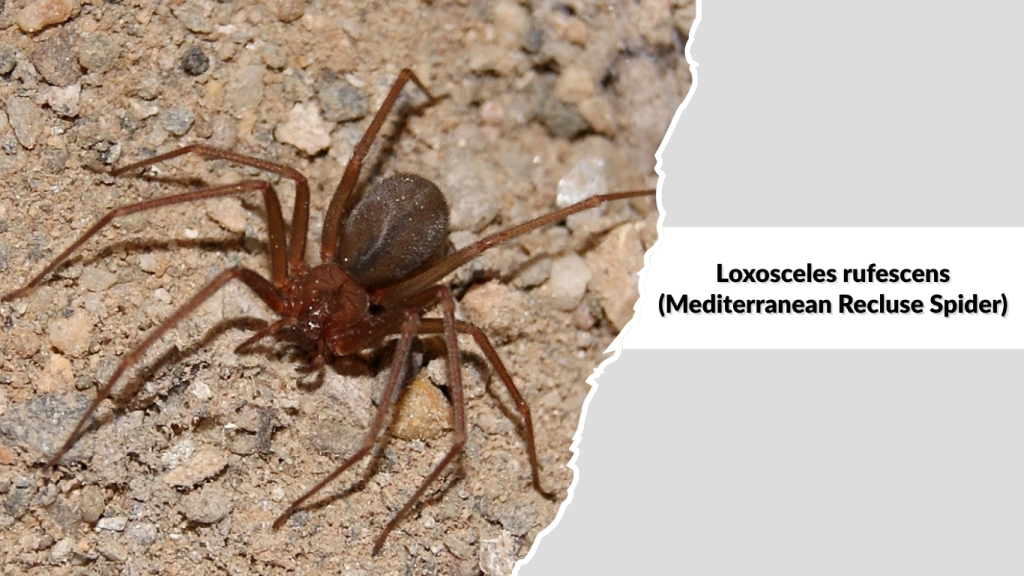
Loxosceles rufescens, commonly known as the Mediterranean recluse spider, is widely distributed across the Mediterranean region, parts of Europe, North Africa, and the Middle East. It has also been introduced to other parts of the world through human activity. This species is secretive and prefers to stay hidden in quiet places during the day.
Identification
- Yellowish-brown to reddish-brown body color
- Faint violin-shaped marking on the cephalothorax
- Six eyes arranged in three pairs
- Long, thin legs without prominent spines
- Body length typically around 7–12 mm
Habitat
The Mediterranean recluse commonly lives in dry, sheltered environments. It may be found under stones, inside cracks in walls, beneath logs, or within buildings. Indoors, it often hides in storage areas, basements, or other undisturbed locations.
Behavior
This spider is primarily nocturnal and leaves its hiding place at night to hunt insects and other small arthropods. It does not rely on elaborate webs to capture prey but instead actively searches for food.
Bite and Medical Importance
Bites from Loxosceles rufescens are relatively rare because the spider avoids human contact. When bites occur, they can cause symptoms similar to other recluse spiders, including localized irritation, redness, and in some cases more serious skin reactions.
8. Loxosceles laeta (Chilean Recluse Spider)
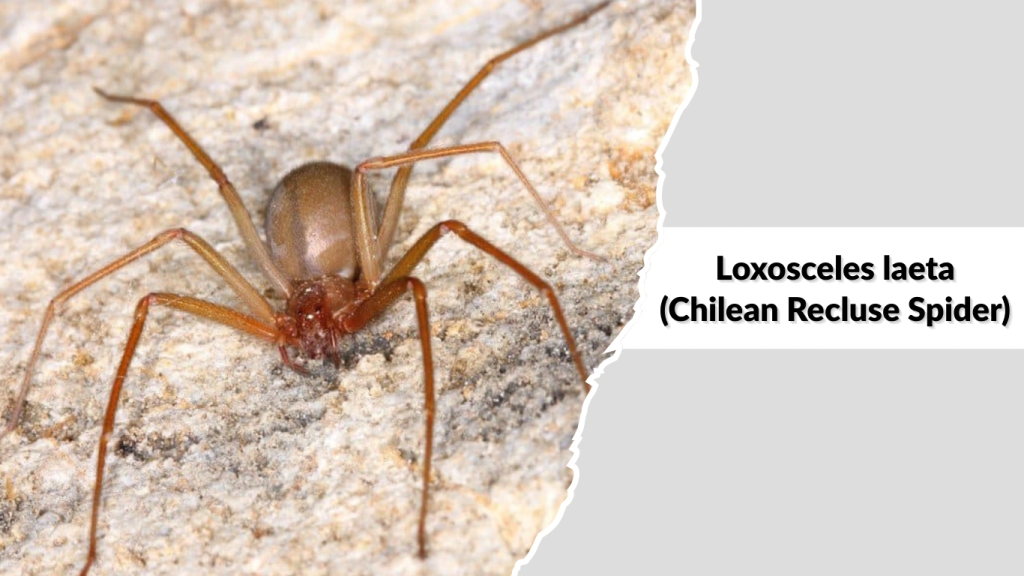
Loxosceles laeta, commonly known as the Chilean recluse spider, is considered one of the most medically significant recluse species. It is native to South America, especially Chile, Peru, and Argentina, but has also been introduced to other regions. This spider is highly reclusive and typically hides in quiet indoor and outdoor spaces during the day.
Identification
- Light to dark brown body color
- Distinct violin-shaped marking on the cephalothorax
- Six eyes arranged in three pairs
- Long, thin legs with fine hairs
- Body length usually around 8–15 mm
Habitat
The Chilean recluse prefers warm, dry environments and often lives inside homes, storage areas, closets, and behind furniture. Outdoors, it may hide under rocks, woodpiles, or debris where it can remain undisturbed.
Behavior
This spider is nocturnal and hunts small insects at night. It does not rely on large webs to catch prey but instead actively searches for food. During the day, it stays hidden in cracks, corners, and other protected spaces.
Bite and Medical Importance
Loxosceles laeta is known for having medically significant venom compared to many other recluse spiders. Although bites are still uncommon, they can sometimes cause serious skin reactions and require medical attention in more severe cases.
9. Loxosceles gaucho (Brazilian Recluse Spider)
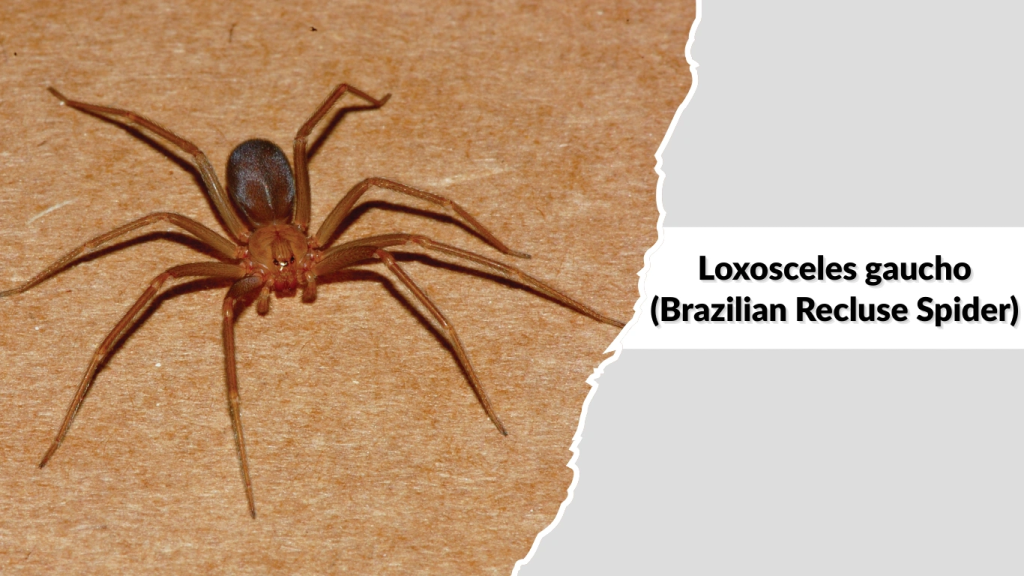
Loxosceles gaucho is a species of recluse spider primarily found in Brazil and parts of South America. It belongs to the same genus as the brown recluse and shares similar characteristics, including a shy nature and preference for quiet environments. This spider is rarely seen because it spends most of the day hiding and becomes active at night.
Identification
- Light brown to reddish-brown body color
- Violin-shaped marking on the cephalothorax
- Six eyes arranged in three pairs
- Long, slender legs with fine hairs
- Body length typically around 8–12 mm
Habitat
The Brazilian recluse often lives in warm environments where it can find sheltered hiding places. It may hide beneath rocks, inside woodpiles, within cracks in walls, or in undisturbed areas of buildings such as storage rooms and basements.
Behavior
This spider is nocturnal and hunts insects and other small arthropods during the night. Instead of building webs to trap prey, it actively searches for food. During the day, it stays hidden in dark and protected areas.
Bite and Medical Importance
Bites from Loxosceles gaucho are uncommon but medically significant when they occur. In some cases, the venom can cause skin lesions or other reactions similar to those caused by other recluse spiders, though most encounters with humans are rare.
10. Loxosceles intermedia (Brazilian Brown Recluse)
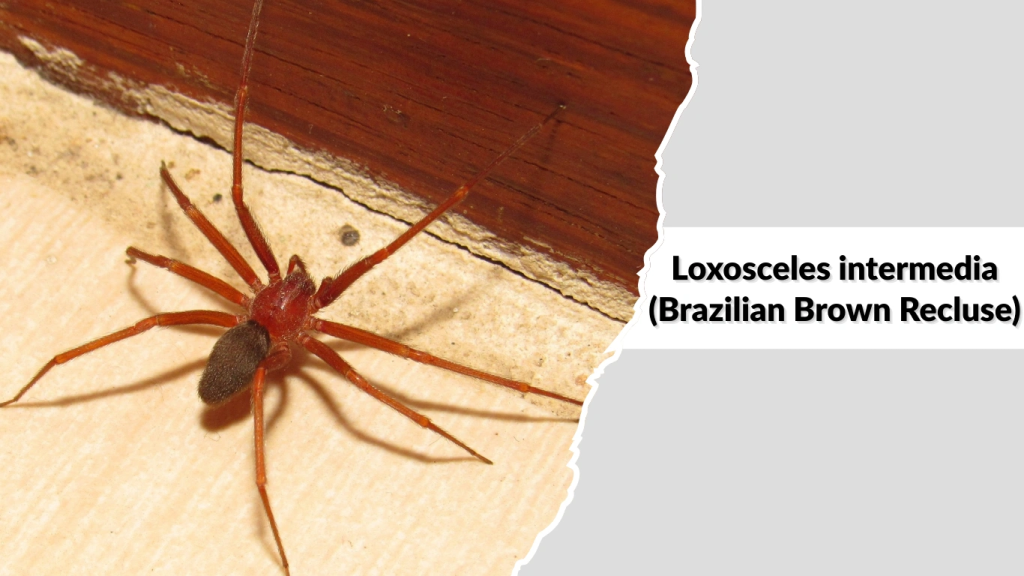
Loxosceles intermedia is another recluse spider species commonly found in Brazil and nearby regions of South America. It is closely related to other medically important recluse spiders and is known for living near human environments. Like other species in the genus, it is shy, avoids human contact, and typically stays hidden during the day.
Identification
- Light brown to dark brown body color
- Distinct violin-shaped marking on the cephalothorax
- Six eyes arranged in three pairs
- Long, slender legs with fine hairs
- Body length usually around 7–12 mm
Habitat
The Brazilian brown recluse prefers warm environments and often lives inside houses, sheds, and storage areas. It may hide behind furniture, inside clothing piles, or within cracks and crevices. Outdoors, it can be found under rocks, logs, or debris.
Behavior
This spider is nocturnal and hunts insects at night. It does not rely on complex webs to catch prey but instead actively searches for insects and other small arthropods. During the daytime, it remains hidden in quiet and undisturbed places.
Bite and Medical Importance
Loxosceles intermedia is considered medically significant because its venom can cause skin reactions in some cases. Although bites are uncommon, they may lead to redness, irritation, or localized tissue damage if they occur.
11. Loxosceles unicolor (Unicolor Recluse Spider)
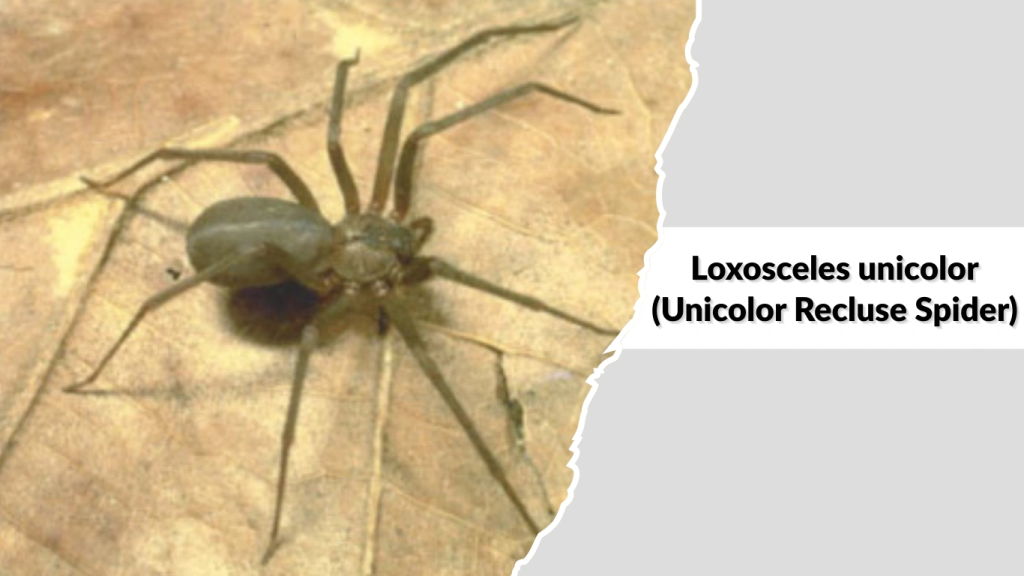
Loxosceles unicolor is a lesser-known species within the recluse spider group. It is primarily found in parts of South America and shares many of the typical characteristics of the Loxosceles genus. Like other recluse spiders, it prefers quiet, undisturbed environments and tends to avoid human contact whenever possible.
Identification
- Uniform light brown body color with minimal markings
- Very faint or nearly absent violin-shaped marking
- Six eyes arranged in three pairs
- Long, slender legs with fine hairs
- Body length typically around 6–10 mm
Habitat
The unicolor recluse spider prefers warm and sheltered environments where it can remain hidden. It is often found beneath rocks, inside cracks, under logs, or within woodpiles. In some cases, it may also enter buildings and hide in storage areas or other quiet spaces.
Behavior
This spider is nocturnal and becomes active at night while hunting small insects and other arthropods. Rather than building webs to capture prey, it actively searches for food. During the day, it remains hidden in protected locations.
Bite and Medical Importance
Bites from Loxosceles unicolor are rarely reported due to the spider’s secretive nature. When bites occur, they are generally similar to those of other recluse spiders and may cause localized irritation or mild skin reactions.
FAQs
Are all brown recluse spiders dangerous to humans?
Not all brown recluse spiders cause serious harm to humans. While their venom can lead to skin irritation or lesions in some cases, most bites are mild. Severe reactions are uncommon and usually depend on factors such as the amount of venom, the bite location, and an individual’s sensitivity.
Where are brown recluse spiders commonly found?
Brown recluse spiders and their relatives are mostly found in the Americas, especially the United States, Mexico, Central America, and South America. Some species, such as the Mediterranean recluse, also live in parts of Europe, North Africa, and the Middle East.
How can you identify a brown recluse spider?
Brown recluse spiders are typically identified by their light to dark brown color, a violin-shaped marking on the cephalothorax, and six eyes arranged in three pairs. Most other spiders have eight eyes, which makes this feature helpful for identification.
Do brown recluse spiders build webs?
Brown recluse spiders do produce silk but do not build large webs to catch prey like many other spiders. Instead, they use silk mainly for shelter and egg sacs. They usually hunt insects at night by actively searching for them.
How can you prevent brown recluse spiders in your home?
To reduce the chance of brown recluse spiders entering your home, keep storage areas organized, seal cracks and gaps in walls or windows, and reduce clutter where spiders can hide. Regular cleaning and removing woodpiles or debris near the house can also help prevent infestations.