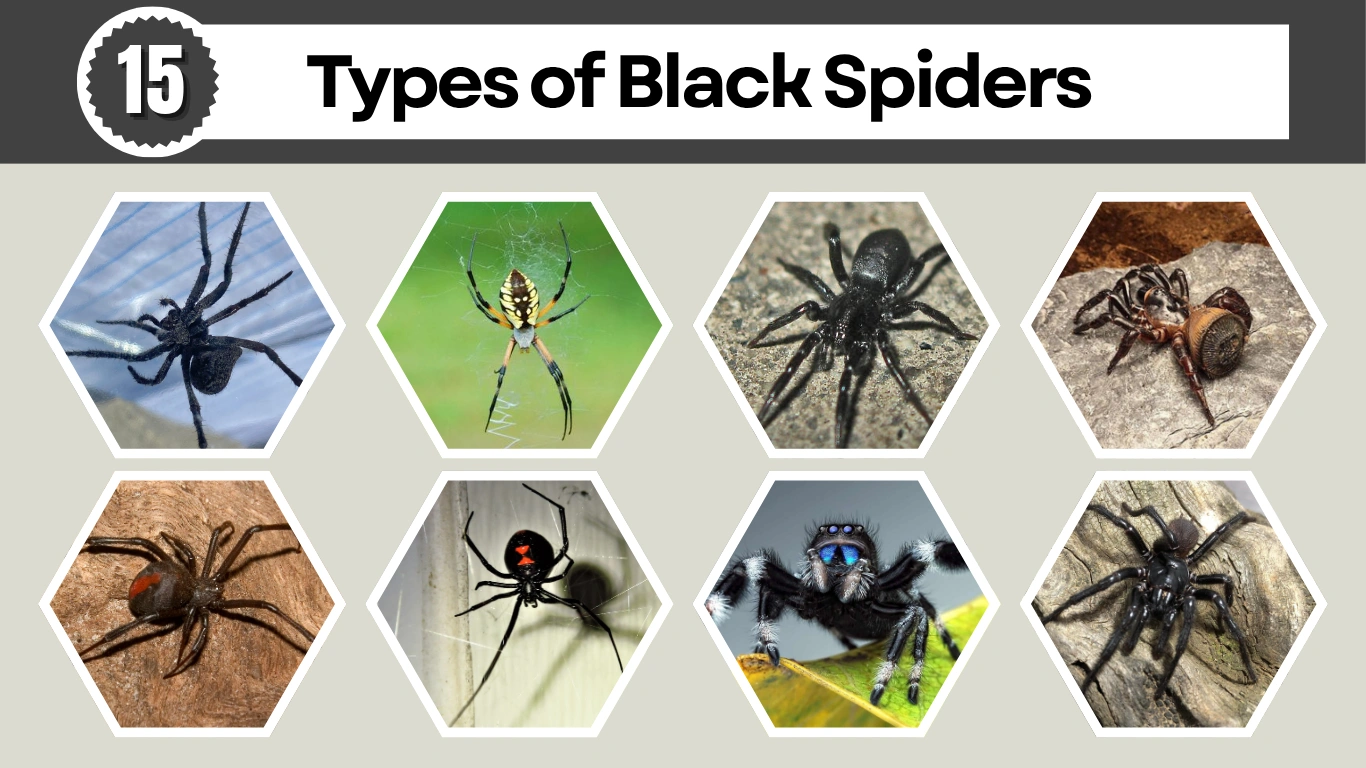
Black spiders are among the most commonly encountered arachnids, known for their shiny appearance and mysterious reputation. While some, like the black widow, are venomous, most black spiders are harmless and even beneficial in controlling insect populations. This guide explores 15 types of black spiders found worldwide — detailing their identification features, habitats, diets, and potential bite risks to help you distinguish between the dangerous and the harmless.
1. Black Widow Spider
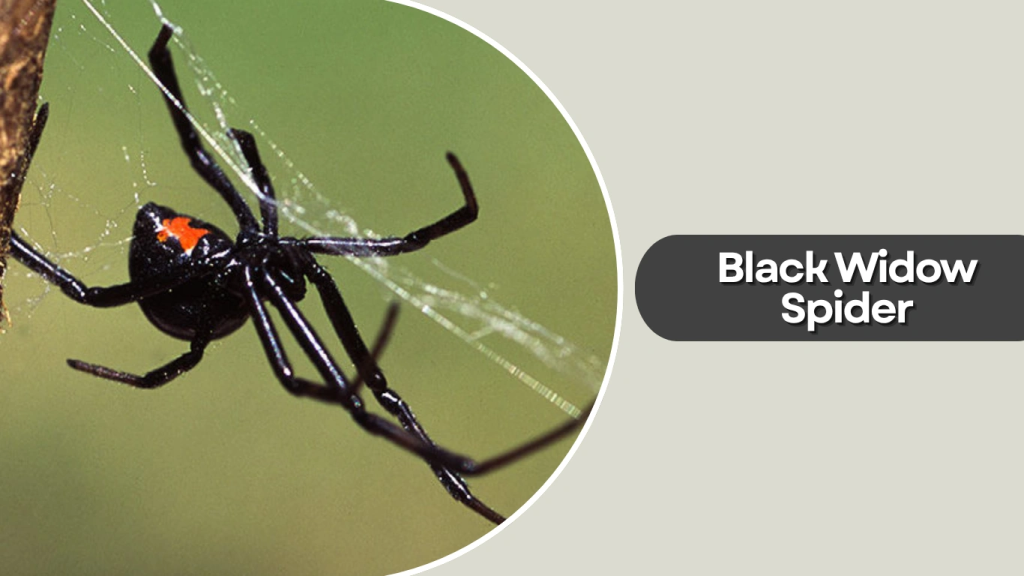
The black widow spider (Latrodectus mactans) is one of the most recognizable and feared spiders in North America. Known for its shiny black body and iconic red hourglass marking, this spider is both striking and misunderstood. Despite its venomous bite, it rarely poses a serious threat when left undisturbed.
Identification
- Scientific Name: Latrodectus mactans
- Color: Glossy black with a red or orange hourglass marking on the underside of the abdomen
- Size: Females about 12–15 mm; males much smaller (around 5 mm)
- Web Type: Irregular, sticky cobwebs
- Legs: Long and thin, appearing glossy and smooth
- Body Shape: Round abdomen with a narrow cephalothorax
Habitat
Black widow spiders prefer dark, sheltered areas such as garages, basements, sheds, and woodpiles. Outdoors, they’re often found under rocks, patio furniture, or garden debris. They are most common in warm climates like the southern and western United States.
Bite & Risk
The bite of a black widow is venomous, containing neurotoxins that can cause severe pain, muscle cramps, and nausea. However, deaths are extremely rare thanks to medical antivenom. Bites occur only in self-defense, typically when the spider is trapped or disturbed.
Diet & Lifecycle
Black widows feed on insects such as flies, beetles, and mosquitoes that get caught in their webs. Females can live up to three years, while males live only a few months. Females produce multiple egg sacs yearly, each containing hundreds of spiderlings.
2. Northern Black Widow
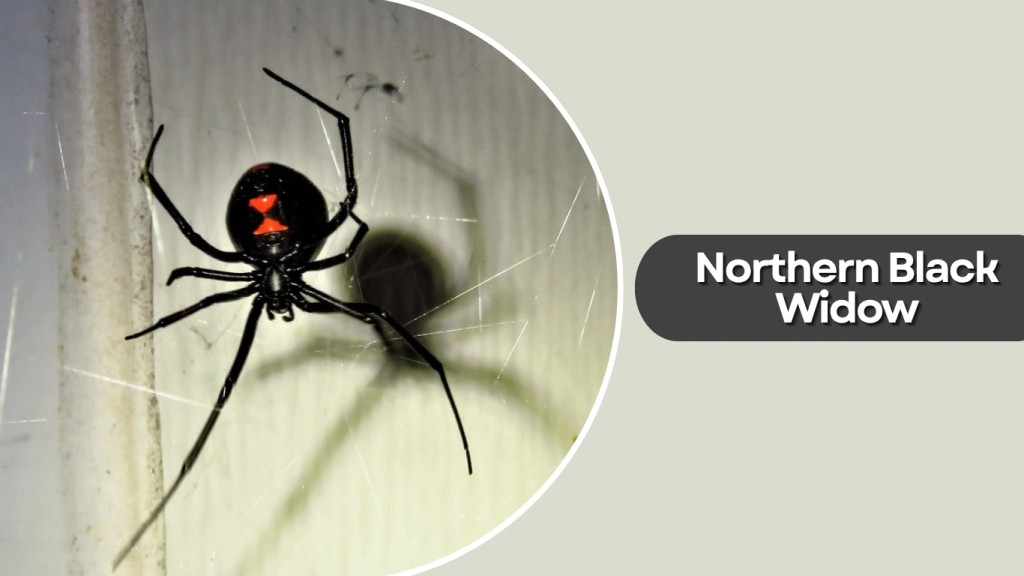
The northern black widow (Latrodectus variolus) is a close relative of the southern black widow, sharing its glossy black appearance but differing in its hourglass pattern. Found mainly in the northeastern and midwestern United States, it’s less aggressive and prefers secluded, dark environments.
Identification
- Scientific Name: Latrodectus variolus
- Color: Jet black with a broken red hourglass or two red spots on the underside of the abdomen
- Size: Females 10–13 mm; males around 5 mm
- Web Type: Irregular, tangled cobwebs built in low, protected spots
- Legs: Long, thin, and glossy
- Body Shape: Spherical abdomen with smooth texture
Habitat
Northern black widows live in wooded areas, sheds, basements, and crawl spaces. Outdoors, they prefer stone walls, piles of logs, or under rocks. They are most active in spring and early summer and are more common in the eastern half of North America.
Bite & Risk
Their venom is potent but rarely fatal, causing symptoms such as muscle cramps, abdominal pain, and sweating. Bites are uncommon and occur only when the spider feels threatened. With prompt medical attention, recovery is quick and complete.
Diet & Lifecycle
These spiders feed on small insects like crickets, flies, and beetles. Females live up to one and a half years, while males live only a few months. After mating, females produce several egg sacs, each containing up to 200 spiderlings that disperse shortly after hatching.
3. Western Black Widow
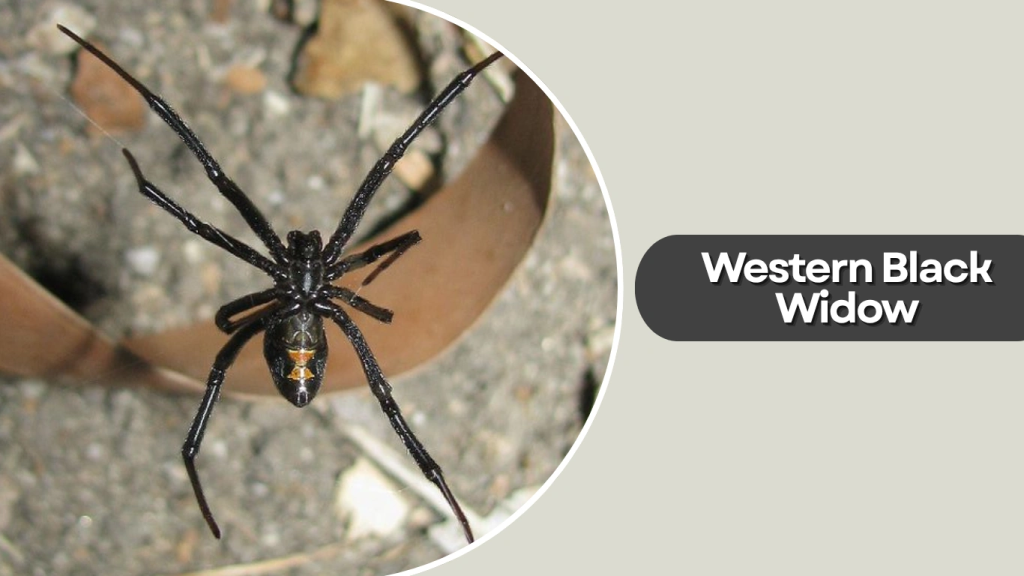
The western black widow (Latrodectus hesperus) is the most widespread widow spider in the western United States. Easily identified by its glossy black body and red hourglass, it is both feared and respected for its potent venom. However, like its relatives, it is shy and non-aggressive.
Identification
- Scientific Name: Latrodectus hesperus
- Color: Shiny black with a solid red hourglass on the underside of the abdomen
- Size: Females about 14 mm; males around 5–6 mm
- Web Type: Tangled, sticky cobwebs built close to the ground
- Legs: Long, smooth, and slender
- Body Shape: Rounded abdomen with glossy sheen
Habitat
Western black widows thrive in dry, sheltered environments, such as garages, woodpiles, sheds, and outdoor furniture. They are found from Canada to Mexico, especially in the U.S. Southwest and along the Pacific coast. They prefer warm climates and rarely venture far from their webs.
Bite & Risk
Their bite is medically significant, delivering neurotoxic venom that can cause muscle stiffness, sweating, and nausea. Fatalities are exceedingly rare. Females are the primary biters, but only when trapped or provoked. Medical treatment ensures a quick recovery.
Diet & Lifecycle
Western black widows feed on ants, beetles, flies, and other small insects. Females live for about three years, while males live less than one. Females produce multiple silk egg sacs containing hundreds of spiderlings each year, which hatch and disperse within weeks.
4. Australian Redback Spider
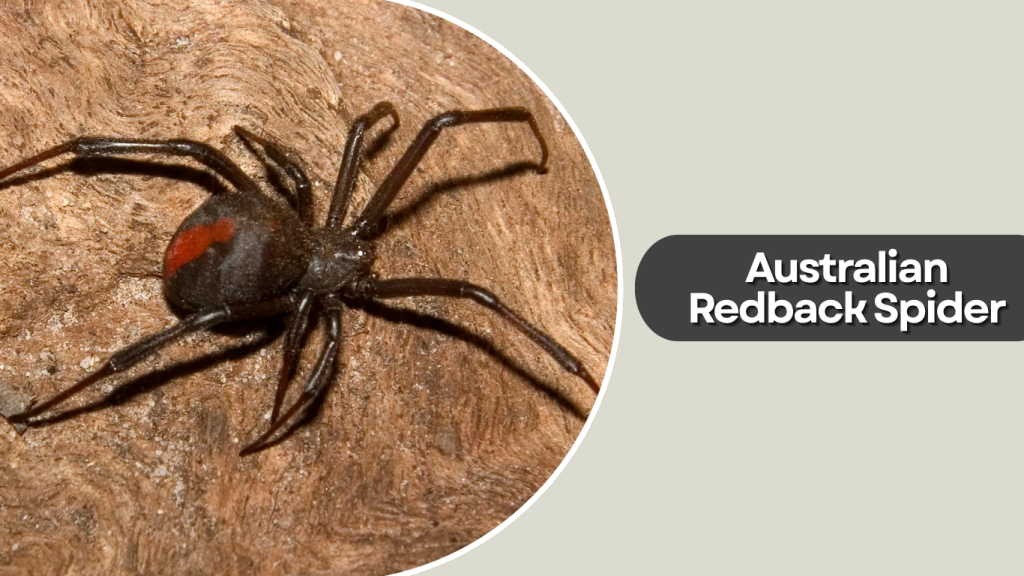
The Australian redback spider (Latrodectus hasselti) is a close relative of the black widow, sharing the same venomous lineage. Recognized by its glossy black body and bright red stripe, it’s one of Australia’s most iconic arachnids and is commonly found in urban areas close to human dwellings.
Identification
- Scientific Name: Latrodectus hasselti
- Color: Jet black with a distinct red dorsal stripe and sometimes a red spot on the underside
- Size: Females 10–12 mm; males 3–4 mm
- Web Type: Irregular, sticky cobwebs built in sheltered corners
- Legs: Slender and glossy black
- Body Shape: Round, bulbous abdomen typical of widow spiders
Habitat
Redback spiders prefer warm, dry environments such as sheds, garages, outdoor toilets, and under furniture. They are widespread throughout Australia and have spread to parts of New Zealand and Asia. They thrive in both rural and suburban settings where shelter and insects are abundant.
Bite & Risk
Their venom is highly toxic, causing pain, sweating, and muscle cramps, but rarely life-threatening. Antivenom is available and widely effective. Only females are dangerous to humans, as males are too small to bite through skin.
Diet & Lifecycle
Redbacks feed on flies, beetles, and small lizards. Females can live for up to two to three years, producing dozens of egg sacs annually. Spiderlings disperse by ballooning—riding the wind on silk strands to new locations.
5. False Widow Spider
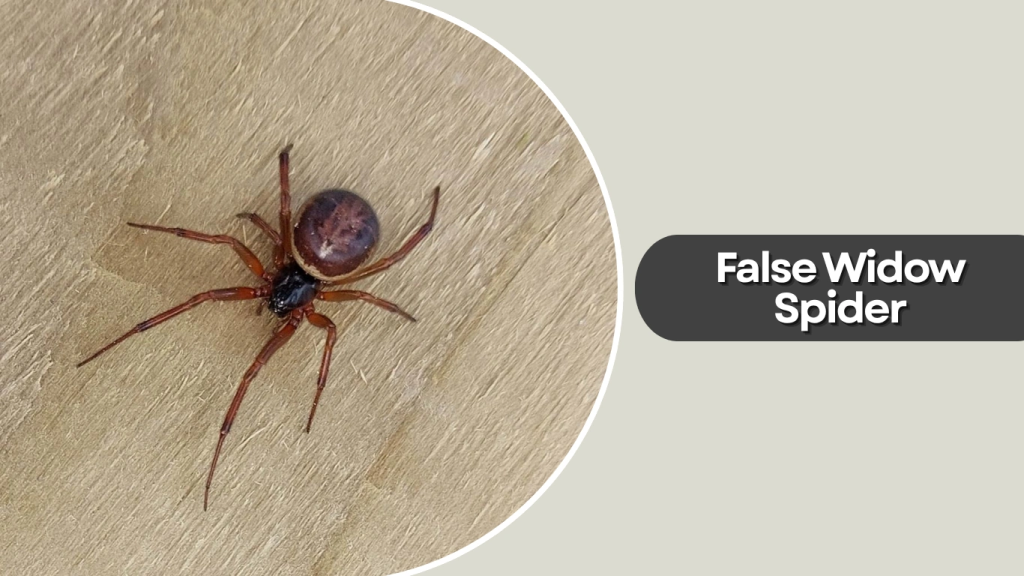
The false widow spider (Steatoda nobilis) is often mistaken for the black widow due to its dark, glossy body and rounded abdomen. Originally from Madeira and the Canary Islands, it’s now common throughout the U.K., Ireland, and parts of North America, particularly in urban homes.
Identification
- Scientific Name: Steatoda nobilis
- Color: Dark brown to black with cream or white markings on the abdomen
- Size: Females up to 14 mm; males around 9 mm
- Web Type: Irregular cobwebs in dark corners
- Legs: Glossy and evenly colored
- Body Shape: Bulbous abdomen resembling the black widow
Habitat
False widows live in attics, garages, sheds, and window frames, often preferring dry, sheltered areas near human habitation. They are particularly common in coastal regions and warmer indoor environments.
Bite & Risk
Their bite is mildly venomous, causing localized pain, redness, or swelling similar to a bee sting. Though some cases have reported temporary discomfort, serious medical issues are extremely rare. They are non-aggressive and bite only when provoked.
Diet & Lifecycle
False widows feed on small insects and occasionally other spiders. Females can live for up to three years, while males live several months. They reproduce year-round in warmer climates, spinning dense silk webs where they capture prey efficiently.
6. Brown House Spider (False Black Widow)
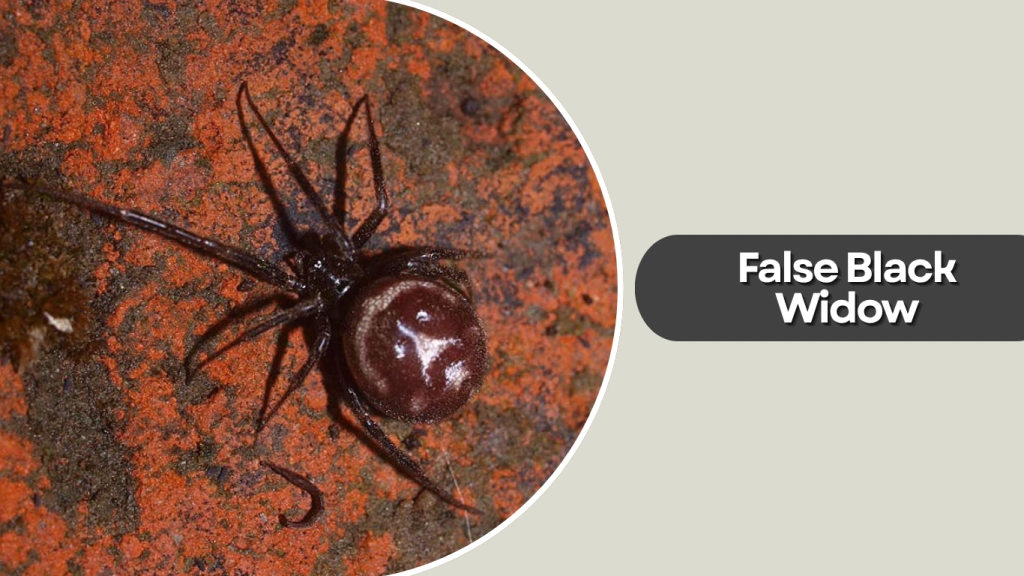
The brown house spider (Steatoda grossa)—often called the false black widow—is a dark, shiny species that closely resembles the true black widow but poses far less danger. It is common in homes throughout North America, Europe, and Australia, especially in quiet, undisturbed areas.
Identification
- Scientific Name: Steatoda grossa
- Color: Dark brown to purplish-black with lighter abdominal markings
- Size: Females up to 10 mm; males smaller
- Web Type: Irregular, messy cobwebs
- Legs: Glossy and dark, sometimes lighter near joints
- Body Shape: Rounded abdomen with smooth, shiny texture
Habitat
Brown house spiders prefer indoor corners, basements, attics, and garages, as well as sheltered outdoor spaces such as fences, sheds, and under eaves. They favor still, dark areas where prey can easily be trapped in their sticky webs.
Bite & Risk
Their bite is mild and non-lethal, sometimes causing minor swelling or redness. It is often compared to a bee sting in discomfort level. These spiders are shy, rarely bite humans, and retreat quickly when disturbed.
Diet & Lifecycle
Brown house spiders feed on small insects and other spiders caught in their webs. Females can live up to two years, producing multiple egg sacs annually. Their webs may be reused and expanded, forming dense silk structures over time.
7. Black House Spider
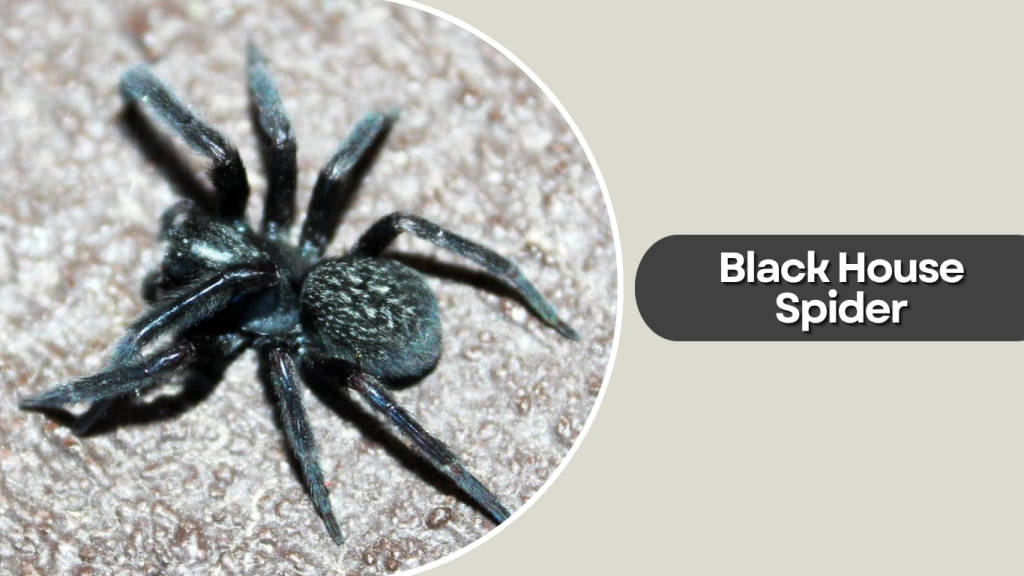
The black house spider (Badumna insignis) is a robust and velvety dark spider native to Australia but now found in parts of New Zealand and North America. Known for its funnel-shaped webs, it prefers sheltered environments both indoors and outdoors.
Identification
- Scientific Name: Badumna insignis
- Color: Dark brown to jet black with a velvety sheen
- Size: Females up to 18 mm; males about 9 mm
- Web Type: Messy funnel-shaped web with a central retreat
- Legs: Strong, dark legs covered with fine hairs
- Body Shape: Compact and rounded abdomen
Habitat
Black house spiders live in window frames, corners, sheds, and wall crevices. They are often found around human homes, particularly in coastal and urban areas. They prefer low-traffic spaces and remain in the same web for extended periods.
Bite & Risk
Their bite can cause localized pain and swelling, but symptoms are usually mild. In rare cases, mild nausea or dizziness may occur. They are defensive rather than aggressive and will retreat into their web when threatened.
Diet & Lifecycle
Black house spiders feed on insects such as flies, mosquitoes, and moths. Females can live for several years and are known to maintain and repair their webs frequently. They produce multiple egg sacs each season, keeping the population steady in homes and gardens.
8. Bold Jumping Spider
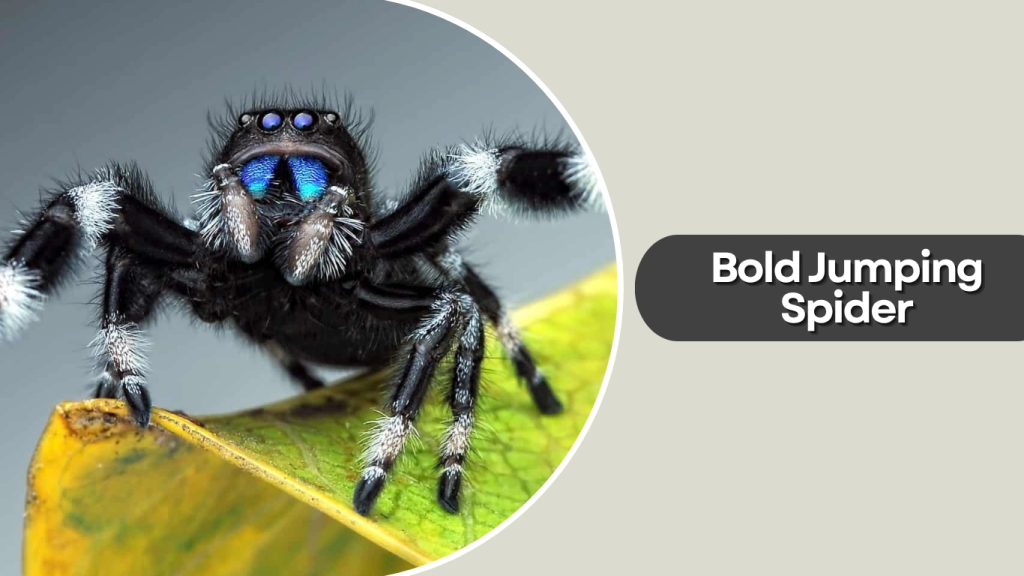
The bold jumping spider (Phidippus audax) is a small yet charismatic species recognized for its shiny black body and bright iridescent markings. Despite their fierce appearance, these spiders are harmless and often found exploring walls, ceilings, and gardens in search of prey.
Identification
- Scientific Name: Phidippus audax
- Color: Jet black with white or orange spots on the abdomen and metallic green or blue chelicerae
- Size: 8–18 mm depending on sex
- Web Type: No hunting web; builds silk retreats for resting or egg sacs
- Legs: Short, thick, and covered in fine hairs for jumping
- Body Shape: Compact, with large forward-facing eyes for vision
Habitat
Bold jumping spiders thrive in sunny indoor or outdoor spaces, including walls, windowsills, and gardens. They are common throughout North America and prefer areas where insects are abundant. They don’t build webs for catching prey but instead stalk and leap onto their targets.
Bite & Risk
Their bite is harmless to humans, rarely causing more than slight redness or itching. They are curious rather than aggressive and often watch movement with their large, expressive eyes. They are valuable pest controllers around the home.
Diet & Lifecycle
These spiders hunt flies, moths, and other small insects. Females lay silk-covered egg sacs in hidden spots and guard them until hatching. Bold jumping spiders typically live for about one year, with females slightly outliving males.
9. Daring Jumping Spider
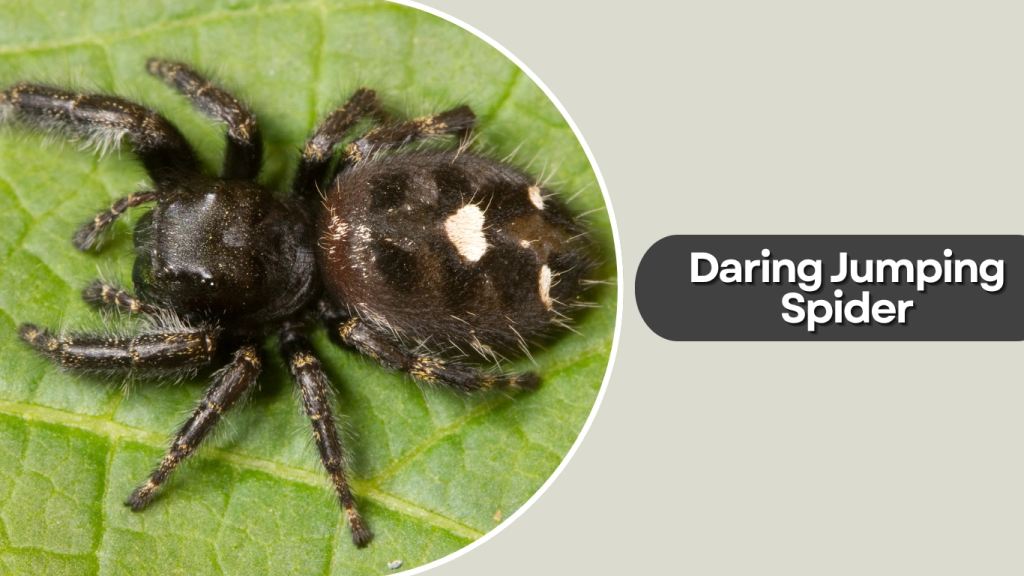
The daring jumping spider (Phidippus regius) is a larger cousin of the bold jumper, known for its striking black body and bright blue-green iridescent fangs. Agile and intelligent, it’s one of the most visually striking black spiders found in homes and gardens across the southern United States.
Identification
- Scientific Name: Phidippus regius
- Color: Shiny black with white or metallic blue markings
- Size: Females up to 18 mm; males about 13 mm
- Web Type: No capture web; spins silk retreats for rest and protection
- Legs: Thick and hairy, adapted for leaping
- Body Shape: Stocky with large forward eyes and smooth cephalothorax
Habitat
Daring jumping spiders live in window corners, attics, porches, and gardens. They prefer sunny, open spaces and are most common in southeastern states such as Florida and Georgia. They often build silk shelters in hidden crevices.
Bite & Risk
Their bite is rare and non-threatening, producing only minor itching or redness. They are more likely to retreat than bite. Their excellent eyesight and agility make them fascinating to observe and beneficial for natural pest control.
Diet & Lifecycle
These spiders prey on flies, ants, and moths, which they capture through precise leaps. Females create multiple egg sacs during their one-year lifespan, guarding them until the spiderlings emerge. Daring jumpers are active hunters and excellent climbers.
10. Trapdoor Spider
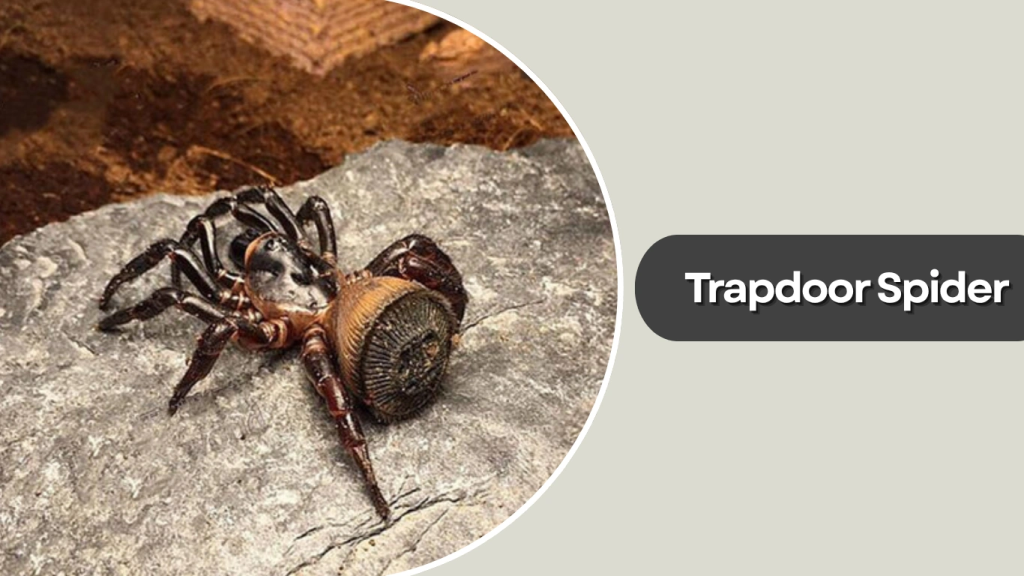
The trapdoor spider (Ctenizidae family) is a fascinating ground-dwelling species known for its stealth and strength. Although it’s usually dark brown or black, its shiny, armored appearance and secretive habits make it one of the most unique black spiders found near human homes.
Identification
- Scientific Name: Ctenizidae family
- Color: Dark brown to black, with a glossy cephalothorax
- Size: 15–30 mm depending on species and sex
- Web Type: Builds burrows lined with silk and covered by a hinged “trapdoor”
- Legs: Thick and strong for digging
- Body Shape: Sturdy, compact body with short, powerful fangs
Habitat
Trapdoor spiders live in underground burrows, gardens, and forested areas. They’re most common in warm, humid regions like the southern United States and Australia. Occasionally, they may wander indoors during heavy rain or while searching for mates.
Bite & Risk
Their bite is not medically dangerous, though it can cause mild pain or swelling. Trapdoor spiders are defensive rather than aggressive and usually retreat quickly into their burrows when disturbed.
Diet & Lifecycle
Trapdoor spiders feed on beetles, ants, and small ground-dwelling insects. They ambush prey by bursting from their burrow when vibrations are detected. Females can live for over 10 years, while males usually die shortly after mating.
11. Black Lace-Weaver Spider
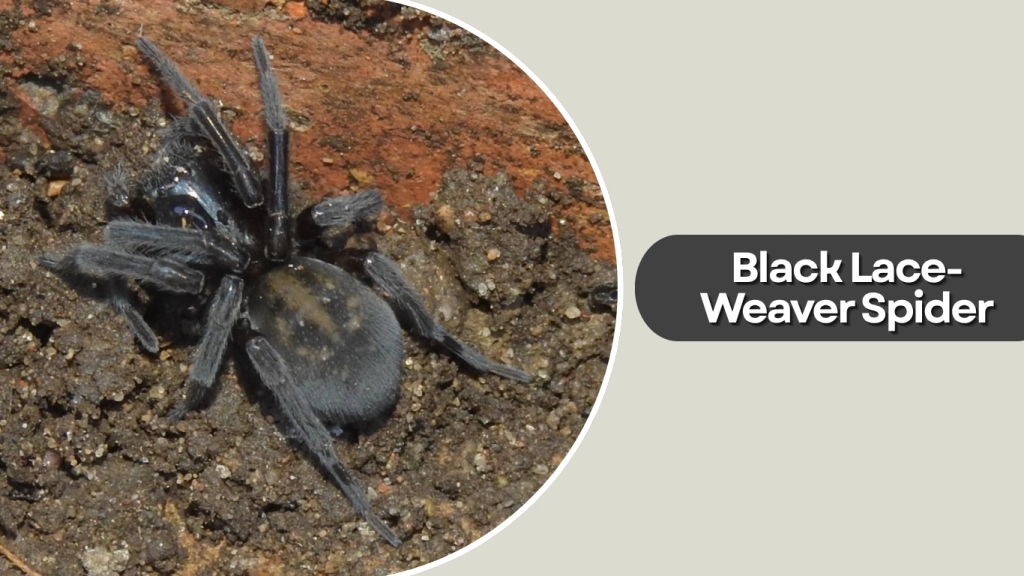
The black lace-weaver spider (Amaurobius ferox) is a dark, velvety spider often found in old buildings, sheds, and outdoor walls. Its name comes from its lace-like web structure, which looks delicate but is incredibly strong. It is common throughout Europe and parts of North America.
Identification
- Scientific Name: Amaurobius ferox
- Color: Dark brown to black with reddish legs and a mottled abdomen
- Size: 8–12 mm in body length
- Web Type: Lace-like, irregular webs made of woolly silk
- Legs: Short, thick, and slightly glossy
- Body Shape: Oval abdomen with faint light patches
Habitat
Black lace-weaver spiders prefer damp, shaded environments such as cellars, basements, and garden walls. They are nocturnal and build their webs close to the ground or inside cracks in wood or stone.
Bite & Risk
Their bite is harmless, causing only mild irritation if it occurs. They are reclusive by nature and rarely leave their webs. Because they are nocturnal, they are seldom seen during the day.
Diet & Lifecycle
These spiders feed on woodlice, beetles, and small insects caught in their sticky webs. Females can live for up to two years and are known for maternal care, often guarding their egg sacs until the spiderlings hatch. Males die shortly after mating.
12. Black Funnel-Web Spider
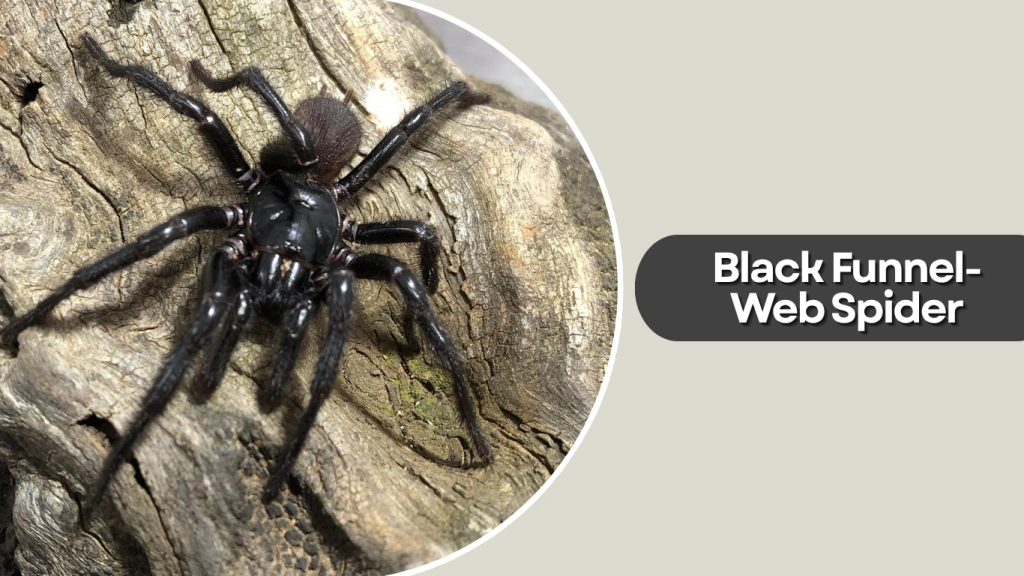
The black funnel-web spider (Atrax robustus) is one of the most feared spiders in the world due to its powerful venom. Native to Australia, this glossy black arachnid builds tunnel-like webs and prefers cool, damp places. Despite its reputation, bites are extremely rare thanks to awareness and available antivenom.
Identification
- Scientific Name: Atrax robustus
- Color: Jet black or dark brown with a glossy carapace
- Size: Females up to 35 mm; males around 25 mm
- Web Type: Funnel-shaped web with a silk-lined burrow
- Legs: Strong and shiny with prominent fangs
- Body Shape: Robust with a thick cephalothorax and rounded abdomen
Habitat
Black funnel-web spiders inhabit moist forests, gardens, and urban areas in eastern Australia, particularly New South Wales. They often hide under logs, stones, or garden debris and occasionally wander indoors during the rainy season.
Bite & Risk
Their bite is highly venomous and can cause serious symptoms such as muscle twitching, nausea, and difficulty breathing. However, thanks to prompt treatment and effective antivenom, fatalities are virtually nonexistent today. Males are more likely to bite as they roam in search of mates.
Diet & Lifecycle
These spiders feed on insects, snails, and small reptiles. Females live for up to 10 years, staying close to their burrows, while males live for a few months after maturity. They are ambush predators, attacking swiftly when prey triggers the silk trip lines near their burrow entrance.
13. Black Ground Spider
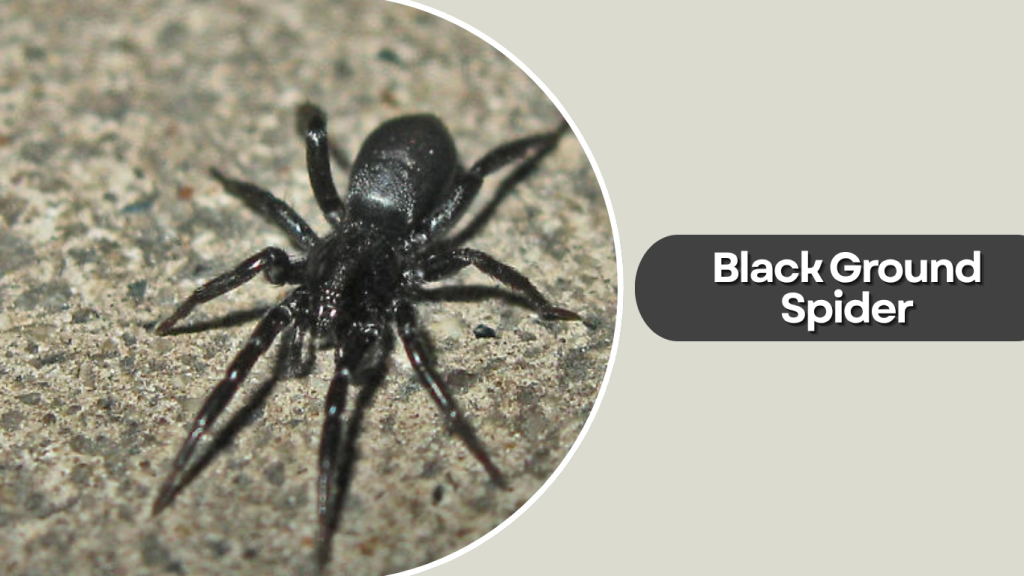
The black ground spider (Gnaphosidae family) is a nocturnal hunter found in homes, gardens, and grassy areas. Its sleek, dark body and fast movements make it easily mistaken for more dangerous spiders, but it is completely harmless and beneficial to have around.
Identification
- Scientific Name: Gnaphosidae family
- Color: Matte black or dark gray
- Size: 10–15 mm in body length
- Web Type: No capture web; uses silk for retreats and egg sacs
- Legs: Long, agile, and slightly flattened for fast running
- Body Shape: Narrow, elongated body with pear-shaped abdomen
Habitat
Black ground spiders prefer ground-level environments, such as under rocks, logs, and leaf litter. Indoors, they can be found along baseboards or in basements, especially during cooler months. They are widespread across North America and Europe.
Bite & Risk
Their bite is non-venomous to humans, producing little more than a small red mark. These spiders are shy and avoid confrontation, quickly retreating if disturbed.
Diet & Lifecycle
They hunt small insects like ants and beetles using stealth and speed rather than webs. Females lay eggs in silk sacs hidden under debris. Black ground spiders typically live for one to two years, actively hunting during warm months and becoming less active in winter.
14. Black and Yellow Garden Spider
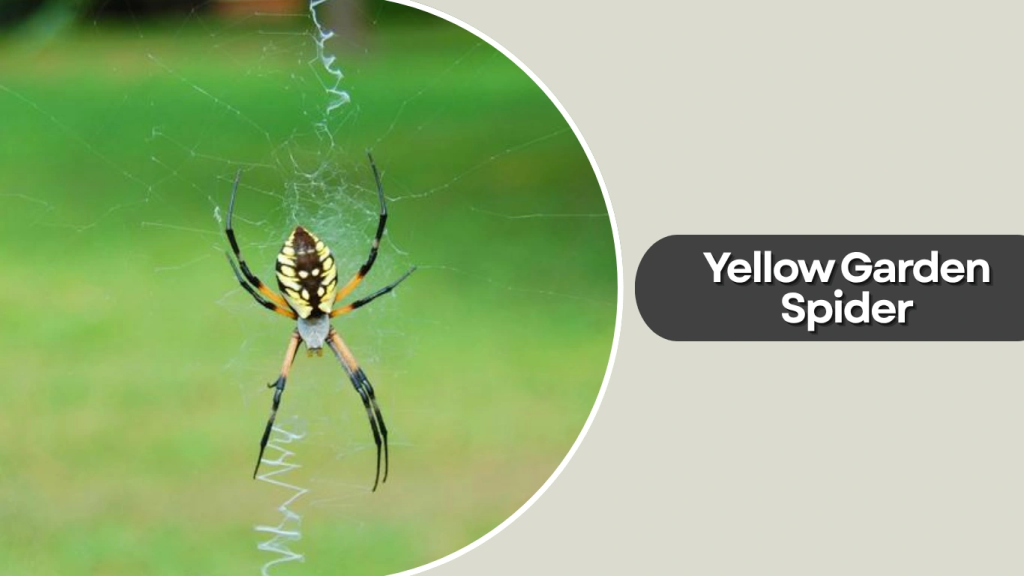
The black and yellow garden spider (Argiope aurantia) is a striking orb-weaver known for its bold coloration and large, circular webs. Often seen in gardens and around homes during summer, this species is harmless and beneficial, helping to keep pest insect populations under control.
Identification
- Scientific Name: Argiope aurantia
- Color: Bright yellow and black body with silver hairs on the cephalothorax
- Size: Females up to 25 mm; males around 8 mm
- Web Type: Large circular orb web with a white zigzag “stabilimentum” in the center
- Legs: Long and banded, often held in an “X” position
- Body Shape: Rounded abdomen with vivid contrasting colors
Habitat
Black and yellow garden spiders live in gardens, fields, porches, and near homes, especially where flying insects are abundant. They prefer sunny, open spaces and attach their webs between tall plants, fences, or shrubs.
Bite & Risk
Their bite is harmless to humans, causing only mild pain or redness if provoked. They are docile and rarely bite unless trapped. Garden spiders are valuable to ecosystems because they prey on many pest insects.
Diet & Lifecycle
They feed primarily on flies, mosquitoes, and grasshoppers caught in their webs. Females live through one breeding season, laying egg sacs in autumn before dying. Spiderlings hatch in spring and disperse to start their own webs.
15. Black Orb-Weaver Spider
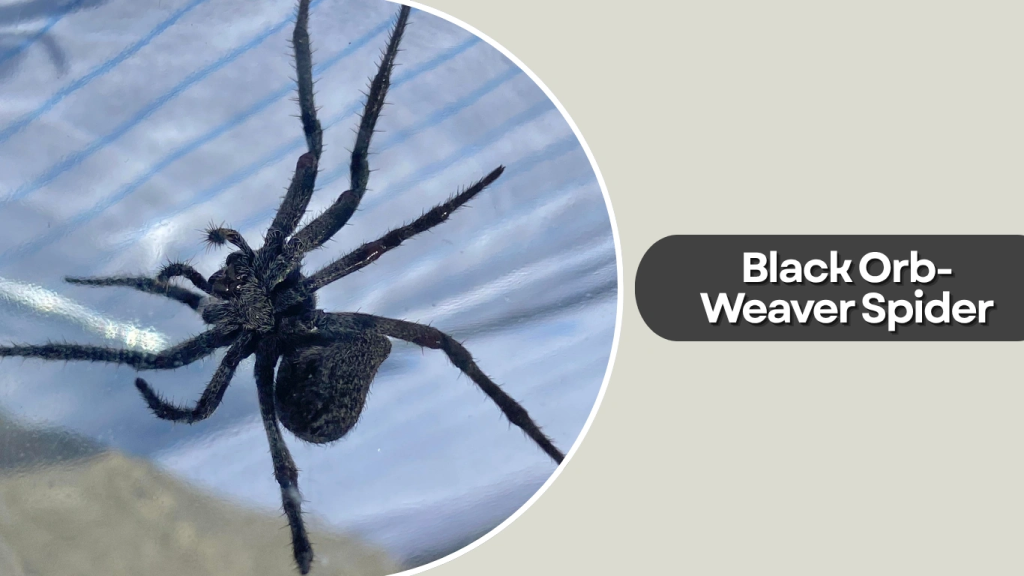
The black orb-weaver spider (Araneus cavaticus) is a dark, secretive web-builder commonly found near buildings, porches, and barns. Although less colorful than other orb-weavers, its large, intricate webs and calm nature make it a familiar sight in temperate regions.
Identification
- Scientific Name: Araneus cavaticus
- Color: Dark brown to black with subtle white or gray markings
- Size: Females up to 20 mm; males smaller
- Web Type: Circular orb webs built between walls, fences, and vegetation
- Legs: Stout and hairy, often darker near the joints
- Body Shape: Rounded abdomen with faint patterning
Habitat
Black orb-weavers prefer sheltered outdoor areas such as barns, sheds, porches, and under eaves. They are widespread in North America and Europe and often rebuild their webs nightly to capture flying insects.
Bite & Risk
Their bite is not dangerous, causing only mild irritation. They are peaceful and avoid human contact. Because they stay outdoors, bites are extremely rare.
Diet & Lifecycle
These spiders prey on moths, mosquitoes, and small flying insects that become ensnared in their webs. Females live for one to two years, laying several egg sacs before dying in winter. Spiderlings emerge in spring and quickly disperse to new locations.