
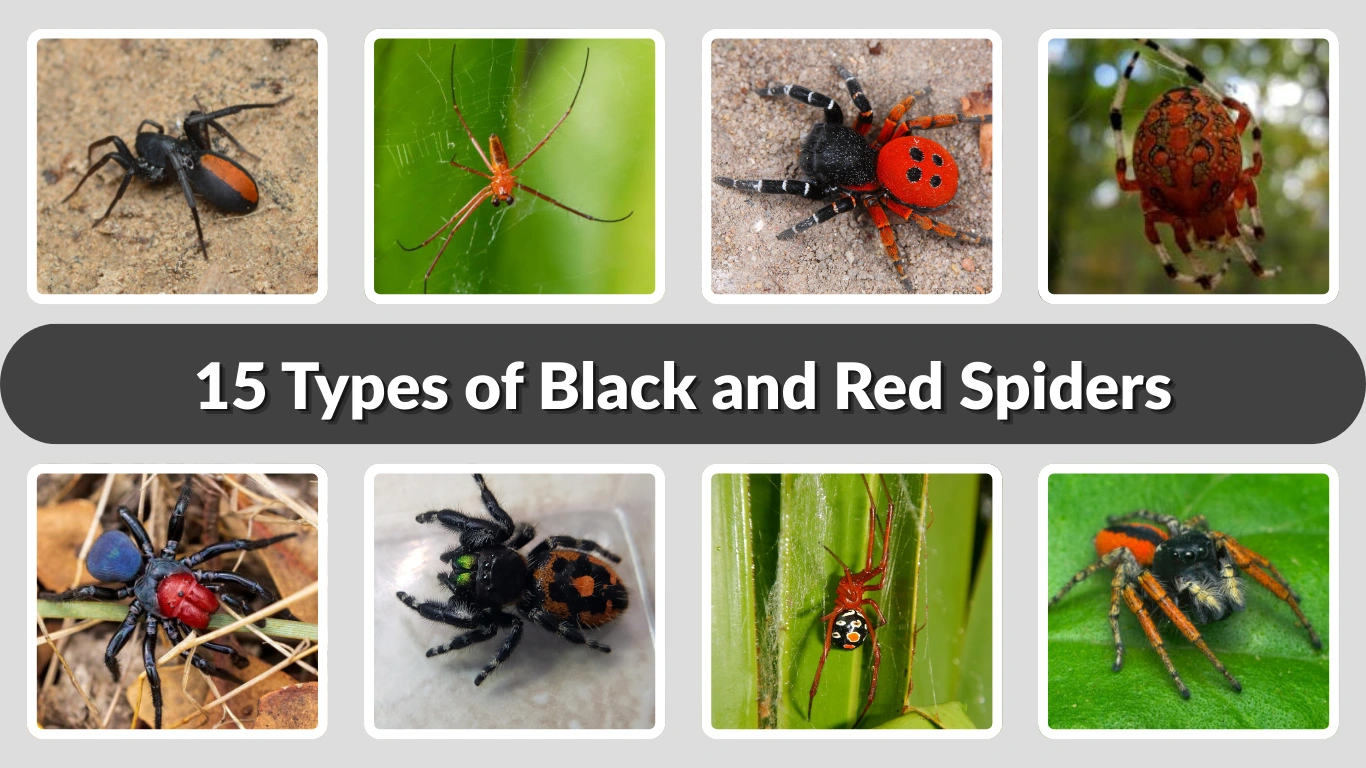
Black-and-red spiders are among the most frequently reported due to their bold colors and often intimidating appearance. Many species share this striking pattern—from harmless jumping spiders to medically significant widow species. In most cases, these spiders rely on coloration for camouflage or warning signals rather than aggression. Understanding how to identify them, where they live, and the real risks they pose helps reduce fear and ensures safe coexistence.
1. Red-Backed Jumping Spider (Phidippus johnsoni)
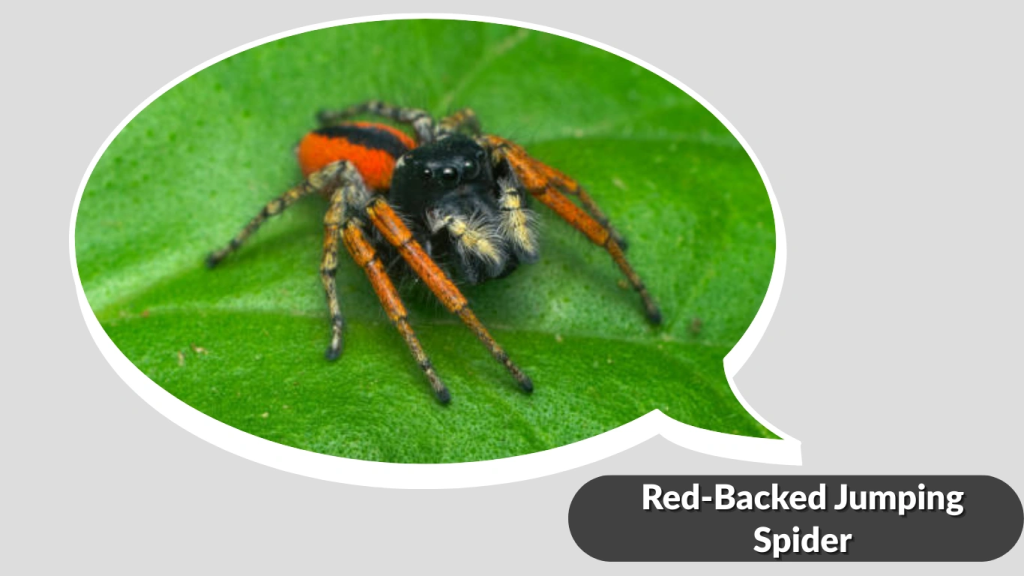
A striking black-and-red jumping spider found across western North America. Known for its bright red abdomen and energetic movements, this species is one of the most commonly mistaken spiders for venomous types, though it is generally harmless to humans.
Identification
- Black cephalothorax with metallic sheen
- Bright red to orange abdomen (sometimes solid, sometimes patterned)
- Short, dense, fuzzy body hair
- Large front eyes typical of jumping spiders
- Compact legs with darker coloration
- Body length: 8–15 mm
Habitat
The red-backed jumping spider prefers dry, open habitats such as deserts, sagebrush areas, rocky outcrops, and sunny garden spaces. It often hides under stones, logs, or human-made debris and frequently builds silk retreats in protected crevices.
Behaviors
This species is active and visually oriented, relying on its excellent eyesight for hunting. Rather than using webs to trap prey, it stalks and pounces on insects with precision. Males perform energetic leg-waving and body-bobbing courtship dances. They are curious and may approach humans but do not act aggressively.
Bite & Risk
Bites from Phidippus johnsoni are rare and typically occur only if the spider is trapped against the skin. Symptoms are mild—similar to a bee sting—and may include redness, slight swelling, or temporary discomfort. The species is not dangerous to humans and is considered medically harmless.
2. Bold Jumping Spider – Red Morph (Phidippus audax)
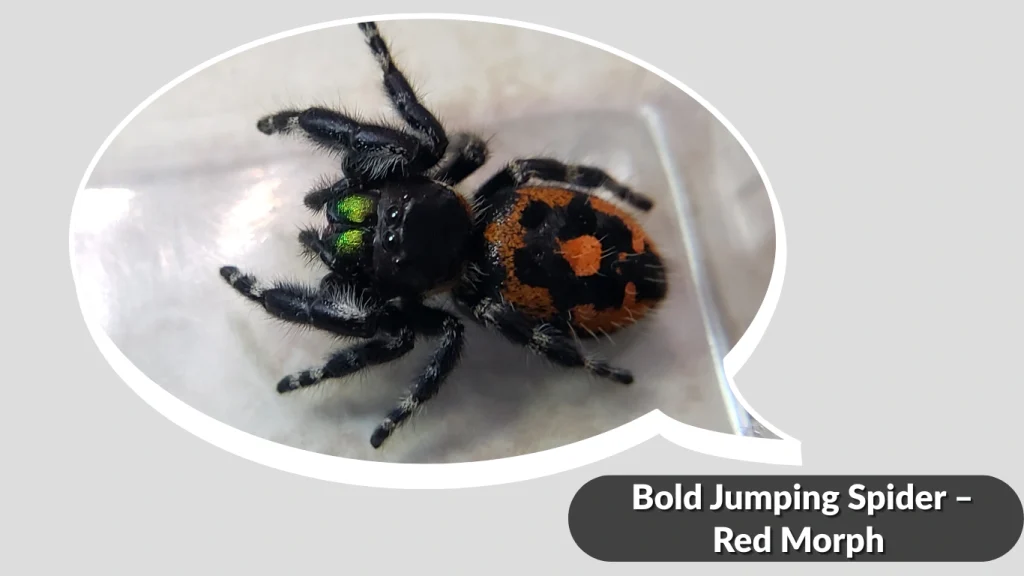
A common North American jumping spider known for its bold patterns and occasional red-marked abdominal variations. This species is active, curious, and easily recognized by its iridescent green or blue chelicerae.
Identification
- Black, fuzzy body with stout legs
- Abdomen may show red, orange, or reddish-brown spots instead of typical white
- Metallic green or blue fangs
- Large forward-facing eyes
- Body length: 6–13 mm
Habitat
This spider thrives in grasslands, gardens, forests, agricultural fields, and human-made structures. It shelters under bark, stones, outdoor equipment, and corners of buildings, using small silk retreats for resting and molting.
Behaviors
Bold jumping spiders actively hunt rather than web-trap. They use excellent vision to stalk and leap onto prey. Curious by nature, they may approach people but remain non-aggressive. Males perform distinctive leg and body movements during courtship.
Bite & Risk
Bites are rare and medically mild, typically causing brief redness or localized swelling. The species is not dangerous, and its venom poses minimal risk to humans.
3. Red Widow (Latrodectus bishopi)
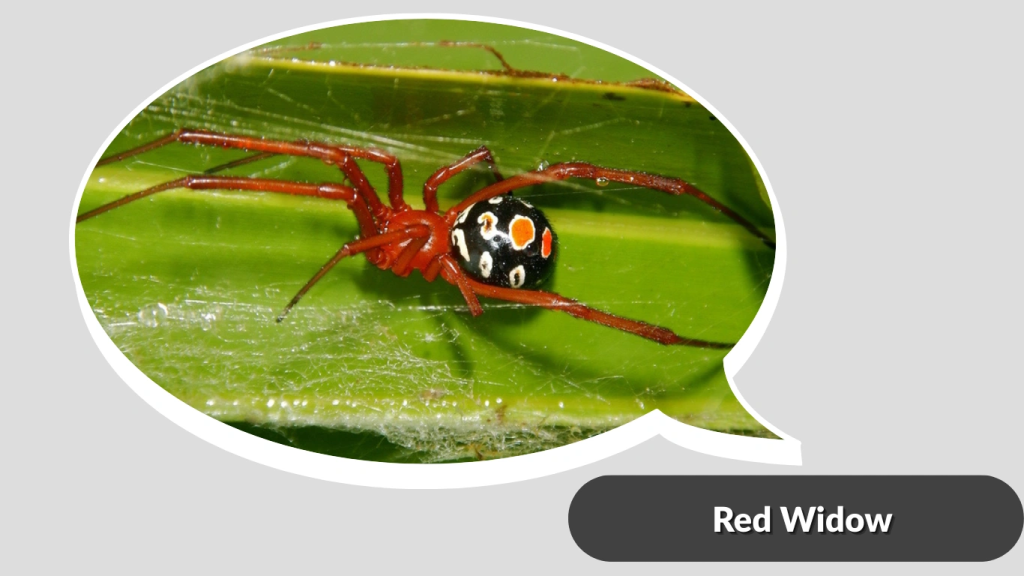
A rare and striking widow spider with a bright red-orange upper body and long black legs, found primarily in Florida scrub habitats. Known for its unique color pattern and close relation to the black widow.
Identification
- Bright red or orange cephalothorax
- Long, slender black legs
- Abdomen usually black with red or orange markings
- Female larger than male
- Body length: 13–15 mm (females), smaller males
Habitat
The red widow is native to Florida’s sand-pine scrub ecosystems. It builds irregular tangle webs among palmetto fronds, shrubs, and low vegetation. Its highly specific habitat requirements make it less commonly encountered than other widow species.
Behaviors
This species builds a messy-style snare web with a funnel-like retreat. Females remain in or near the web, capturing insects that wander into the snare. They are shy, reclusive, and avoid open areas. Males roam during mating periods in search of receptive females.
Bite & Risk
As a true widow species, its bite can be medically significant, causing muscle pain, sweating, nausea, and cramping (latrodectism). Bites, however, are extremely rare due to the spider’s secretive nature and limited range. Medical attention is recommended if bitten.
4. Black Widow (Latrodectus mactans)
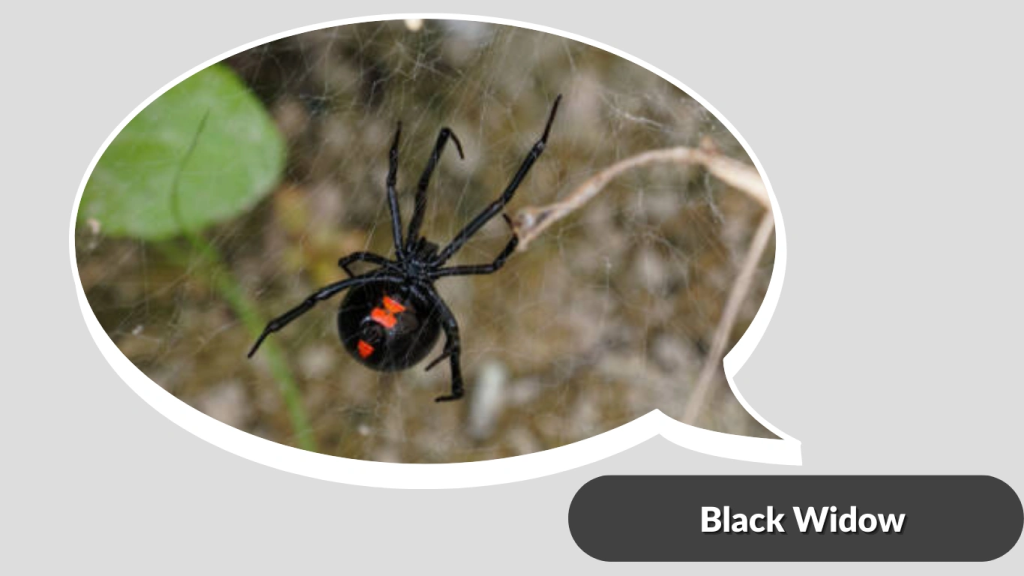
A well-known venomous spider recognized by its glossy black body and distinctive red hourglass marking. Found across much of North America, it prefers dark, sheltered areas close to human structures.
Identification
- Shiny black body
- Distinct red hourglass on underside of abdomen
- Round, bulbous abdomen
- Long, thin black legs
- Body length: 8–13 mm (females), smaller males
Habitat
Black widows inhabit woodpiles, sheds, garages, garden equipment, crawl spaces, and undisturbed corners. Outdoors they hide beneath rocks, logs, and debris. They build irregular tangle webs in dry, sheltered, low-light areas where prey often wanders through.
Behaviors
Females tend to remain within their webs, waiting for insects to become entangled. They are shy, nocturnal, and avoid confrontation. Males travel in search of mates and rarely bite. Widows rely on sticky, chaotic webs rather than active hunting.
Bite & Risk
The bite can cause severe symptoms, including muscle cramps, back pain, sweating, and nausea due to neurotoxic venom. Fatalities are extremely rare with modern medical care. Bites happen only when the spider is pressed or disturbed. Medical evaluation is advised if bitten.
5. Red-Kneed Tarantula (Brachypelma smithi)
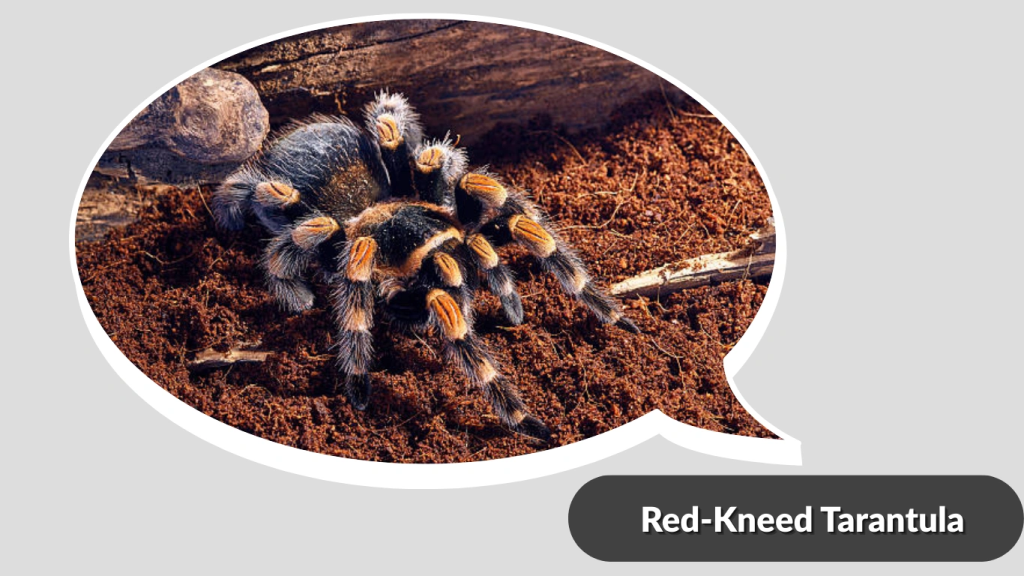
A large, visually striking tarantula known for its black body and bright red or orange knee joints. Popular in the pet trade and native to Mexico’s Pacific coast regions.
Identification
- Black, robust, hairy body
- Distinct red or orange patches on the knee joints
- Thick legs with tan-to-orange segment bands
- Body length: 4–6 inches (including leg span)
- Heavy-bodied appearance typical of tarantulas
Habitat
This species inhabits dry scrublands, thorn forests, and semi-desert regions. It lives in burrows—either self-dug or naturally occurring—which it lines with silk. They prefer stable temperatures, low humidity, and sheltered underground retreats.
Behaviors
Red-kneed tarantulas are slow-moving, calm, and mostly nocturnal. They ambush insects and small animals near their burrow entrances. When threatened, they may rear up or kick urticating hairs as a defense. They spend most of their lives hidden underground.
Bite & Risk
Their bite is rarely dangerous and typically comparable to a bee sting. Mild pain, redness, or swelling may occur. The urticating hairs they release can cause itching or irritation if they contact skin or eyes. Overall, the species poses low medical risk to humans.
6. Red-Headed Mouse Spider (Missulena occatoria)
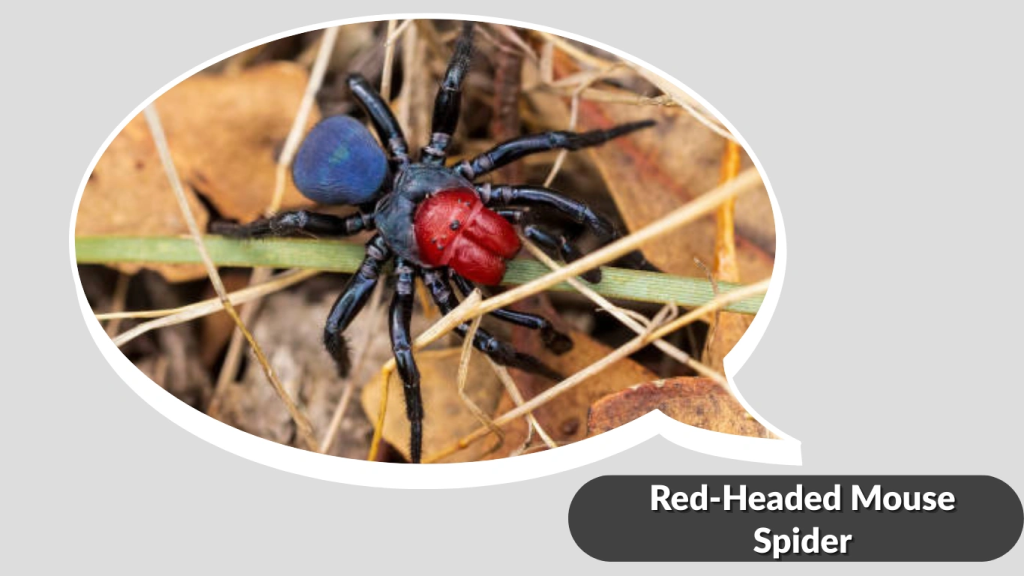
A burrowing mygalomorph spider with a bright red head and glossy black body. Often confused with funnel-web spiders due to its robust build but generally less dangerous.
Identification
- Bright red or crimson head and chelicerae
- Shiny black abdomen and legs
- Thick, powerful front fangs
- Stocky, ground-dwelling body shape
- Body length: 10–35 mm depending on sex
Habitat
Red-headed mouse spiders prefer dry, open environments such as scrublands, grasslands, and arid zones. They construct burrows with trapdoor-like entrances or silk-lined tunnels. These spiders stay hidden underground during hot daytime hours.
Behaviors
This species is largely solitary and spends most of its life inside burrows. Females rarely leave their tunnels, while males roam in search of mates during cooler seasons. They rely on a sit-and-wait hunting strategy, grabbing prey that crosses their burrow entrance.
Bite & Risk
Although related to some medically significant Australian spiders, mouse spider bites are infrequent. Most recorded bites result in mild to moderate pain, swelling, or local irritation. Severe symptoms are possible but rare. Medical evaluation is recommended if symptoms escalate.
7. Australian Redback Spider (Latrodectus hasselti)
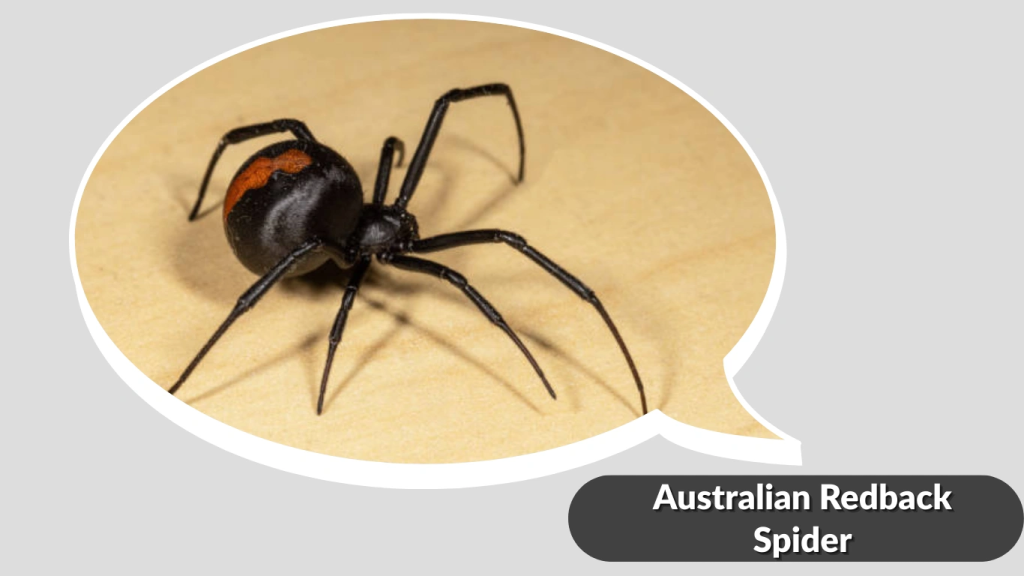
A close relative of the black widow, easily recognized by its glossy black body and bright red dorsal stripe. Common across Australia and often found around human structures.
Identification
- Shiny black body
- Prominent red stripe on top of the abdomen
- Females have rounded abdomens; males are smaller and lighter
- Long, thin black legs
- Body length: 10–14 mm (females), much smaller males
Habitat
Redbacks thrive in warm, dry environments and frequently inhabit sheds, mailboxes, outdoor furniture, fences, garages, and cluttered corners. They also build webs under rocks, logs, debris, and metal structures warmed by the sun.
Behaviors
Females create messy, irregular tangle webs with sticky trip lines designed to snare insects. They remain in their webs almost constantly, feeding on insects and occasionally small vertebrates. Males wander during mating seasons and rarely survive long after breeding.
Bite & Risk
Redback bites can cause severe pain, sweating, nausea, and systemic symptoms. Antivenom is widely available in Australia. Though painful, bites are rarely life-threatening with medical treatment. They typically occur when the spider is accidentally pressed or disturbed.
8. Red-Legged Purseweb Spider (Sphodros rufipes)
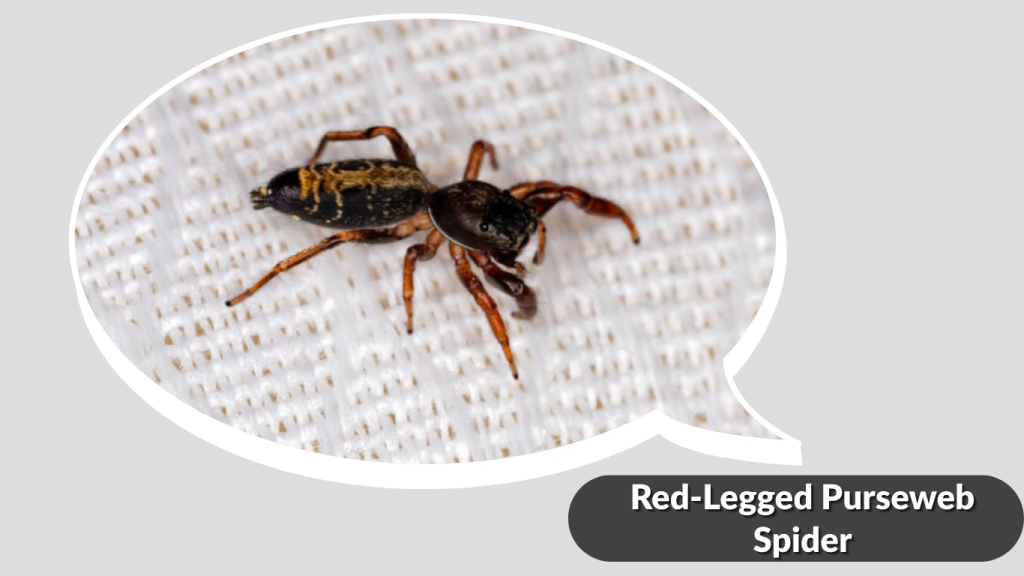
A striking mygalomorph spider with a velvet-black body and vivid red legs. Native to the eastern United States, it is secretive and rarely seen outside its tubular silk retreats.
Identification
- Bright red legs with velvet-like texture
- Shiny black body and abdomen
- Tubular, stout shape similar to trapdoor spiders
- Short, robust fangs
- Body length: 15–30 mm
Habitat
This species prefers forests, shaded woodland floors, and moist leaf litter. It builds long silk tubes attached to tree trunks or buried partially underground. The tube acts as both retreat and hunting trap, where the spider waits hidden beneath the surface layer.
Behaviors
Red-legged purseweb spiders feed by ambushing prey through their silk tube. When insects walk across the outer surface, the spider bites through the tube wall and pulls the prey inside. They are reclusive, slow-moving, and spend most of their lives in their silk-lined tunnels.
Bite & Risk
Encounters and bites are extremely rare due to their secretive lifestyle. When bites do occur, symptoms are usually mild—localized pain or swelling. They are not considered medically dangerous to humans.
9. Orchard Orbweaver – Red/Black Morph (Leucauge venusta)
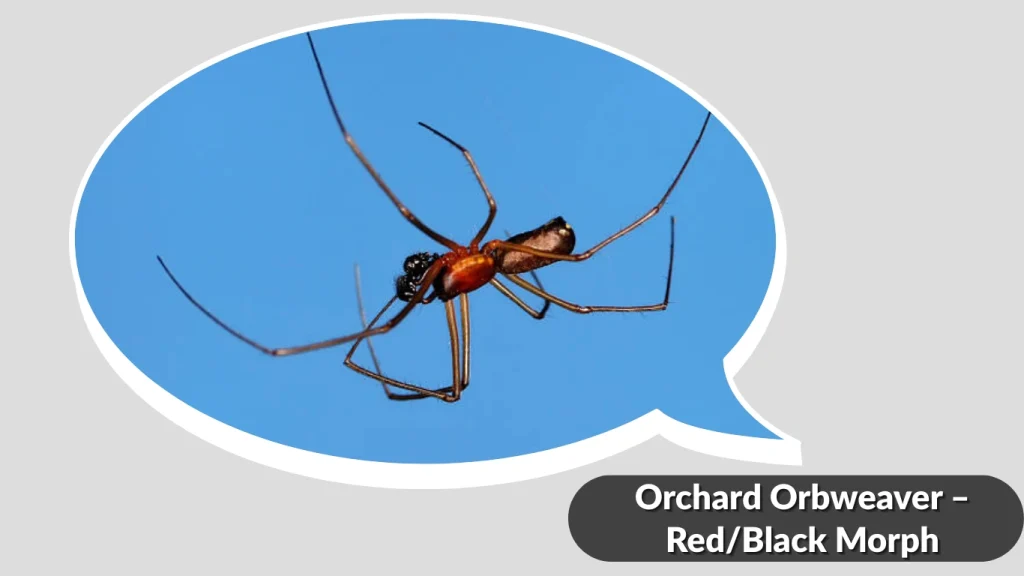
A delicate yet vividly colored orb-weaving spider known for its long legs, slender body, and reflective patterns. While the normal form is green and silver, some individuals develop red, black, and white markings, especially on the abdomen, creating the red–black combination seen in your keywords.
Identification
- Slender abdomen that may show red patches, black striping, or white speckling
- Long, thin legs often tinted in black, yellow, or red depending on the morph
- Shiny, metallic cephalothorax with greenish or silver tones
- Body suspended downward in web (typical orbweaver posture)
- Body length: 5–7 mm
Habitat
Orchard orbweavers prefer humid, shaded environments. They are common in orchards, gardens, forests, meadows, and vegetation near water sources. Their webs are usually built low to the ground on shrubs, small trees, tall grass, or fences. Dense foliage and stable humidity are important for their web-building success.
Behaviors
As classic orbweavers, they build symmetrical wheel-shaped webs designed to capture flying insects. The spider hangs upside down at the center, waiting for vibrations to signal prey. Each night, they often consume their old web and rebuild a fresh one in the morning or evening. They are gentle, non-aggressive, and timid toward humans, retreating quickly if disturbed.
Bite & Risk
Bites from orchard orbweavers are extremely rare due to their small size and shy nature. When they do occur, effects are mild—similar to a light bee sting—with minor redness or itching. They are not considered dangerous and pose no medical threat to humans.
10. Northern Black-and-Red Jumping Spider (Phidippus clarus)
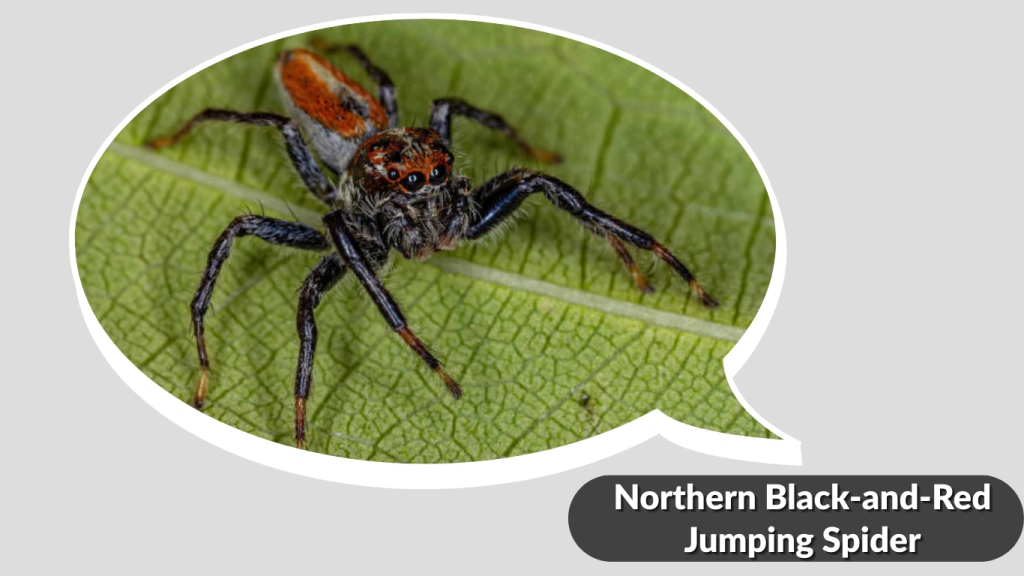
A colorful and highly active jumping spider commonly found across North America. Females often display red or reddish-orange abdomens with black borders, making the species one of the most frequently mistaken for dangerous red-and-black spiders, though it is completely harmless.
Identification
- Abdomen often red, orange, or rusty-colored with black edging or striping
- Cephalothorax dark brown to black, sometimes with white hair patches
- Fuzzy body typical of jumping spiders
- Metallic green or blue chelicerae
- Large, forward-facing eyes providing excellent vision
- Body length: 6–12 mm
Habitat
This species favors open fields, meadows, gardens, tall grasses, wooded edges, and shrubs. They often build small, silk-lined retreats inside curled leaves or plant stems. They are especially common in warm months and in areas with abundant insect activity.
Behaviors
Phidippus clarus is a diurnal, visually oriented hunter. It stalks insects with precision, making short calculated jumps before striking. Males perform elaborate leg-waving and abdomen-bobbing courtship displays to attract females. Curious but cautious, they may watch or follow human movement but rarely attempt to flee unless threatened.
Bite & Risk
Bites are rare and only occur under direct pressure, such as when the spider is trapped against the skin. Reactions are mild—slight swelling, itching, or brief pain. This species poses no medical risk and is considered completely harmless to humans.
11. Spotted Orbweaver – Red/Black Form (Neoscona crucifera)
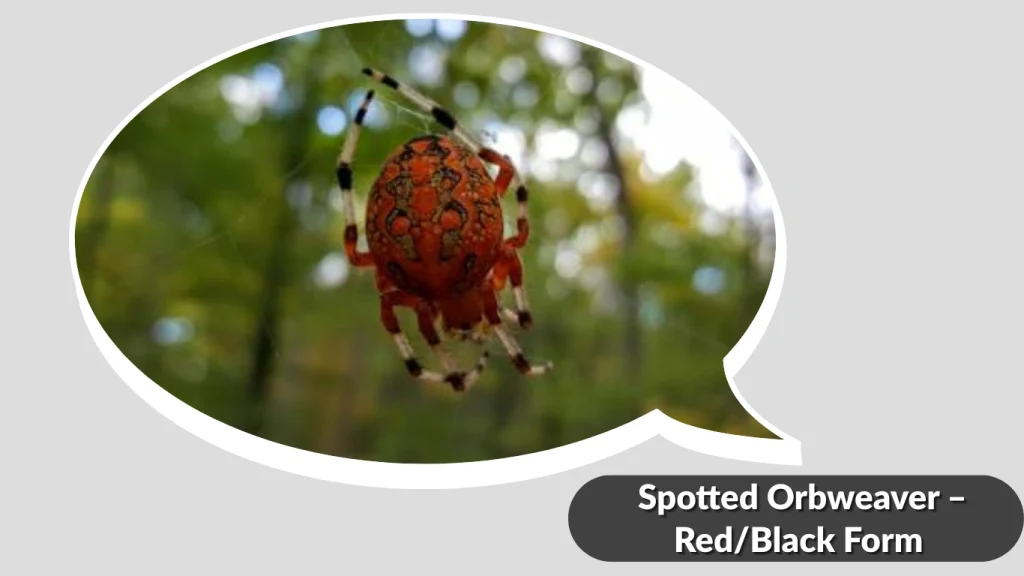
A medium-sized orbweaver known for its variable coloration. Some individuals show reddish abdomens with dark legs or black striping, matching many red-and-black spider sightings. This species becomes especially visible in late summer and fall.
Identification
- Abdomen can appear red, orange, or reddish-brown with darker mottling
- Legs typically black or dark brown, sometimes banded
- Body covered with short, fuzzy hairs
- Round, robust abdomen typical of orbweavers
- Body length: 8–20 mm
Habitat
Spotted orbweavers prefer outdoor structures, gardens, forests, fences, porches, and vegetation at moderate heights. They build large, wheel-shaped webs at dusk, often near lights where insects gather. During the day, they hide in rolled leaves, wall corners, or within silk retreats.
Behaviors
This species rebuilds its orb web each night, consuming damaged webs and spinning new ones before dusk. They capture flying insects and remain at the center of their web or on a nearby signal line. Despite their size, they are shy and retreat quickly when disturbed. Mating occurs in late summer, and adults are most abundant in fall.
Bite & Risk
Spotted orbweaver bites are rare and medically insignificant. When bites do occur, symptoms include mild redness, slight swelling, or brief discomfort. The species is non-aggressive and considered harmless to humans.
12. Velvet Spider (Eresus sandaliatus)
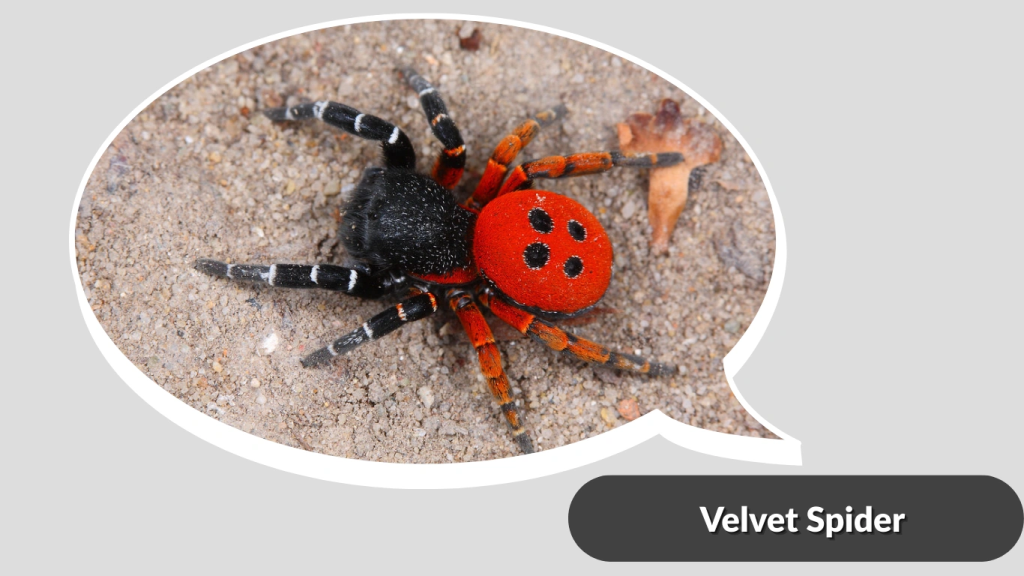
A striking and highly recognizable spider known for its velvety-black body and bright red abdomen with black spots. Males display the red pattern most prominently, making them one of the most iconic black-and-red spiders worldwide.
Identification
- Velvety black cephalothorax and legs
- Bright red abdomen with distinct black spots
- Dense, plush-looking hair covering the body
- Females are larger but darker, often with minimal red
- Body length: males 8–11 mm, females up to 20 mm
Habitat
Velvet spiders inhabit dry grasslands, heathlands, and sandy open areas across parts of Europe. They build silk-lined burrows under stones, roots, or patches of vegetation. These burrows contain a system of silk trip-lines that alert the spider to approaching prey or predators.
Behaviors
This species lives a largely sedentary lifestyle within its burrow. Males wander during mating season, displaying their red coloration to attract females. They hunt by ambush, sensing vibrations along silk lines outside the burrow. Velvet spiders are notably communal for part of their life cycle, with juveniles often sharing webs.
Bite & Risk
Bites are extremely uncommon due to the spider’s reclusive nature. If a bite occurs, symptoms are mild—localized pain, swelling, or redness. There are no known severe medical risks, and the species is considered harmless to humans.
13. Red Wolf Spider (Trochosa spp.)
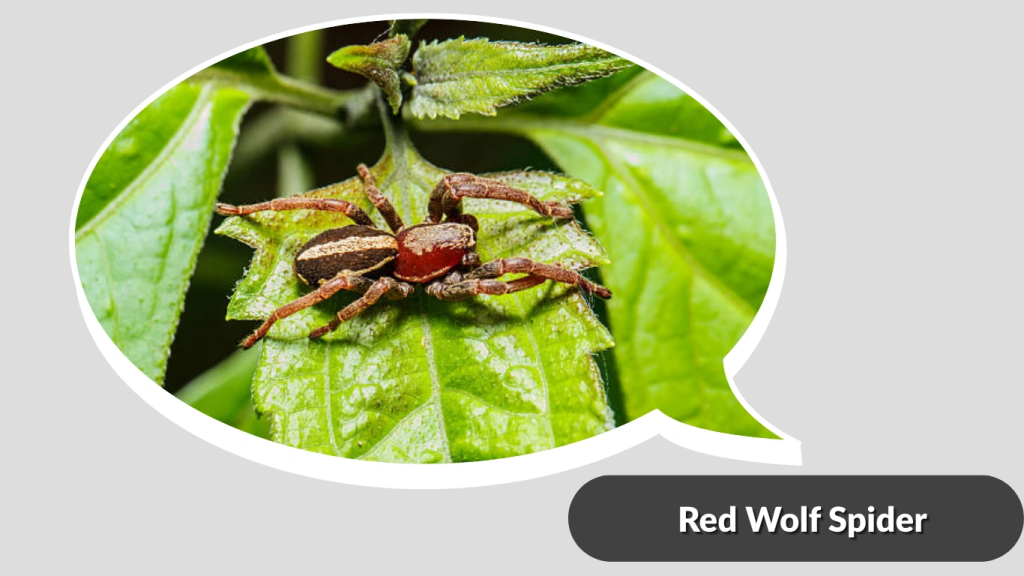
A fast-moving ground-dwelling spider that often displays reddish-brown to red abdominal tones combined with dark or black legs. Common across many regions, it is frequently encountered in homes, gardens, and leaf litter.
Identification
- Abdomen colored red, reddish-brown, or rusty with dark markings
- Legs typically black or dark brown, sometimes faintly banded
- Strong, long-legged, agile body shape
- Eyes arranged in three rows typical of wolf spiders
- Body length: 10–25 mm depending on species and sex
Habitat
Red wolf spiders live in leaf litter, grasslands, forests, gardens, basements, and under stones or logs. They do not build webs; instead, they rely on camouflage and speed. Many create silk-lined burrows or hide in natural crevices, emerging mostly at night to hunt.
Behaviors
These spiders are active nocturnal hunters, pursuing prey across the ground rather than catching it in webs. Females carry egg sacs attached to their spinnerets and later carry spiderlings on their backs—an iconic wolf spider behavior. They are nervous around humans and quick to retreat when disturbed.
Bite & Risk
Bites from wolf spiders are rare and typically result from accidental skin contact. Symptoms include mild swelling, redness, or itching. Pain is comparable to a bee sting. No serious medical risk is associated with this group, and bites usually resolve without treatment.
14. Red-Striped Juvenile Golden Silk Orbweaver (Trichonephila clavipes – Juvenile)
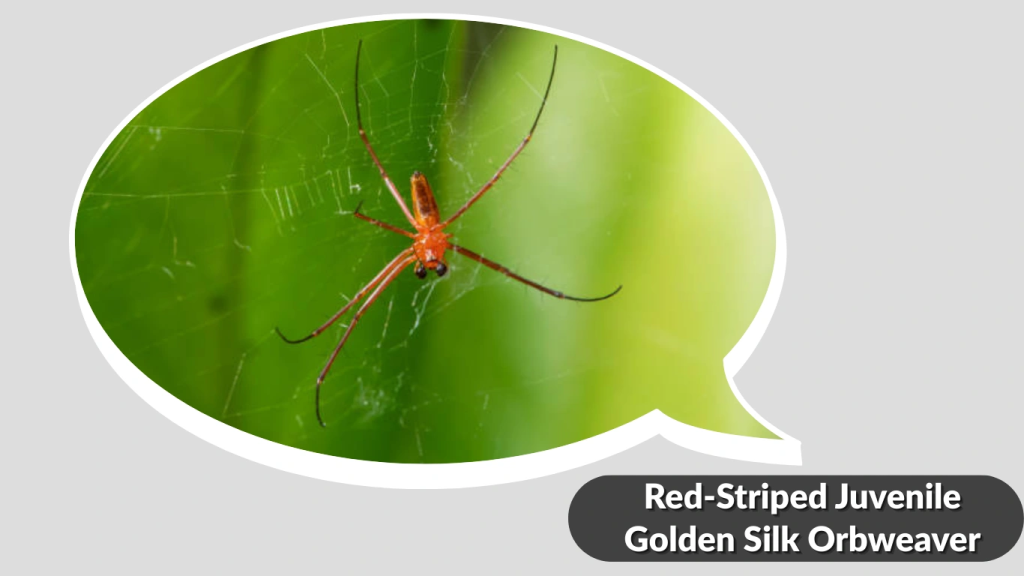
Juveniles of this species often display red, black, and yellow striping, unlike the large golden adults. Their bright contrasting colors frequently lead to red-and-black spider reports, especially in warm, humid areas.
Identification
- Abdomen marked with red stripes, black bands, and yellow accents
- Long, slender legs often banded in black and red
- Small, elongated body shape typical of young orbweavers
- Reflective or metallic sheen on thorax
- Body length: 5–12 mm (juveniles)
Habitat
Juvenile golden silk orbweavers thrive in warm, humid environments including forests, gardens, shrublands, and areas near water. They build orb-shaped webs in shrubs, tall grass, and low tree branches. As they grow, they move to higher webs similar to the adult’s placement strategy.
Behaviors
Young orbweavers build neat, circular webs designed to capture small flying insects. They rebuild their webs frequently, especially after storms or heavy insect activity. Although brightly colored, they are timid and drop from their webs if disturbed. As they mature, their colors shift from red-black patterns to more golden hues.
Bite & Risk
Juvenile bites are extremely rare due to their small size and shy nature. When they occur, symptoms are mild—light stinging, temporary redness, or itching. They are not considered dangerous, and no significant medical issues are associated with this species at any life stage.
15. Red-Spotted Ant-Mimic Spider (Castianeira descripta)
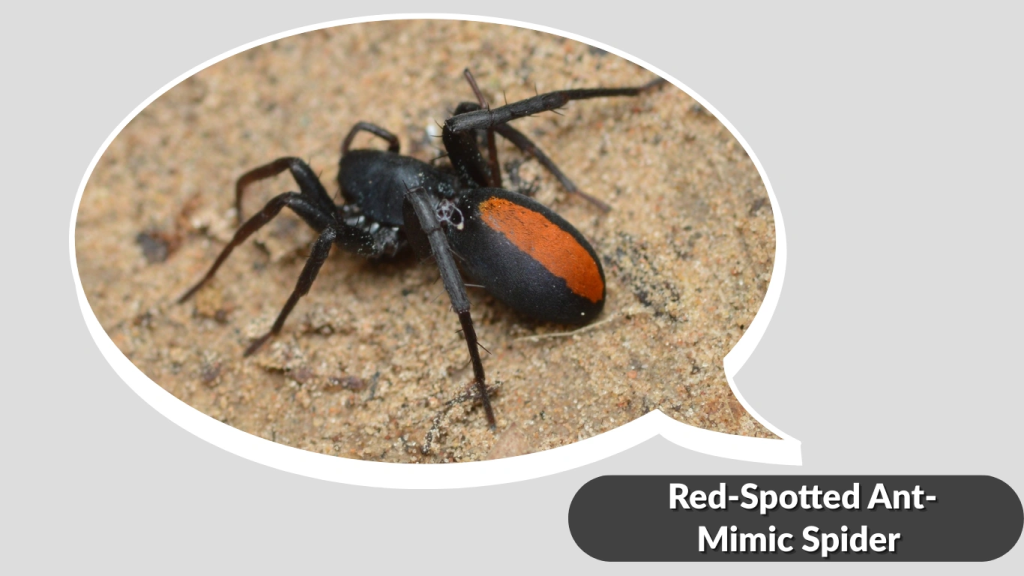
A small, fast-moving ground spider known for its black body with bright red spots or stripes, giving it the look of a dangerous species. Its antlike shape and quick movements help it avoid predators.
Identification
- Shiny black body with red or orange spots/stripes on the abdomen
- Slim, elongated body resembling an ant
- Dark, slender legs with slight banding
- Distinctive jerky, antlike walking pattern
- Body length: 6–12 mm
Habitat
This species inhabits forests, grasslands, gardens, leaf litter, and the edges of buildings. It hides under rocks, logs, bark, and ground debris. It is especially common in wooded regions and often wanders into yards or porches during warm seasons.
Behaviors
Red-spotted ant-mimic spiders rely on speed and mimicry rather than webs. Their walking style, raised front legs, and narrow bodies imitate ants, which discourages predators. They hunt small insects and spiders and may explore open ground quickly before darting back to cover when threatened.
Bite & Risk
Bites are extremely rare and typically mild due to the spider’s small size. Reactions may include slight redness, mild itching, or momentary discomfort. This species is not dangerous, and no serious medical risks are associated with it.