
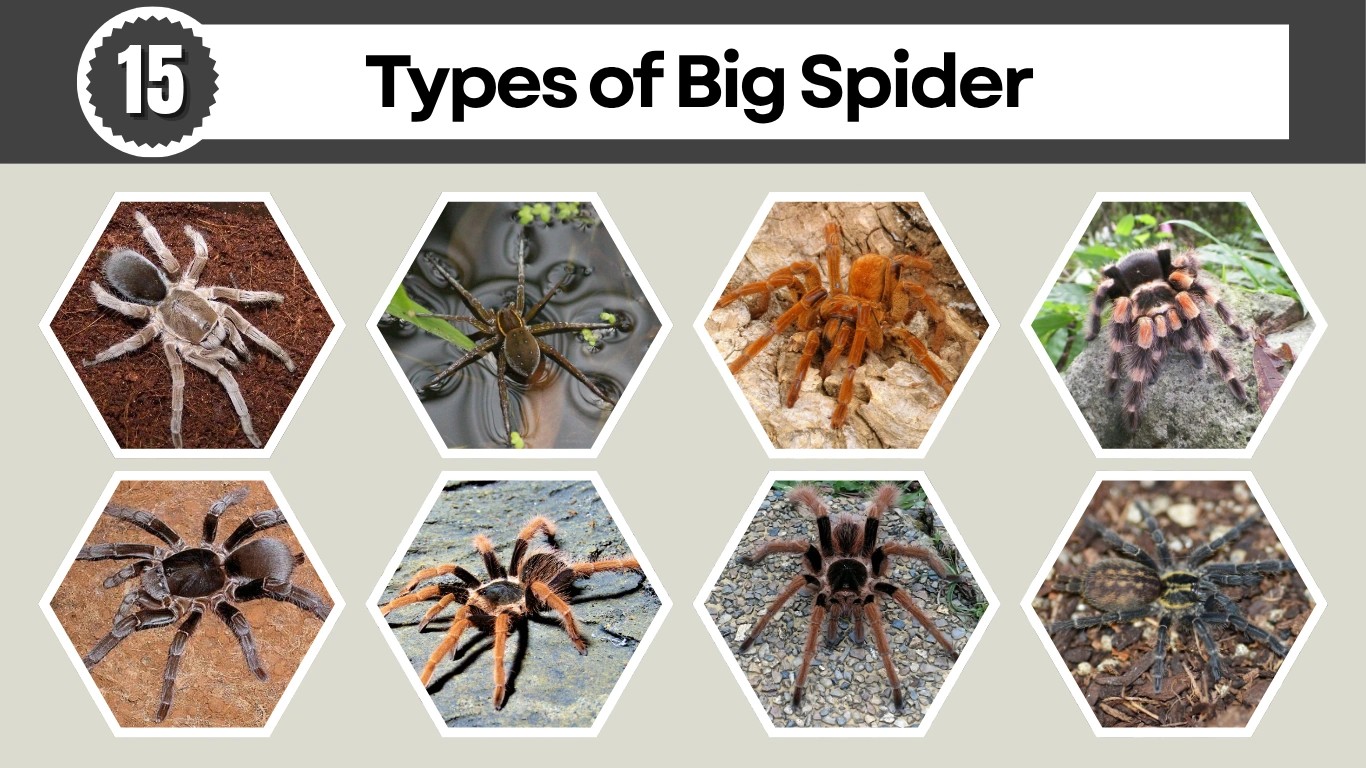
Big spiders are among nature’s most fascinating and intimidating creatures, admired for their strength, size, and hunting abilities. Found in rainforests, deserts, and even homes, these giant arachnids showcase incredible adaptations — from massive tarantulas to swift hunters and web-builders. Despite their fearsome looks, most large spiders are harmless to humans and play a vital role in maintaining ecological balance.
1. Goliath Birdeater (Theraphosa blondi)
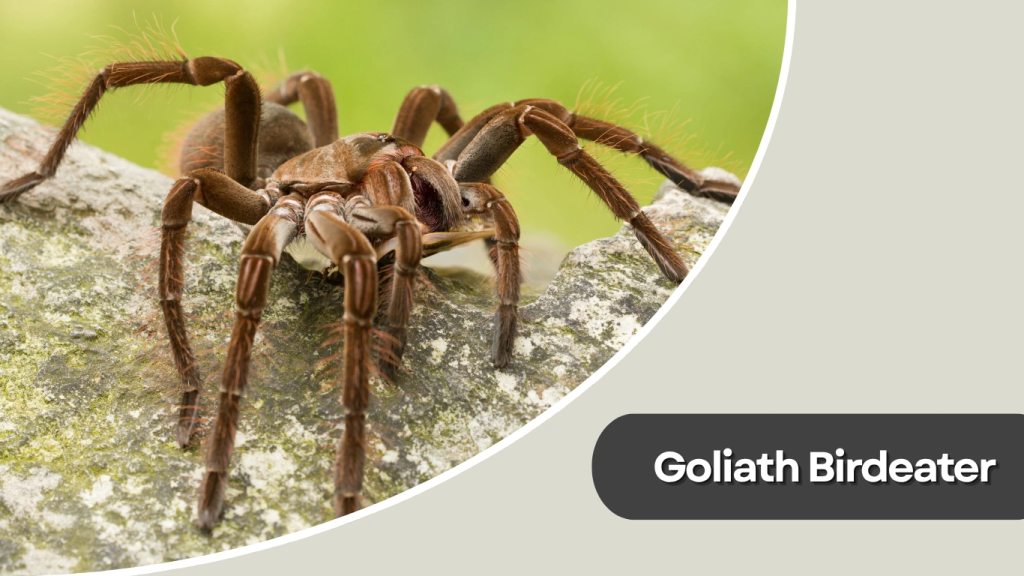
The Goliath Birdeater is the largest spider in the world by mass and size, belonging to the Theraphosidae family. Native to the rainforests of South America, this enormous tarantula can reach the size of a dinner plate. Despite its fearsome appearance, it rarely poses a threat to humans and primarily relies on intimidation rather than aggression.
Identification
- Size: Leg span up to 30 cm (12 inches); body length around 11 cm (4.5 inches)
- Color: Brown to dark tan with a glossy, hairy body
- Body Shape: Robust body and thick, hairy legs
- Fangs: Up to 2.5 cm (1 inch) long
- Distinct Features: Large size, loud hissing noise (stridulation), and urticating hairs
Habitat
The Goliath Birdeater inhabits tropical rainforests in northern South America, particularly in Suriname, Guyana, Brazil, and Venezuela. It prefers humid environments and lives in deep burrows dug into the forest floor, where it remains hidden during the day and hunts at night.
Diet
Despite its name, the Goliath Birdeater rarely eats birds. Its diet mainly consists of insects, frogs, lizards, and small rodents. It ambushes prey using its strength and venom, which, while potent to its victims, is harmless to humans.
Life Cycle & Lifespan
Females lay up to 100 eggs in a silk sac, which hatch after 6–8 weeks. The spiderlings remain with the mother briefly before dispersing. Females can live for up to 15–20 years, while males have a much shorter lifespan, typically surviving only 3–6 years after maturity.
2. Brazilian Salmon Pink Birdeater (Lasiodora parahybana)
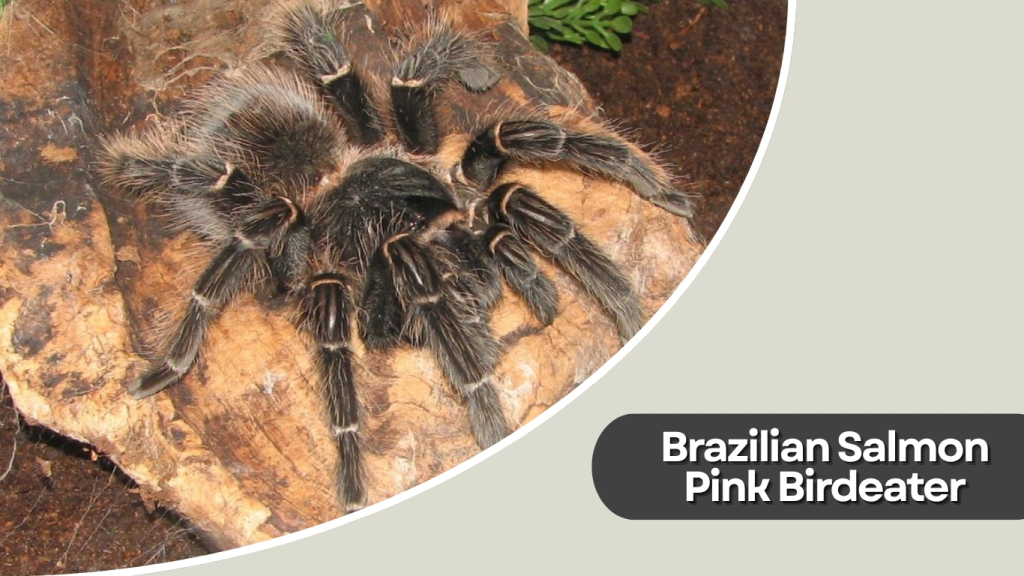
The Brazilian Salmon Pink Birdeater is one of the largest and most striking tarantulas in the world, known for its shimmering pink-tipped hairs and impressive size. Native to northeastern Brazil, this species is popular among collectors due to its beauty and manageable temperament despite its intimidating appearance.
Identification
- Size: Leg span up to 28 cm (11 inches); body length around 10 cm (4 inches)
- Color: Dark brown or black with distinctive salmon-pink hairs on the legs
- Body Shape: Large, robust body with dense setae (hair covering)
- Distinct Features: Pink-tinted hairs and massive build
- Fangs: Large and strong, capable of piercing small prey easily
Habitat
This species is found in the Atlantic forests and scrublands of Brazil, where it occupies burrows or hides under logs and rocks. It prefers warm, humid environments and uses silk to reinforce its burrow entrance for protection.
Diet
The Brazilian Salmon Pink Birdeater feeds on insects, small lizards, and occasionally rodents or amphibians. It uses its size and venom to overpower prey. Like other tarantulas, it relies on ambush hunting and rarely chases its victims.
Life Cycle & Lifespan
Females lay up to 2,000 eggs per clutch, an unusually high number for a tarantula. Spiderlings grow quickly and reach maturity in about 3–4 years. Females can live for over 15 years, while males typically live for 4–6 years.
3. Huntsman Spider (Heteropoda maxima)
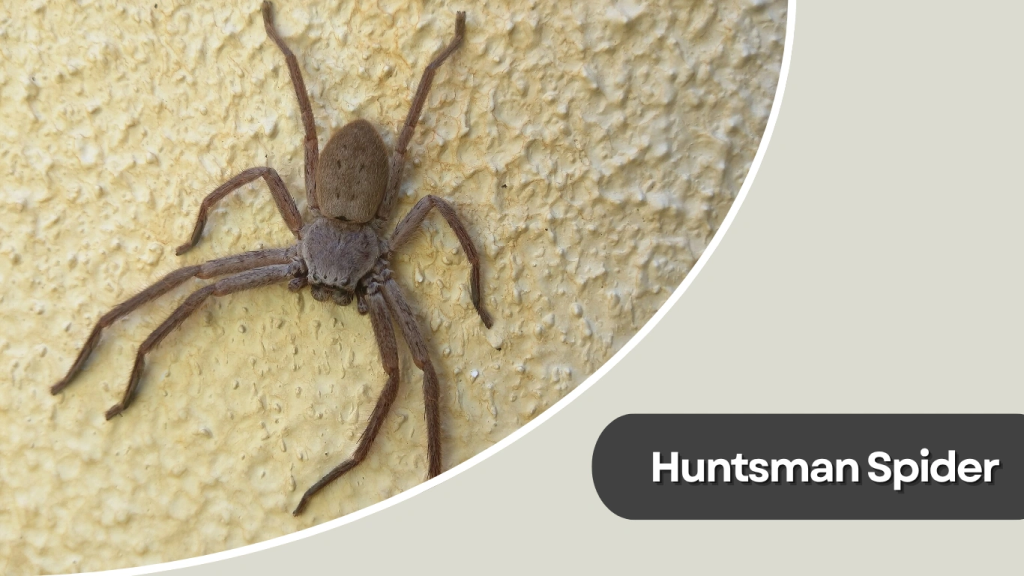
The Huntsman Spider, particularly the Heteropoda maxima species from Laos, is famous for having the largest leg span of any spider, reaching up to 30 centimeters (12 inches). Known for their incredible speed and flattened bodies, Huntsman Spiders are agile predators that often startle people but are harmless to humans.
Identification
- Size: Leg span up to 30 cm (12 inches); body length around 4.5 cm (1.8 inches)
- Color: Pale brown or gray with subtle markings
- Body Shape: Flat body and long, crab-like legs extending sideways
- Distinct Features: Exceptional speed and wide leg span
- Eyes: Eight eyes arranged in two rows
Habitat
Huntsman Spiders are found throughout Asia, Australia, and tropical regions. Heteropoda maxima lives in limestone caves in Laos, while other species dwell in forests, under bark, and inside houses. They prefer warm, sheltered spaces for hunting and resting.
Diet
Their diet includes insects, small reptiles, and other spiders. They do not spin webs but actively hunt prey using stealth and speed, pinning it down with their long legs before delivering a venomous bite.
Life Cycle & Lifespan
Females carry egg sacs under their bodies until hatching, guarding them diligently. Spiderlings disperse shortly after birth. Huntsman Spiders live for about 2 years on average, with females generally outliving males.
4. Giant House Spider (Eratigena atrica)
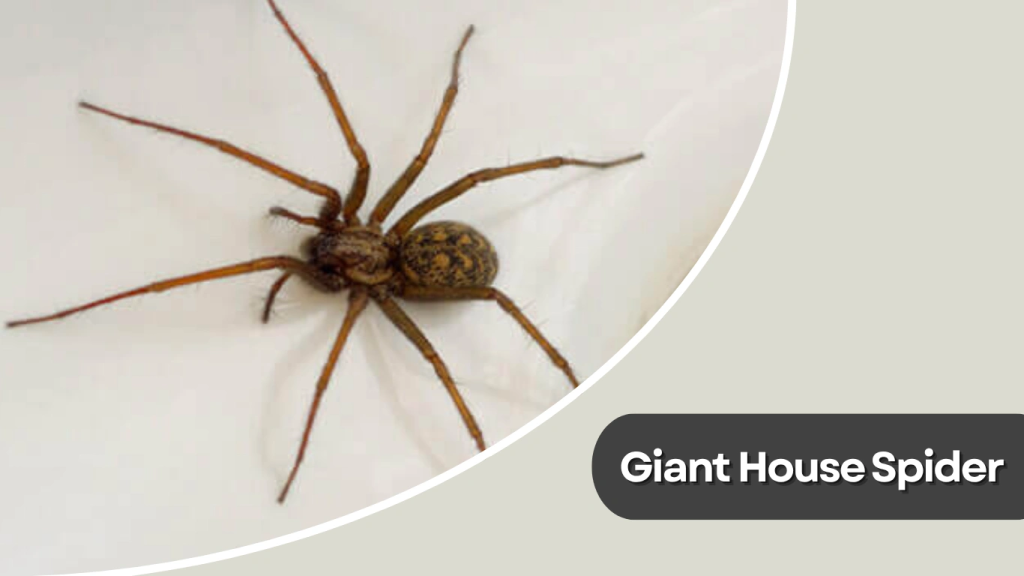
The Giant House Spider is one of the fastest and most commonly encountered large spiders in Europe. Known for its long legs and impressive speed, this species often startles homeowners but poses no danger to humans. It plays an essential role in controlling household pests like flies and other insects.
Identification
- Size: Leg span up to 12 cm (4.7 inches); body length around 2 cm (0.8 inches)
- Color: Brown with lighter markings on the abdomen
- Body Shape: Long, slender legs and a flattened body
- Web Type: Funnel-shaped web in corners or crevices
- Distinct Features: Quick movements and large, hairy legs
Habitat
These spiders prefer dark, sheltered environments such as basements, attics, and sheds. Outdoors, they can be found under rocks, logs, or bark. They construct large funnel webs and wait at the entrance for prey to get trapped.
Diet
Giant House Spiders feed on insects, moths, and other small arthropods. Their fast reflexes and sticky silk allow them to capture prey efficiently. They are nocturnal hunters, often leaving their webs at night to search for food.
Life Cycle & Lifespan
Females live up to three years, while males typically die shortly after mating. Females lay egg sacs containing dozens of eggs, which hatch in a few weeks. Spiderlings mature within a year, growing quickly in warm, humid conditions.
5. Camel Spider (Solifugae)
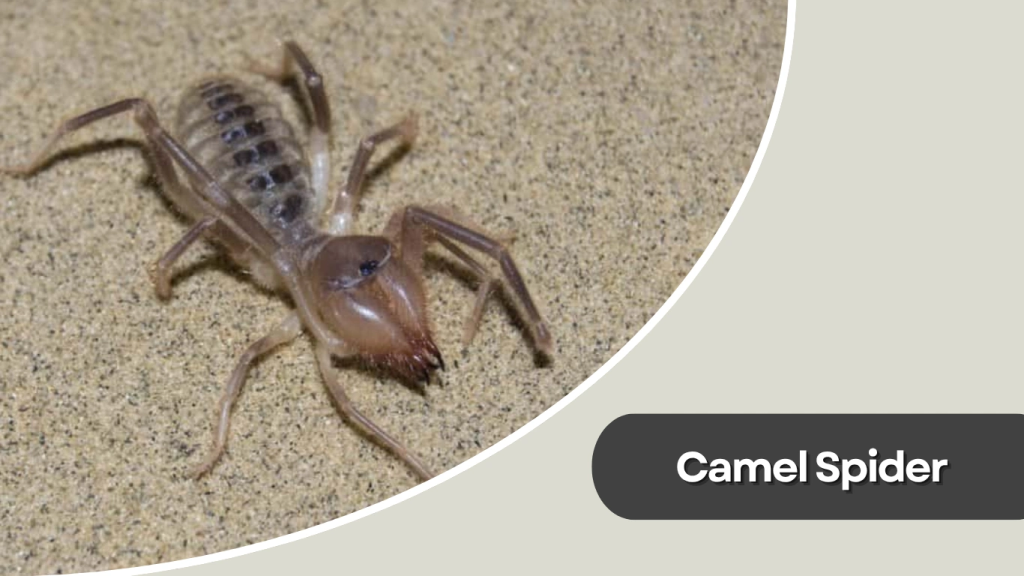
The Camel Spider, often called a “wind scorpion” or “sun spider,” is a member of the order Solifugae. Although not a true spider, it resembles one and is known for its fearsome appearance and incredible speed. Found mainly in deserts, it is a fierce predator but harmless to humans despite myths suggesting otherwise.
Identification
- Size: Up to 15 cm (6 inches) including legs
- Color: Sandy brown or tan for desert camouflage
- Body Shape: Segmented body with powerful jaws (chelicerae)
- Distinct Features: Large, curved jaws and elongated body
- Movement: Extremely fast, capable of running up to 16 km/h (10 mph)
Habitat
Camel Spiders inhabit arid and semi-arid regions across Africa, the Middle East, and North America. They hide under rocks or burrow into sand during the day to avoid heat, becoming active hunters at night.
Diet
They feed on insects, scorpions, and small lizards. Using their strong jaws, they crush prey rather than relying on venom. Their hunting is purely mechanical, relying on speed and strength to overpower victims.
Life Cycle & Lifespan
Females lay eggs in underground burrows, sometimes guarding them until hatching. The young emerge fully formed and begin hunting immediately. Camel Spiders live for about one to two years, depending on climate and food availability.
6. Golden Silk Orb-Weaver (Nephila pilipes)
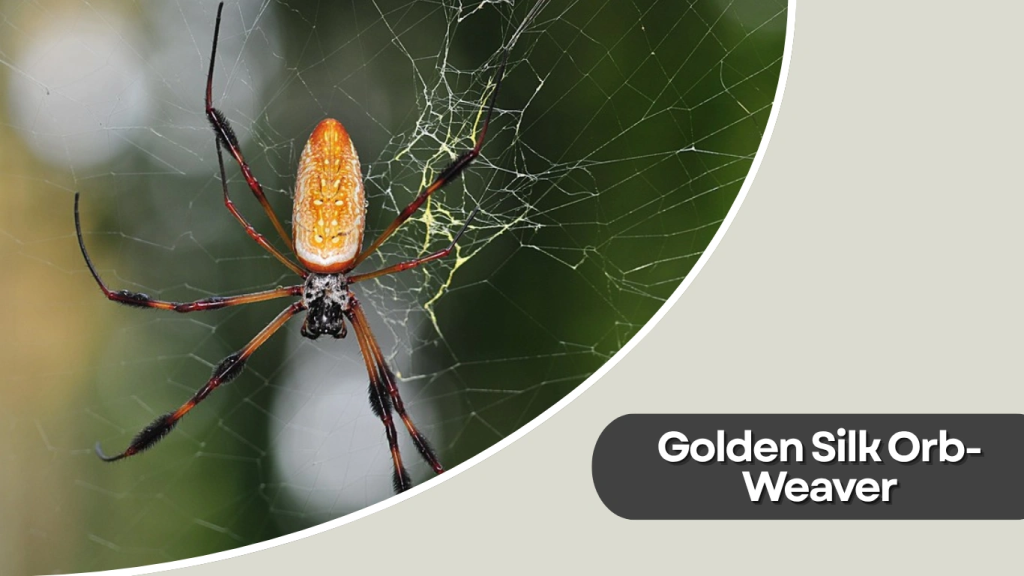
The Golden Silk Orb-Weaver, also known as the Banana Spider, is famous for spinning massive, golden-hued webs that can span over a meter wide. Found in tropical regions, these spiders are admired for their beauty and strength. Their silk is among the strongest natural fibers, shimmering in sunlight with a golden glow.
Identification
- Size: Females up to 12 cm (4.7 inches) body length; males much smaller at 2–3 cm
- Color: Golden-yellow body with long, banded legs
- Web Type: Large, circular web with a golden sheen
- Distinct Features: Long legs with brush-like tufts and metallic coloration
- Sexual Dimorphism: Females are several times larger than males
Habitat
Golden Silk Orb-Weavers inhabit tropical and subtropical forests in Asia, Australia, and the Americas. They build webs in open spaces between trees or shrubs, often several meters above the ground. These webs are used both for catching prey and for mating interactions.
Diet
Their diet includes flying insects such as moths, flies, and sometimes small birds or bats. They rely on their sticky, strong silk to trap prey, which they wrap and consume at leisure. Their venom is mild and harmless to humans.
Life Cycle & Lifespan
Females lay eggs in silk sacs attached to leaves or twigs. Spiderlings disperse after hatching, often via ballooning. Females can live up to one year, while males usually die soon after mating.
7. King Baboon Spider (Pelinobius muticus)

The King Baboon Spider is one of Africa’s largest and most powerful tarantulas, known for its striking copper-brown coloration and defensive behavior. Found primarily in East Africa, it’s a burrowing species that spends much of its life underground. Though intimidating, it’s a slow grower and highly sought after by tarantula enthusiasts.
Identification
- Size: Leg span up to 20 cm (8 inches); body length around 8 cm (3 inches)
- Color: Shiny copper or reddish-brown
- Body Shape: Thick, heavily built body and legs with dense hair
- Distinct Features: Stridulates (hisses) when threatened; powerful fangs
- Behavior: Defensive and aggressive when disturbed
Habitat
This species lives in dry savannas and scrublands of Kenya, Tanzania, and Uganda. It digs deep burrows in the soil for shelter and protection from heat. The burrow entrance is often lined with silk and camouflaged with debris.
Diet
King Baboon Spiders are ambush predators, feeding on insects, lizards, and small rodents. They use their strong front legs and fangs to overpower prey rather than relying on webs. Their venom is potent but not dangerous to humans.
Life Cycle & Lifespan
Females can live for 20–25 years, while males typically survive only 4–5 years after maturity. Females lay egg sacs containing 50–200 eggs, guarding them fiercely within the burrow until hatching. Growth is slow, with spiderlings taking several years to reach full size.
8. Colombian Giant Redleg (Megaphobema robustum)
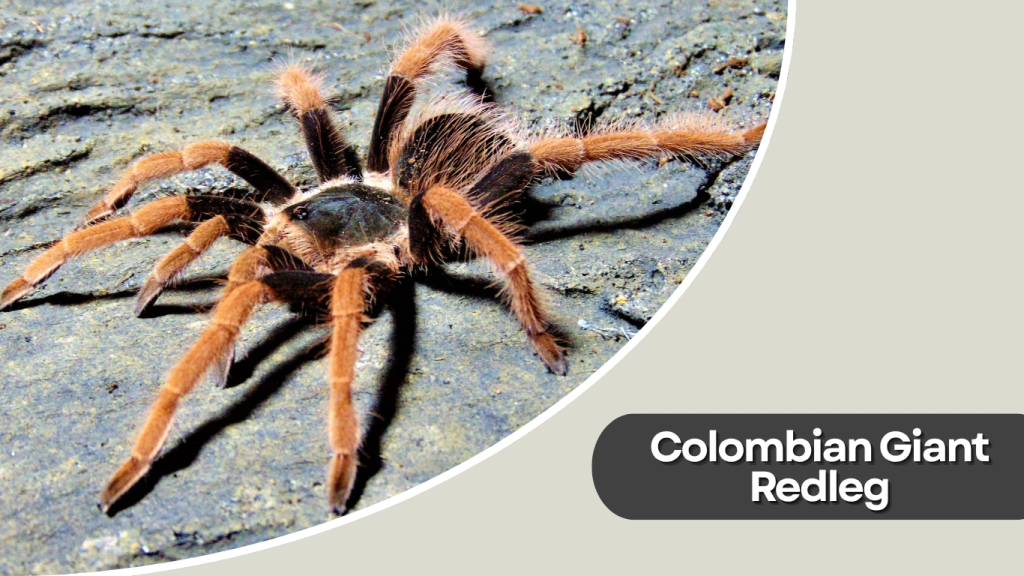
The Colombian Giant Redleg is a stunning and formidable tarantula species native to the rainforests of Colombia. Known for its fiery red legs and defensive spinning behavior, this spider combines beauty with boldness. Despite its size and appearance, it is not dangerous to humans and is admired by collectors for its striking coloration.
Identification
- Size: Leg span up to 20 cm (8 inches); body length about 8 cm (3 inches)
- Color: Dark brown or black body with bright red or orange legs
- Body Shape: Sturdy body with thick, hairy legs
- Distinct Features: Bright red femurs and defensive spinning motion
- Behavior: Defensive but rarely bites; prefers to flee or intimidate
Habitat
Colombian Giant Redlegs inhabit tropical rainforests and moist forest floors. They dig burrows or occupy natural shelters such as rotting logs or leaf litter. They prefer humid, shaded environments and rely on their burrows for protection.
Diet
Their diet includes large insects, small reptiles, and amphibians. They ambush prey from the entrance of their burrow, injecting venom and digestive enzymes before consuming the liquefied meal. They play a vital role in controlling insect populations in their habitat.
Life Cycle & Lifespan
Females can live up to 15–20 years, while males typically live around 4–5 years. Females lay egg sacs containing around 100 eggs, which hatch in 6–8 weeks. Spiderlings grow slowly, taking several years to reach maturity.
9. Chaco Golden Knee Tarantula (Grammostola pulchripes)
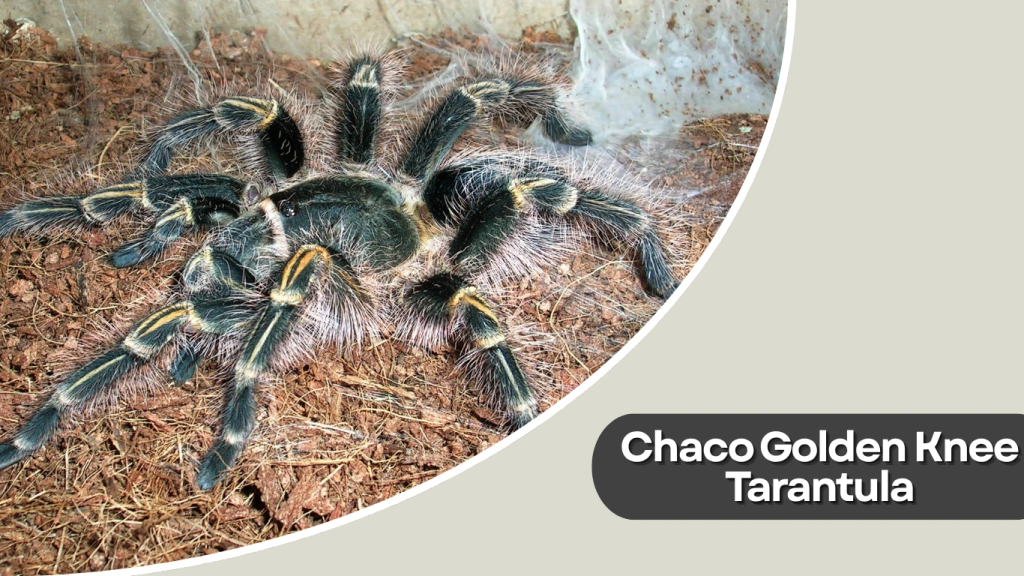
The Chaco Golden Knee Tarantula is a large, docile species native to Paraguay and Argentina. It is famous for its golden-striped legs and calm temperament, making it a favorite among tarantula enthusiasts. Despite its impressive size, it’s gentle and easy to handle, often used for educational and display purposes.
Identification
- Size: Leg span up to 20 cm (8 inches); body length around 7 cm (2.8 inches)
- Color: Dark brown or black body with golden stripes on knees
- Body Shape: Heavy-bodied with dense hair and thick legs
- Distinct Features: Bright golden bands on joints; calm demeanor
- Fangs: Strong, used for hunting insects and small vertebrates
Habitat
These tarantulas inhabit grasslands and scrub regions of Paraguay and Argentina. They dig burrows or use natural shelters to hide during the day. They prefer warm, dry environments and are often found in open areas near sparse vegetation.
Diet
The Chaco Golden Knee feeds on crickets, roaches, and small vertebrates. It hunts by ambushing prey and subduing it with venom. In captivity, it adapts well to feeding schedules and has a hearty appetite.
Life Cycle & Lifespan
Females live between 15 and 20 years, while males live around 5 years. Females produce egg sacs containing up to 500 eggs, which hatch after 6–8 weeks. Spiderlings mature slowly but steadily, reaching adulthood in about 3–4 years.
10. Hercules Baboon Spider (Hysterocrates hercules)
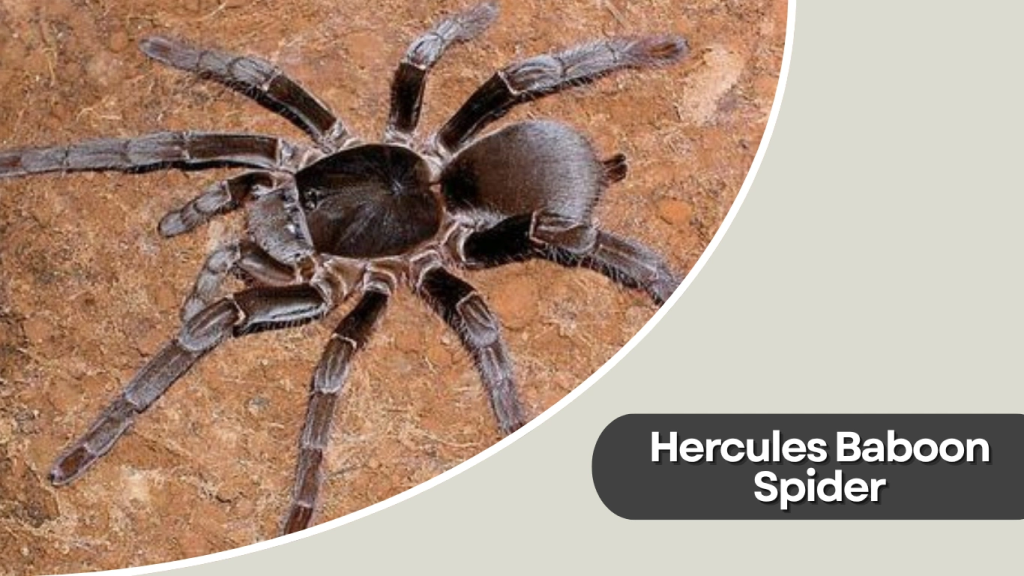
The Hercules Baboon Spider is one of Africa’s largest and most elusive tarantulas, often shrouded in mystery due to its rarity. Belonging to the Hysterocrates genus, it is named after its immense strength and powerful build. Although intimidating, little is known about this spider’s natural behavior as confirmed sightings are extremely rare.
Identification
- Size: Leg span up to 20 cm (8 inches); body length around 9 cm (3.5 inches)
- Color: Dark brown to black with a shiny, velvety sheen
- Body Shape: Thick and muscular legs, heavy body structure
- Distinct Features: Deep burrower with strong front legs
- Behavior: Shy but defensive when provoked
Habitat
Found in the tropical forests of West Africa, particularly in Cameroon, this spider prefers humid environments and spends most of its life underground. It constructs long burrows in soft soil, where it remains hidden during the day and emerges at night to hunt.
Diet
Its diet consists of insects, small rodents, and other invertebrates. The Hercules Baboon Spider uses its size and strength to overpower prey quickly. It does not rely on webs but ambushes prey from within its burrow.
Life Cycle & Lifespan
Females may live up to 20 years, while males typically survive for 5–6 years. The female produces a silk egg sac containing up to 200 eggs, guarding it until hatching. Growth is slow, and spiderlings can take several years to mature fully.
11. Tanzanian Giant Tarantula (Hysterocrates gigas)
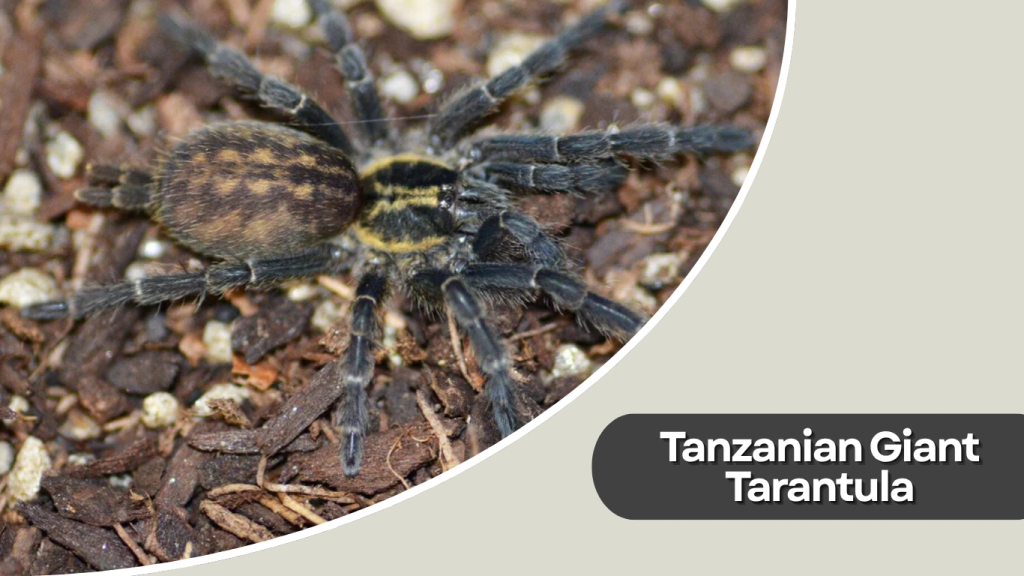
The Tanzanian Giant Tarantula, or Cameroon Red Baboon Spider, is a large and powerful burrowing tarantula native to Central and East Africa. It’s famous for its ability to swim, making it one of the few tarantulas that can hunt both on land and in shallow water.
Identification
- Size: Leg span up to 22 cm (9 inches); body length around 8 cm (3 inches)
- Color: Deep reddish-brown or dark gray
- Body Shape: Stocky body with long, muscular legs
- Distinct Features: Semi-aquatic behavior and strong front legs
- Behavior: Defensive but not overly aggressive
Habitat
This species lives in humid tropical forests and swampy areas across Cameroon and Tanzania. It digs deep burrows near water sources and is known to take refuge underwater when threatened. Its adaptability allows it to thrive in wet environments.
Diet
Tanzanian Giant Tarantulas are opportunistic feeders, consuming insects, small amphibians, and even fish. They ambush prey near their burrows or water edges, using speed and venom to subdue them. Their aquatic hunting skill sets them apart from most tarantulas.
Life Cycle & Lifespan
Females live up to 15–20 years, while males generally live around 5 years. Females produce 100–200 eggs per sac. Spiderlings grow rapidly in their early stages and reach maturity within 3–4 years.
12. Mexican Redknee Tarantula (Brachypelma smithi)
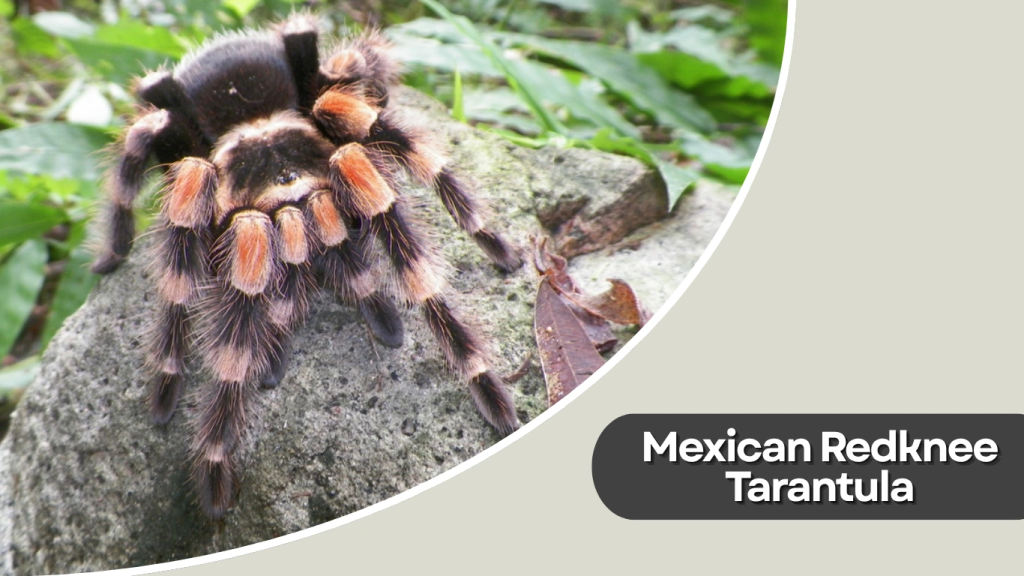
The Mexican Redknee Tarantula is one of the most famous and visually stunning tarantulas in the world. Recognized by its jet-black body and bright orange-red leg joints, this species is native to the Pacific coast of Mexico. Known for its calm temperament, it’s a favorite in the exotic pet trade and a symbol of tarantula beauty.
Identification
- Size: Leg span up to 18 cm (7 inches); body length around 6 cm (2.5 inches)
- Color: Black body with orange-red knee joints
- Body Shape: Sturdy, rounded body covered in dense hair
- Distinct Features: Vibrant coloration and gentle nature
- Fangs: Large but rarely used defensively
Habitat
Mexican Redknees inhabit dry scrublands and semi-desert regions of western Mexico. They live in burrows or use abandoned rodent holes, which they line with silk for stability and comfort. They thrive in warm climates with low humidity.
Diet
Their diet mainly includes insects, small reptiles, and amphibians. They are ambush predators, waiting patiently at their burrow entrances for prey to approach. Despite their size, they are slow-moving and rely on stealth and venom rather than speed.
Life Cycle & Lifespan
Females can live over 25 years, while males live around 5–7 years. Females produce up to 600 eggs per clutch, which hatch in 6–8 weeks. Spiderlings mature slowly, taking several years to reach adulthood.
13. Pinkfoot Goliath (Theraphosa apophysis)
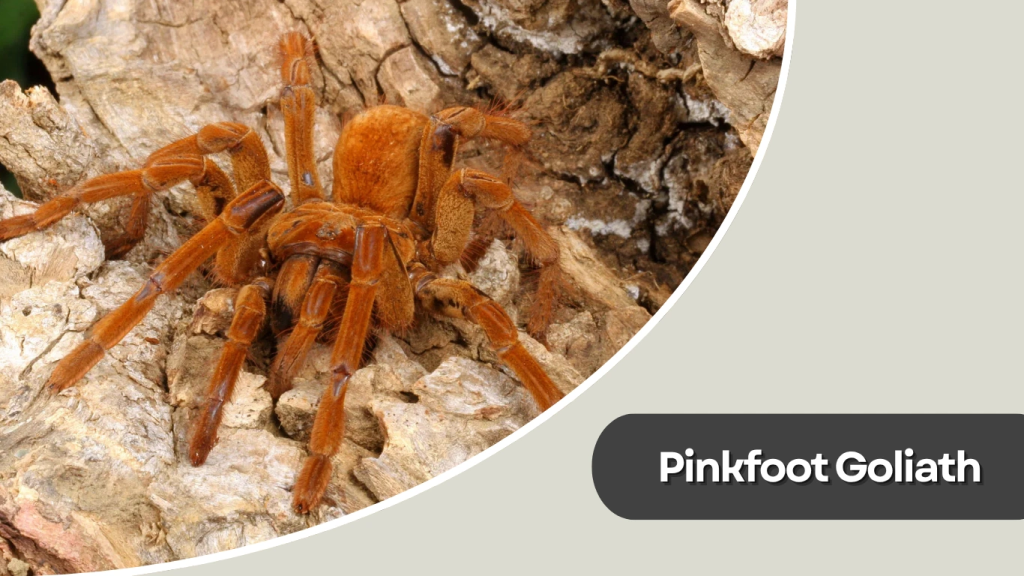
The Pinkfoot Goliath is one of the largest and rarest tarantulas, closely related to the Goliath Birdeater. Native to Venezuela, this spider is notable for its massive size and pinkish tips on its legs. Despite its intimidating appearance, it is shy and spends most of its time hidden in burrows deep in the rainforest.
Identification
- Size: Leg span up to 30 cm (12 inches); body length about 10 cm (4 inches)
- Color: Dark brown to reddish-brown with pink leg tips
- Body Shape: Thick, heavily built body with dense hair
- Distinct Features: Pink foot pads and powerful fangs
- Behavior: Defensive posture and hissing sounds when threatened
Habitat
The Pinkfoot Goliath lives in humid tropical rainforests of Venezuela and northern South America. It digs deep burrows in soft, moist soil and often lines them with silk to reinforce the structure. It is nocturnal and emerges mainly at night to hunt.
Diet
It preys on insects, frogs, small reptiles, and occasionally rodents. Its ambush hunting strategy involves overpowering prey with sheer strength and venom. Though large and capable of delivering a painful bite, it poses no real threat to humans.
Life Cycle & Lifespan
Females can live up to 20 years, while males typically live around 5 years. Females produce egg sacs containing 100–200 eggs. Spiderlings hatch after about two months and grow slowly, taking years to reach full size.
14. Giant Fishing Spider (Dolomedes tenebrosus)
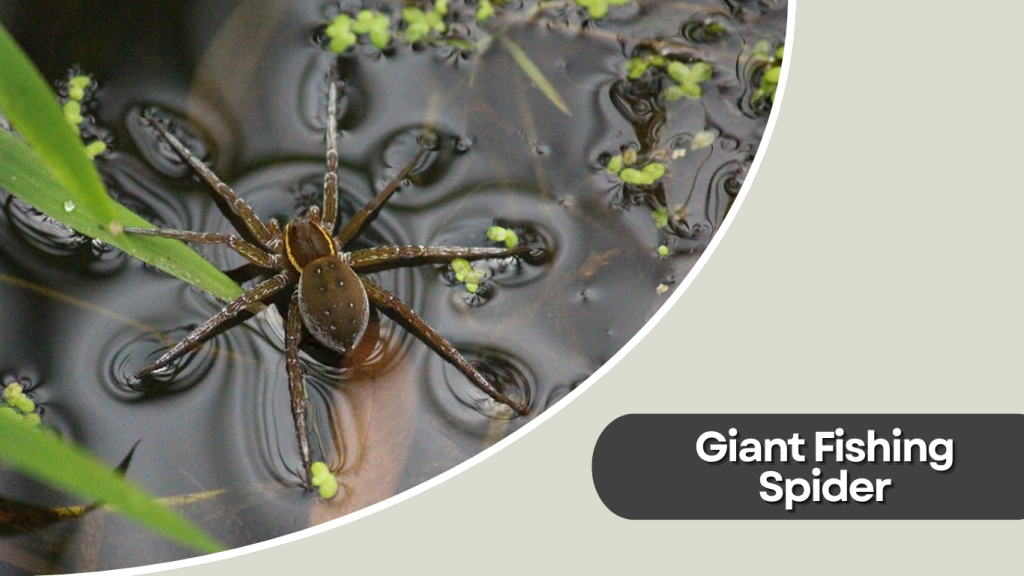
The Giant Fishing Spider, also known as the Dock Spider or Raft Spider, is an agile semi-aquatic hunter that lives near lakes, rivers, and marshes. Belonging to the Pisauridae family, this large spider can walk on water, dive below the surface, and even catch small fish and tadpoles with ease.
Identification
- Size: Leg span up to 10 cm (4 inches); body length about 3 cm (1.2 inches)
- Color: Brown or gray with dark markings and pale side stripes
- Body Shape: Flat body with long legs adapted for water movement
- Distinct Features: Can walk on water and dive to escape predators
- Eyes: Eight eyes arranged for excellent night vision
Habitat
Giant Fishing Spiders are found across North America, especially near ponds, streams, and wetlands. They prefer areas with still or slow-moving water and can often be seen resting on rocks, logs, or vegetation near the water’s edge.
Diet
Their diet includes aquatic insects, small fish, tadpoles, and even frogs. They detect vibrations on the water’s surface, then strike quickly to grab prey. Their strong legs and hydrophobic hairs allow them to move easily across water without sinking.
Life Cycle & Lifespan
Females carry egg sacs attached to their jaws and guard them until hatching. After hatching, the spiderlings remain on the mother’s back for a short period. Giant Fishing Spiders live for about two years, with females outliving males.
15. Australian Tarantula (Selenocosmia crassipes)
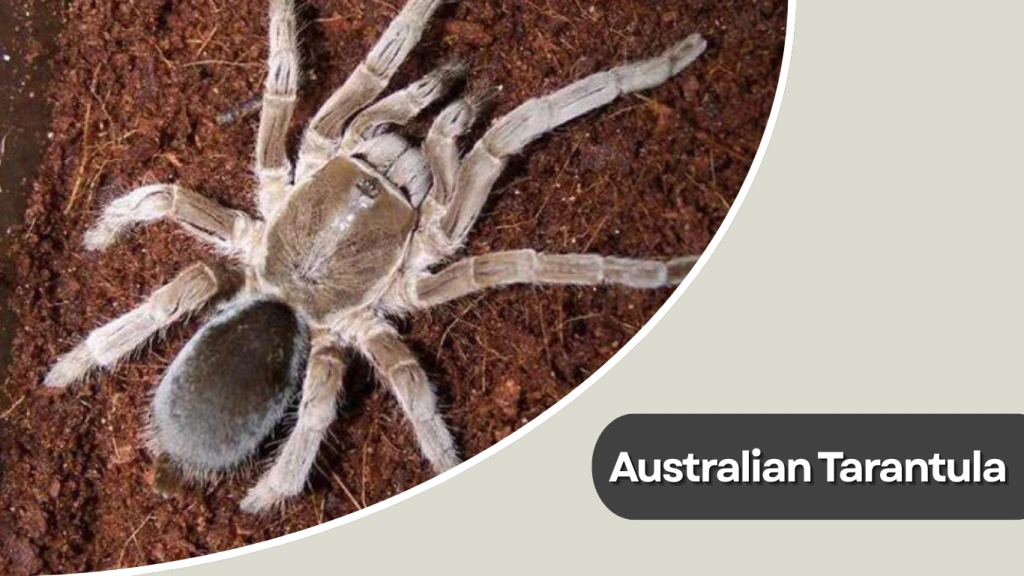
The Australian Tarantula, also known as the Barking Spider or Whistling Spider, is one of Australia’s largest and most iconic arachnids. Named for the hissing sound it makes when threatened, this spider is powerful and resilient, adapted to the continent’s warm and dry conditions.
Identification
- Size: Leg span up to 22 cm (9 inches); body length around 6 cm (2.5 inches)
- Color: Dark brown to chocolate with a velvety sheen
- Body Shape: Thick, heavy body with strong legs and dense hairs
- Distinct Features: Produces a hissing or “barking” sound by rubbing body parts together
- Fangs: Large, capable of subduing small vertebrates
Habitat
Australian Tarantulas inhabit arid regions, grasslands, and forests across Queensland, New South Wales, and Western Australia. They live in deep burrows lined with silk and remain hidden during the day, emerging at night to hunt.
Diet
These spiders feed on insects, frogs, and small reptiles. They are ambush predators that rely on speed and venom to capture prey. They can also tackle larger prey such as small birds or mice when available.
Life Cycle & Lifespan
Females lay eggs inside silk-lined burrows and guard them until hatching. Spiderlings grow slowly and may take 5–7 years to mature. Females can live up to 25 years, while males typically survive only 5–8 years after reaching adulthood.