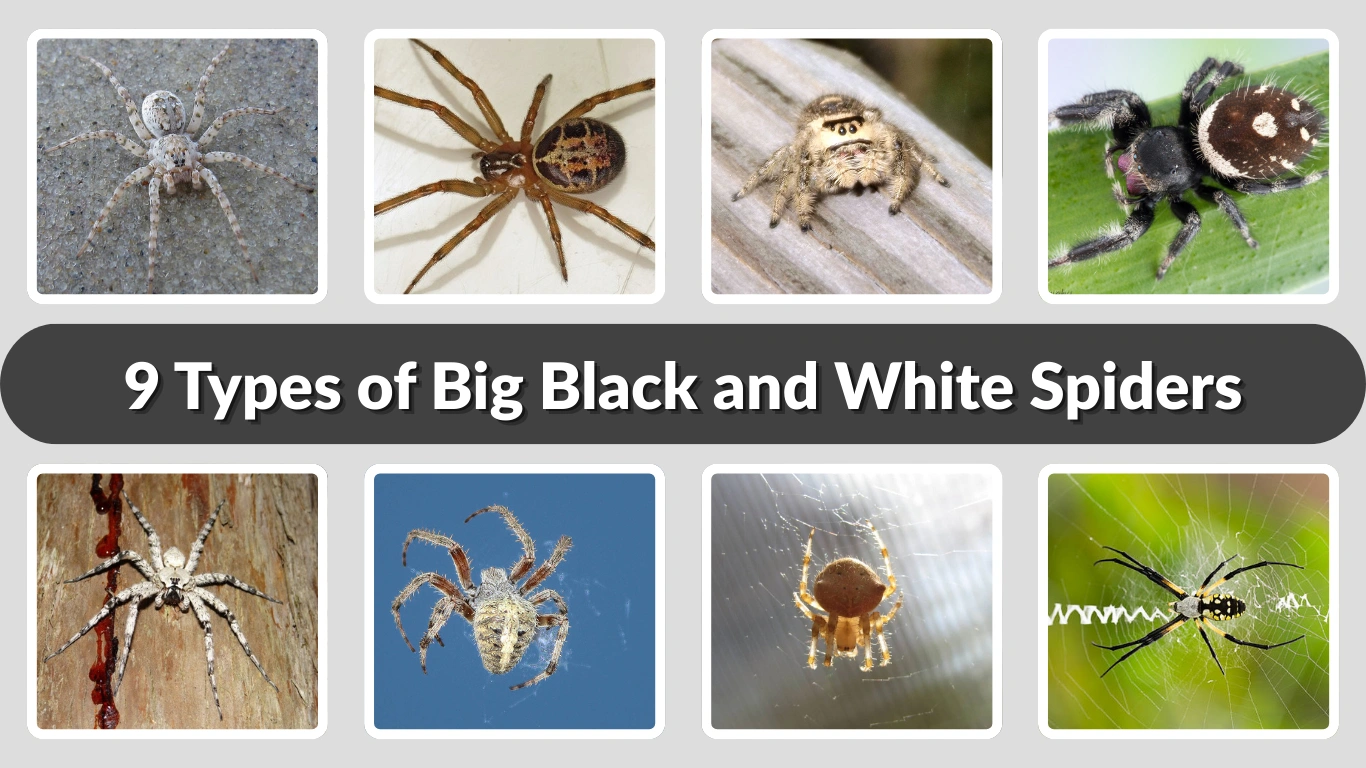
Big black and white spiders are commonly seen in gardens, porches, sheds, and wooded areas across North America and beyond. These striking species often have bold patterns, striped legs, or large round bodies that make them stand out. Many belong to orb-weavers, wolf spiders, or large jumping spiders—groups that look intimidating but are almost always harmless. This guide covers the most recognizable big black-and-white spiders you may encounter.
1. Yellow Garden Spider
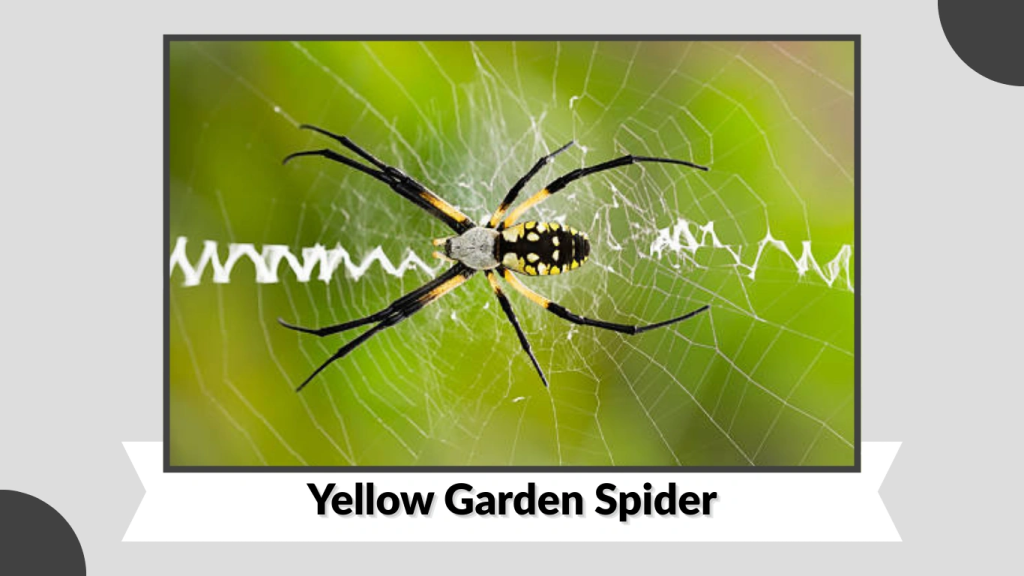
A large and striking orb-weaver, the Yellow Garden Spider is well known for its bold black-and-white body patterns paired with bright yellow bands. Often found in gardens, porches, and tall vegetation, this species builds big circular webs and is one of the most recognizable large spiders in North America.
Identification
- Color: Black body with white markings and strong yellow bands
- Size: Females large at 19–28 mm; males smaller
- Legs: Long, banded black-and-white with yellow accents
- Body Shape: Large oval abdomen with distinct patterning
- Web: Extra-large orb web with a zig-zag stabilimentum
- Texture: Smooth abdomen with fine leg hairs
- Movement: Slow walking; fast retreat across web lines
Habitat & Range
This species is common across the United States, Canada, and Mexico, especially in sunny, open areas. It frequently builds large webs near gardens, shrubs, crops, fences, and barn corners. States like Michigan, Texas, Florida, Georgia, Ohio, Illinois, and California regularly report sightings.
Behavior
The Yellow Garden Spider is a classic web-builder, waiting motionless in the center until prey shakes the silk strands. It is not aggressive and usually retreats when disturbed. The distinctive zig-zag silk line helps stabilize the web and may reflect UV light to attract insects.
Bite & Safety
Although large and intimidating, this spider is harmless to humans. Bites are extremely rare and mild, comparable to a bee sting. Its presence is beneficial in gardens, where it controls pests such as grasshoppers, flies, beetles, and moths.
2. Banded Garden Spider
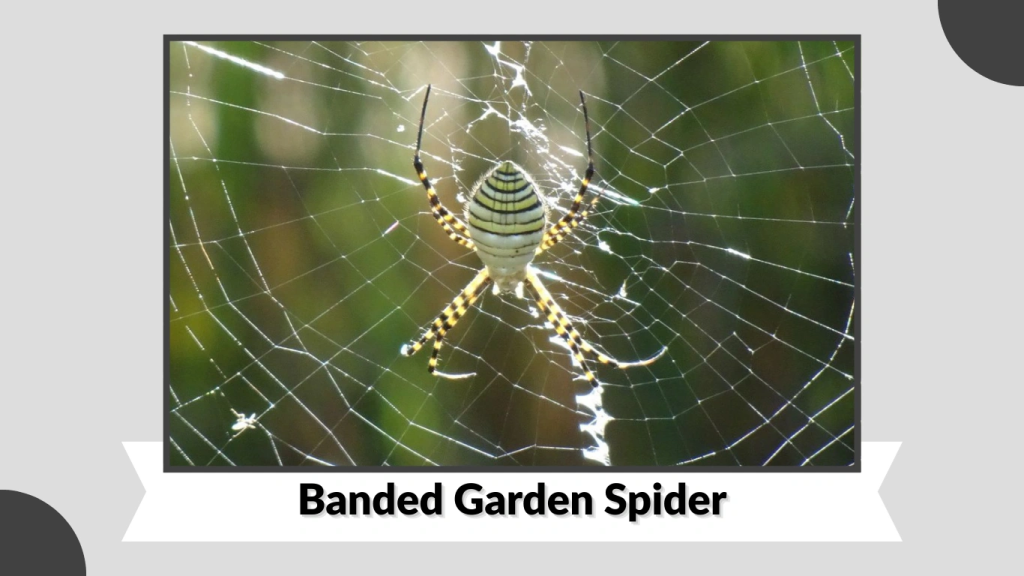
A large orb-weaver with bold black, white, and yellow striping, the Banded Garden Spider is commonly seen in open fields, gardens, and around homes. Its long, banded legs and big circular webs make it one of the most striking large spiders across North America, Europe, and the UK.
Identification
- Color: White or pale abdomen with black and yellow horizontal bands
- Size: Large females 15–25 mm; males smaller
- Legs: Long, slender, and black-and-white striped
- Body Shape: Elongated oval abdomen with crisp bands
- Web: Large orb web built in open, sunny locations
- Texture: Smooth body with lightly hairy legs
- Movement: Slow climbing across the web frame
Habitat & Range
This species is widespread across North America, Europe, South America, and the UK. It prefers sunny, breezy environments such as prairies, meadows, gardens, crop fields, and backyard fences. It often attaches webs between tall plants, grass stems, or shrubs.
Behavior
The Banded Garden Spider is a patient ambush hunter. It waits at the center of its web for flying insects to hit the silk. When prey arrives, it quickly wraps it in silk and delivers a controlled bite. Although large, it is shy and often drops from the web when disturbed.
Bite & Safety
Despite its size, this spider is not dangerous. Bites are uncommon and mild, causing minor redness or swelling. It provides excellent natural pest control by capturing flies, bees, wasps, grasshoppers, and other flying insects in large numbers.
3. Cat-Faced Spider
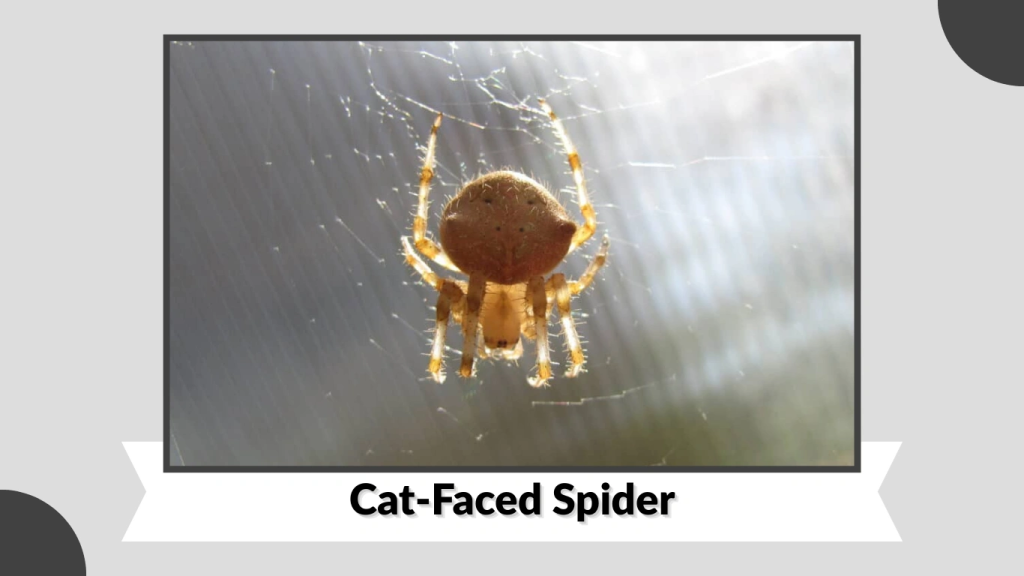
A round-bodied orb-weaver with distinctive markings, the Cat-Faced Spider is known for its large abdomen and unique facial pattern formed by bumps and white spots. Common in gardens, porches, and outdoor structures, it is a harmless and highly visible spider throughout North America.
Identification
- Color: Tan, brown, or gray with black-and-white spotting
- Size: Large; females 15–25 mm, males smaller
- Legs: Thick legs often showing black-and-white banding
- Body Shape: Big round abdomen with two bumps resembling “ears”
- Web: Large nightly orb webs built near homes and vegetation
- Texture: Rough surface with fine body hairs
- Movement: Slow, steady climbing and web repositioning
Habitat & Range
The Cat-Faced Spider is common across the western and central United States, southern Canada, and parts of the Midwest. It thrives around houses, barns, porches, and gardens where outdoor lights attract insects. It often shelters near siding, windows, or tucked corners.
Behavior
This species builds a large new web nightly, then rests in a protected spot during the day. It uses strong silk to catch moths, beetles, and flying insects. When threatened, it may drop from its web or curl tightly to blend into its surroundings.
Bite & Safety
The Cat-Faced Spider is completely harmless to humans. Bites are extremely rare and far less painful than a bee sting. Its presence is beneficial in outdoor spaces because it naturally reduces flying insect populations.
4. Barn Spider
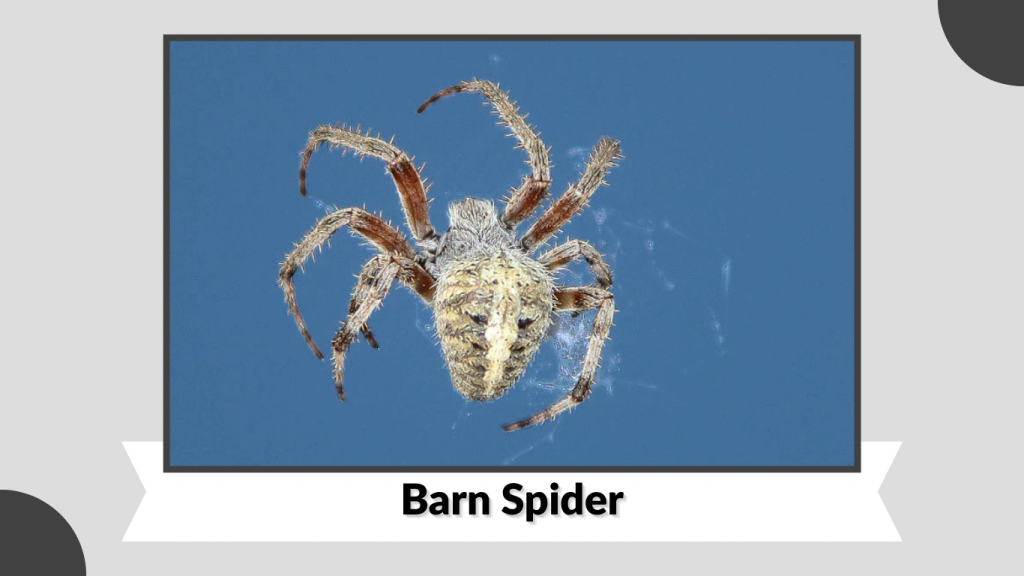
A large, sturdy orb-weaver often found on buildings and outdoor structures, the Barn Spider is known for its brown, black, and white mottled markings. It frequently builds big circular webs around barns, porches, eaves, and sheds, making it a familiar nighttime presence in rural and suburban areas.
Identification
- Color: Brown to tan with black-and-white patterning
- Size: Females 14–20 mm; males smaller
- Legs: Strong legs with striped or banded black-and-white segments
- Body Shape: Rounded abdomen with mottled markings
- Web: Large orb webs rebuilt nightly
- Texture: Moderately hairy, giving a rugged look
- Movement: Slow climbing; quick motion when wrapping prey
Habitat & Range
The Barn Spider is widespread across the United States and Canada, especially in the Northeast, Midwest, and Great Lakes regions. It prefers human-made structures—barns, porches, garages, attics, and fences—where lights draw in flying insects. It can also be found in wooded edges and gardens.
Behavior
This species is a nighttime web-builder, constructing a fresh web each evening and sitting at the center to catch moths, beetles, and flying insects. During the day, it hides in a protected corner. When disturbed, it usually retreats or drops from the web rather than displaying aggression.
Bite & Safety
Barn Spiders are harmless and non-aggressive, posing no threat to people or pets. Bites are extremely uncommon and mild, resulting in slight irritation at most. They are beneficial for controlling nighttime insect populations around homes and outdoor structures.
5. White-Banded Fishing Spider
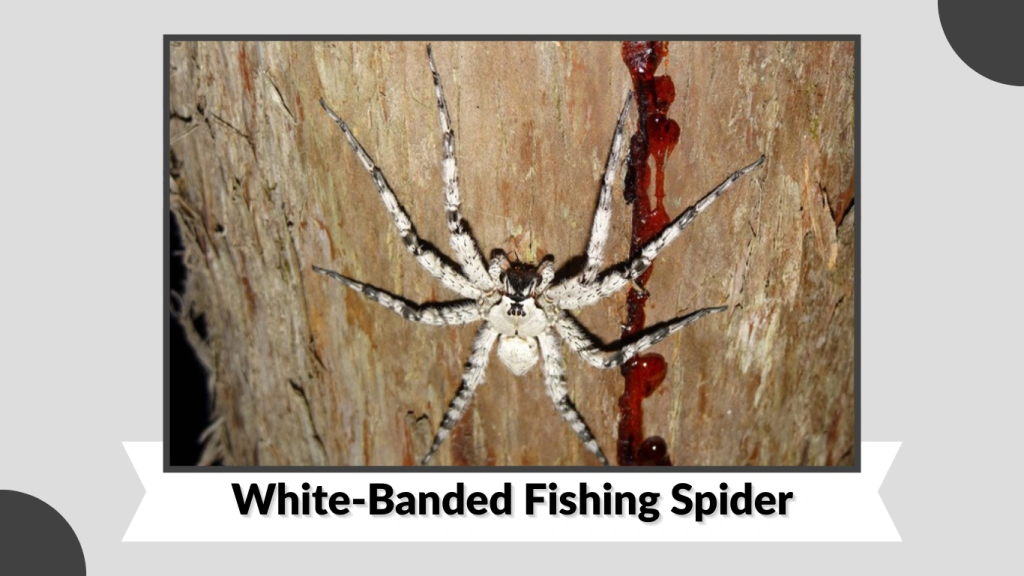
A large, long-legged spider with bold contrast patterns, the White-Banded Fishing Spider is recognized by its pale body and striking black-and-white banded legs. Common in the southeastern United States, it is often found near water, wooded areas, and even on the exterior walls of homes.
Identification
- Color: Pale gray or white body with dark markings
- Size: Large; females can reach 20–25 mm body length
- Legs: Very long with distinct black-and-white stripes
- Body Shape: Flattened profile built for speed and climbing
- Texture: Lightly hairy legs and smooth body
- Movement: Fast runner capable of skimming water surfaces
Habitat & Range
This species is widespread in Alabama, Georgia, Florida, the Carolinas, Texas, and much of the southeastern U.S. It lives near ponds, creeks, wetlands, wooded trails, and shaded building exteriors. Indoors, it may occasionally wander into porches, garages, or basements.
Behavior
White-Banded Fishing Spiders are ambush predators that wait quietly on tree trunks, walls, or vegetation. They do not rely on webs to catch prey. Instead, they use speed and stealth, sometimes even running across water to escape threats or pursue insects.
Bite & Safety
Although large and intimidating, this spider is not dangerous. It avoids confrontation and typically runs when approached. Bites are rare and mild, causing temporary redness or swelling. As effective hunters of mosquitoes and other insects, they are beneficial to the environment.
6. Regal Jumping Spider (Female)
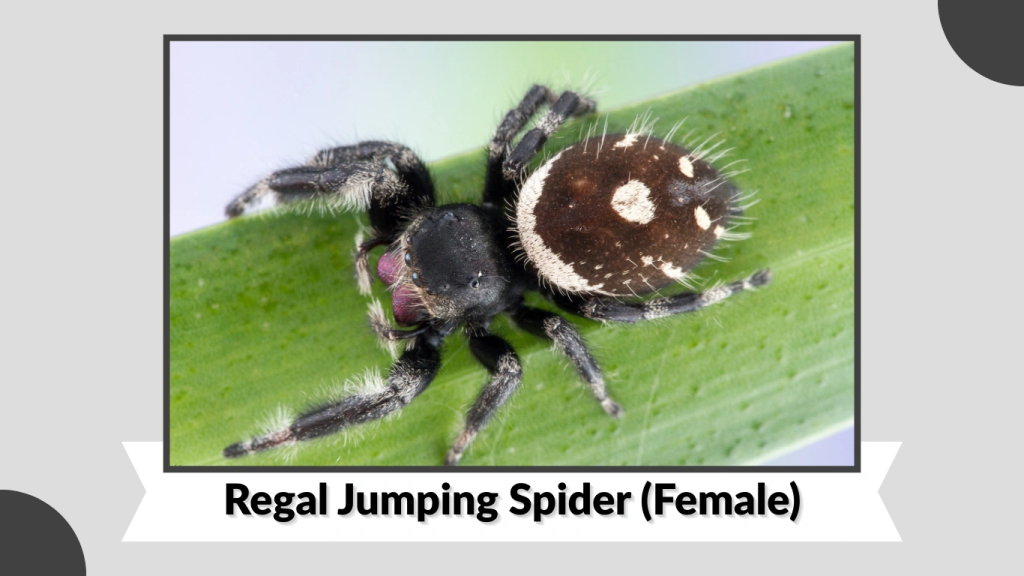
A large, fuzzy jumping spider with bold black-and-white markings, the female Regal Jumping Spider is one of the biggest and most recognizable jumpers in the southeastern United States. It is frequently seen on walls, gardens, fences, and sunny outdoor areas where it actively hunts insects.
Identification
- Color: Black body with white spots and pale bands
- Size: Large for a jumping spider, typically 12–22 mm
- Legs: Thick, hairy, and often showing white patterns
- Eyes: Large forward-facing eyes for sharp vision
- Body Shape: Big, robust abdomen with rounded edges
- Texture: Very fuzzy and densely haired
- Movement: Powerful jumps and controlled stalking movements
Habitat & Range
The Regal Jumping Spider is widespread in Florida, Georgia, Alabama, Mississippi, and South Carolina, with occasional sightings in Texas and other southern states. It prefers sunny walls, garden plants, tree bark, and outdoor structures where insects are plentiful.
Behavior
This species is bold, curious, and highly visual. It hunts by creeping close to prey and leaping forward with precision. Females often appear cautious but will observe nearby activity closely, sometimes turning their heads to follow movement. They do not build webs for hunting, only for resting or egg sacs.
Bite & Safety
Despite their size and fuzzy appearance, Regal Jumping Spiders are harmless to humans. Bites are rare and comparable to a mild bug bite. These spiders are excellent natural pest controllers, feeding on flies, moths, beetles, and other small insects around homes and gardens.
7. Canopy Jumping Spider
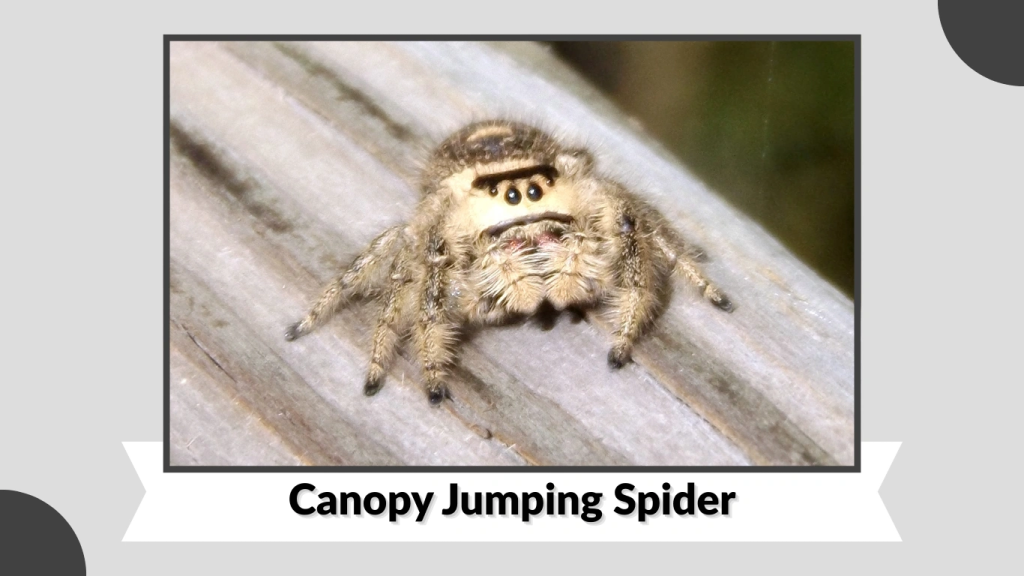
A large, dark-bodied jumper with crisp white patches, the Canopy Jumping Spider is a visually striking species commonly found in warm regions of the southeastern and south-central United States. Its bold contrast, fuzzy legs, and confident movements make it one of the more noticeable large jumping spiders around homes and gardens.
Identification
- Color: Deep black or dark brown with prominent white side patches
- Size: Large for a jumper, usually 10–18 mm
- Legs: Thick, hairy, and often showing pale or white accents
- Eyes: Large central eyes providing sharp, forward vision
- Body Shape: Heavy, rounded abdomen typical of big Phidippus species
- Texture: Dense, velvety hair covering the body
- Movement: Strong jumps and steady exploratory walking
Habitat & Range
This species is found primarily in Texas, Florida, Georgia, the Carolinas, and nearby states. It thrives in warm, humid climates and is often spotted on garden plants, tree trunks, porch railings, walls, and fence posts. It also appears on sunlit windows and outdoor furniture where insects gather.
Behavior
The Canopy Jumping Spider is observant and confident, often staring directly at movement with its large eyes. It hunts by stalking insects and leaping with accuracy, relying on vision rather than webs. Although curious, it remains cautious and will retreat if approached too closely.
Bite & Safety
This spider is harmless to humans. Bites are extremely rare and mild, similar to a small bug bite. The species serves as a helpful predator, reducing populations of flies, moths, gnats, and other small insects around buildings and gardens.
8. False Widow Spider (Steatoda grossa)
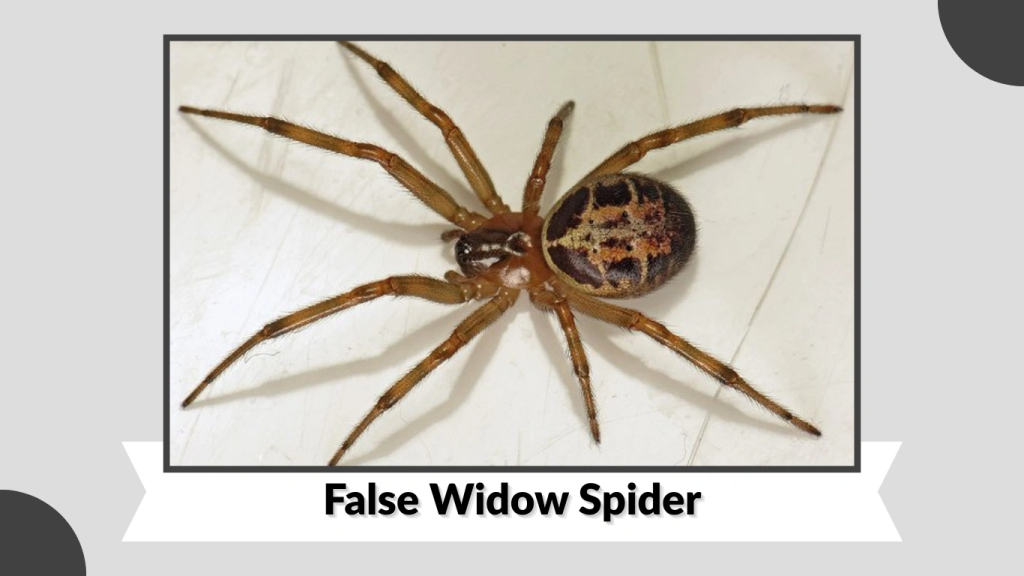
A plump, dark-bodied spider sometimes showing faint white or pale markings, the False Widow is a common species in homes, sheds, and outdoor structures. Although often confused with widow spiders, it is far less dangerous and widely found across the United States, UK, Australia, and Canada.
Identification
- Color: Dark brown to black with occasional white or cream markings
- Size: Females 8–14 mm; males smaller and slimmer
- Legs: Long, thin legs with subtle pale banding
- Body Shape: Bulbous abdomen resembling a small black “tear drop”
- Texture: Smooth, shiny body with minimal hair
- Movement: Slow walking; quick retreat into silk retreats
Habitat & Range
False Widows are widely distributed across North America, the UK, Europe, and Australia. They thrive around homes—sheds, garages, eaves, basements, decks, and outdoor furniture. They prefer dark corners and cluttered areas where insects frequently wander into their irregular webs.
Behavior
These spiders build messy, three-dimensional webs and generally stay hidden during the day. They wait for prey to wander into the sticky silk, then quickly immobilize it with a fast bite and wrap. Despite their reputation, they avoid confrontation and rarely leave their webs unless disturbed.
Bite & Safety
False Widows are not aggressive. Their bites are uncommon and usually mild, causing localized swelling or soreness. Although stronger than many house spiders, their venom is far less potent than true widows. They help remove unwanted insects like roaches, beetles, and woodlice around homes.
9. Beach Wolf Spider (Arctosa littoralis)
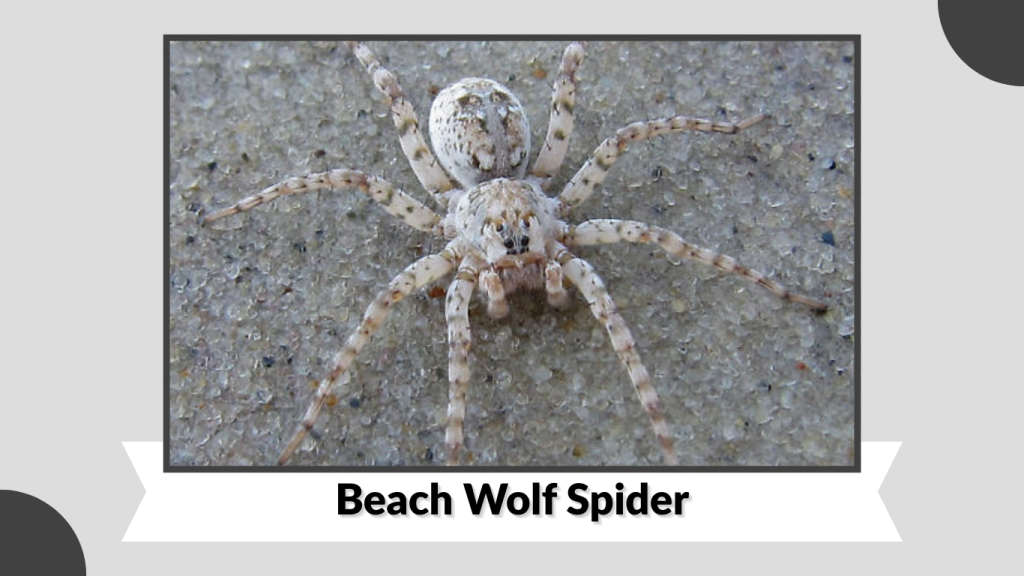
A large, fast-moving wolf spider with a pale body and contrasting dark leg markings, the Beach Wolf Spider is commonly found near lakes, rivers, dunes, and sandy soil. Its bold black-and-white appearance and quick movements make it a noticeable species across the northern United States and southern Canada.
Identification
- Color: Light gray or white body with dark or black leg bands
- Size: Large; adults often 18–25 mm
- Legs: Long, strong legs with bold black-and-white striping
- Body Shape: Elongated, athletic build typical of wolf spiders
- Texture: Moderately hairy, especially on the legs
- Movement: Extremely fast runner capable of quick bursts across sand
Habitat & Range
The Beach Wolf Spider is widely distributed in Michigan, Minnesota, Ohio, Ontario, and throughout the Great Lakes region. It prefers sandy ground near water—beaches, dunes, riverbanks, lakesides, and open sandy fields. It may wander onto porches or walls near these environments.
Behavior
This spider does not build webs for hunting. Instead, it relies on speed and agility to chase down insects on open ground. It hides under driftwood, rocks, and sand crevices during the day and becomes more active in early morning and evening. Though alert and quick, it usually flees from humans.
Bite & Safety
While its size can be intimidating, the Beach Wolf Spider is harmless to humans. Bites are rare and typically cause only mild redness or swelling. It plays an important role in the ecosystem by reducing populations of flies, beetles, ants, and other ground-dwelling insects.
FAQs
1. Are big black and white spiders dangerous?
Most large black-and-white spiders—such as orb-weavers, fishing spiders, and jumping spiders—are harmless to humans. Their bites are rare and typically no worse than a mild bee sting. They avoid confrontation and prefer to escape or hide when disturbed.
2. Why do these spiders have black-and-white patterns?
The bold coloration helps with camouflage, communication, and predator deterrence. Striped legs or contrasting patches can confuse predators, while bright banding may help attract prey by reflecting light in webs.
3. Can big black and white spiders be found inside homes?
Yes, some species like False Widows and Fishing Spiders may enter homes, especially basements, garages, or porches. They usually come inside while hunting insects or seeking shelter but do not infest homes.
4. What big black and white spider is common in gardens?
The most common garden species include the Yellow Garden Spider and the Banded Garden Spider. These large orb-weavers create big circular webs between plants, fences, and shrubs and are beneficial for natural pest control.
5. How can I safely remove a large spider from my home?
Use a cup-and-paper method: gently place a cup over the spider, slide a stiff paper underneath, and carry it outside. Avoid squishing them—they play an important ecological role by reducing insect populations.