
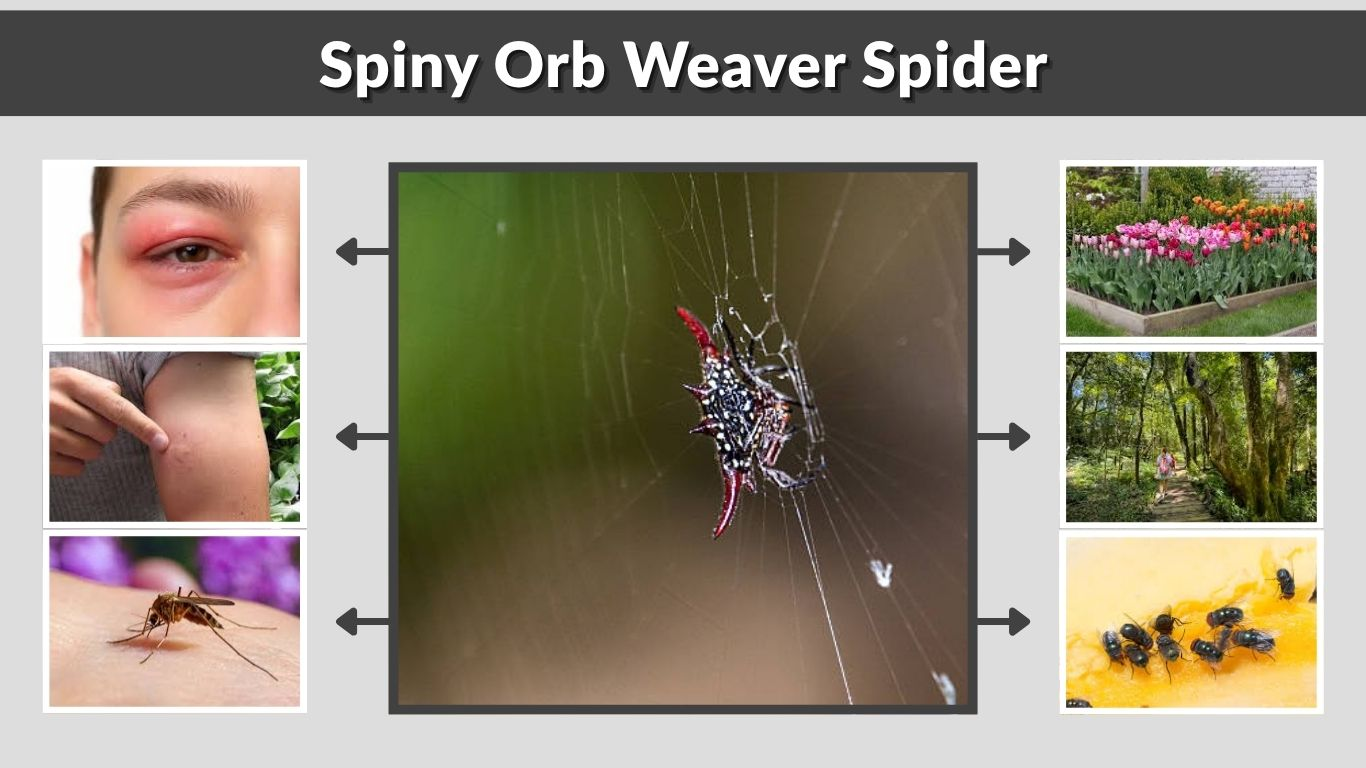
Spiny orb weaver spiders are among the most unusual and colorful spiders found in gardens and tropical outdoor spaces. Their small bodies, bright markings, and sharp spines make them easy to recognize compared to other orb weaver species. Despite their intimidating appearance, these spiders are harmless to humans and are highly beneficial for controlling flying insect populations. Spiny orb weavers are also famous for their perfectly circular webs, which are carefully constructed using strong silk designed to trap prey efficiently in warm and humid environments around the world.
What Is a Spiny Orb Weaver Spider?

Spiny orb weaver spiders belong to the orb weaver family, a large group of spiders known for building circular webs. These spiders are recognized by their flattened bodies and sharp abdominal spines that create a crab-like appearance. Most species are small in size but stand out because of their colorful patterns and unusual body shape.
Why Spiny Orb Weavers Look Different
Unlike many common spiders, spiny orb weavers have hardened outer bodies with noticeable spikes extending from the abdomen. These features help protect them from predators while also making them appear larger and more dangerous than they actually are.
Spiny Orb Weaver Spider Identification
Identifying a spiny orb weaver is usually easy because of its unique shape and bright coloration. Their appearance often surprises people who encounter them in gardens or near shrubs.
Common identification features include:
- Small rounded body shape
- Six sharp abdominal spines
- Bright white, yellow, orange, or red colors
- Black spots or markings on the shell
- Circular orb-shaped web structures
Male vs Female Spiny Orb Weavers
Female spiny orb weavers are much larger and easier to notice than males. Females typically build the large webs used for trapping insects, while males remain smaller and less colorful.
Female Spiny Orb Weaver
Females have stronger body coloration and more prominent spines. Their larger size helps them produce stronger silk and construct more effective webs for catching prey.
Male Spiny Orb Weaver
Male spiny orb weavers are smaller and less visually striking. They are rarely seen because they usually stay near the female’s web during mating periods rather than building their own large webs.
Spiny Orb Weaver Spider Habitat

Spiny orb weaver spiders thrive in warm outdoor environments where flying insects are abundant. They are commonly found in gardens, forests, shrubs, and areas with dense vegetation. These spiders prefer humid climates and are especially active during warmer months when insect activity increases significantly.
Where Spiny Orb Weavers Commonly Live
Spiny orb weavers select habitats that provide shelter, web-building support, and steady insect movement. Their webs are often stretched between branches, fences, or plants where prey is likely to fly.
Typical habitats include:
- Gardens and flower beds
- Forest edges and wooded areas
- Bushes and shrubs
- Tropical and subtropical regions
- Outdoor spaces near lights and plants
Why Warm Climates Help Spiny Orb Weavers
Warm temperatures support larger insect populations, giving spiny orb weavers better hunting opportunities. Humid conditions also help maintain the flexibility and durability of their silk webs, allowing them to remain effective for longer periods.
These spiders are most commonly active during late summer and early fall. During this time, they spend evenings repairing or rebuilding webs to capture moths, flies, mosquitoes, and other flying insects throughout the night.
Spiny Orb Weaver Spider Web
The web of a spiny orb weaver is one of its most remarkable features. These spiders create symmetrical circular webs designed to trap prey quickly and efficiently. Their silk is lightweight yet durable enough to withstand wind and the impact of flying insects.
What Makes Their Web Unique
Spiny orb weaver webs are carefully engineered structures made from multiple silk layers. The web usually contains radial support lines connected by sticky spiral threads that trap insects on contact.
Unlike random spider webs, orb webs display highly organized geometric patterns that allow the spider to detect even the smallest vibration caused by trapped prey.
Spiny Backed Orb Weaver Spider Web Facts
Spiny orb weaver spiders regularly repair or rebuild damaged webs to maintain effectiveness. Some spiders even consume old silk before constructing a new web, helping recycle nutrients for future web production.
Interesting web facts include:
- Webs are usually built during evening hours
- Circular designs help maximize prey capture
- Sticky silk traps flying insects efficiently
- Webs are commonly rebuilt overnight
- Larger females produce stronger web structures
How Spiny Orb Weavers Spin Their Webs
Web construction begins with anchor silk attached to nearby surfaces such as branches or fences. After forming the outer frame, the spider creates radial lines extending outward from the center. Sticky spiral silk is then added carefully to create the final trapping surface.
This process requires precision and coordination, allowing the spider to create a perfectly balanced structure capable of supporting both the spider and captured prey.
Spiny Orb Weaver Spider Spinning a Web
Spiny orb weaver spiders are highly skilled web builders that rely on silk webs for survival. Their web-spinning process is both precise and efficient, allowing them to create strong circular traps capable of catching flying insects within a short period. Most web construction happens during the evening when environmental conditions are calmer and insect activity begins to increase.
How Web Construction Happens
The spider begins by releasing silk threads into the air until they attach to a nearby surface. Once the anchor line is secure, the spider creates the outer frame and gradually forms radial support lines that extend outward like spokes on a wheel.
After the basic structure is complete, sticky spiral silk is added carefully between the radial threads. This sticky layer is responsible for trapping insects that fly into the web during the night.
Why Web Building Is Important
Web construction plays a major role in the spider’s survival because orb weavers do not chase prey directly. Instead, they depend entirely on their webs for hunting and protection.
Important purposes of web building include:
- Capturing flying insects
- Detecting vibrations from trapped prey
- Providing temporary shelter
- Supporting reproduction and survival
- Conserving energy while hunting
The spider usually waits near the center of the web or hides nearby while monitoring vibrations caused by struggling insects.
Are Spiny Orb Weaver Spiders Poisonous?

Although spiny orb weaver spiders are venomous like most spiders, they are not considered dangerous to humans. Their venom is designed primarily to immobilize insects and is far too mild to cause serious harm to people. These spiders are also extremely non-aggressive and prefer avoiding human contact whenever possible.
Are They Dangerous to Humans?
Spiny orb weavers rarely bite humans because they are shy and defensive by nature. Most encounters happen accidentally while gardening or walking through vegetation where webs have been built.
Even if a bite occurs, symptoms are usually minor and temporary. Most people experience only slight irritation that disappears without medical treatment.
Do Spiny Orb Weavers Bite?
Bites are uncommon because these spiders prefer escaping rather than attacking. A bite generally occurs only if the spider becomes trapped against human skin or feels directly threatened.
Possible bite symptoms include:
- Mild redness
- Temporary swelling
- Minor itching or irritation
- Slight discomfort around the bite area
- Short-term skin sensitivity
Serious reactions are extremely rare and usually linked to allergies rather than the spider’s venom itself.
How to Treat a Spiny Orb Weaver Bite
Simple first aid is normally enough for treating a spiny orb weaver bite. Washing the affected area and reducing swelling helps relieve discomfort quickly.
Cold compresses and over-the-counter antihistamines may also help if irritation develops. Medical attention is only necessary if unusual symptoms or allergic reactions occur.
Spiny Orb Weaver Spider Facts

Spiny orb weaver spiders are fascinating creatures with several unusual features that make them stand out among common garden spiders. Their colorful bodies, defensive spines, and detailed web designs have made them popular subjects for nature photography and wildlife observation.
Interesting Facts About Spiny Orb Weavers
These spiders possess unique characteristics that help them survive in outdoor environments filled with predators and changing weather conditions.
Interesting facts include:
- Their bodies resemble tiny crabs or armored insects
- Spines help discourage predators from attacking
- Females are much larger than males
- They help reduce mosquito and fly populations
- Their colorful appearance acts as a warning signal
Some species can display highly vibrant colors that vary depending on age, habitat, and geographic location.
Ecological Importance of Spiny Orb Weavers
Spiny orb weavers play an important role in maintaining ecological balance by controlling insect populations naturally. Gardens and outdoor spaces benefit from their presence because they help reduce harmful flying pests without chemicals or pesticides.
Their webs also contribute to local ecosystems by supporting food chains involving birds, insects, and other wildlife species. Despite their intimidating appearance, spiny orb weavers are beneficial spiders that rarely pose any threat to humans.
FAQs
Are spiny orb weaver spiders harmful to pets?
Spiny orb weaver spiders are generally harmless to pets. Their venom is mild and designed for small insects rather than large animals. Most pets ignore these spiders, and bites are extremely uncommon even when accidental contact occurs outdoors.
How large is a spiny orb weaver spider?
Spiny orb weaver spiders are relatively small compared to many other orb weaver species. Females are usually larger than males and often measure less than an inch across, including their distinctive abdominal spines.
What do spiny orb weaver spiders eat?
These spiders mainly feed on flying insects such as mosquitoes, flies, moths, beetles, and small wasps. Their sticky circular webs trap prey efficiently, allowing the spider to immobilize and consume insects caught during nighttime activity.
Why are spiny orb weavers brightly colored?
Bright coloration may help warn predators that the spider could be dangerous or difficult to eat. Their colorful bodies and sharp spines create a defensive appearance that helps discourage attacks from birds and larger insects.
When are spiny orb weavers most active?
Spiny orb weaver spiders are usually most active during warm months, especially in late summer and early fall. They commonly build or repair webs during the evening and remain active throughout the night while hunting insects.
