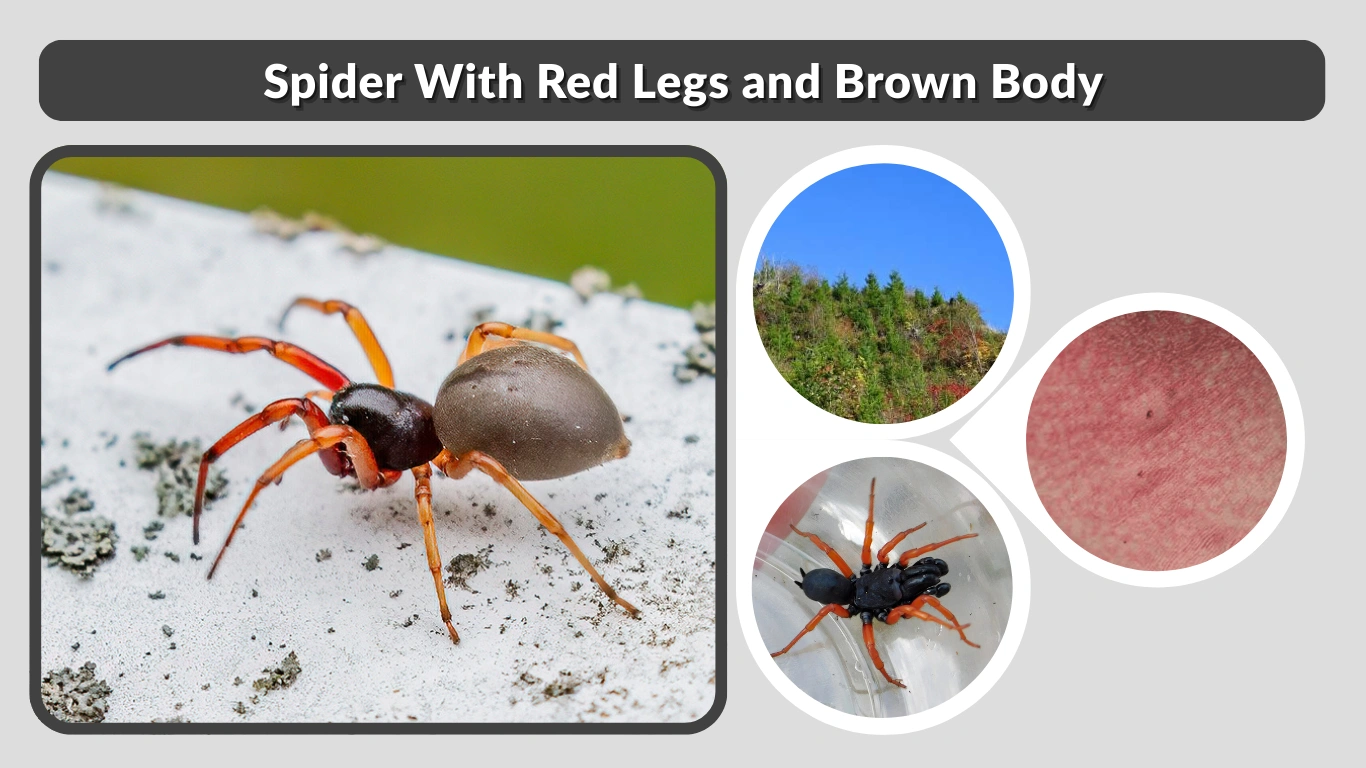
Seeing a spider with red legs and a brown body can be unsettling, especially when it appears indoors or in a frequently used space. This distinctive color combination is shared by several different spider species, most of which are harmless to humans. Correct identification is important because body shape, behavior, and habitat matter far more than color alone. This guide helps you recognize key features, understand which spiders commonly match this appearance, and determine whether the spider poses any real risk.
Identification Features
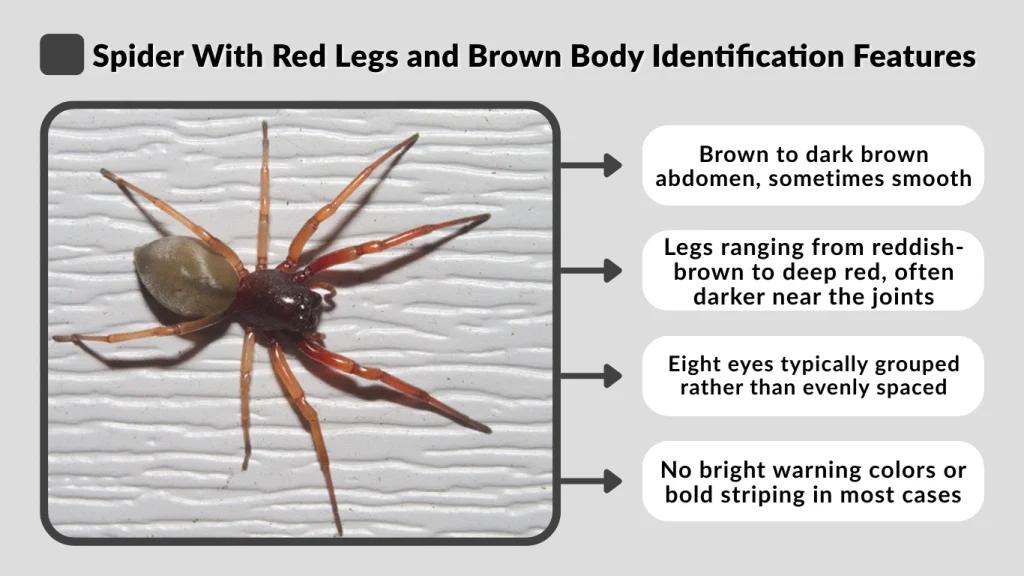
- Brown to dark brown abdomen, sometimes smooth or slightly patterned
- Legs ranging from reddish-brown to deep red, often darker near the joints
- Medium-sized body with a compact or slightly elongated shape
- Eight eyes typically grouped rather than evenly spaced
- Legs may appear shiny or lightly hairy depending on species
- Overall coloration often looks darker in low light
- No bright warning colors or bold striping in most cases
Common Spiders With Red Legs and Brown Body

Several unrelated spiders share this color pattern, which is why misidentification is common. Below are the most frequently encountered species that fit this description.
Broad-Faced Sac Spider (Trachelas tranquillus)
This spider is one of the most common causes of “red legs and brown body” sightings in homes. It has a dark brown to grayish abdomen and noticeably reddish legs, especially on adults. Broad-faced sac spiders are active hunters rather than web builders and are often found wandering across walls or floors at night. They are not aggressive and usually bite only if trapped.
Woodlouse Spider (Dysdera crocata)
The woodlouse spider has a darker brown or gray abdomen with deep red legs and a reddish cephalothorax. Its most noticeable feature is its large forward-facing fangs, which are adapted for hunting woodlice. This species is typically found outdoors under rocks, logs, or leaf litter but may wander indoors accidentally. Despite its intimidating appearance, it is not dangerous to humans.
Red-Legged Purseweb Spider (Sphodros species)
Purseweb spiders are thicker and more robust than most house spiders. They have dark brown bodies and strong red legs, giving them a stocky appearance. These spiders build silk-lined burrows and rarely leave them, which makes indoor encounters uncommon. Their coloring often leads to confusion with more dangerous species, even though they are generally shy.
False Wolf Spider Variants
Some false wolf spiders also display reddish legs paired with a brown body. Unlike true wolf spiders, these species may have smoother bodies and less hair. They do not build webs and rely on active hunting. Their size and movement style can make them appear more threatening than they actually are.
Size and Physical Characteristics
Most spiders with red legs and brown bodies fall into the small-to-medium size range. Adult body length typically ranges from 6 to 15 millimeters, although leg span can make them appear much larger. Females are usually slightly larger and rounder than males, especially during breeding seasons.
Color intensity can vary with age, environment, and recent molting. Juveniles often appear lighter, with less pronounced red in the legs. As spiders mature, the leg coloration usually deepens, making the red tones more noticeable under natural or artificial light.
Geographic Range and Distribution
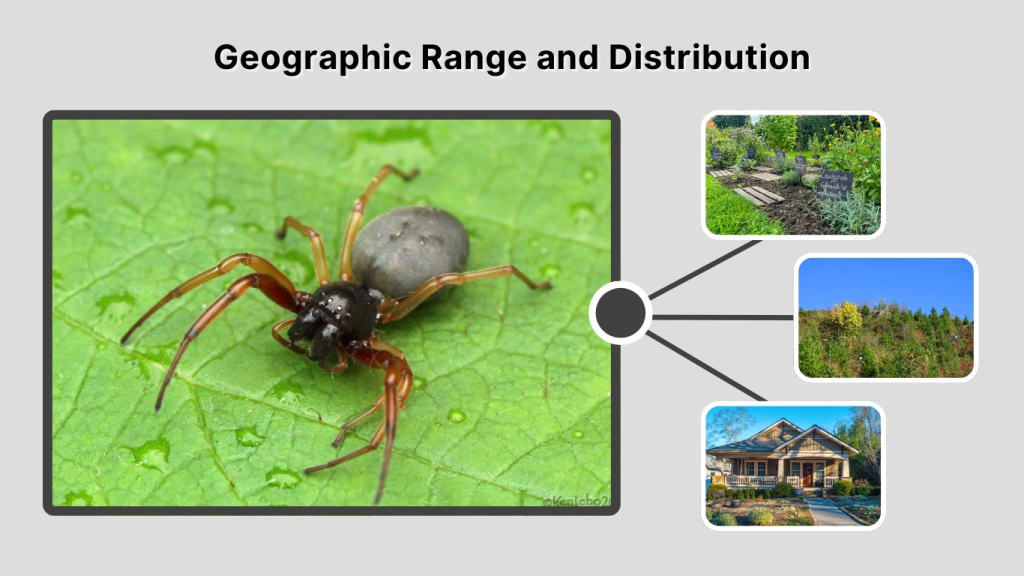
- Widely distributed across North America
- Common in parts of Europe
- Found in limited regions of Asia
- More frequent in temperate climates
- Often seen in urban and suburban areas
These spiders are adaptable and thrive in areas where insects are abundant. Seasonal sightings increase during warmer months when spiders become more active and males roam in search of mates.
Habitat and Living Environment
Spiders with red legs and brown bodies are typically outdoor species, but they may enter homes accidentally. Outdoors, they prefer sheltered environments such as leaf litter, woodpiles, beneath stones, or inside ground crevices. These locations provide moisture, protection, and access to prey.
Indoors, they are most often found in basements, garages, bathrooms, and storage areas. They do not infest homes in the traditional sense and usually do not reproduce successfully indoors. Their presence often indicates nearby outdoor habitats rather than a household problem.
Behavior and Activity Patterns
- Mostly nocturnal and more active after dark
- Prefer walking or running rather than web-building
- Hide during the day under objects or in crevices
- Avoid human interaction when possible
- May freeze or retreat when disturbed
- Increased movement during mating seasons
These spiders are solitary hunters that rely on stealth rather than traps. Instead of building large webs, they roam surfaces in search of insects such as ants, flies, and small beetles. Their quick movements often startle people, but this behavior is defensive rather than aggressive.
Is the Spider Dangerous to Humans?
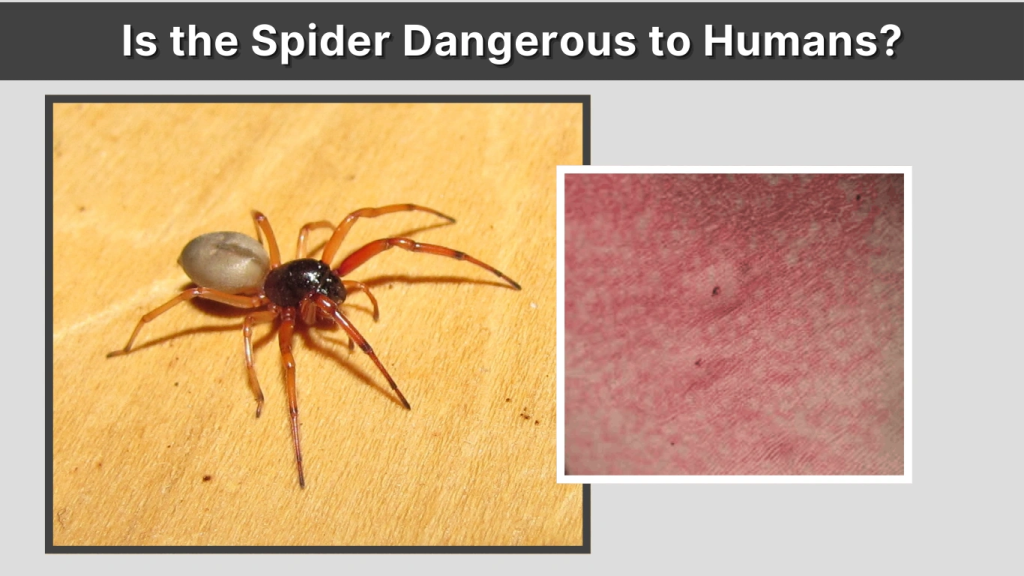
Spiders with red legs and brown bodies are not considered dangerous to humans. While they do possess venom like nearly all spiders, their venom is designed to subdue small insects, not people. Bites are uncommon and usually occur only when the spider is trapped against skin or accidentally handled.
In most cases, a bite results in mild, localized discomfort similar to a mosquito bite. Serious reactions are extremely rare and typically associated with secondary infection or individual sensitivity rather than venom toxicity.
Spider Bite Symptoms and Treatment
- Mild redness or swelling
- Slight burning or stinging sensation
- Itching around the bite area
- Symptoms usually fade within a few days
Basic treatment involves washing the area with soap and water, applying a cold compress to reduce swelling, and avoiding scratching. Over-the-counter antihistamines or hydrocortisone cream can help with itching. Medical attention is rarely necessary unless symptoms worsen or signs of infection appear.
Spider With Red Legs and Brown Body vs Similar Spiders
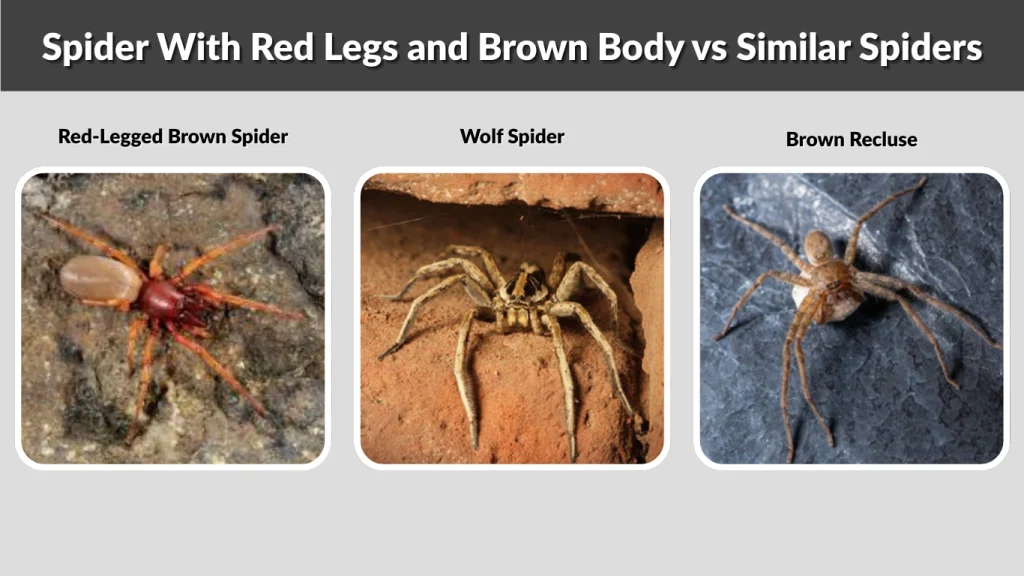
| Feature | Red-Legged Brown Spider | Wolf Spider | Brown Recluse |
| Leg color | Reddish or red-brown | Brown or gray | Uniform brown |
| Body shape | Compact to oval | Large and hairy | Slim and smooth |
| Web use | Minimal or none | None | Irregular webs |
| Behavior | Shy, wandering hunter | Fast ground hunter | Reclusive |
| Medical risk | Low | Low | Medically significant |
This comparison highlights why color alone should never be used for identification. Shape, behavior, and habitat provide more reliable clues than leg color.
How to Get Rid of Red-Legged Brown Spiders Safely
- Seal cracks and gaps around doors and windows
- Reduce clutter in basements and storage areas
- Remove outdoor debris near foundations
- Use sticky traps for monitoring, not elimination
- Relocate spiders outdoors when possible
Chemical treatments are rarely needed and often unnecessary. Because these spiders help control pest populations, removing entry points is a more effective long-term solution than killing them.
Ecological Importance
Spiders with red legs and brown bodies play an important role in controlling insect populations. By feeding on common household and garden pests, they help maintain ecological balance without the use of chemicals.
Eliminating them can unintentionally lead to increased insect activity. In most cases, allowing these spiders to live outdoors or gently relocating indoor wanderers is the best approach for both humans and the environment.
FAQs
What spider has red legs and a brown body?
Several species match this description, including the broad-faced sac spider, woodlouse spider, and certain purseweb spiders. Color alone is not enough for identification, as size, behavior, habitat, and body shape all play important roles in determining the exact species.
Are red-legged brown spiders poisonous?
They are venomous, like nearly all spiders, but not medically dangerous to humans. Their venom is mild and intended for insects. Bites are rare and usually cause only minor irritation that resolves without treatment.
Can these spiders live indoors?
They may enter homes accidentally, especially during warmer months, but they do not typically establish indoor populations. Most indoor sightings are temporary and linked to nearby outdoor habitats.
How big do red-legged brown spiders get?
Most species range from 6 to 15 millimeters in body length, though their leg span can make them appear larger. Females are usually bigger than males, especially when carrying eggs.
Should I kill a spider with red legs?
Killing is unnecessary in most cases. These spiders are beneficial predators and pose little risk. Relocating them outdoors or preventing entry into the home is a more effective and environmentally friendly solution.