
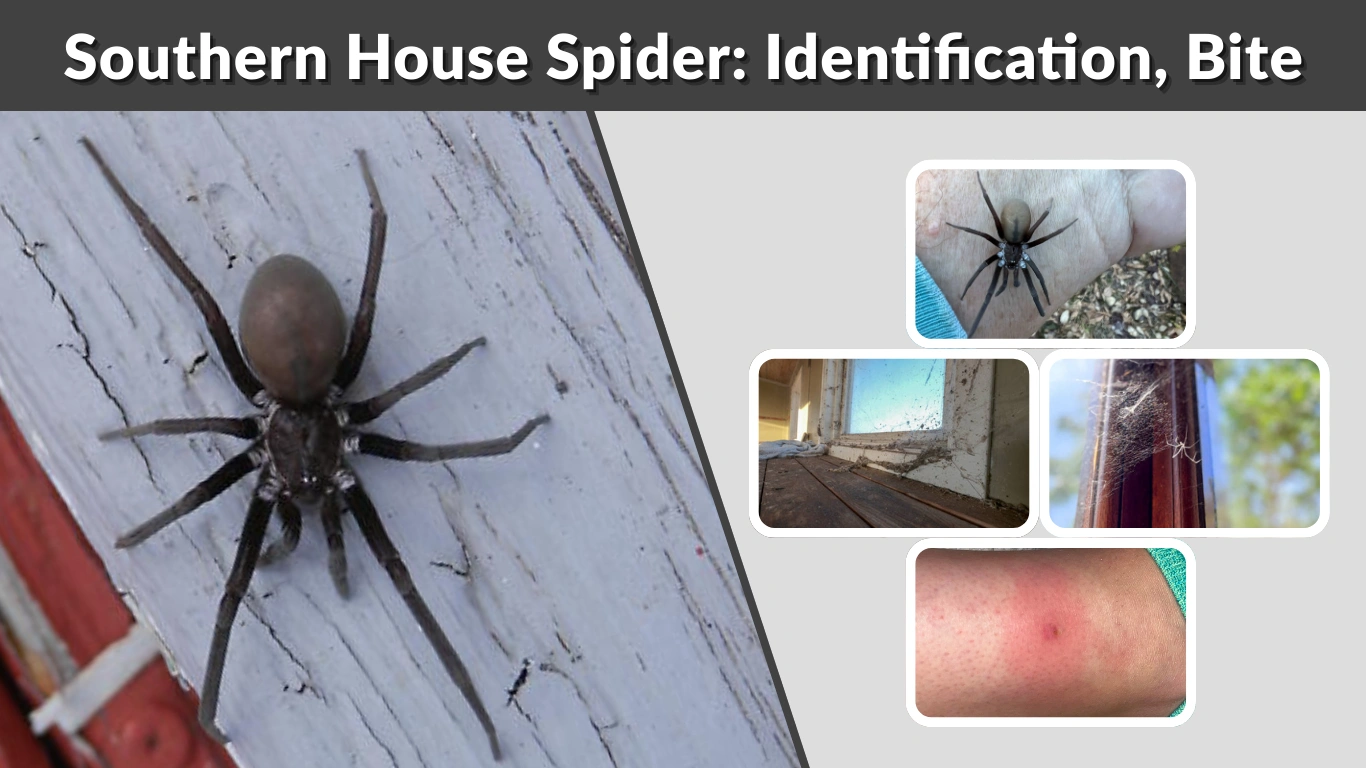
The southern house spider (Kukulcania hibernalis) is a common spider found throughout the southeastern United States. Although its appearance can be alarming—especially when spotted indoors—it is often harmless and far less dangerous than many people assume. In fact, this spider is frequently mistaken for the brown recluse, which causes unnecessary panic. Understanding how to identify a southern house spider, whether it poses a threat, and how to manage its presence can help you respond calmly and effectively.
What Is a Southern House Spider?
The southern house spider belongs to the crevice weaver family (Filistatidae). As its name suggests, it is commonly found in and around homes, particularly in warm and humid regions.
Scientific Name and Classification
- Scientific name: Kukulcania hibernalis
- Family: Filistatidae
- Common name: Southern house spider
These spiders are known for building dense, wool-like webs in cracks and crevices. Unlike orb-weaving spiders that create circular webs, southern house spiders construct irregular webs that serve as both shelter and a hunting platform.
Where Southern House Spiders Are Found
Southern house spiders are most common in:
- Florida
- Georgia
- Alabama
- Mississippi
- Louisiana
- Texas
- The Carolinas
They thrive in warm climates and are especially prevalent in coastal areas. However, they may also appear in other southern states with mild winters.
Why They Are Called “House” Spiders
These spiders prefer man-made structures because they provide stable shelter and reliable access to prey. Cracks in brick walls, window frames, garages, attics, and sheds offer ideal hiding spots. Homes also attract insects, which serve as their primary food source. Their ability to adapt to human environments is what earns them the name “house” spider.
Southern House Spider Identification Guide
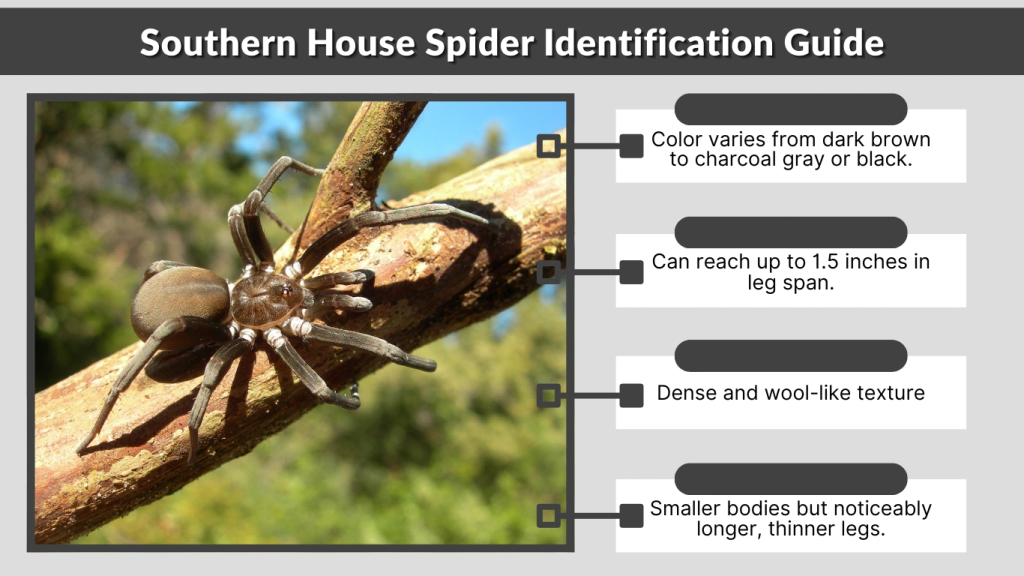
Correct identification is essential, especially since this species is often confused with the brown recluse. Fortunately, there are clear differences once you know what to look for.
Size and Physical Appearance
Southern house spiders are medium to large in size.
- Females: Can reach up to 1.5 inches in leg span. They have stout bodies and relatively shorter legs compared to males.
- Males: Smaller bodies but noticeably longer, thinner legs.
Color varies from dark brown to charcoal gray or black. Females typically appear darker and more robust, while males are lighter brown and slimmer.
The body is generally smooth and somewhat velvety in appearance. Unlike some spiders, they lack bright markings or patterns.
Male vs Female Differences
The differences between males and females are significant:
- Males roam more frequently, especially during mating season. This is when they are most often seen inside homes.
- Females remain in their webs and rarely wander far from their hiding spot.
- Males are often mistaken for brown recluse spiders because of their lighter color and long legs.
If you see a spider actively walking across a wall or floor, it is likely a male searching for a mate rather than a female establishing a web.
Southern House Spider Web Appearance
The web of a southern house spider is a key identifying feature.
- Dense and wool-like texture
- Gray or dusty in appearance
- Built in cracks, corners, and crevices
- Often includes a funnel-shaped retreat
Unlike symmetrical orb webs, these webs look messy and irregular. They may accumulate dust over time, giving them an untidy look. The spider typically stays hidden in a small retreat within the web, waiting for vibrations that signal trapped prey.
Southern House Spider vs Brown Recluse
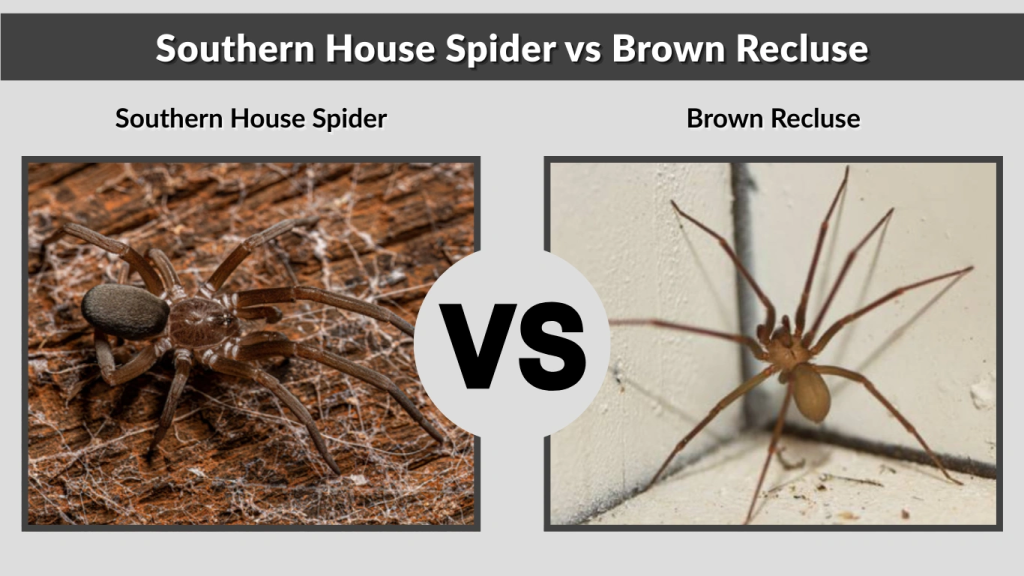
One of the most common concerns about southern house spiders is whether they are brown recluses. The confusion is understandable, but the two species differ in important ways.
Key Physical Differences
- Violin marking: Brown recluse spiders have a distinct violin-shaped marking on their back. Southern house spiders do not.
- Body shape: Brown recluses have a more uniform tan color and a smoother, more delicate appearance. Southern house spiders tend to be darker and bulkier (especially females).
- Eye arrangement: Brown recluse spiders have six eyes arranged in pairs, while southern house spiders have eight eyes.
These differences may require close observation, but the violin marking is usually the easiest clue.
Bite Comparison
Brown recluse bites can cause serious skin damage in rare cases. In contrast, southern house spider bites are:
- Extremely rare
- Mild when they occur
- Comparable to a minor insect sting
Southern house spiders are not aggressive and typically bite only when trapped against the skin.
Web and Habitat Differences
Brown recluses do not build large, obvious webs. Instead, they prefer hidden, undisturbed areas like cardboard boxes or storage spaces.
Southern house spiders, on the other hand, create visible wool-like webs in cracks and corners. If you see a thick, messy web around a window frame or brick wall, it is more likely to belong to a southern house spider.
Are Southern House Spiders Dangerous?
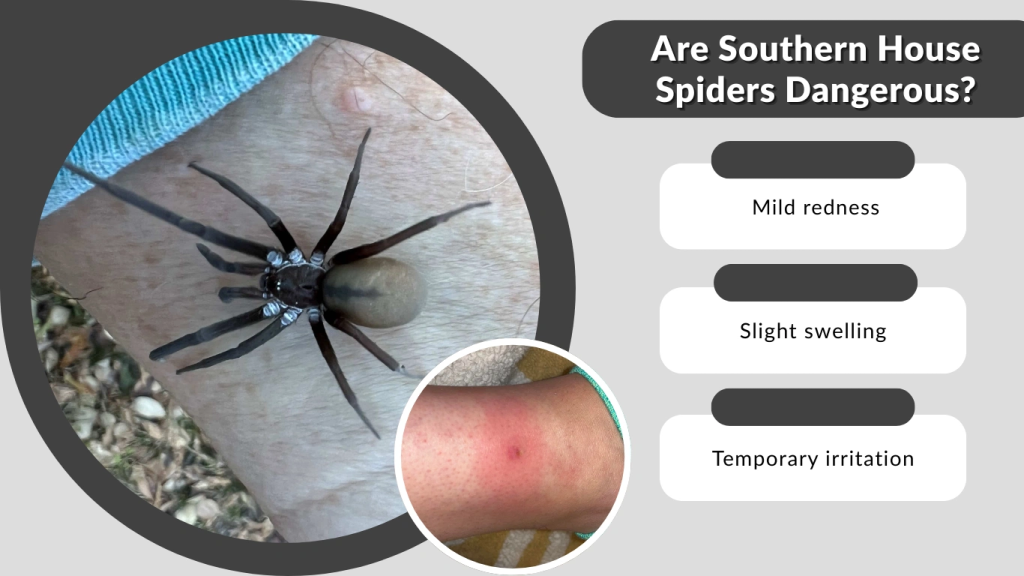
Despite their intimidating size, southern house spiders are not considered dangerous to humans.
Are They Poisonous or Venomous?
Southern house spiders are venomous, but only in the way most spiders are—they use venom to subdue insects. They are not poisonous, meaning they do not harm you by touch or proximity.
Their venom is designed for small prey, not humans.
Southern House Spider Bite Symptoms
Bites are uncommon and usually occur only if the spider feels threatened. When a bite does happen, symptoms may include:
- Mild redness
- Slight swelling
- Temporary irritation
Severe reactions are rare. Most symptoms resolve within a short time without medical treatment.
Southern House Spider Behavior and Habitat
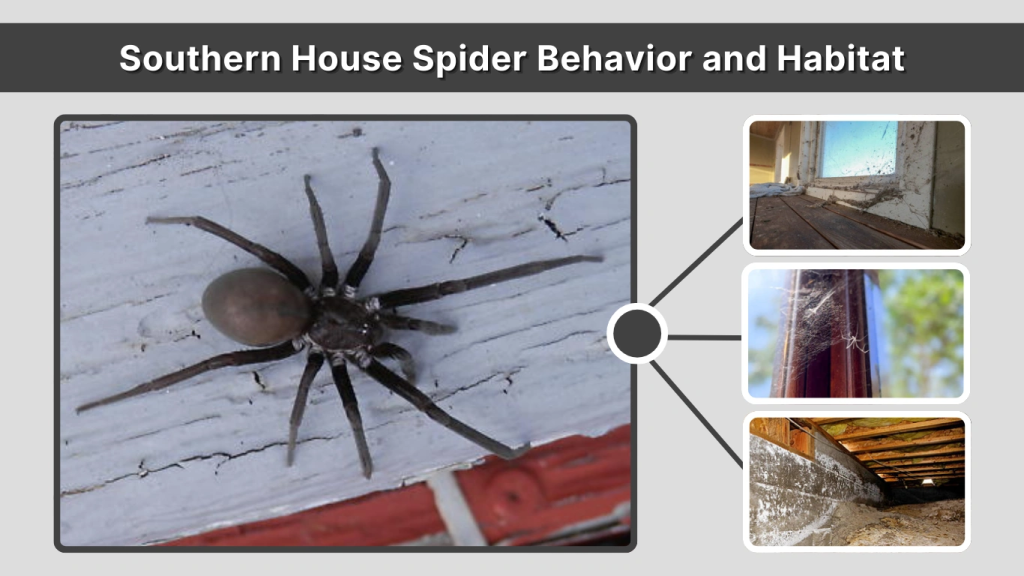
Understanding how southern house spiders behave can help you determine whether their presence is temporary or ongoing.
Where They Hide Indoors
Inside homes, southern house spiders prefer quiet, undisturbed areas. Common hiding spots include:
- Window frames and sills
- Cracks in walls or brick
- Corners of ceilings
- Basements and crawl spaces
- Attics and garages
Females typically remain inside their web retreats, rarely venturing out. Males, however, may wander across walls and floors, especially during mating season. This roaming behavior is often what brings them to your attention.
Outdoor Habitats
Outdoors, southern house spiders are frequently found:
- Under eaves and roof overhangs
- In tree bark crevices
- Around sheds and barns
- Inside brick or stone walls
They prefer dry, sheltered areas where they can anchor their web securely. Brick homes are especially attractive because mortar gaps create ideal web-building sites.
Seasonal Activity
Southern house spiders are most active during warmer months. Late summer and early fall often see an increase in sightings, primarily due to male spiders searching for mates.
During cooler months, activity decreases, but these spiders can survive indoors year-round where temperatures remain stable.
Why Southern House Spiders Enter Homes
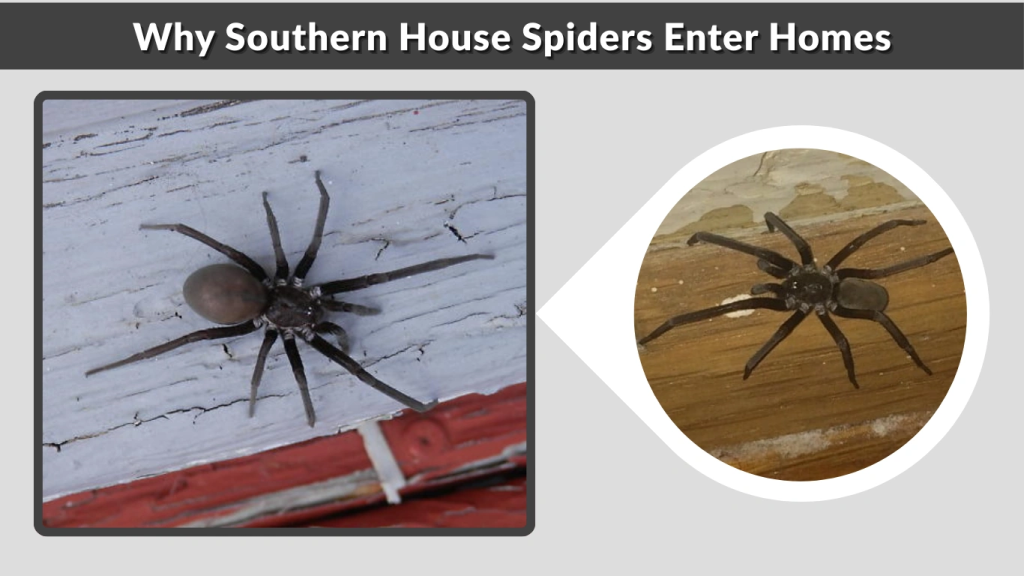
Southern house spiders don’t invade homes with the intention of causing harm. Their presence is usually driven by basic survival needs.
Primary reasons include:
- Searching for food (insects attracted by indoor lights)
- Seeking shelter from extreme heat or weather changes
- Looking for mating opportunities
- Following prey that has already entered the home
Because homes naturally attract insects like flies and mosquitoes, they provide an abundant food source. If insect populations are high, spider activity may increase as well.
How to Get Rid of Southern House Spiders
If you decide you don’t want southern house spiders in your home, several control methods can help manage their presence effectively.
Natural Removal Methods
For minor issues, simple solutions often work well:
- Vacuum webs and visible spiders
- Remove egg sacs when found
- Use a broom to clear webbing from corners
- Reduce indoor insect populations
Regular cleaning is one of the most effective non-chemical solutions. Eliminating their food source makes your home less attractive to them.
Sealing Entry Points
Preventing entry is just as important as removing existing spiders.
- Seal cracks and crevices with caulk
- Repair damaged window screens
- Install door sweeps
- Fix gaps around utility pipes
Small structural repairs can significantly reduce spider access points.
When to Call Pest Control
Professional pest control may be necessary if:
- There is a large infestation
- Spiders repeatedly return after removal
- You are unsure about proper identification
- You suspect brown recluse activity instead
A licensed pest control professional can confirm the species and recommend targeted treatment if needed.
How to Prevent Southern House Spiders
Prevention focuses on making your home less inviting to both spiders and their prey.
Effective prevention strategies include:
- Regular dusting and vacuuming of corners
- Decluttering storage areas
- Keeping outdoor lights away from entry points
- Trimming vegetation near exterior walls
- Reducing moisture in basements and crawl spaces
By minimizing insects and sealing structural gaps, you can significantly reduce the likelihood of spider activity indoors.
FAQs
Is a southern house spider dangerous to humans?
Southern house spiders are not considered dangerous. While they are venomous like most spiders, their venom is designed to immobilize insects. Bites are rare and typically cause only mild irritation, similar to a minor bug sting.
Can a southern house spider bite you?
Yes, but bites are uncommon. These spiders are not aggressive and usually bite only if trapped against the skin. Most bites result in mild redness or swelling and resolve without medical treatment.
How do I know if it’s a brown recluse?
Look for a violin-shaped marking on the back, which is unique to brown recluses. Southern house spiders lack this marking and often build thick, wool-like webs in visible crevices, unlike brown recluses.
How long do southern house spiders live?
Females can live several years, especially if undisturbed in a stable web location. Males have shorter lifespans and often die shortly after mating.
Should I remove them from my home?
That depends on your comfort level. Southern house spiders help control insect populations. If their presence doesn’t bother you, they can serve as natural pest control. If webs become unsightly or sightings increase, removal may be appropriate.
Conclusion
The southern house spider may look intimidating, but it is generally harmless and beneficial in controlling insects around your home. Often mistaken for the brown recluse, this species poses little risk to humans and rarely bites. By understanding how to identify southern house spiders and taking simple prevention measures, you can manage their presence calmly and effectively. Proper identification is key to avoiding unnecessary concern and ensuring appropriate action when needed.