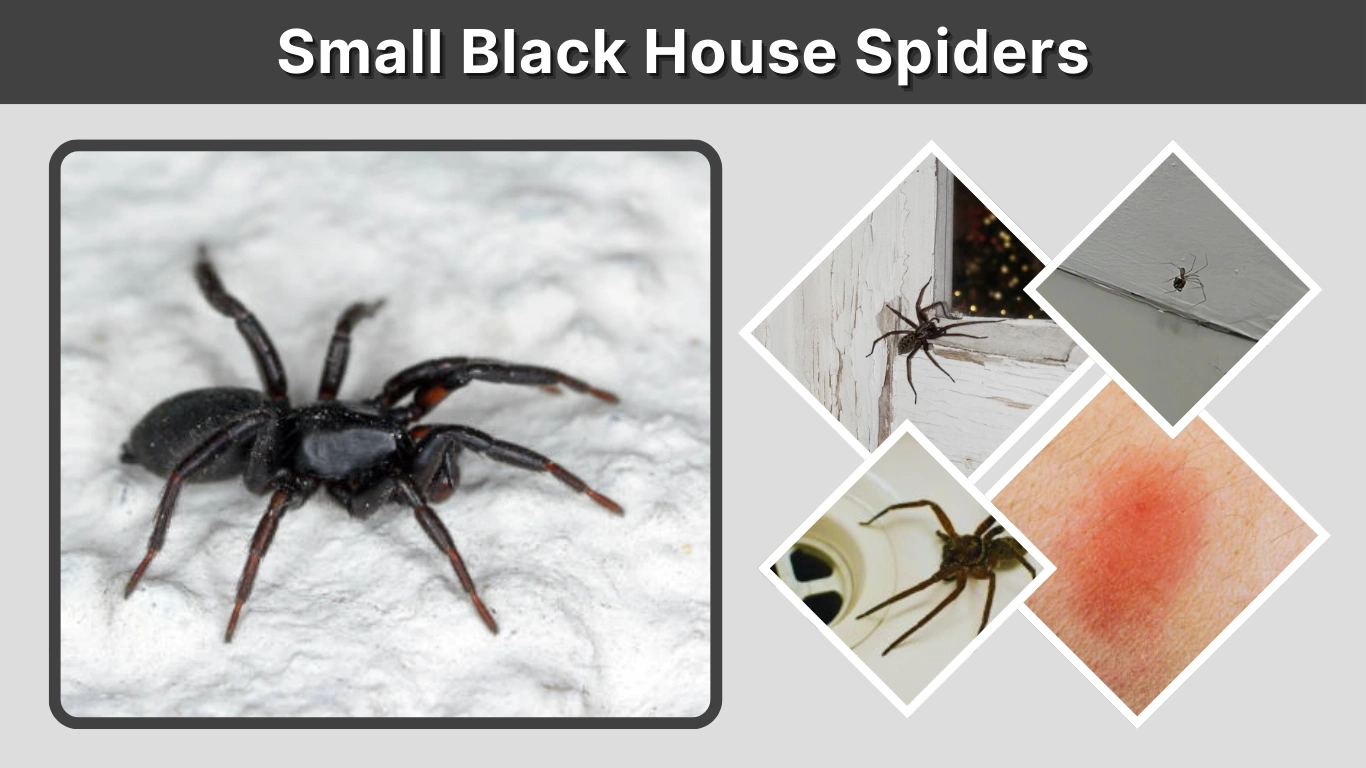
Small black house spiders are among the most commonly reported spiders inside homes across the U.S., Canada, the UK, Australia, and many other regions. Because many species share similar dark coloring, tiny size, fast movement, and occasional white, yellow, or red markings, people often misidentify them—and worry unnecessarily. This guide explains how to identify tiny black spiders, what species they may be, regional differences, bite safety, and how to prevent them from entering your home.
Small Black House Spider
The phrase “small black house spider” does not refer to one species but dozens of different spiders that look similar at a glance. Many are tiny (2–8 mm), dark-bodied, and extremely fast. Others are fuzzy, jump from place to place, or resemble ants. Some build webs, while others run freely across walls and floors.
Most are completely harmless. A few, like false widows or juvenile widows, require awareness but still cause far less danger than people assume.
Understanding the spider’s shape, markings, leg thickness, and movement style is the key to proper identification.
Quick Identification Checklist for Small Black Spiders
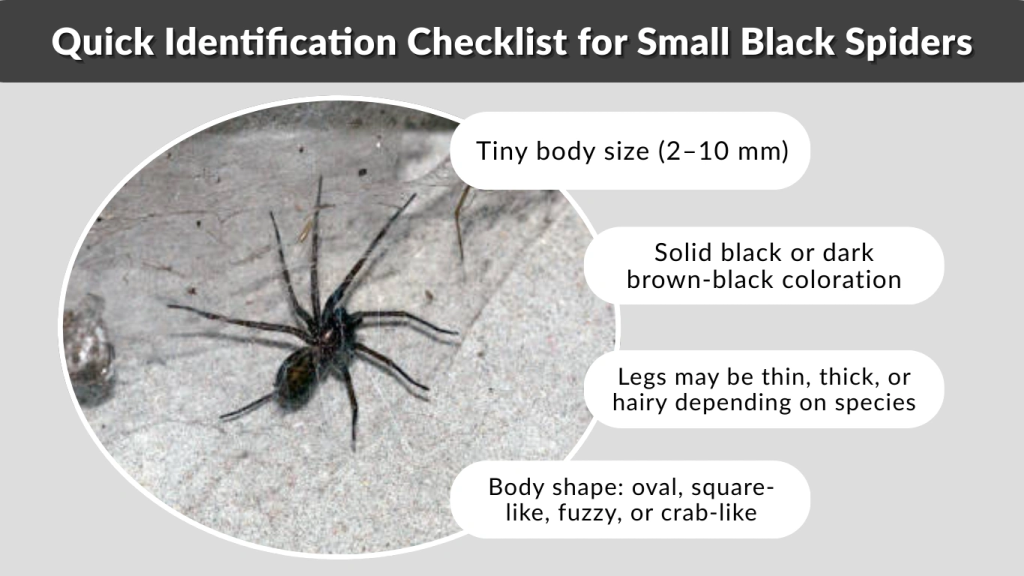
Use this simple list before deciding what species you’re dealing with:
- Tiny body size (2–10 mm)
- Solid black or dark brown-black coloration
- Legs may be thin, thick, or hairy depending on species
- Movement can be slow, fast, or jumping
- Markings: white dots, white stripes, yellow bands, red patches, orange abdomen
- Body shape: oval, square-like, fuzzy, or crab-like
- Presence or absence of web nearby
These traits help narrow down the likely species long before region is considered.
Common Small Black House Spider Species
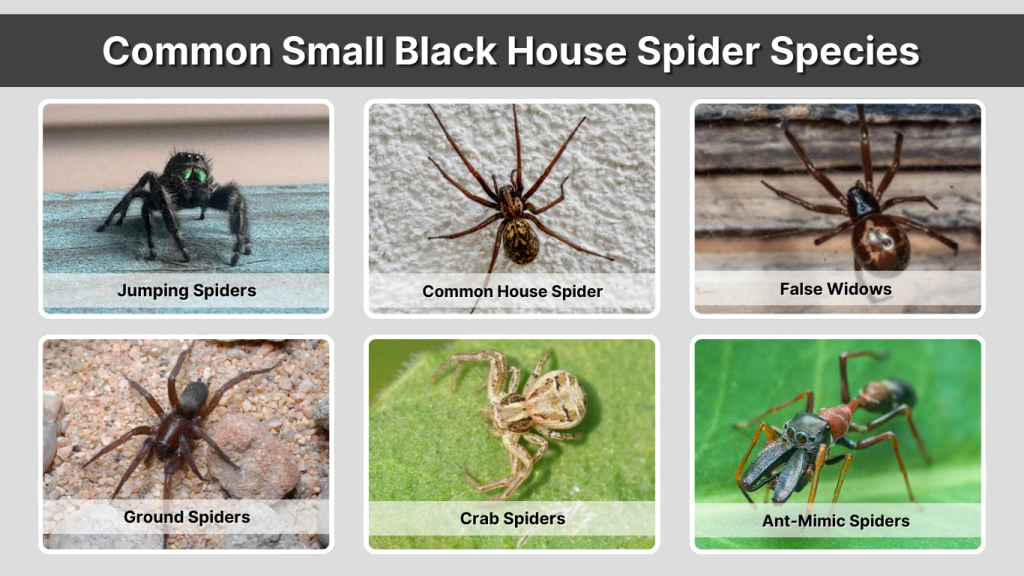
Jumping Spiders (Salticidae)
One of the most frequent culprits behind searches like “small black fuzzy spider in house” and “small fast black spider.” Jumping spiders are tiny, fuzzy, and often have white stripes or spots on their legs or abdomen. They have excellent vision, compact bodies, and tend to move in short, sudden jumps. They are harmless and often beneficial.
Common House Spider (Parasteatoda tepidariorum)
Small brown-black or blackish spiders often found in corners and ceilings. They build messy cobwebs and vary in color from tan to nearly black. Indoors, juveniles appear much darker and smaller, often mistaken for tiny black widow look-alikes.
False Widows (Steatoda species)
Often described as small black spiders with shiny round abdomens. Some species have faint white or cream markings. Though they can bite, their venom is mild. They are among the most commonly mistaken spiders when people report “tiny venomous black spiders.”
Ground Spiders (Gnaphosidae)
These are the spiders behind many reports of “small fast black spider” and “small all-black spider in house.” They are matte black, very quick, and run along baseboards and walls without webs.
Crab Spiders
Small, dark spiders with crab-like legs and a flattened body shape. They may appear black indoors and often rest near windows or lights.
Ant-Mimic Spiders
Thin, small, black spiders that look amazingly like ants. Fast, jerky movements often alarm homeowners, but they are harmless hunters.
Juvenile Black Widows
Very small black spiders with white, yellow, or red markings. While adult widows are dangerous, juveniles are smaller and less potent—but still important to identify properly.
Special Color-Marked Small Black Spiders
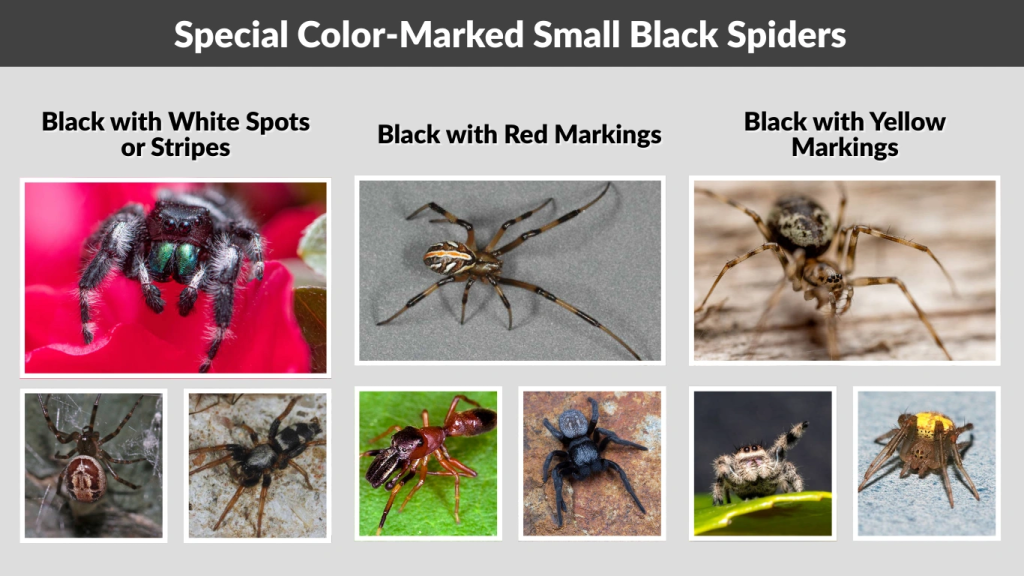
Many people report small black spiders with various colored markings. Here’s what they usually are:
Black with White Spots or Stripes
- Jumping spiders (the most common)
- Small false widows
- Ground spiders with pale leg bands
Black with Red Markings
- Juvenile black widows
- Ant-mimic species with red dots
- Small velvet spiders (rare indoors)
Black with Yellow Markings
- Tiny orb weavers
- Jumping spiders with yellow side patches
Black with Orange Abdomen
- Certain false widow variants
- Small orb weavers that appear black in low light
Black and Brown Tiny Spiders
- Young house spiders
- Small wolf spiders
- Juvenile false widows
These color clues drastically improve identification accuracy.
Movement-Based Identification: Fast, Fuzzy, Thin Legs, Thick Legs
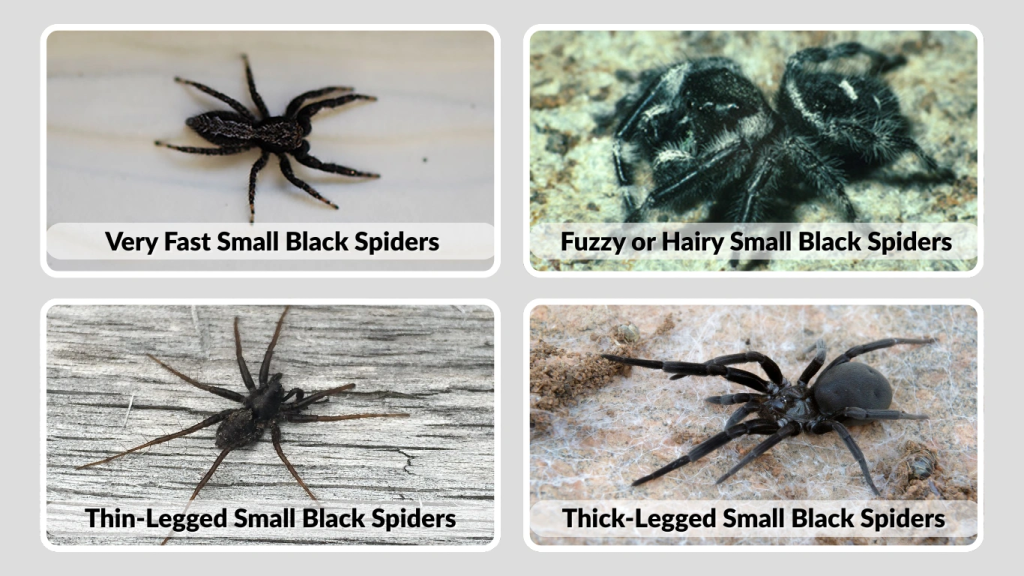
Very Fast Small Black Spiders
Ground spiders and ant-mimic spiders are extremely fast runners. They move in bursts and disappear quickly under furniture.
Fuzzy or Hairy Small Black Spiders
Jumping spiders are the classic “fuzzy black house spiders.” Their compact, hairy bodies and large eyes make them easy to distinguish once you know the signs.
Thin-Legged Small Black Spiders
Juvenile house spiders and false widows often have long, thin legs compared to their small body size.
Thick-Legged Small Black Spiders
Small wolf spiders and crab spiders have thicker legs and a bulkier appearance, even though they are still small.
Region-by-Region Identification Guide
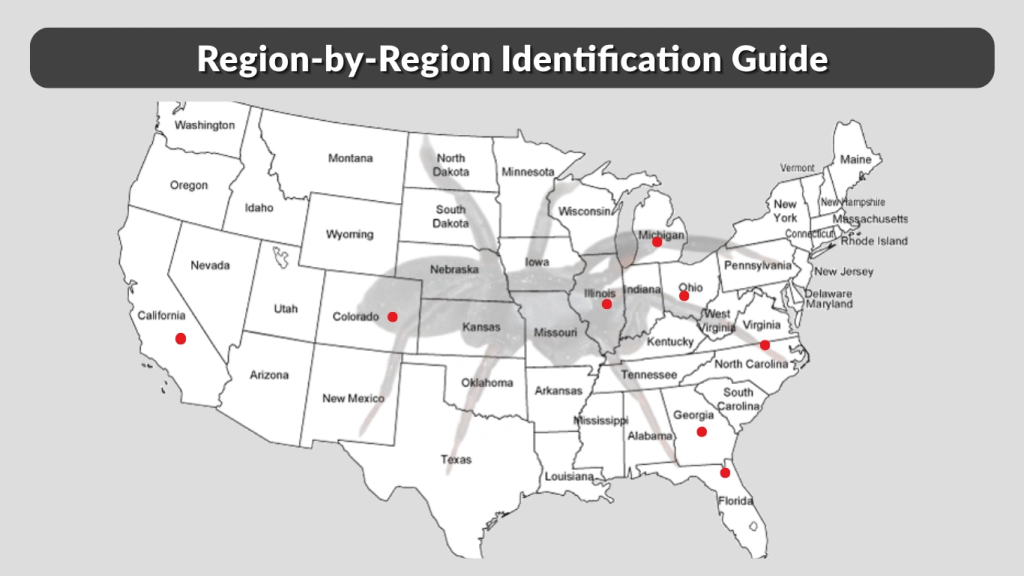
Because small black spiders vary by climate and geography, your location is one of the strongest clues for correct identification.
United States (General)
Across most U.S. homes, the most common small black spiders are jumping spiders, false widows, ground spiders, and common house spiders. These species thrive indoors year-round and often appear near windows, ceilings, or floors.
California
California homes frequently contain small jumping spiders, tiny false widows, and small cobweb spiders. In Northern California specifically, small black jumping spiders and false widow juveniles are widely reported.
Colorado
Dry regions of Colorado often see ant-mimic spiders, ground spiders, and small jumping spiders entering homes during summer.
Florida
Florida’s warm climate supports parson spiders, false widow juveniles, jumping spiders, and occasionally young widows. Tiny black spiders appear indoors more often due to year-round insect activity.
Georgia / Georgia USA
Common southern house spiders, tiny wolf spiders, and false widows appear regularly. Black-and-white jumping spiders are especially common around windows.
Illinois
Illinois homes often see small ground spiders, tiny house spiders, and fuzzy jumpers. These small dark species thrive in basements and older structures.
Maryland
Maryland has plentiful ant-mimic spiders, dark cobweb spiders, and small jumping spiders. These are common in attics, vents, and door frames.
Michigan
Cooler climates produce many small black ground spiders and jumping spiders. Tiny parson spiders are also frequently spotted indoors.
Minnesota
In Minnesota, homeowners often find small wolf spiders and little jumping spiders indoors. Their dark coloring causes many misidentifications.
New York / NY / New Jersey
Tiny false widows, common house spiders, and jumpers dominate small spider sightings in buildings and apartments.
North Carolina
The most common small black spiders are tiny wolf spiders, jumping spiders, and cobweb spiders. They wander indoors during seasonal temperature changes.
Ohio
Ohio frequently reports small false widows, fast ground spiders, and fuzzy jumpers. Basements and entryways are common hiding spots.
Pennsylvania
Parson spiders, cobweb spiders, and small ant-mimic spiders are the most frequent indoor species.
Texas
Texas homes frequently find parson spiders, small jumping spiders, false widow juveniles, and tiny wolf spiders. Tiny red-marked widows can also appear outdoors.
Washington & Oregon
These states often see small false widows, black jumping spiders, and little house spiders. Cool, moist homes attract small cobweb builders.
Wisconsin
Jumpers and small wolf spiders are common in Wisconsin homes, especially near windows and basements.
Canada (Ontario, Alberta, general)
Canadian homes often contain jumping spiders, common house spiders, and tiny false widows. Ontario especially reports small black jumping spiders indoors.
United Kingdom
UK homes often contain money spiders (very tiny black spiders), small lace-web spiders, and juvenile false widows. These species hide in corners and vents.
Australia
Australia has small juvenile black house spiders (Badumna insignis), tiny jumping spiders, and sac spiders that appear dark indoors.
South Africa
Small black rain spider juveniles, jumpers, and tiny house spiders are common indoors.
Size Guide
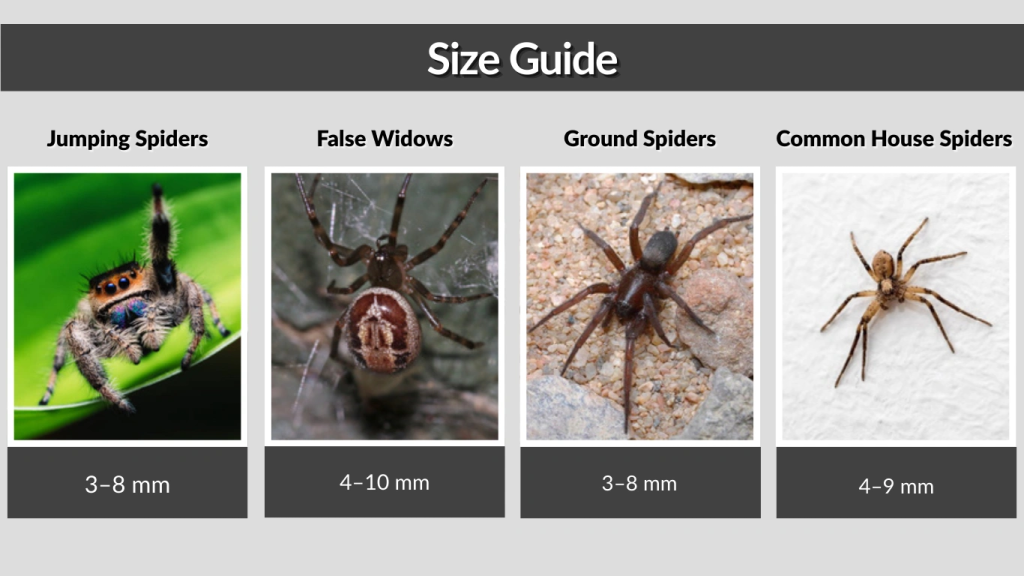
| Species | Size Range | Color Traits | Notes |
| Jumping Spiders | 3–8 mm | Black with white stripes | Fuzzy, leaps often |
| False Widows | 4–10 mm | Shiny black/brown | Mild bites possible |
| Ground Spiders | 3–8 mm | Matte black | Very fast runners |
| Common House Spiders | 4–9 mm | Dark brown/black | Web builders |
| Black Widow Juveniles | 2–4 mm | Black + red/white/yellow | Important for safety |
Behavior & Habitat
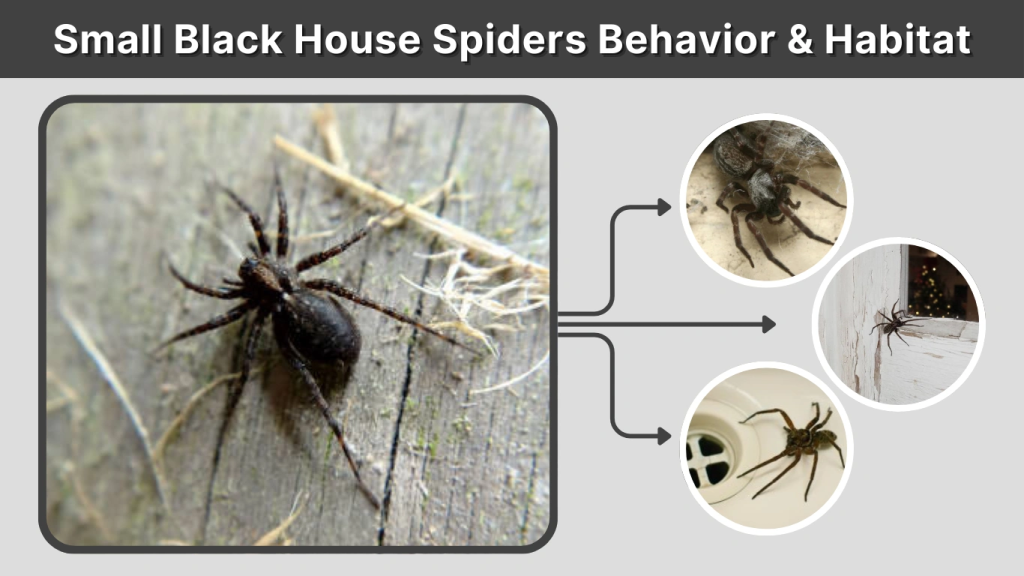
Small black spiders prefer areas that provide food, moisture, and shelter. Indoors, you’ll most often find them:
- On walls, ceilings, and window frames
- Inside corners of rooms
- In bathrooms and kitchens where insects gather
- Under appliances and furniture
- In basements, attics, garages, and vents
Most enter by accident through open doors, gaps, or windows.
Are Small Black House Spiders Dangerous?
Most small black spiders found indoors pose no danger to humans or pets.
- Jumping spiders: Harmless, non-aggressive
- Ground spiders: Harmless, rarely bite
- Common house spiders: Harmless
- False widows: May bite, but symptoms usually mild
- Widow juveniles: Require caution but are less potent than adults
Search terms like “lethal to small pets” rarely apply. Only mature widows pose real risk, and they are rarely found freely indoors.
Bites & Symptoms
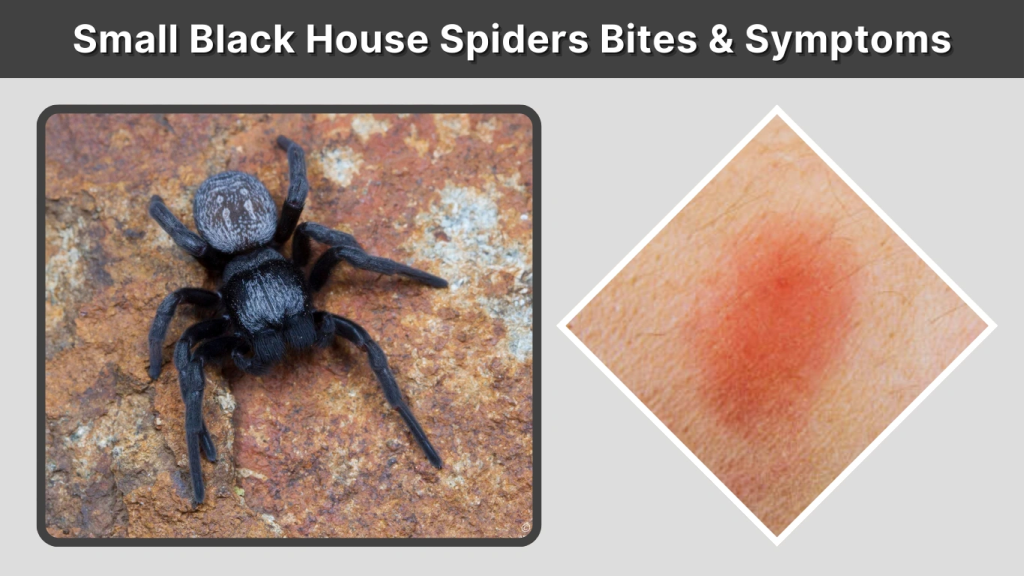
While small black spiders seldom bite, here are typical reactions:
- Mild redness
- Slight swelling
- Itching or brief stinging
- Localized irritation lasting 1–24 hours
Seek medical attention only if:
- Pain spreads or worsens
- Reaction includes fever, rash, or muscle cramps
- You suspect a widow juvenile bite
Most household spiders are incapable of serious harm.
Prevention & Control
To reduce the number of small black spiders in your home:
- Seal cracks, door gaps, and window openings
- Reduce indoor insects by keeping lights low at night
- Keep humidity controlled
- Vacuum webs and corners weekly
- Remove clutter where spiders hide
- Install fine-mesh screens on windows and vents
Long-term control comes from managing insects, their primary food source.
Comparison Table (VS Section)
| Feature | Small House Spider | Jumping Spider | False Widow | Widow Juvenile |
| Body Texture | Smooth | Fuzzy | Shiny | Smooth |
| Speed | Slow | Quick jumps | Slow | Slow |
| Webs | Yes | No | Yes | Yes |
| Danger | Very low | Very low | Low-moderate | Moderate |
FAQs
Why is there a small black spider in my house?
Most small black spiders wander indoors searching for insects, moisture, or shelter. Seasonal changes, open windows, and exterior lighting also attract them. In most cases, finding one or two is normal and not a sign of infestation.
Are small black house spiders venomous?
Nearly all spiders have venom, but most small black house spiders have venom too weak to harm humans. False widows cause mild symptoms, while widow juveniles require caution but rarely deliver serious effects.
How do I identify a tiny black spider with white spots?
This description almost always refers to jumping spiders. Their fuzzy bodies, large eyes, and distinctive white stripes or dots make them easy to recognize once observed closely.
Are small black spiders harmful to pets?
Most are harmless to pets. Only widow species pose a medical concern, and adults—not juveniles—are the real risk. Tiny black spiders found indoors almost never threaten cats or dogs.
Do small black spiders bite humans?
Bites are rare and usually happen only when a spider is pressed against skin. Reactions are mild and temporary. Jumping spiders, ground spiders, and house spiders avoid people entirely.
How do I remove small black spiders from my home?
Use a cup-and-paper method to relocate them. Reduce insects, declutter, vacuum regularly, and seal gaps to prevent new ones from entering. Sticky traps may help in problem areas.