
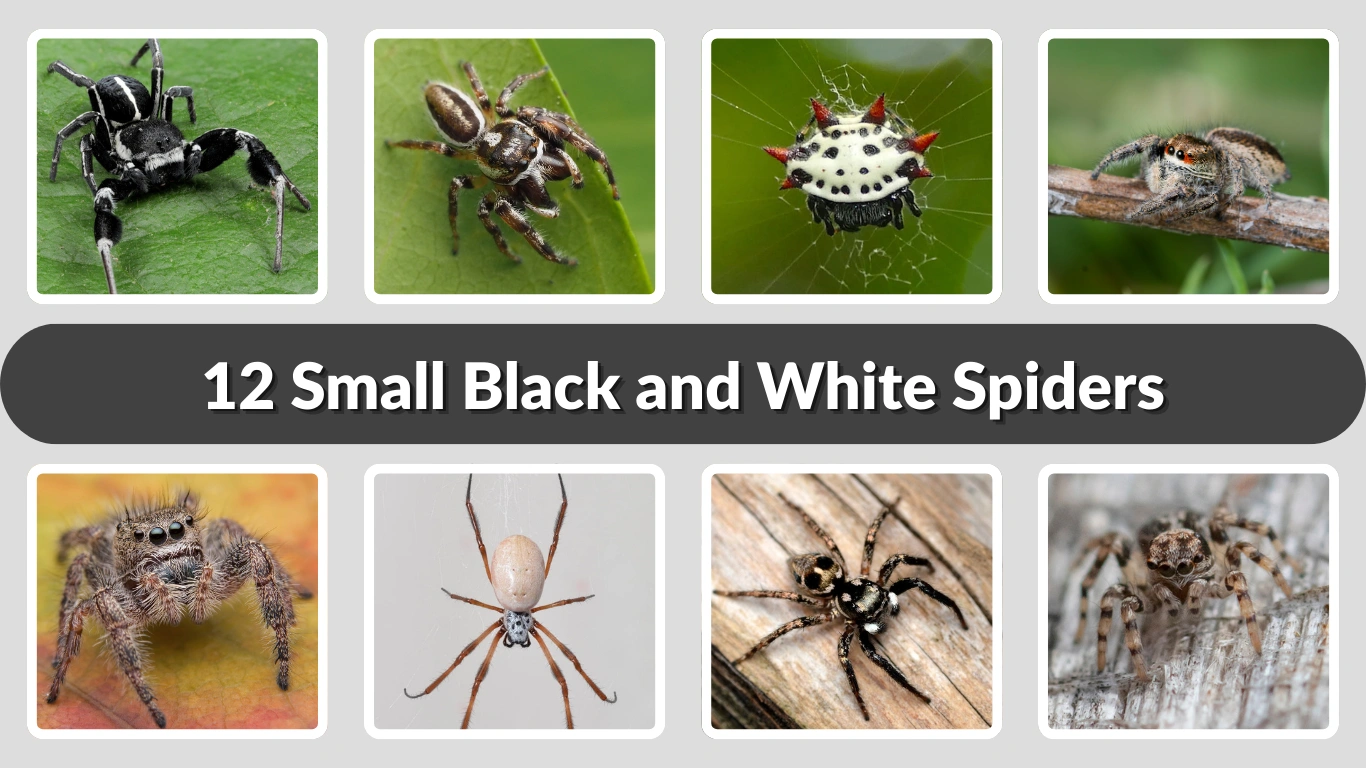
Small black and white spiders appear in homes, gardens, walls, and outdoor spaces across many regions. These tiny hunters often have striped legs, spotted bodies, or sharp contrasting patterns that make them easy to notice. Many belong to the jumping spider family, known for their curious behavior and harmless nature, while others are young orb-weavers or small web-builders. This guide helps identify the most common species you may encounter.
1. Bold Jumping Spider
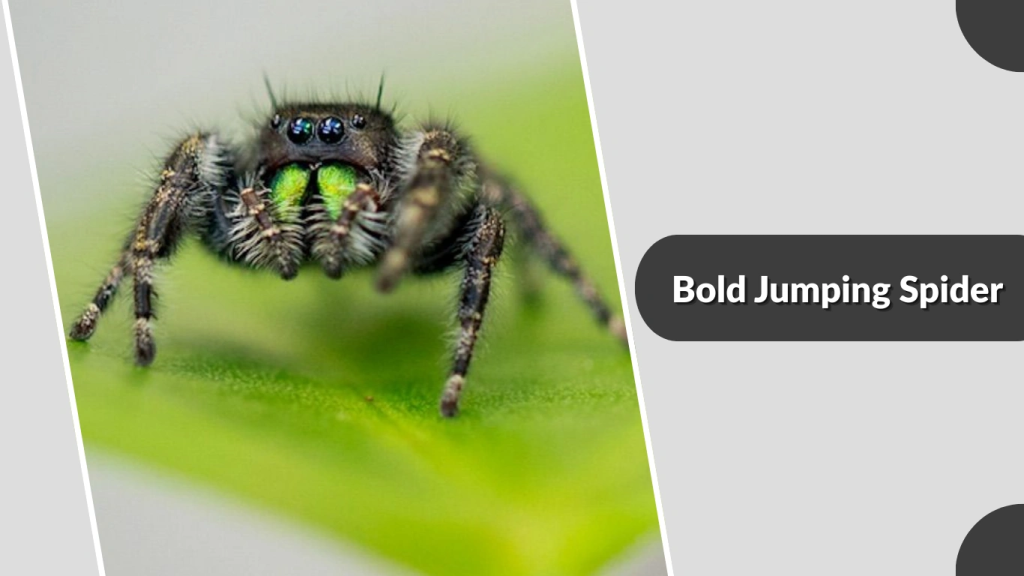
A common small black and white spider, the Bold Jumping Spider is easily recognized by its white spots, fuzzy body, and bright metallic fangs. It’s one of the most frequently encountered jumping spiders in North America and often appears on walls, windows, gardens, and inside homes.
Identification
- Color: Black body with distinct white or pale spots on the abdomen
- Size: Small; adults usually 8–15 mm
- Legs: Short, thick, and slightly fuzzy
- Fangs (chelicerae): Often metallic green or blue
- Movement: Quick, jerky jumping motions
- Body Type: Compact, oval abdomen with stout cephalothorax
- Markings: Young spiders may show orange spots that turn white as they mature
Habitat & Range
The Bold Jumping Spider is widespread across the United States, Canada, and Mexico, thriving in warm and temperate climates. It commonly lives around homes, gardens, fences, exterior walls, and sheds. In northern states, it often hides in window frames or sun-exposed house siding.
Behavior
This spider is diurnal, highly alert, and very curious toward humans. Rather than spinning webs to catch prey, it uses excellent vision and jumping ability to stalk insects. When threatened, it may raise its front legs in a defensive display, but it is not aggressive and rarely bites.
Bite & Safety
Bites are extremely uncommon since the Bold Jumping Spider prefers escape over confrontation. When they do occur, symptoms are mild—similar to a bee sting—and typically include slight redness, swelling, or itching. The species is not dangerous to humans or pets and provides natural pest control around the home.
2. Zebra Jumping Spider
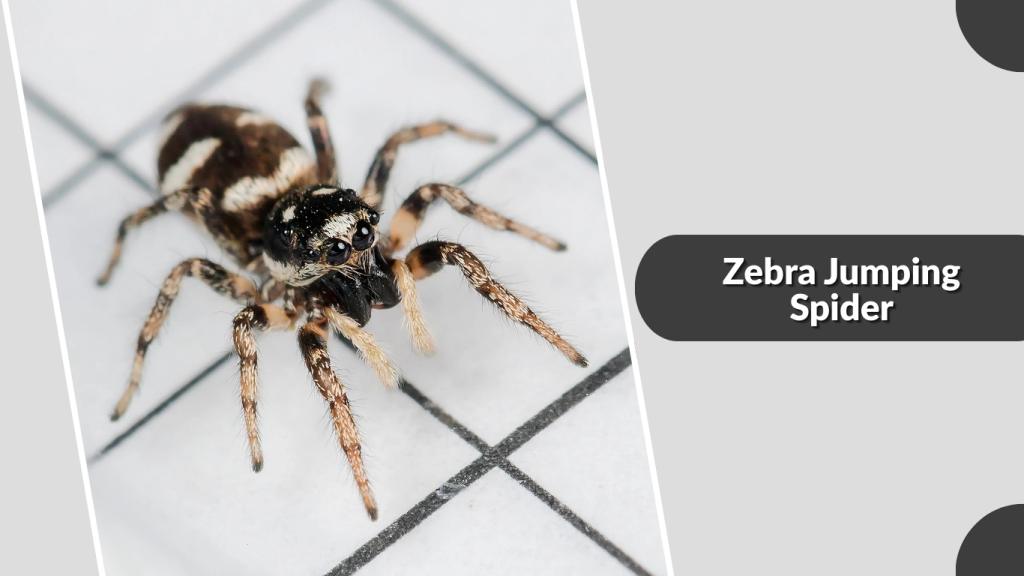
A widespread small black and white striped spider, the Zebra Jumping Spider is known for its bold horizontal bands and lively movements. Frequently seen on exterior walls, windows, and household surfaces, it is one of the most recognizable jumping spiders across North America, Europe, the UK, and Australia.
Identification
- Color: Black body with bright white horizontal stripes
- Size: Very small, typically 5–7 mm
- Legs: Short, agile, with subtle banding
- Eyes: Large forward-facing eyes giving excellent vision
- Markings: Distinct zebra-like pattern across the abdomen and cephalothorax
- Texture: Slightly fuzzy appearance
- Behavioral cue: Often makes short rapid jumps when approached
Habitat & Range
This species thrives in urban areas, preferring sunny walls, brick surfaces, fences, windowsills, and garden structures. It is abundant in the United States, Canada, UK, Europe, and Australia, where it often hunts during daylight and stays close to buildings.
Behavior
The Zebra Jumping Spider is active, alert, and visually oriented. It does not build webs to trap prey. Instead, it stalks insects with precision, using quick jumps to capture them. These spiders may curiously watch humans who approach, turning their heads to track movement.
Bite & Safety
This spider is harmless to people. Bites are extremely rare and typically mild, causing only small red bumps or temporary irritation. The species plays a beneficial role outdoors and around homes by reducing small insect populations.
3. Peppered Jumping Spider
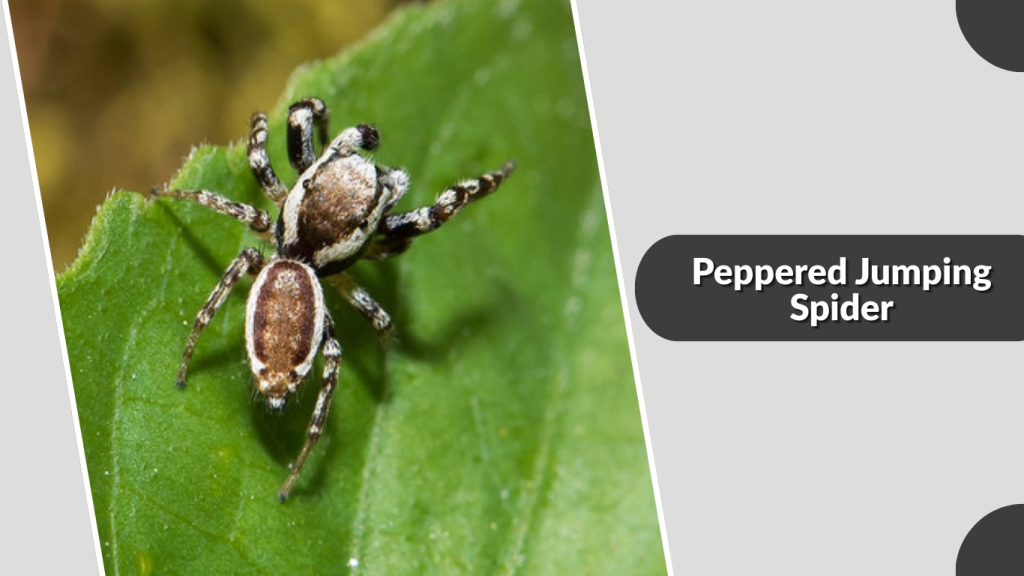
A tiny, mottled small black and white spider, the Peppered Jumping Spider is known for its speckled pattern that helps it blend into bark, stone, and leaf surfaces. Common in fields, gardens, and forest edges across North America, it is frequently seen on low plants and outdoor structures.
Identification
- Color: Black body with scattered white or gray speckles
- Size: Very small, usually 4–6 mm
- Legs: Short, lightly banded, and slightly fuzzy
- Eyes: Prominent front-facing eyes typical of jumping spiders
- Markings: Pepper-like speckling over the abdomen
- Texture: Matte, granular appearance
- Movement: Quick, darting jumps when disturbed
Habitat & Range
The Peppered Jumping Spider prefers sunlit areas with plenty of vegetation, such as meadows, gardens, crop fields, and woodland edges. It commonly appears on railings, leaf litter, wildflowers, and fence posts. Its range spans much of North America, with higher concentrations in temperate regions.
Behavior
This species relies heavily on camouflage and calculated movement. It hunts actively during the day, stalking small flies and gnats. Despite its tiny size, it shows strong curiosity and may pause to observe nearby activity, often turning its head toward motion.
Bite & Safety
The Peppered Jumping Spider poses no danger to humans. Its small fangs make bites extremely unlikely. If a bite were to happen, it would be mild, causing minimal redness or irritation. It is considered a helpful garden spider due to its insect-hunting habits.
4. Twin-Flagged Jumping Spider
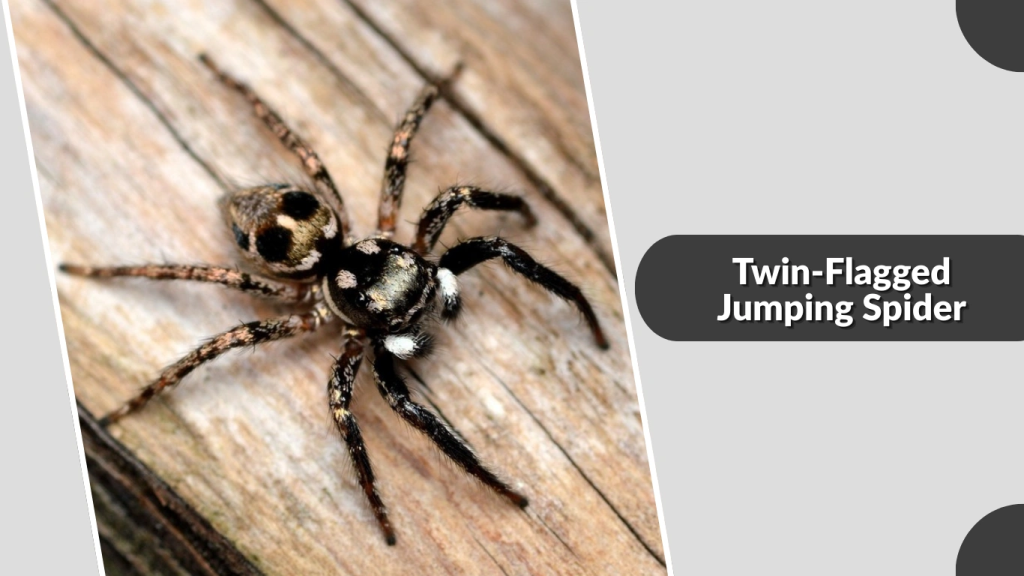
A small, agile spider with contrasting dark and pale facial markings, the Twin-Flagged Jumping Spider is frequently seen around homes, patios, and gardens—especially in the southeastern United States. Its quick movements and bright white patches make it easy to recognize during the day.
Identification
- Color: Dark brown to black with white facial tufts
- Size: Small, typically 5–7 mm
- Legs: Compact, strong legs used for short leaps
- Eyes: Large, forward-facing eyes typical of jumping spiders
- Markings: Twin white flag-like patches on the face
- Texture: Slightly fuzzy appearance
- Movement: Fast, precise jumps and active daytime hunting
Habitat & Range
This species is most common in the southeastern U.S., including Florida, Georgia, Alabama, and South Carolina. It thrives in warm, humid environments and often appears on brick walls, porch railings, outdoor furniture, and garden plants. Indoors, it may wander into windowsills or sunlit rooms.
Behavior
The Twin-Flagged Jumping Spider is a visual hunter with excellent awareness of its surroundings. It tracks tiny insects closely before leaping to capture them. Curious but cautious, it may approach humans briefly and then dart away. It does not rely on webs except for resting shelters.
Bite & Safety
This spider is harmless and non-aggressive. Bites are rare and mild, typically causing only light redness or slight swelling. Its presence is beneficial, as it helps control small household pests such as gnats and fruit flies.
5. Princeps Jumping Spider
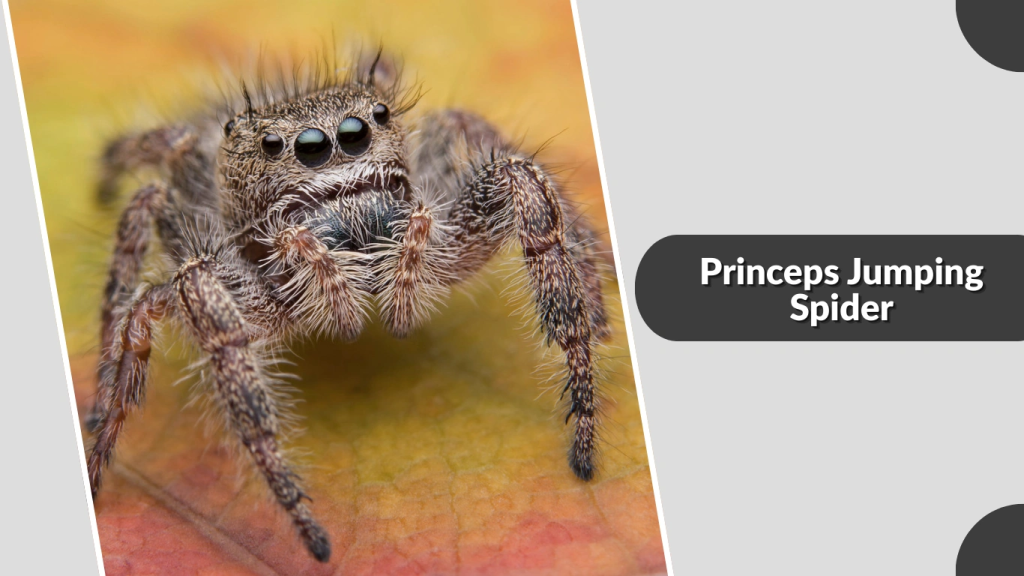
A compact and dark-bodied jumper with bold pale markings, the Princeps Jumping Spider is commonly found in fields, gardens, wooden fences, and sunny walls across the eastern and midwestern United States. Its white side patches and curious behavior make it a noticeable yet harmless backyard hunter.
Identification
- Color: Deep black to dark brown with distinct white side patches
- Size: Small, usually 6–12 mm
- Legs: Robust, slightly hairy, and built for strong jumps
- Eyes: Large central eyes providing excellent vision
- Markings: Pale or white streaks along the abdomen and cephalothorax
- Texture: Moderately fuzzy body
- Movement: Confident, deliberate jumping while hunting
Habitat & Range
This species is widespread in the eastern, central, and midwestern U.S., extending into parts of Canada such as Ontario. It thrives in open areas with sunlight—meadows, crop edges, barns, gardens, and decks. It often rests under loose bark, wooden planks, and outdoor structures.
Behavior
Princeps Jumping Spiders are patient stalkers that rely heavily on visual cues when hunting. They often turn to observe movement, displaying curiosity similar to other jumping spiders. They hunt small insects by creeping close and leaping with precision rather than using webs.
Bite & Safety
This spider is gentle and avoids confrontation. Bites are very uncommon and mild, producing slight irritation at most. Its role as a natural predator helps reduce flies, gnats, and small pests around homes, making it a beneficial garden companion.
6. Flea Jumping Spider
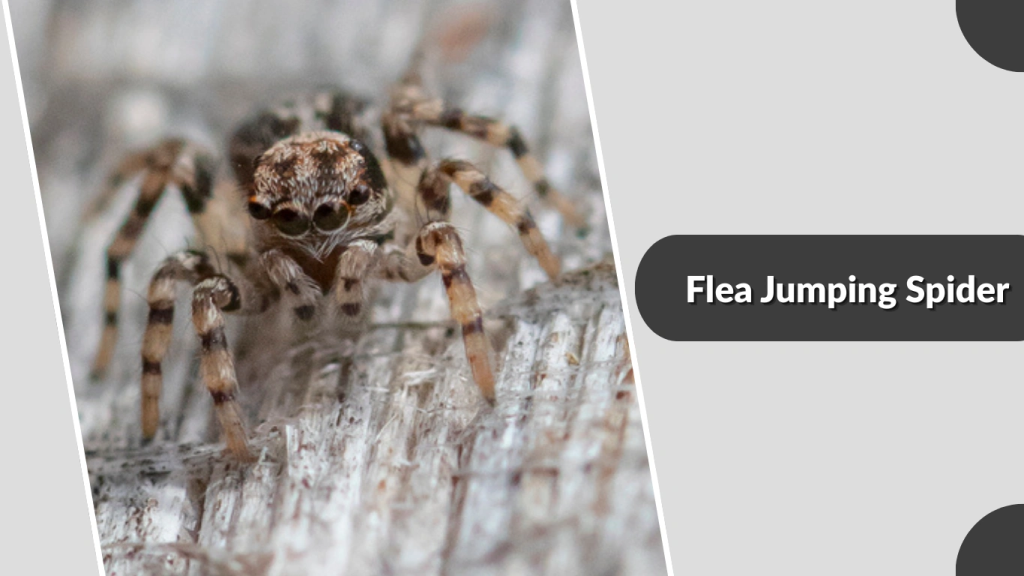
A tiny, fast-moving species often found indoors, the Flea Jumping Spider is known for its compact shape and subtle black-and-white patterning. Its small size and quick hops make it easy to mistake for an insect, especially when it darts across windowsills or walls in search of prey.
Identification
- Color: Dark brown to black with fine white hairs
- Size: Extremely small, typically 3–5 mm
- Legs: Short, sturdy, and slightly bristled
- Eyes: Prominent front eyes that give strong vision
- Markings: Light dusting of pale hairs across the body
- Texture: Soft, velvety appearance
- Movement: Rapid, flea-like jumps when disturbed
Habitat & Range
This spider is widespread across North America, frequently appearing inside houses, sheds, garages, and window frames. Outdoors, it hides in leaf debris, wood piles, and shaded garden areas. Its preference for sheltered, human-made structures makes it one of the more commonly seen indoor jumpers.
Behavior
The Flea Jumping Spider moves quickly and unpredictably, often zigzagging across surfaces. It hunts small insects such as fungus gnats and fruit flies, relying on close-range stalking. Despite its speed, it is cautious and retreats quickly from human interaction.
Bite & Safety
Harmless to humans, the Flea Jumping Spider rarely bites and poses no medical concern. If a bite does occur, symptoms are mild and short-lived. With its diet of tiny nuisance insects, it serves as a natural household pest controller.
7. Pellenes Species
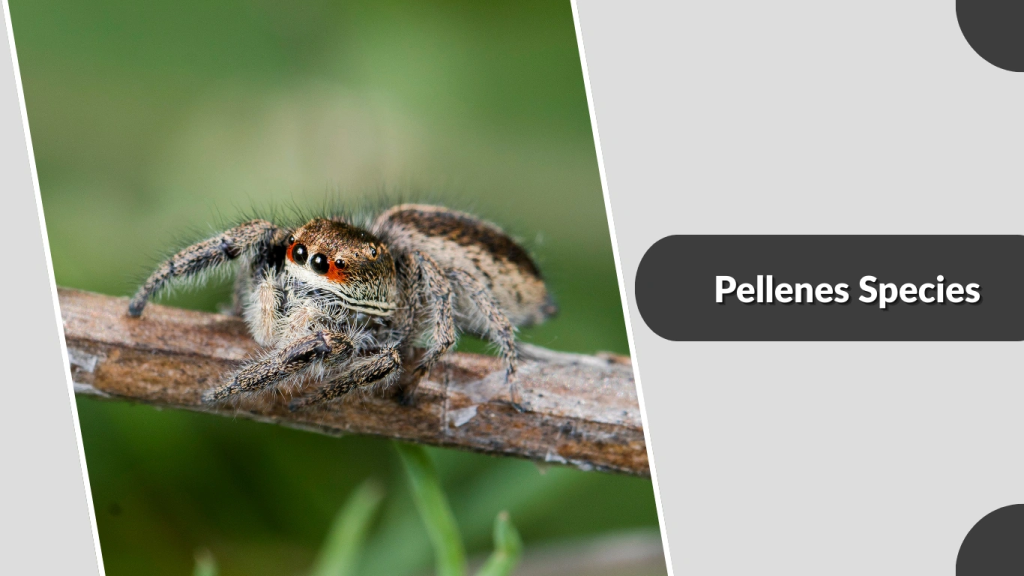
Small and compact with bold contrasting patterns, Pellenes spiders are easily recognized by their dark bodies and pale leg markings. These spiders appear on stones, brick walls, plants, and garden structures where their subtle black-and-white coloration helps them blend while hunting.
Identification
- Color: Dark brown to black with white or pale bands on the legs
- Size: Small, generally 4–7 mm
- Legs: Distinctly banded or striped, moderately hairy
- Eyes: Large front eyes typical of jumping spiders
- Markings: Light patches on the abdomen or cephalothorax
- Texture: Soft and fuzzy
- Movement: Quick jumps and alert scanning behavior
Habitat & Range
Pellenes species are found across North America, Europe, and parts of Asia, with many preferring dry, sunny environments. They are often seen on stone walls, fence posts, sandy patches, and garden vegetation. Some species also explore household exteriors on warm days.
Behavior
These spiders are active daytime hunters that rely heavily on visual cues. They typically stalk small insects and leap accurately to capture them. While curious, they are also wary, often freezing or backing away when observed closely.
Bite & Safety
Like most jumping spiders, Pellenes species are harmless. Bites are rare and mild, usually resulting in minor redness or itching. Their presence around homes and gardens is beneficial, as they help control small insect populations.
8. Trite auricoma
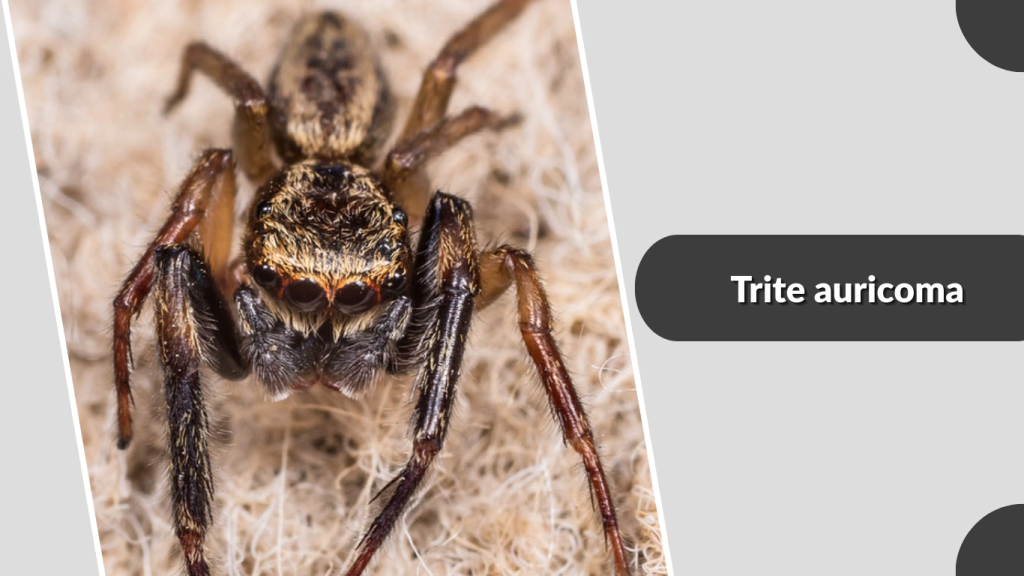
A small, alert jumping spider native to New Zealand and parts of Australia, Trite auricoma is recognized by its dark body, pale tufts, and energetic movements. It often appears around homes, gardens, decks, and sunny outdoor spaces where it actively hunts during the day.
Identification
- Color: Dark brown to black with white or pale hair tufts
- Size: Small, typically 5–8 mm
- Legs: Moderately hairy with light banding
- Eyes: Large central eyes providing sharp vision
- Markings: Pale patches on the front of the cephalothorax
- Texture: Soft and slightly fuzzy
- Movement: Quick, purposeful jumps and active exploration
Habitat & Range
Trite auricoma is common in New Zealand and also present in Australia, where it thrives in temperate outdoor environments. It frequently appears on fences, garden pots, siding, tree trunks, and window frames. These spiders prefer bright locations with insects to hunt.
Behavior
This species is bold and curious, often observing movement by turning its head or adjusting its body orientation. It hunts small flying and crawling insects by sneaking close and leaping with precision. It does not build webs for hunting, relying instead on eyesight and agility.
Bite & Safety
Harmless to humans, Trite auricoma rarely bites and avoids direct conflict. Any bite would cause only mild symptoms such as slight redness or irritation. As an active predator of small insects, it helps control unwanted pests around homes and gardens.
9. Spiny Orb Weaver (Black and White Morph)
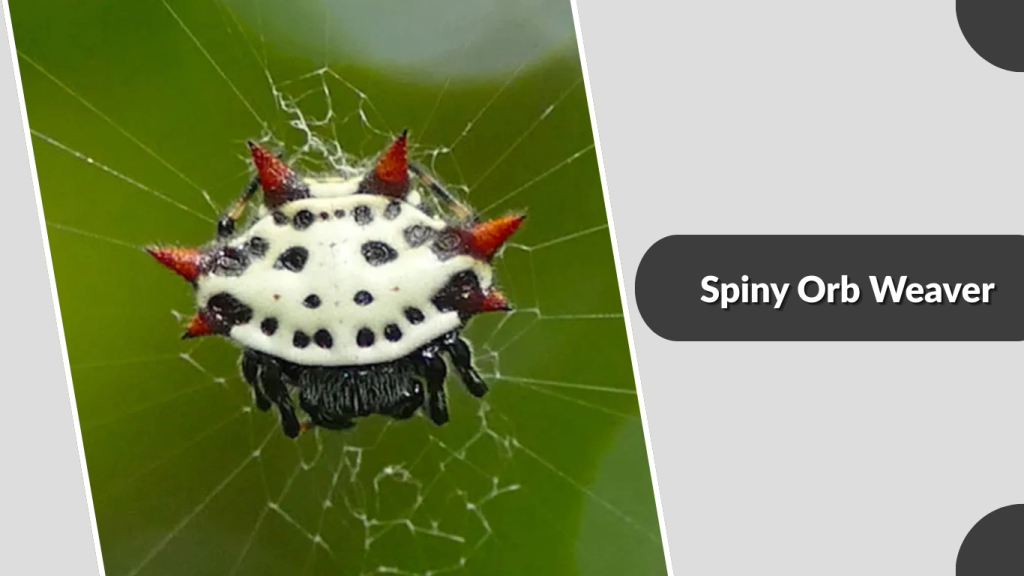
A distinctive small spider known for its hardened body and pointed spines, the black-and-white morph of the Spiny Orb Weaver stands out with its bold coloration. Common in warm regions, it often builds its circular webs in gardens, hedges, porches, and wooded edges.
Identification
- Color: Black-and-white body with contrasting patterns
- Size: Small, typically 5–9 mm
- Legs: Slender, sometimes lightly banded
- Eyes: Small cluster positioned at the front
- Markings: Hardened shell-like abdomen with prominent spikes
- Texture: Glossy, rigid surface rather than fuzzy
- Movement: Slow climbing but quick repositioning within its web
Habitat & Range
This species thrives in the southern United States, especially Florida and Texas, as well as Central America and the Caribbean. It prefers warm, humid environments and often appears in gardens, shrubs, wooded paths, outdoor lights, and between fence posts where insects are abundant.
Behavior
The Spiny Orb Weaver is a classic web-builder, constructing strong, symmetrical circular webs to capture flying insects. It usually sits at the center or edge of the web, waiting for vibrations. Despite its intimidating appearance, it is shy and avoids disturbances by dropping from the web or retreating to its frame lines.
Bite & Safety
This spider is completely harmless. Bites are extremely rare and insignificant, often milder than a mosquito bite. It is beneficial in gardens because it traps and reduces flies, mosquitoes, moths, and other small flying insects.
10. White-Backed Jumping Spider
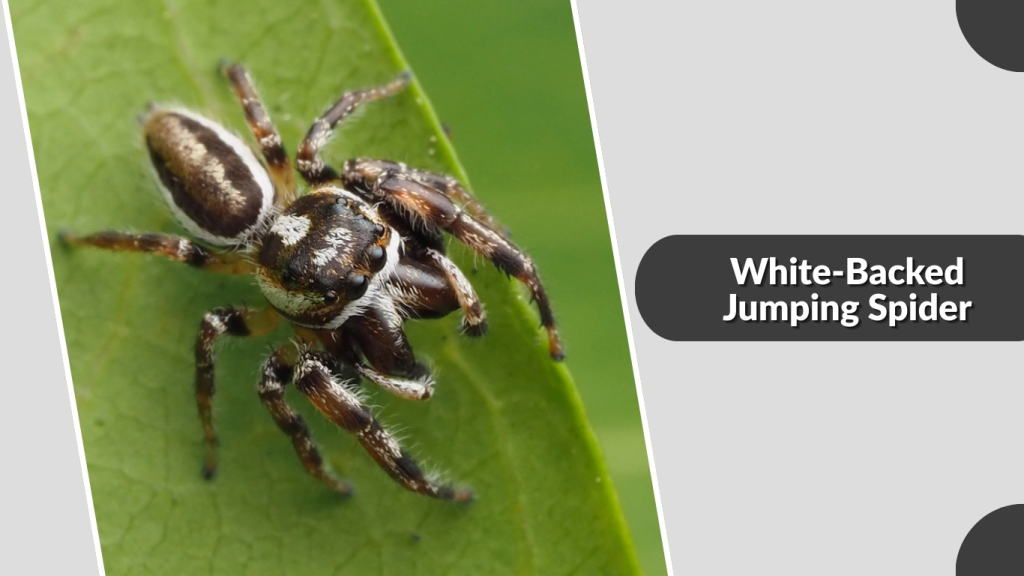
A striking small spider with a bold pale marking across its back, the White-Backed Jumping Spider is commonly seen on sunlit walls, rocks, and garden structures. Its contrasting black body and bright white dorsal patch make it easy to spot while it actively hunts during the day.
Identification
- Color: Dark brown to black with a solid white patch on the back
- Size: Small, generally 4–7 mm
- Legs: Lightly banded, moderately hairy
- Eyes: Prominent forward-facing eyes for strong vision
- Markings: Clean, bright white dorsal marking that stands out sharply
- Texture: Soft, velvety body surface
- Movement: Quick jumps and controlled stalking movements
Habitat & Range
The White-Backed Jumping Spider is found mainly in Mediterranean regions, though it also appears in collections and habitats where conditions are warm and dry. It prefers stone walls, tree trunks, wooden fences, and sun-exposed surfaces where it can hunt effectively.
Behavior
This species is alert and inquisitive, often observing nearby motion with its large eyes. It approaches prey carefully, using slow movements before executing a precise jump. Although curious around humans, it quickly retreats when threatened and does not rely on webs for capturing food.
Bite & Safety
Harmless to humans, this spider rarely bites and poses no medical concerns. Any bite would produce only minor irritation. As an active predator of small insects, it helps maintain balanced insect populations in gardens and outdoor areas.
11. Juvenile Orb-Weaver Spiders
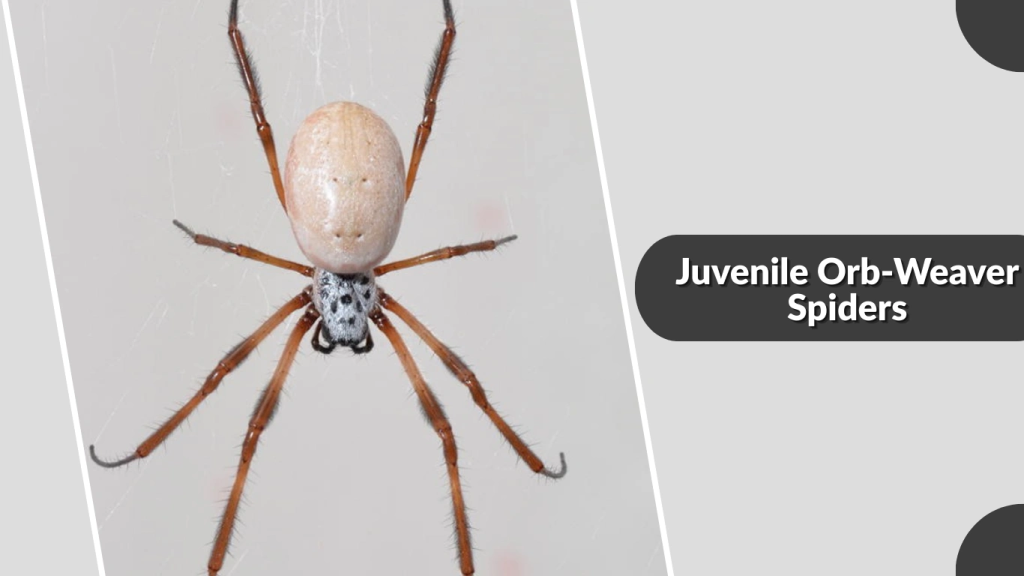
Young orb-weaver spiders often appear as tiny black-and-white patterned creatures that differ noticeably from their adult forms. These juveniles can be found in gardens, bushes, porches, and window corners, where they begin building miniature webs as they develop through early growth stages.
Identification
- Color: Dark bodies with white or pale spots and streaks
- Size: Very small, typically 2–4 mm
- Legs: Thin, sometimes lightly banded
- Eyes: Small eye cluster suited for web-building behavior
- Markings: Speckled or spotted abdomen in black-and-white patterns
- Texture: Soft, smooth appearance
- Movement: Slow, deliberate climbing around silk threads
Habitat & Range
Juvenile orb-weavers appear worldwide, thriving in North America, Europe, Asia, Australia, and beyond. These young spiders favor garden plants, hedges, windows, railings, and sheltered corners of homes. They often spin tiny, imperfect webs that gradually become larger as they mature.
Behavior
During this stage of development, orb-weaver juveniles focus on building and adjusting their webs. They spend most of their time waiting for prey to land, relying on the vibrations of silk lines. Their behavior is quiet and cautious, and they frequently reposition themselves along the web frame.
Bite & Safety
These spiders are harmless at this age and lack the size to deliver any meaningful bite. They pose no threat to people or pets and serve as helpful garden predators by capturing gnats, small flies, and mosquitoes in their early webs.
12. Peckhamia picata
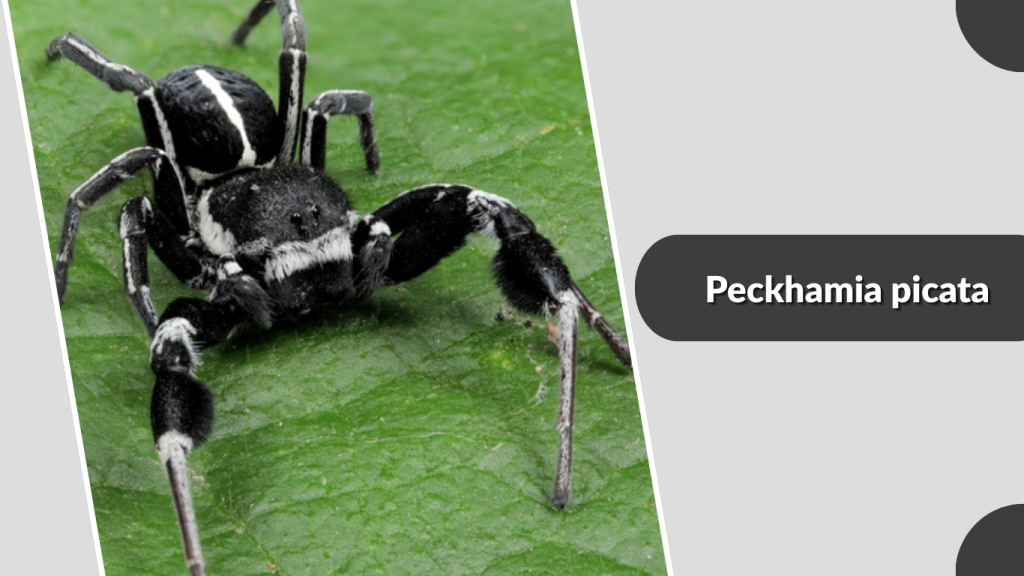
A small and energetic ant-mimicking jumping spider, Peckhamia picata features a reddish body paired with striking black-and-white striped legs. Common in warmer regions of North America, it is frequently seen exploring vegetation, walls, and garden structures while hunting tiny insects.
Identification
- Color: Reddish to orange body with black-and-white banded legs
- Size: Very small, typically 3–5 mm
- Legs: Long, slender, and sharply striped
- Eyes: Forward-facing eyes typical of jumping spiders
- Markings: Subtle pale patches along the cephalothorax
- Texture: Smooth and lightly hairy
- Movement: Quick, ant-like movements and agile jumps
Habitat & Range
This species is found in the southern United States, including Texas, Florida, Georgia, and surrounding areas. It prefers warm habitats with plenty of sunlight, such as garden plants, shrubs, low tree branches, fence posts, and exterior walls. Its ant-mimicking form helps it blend into busy environments.
Behavior
Peckhamia picata is an active daytime hunter. It imitates the movements of ants—raising its front legs and making jerky motions—to avoid predators and approach prey unnoticed. Its hunting style involves stalking small insects closely before making a precise forward jump.
Bite & Safety
This spider is harmless to people and pets. Bites are extremely rare and very mild when they occur. Because of its diet of gnats, aphids, and tiny insects, it plays a useful role in maintaining natural pest control in gardens and around homes.