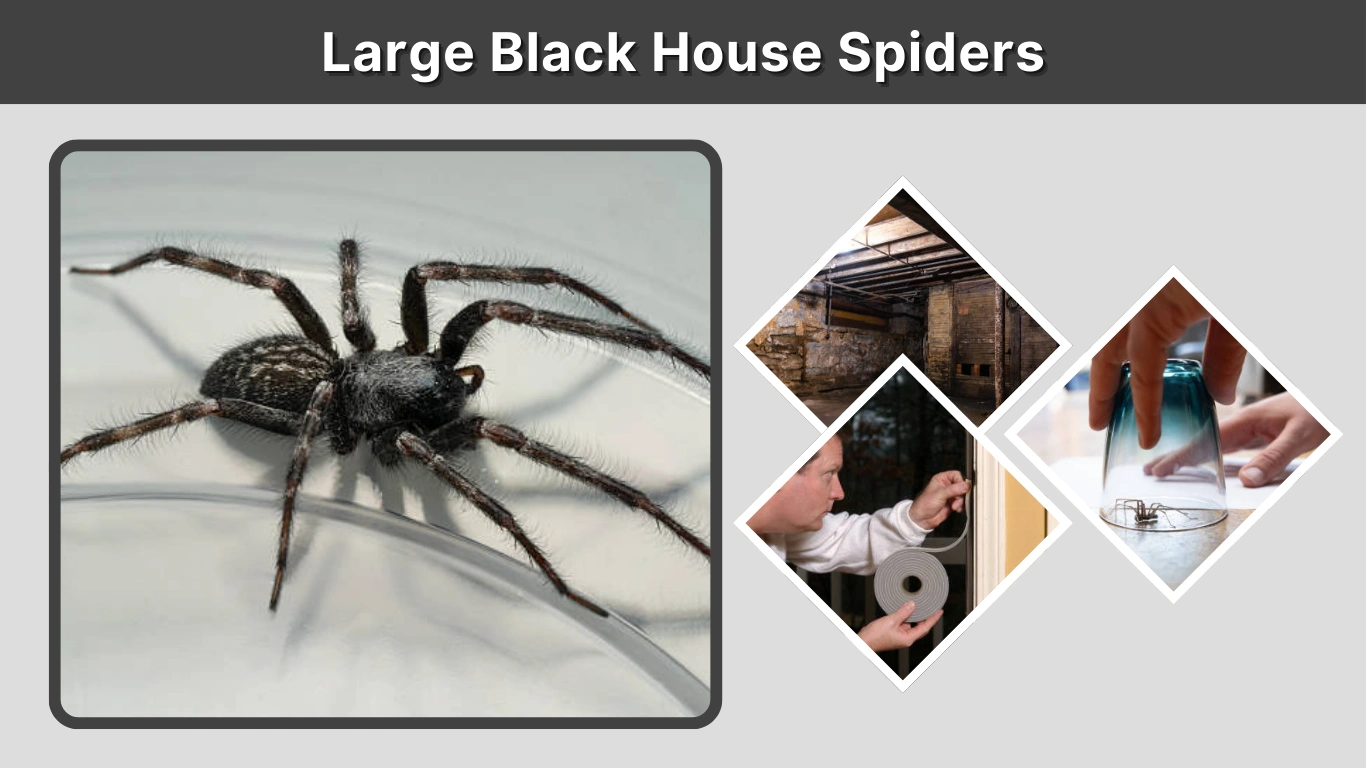
Large black house spiders are among the most misidentified home-invading spiders worldwide. Because several species share dark coloring, thick or thin legs, and fast movement, homeowners often struggle to know what they’re looking at—or whether it’s dangerous. This guide breaks down identification, regional variations, behavior, and safety, helping you accurately understand the spiders you’re seeing in Florida, Ontario, the UK, the U.S., and beyond.
What People Call a “Large Black House Spider”
Many different species fit the simple description “large black spider in the house.” The phrase doesn’t refer to one specific species but a collection of spiders with similar color, size, and behavior. Most are harmless nocturnal hunters or web builders seeking insects, moisture, or warmth.
Common confusion arises because a wolf spider, giant house spider, parson spider, and even a false widow can look nearly identical at first glance. Understanding these differences is the key to correct identification.
Quick Identification Checklist
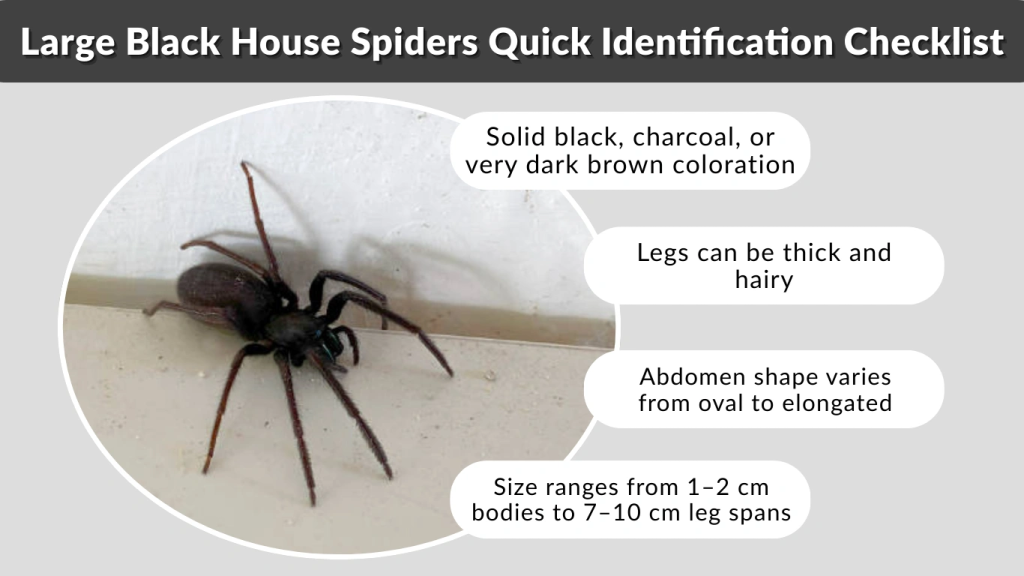
Use this list to classify large black spiders typically found indoors:
- Solid black, charcoal, or very dark brown coloration
- Legs can be thick and hairy or long and thin depending on species
- Abdomen shape varies from oval to elongated
- Messy sheet webs or funnel-shaped webs nearby
- Size ranges from 1–2 cm bodies to 7–10 cm leg spans
- Speed: some move slowly, others sprint across floors
- Distinct features: orange markings, banded legs, smooth vs. hairy body
This checklist helps match spiders to likely species before considering your specific region.
Most Common Species Mistaken for Large Black House Spiders
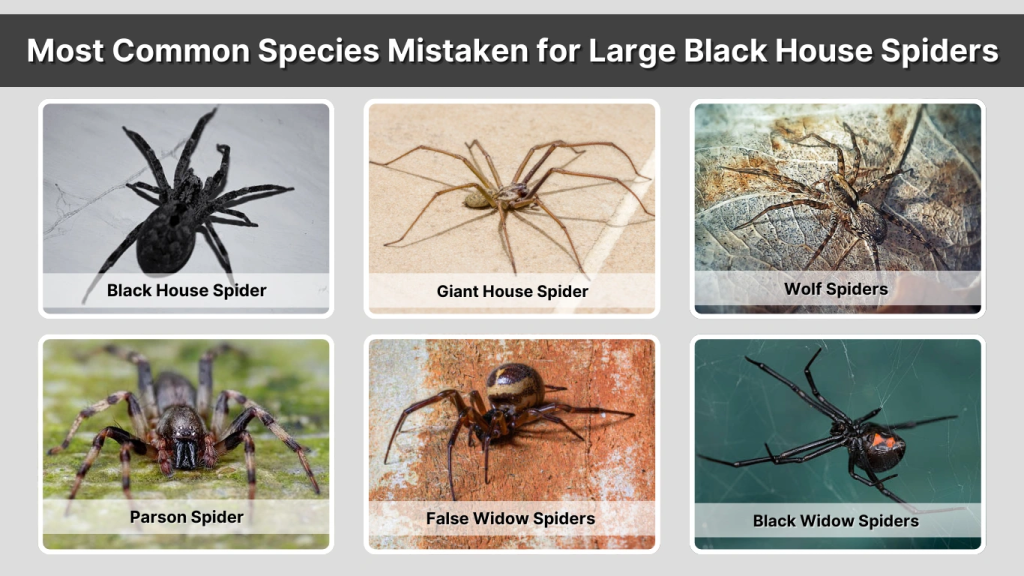
Black House Spider (Badumna insignis)
A dark gray-black species commonly found in Australia but reported in a few other regions due to travel and imported materials. It builds messy, lace-like webs in corners, window frames, and sheds. While intimidating in size, it is shy and rarely bites. Bites cause localized pain but no major medical danger.
Giant House Spider (Eratigena atrica)
One of the most frequently identified species worldwide, especially in the UK, Ireland, northern U.S., Ontario, and much of Europe. Though brownish-black rather than pure black, many homeowners perceive them as black due to low-light sightings. They are fast runners and can reach impressive leg spans but are harmless and avoid humans.
Wolf Spiders (Various species)
A top candidate for the “large black spider thick legs in my house” search term. Wolf spiders are ground hunters with chunky, hairy bodies that often appear black indoors. They wander without webs, carrying their egg sacs or babies on their abdomen. They are not aggressive, and bites are uncommon.
Parson Spider (Herpyllus ecclesiasticus)
Common in eastern and midwestern U.S. homes. This spider is dark black with a subtle gray abdominal pattern. It is a fast runner and often surprises people by darting across floors. Though it can bite when pressed, effects are mild.
False Widow Spiders (Steatoda species)
These dark, shiny, sometimes black or black-purple spiders are often misidentified as black widows. They have round abdomens and may feature faint cream or orange markings. While they can bite, their venom is weaker than true widows, and symptoms are usually mild.
Black Widow Spiders
The only medically significant species in this list. Jet black with the classic red hourglass, they typically hide in garages, woodpiles, and sheds—not inside living rooms. Most “large black house spiders” people report indoors are not widows.
Region-by-Region Guide to Large Black House Spiders
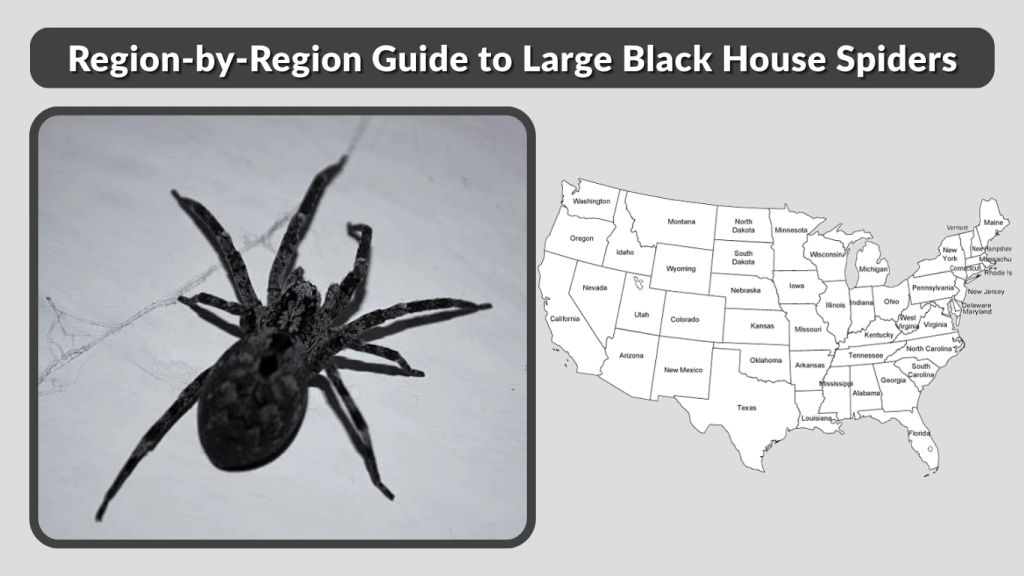
Understanding your location dramatically narrows down the species.
United States (General)
Across the U.S., the most common large dark house spiders are wolf spiders, parson spiders, giant house spiders, and various funnel weavers. Black widows appear indoors far less often than people assume.
California
Californian homes frequently encounter false widows, wolf spiders, and large funnel weavers. These species appear dark enough in low light to be described as black. Most are harmless and tend to hide near garages, entryways, and crawl spaces.
Florida
Florida’s humidity supports many dark, fast-moving spiders. Common candidates include parson spiders, southern wolf spiders, and tropical species that occasionally wander indoors. Because of the climate, sightings are year-round rather than seasonal.
Illinois
Illinois homeowners typically see wolf spiders and giant house spiders. Dark parson spiders are also common along baseboards and in basements.
Maryland
Maryland frequently reports parson spiders indoors due to their preference for warm structures. Wolf spiders and funnel weavers also appear in garages and lower-level rooms.
New York / NY
New York apartments and homes often report giant house spiders, parson spiders, and wolf spiders. Giant house spiders thrive in older buildings, while wolf spiders seek warmth in basements during colder months. False widows also appear in coastal regions.
Ohio
One of the most common search locations for “large black spider in my house.” Ohio homes experience wolf spiders, funnel weavers, and slender giant house spiders. The dark color and rapid movement often cause mistaken identity.
Tennessee
Southern house spiders and wolf spiders dominate indoor sightings. Many homeowners report large, dark spiders with thick legs—typically wolf spiders seeking insects during warmer nights.
Utah
Dry climates limit species, but Utah still sees wolf spiders and giant house spiders entering structures. These spiders often settle in basements or utility rooms during temperature changes.
Washington State
Washington homes are well-known for giant house spiders—one of the most common “large black house spiders” reported online. False widows also inhabit residential areas, hiding in protected corners.
Wisconsin
Wisconsin has large wolf spiders and fishing spiders, both capable of appearing black indoors. Fishing spiders especially surprise homeowners due to their large size and long legs.
Oregon
Oregon houses often host giant house spiders and false widows. Both species prefer moist, cool environments such as basements and laundry rooms.
West Virginia
Wolf spiders and funnel weavers are the species most often mistaken for large black house spiders in this region. Both wander indoors during seasonal shifts.
United Kingdom
One of the top global locations associated with the keyword “large black house spider.” The UK’s dominant species is the giant house spider (Eratigena atrica), which grows large and often appears black indoors. False widows occur in southern regions.
Ontario
Ontario homes commonly experience giant house spiders and wolf spiders. Their dark coloration and autumn migration into homes make sightings frequent.
Ireland
Ireland’s most common dark house spiders are giant house spiders and lace-web spiders. Lace-web spiders may appear black and are often found near door frames and stone walls.
Black and Orange Large House Spiders
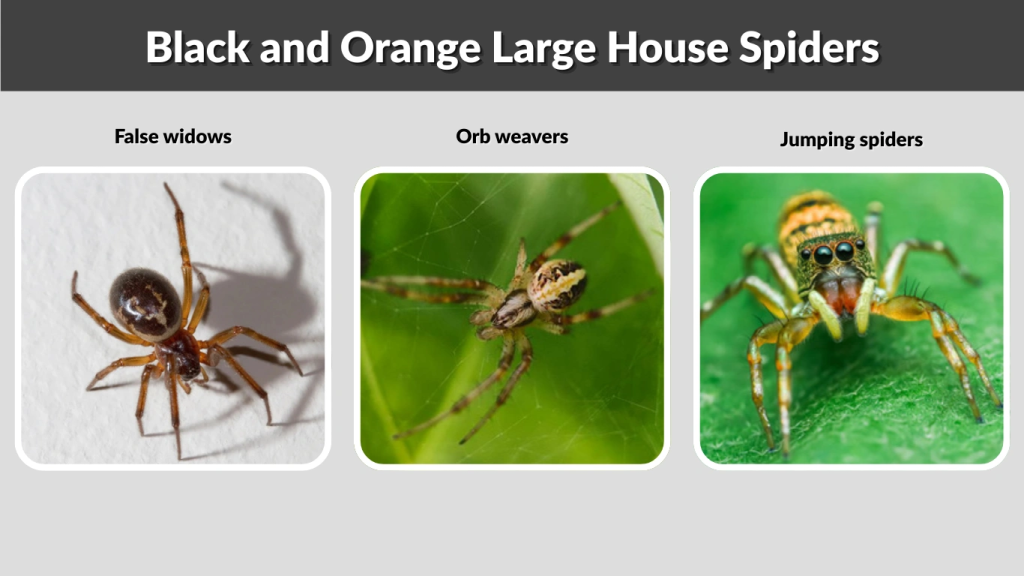
When homeowners report “black and orange large house spiders,” they usually encounter:
- False widows with orange thigh markings
- Orb weavers with orange abdomens that appear dark in low light
- Jumping spiders with orange patches
Color shifts under artificial lighting frequently cause misinterpretation.
Size Guide
Below is a comparison table showing approximate body and leg measurements for common species:
| Species | Body Length | Leg Span | Appearance |
| Giant House Spider | 1–2 cm | 7–10 cm | Dark brown/black, long legs |
| Wolf Spider | 1–3 cm | 5–8 cm | Thick, hairy, dark gray/black |
| Parson Spider | 1–1.5 cm | 3–5 cm | Black with gray abdominal stripe |
| False Widow | 0.8–1.5 cm | 2–4 cm | Shiny, dark, round abdomen |
| Black Widow | 1–1.5 cm | 3–5 cm | Jet black, red hourglass |
Behavior & Habitat
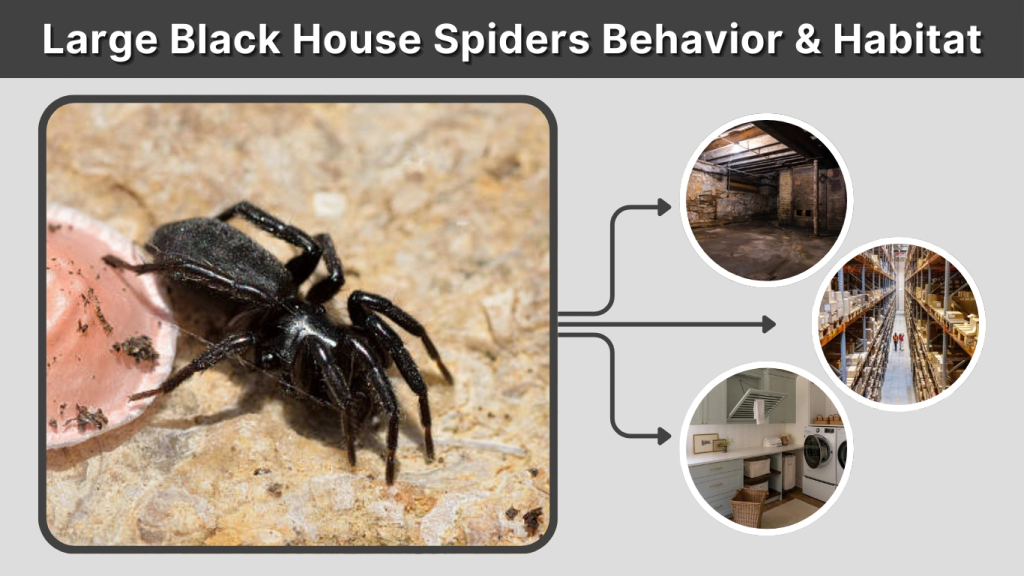
Large black house spiders are typically shy, nocturnal, and retreat from disturbance. Indoors, they settle in:
- Basements
- Laundry rooms
- Storage areas
- Corners, vents, and window frames
- Behind furniture or appliances
Outdoors, they hide in woodpiles, under siding, and in garden structures. Most enter homes seeking insects or refuge during weather changes.
Are They Dangerous?
Most large black house spiders are not dangerous. Their venom rarely harms humans, and they prefer escape over confrontation.
- Wolf spiders: Mild bites, only if pressed
- Giant house spiders: Almost never bite
- Parson spiders: Mild stinging bite possible
- False widows: Symptoms mild to moderate but not life-threatening
- Black widows: Medically significant but rarely found indoors
If symptoms like severe pain, muscle cramps, or difficulty breathing occur—seek medical help immediately.
What to Do if You Find a Large Black Spider in Your House
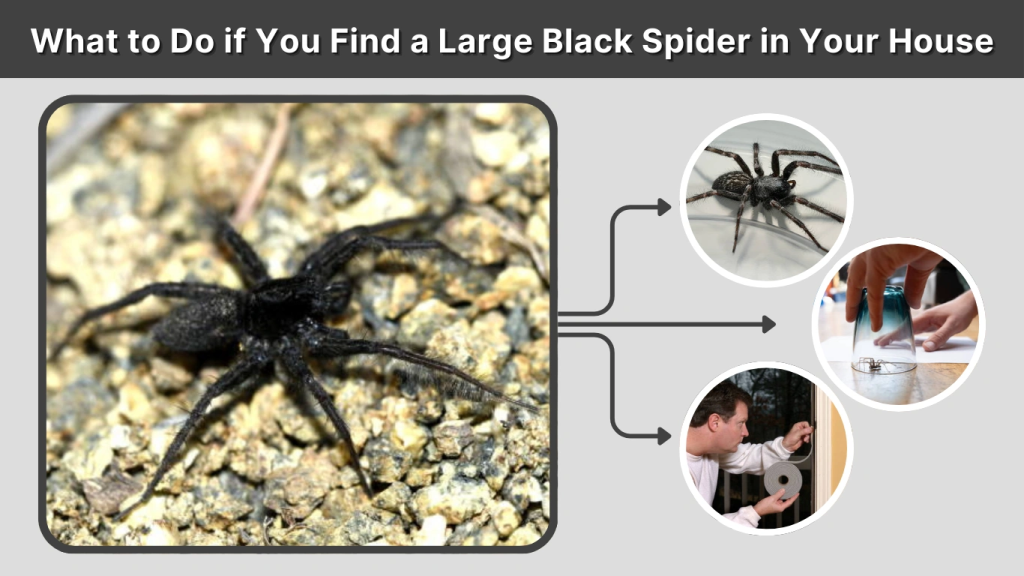
Follow this simple checklist:
- Stay calm and observe from a safe distance
- Take a photo for proper identification
- Use a cup and paper to gently relocate it outdoors
- Avoid squashing unless absolutely necessary
- If spiders appear frequently, inspect for insects or moisture
- Seal gaps around doors, pipes, and windows
Most sightings are harmless and accidental.
Prevention & Home Spider Control
A few adjustments can significantly reduce indoor spider encounters:
- Reduce clutter and remove old boxes
- Vacuum corners, vents, and baseboards regularly
- Use yellow outdoor bulbs to decrease insect attraction
- Keep humidity low with dehumidifiers
- Seal foundation cracks and window gaps
- Clear away webs but avoid scattering them during mating season
Long-term prevention focuses on eliminating the insects spiders feed on.
Comparison Table
| Feature | Large House Spider | Wolf Spider | Black Widow | False Widow |
| Leg Type | Long, thin | Thick, hairy | Smooth | Smooth/shiny |
| Web? | Sometimes | No | Yes | Yes |
| Danger | Very low | Low | High | Moderate |
| Indoors? | Common | Common | Rare | Common |
FAQs
Are large black house spiders dangerous?
Most are not dangerous. Species like giant house spiders and wolf spiders rarely bite, and their venom is mild. The only truly dangerous species is the black widow, which is far less common indoors. Most dark spiders found inside homes are harmless hunters that prefer to avoid humans.
Why do I suddenly have big black spiders in my house?
Sudden spider appearances usually occur in autumn when males search for mates. Weather shifts, new construction, and increased insect activity also draw spiders indoors. In many cases, they are temporary visitors seeking warmth or prey rather than signs of infestation.
How do I tell wolf spiders from house spiders?
Wolf spiders have thick, hairy legs and move quickly across floors without webs. Giant house spiders and funnel weavers have longer, thinner legs and are often found near webs. Wolf spiders also carry egg sacs or young on their abdomen, which house spiders do not.
Do large black house spiders bite humans?
Most bites occur only when spiders are pressed against skin. Wolf spiders, parson spiders, and false widows may bite defensively, but symptoms are typically mild: redness, swelling, or brief discomfort. True house spiders like Eratigena species rarely bite at all.
Should I kill a big spider inside my home?
It’s better to relocate than kill. Large spiders help control insects and are typically harmless. Using a cup-and-paper method or spider catcher tool allows safe removal. Killing should only be considered if identification suggests a potentially dangerous species like a black widow.