
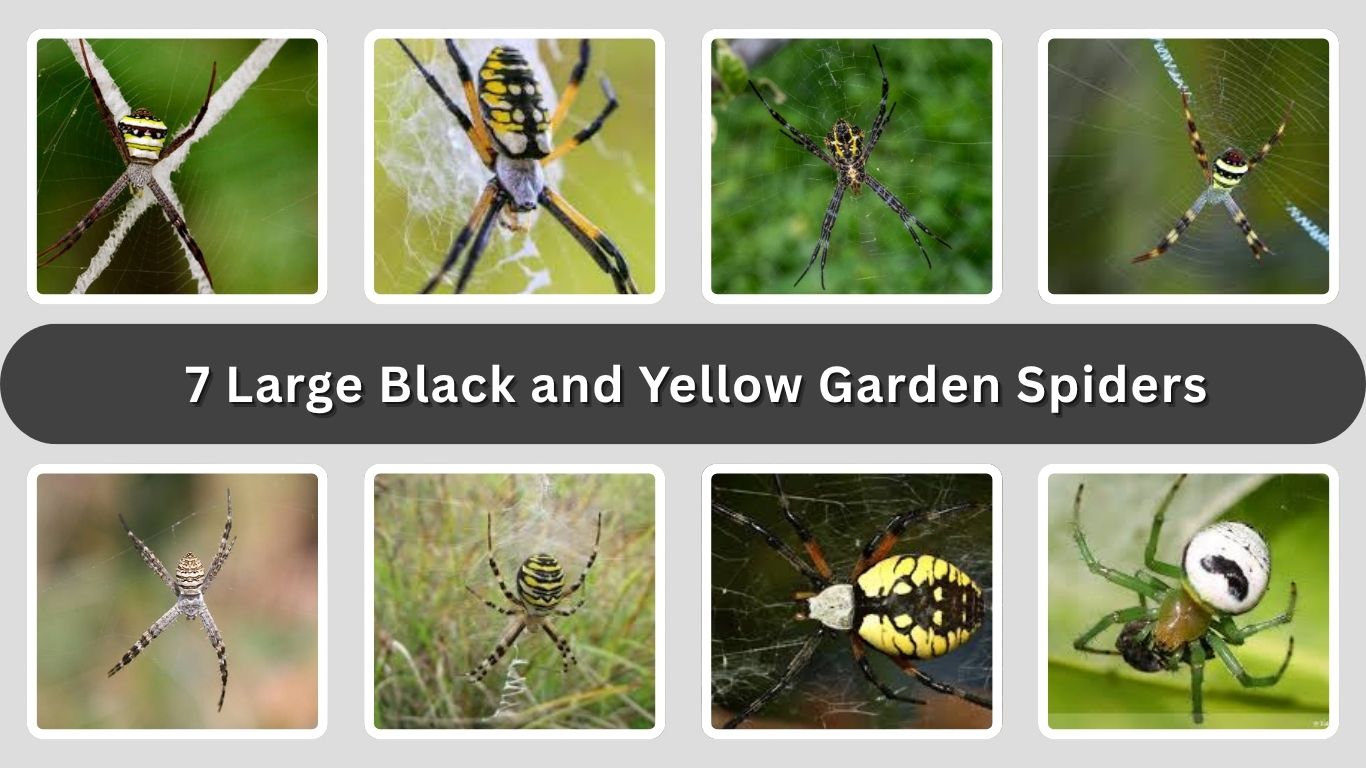
Black and yellow garden spiders are among the most eye-catching and beneficial spiders found in nature. Known for their bold patterns and large orb-shaped webs, these spiders play an important role in controlling insect populations. Despite their striking appearance, they are generally harmless to humans and prefer to avoid contact. This list highlights seven well-known species, each with unique features, habitats, and behaviors that make them fascinating to observe in gardens and wild environments.
1. Black and Yellow Garden Spider

The Black and Yellow Garden Spider (Argiope aurantia) is a striking and easily recognizable orb-weaver commonly found in gardens, fields, and open spaces. Known for its bold black and yellow markings, this spider is both beneficial and harmless to humans, playing an important role in controlling insect populations.
Identification
- Bright yellow and black patterned abdomen with symmetrical markings
- Silvery or whitish cephalothorax (front body section)
- Long, slender legs often held in pairs forming an “X” shape
- Females are much larger and more colorful than males
- Distinctive zigzag pattern (stabilimentum) in the center of its web
Size
The female Black and Yellow Garden Spider is significantly larger than the male. Females typically measure about 19–28 mm (0.75–1.1 inches) in body length, while males are much smaller, usually around 5–9 mm (0.2–0.35 inches). Including their leg span, females can appear even more imposing, though they are not dangerous to humans.
Habitat
This species prefers sunny, open areas where it can build large, circular webs. It is commonly found in gardens, meadows, fields, and along forest edges. The spider constructs its web between plants, shrubs, or tall grasses, usually a few feet above the ground. These webs are strong and often rebuilt daily.
Behavior and Role
The Black and Yellow Garden Spider is a non-aggressive and beneficial predator. It feeds on a variety of flying insects such as flies, mosquitoes, grasshoppers, and beetles. When prey gets caught in its web, the spider quickly immobilizes it with silk before feeding. Despite its intimidating appearance, it rarely bites and poses little threat to humans.
2. Wasp Spider

The Wasp Spider (Argiope bruennichi) is a visually striking species named for its bold yellow and black stripes, which resemble those of a wasp. Native to Europe and parts of Asia, this spider has expanded its range in recent years and is commonly found in grassy habitats. Despite its alarming coloration, it is harmless to humans and plays a useful ecological role.
Identification
- Bright yellow, black, and white striped abdomen resembling a wasp
- Silvery-white cephalothorax
- Long legs with faint banding
- Females are larger and more vividly colored than males
- Characteristic zigzag stabilimentum in the web
Size
Female Wasp Spiders typically measure around 10–15 mm (0.4–0.6 inches) in body length, while males are much smaller, usually about 4–6 mm (0.15–0.25 inches). The difference in size between sexes is quite noticeable, with females dominating both in size and appearance.
Habitat
This species prefers warm, open environments such as grasslands, meadows, roadside vegetation, and agricultural fields. It builds its orb-shaped web low among tall grasses, often just above ground level. The spider thrives in sunny locations where flying insects are abundant.
Behavior and Role
The Wasp Spider is a skilled hunter that captures flying insects like grasshoppers, flies, and bees. It uses its strong silk to wrap prey quickly before feeding. Its wasp-like coloration is thought to deter predators. Although it may look intimidating, it is non-aggressive and rarely bites, making it a beneficial presence in natural ecosystems.
3. Banded Garden Spider

The Banded Garden Spider (Argiope trifasciata) is a common orb-weaving spider known for its delicate banded pattern and impressive web-building skills. It is widely distributed across many regions and is often seen in gardens, fields, and grassy areas. This spider is beneficial to humans as it helps control pest insect populations.
Identification
- Abdomen marked with horizontal bands of yellow, black, and white
- Slender body compared to other Argiope species
- Silvery cephalothorax
- Long legs with subtle banding
- Often rests in the center of its web with legs paired
Size
Female Banded Garden Spiders typically grow to about 15–25 mm (0.6–1 inch) in body length, while males are much smaller, measuring around 4–6 mm (0.15–0.25 inches). Females appear larger due to their fuller abdomen and longer legs.
Habitat
This spider prefers open, sunny areas such as gardens, meadows, grasslands, and agricultural fields. It builds large, circular webs in tall grass or between plants, usually positioned to catch flying insects. The web is often rebuilt regularly to maintain its strength and effectiveness.
Behavior and Role
The Banded Garden Spider is a calm and non-aggressive species. It captures flying insects like moths, flies, and grasshoppers in its web. Once prey is caught, the spider wraps it in silk before feeding. Its presence is beneficial for natural pest control, and it rarely interacts with humans unless disturbed.
4. St Andrew’s Cross Spider

The St Andrew’s Cross Spider (Argiope keyserlingi) is a distinctive orb-weaver commonly found in Australia. It is named after the unique cross-shaped posture it adopts while sitting in its web, as well as the zigzag silk pattern that often forms a cross. This spider is harmless to humans and is valued for its role in controlling insect populations.
Identification
- Abdomen with bold yellow and black markings
- Silvery cephalothorax
- Long legs often held in pairs forming an “X” shape
- Prominent zigzag stabilimentum forming a cross in the web
- Females are larger and more colorful than males
Size
Female St Andrew’s Cross Spiders typically measure about 10–16 mm (0.4–0.6 inches) in body length, while males are much smaller, around 3–5 mm (0.1–0.2 inches). The size difference between sexes is quite noticeable, with females being more visible and dominant.
Habitat
This species is commonly found in gardens, parks, forests, and shrublands, especially in eastern Australia. It prefers warm, sunny areas where it can build its web among shrubs or between tree branches. The web is usually positioned at a moderate height to catch flying insects.
Behavior and Role
The St Andrew’s Cross Spider is known for its unique resting posture, aligning its legs in pairs to form an “X.” It preys on flying insects such as flies and bees, quickly wrapping them in silk. Despite its bold appearance, it is non-aggressive and beneficial, helping maintain ecological balance by reducing insect populations.
5. Hawaiian Garden Spider

The Hawaiian Garden Spider (Argiope appensa) is a large and visually striking orb-weaver commonly found in Hawaii and other Pacific islands. Known for its bold coloration and large webs, this spider is an important part of the local ecosystem. Despite its intimidating size, it is harmless to humans and plays a helpful role in controlling insect populations.
Identification
- Bright yellow and black patterned abdomen
- Silvery cephalothorax
- Long, strong legs often held in pairs
- Large orb-shaped web with a visible zigzag stabilimentum
- Females are significantly larger and more colorful than males
Size
Female Hawaiian Garden Spiders are quite large, typically measuring around 15–25 mm (0.6–1 inch) in body length, with an even greater leg span. Males are much smaller, usually about 4–6 mm (0.15–0.25 inches). The size difference makes females more noticeable in their webs.
Habitat
This species is commonly found in tropical environments such as gardens, forests, and coastal vegetation. It prefers warm, humid areas where it can build large webs between trees, shrubs, or man-made structures. Its webs are often placed in open spaces to catch flying insects efficiently.
Behavior and Role
The Hawaiian Garden Spider is a non-aggressive predator that feeds on a variety of insects, including flies, moths, and beetles. It uses its strong silk to quickly immobilize prey before feeding. This spider is beneficial to humans because it helps reduce pest populations, and it rarely bites unless directly threatened.
6. Asian Garden Spider

The Asian Garden Spider (Argiope versicolor) is a beautifully patterned orb-weaver found across Asia, especially in tropical and subtropical regions. Its vibrant colors and intricate web make it a fascinating species to observe in gardens and natural habitats. Like other Argiope spiders, it is harmless to humans and beneficial for controlling insect populations.
Identification
- Abdomen with bright yellow, black, and sometimes bluish or greenish tones
- Silvery cephalothorax
- Long, slender legs with dark and light banding
- Often displays a zigzag stabilimentum in the web
- Females are larger and more vividly colored than males
Size
Female Asian Garden Spiders usually measure around 15–25 mm (0.6–1 inch) in body length, while males are much smaller, typically about 4–6 mm (0.15–0.25 inches). The females’ larger size and brighter coloration make them easier to spot in their webs.
Habitat
This species thrives in warm climates and is commonly found in gardens, forests, agricultural fields, and shrublands. It prefers sunny, open areas where it can construct large orb webs between plants or tree branches. The web is usually positioned to intercept flying insects.
Behavior and Role
The Asian Garden Spider is a calm and efficient predator, feeding on insects such as flies, mosquitoes, and moths. It quickly wraps captured prey in silk before consuming it. Its colorful appearance may help deter predators. Overall, it plays an important ecological role by naturally reducing insect populations.
7. Oval St Andrew’s Cross Spider

The Oval St Andrew’s Cross Spider (Argiope aemula) is a distinctive orb-weaver found in parts of Asia and Australia. It is known for its oval-shaped abdomen and the characteristic cross-like pattern in its web. This spider is harmless to humans and is beneficial for maintaining balance in insect populations.
Identification
- Oval-shaped abdomen with yellow, black, and white markings
- Silvery cephalothorax
- Long legs often held in pairs forming an “X” posture
- Prominent zigzag stabilimentum forming a cross in the web
- Females are larger and more colorful than males
Size
Female Oval St Andrew’s Cross Spiders typically measure about 10–18 mm (0.4–0.7 inches) in body length, while males are smaller, around 3–5 mm (0.1–0.2 inches). Females are more noticeable due to their size and brighter coloration.
Habitat
This species is commonly found in tropical and subtropical regions, especially in gardens, forests, and shrublands. It prefers warm, humid environments where it can build its web between plants or tree branches. The web is usually positioned in open spaces to capture flying insects.
Behavior and Role
The Oval St Andrew’s Cross Spider is a non-aggressive predator that feeds on various flying insects such as flies and moths. It quickly immobilizes prey by wrapping it in silk. Its cross-shaped web pattern may help deter predators or attract prey. Overall, it is a helpful species that contributes to natural pest control.
FAQs
Are black and yellow garden spiders dangerous to humans?
Black and yellow garden spiders are generally harmless to humans. They are non-aggressive and rarely bite unless directly handled or threatened. Even if a bite occurs, it is usually mild and comparable to a bee sting, causing only minor discomfort.
What do black and yellow garden spiders eat?
These spiders mainly feed on flying insects such as flies, mosquitoes, grasshoppers, and moths. They use their large orb-shaped webs to trap prey, then quickly wrap it in silk before consuming it. This makes them highly beneficial for natural pest control.
Where can black and yellow garden spiders be found?
They are commonly found in gardens, fields, meadows, and forest edges. These spiders prefer sunny, open areas where they can build large webs between plants, shrubs, or tall grasses to catch flying insects effectively.
Why do their webs have a zigzag pattern?
The zigzag pattern, called a stabilimentum, is a unique feature of many Argiope spiders. It may help strengthen the web, attract prey by reflecting light, or warn larger animals like birds to avoid destroying the web.
How long do black and yellow garden spiders live?
Most black and yellow garden spiders have a life cycle of about one year. They typically hatch in spring, grow through summer, and reach maturity by late summer or early fall. Females lay eggs before dying as temperatures drop.
