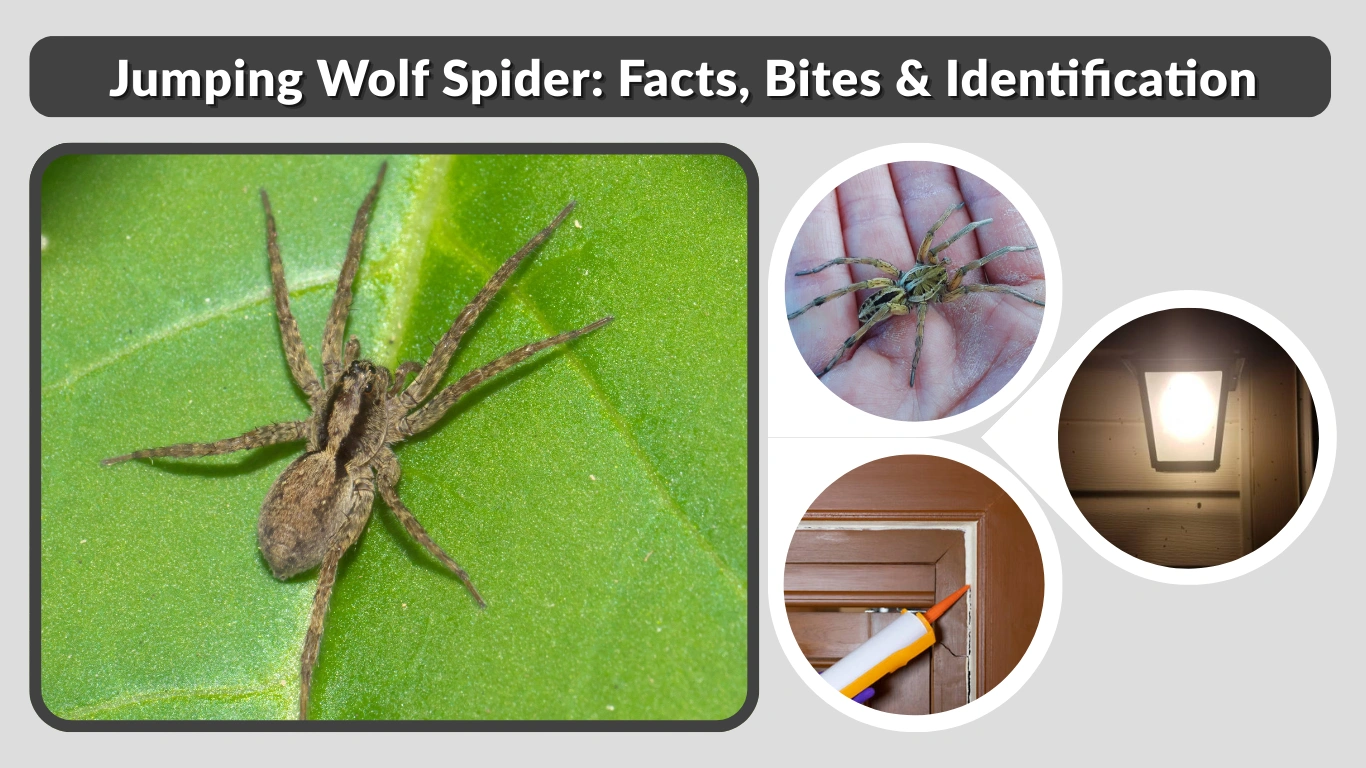
The term “jumping wolf spider” often confuses homeowners who spot a fast, hairy spider that suddenly leaps across the floor. While wolf spiders are not true jumping spiders, they can make short, quick jumps when hunting or defending themselves. This behavior often surprises people and leads to concern about danger. In this guide, you’ll learn how to identify a jumping wolf spider, understand why it jumps, and determine whether it poses any real risk.
What Is a Jumping Wolf Spider?
A “jumping wolf spider” is not a separate species. The name usually refers to a wolf spider that appears to leap while moving. Wolf spiders belong to the Lycosidae family and are known for their speed, strong legs, and ground-hunting skills.
Unlike jumping spiders (family Salticidae), wolf spiders do not rely on dramatic, long-distance leaps. Instead, they use short bursts of movement to capture prey or escape threats. Because these quick movements can look like jumps, people often mistake them for jumping spiders.
Wolf spiders are solitary hunters. They do not build webs to catch prey. Instead, they actively chase or ambush insects on the ground.
Do Wolf Spiders Actually Jump?
Yes — but not in the same way jumping spiders do.
Wolf spiders can make short leaps, usually just a few inches, as part of their hunting or defensive behavior. These jumps are powered by their strong back legs and hydraulic pressure in their limbs. However, they lack the exaggerated jumping ability and precision vision that true jumping spiders are famous for.
Most of the time, what looks like a “jump” is actually a rapid dash forward. When startled, a wolf spider may suddenly spring in a direction that appears aggressive, even though it is simply trying to escape.
Their movement is:
- Fast and low to the ground
- Short-distance
- Often defensive rather than aggressive
Jumping Wolf Spider Identification Guide
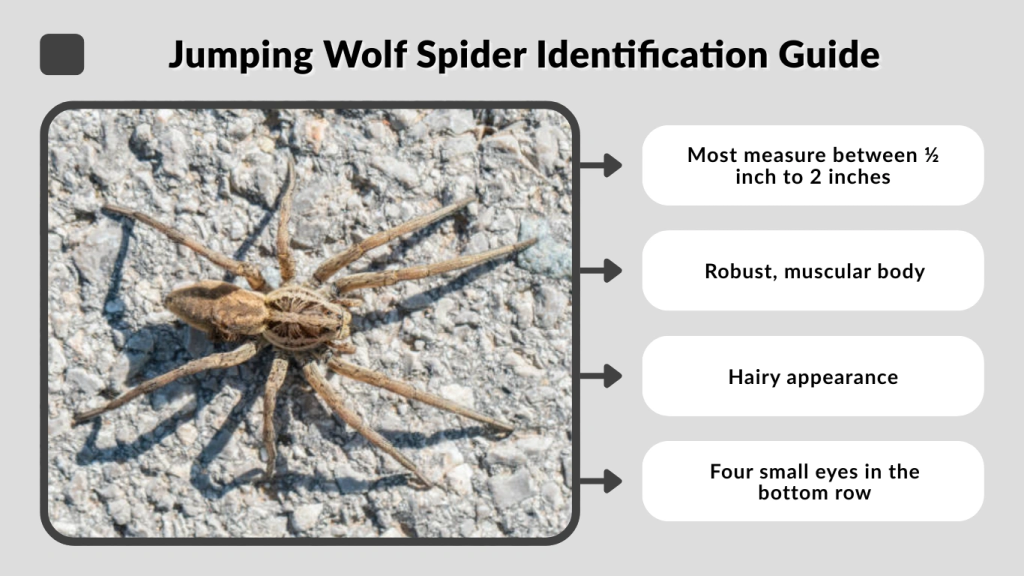
Correct identification is important, especially since wolf spiders are commonly confused with jumping spiders and even small tarantulas.
Size and Body Shape
Wolf spiders are medium to large compared to many household spiders. Most measure between ½ inch to 2 inches, including leg span.
Key physical traits:
- Robust, muscular body
- Hairy appearance
- Long, strong legs
- Low, ground-hugging posture
They look powerful rather than compact.
Eye Arrangement (Most Important Feature)
The eye pattern is the clearest way to identify a wolf spider.
Wolf spiders have eight eyes arranged in three rows:
- Four small eyes in the bottom row
- Two very large eyes in the middle row
- Two medium-sized eyes on top
Those two large middle eyes are especially noticeable when light reflects off them at night.
Jumping spiders, by comparison, have one very large pair of front-facing eyes that dominate their face.
Color and Markings
Wolf spiders are usually:
- Brown
- Gray
- Tan
- Dark brown with stripes
Many have a stripe pattern running down their back, which helps them blend into soil, leaves, and grass. Their camouflage makes them difficult to spot outdoors.
Wolf Spider vs Jumping Spider: Key Differences
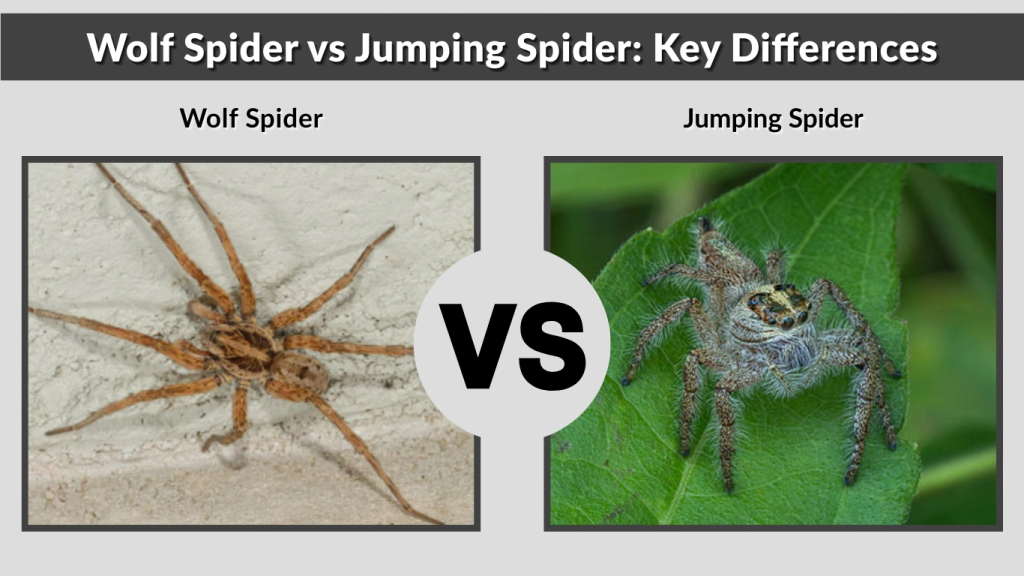
Because of the name confusion, it helps to understand how these spiders differ.
Wolf Spider
- Larger and more elongated
- Hairier body
- Ground runner
- Short bursts of movement
- Active mostly on the ground
Jumping Spider
- Smaller and compact
- Shorter legs
- Extremely large front eyes
- Capable of impressive leaps
- Often seen on walls and windows
Jumping spiders rely heavily on vision and stalking behavior. Wolf spiders rely more on speed and vibration detection.
Are Jumping Wolf Spiders Dangerous?
Wolf spiders are not considered dangerous to humans.
They do have venom, but it is designed to immobilize insects, not people. A bite is rare and usually occurs only if the spider is trapped against skin or handled.
If a bite happens, symptoms may include:
- Mild redness
- Slight swelling
- Temporary pain similar to a bee sting
Serious reactions are extremely uncommon.
Wolf spiders are not aggressive by nature. When they appear to “jump at you,” they are typically trying to escape rather than attack.
Why Did a Wolf Spider Jump at Me?
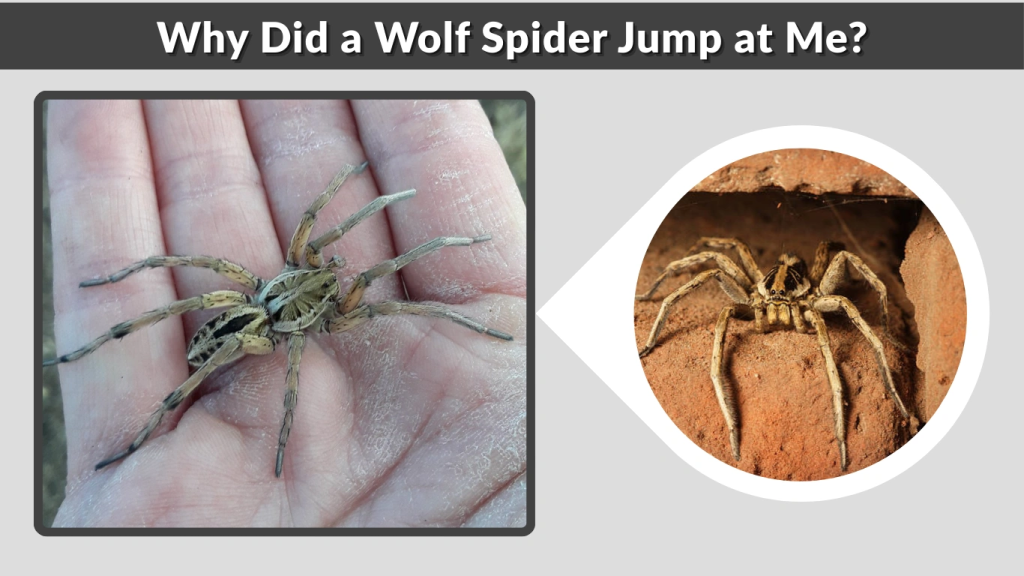
This is one of the most common concerns people have.
In most cases, the spider:
- Felt threatened
- Misjudged your movement
- Was trying to flee
Wolf spiders have limited eyesight compared to jumping spiders. If you move suddenly, they may dash or spring in your direction by accident. It can feel intentional, but it is usually defensive behavior.
They do not chase humans as prey.
Where Are Jumping Wolf Spiders Commonly Found?
Wolf spiders are found throughout many regions of the world, especially in temperate and warm climates. They prefer outdoor environments but occasionally wander indoors.
You’ll most often find them:
- In gardens and lawns
- Under rocks, logs, or leaf litter
- Along the edges of buildings
- Inside basements and garages
- Near doors where insects gather
They are ground-dwelling spiders and rarely climb high surfaces. During colder months or heavy rain, they may enter homes seeking shelter.
Wolf spiders are more active at night. If you shine a flashlight across your yard after dark, you may notice tiny reflective glints — these are their large middle eyes reflecting light.
How to Get Rid of Jumping Wolf Spiders
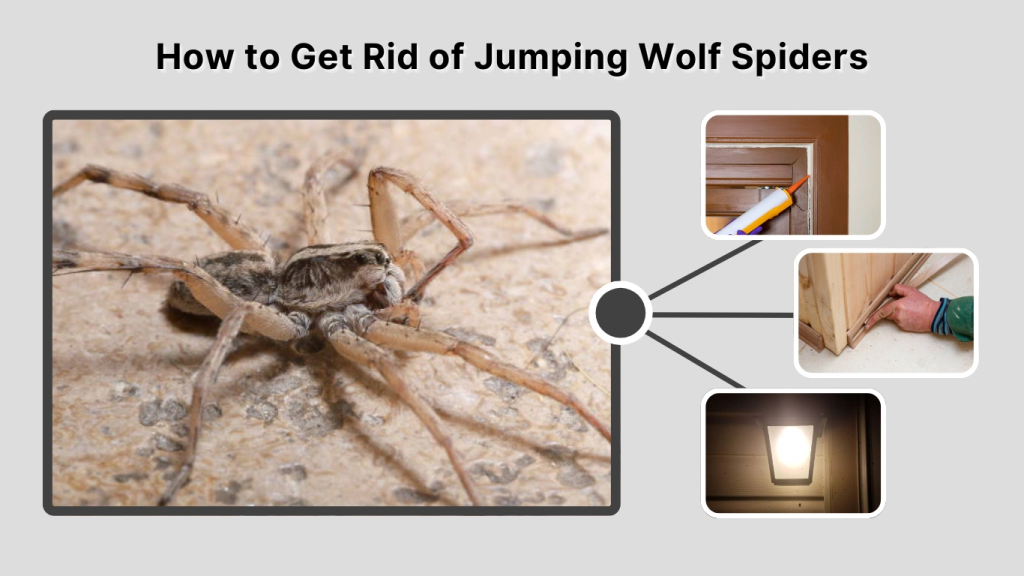
If you’re seeing wolf spiders indoors regularly, simple prevention steps can reduce their presence.
Natural Prevention Methods
Wolf spiders usually enter homes while hunting insects. Reducing their food source is the most effective strategy.
- Seal cracks around doors and windows
- Install tight-fitting door sweeps
- Reduce outdoor lighting that attracts insects
- Keep basements dry with a dehumidifier
- Remove clutter near the foundation
Outdoor landscaping maintenance also helps. Trim tall grass and remove woodpiles near your home’s exterior.
Safe Removal Methods
If you spot one indoors, there’s no need to panic.
- Use a cup-and-card method to capture and release it outside
- Vacuum the spider if immediate removal is necessary
- Avoid crushing with bare hands
Because wolf spiders are beneficial predators, releasing them outdoors is often the best option.
When to Call Pest Control
Occasional sightings are normal. However, professional help may be needed if:
- You see multiple spiders daily
- Egg sacs are present indoors
- Other insect infestations are noticeable
In many cases, the underlying issue is excess insects rather than a spider problem.
Are Jumping Wolf Spiders Good for Your Home?
Yes — in many situations, wolf spiders are beneficial.
They help control populations of:
- Ants
- Roaches
- Crickets
- Beetles
- Other small insects
Outdoors, they play an important role in maintaining ecological balance. Even indoors, they often reduce pest activity naturally.
While their sudden movements can be startling, they are not destructive and do not damage property.
FAQs
Do wolf spiders jump like jumping spiders?
Wolf spiders can make short, quick leaps, but they do not jump long distances like true jumping spiders. Their movements are more like rapid lunges powered by strong back legs. What appears to be a dramatic jump is usually a fast defensive dash.
Can a wolf spider bite you?
Yes, but bites are rare and typically happen only if the spider is trapped or handled. A wolf spider bite may cause mild pain, redness, and slight swelling. Serious reactions are uncommon, and most symptoms resolve within a few days without medical treatment.
How high can a wolf spider jump?
Wolf spiders can only jump short distances, typically a few inches at most. They are built for speed rather than height or precision jumping. Their leaps are primarily used for catching prey or escaping threats rather than traveling long distances.
Are wolf spiders aggressive?
Wolf spiders are not aggressive toward humans. If they move quickly in your direction, it is usually accidental or defensive. They prefer to flee rather than confront larger animals and will only bite if they feel directly threatened.
How do I tell if it’s a wolf spider or jumping spider?
The easiest way is by examining the eyes and body shape. Wolf spiders are larger, hairier, and have eight eyes arranged in three rows. Jumping spiders are smaller, compact, and have very large front-facing eyes that dominate their face.
Conclusion
A “jumping wolf spider” is simply a wolf spider displaying its natural quick-movement behavior. While their sudden bursts of speed can be alarming, they are not dangerous to humans and rarely bite. Proper identification helps reduce unnecessary fear and confusion with jumping spiders. In most cases, these spiders are helpful predators that keep insect populations under control — making them more beneficial than harmful in both gardens and homes.