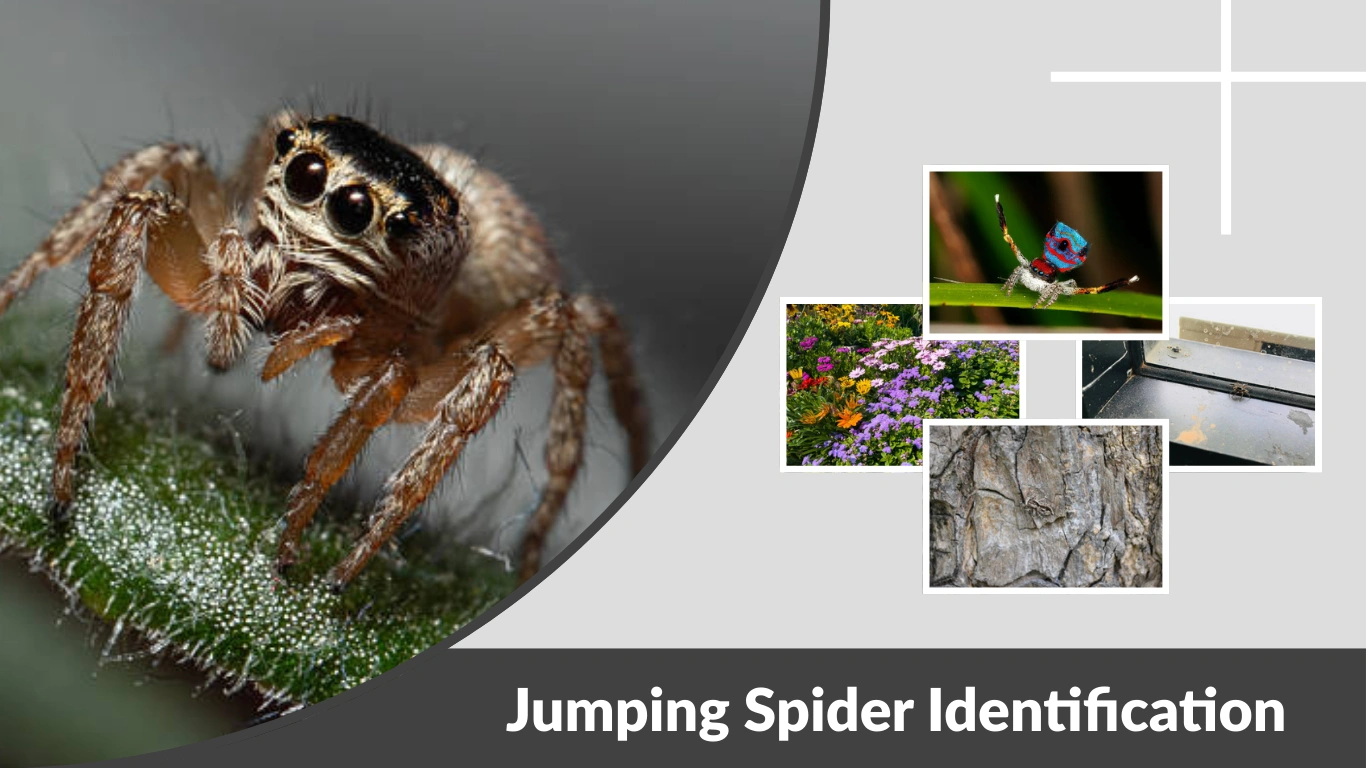
Jumping spiders are some of the most commonly seen and easily recognizable spiders in the world. Known for their excellent eyesight, curious behavior, and sudden jumps, these spiders often attract attention indoors and outdoors. Although many people confuse them with other small spiders, jumping spiders have several unique features that make identification easier once you know what to look for. Learning proper jumping spider identification helps distinguish harmless species from look-alikes and builds a better understanding of these fascinating hunters.
What Is a Jumping Spider?
Jumping spiders belong to the family Salticidae, the largest spider family on Earth, with more than 6,000 known species. They are found on every continent except Antarctica and live in gardens, forests, grasslands, deserts, and even inside homes.
Unlike web-building spiders, jumping spiders actively hunt their prey. They stalk insects during the day and use powerful jumps to capture them. Their alert movements, frequent head-turning, and forward-facing eyes make them appear curious and almost animated compared to other spiders.
Key Features for Jumping Spider Identification
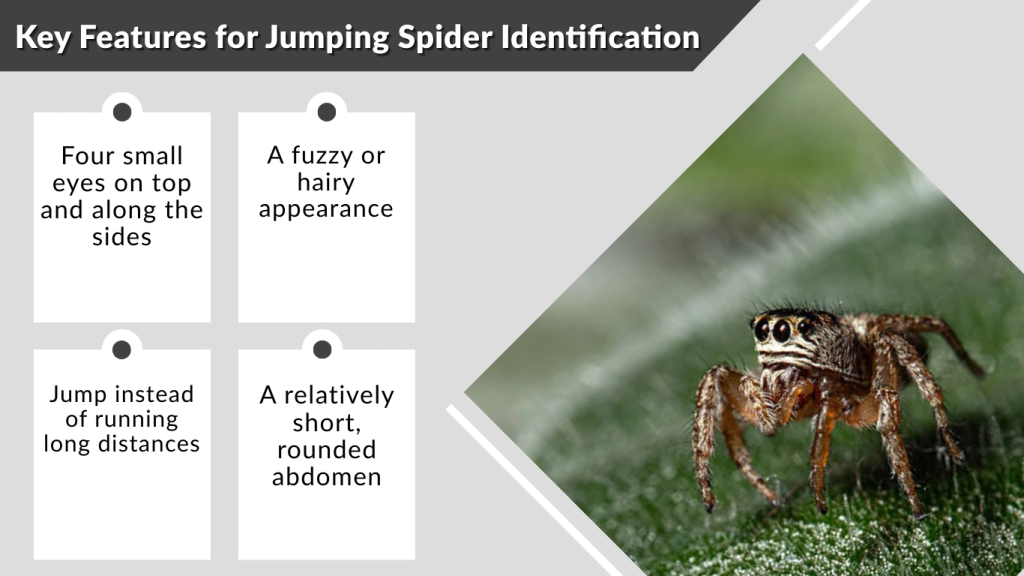
1. Eye Pattern (Most Important Feature)
The most reliable way to identify a jumping spider is by its eyes. Jumping spiders have eight eyes arranged in three rows, with:
- Two very large front eyes
- Two smaller eyes beside them
- Four small eyes on top and along the sides
The two central front eyes are especially noticeable. They give jumping spiders excellent depth perception and sharp vision. If a spider seems to be “looking at you,” it is very likely a jumping spider.
2. Body Shape and Size
Jumping spiders usually have short, compact bodies rather than long, thin shapes. Most species range from 3 to 15 millimeters in length, though some tropical species are larger.
Common body traits include:
- A stocky cephalothorax (front body section)
- A relatively short, rounded abdomen
- Thick front legs in many species
- A fuzzy or hairy appearance
They often look more “cute” or plush compared to shiny house spiders.
3. Movement and Behavior
Behavior is one of the easiest ways to identify a jumping spider. These spiders:
- Walk in quick, jerky movements
- Frequently stop and turn to observe surroundings
- Jump instead of running long distances
- Rarely sit in webs
If a spider actively jumps when disturbed rather than dropping on silk, it is almost certainly a jumping spider.
Color Patterns and Markings
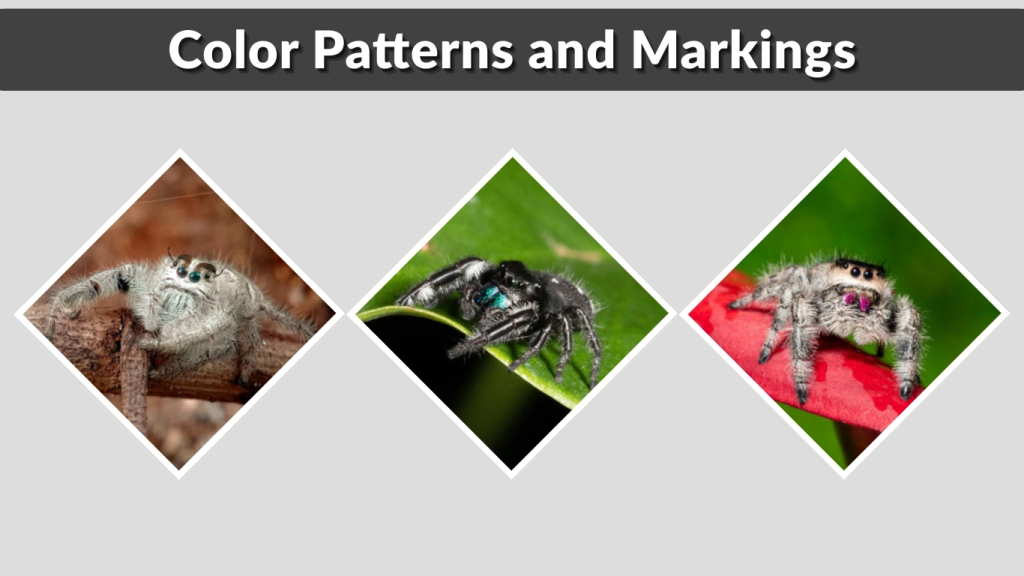
Jumping spiders are extremely diverse in color. Some are dull brown or gray, while others display brilliant reds, greens, blues, and metallic shades.
Common color traits used in identification include:
- Bold stripes or spots
- Iridescent scales in some species
- White, orange, or red facial markings
- Brightly colored mouthparts (chelicerae)
Males are often more colorful than females, especially in species such as peacock jumping spiders or bold jumping spiders.
Hair, Texture, and Facial Features
Most jumping spiders appear hairy or fuzzy under close inspection. These tiny hairs help them sense vibrations and air movement. Many species also have:
- Prominent facial “mustaches”
- Colorful pedipalps (small leg-like mouthparts)
- Distinctive eye rings
These facial features are commonly used by spider enthusiasts to identify specific species.
Common Types of Jumping Spiders and How to Recognize Them
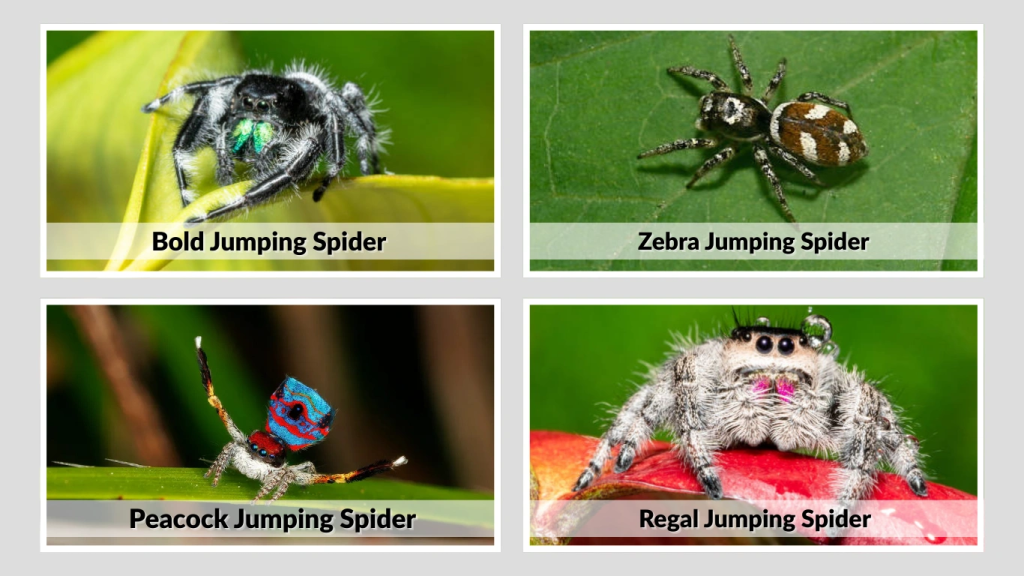
Bold Jumping Spider (Phidippus audax)
One of the most widespread jumping spiders in North America.
Identification clues:
- Black body
- White or orange spots on the abdomen
- Metallic green or blue mouthparts
- Thick front legs
Zebra Jumping Spider (Salticus scenicus)
Often found on walls and fences.
Identification clues:
- Black and white stripes
- Small, flattened body
- Quick, nervous movements
Peacock Jumping Spider (Maratus species)
Native mainly to Australia.
Identification clues:
- Bright rainbow colors (males)
- Fan-shaped abdominal flaps
- Complex courtship dances
Regal Jumping Spider (Phidippus regius)
Large and fuzzy with strong sexual color differences.
Identification clues:
- Black and white females
- Brightly colored males
- Thick legs and large eyes
Jumping Spider vs Look-Alike Spiders
Jumping spiders are often confused with wolf spiders, crab spiders, and young tarantulas.
Compared to wolf spiders:
Jumping spiders are shorter, fuzzier, and have much larger front eyes. Wolf spiders have longer legs and run instead of jump.
Compared to crab spiders:
Crab spiders hold their legs sideways and ambush prey. Jumping spiders face forward and move actively.
Compared to house spiders:
House spiders build webs and have small eyes. Jumping spiders rarely build capture webs and have prominent eyes.
Where Jumping Spiders Are Usually Found
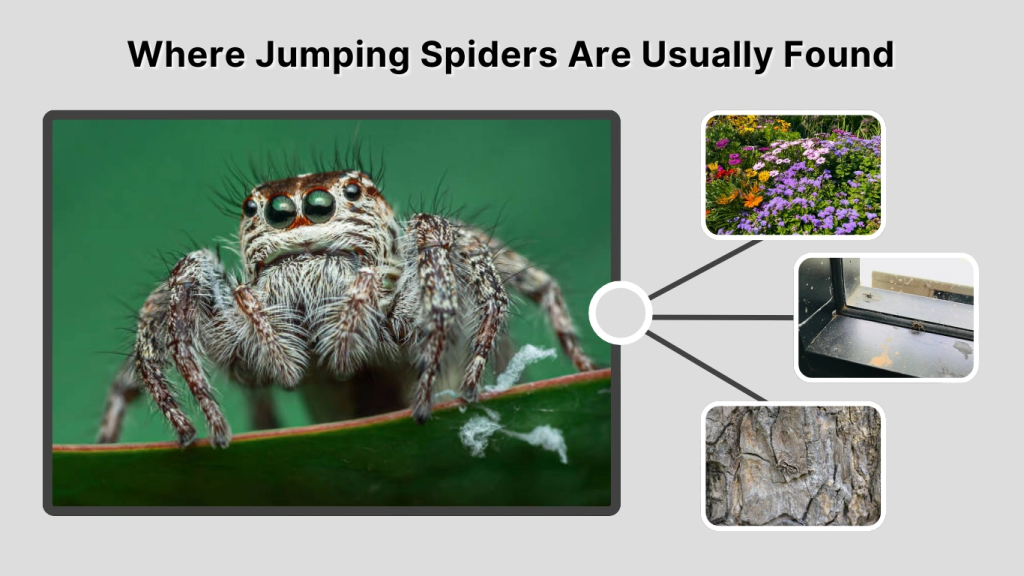
Jumping spiders are daytime hunters. Common locations include:
- Garden plants and flowers
- Window frames and walls
- Tree bark and fences
- Outdoor furniture
- Sunny indoor areas
They prefer bright environments where their excellent vision gives them an advantage.
Are Jumping Spiders Dangerous?
Jumping spiders are not dangerous to humans. Their venom is mild and designed for tiny insects. Bites are rare and usually happen only if the spider is trapped against skin.
If a bite occurs, symptoms are generally limited to minor redness or itching. Jumping spiders are curious but shy and almost always choose to escape rather than bite.
Tools That Help With Jumping Spider Identification
For more accurate identification, many people use:
- Macro photography
- Magnifying glasses
- Spider identification apps
- Regional spider field guides
Clear photos of the eyes, face, and abdomen greatly improve identification accuracy.
Why Proper Identification Matters
Correctly identifying jumping spiders helps people:
- Avoid unnecessary pest control
- Appreciate beneficial predators
- Track local biodiversity
- Recognize rare or regional species
Jumping spiders feed on many pest insects, making them valuable allies in gardens and homes.
FAQs
How can I tell if a spider is a jumping spider?
Look for large front-facing eyes, quick movements, and jumping behavior. If the spider seems to watch you and leaps rather than runs, it is almost certainly a jumping spider.
Do all jumping spiders look the same?
No. Jumping spiders vary widely in color, size, and patterns. Some are dull and camouflaged, while others are brightly colored with bold markings.
Can jumping spiders see people?
Yes. Jumping spiders have some of the best vision among spiders. They can detect movement, shapes, and even colors, which is why they often appear to look directly at people.
Are jumping spiders good to have around?
Yes. They help control flies, mosquitoes, and other pests. They rarely bite and are not harmful to humans or pets.
What is the easiest way to identify a jumping spider species?
The best methods are close-up photos of the eyes and abdomen, along with noting location and behavior. Eye arrangement and color patterns are the most important clues.