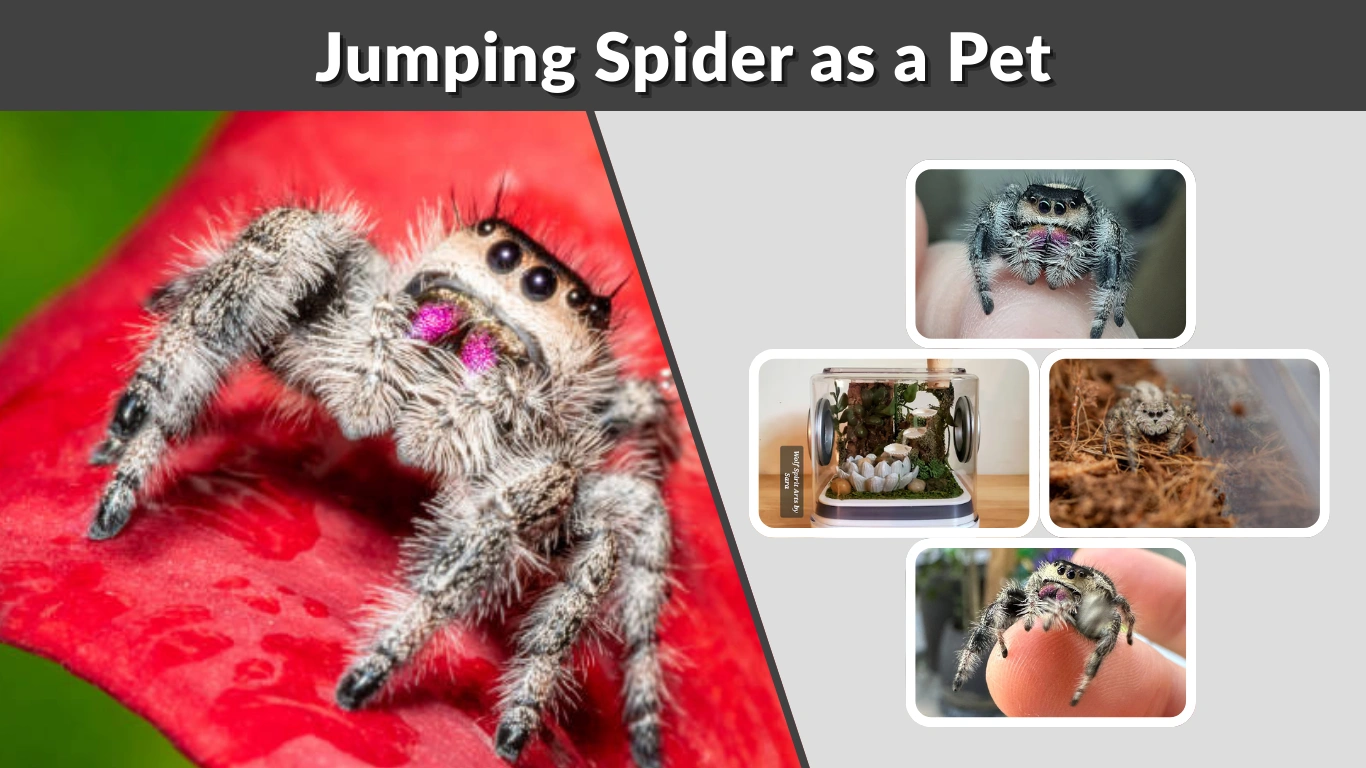
Jumping spiders have become one of the most popular small invertebrate pets in recent years. Unlike many web-building spiders, they are active during the day, visually aware, and often appear curious about their surroundings. Their compact size, low space requirements, and interesting hunting behavior make them ideal pets for beginners and experienced keepers alike. A well-kept jumping spider needs only a simple enclosure, live insect food, and basic maintenance. This guide explains what jumping spiders are, why people choose them as pets, and how to start caring for one properly.
What Is a Jumping Spider?
Jumping spiders belong to the family Salticidae, which includes more than 6,000 species worldwide. They are best known for their large forward-facing eyes, excellent vision, and ability to leap many times their body length. Instead of building webs to catch prey, they actively stalk insects and pounce on them with precision.
Jumping spiders use silk mainly for safety lines, molting shelters, and egg sacs. Their alert movements and habit of turning to face objects give them a reputation as one of the most intelligent-looking spiders. This unique combination of behavior and visibility is a major reason they are so appealing as pets.
Why Choose a Jumping Spider as a Pet?
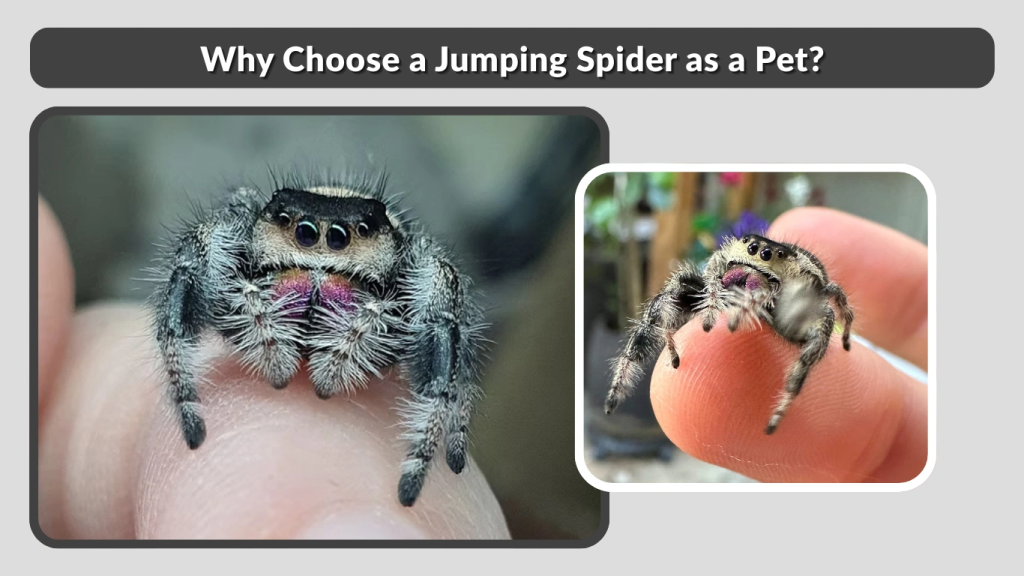
Jumping spiders offer several advantages over many traditional exotic pets. They require very little space and can live comfortably in small desktop enclosures. They do not make noise, produce odors, or require expensive equipment. Daily care usually takes only a few minutes.
They are also visually engaging. Unlike nocturnal spiders that remain hidden, jumping spiders are active in daylight and frequently explore their enclosure. Many keepers enjoy watching them hunt, build silk retreats, and observe objects outside their habitat.
For people interested in arachnids but hesitant about large spiders, jumping spiders are often considered an ideal starting point.
Best Jumping Spider Species for Pets
Not all jumping spiders are equally suitable for captivity, but several species are commonly kept.
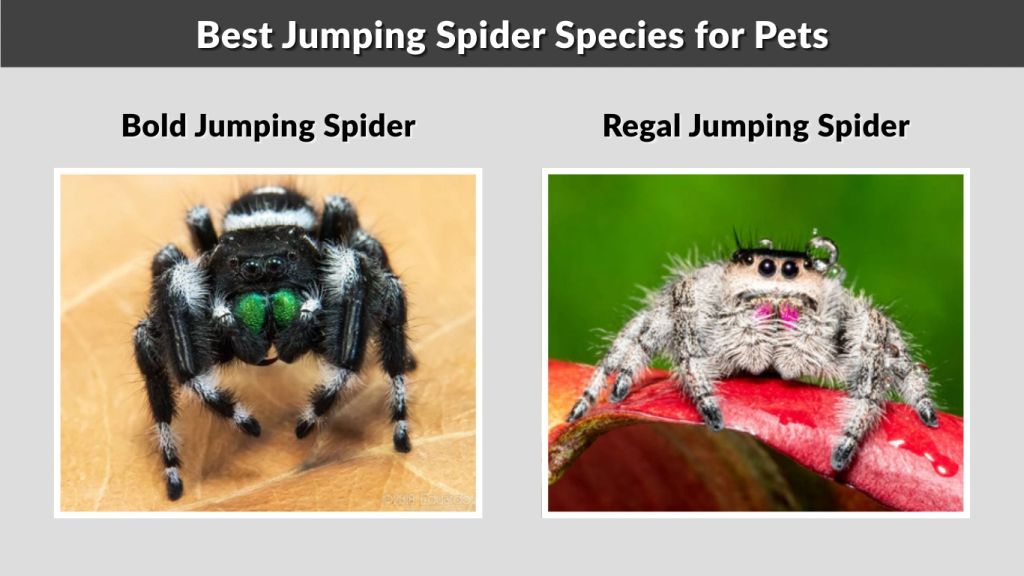
Bold Jumping Spider
The bold jumping spider (Phidippus audax) is one of the most popular pet species. It is hardy, widely available, and adapts well to captive conditions. Its black body with white spots and metallic green mouthparts make it visually striking.
Regal Jumping Spider
The regal jumping spider (Phidippus regius) is another favorite. It is known for its larger size, colorful variations, and calm temperament. Many captive-bred jumping spiders sold in the pet trade belong to this species.
Other Pet-Friendly Jumping Spiders
Other species in the genus Phidippus, such as Phidippus otiosus and Phidippus clarus, are also sometimes kept. These species share similar care requirements and behaviors.
Choosing a Healthy Jumping Spider
Jumping spiders may be wild-caught or captive-bred. Captive-bred individuals are usually preferred because they are accustomed to enclosure life and reduce impact on wild populations.
A healthy jumping spider should be alert, able to climb easily, and responsive to movement. Its abdomen should appear full but not swollen. Avoid spiders that appear lethargic, curled, or unable to grip surfaces.
Juveniles are often easier to acclimate and allow keepers to observe growth and molting, while adults provide immediate visibility and established behavior. Females tend to live longer than males, but may lay eggs.
Jumping Spider Enclosure Setup
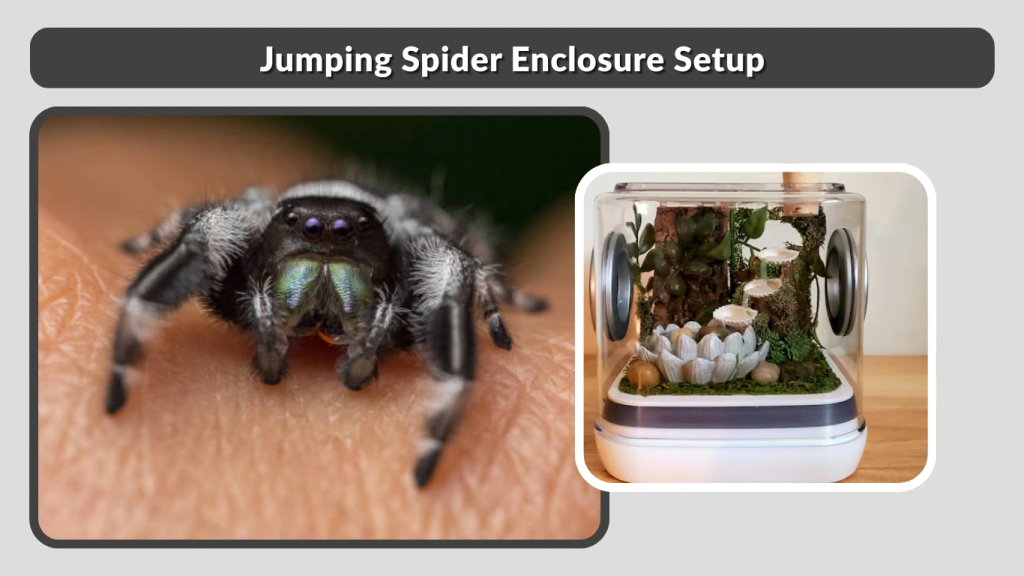
A proper enclosure is essential for health and activity.
- Small but tall containers are ideal, providing vertical climbing space
- Cross-ventilation is important to prevent mold and stagnant air
- Substrate may include paper towel, coco fiber, or reptile soil
- Provide branches, cork bark, or artificial plants for climbing
- Include small hides or textured surfaces for silk retreats
The enclosure should be placed in a bright room with indirect light. Direct sunlight should be avoided, as it can overheat the habitat quickly.
Temperature and Humidity Requirements
Jumping spiders thrive at normal room temperatures, usually between 20°C and 27°C (68°F to 80°F). Supplemental heating is rarely necessary in most homes.
Humidity should be light to moderate. A gentle mist on one side of the enclosure every few days provides drinking droplets without soaking the environment. Overwatering should be avoided, as excessive moisture leads to mold and drowning risks.
Jumping Spider Diet and Feeding
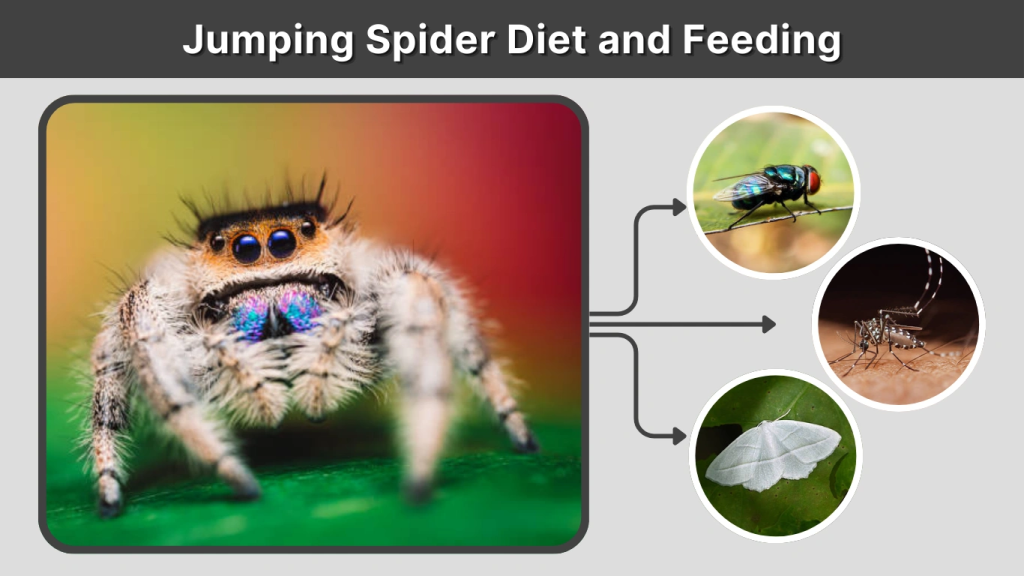
What Do Pet Jumping Spiders Eat?
Jumping spiders are strict carnivores and must be fed live insects. Common feeder insects include fruit flies, houseflies, small crickets, roach nymphs, and tiny moths. The prey should always be smaller than the spider’s body to prevent stress or injury.
Juvenile jumping spiders do best on flightless fruit flies or pinhead insects, while adults can handle slightly larger prey such as small crickets or flies.
Feeding Schedule
Young jumping spiders usually eat every one to two days. Adults typically eat two to three times per week. A well-fed spider has a gently rounded abdomen. If the abdomen appears very small or wrinkled, feeding should be increased. Remove uneaten insects after 24 hours.
Water and Hydration
Most hydration comes from prey, but spiders still need access to moisture. Lightly mist the enclosure wall or decorations to create tiny water droplets. Avoid open water dishes, which can drown spiders.
Handling and Behavior
Jumping spiders are known for their curious and alert behavior. Many will watch movement outside their enclosure and may approach fingers or objects placed nearby.
Handling is optional and should be gentle. Never squeeze or trap a spider. Allow it to step onto your hand on its own. Sudden movements, blowing air, or frequent handling can cause stress. Observing rather than handling is often best, especially for beginners.
Signs of stress include frantic running, refusal to eat, or constantly hiding.
Jumping Spider Molting and Growth
Jumping spiders molt several times as they grow. During this period, they will hide inside a silk retreat and stop eating for days. This is normal and necessary for development.
Do not disturb or handle a spider during molting. Keep humidity slightly elevated and ensure there are no loose insects in the enclosure that could harm the spider while it is vulnerable.
After molting, the spider may remain inactive for a short time before resuming normal behavior.
Common Problems and Mistakes
Some of the most common issues in jumping spider care include overwatering, poor ventilation, and feeding prey that is too large. Mold growth, drowned spiders, and injured legs are often linked to these mistakes.
Other problems include placing enclosures in direct sunlight, handling spiders during molting, and keeping multiple jumping spiders together. Jumping spiders are solitary and may attack each other.
Jumping Spider Lifespan and Commitment
Most pet jumping spiders live around one year, though females may live longer than males. Males often decline quickly after maturity, while females may survive through egg-laying cycles.
Although small, jumping spiders still require consistent care. Regular feeding, enclosure cleaning, and observation are necessary to maintain health.
Jumping Spider Safety and Bites
Jumping spiders are not aggressive and rarely bite humans. Bites usually occur only when a spider is trapped or pressed against skin. Their venom is mild and not medically significant, causing minor redness or irritation at most.
They are considered safe to keep in homes and around children with supervision.
FAQs
Are jumping spiders good pets for beginners?
Yes. Jumping spiders are one of the best beginner spiders because they are active, easy to feed, and do not require large enclosures or complex equipment.
Do jumping spiders recognize humans?
While they do not recognize humans the way mammals do, their strong vision allows them to track movement and respond to familiar surroundings, which can appear like recognition.
How often should I feed my jumping spider?
Juveniles usually eat every one to two days. Adults generally eat two to three times per week, depending on size, age, and temperature.
Can I keep more than one jumping spider together?
No. Jumping spiders are solitary and often cannibalistic. Keeping more than one in the same enclosure can result in injury or death.
How long do pet jumping spiders live?
Most pet jumping spiders live around one year. Some females may live slightly longer under good care conditions.