
Silk moths are some of the most striking moths in the world, ranging from brightly colored species to enormous giants with dramatic eyespots and long tails. Many are known for spinning strong silk cocoons, while others stand out for their unusual life cycles and host plants. Species such as the Luna Moth, Atlas Moth, Cecropia Moth, and Hercules Moth are especially impressive. This guide covers 25 types of silk moths, including their appearance, habitat, feeding habits, life cycle, and interesting characteristics.
1. Luna Moth

The Luna Moth is one of the most recognizable silk moths in North America, famous for its pale green wings, long hindwing tails, and large size. This beautiful nocturnal moth belongs to the giant silk moth family and is usually active during late spring and summer. Adults live only a short time and focus entirely on reproduction, while the caterpillars spend their lives feeding on the leaves of several hardwood trees.
Identification
- Scientific name: Actias luna
- Wingspan: Usually about 3–4.5 inches
- Wing color: Pale lime green
- Hindwings: Long, curved tails
- Eyespots: One on each wing
- Body: Thick, fuzzy, and light green
- Antennae: Broad and feathery, especially in males
- Caterpillar: Bright green with small yellow or orange spots
Habitat and Distribution
Luna Moths are found throughout much of eastern North America, from southern Canada through the United States. They prefer deciduous forests, wooded suburbs, parks, and areas with plenty of host trees. Caterpillars commonly feed on walnut, birch, hickory, sweetgum, and persimmon trees. Adults are mainly active at night and are sometimes attracted to outdoor lights.
Life Cycle and Feeding
Female Luna Moths lay eggs on suitable host plants. After hatching, the caterpillars feed heavily on leaves and pass through several growth stages. When fully grown, they create a cocoon wrapped in leaves and silk. Adults emerge later, depending on climate and season. Interestingly, adult Luna Moths do not eat because their mouthparts are reduced. They survive using energy stored during the caterpillar stage.
Behavior and Interesting Facts
Luna Moths are gentle and completely harmless to humans. Their long tails may help confuse hunting bats by interfering with echolocation. Males use their large, feathery antennae to detect female pheromones from considerable distances. Because adults live for only about a week, their brief life is devoted almost entirely to finding a mate and reproducing.
2. Cecropia Moth

The Cecropia Moth is the largest native moth in North America and one of the most impressive members of the giant silk moth family. Its broad wings display a dramatic combination of reddish brown, gray, black, and white. Cecropia Moths are nocturnal, harmless to humans, and most often found in wooded areas where their caterpillars can feed on a variety of trees and shrubs.
Identification
- Scientific name: Hyalophora cecropia
- Wingspan: About 4–6 inches
- Wing color: Reddish brown, gray, black, and white
- Markings: Large white crescent-shaped spots
- Body: Thick, hairy, and reddish
- Antennae: Broad and feathery, especially in males
- Caterpillar: Large, green, with colorful raised tubercles
- Activity: Primarily nocturnal
Habitat and Distribution
Cecropia Moths are widespread across much of eastern and central North America. They occur in deciduous forests, woodland edges, gardens, orchards, and suburban areas. Caterpillars feed on many woody plants, including maple, birch, cherry, willow, and apple. Adults are often attracted to lights during late spring and early summer.
Life Cycle and Feeding
Females lay clusters of eggs on host plants. The caterpillars grow rapidly and pass through several molts before spinning tough, elongated silk cocoons attached to branches. In colder regions, the pupa remains inside the cocoon through winter. Adult Cecropia Moths lack functional feeding mouthparts and survive on stored energy.
Behavior and Interesting Facts
Adult Cecropia Moths live only long enough to mate and reproduce. Males can detect female pheromones from impressive distances using their large antennae. Although their size may surprise people, these moths neither bite nor sting and are completely harmless.
3. Polyphemus Moth
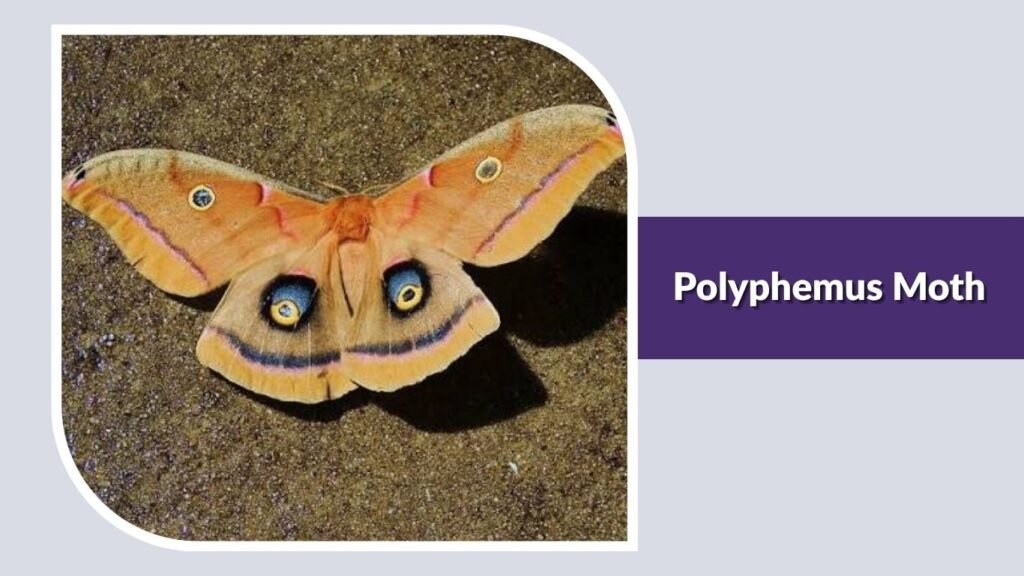
The Polyphemus Moth is a large North American silk moth named after the one-eyed Cyclops Polyphemus from Greek mythology. Its most striking features are the large transparent-looking eyespots on its hindwings. These markings can startle predators and make the moth appear much larger than it actually is.
Identification
- Scientific name: Antheraea polyphemus
- Wingspan: About 4–6 inches
- Wing color: Tan, brown, or reddish brown
- Eyespots: Large circular eyespots on the hindwings
- Forewings: Smaller transparent spots
- Body: Thick and hairy
- Antennae: Strongly feathered in males
- Caterpillar: Large, bright green
Habitat and Distribution
Polyphemus Moths occur throughout much of the United States and southern Canada. They inhabit forests, parks, gardens, orchards, and suburban neighborhoods. Their caterpillars feed on many deciduous trees, including oak, maple, birch, willow, and elm.
Life Cycle and Feeding
After mating, females lay eggs on host-tree leaves. The caterpillars feed continuously as they grow and eventually form oval cocoons made of silk and wrapped in leaves. Depending on climate, there may be one or several generations each year. Adults do not feed and survive only on energy stored from the larval stage.
Behavior and Interesting Facts
When threatened, a Polyphemus Moth may suddenly expose its enormous hindwing eyespots to frighten birds and other predators. Males are powerful fliers and use sensitive antennae to locate females. The species is harmless to humans and plays a natural role in forest ecosystems.
4. Atlas Moth

The Atlas Moth is one of the largest moths in the world and is famous for its enormous wings and unusual wingtip patterns. Native to parts of Asia, this spectacular silk moth has reddish-brown wings decorated with cream, black, pink, and transparent markings. Its impressive appearance has made it one of the best-known giant moths.
Identification
- Scientific name: Attacus atlas
- Wingspan: Commonly 8–10 inches
- Wing color: Reddish brown
- Markings: Cream, black, pink, and white bands
- Wing spots: Large translucent triangular patches
- Wingtips: Curved and snake-head-like
- Body: Thick and reddish brown
- Antennae: Large and feathery
Habitat and Distribution
Atlas Moths are native to tropical and subtropical regions of South and Southeast Asia. They live in forests, plantations, gardens, and areas rich in suitable host plants. Caterpillars feed on several trees and shrubs, including citrus, cinnamon, guava, and related plants.
Life Cycle and Feeding
Females lay numerous eggs on suitable leaves. The caterpillars grow very large and eventually produce strong silk cocoons attached to vegetation. Adult Atlas Moths emerge with reduced mouthparts and generally do not feed. They rely entirely on fat reserves accumulated as caterpillars.
Behavior and Interesting Facts
One of the Atlas Moth’s most distinctive defenses is the shape of its wing tips, which can resemble snake heads when viewed from certain angles. This may discourage potential predators. Adults typically live for only about one to two weeks, during which their main goal is reproduction.
5. Emperor Gum Moth

The Emperor Gum Moth is a large and attractive Australian silk moth recognized by its broad wings and prominent eyespots. Its colors can range from grayish brown to reddish brown, with contrasting bands and markings. The species is closely associated with eucalyptus trees, which serve as important food plants for its caterpillars.
Identification
- Scientific name: Opodiphthera eucalypti
- Wingspan: Commonly 4–6 inches
- Wing color: Brown, gray, reddish, or pinkish
- Eyespots: Large circular spots on all four wings
- Body: Thick and furry
- Antennae: Feathery, particularly in males
- Caterpillar: Large, green, with colorful bumps
- Host plants: Mainly eucalyptus species
Habitat and Distribution
Emperor Gum Moths are native to Australia and are commonly found in eucalyptus forests, parks, gardens, and suburban environments. Caterpillars may occur on several eucalyptus species and occasionally on other introduced trees.
Life Cycle and Feeding
Females lay eggs in groups on leaves or branches. Young caterpillars feed together before becoming more solitary as they grow. Mature larvae create tough brown silk cocoons, often attached to twigs or leaves. Like many giant silk moths, adults have reduced mouthparts and do not feed.
Behavior and Interesting Facts
The large eyespots on the wings may help frighten predators by resembling the eyes of a much larger animal. Adult moths are mainly active at night and may be attracted to outdoor lights. Despite their considerable size, they are harmless and cannot sting.
6. Promethea Moth
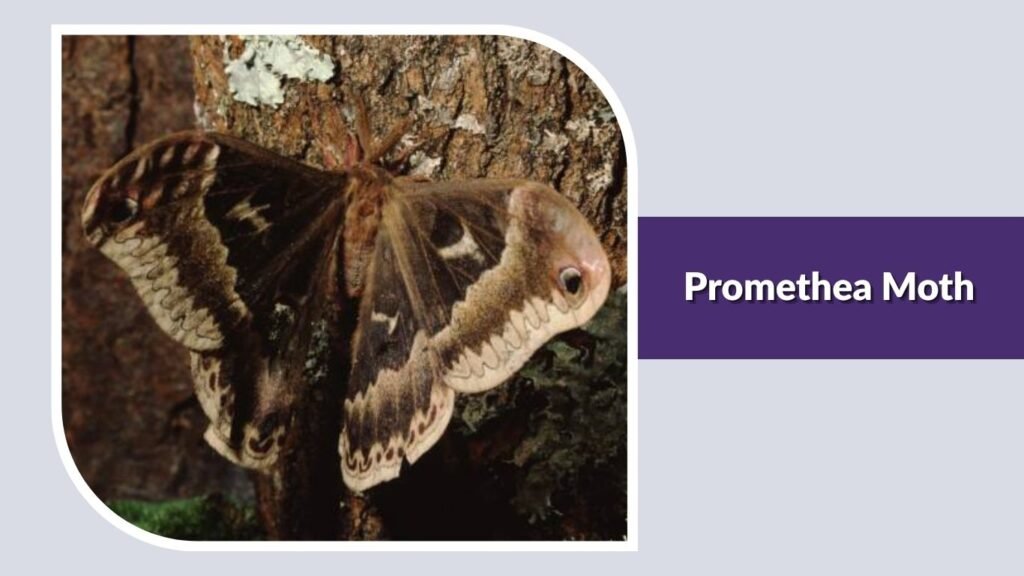
The Promethea Moth is a striking North American silk moth known for the dramatic differences between males and females. Males are generally dark brown to nearly black, while females are reddish brown. This difference in appearance makes the species particularly interesting to moth enthusiasts.
Identification
- Scientific name: Callosamia promethea
- Wingspan: About 3–4 inches
- Male color: Dark brown or nearly black
- Female color: Reddish brown
- Wing markings: Pale borders and curved lines
- Body: Thick and hairy
- Antennae: Broader in males
- Caterpillar: Pale green with colorful projections
Habitat and Distribution
Promethea Moths occur mainly in eastern North America. They inhabit deciduous forests, woodland edges, gardens, and shrubby areas. Caterpillars feed on several trees and shrubs, including spicebush, sassafras, tulip tree, cherry, and magnolia.
Life Cycle and Feeding
Females deposit eggs on host plants, and young larvae may initially feed together. Mature caterpillars spin cocoons within leaves, attaching them securely to twigs with silk. Adults emerge during the warmer months and do not feed because their mouthparts are nonfunctional.
Behavior and Interesting Facts
Unlike many silk moths, male Promethea Moths commonly fly during the afternoon while females are more active at night. Males use their feathery antennae to locate females by scent. Their sexual color differences make males and females look almost like separate species.
7. Io Moth

The Io Moth is a beautiful silk moth famous for the enormous black-and-blue eyespots hidden on its hindwings. Adults are relatively small compared with some giant silk moths, but their bright colors make them easy to recognize. The caterpillars are equally distinctive and should not be touched because they possess irritating spines.
Identification
- Scientific name: Automeris io
- Wingspan: About 2.5–3.5 inches
- Male color: Bright yellow
- Female color: Reddish brown
- Hindwings: Large black eyespots with blue centers
- Body: Thick and fuzzy
- Caterpillar: Green with branching venomous spines
- Activity: Mostly nocturnal
Habitat and Distribution
Io Moths are found across much of eastern and central North America. Their habitats include forests, fields, gardens, woodland edges, and suburban areas. Caterpillars feed on numerous plants, including willow, oak, maple, blackberry, and several ornamental species.
Life Cycle and Feeding
Females lay clusters of eggs on host plants. Young caterpillars often remain together and feed communally before dispersing as they mature. They eventually form thin cocoons among leaves or plant debris. Adult moths do not feed and live primarily to find mates and reproduce.
Behavior and Interesting Facts
When resting, the large eyespots remain hidden beneath the forewings. If threatened, the moth suddenly exposes them, potentially startling a predator. The adult is harmless, but the caterpillar’s spines can cause painful skin irritation, making it one silk moth larva best admired without handling.
8. Rosy Maple Moth

The Rosy Maple Moth is one of the most colorful silk moths in North America. Its bright pink and yellow coloration gives it an almost candy-like appearance. Although smaller than most giant silk moths, it belongs to the same family and is closely associated with maple trees during its caterpillar stage.
Identification
- Scientific name: Dryocampa rubicunda
- Wingspan: About 1.25–2 inches
- Wing color: Pink and creamy yellow
- Body: Yellow with pink coloration
- Legs: Pink to reddish
- Antennae: Feathery, especially in males
- Caterpillar: Green with pale stripes
- Primary hosts: Maple trees
Habitat and Distribution
Rosy Maple Moths are widespread across eastern North America. They occur in deciduous forests, parks, gardens, and suburban areas where maple trees grow. Red maple and sugar maple are among their most common caterpillar host plants.
Life Cycle and Feeding
Female moths lay eggs on the undersides of maple leaves. The caterpillars, sometimes called green-striped mapleworms, initially feed in groups and may consume significant amounts of foliage when numerous. Mature larvae pupate in shallow soil rather than constructing a prominent silk cocoon. Adults emerge during warm weather and do not eat.
Behavior and Interesting Facts
The Rosy Maple Moth is primarily nocturnal and can often be attracted to porch lights. Its vivid coloration makes it one of the most photographed small silk moths. Although caterpillars may occasionally defoliate maple trees when populations are high, healthy mature trees usually recover without lasting damage.
9. Imperial Moth

The Imperial Moth is a large and beautifully patterned member of the giant silk moth family. Its yellow wings are covered with purple, brown, or reddish markings, giving it a bold appearance that stands out among North American moths. Adults are active mainly at night, while the large caterpillars feed on a variety of trees before pupating underground.
Identification
- Scientific name: Eacles imperialis
- Wingspan: About 3–5.5 inches
- Wing color: Yellow with purple or reddish-brown markings
- Body: Thick, hairy, and yellowish
- Antennae: Feathery, especially in males
- Caterpillar: Large and variable in color
- Host plants: Oak, pine, maple, and sweetgum
- Activity: Primarily nocturnal
Habitat and Distribution
Imperial Moths are found throughout much of eastern and central North America. They prefer forests, woodland edges, parks, and suburban areas with plenty of host trees. Caterpillars may feed on both deciduous and coniferous trees, making the species adaptable to different forest environments.
Life Cycle and Feeding
Females deposit eggs on suitable foliage, and the young caterpillars begin feeding soon after hatching. As they grow, they become thick-bodied and may reach several inches in length. Unlike many giant silk moths that spin above-ground cocoons, Imperial Moth caterpillars usually burrow into the soil and pupate underground. Adults do not feed.
Behavior and Interesting Facts
Imperial Moths are harmless despite their large size. Their striking coloration varies considerably between individuals and regions. Males typically have larger antennae for detecting female pheromones. Adults live only a short time, focusing almost entirely on reproduction.
10. Regal Moth

The Regal Moth is one of the largest and most impressive silk moths in North America. Its orange body, grayish wings, and bold yellow markings make it easy to recognize. The caterpillar is even more famous and is commonly known as the hickory horned devil because of its enormous size and intimidating horn-like projections.
Identification
- Scientific name: Citheronia regalis
- Wingspan: About 3.5–6 inches
- Wing color: Gray with orange and yellow markings
- Body: Bright orange with pale spots
- Antennae: Feathered
- Caterpillar: Very large, green, with red or orange horns
- Host plants: Hickory, walnut, sweetgum, and persimmon
- Activity: Nocturnal
Habitat and Distribution
Regal Moths are found mainly in eastern North America. They inhabit deciduous forests, wooded parks, gardens, and suburban areas where suitable host trees grow. Their larvae are especially associated with hickory and walnut trees.
Life Cycle and Feeding
Females lay eggs on host-tree leaves. The young caterpillars grow rapidly and eventually become some of the largest caterpillars in North America. When mature, they leave the tree and burrow into the soil, where they pupate. Adults emerge during the warmer months and do not eat.
Behavior and Interesting Facts
The hickory horned devil may look dangerous, but its large horns are harmless. Adult Regal Moths are also completely non-aggressive. Their dramatic size and coloration make them popular among moth enthusiasts, and their underground pupation helps protect them during unfavorable weather.
11. Hercules Moth

The Hercules Moth is one of the largest moths in Australia and belongs to the giant silk moth family. Females can reach an enormous wingspan, while males are usually smaller but have more elongated hindwing tails. Their reddish-brown wings feature pale markings and large transparent patches.
Identification
- Scientific name: Coscinocera hercules
- Wingspan: Females may exceed 10 inches
- Wing color: Brown, reddish brown, and cream
- Wing spots: Large transparent patches
- Male hindwings: Long, extended tails
- Body: Thick and hairy
- Antennae: Broad and feathery
- Caterpillar: Very large and pale green
Habitat and Distribution
Hercules Moths are native to northern Australia and parts of New Guinea. They live mainly in tropical rainforests and humid woodland environments. Their caterpillars feed on several trees and shrubs, including rainforest species and some cultivated plants.
Life Cycle and Feeding
Females lay eggs on host plants, where the caterpillars feed and grow through several stages. Mature larvae produce large silk cocoons, often attached to vegetation. The adult moth emerges with reduced mouthparts and does not feed, surviving instead on energy accumulated during the caterpillar stage.
Behavior and Interesting Facts
The Hercules Moth is particularly famous for its massive females and long-tailed males. Males use their sensitive antennae to locate females by scent. Despite their tremendous size, adults are harmless and cannot bite or sting.
12. Ailanthus Silkmoth

The Ailanthus Silkmoth is a large and attractive silk moth originally native to Asia. It was introduced to other regions in attempts to establish commercial silk production. Its broad brown wings feature pale crescent-shaped markings, while the caterpillars commonly feed on tree-of-heaven and several other woody plants.
Identification
- Scientific name: Samia cynthia
- Wingspan: About 4–5 inches
- Wing color: Brown, gray, and olive
- Markings: Pale crescent-shaped wing spots
- Body: Thick and hairy
- Antennae: Strongly feathered in males
- Caterpillar: Pale green to bluish green
- Primary host: Tree-of-heaven
Habitat and Distribution
Ailanthus Silkmoths are native to parts of Asia but have been introduced elsewhere. They may occur in urban landscapes, gardens, parks, and woodland edges where tree-of-heaven and other host plants are available.
Life Cycle and Feeding
Females lay eggs on host leaves, and the caterpillars feed heavily as they develop. When mature, they spin strong silk cocoons among leaves. Adults emerge later and live only briefly because they do not feed. Their primary purpose is to mate and reproduce.
Behavior and Interesting Facts
The species was once considered promising for silk production because its cocoons yield durable fibers. Males are especially active when searching for females and can detect pheromones from considerable distances. Adults are harmless and are most often active at night.
13. Chinese Oak Silkmoth

The Chinese Oak Silkmoth is a large Asian silk moth that has long been associated with commercial tussar silk production. Its broad wings are usually yellowish brown or reddish brown and feature prominent transparent eyespots. The caterpillars mainly feed on oak leaves, making forests and oak plantations important habitats.
Identification
- Scientific name: Antheraea pernyi
- Wingspan: About 4–6 inches
- Wing color: Yellowish, brown, or reddish
- Eyespots: Large transparent spots on all four wings
- Body: Thick and furry
- Antennae: Broad and feathery
- Caterpillar: Large and green
- Primary host: Oak trees
Habitat and Distribution
Chinese Oak Silkmoths are native to East Asia and are particularly associated with China. They occur in oak forests, wooded hills, and managed silk-producing areas where suitable trees are abundant.
Life Cycle and Feeding
Females lay eggs on oak leaves, and the caterpillars feed continuously until reaching full size. Mature larvae spin strong silk cocoons attached to branches or leaves. The silk produced from these cocoons is commercially valuable and differs in texture and color from traditional mulberry silk.
Behavior and Interesting Facts
This species has been domesticated and semi-domesticated for silk production for many generations. Adults do not feed and survive on stored energy. Their large eyespots may help deter predators, while males use their feathery antennae to locate females.
14. Japanese Oak Silkmoth

The Japanese Oak Silkmoth is a large green silk moth famous for its beautiful coloration and distinctive eyespots. Native to Japan and nearby parts of East Asia, it is closely associated with oak trees. The species has also been used historically for producing a type of wild silk.
Identification
- Scientific name: Antheraea yamamai
- Wingspan: About 4–6 inches
- Wing color: Yellow-green, olive, or brownish green
- Eyespots: Round and transparent-centered
- Body: Thick and furry
- Antennae: Large and feathered
- Caterpillar: Green with small raised bumps
- Host plants: Primarily oak species
Habitat and Distribution
Japanese Oak Silkmoths inhabit deciduous woodlands and mountainous areas with abundant oak trees. They are native to Japan and neighboring regions but have also been introduced into parts of Europe.
Life Cycle and Feeding
Females deposit eggs near host-plant foliage. The caterpillars feed on oak leaves and grow to a substantial size before spinning tough cocoons. Adults later emerge, mate, and reproduce without feeding.
Behavior and Interesting Facts
The silk produced by this species is sometimes known as tensan silk and is valued for its natural greenish coloration and distinctive texture. Adult moths are nocturnal and attracted to lights. They are entirely harmless to humans.
15. Giant Peacock Moth
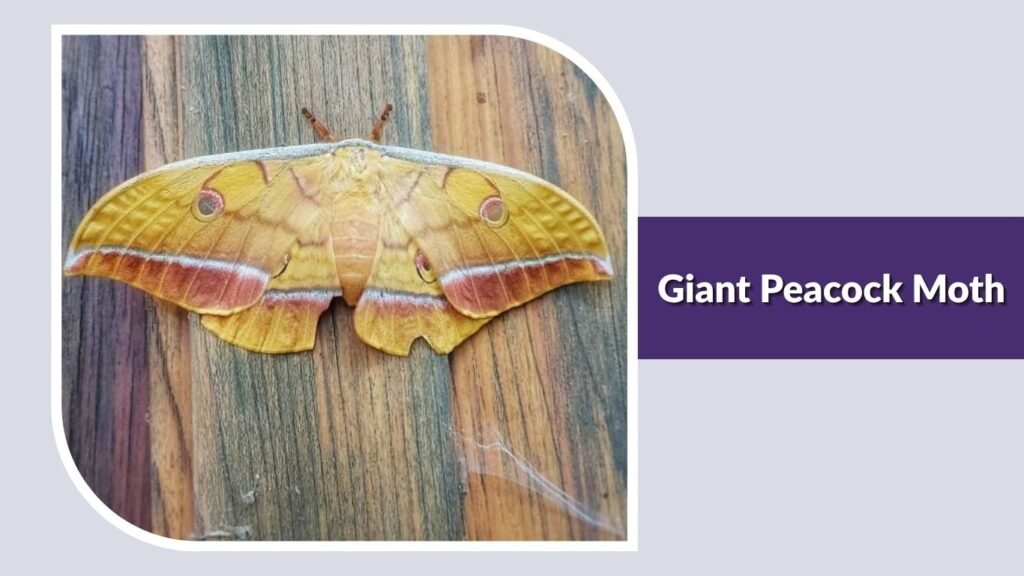
The Giant Peacock Moth is the largest moth native to Europe and one of the most striking members of the silk moth family. Its brown and gray wings display four large eyespots surrounded by colorful rings, giving it a dramatic peacock-like appearance. The caterpillars are large, green, and covered with bright blue tubercles.
Identification
- Scientific name: Saturnia pyri
- Wingspan: About 4–6 inches
- Wing color: Gray, brown, and cream
- Eyespots: Large colorful eyespots on all wings
- Body: Thick and hairy
- Antennae: Strongly feathered in males
- Caterpillar: Bright green with blue tubercles
- Activity: Mostly nocturnal
Habitat and Distribution
Giant Peacock Moths occur across southern and central Europe and parts of western Asia. They inhabit woodland edges, orchards, gardens, farmland, and areas with fruit trees. Caterpillars commonly feed on pear, apple, plum, almond, and other deciduous trees.
Life Cycle and Feeding
Females lay eggs on suitable host plants. Caterpillars pass through several growth stages before spinning tough cocoons in protected places such as tree trunks or branches. Adults emerge during spring or early summer and do not feed because their mouthparts are reduced.
Behavior and Interesting Facts
The huge eyespots can make the moth appear much larger to predators. Males are powerful night fliers and can detect female pheromones from long distances. Despite their imposing size, Giant Peacock Moths are harmless and live only briefly as adults.
16. Cynthia Moth

The Cynthia Moth is a large silk moth with broad brown wings crossed by pale bands and distinctive crescent-shaped transparent markings. It is another common name for Samia cynthia, meaning it refers to the same species commonly called the Ailanthus Silkmoth. The species originated in Asia and became associated with other regions partly because of attempts to produce wild silk.
Identification
- Scientific name: Samia cynthia
- Wingspan: About 4–5 inches
- Wing color: Brown, olive-brown, and gray
- Markings: Pale bands across all four wings
- Wing spots: Crescent-shaped translucent areas
- Body: Thick and hairy
- Antennae: Broad and feathery in males
- Caterpillar: Bluish-green to pale green
Habitat and Distribution
Cynthia Moths are native to Asia but have been introduced to several other regions. They are strongly associated with tree-of-heaven, although the caterpillars can use additional host plants. Wooded urban areas, gardens, parks, and forest edges can provide suitable habitat where these trees are common.
Life Cycle and Feeding
Females deposit eggs on host-tree leaves. After hatching, the caterpillars feed extensively and grow through several stages before producing tough silk cocoons among leaves or branches. The adult moth emerges with reduced feeding structures and depends on energy stored during the caterpillar stage.
Behavior and Interesting Facts
Cynthia Moths have historically attracted attention because their cocoons can produce silk. Their silk differs from that of the fully domesticated mulberry silkworm. Adult moths are harmless and primarily concentrate on mating and egg laying during their relatively short adult lives.
17. Suraka Silk Moth

The Suraka Silk Moth is a spectacular giant silk moth native to Madagascar and nearby islands. Its broad brown wings conceal colorful hindwing eyespots surrounded by pink, black, and cream markings. When the moth opens its wings, these large eyespots become especially noticeable and may help discourage predators. The accepted scientific name is Antherina suraka.
Identification
- Scientific name: Antherina suraka
- Wingspan: Roughly 4–5 inches
- Forewings: Brown to reddish brown
- Hindwings: Large colorful eyespots
- Eyespot colors: Black, pink, cream, and orange
- Body: Thick and hairy
- Antennae: Broad and feather-like
- Caterpillar: Large and increasingly green as it matures
Habitat and Distribution
Suraka Silk Moths occur naturally in Madagascar, with related populations also occurring on nearby islands. They inhabit tropical environments where suitable host plants are plentiful. Caterpillars can feed on a variety of woody plants, giving the species considerable flexibility in the plants it can use.
Life Cycle and Feeding
Females lay eggs on appropriate vegetation, and newly hatched caterpillars begin feeding soon afterward. Their appearance changes considerably as they grow. When mature, the caterpillar searches for a protected location and forms a silk cocoon in which it pupates before eventually emerging as an adult.
Behavior and Interesting Facts
The dramatic hindwing eyespots are among the Suraka Silk Moth’s most memorable features. When disturbed, revealing these markings can make the moth appear more intimidating to a potential predator. Like other giant silk moths, adults devote most of their short lives to reproduction and pose no danger to people.
18. Madagascar Comet Moth

The Madagascar Comet Moth, also known as the Madagascan Moon Moth, is famous for its brilliant yellow wings and extraordinarily long hindwing tails. Native to Madagascar, it is one of the most visually spectacular giant silk moths. Males are especially distinctive because their tails can extend far beyond the main portion of the wings.
Identification
- Scientific name: Argema mittrei
- Wing color: Bright yellow
- Markings: Reddish-brown lines and spots
- Eyespots: Present on all four wings
- Hindwings: Extremely long tails, especially in males
- Body: Thick and yellow
- Antennae: Large and feathery
- Overall appearance: Long-tailed and highly distinctive
Habitat and Distribution
The Madagascar Comet Moth is native to Madagascar and is associated with its forest habitats. Suitable vegetation is especially important because caterpillars require host plants on which to feed before becoming adults.
Life Cycle and Feeding
Females lay eggs on suitable host plants, and the caterpillars spend their growing period consuming foliage and storing energy. Mature larvae form strong silk cocoons before entering the pupal stage. Adult Comet Moths cannot feed, so their adult lifespan is brief and supported entirely by energy accumulated as larvae.
Behavior and Interesting Facts
The extraordinarily long tails are thought to help interfere with attacks from echolocating bats by drawing strikes away from the moth’s body. Adults spend their limited time searching for mates and reproducing. Their exotic coloration and exaggerated tails have made the Madagascar Comet Moth one of the world’s best-known Saturniid moths.
19. Rothschildia Silkmoth

The Rothschildia Silkmoth refers to members of the genus Rothschildia, a group of large giant silk moths found throughout parts of the Americas. Rather than representing only one species, the name covers numerous closely related moths. Many share reddish or brown wings, wavy bands, and large translucent window-like markings that make them immediately distinctive.
Identification
- Genus: Rothschildia
- Body size: Medium to very large
- Wing color: Brown, reddish brown, burgundy, or olive
- Wing spots: Large translucent or clear windows
- Wing edges: Often scalloped or rounded
- Body: Thick and hairy
- Antennae: Broad and feathery
- Family: Saturniidae
Habitat and Distribution
Different Rothschildia species occur from parts of North America through Central and South America. They occupy forests, scrublands, tropical environments, and other habitats where appropriate caterpillar food plants grow. Their exact habitat and range differ considerably among species.
Life Cycle and Feeding
Females place eggs on host plants, where caterpillars hatch and begin feeding on foliage. Young caterpillars of some species may remain together before becoming more solitary as they grow. Mature larvae spin strong silk cocoons attached to vegetation, and adults later emerge to reproduce.
Behavior and Interesting Facts
Rothschildia moths are especially recognized for the transparent windows in their wings. Some species have also attracted interest because of the strong silk produced by their cocoons. Like most giant silk moths, adults are harmless to humans and have short adult lives centered primarily on mating and reproduction.
20. Columbia Silkmoth

The Columbia Silkmoth, also called the Larch Silkmoth, is a large North American species closely related to the Cecropia Moth. Its deep reddish-brown wings are crossed with white and gray markings, producing an elegant but darker appearance. It is particularly associated with northern forests where larch and related trees provide food for its caterpillars.
Identification
- Scientific name: Hyalophora columbia
- Wingspan: About 3–4 inches
- Wing color: Dark reddish brown to burgundy
- Markings: White crescent-shaped spots
- Wing borders: Gray, black, and white
- Body: Thick and furry
- Antennae: Broadly feathered in males
- Caterpillar: Large and green
Habitat and Distribution
Columbia Silkmoths occur mainly in northern and western parts of North America. Eastern populations range through parts of Canada and the northern United States, while western populations extend along portions of the Rocky Mountain region. Forests containing suitable caterpillar host trees provide their primary habitat.
Life Cycle and Feeding
Females lay their eggs on suitable trees. Caterpillars feed throughout the warmer season, becoming increasingly large before spinning durable silk cocoons. In colder regions, the pupal stage may remain protected inside the cocoon through winter. Adults emerge when seasonal conditions become favorable and do not spend their short adult stage feeding.
Behavior and Interesting Facts
Columbia Silkmoths can be confused with Cecropia Moths because both belong to Hyalophora and share similar wing patterns. Columbia Silkmoths are generally darker and are closely associated with northern forest habitats. Males use their highly sensitive antennae to locate females, while the adults themselves are harmless to humans.
21. Sweetbay Silkmoth

The Sweetbay Silkmoth is an attractive North American giant silk moth recognized by its reddish-brown wings, pale markings, and distinctive transparent spots. It is closely related to the Promethea Moth but tends to be associated with southern habitats where sweetbay magnolia grows. Like other giant silk moths, adults are short-lived and devote their brief adult stage almost entirely to reproduction.
Identification
- Scientific name: Callosamia securifera
- Wingspan: About 3–4 inches
- Wing color: Reddish brown to dark brown
- Markings: Pale bands and crescent-shaped spots
- Body: Thick and hairy
- Antennae: Broad and feathery in males
- Caterpillar: Green with colorful raised tubercles
- Primary host: Sweetbay magnolia
Habitat and Distribution
Sweetbay Silkmoths occur mainly in the southeastern United States. They are most strongly associated with wetlands, swampy woodlands, coastal plains, and forest edges where sweetbay magnolia is abundant. Adults may occasionally be attracted to outdoor lights during their seasonal flights.
Life Cycle and Feeding
Females lay eggs on sweetbay magnolia leaves. After hatching, caterpillars feed on the foliage and pass through several growth stages before spinning silk cocoons. The cocoon is commonly attached to a twig and may incorporate a leaf. Adult moths emerge later but do not feed because their mouthparts are reduced.
Behavior and Interesting Facts
Sweetbay Silkmoths are completely harmless to humans. Males use their large antennae to detect female pheromones and may travel considerable distances while searching for mates. Their strong dependence on sweetbay magnolia makes them more habitat-specific than many other North American silk moths.
22. Calleta Silkmoth
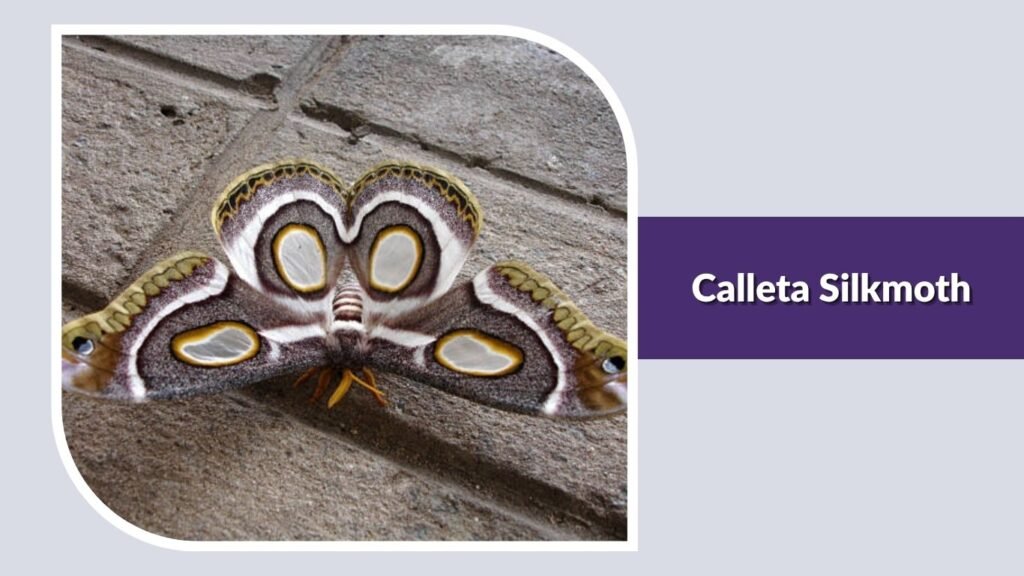
The Calleta Silkmoth is a large, beautifully patterned silk moth of the southwestern United States and Mexico. Its dark wings are decorated with cream-colored bands and striking orange or reddish areas. Adapted to relatively warm and dry environments, this species can be found around deserts, scrublands, and open woodlands where its caterpillar host plants grow.
Identification
- Scientific name: Eupackardia calleta
- Wingspan: About 3–4.5 inches
- Wing color: Dark brown or blackish
- Markings: Cream, orange, and reddish bands
- Body: Thick and furry
- Antennae: Broadly feathered in males
- Caterpillar: Black with colorful markings and projections
- Activity: Mainly nocturnal
Habitat and Distribution
Calleta Silkmoths are primarily found in the southwestern United States, Mexico, and neighboring regions. They inhabit desert margins, thorn scrub, canyons, dry woodlands, and suburban landscapes. Caterpillars feed on several woody plants, including ash, privet, and related shrubs.
Life Cycle and Feeding
Females place eggs on suitable host plants, where caterpillars begin feeding shortly after hatching. As the larvae mature, their coloration becomes increasingly distinctive. Fully grown caterpillars spin tough cocoons in protected locations on vegetation. Adults emerge with nonfunctional feeding mouthparts and rely on stored energy.
Behavior and Interesting Facts
The Calleta Silkmoth’s dark coloration and contrasting bands make it one of the more distinctive Saturniid moths of the American Southwest. Adults are most active at night and can be attracted to artificial lights. Although large, they cannot bite or sting and pose no danger to people.
23. Tulip-Tree Silkmoth

The Tulip-Tree Silkmoth is a large North American silk moth named for one of its most important caterpillar host plants, the tulip tree. Its soft brown wings display pale markings and transparent crescent-shaped spots. It is related to both the Promethea and Sweetbay silkmoths but has its own distinctive appearance and host preferences.
Identification
- Scientific name: Callosamia angulifera
- Wingspan: About 3–4 inches
- Wing color: Light to reddish brown
- Markings: Pale bands across the wings
- Wing spots: Curved translucent markings
- Body: Thick and fuzzy
- Antennae: Strongly feathered in males
- Primary host: Tulip tree
Habitat and Distribution
Tulip-Tree Silkmoths occur throughout much of eastern North America wherever tulip trees grow. They inhabit deciduous forests, wooded parks, valleys, and suburban areas with mature host trees. Their distribution generally follows the natural range of the tulip tree.
Life Cycle and Feeding
Females lay eggs on tulip-tree foliage, and the caterpillars consume leaves as they grow. Mature larvae spin silk cocoons around or within leaves attached to twigs. Depending on climate, the pupal stage may remain dormant through winter. Adults emerge during warm weather and do not feed.
Behavior and Interesting Facts
Tulip-Tree Silkmoths are nocturnal and may occasionally appear around porch or street lights. Males have especially large antennae that allow them to detect female pheromones over considerable distances. Adults live only briefly and concentrate their energy on finding mates and reproducing.
24. Muga Silk Moth

The Muga Silk Moth is an economically important silk moth native to northeastern India and surrounding regions. It is famous for producing naturally golden-colored Muga silk, a durable and highly valued textile traditionally associated with Assam. Unlike many wild silk moths, this species has been managed for silk production for generations.
Identification
- Scientific name: Antheraea assamensis
- Wingspan: Roughly 4–6 inches
- Wing color: Yellowish brown to golden brown
- Eyespots: Present on all four wings
- Body: Thick and covered with fine hairs
- Antennae: Strongly feathered in males
- Caterpillar: Large and green
- Silk: Naturally golden-yellow
Habitat and Distribution
Muga Silk Moths are most strongly associated with northeastern India, especially Assam. They thrive in warm, humid environments where their primary host trees are cultivated. Som and soalu trees are among the most important plants used for raising the caterpillars.
Life Cycle and Feeding
Females lay eggs that hatch into hungry caterpillars, which feed extensively on host-tree leaves. Once mature, the larvae spin strong golden silk cocoons. These cocoons are harvested in traditional sericulture. Adults emerge without functional feeding mouthparts and depend on reserves accumulated during larval development.
Behavior and Interesting Facts
Muga silk is particularly prized because its natural golden sheen can become more attractive with age and repeated washing. The moth is closely connected with the culture and economy of Assam. Its domestication remains less complete than that of the traditional mulberry silkworm, so outdoor rearing is still important.
25. Eri Silk Moth
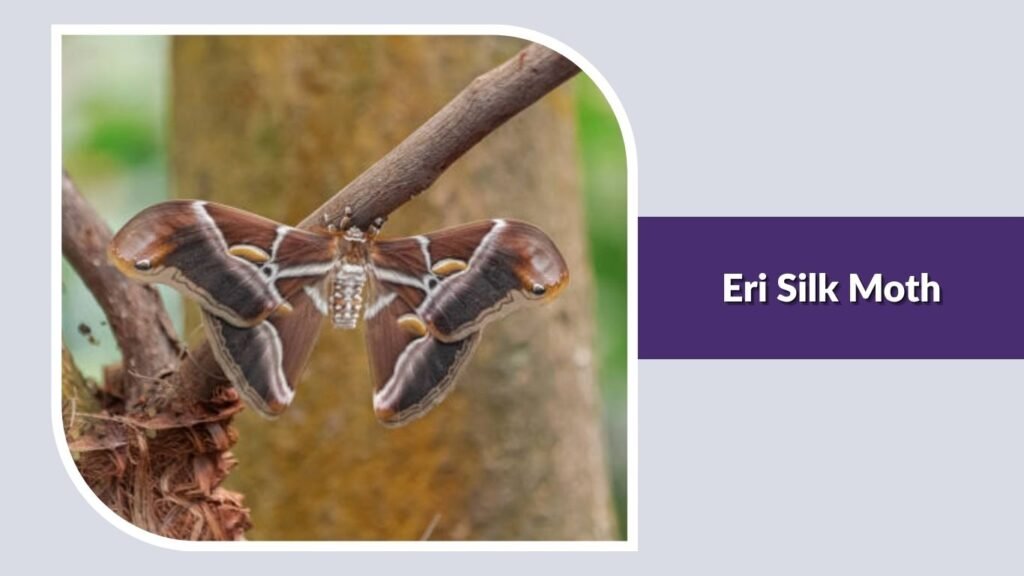
The Eri Silk Moth is an important silk-producing moth widely raised in parts of South and Southeast Asia. It produces Eri silk, a soft, warm fiber often called peace silk when the moth is allowed to emerge before the cocoon is processed. The caterpillars are commonly raised on castor plants and can be maintained successfully in household or small-scale farming systems.
Identification
- Scientific name: Commonly Samia ricini
- Wingspan: About 4–5 inches
- Wing color: Brown, gray, or reddish brown
- Markings: White crescent-shaped or transparent patches
- Body: Thick and furry
- Antennae: Broad and feathery
- Caterpillar: Pale green or bluish green
- Primary host: Castor plant
Habitat and Distribution
Eri Silk Moths are closely associated with silk-producing regions of India, Bangladesh, and other parts of Asia. Because the species has been domesticated, it is commonly reared rather than encountered solely as a wild moth. Castor plants provide the main food source, although caterpillars can use some alternative host plants.
Life Cycle and Feeding
Females lay numerous eggs, and the caterpillars begin eating soon after hatching. They grow rapidly through several stages before spinning loose, open-ended silk cocoons. The adults emerge, mate, and lay eggs without feeding. Their entire adult life is supported by nutrients stored during the caterpillar stage.
Behavior and Interesting Facts
Eri silk differs from many commercial silks because its cocoon is naturally open-ended and the fiber is usually spun rather than reeled as one continuous filament. The finished material is soft, durable, and warm. Eri culture also supports small-scale silk production in many rural communities.
FAQs
1. What are silk moths?
Silk moths are moths from groups that produce silk during their larval stage, especially members of the family Saturniidae and related silk-producing species. Many are large, colorful, and known for broad wings, eyespots, and feathery antennae.
2. Do all silk moths produce usable silk?
No. Although many silk moth caterpillars spin silk cocoons, only certain species are traditionally used for commercial silk production. Species such as the Chinese Oak Silkmoth, Muga Silk Moth, and Eri Silk Moth are especially valued for their silk.
3. Are silk moths dangerous to humans?
Adult silk moths are generally harmless and do not bite or sting. However, caterpillars of some species, such as the Io Moth, have irritating or venomous spines that can cause painful skin reactions if touched.
4. What do adult silk moths eat?
Many giant silk moth adults do not eat at all because their mouthparts are reduced or nonfunctional. They survive on energy stored during the caterpillar stage. Their short adult life is mainly focused on mating and reproduction.
5. How long do silk moths live?
The adult stage of many silk moths lasts only about one to two weeks. Their complete life cycle is much longer and includes egg, caterpillar, pupa, and adult stages. In colder climates, some species remain in the pupal stage through winter before emerging the following season.