
Sawflies are wasp-like insects whose larvae often resemble caterpillars and feed on a wide variety of plants, trees, and shrubs. Different types of sawflies specialize in hosts such as roses, pines, birches, willows, gooseberries, and oaks. While adults are generally harmless to people, the larvae can sometimes cause serious leaf or needle damage. This guide covers 20 types of sawflies, including their identification, habitat, feeding behavior, and life cycle to help you recognize them more easily.
1. Rose Sawfly

The rose sawfly is a small, wasp-like insect best known for the leaf-feeding habits of its larvae. These larvae are often called “rose slugs” because of their soft, slug-like appearance. They commonly feed on rose bushes and can cause noticeable leaf damage when populations become high. Although adult sawflies are usually harmless to plants, their larvae can skeletonize leaves and reduce the overall appearance and vigor of roses.
Identification
- Adult rose sawflies are small, usually about 6–10 mm long.
- Adults have dark bodies with transparent or slightly smoky wings.
- The larvae are pale green to yellow-green and resemble tiny caterpillars.
- Larvae have a smooth, soft-looking body and a distinct rounded head.
- Young larvae usually feed on the undersides of rose leaves.
- Damaged leaves may appear transparent, brown, or skeletonized.
- Sawfly larvae have more pairs of abdominal prolegs than true caterpillars.
Habitat and Distribution
Rose sawflies are commonly found anywhere roses are grown, including home gardens, parks, landscaped areas, and nurseries. They are especially noticeable during spring and early summer when new rose foliage is abundant. Adults often remain close to suitable host plants, while females select healthy rose leaves as egg-laying sites. Several rose sawfly species occur across North America, Europe, and other temperate regions.
Diet and Feeding Behavior
The larvae feed almost exclusively on rose foliage. Young larvae scrape away the soft tissue from the lower surface of leaves while leaving the upper layer intact. This creates pale or translucent patches. As the larvae mature, they may consume larger portions of the leaf, sometimes leaving only the veins behind. Heavy feeding can make a rose bush look scorched or thin.
Life Cycle and Behavior
Female sawflies lay eggs inside or along rose leaves. After hatching, the larvae begin feeding together or individually depending on the species. Once fully developed, they drop to the soil or find protected areas where they form cocoons and pupate. Adults later emerge to mate and begin another generation. Some species produce only one generation each year, while others may produce several during warm weather.
2. Pear Sawfly

The pear sawfly, often called the pear slug, is a small sawfly species whose larvae feed on the leaves of pear, cherry, plum, and related trees. The larvae have a shiny, slug-like appearance and can cause leaves to turn brown and skeletonized. Infestations are most common during warm months when larvae actively feed on foliage.
Identification
- Larvae are dark green to black and covered with a slimy coating.
- Young larvae resemble tiny slugs.
- Mature larvae become lighter and less glossy.
- Adults are small, dark-colored, wasp-like insects.
- Damaged leaves often look scorched or skeletonized.
- Larvae usually feed on the upper surface of leaves.
Habitat and Distribution
Pear sawflies are commonly found in orchards, gardens, and landscapes where pear, cherry, plum, or hawthorn trees grow. They occur throughout many temperate regions, including large parts of North America and Europe. Trees growing in warm, sunny locations may experience heavier feeding when adult females find suitable foliage for egg laying.
Diet and Feeding Behavior
The larvae scrape away the soft tissue between leaf veins, leaving behind a thin, transparent layer. As this tissue dries, the leaf turns brown. Heavy feeding can make trees look unhealthy, although established trees usually survive moderate infestations. Young ornamental or fruit trees may suffer more noticeable stress.
Life Cycle and Behavior
Adults emerge during the growing season and lay eggs within leaf tissue. The larvae hatch and begin feeding almost immediately. After completing development, they fall to the ground and pupate in the soil. Depending on climate, pear sawflies may produce more than one generation each year.
3. Willow Sawfly

The willow sawfly is associated primarily with willow trees and shrubs. Its caterpillar-like larvae can gather in groups and consume large amounts of foliage. Although most infestations cause cosmetic damage, repeated or severe defoliation can weaken young trees. Willow sawflies are most noticeable during periods of active leaf growth.
Identification
- Larvae are generally greenish, yellowish, or patterned with darker markings.
- Many species have visible dark spots along the body.
- Adults resemble small, dark wasps.
- Larvae have multiple pairs of abdominal prolegs.
- They are frequently found along leaf margins.
- Heavy infestations can leave branches nearly bare.
Habitat and Distribution
Willow sawflies live wherever their host plants occur, particularly along riverbanks, wetlands, ponds, gardens, and moist woodland edges. Willows growing beside water provide abundant food for developing larvae. Different species are distributed across North America, Europe, and parts of Asia.
Diet and Feeding Behavior
Larvae consume willow leaves, often beginning along the outer edges. Groups of larvae can quickly remove large areas of foliage. Some species feed openly during daylight, making them easy to notice. Mature willow trees usually tolerate occasional feeding, but repeated defoliation can slow growth and reduce plant vigor.
Life Cycle and Behavior
Females lay eggs in or along willow leaves. Once hatched, larvae feed for several weeks before moving to protected locations to pupate. Some species overwinter as pupae in soil or leaf litter. Adults emerge when temperatures become favorable and suitable new foliage is available.
4. Pine Sawfly

The pine sawfly refers to several closely related sawfly species whose larvae feed on pine needles. They can sometimes occur in large colonies and cause noticeable defoliation. Young pine trees and ornamental plantings may be particularly vulnerable when larvae remove large numbers of needles during spring or summer.
Identification
- Larvae resemble caterpillars and commonly feed in groups.
- Body colors range from green to gray with dark stripes or spots.
- Larvae often raise the front of their bodies when disturbed.
- Adults are small, stout, wasp-like insects.
- Feeding damage appears as missing or shortened pine needles.
- Older infestations may leave branches with only bare needle bases.
Habitat and Distribution
Pine sawflies occur in forests, plantations, parks, and residential landscapes containing pine trees. Different species prefer particular pine hosts. They are found across large areas of North America, Europe, and Asia wherever suitable pine species are available.
Diet and Feeding Behavior
Larvae feed primarily on pine needles. Some species prefer older needles, while others attack new growth. Colonies often begin feeding together and move from branch to branch as food becomes scarce. Large infestations may partially or completely defoliate small trees.
Life Cycle and Behavior
Eggs are usually inserted into pine needles. After hatching, larvae remain together during their early development. Mature larvae eventually drop to the soil, leaf litter, or sheltered parts of the tree to form cocoons. Adults emerge later to mate and restart the cycle.
5. Elm Sawfly
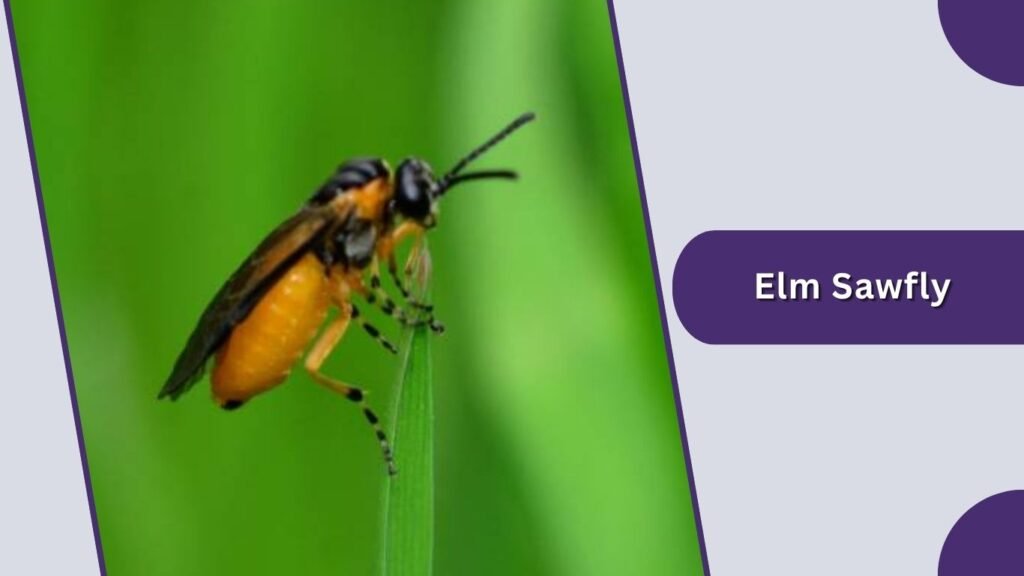
The elm sawfly is one of the larger sawflies found in North America and is associated with elm, willow, maple, and several other deciduous trees. Both adults and larvae can appear impressive because of their size, but they do not sting people. The larvae mainly cause chewing damage to leaves.
Identification
- Adults are large and robust compared with many other sawflies.
- Adult bodies are usually dark with yellowish or reddish markings.
- Larvae are greenish or yellowish with dark spots.
- Mature larvae can become relatively large and thick-bodied.
- Adults have broad, transparent wings.
- Larvae resemble caterpillars but have many abdominal prolegs.
Habitat and Distribution
Elm sawflies are found in forests, wooded neighborhoods, parks, and gardens across much of North America. They are especially common where elm and willow trees grow. Adults may be seen resting on trunks, foliage, fences, or other vegetation during warm weather.
Diet and Feeding Behavior
The larvae feed on leaves of elm, willow, maple, birch, and several related trees. They chew holes or consume sections from the leaf margins. Despite their size, populations are usually not dense enough to cause serious damage to healthy mature trees.
Life Cycle and Behavior
Females place eggs into suitable host leaves. Larvae develop through several stages while feeding on foliage. Fully grown larvae move away from the feeding area and create protected pupation sites. Adults emerge in the following season or later in the same year, depending on local conditions.
6. Dogwood Sawfly

The dogwood sawfly is a distinctive species whose larvae feed on dogwood leaves. Early-stage larvae often have a white, powdery coating that makes them easy to recognize. As they mature, their appearance changes considerably. Large groups may defoliate sections of dogwood shrubs during late summer.
Identification
- Young larvae are covered with a white, waxy or powdery coating.
- Older larvae become yellowish with black markings.
- Mature larvae may look very different from younger stages.
- Adults are small, dark, wasp-like insects.
- Larvae feed openly on dogwood foliage.
- Groups may gather closely together on individual branches.
Habitat and Distribution
Dogwood sawflies occur in woodland edges, gardens, parks, and landscapes containing dogwood shrubs and trees. They are particularly associated with shrubby dogwoods. They are widely distributed across eastern and central portions of North America.
Diet and Feeding Behavior
The larvae consume dogwood foliage and may leave only major veins behind when populations are high. Young larvae often feed in groups, which can make damage appear suddenly. Established dogwoods generally recover from moderate feeding, although repeated defoliation may reduce plant vigor.
Life Cycle and Behavior
Adults lay eggs in dogwood leaves during the growing season. Larvae hatch and begin feeding together. Once mature, they move into soft or decaying wood, bark crevices, or similar protected areas where they form pupal chambers. They later emerge as adults and continue the reproductive cycle.
7. Birch Sawfly

The birch sawfly is a leaf-feeding insect associated mainly with birch trees. Its larvae resemble caterpillars and are often found feeding together along leaf edges. Most infestations affect the appearance of trees rather than causing permanent damage, although young or stressed birches may be more vulnerable.
Identification
- Larvae are generally pale green with darker markings.
- They have multiple pairs of abdominal prolegs.
- Groups frequently line up around the edge of a birch leaf.
- Adults are small and wasp-like.
- Feeding creates irregular holes and missing leaf margins.
- Severe infestations may leave only leaf veins behind.
Habitat and Distribution
Birch sawflies are found in forests, gardens, parks, and urban landscapes wherever birch trees grow. They occur across much of the northern temperate zone. Ornamental birches planted in residential areas may also support populations of sawfly larvae.
Diet and Feeding Behavior
Larvae eat birch leaves, typically beginning along leaf margins. Young larvae may remain clustered while older individuals spread across nearby branches. Large populations can remove substantial amounts of foliage, especially from smaller trees. Healthy mature birches can normally tolerate limited seasonal feeding.
Life Cycle and Behavior
Females insert eggs into leaf tissue or along leaf edges. The newly hatched larvae feed through several developmental stages. When mature, they move to soil, leaf litter, or other protected areas to pupate. Depending on the species and local climate, there may be one or multiple generations each year.
8. Columbine Sawfly

The columbine sawfly is a small sawfly known for feeding on columbine plants. Its larvae can rapidly strip leaves from ornamental columbines, sometimes leaving only stems and flowers behind. Because they blend well with green foliage, infestations may not be noticed until significant leaf damage has occurred.
Identification
- Larvae are smooth, pale green, and caterpillar-like.
- Their coloration closely matches columbine leaves.
- Adults are small, dark, and wasp-like.
- Larvae usually feed along leaf edges or undersides.
- Damaged plants may have heavily chewed or missing leaves.
- Multiple pairs of abdominal prolegs help distinguish them from true caterpillars.
Habitat and Distribution
Columbine sawflies are most often found in gardens and landscaped areas where columbine plants are cultivated. They can also occur in natural habitats containing native columbine species. Their distribution includes parts of North America and other temperate regions where suitable host plants grow.
Diet and Feeding Behavior
The larvae feed almost exclusively on columbine foliage. They consume leaves from the edges inward and may rapidly defoliate an entire plant when several larvae are present. Flowers and stems are usually left untouched, allowing healthy plants to recover after the larvae disappear.
Life Cycle and Behavior
Adult females lay eggs on columbine plants in spring. Larvae hatch as fresh foliage develops and begin feeding immediately. After completing their larval stage, they drop to the ground and pupate in the soil. Adults eventually emerge to mate and produce the next generation.
9. Gooseberry Sawfly
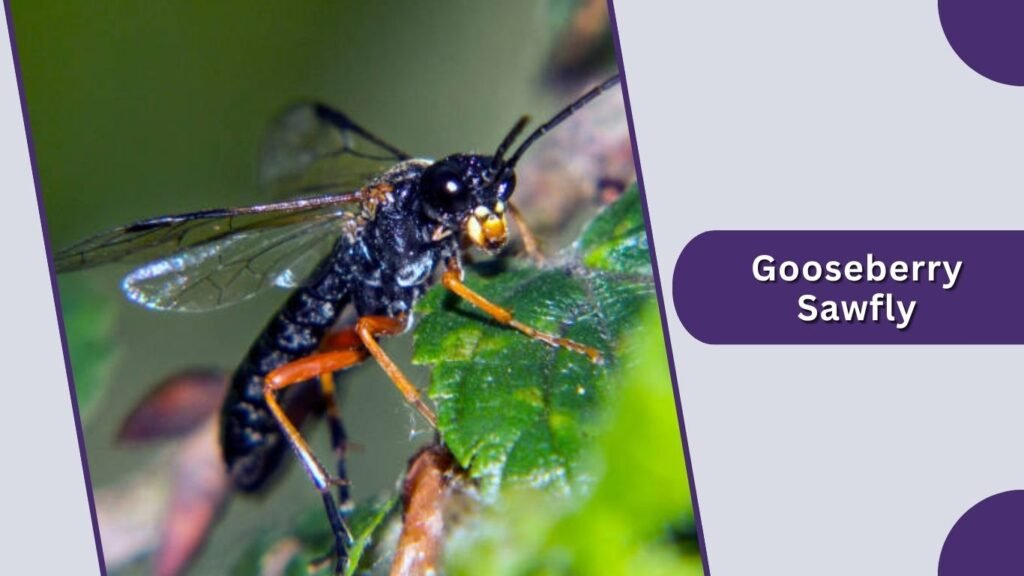
The gooseberry sawfly is a common garden pest whose larvae feed heavily on gooseberry and currant plants. These caterpillar-like larvae can strip leaves quickly when present in large numbers. Damage is usually most noticeable in spring and early summer. Repeated infestations may weaken plants and reduce fruit production, especially when much of the foliage is removed.
Identification
- Larvae are usually pale green with black spots.
- The head is typically dark or black.
- Mature larvae may reach around 20 mm long.
- Adults are small, yellowish or dark-bodied sawflies.
- Larvae often gather on the undersides of leaves.
- Heavy feeding may leave stems almost completely bare.
Habitat and Distribution
Gooseberry sawflies are commonly found in home gardens, allotments, orchards, and fruit-growing areas where gooseberries and currants are cultivated. They are especially well known in Europe but occur in other temperate regions as well. Dense bushes provide both abundant food and shelter for developing larvae.
Diet and Feeding Behavior
The larvae feed mainly on gooseberry and currant leaves. They usually begin by creating small holes before consuming larger portions of foliage as they grow. Groups can move rapidly through a plant, sometimes removing nearly every leaf. Severe defoliation may reduce photosynthesis and affect the plant’s ability to produce healthy fruit.
Life Cycle and Behavior
Adult females lay eggs on host plants during spring. The larvae hatch and begin feeding soon afterward. Once mature, they drop to the soil and form cocoons where pupation occurs. Several generations may develop during favorable weather, which means plants can experience repeated attacks during the growing season.
10. Currant Sawfly

The currant sawfly is closely associated with currant and gooseberry bushes. Its larvae are active leaf feeders and can become troublesome in gardens and fruit-growing areas. They are often difficult to notice when young because their green coloration blends with foliage, allowing populations to increase before significant damage becomes obvious.
Identification
- Larvae are greenish with dark markings or spots.
- The head is usually dark and clearly visible.
- Adults resemble tiny wasps with transparent wings.
- Larvae have several pairs of abdominal prolegs.
- Feeding produces irregular holes in leaves.
- Severe infestations may leave only the main leaf veins.
Habitat and Distribution
Currant sawflies are generally found wherever currant and gooseberry plants are grown. Gardens, orchards, small farms, and berry plantations provide suitable habitats. They are especially common in temperate climates where their host plants grow successfully.
Diet and Feeding Behavior
The larvae feed directly on currant and gooseberry foliage. Early feeding may appear as small holes, but older larvae consume entire sections of leaves. Large numbers can quickly reduce foliage and expose developing fruit. Healthy plants often recover, but repeated defoliation may reduce growth and productivity.
Life Cycle and Behavior
Females place eggs on or near suitable leaves. After hatching, young larvae begin feeding and pass through several growth stages. Mature larvae eventually move to the soil, where they pupate inside protective cocoons. Depending on weather conditions, more than one generation can occur during a single growing season.
11. Raspberry Sawfly
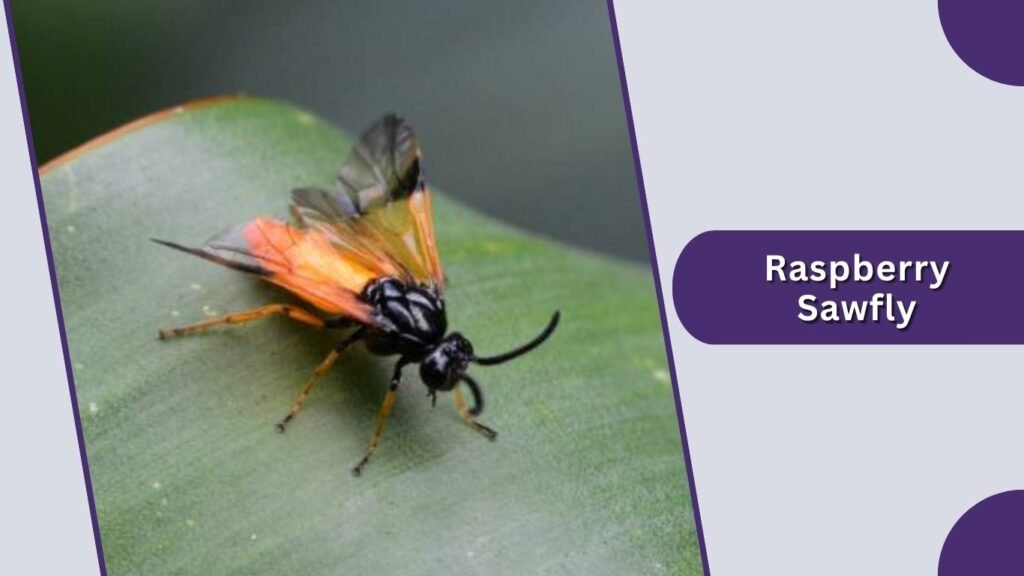
The raspberry sawfly is a small sawfly whose larvae feed on raspberry and related bramble plants. The larvae can create irregular holes in leaves and occasionally cause noticeable defoliation. Most established raspberry plants tolerate limited feeding, but large populations can reduce leaf area and potentially affect plant vigor and fruit development.
Identification
- Larvae are usually green and blend well with raspberry leaves.
- Bodies may have fine hairs or small markings.
- Adults are small, dark, and wasp-like.
- Larvae are often found on leaf undersides.
- Feeding creates holes between leaf veins.
- Mature larvae resemble small green caterpillars.
Habitat and Distribution
Raspberry sawflies occur in gardens, berry farms, hedgerows, woodland edges, and natural areas where raspberries and related plants grow. They are found in several temperate regions and are particularly noticeable in areas with abundant cultivated or wild brambles.
Diet and Feeding Behavior
The larvae primarily consume raspberry foliage, though they may also feed on related bramble species. Young larvae often create small patches or holes, while older larvae remove larger portions of leaves. They usually do not attack the fruit directly, but severe loss of foliage can stress the plant.
Life Cycle and Behavior
Adult females deposit eggs on raspberry leaves during the growing season. Larvae emerge and feed for several weeks before becoming fully mature. They then leave the plant and pupate in soil or leaf litter. Adults later emerge to mate and continue the cycle, with timing depending on local climate.
12. Mountain Ash Sawfly

The mountain ash sawfly is a leaf-feeding insect associated mainly with mountain ash trees. Its larvae may gather in groups and consume substantial amounts of foliage, sometimes leaving branches partially defoliated. Although mature trees generally recover from moderate damage, repeated feeding can place additional stress on young or already weakened trees.
Identification
- Larvae are usually greenish or yellow-green.
- Dark spots or lines may appear along the body.
- Adults are small and wasp-like.
- Larvae possess numerous abdominal prolegs.
- Groups may cluster along leaflets.
- Damaged foliage often appears ragged or partially skeletonized.
Habitat and Distribution
Mountain ash sawflies occur in forests, parks, gardens, and landscaped areas containing mountain ash trees. They are particularly associated with temperate and cooler regions where these trees are common. Urban ornamental trees may also support larval populations.
Diet and Feeding Behavior
The larvae feed primarily on mountain ash leaves, consuming the soft tissue of individual leaflets. Young larvae may feed together, making damage highly concentrated on particular branches. As they grow, they can spread to nearby leaves and remove increasingly large sections of foliage.
Life Cycle and Behavior
Adult females lay eggs in suitable leaf tissue. Newly hatched larvae begin feeding during periods of active foliage growth. After completing development, they leave the tree and pupate in soil, leaf litter, or other protected sites. Adults emerge when seasonal conditions are favorable.
13. Dusky Birch Sawfly

The dusky birch sawfly is a common leaf-feeding sawfly associated with birch trees. Its larvae are often seen clustered along leaf margins and may raise their bodies when disturbed. Large colonies can remove considerable amounts of foliage, but healthy mature birches generally tolerate occasional infestations without lasting damage.
Identification
- Larvae are greenish with rows of dark spots.
- The head is usually dark or black.
- Larvae commonly feed in organized groups.
- Adults are small, dark-bodied sawflies.
- Larvae may curl or raise their rear bodies when disturbed.
- Feeding causes irregularly chewed or skeletonized leaves.
Habitat and Distribution
Dusky birch sawflies inhabit forests, parks, residential landscapes, and gardens where birch trees are present. They occur across much of North America and can be especially noticeable on ornamental birches planted around homes and public spaces.
Diet and Feeding Behavior
Larvae feed on birch foliage and usually begin at the outer edges of leaves. Groups can consume large portions of a leaf before moving together to fresh foliage. Their synchronized feeding behavior may cause localized branches to become heavily defoliated.
Life Cycle and Behavior
Females lay eggs within birch leaves, often arranging them along the leaf edge. The larvae emerge and feed together through several growth stages. When fully developed, they move to the ground and pupate. Depending on local conditions, one or more generations may occur each year.
14. Redheaded Pine Sawfly
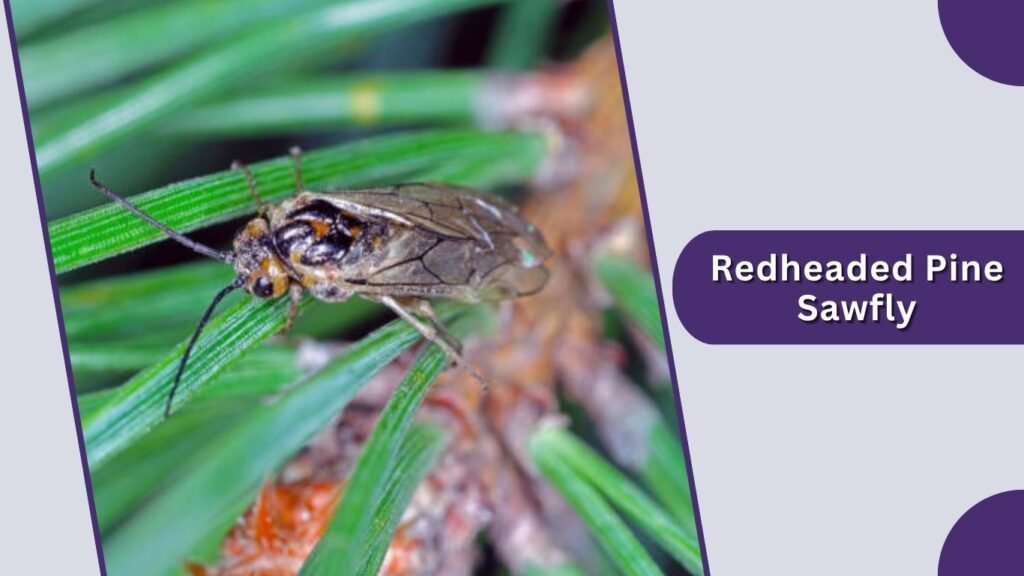
The redheaded pine sawfly is an important pine-feeding sawfly known for its distinctive red-orange head and spotted body. Larvae often feed in large colonies and can defoliate young pine trees rapidly. Small ornamental or plantation pines may be particularly vulnerable to repeated attacks during the growing season.
Identification
- Larvae have a reddish-orange or bright red head.
- The body is pale yellow to greenish with rows of black spots.
- Mature larvae can reach about 25 mm long.
- Larvae typically feed in large groups.
- Adults are small and dark with transparent wings.
- Disturbed larvae may raise the front part of their bodies together.
Habitat and Distribution
Redheaded pine sawflies are found in pine forests, plantations, nurseries, parks, and residential landscapes across eastern North America. They often prefer young pines growing in open, sunny locations. Several pine species can serve as hosts.
Diet and Feeding Behavior
The larvae eat pine needles and may feed on both old and new foliage. Colonies can strip needles from entire branches and then move to nearby areas. Severe infestations may leave small trees nearly bare, reducing growth and increasing stress.
Life Cycle and Behavior
Females insert eggs into pine needles. After hatching, larvae remain together and feed as a colony. When fully grown, they leave the tree and form cocoons in the soil or leaf litter. Depending on the climate, the species may produce more than one generation per year.
15. European Pine Sawfly
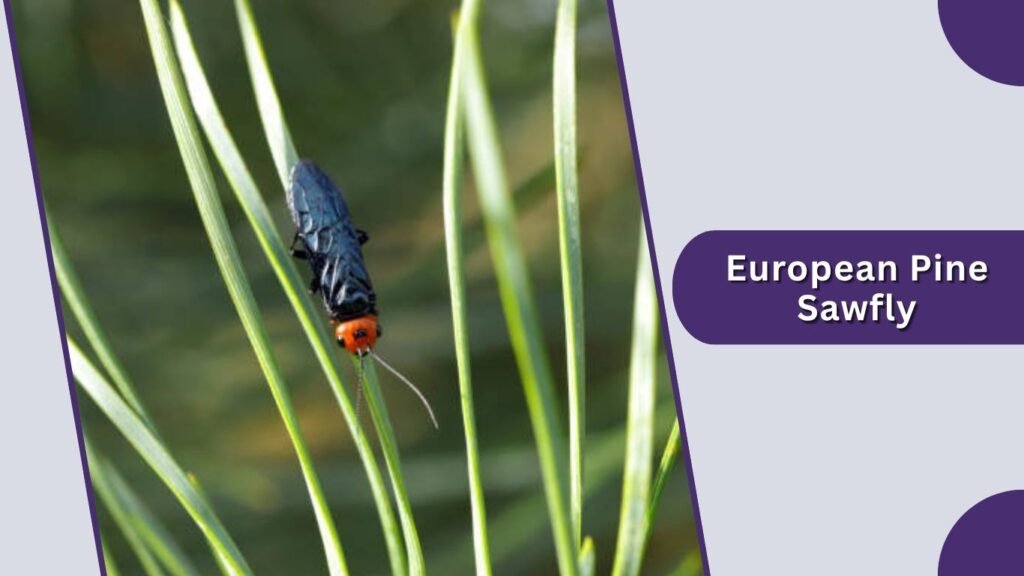
The European pine sawfly is a widespread pine pest whose larvae commonly attack ornamental and landscape pines. They usually feed in groups on older needles during spring. While healthy mature trees often survive an infestation, severe feeding can reduce tree appearance and vigor, particularly when the same trees are attacked repeatedly.
Identification
- Larvae are gray-green with light and dark longitudinal stripes.
- The head is glossy black.
- Larvae commonly reach around 20–25 mm long.
- They usually feed together in dense colonies.
- Adults are small, stout, wasp-like insects.
- Damaged branches may have clusters of shortened or missing needles.
Habitat and Distribution
European pine sawflies are common in landscapes, parks, nurseries, windbreaks, and pine plantations. Although native to Europe, the species is now established in parts of North America. Mugo, Scots, red, and several other pines may be used as host plants.
Diet and Feeding Behavior
Larvae primarily feed on older pine needles and often avoid the newest spring growth. Large groups can remove needles quickly, producing thin or bare-looking branches. Because buds and new shoots may remain intact, many trees are able to produce replacement foliage and recover.
Life Cycle and Behavior
Eggs are inserted into pine needles and typically remain there through winter. Larvae hatch in spring and feed together for several weeks. Mature larvae eventually form cocoons on vegetation, bark, or in nearby litter. Adults emerge later, mate, and females lay the eggs that will begin the next annual cycle.
16. Introduced Pine Sawfly

The introduced pine sawfly is a pine-feeding insect whose larvae can cause noticeable damage to ornamental and forest pines. The species is especially associated with eastern North America, where it feeds on several pine species. Larvae often occur in groups and consume needles rapidly, making infestations easy to spot once feeding becomes heavy.
Identification
- Larvae are greenish with dark longitudinal stripes.
- The head is usually dark or black.
- Mature larvae are about 20–25 mm long.
- Larvae commonly feed together in colonies.
- Adults are small, dark, and wasp-like.
- Damaged branches may appear thin or partially stripped of needles.
Habitat and Distribution
Introduced pine sawflies are commonly found in pine forests, plantations, parks, gardens, and landscaped areas. They are especially associated with eastern parts of North America. White pine and several other pine species can serve as host plants, making both ornamental and naturally occurring trees vulnerable to feeding.
Diet and Feeding Behavior
The larvae feed on pine needles, often beginning with older foliage before moving to newer needles. Young larvae usually remain close together, creating concentrated areas of damage. As they grow, they consume increasing amounts of foliage and may spread to nearby branches. Severe infestations can reduce tree vigor, particularly in young or stressed pines.
Life Cycle and Behavior
Adult females lay eggs in pine needles during the growing season. After hatching, larvae feed in groups for several weeks. Mature larvae leave the tree and form cocoons in soil, litter, or protected areas. Pupation occurs inside the cocoon, and adults later emerge to mate and begin another generation.
17. Yellowheaded Spruce Sawfly

The yellowheaded spruce sawfly is a damaging sawfly species that primarily attacks young spruce trees. Its larvae feed on newly developing needles, sometimes causing severe defoliation. Small landscape spruces and young trees in plantations are especially vulnerable because repeated feeding can reduce growth and may eventually kill heavily stressed trees.
Identification
- Larvae have a yellowish or reddish-brown head.
- The body is green with several dark longitudinal stripes.
- Mature larvae are usually around 18–20 mm long.
- Adults are small and wasp-like.
- Larvae often feed openly on new spruce growth.
- Severe feeding leaves branches thin and bare-looking.
Habitat and Distribution
Yellowheaded spruce sawflies are found in areas where spruce trees grow, including plantations, nurseries, windbreaks, parks, and residential landscapes. They occur across much of North America and are particularly important pests of young ornamental spruce trees.
Diet and Feeding Behavior
Larvae feed mainly on the newest spruce needles. Young larvae begin by consuming tender new foliage, while older individuals may move onto previous-year needles after fresh growth is depleted. Because new needles are essential for tree development, heavy feeding can significantly reduce annual growth.
Life Cycle and Behavior
Females lay eggs in developing spruce needles in spring. Larvae hatch shortly afterward and begin feeding on the fresh foliage. They mature over several weeks before dropping to the soil, where they form cocoons and pupate. The species usually produces one generation per year, with the pupal stage surviving unfavorable seasons.
18. Scarlet Oak Sawfly
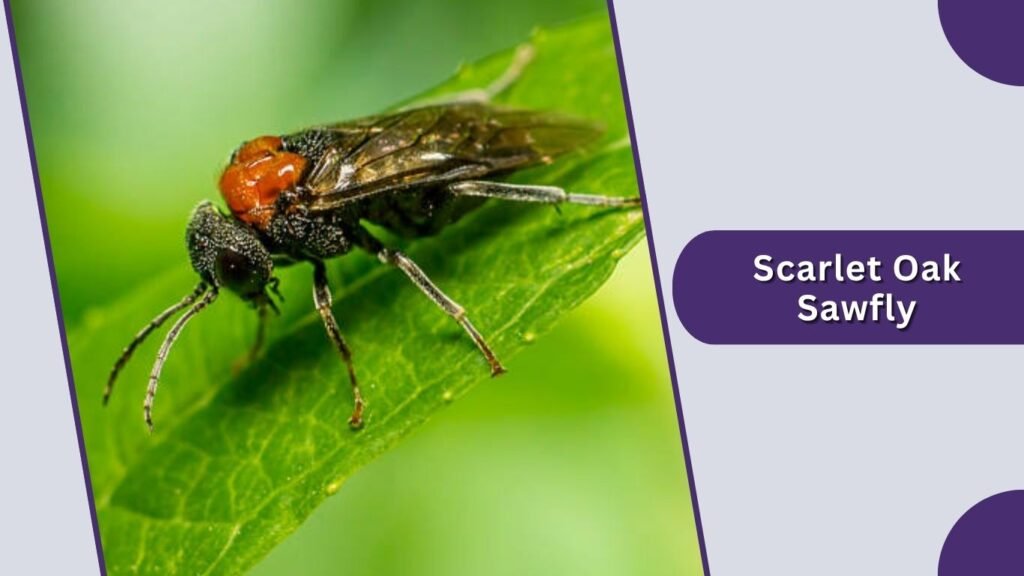
The scarlet oak sawfly is a leaf-feeding species associated with oaks, particularly scarlet oak and related trees. The larvae feed on leaf tissue and may create a distinctive skeletonized appearance. Large infestations can make trees look unhealthy, but mature oaks usually tolerate moderate feeding without suffering serious long-term damage.
Identification
- Larvae are usually pale green to yellowish.
- Dark markings may appear along the body.
- The head can be yellowish or brownish.
- Adults are small, dark, wasp-like insects.
- Larvae often feed on the undersides of oak leaves.
- Damaged leaves may become brown and skeletonized.
Habitat and Distribution
Scarlet oak sawflies occur in oak forests, woodland edges, parks, and landscaped areas where suitable host trees grow. They are mainly associated with regions of North America containing scarlet oak and closely related oak species.
Diet and Feeding Behavior
The larvae consume the soft tissue between oak leaf veins. Young larvae may scrape the lower leaf surface, leaving a thin upper layer behind. As the damaged tissue dries, affected leaves develop brown or transparent patches. Heavy populations can skeletonize numerous leaves and reduce the overall density of the tree canopy.
Life Cycle and Behavior
Adult females place eggs into oak leaf tissue. After hatching, the larvae begin feeding and may remain close together during their early stages. Mature larvae eventually leave the foliage and move into soil or leaf litter to pupate. Adults emerge when conditions become suitable and begin another reproductive cycle.
19. Woolly Alder Sawfly

The woolly alder sawfly is an unusual sawfly whose larvae are covered with white, waxy material that gives them a woolly appearance. They are commonly found feeding on alder leaves and may occasionally occur on related trees. Their cotton-like coating makes them easy to distinguish from most other sawfly larvae.
Identification
- Larvae are covered with white, woolly or waxy material.
- The body beneath the coating is usually pale green.
- Mature larvae resemble tiny pieces of cotton on leaves.
- Adults are small and dark-colored.
- Larvae commonly occur on alder foliage.
- Feeding damage appears as holes or missing sections of leaves.
Habitat and Distribution
Woolly alder sawflies are found around wetlands, streams, woodland edges, gardens, and other areas where alder trees grow. They occur across parts of North America and other temperate regions. Moist environments with abundant alder growth provide especially suitable habitat.
Diet and Feeding Behavior
The larvae mainly feed on alder leaves, chewing away tissue from the edges or between veins. Groups may occupy the same plant, but severe defoliation is relatively uncommon compared with some pine-feeding sawflies. Their waxy coating may help protect them from predators and environmental conditions.
Life Cycle and Behavior
Adult females lay eggs on or within host leaves. After hatching, larvae begin feeding and gradually develop their characteristic white waxy covering. Once fully grown, they leave the host plant and move to protected areas for pupation. Adults later emerge, mate, and produce another generation when suitable foliage becomes available.
20. Hibiscus Sawfly

The hibiscus sawfly is a small sawfly species whose larvae feed primarily on hibiscus and related plants in the mallow family. It is especially associated with hardy hibiscus and rose mallow. The caterpillar-like larvae can cause extensive leaf damage when present in large numbers, sometimes leaving plants heavily skeletonized during the growing season.
Identification
- Larvae are usually pale green with dark spots or markings.
- The head is typically dark brown or black.
- Mature larvae are generally around 12–15 mm long.
- Adults are small, dark-colored, wasp-like insects.
- Larvae have several pairs of abdominal prolegs.
- They commonly feed on the undersides of hibiscus leaves.
- Damaged foliage may become skeletonized or develop irregular holes.
Habitat and Distribution
Hibiscus sawflies are commonly found in gardens, wetlands, landscaped areas, and nurseries where hibiscus and related plants grow. They are especially noticeable on hardy hibiscus and native rose mallow species. In North America, they occur mainly in eastern and central regions where suitable host plants are abundant. Moist environments can provide particularly favorable conditions because many hibiscus species naturally grow near ponds, marshes, and wet soils.
Diet and Feeding Behavior
The larvae feed almost entirely on hibiscus leaves. Young larvae begin by scraping or chewing small sections from the underside of foliage. As they grow, they consume larger areas between the veins, creating a skeletonized appearance. Heavy infestations can remove much of a plant’s foliage. Although established hibiscus plants often survive, repeated defoliation may reduce flowering and overall vigor.
Life Cycle and Behavior
Adult females lay eggs within hibiscus leaf tissue. After hatching, the larvae begin feeding and pass through several developmental stages. Mature larvae eventually leave the plant and enter the soil, where they create protective cells for pupation. Adults later emerge and begin another reproductive cycle. In warm climates, more than one generation may occur during a single growing season.
FAQs
1. Are sawflies dangerous to humans?
Sawflies are generally not dangerous to humans. Unlike many wasps, adult sawflies do not have a stinger and usually do not act aggressively. Their larvae may look like caterpillars, but they are mainly a concern because of the damage they can cause to plants.
2. What do sawflies eat?
Sawfly larvae usually feed on leaves or needles of specific host plants. Depending on the species, they may attack roses, pines, birches, willows, gooseberries, currants, oaks, spruce trees, and many other plants. Adult sawflies generally feed little or may consume nectar and other plant-based foods.
3. Are sawfly larvae the same as caterpillars?
No. Sawfly larvae may closely resemble caterpillars, but they belong to the order Hymenoptera and are related to wasps and bees. One useful difference is that sawfly larvae typically have six or more pairs of abdominal prolegs, while most caterpillars have five or fewer pairs.
4. Do sawflies damage plants?
Yes. The larval stage can damage plants by chewing leaves, scraping leaf surfaces, or eating pine and spruce needles. Light infestations usually cause only cosmetic damage, but large populations can partially or completely defoliate young plants and trees.
5. How can you get rid of sawfly larvae?
Small infestations can often be controlled by hand-picking larvae or spraying them off plants with water. Removing heavily infested leaves may also help. For larger infestations, insecticidal soap, horticultural products, or other treatments labeled for sawflies may be used according to the product instructions.