
Paper wasps are slender, long-legged wasps known for building distinctive open-comb nests from paper-like material. Although many species look similar, they can differ in color, size, markings, behavior, and geographic range. Some are mostly red or black, while others display bright yellow patterns. Most paper wasps are beneficial predators that help control caterpillars and other garden pests. In this guide, you’ll discover 17 types of paper wasps, along with their identification features, habitat, diet, behavior, and life cycle.
1. European Paper Wasp

The European paper wasp (Polistes dominula) is one of the most recognizable paper wasps and has become established in many regions outside its native range. It is a slender, social wasp known for building open, umbrella-shaped paper nests under sheltered structures. Although it may look similar to a yellowjacket, its long legs, narrow waist, and flight style make it easier to identify once you know what to look for.
Identification
- Common name: European Paper Wasp
- Scientific name: Polistes dominula
- Body length: About 0.5–0.7 inches
- Color: Black with bright yellow markings
- Body shape: Slender with a narrow waist
- Antennae: Mostly orange or yellowish toward the tips
- Legs: Long and often hang beneath the body during flight
- Nest: Open paper comb with visible hexagonal cells
Habitat and Distribution
European paper wasps originated in parts of Europe, North Africa, and Asia but have spread widely to other regions, including North America. They adapt especially well to towns, suburbs, gardens, farms, and other human-modified environments. Nests are often constructed under roof eaves, decks, porch ceilings, window frames, pipes, sheds, and other protected spaces.
Behavior and Diet
These wasps are generally less aggressive when they are away from their nest. However, they may sting when their colony is disturbed or threatened. European paper wasps are useful predators because they hunt caterpillars and other soft-bodied insects to feed their developing larvae.
Adult wasps mainly consume sugary foods such as flower nectar, honeydew, and juices from ripe or damaged fruit. Their hunting activity can help naturally reduce populations of certain garden pests.
Life Cycle
The colony usually begins in spring when a fertilized queen emerges from winter shelter and starts building a small nest. She lays eggs inside individual cells and initially feeds the larvae herself.
As the first workers mature, they take over nest expansion, hunting, and larval care. The colony grows throughout summer, sometimes containing dozens of adults. Later in the season, new males and reproductive females are produced. After mating, fertilized females find protected locations to overwinter, while most workers, males, and the old queen die as colder weather arrives.
2. Northern Paper Wasp

The Northern paper wasp (Polistes fuscatus) is a widespread North American paper wasp known for its highly variable coloration. Some individuals are mostly dark brown, while others have reddish or yellow markings. Like other paper wasps, it builds an exposed paper nest made of a single comb. These wasps are beneficial predators around gardens because they capture many caterpillars and other insects.
Identification
- Common name: Northern Paper Wasp
- Scientific name: Polistes fuscatus
- Body length: About 0.6–0.8 inches
- Color: Brown, reddish-brown, black, and yellow
- Body shape: Slender with a narrow waist
- Legs: Long and noticeable during flight
- Wings: Smoky or brownish
- Nest: Open, umbrella-shaped paper comb
Habitat and Distribution
Northern paper wasps are found throughout much of eastern and central North America. They commonly occupy forests, woodland edges, meadows, gardens, farms, and residential areas.
Their nests are usually placed in sheltered locations such as under roof eaves, porch ceilings, deck railings, tree branches, sheds, and inside unused structures. Colonies often establish themselves close to people when suitable protected nesting sites are available.
Behavior and Diet
Northern paper wasps are active hunters that capture caterpillars, flies, and other soft-bodied insects. Workers chew their prey into smaller pieces and bring it back to feed developing larvae.
Adults mainly obtain energy from flower nectar and other sugary liquids. They are generally not interested in attacking people while foraging, but females can sting if their nest is handled or disturbed.
Life Cycle
In spring, overwintered females emerge and begin searching for nesting sites. A dominant female usually becomes the primary egg-laying queen, while other females may assist with nest construction and brood care.
The first generation develops into workers that expand the nest and collect food. Colony size increases during summer. Toward late summer and fall, reproductive males and females appear. After mating, newly fertilized females seek protected places to survive winter and begin new colonies the following spring.
3. Golden Paper Wasp
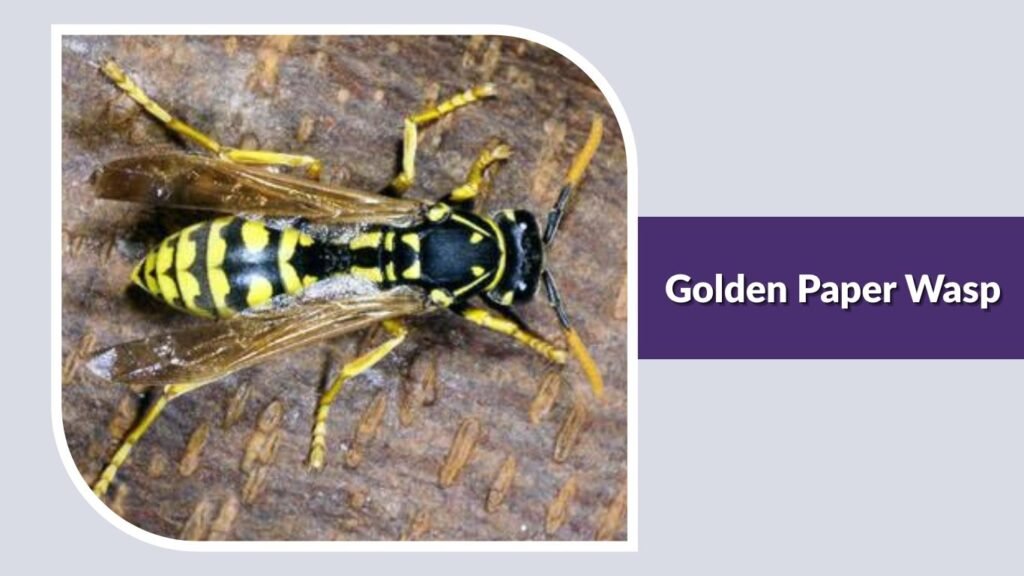
The Golden paper wasp is a striking paper wasp recognized for its yellow to golden coloration and slender body. Depending on the species and region, the term may be used for paper wasps with especially prominent yellow markings. Like other members of the paper wasp group, they construct exposed nests from plant fibers mixed with saliva and play an important ecological role as insect predators.
Identification
- Common name: Golden Paper Wasp
- Color: Golden-yellow with darker markings
- Body length: Usually about 0.6–1 inch
- Body shape: Long and slender
- Waist: Narrow and clearly defined
- Legs: Long and dangling during flight
- Wings: Transparent to slightly smoky
- Nest: Exposed paper comb with visible cells
Habitat and Distribution
Golden-colored paper wasps occur in warm and temperate environments where flowering plants and suitable nesting structures are available. Depending on the species, they may occur around woodland margins, gardens, agricultural fields, grasslands, and suburban areas.
Nests are often attached beneath eaves, branches, porch roofs, fences, or other surfaces that provide protection from heavy rain and direct disturbance.
Behavior and Diet
Golden paper wasps spend much of the day searching vegetation for caterpillars and other small insects. These prey animals provide the protein necessary for larval growth.
Adult wasps primarily consume flower nectar and sugary plant secretions. While visiting flowers, they may also contribute to pollination. They usually avoid unnecessary conflict but will defend the nest when they perceive a threat nearby.
Life Cycle
A fertilized female begins a new colony when temperatures become warm enough in spring or at the beginning of the local active season. She constructs several paper cells and deposits one egg in each.
After larvae hatch, they are fed chewed insects until pupation. Newly emerged workers then assume most foraging and nest-maintenance duties. The colony continues growing until reproductive males and females are produced later in the season. Mating occurs before colder conditions cause the colony to decline, leaving fertilized females to overwinter.
4. Red Paper Wasp

The red paper wasp is a large, reddish-brown paper wasp commonly encountered in warmer parts of North America. Several species may be called red paper wasps, especially members of the genus Polistes. Their distinctive reddish coloration makes them relatively easy to recognize. They are important natural predators but may become defensive when nests are constructed close to homes.
Identification
- Common name: Red Paper Wasp
- Genus: Polistes
- Body length: About 0.7–1 inch
- Color: Reddish-brown to dark red
- Body shape: Long and narrow
- Waist: Thin and well defined
- Legs: Long, often hanging down during flight
- Nest: Grayish open paper comb
Habitat and Distribution
Red paper wasps are especially common in the southern United States, although their exact distribution varies by species. They thrive in warm environments such as woodland edges, gardens, farms, parks, and suburban neighborhoods.
Typical nest locations include roof overhangs, sheds, barns, porches, attic spaces, tree branches, and protected areas beneath outdoor furniture or equipment.
Behavior and Diet
Workers actively search plants for caterpillars and other insects. After capturing prey, they chew it into a soft mass that is carried back to the nest and fed to larvae.
Adult red paper wasps consume nectar and other sweet liquids. They are generally calm while feeding or flying away from the nest. However, they can become strongly defensive if someone approaches or shakes their colony, and females are capable of delivering repeated stings.
Life Cycle
During spring, a fertilized female emerges from winter shelter and begins constructing a nest. She lays eggs and cares for the first group of larvae until they develop into adult workers.
These workers then handle hunting, nest construction, and brood care. The colony becomes larger throughout the warm months. New queens and males are produced toward the end of the season. After mating, reproductive females search for sheltered overwintering sites, while most members of the original colony die as temperatures fall.
5. Metric Paper Wasp

The metric paper wasp (Polistes metricus) is a medium-to-large social wasp native to North America. It is commonly recognized by its reddish-brown body combined with darker areas and yellow markings. Its open paper nest may be found around homes as well as natural habitats. Metric paper wasps are valuable predators because they remove many leaf-feeding caterpillars.
Identification
- Common name: Metric Paper Wasp
- Scientific name: Polistes metricus
- Body length: Around 0.6–0.9 inches
- Color: Reddish-brown with black and yellow areas
- Body shape: Narrow and elongated
- Legs: Long and reddish to dark
- Wings: Smoky brown
- Nest: Single exposed paper comb
Habitat and Distribution
Metric paper wasps occur mainly in eastern and central portions of the United States. They inhabit open woodlands, fields, gardens, farms, parks, and suburban environments.
Their nests may be constructed under eaves, beneath branches, inside sheds, under railings, or in other sheltered locations. Colonies generally prefer spots that provide protection from rain while still allowing easy access to surrounding vegetation.
Behavior and Diet
These wasps are active daytime hunters. Caterpillars are among their most important prey, although they can also capture other small insects.
Adults feed primarily on nectar and sugary plant substances. Workers regularly travel between vegetation and the colony to provide protein-rich food to larvae. Metric paper wasps generally avoid people during normal foraging but may aggressively defend a nest if approached too closely.
Life Cycle
The seasonal colony begins with a fertilized female in spring. She constructs a small paper comb, deposits eggs, and feeds the developing larvae.
Once the first workers emerge, they take over most colony maintenance and food collection. Additional generations increase the population through summer. Later, the colony shifts toward producing males and reproductive females rather than workers. These reproductive individuals eventually leave the nest and mate. Fertilized females overwinter in sheltered locations and start new colonies when warm weather returns.
6. Fine-Backed Red Paper Wasp

The fine-backed red paper wasp is a reddish paper wasp recognized by its slender shape and comparatively delicate markings across the body. Like other paper wasps, it belongs to a group of social insects that build open-comb nests without an enclosing outer shell. These wasps can be beneficial around gardens because their larvae are supplied with captured insect prey.
Identification
- Common name: Fine-Backed Red Paper Wasp
- Body length: Generally around 0.6–1 inch
- Color: Reddish-brown with darker markings
- Body shape: Slim and elongated
- Waist: Very narrow
- Legs: Long and slender
- Wings: Brownish or lightly smoky
- Nest: Exposed gray or brown paper cells
Habitat and Distribution
Fine-backed red paper wasps favor warm habitats where insects are abundant. They may be encountered around woodland margins, fields, gardens, shrublands, farms, and residential properties.
Protected overhead surfaces are especially attractive nesting locations. Colonies may be attached beneath tree limbs, roofs, decks, porches, sheds, and other structures. Their ability to use buildings makes encounters with people relatively common in areas where they occur.
Behavior and Diet
Adults frequently visit flowers for nectar while workers patrol plants for caterpillars, insect larvae, and other small prey. The captured insects are processed into manageable pieces before being delivered to developing larvae.
These wasps usually spend their time foraging rather than interacting with people. Defensive behavior becomes more likely near the nest, particularly when vibrations, sudden movements, or physical disturbance make the colony feel threatened.
Life Cycle
The colony starts when a reproductive female establishes a small nest and lays her first eggs. During the early stage, she performs nearly every task, including hunting and feeding larvae.
When the first workers become adults, the queen focuses increasingly on reproduction. Workers enlarge the nest, gather food, and care for younger wasps. Mature colonies later produce males and reproductive females. The colony eventually declines as seasonal conditions change. Newly fertilized females survive in protected locations and emerge later to establish colonies of their own.
7. Ringed Paper Wasp
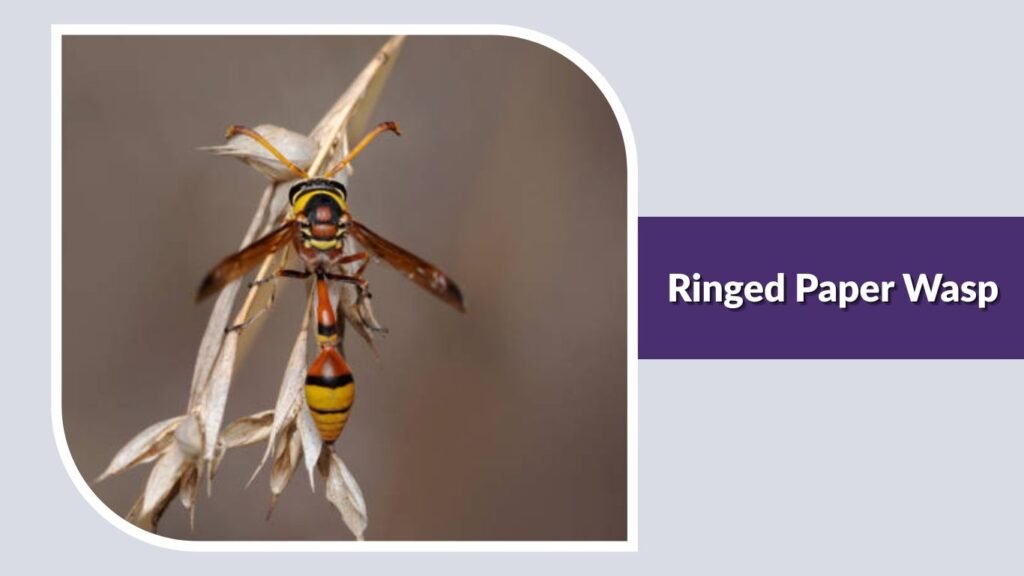
The ringed paper wasp is a slender social wasp recognized by the banded or ring-like markings that appear across parts of its abdomen. Like other paper wasps, it produces an exposed comb-shaped nest from chewed plant fibers. These wasps are useful predators in natural and garden environments because they hunt caterpillars and other insects to feed their developing larvae.
Identification
- Common name: Ringed Paper Wasp
- Body length: Usually around 0.6–1 inch
- Color: Brown, reddish-brown, or black with yellow bands
- Abdomen: Noticeable ring-like markings
- Body shape: Long and slender
- Waist: Narrow and clearly visible
- Legs: Long and dangling during flight
- Nest: Open paper comb with exposed cells
Habitat and Distribution
Ringed paper wasps generally favor warm habitats with plenty of vegetation and insect prey. They may be found around woodland edges, gardens, orchards, grasslands, farms, and residential areas.
Their nests are normally built in protected locations that reduce exposure to rain and strong wind. Common nesting sites include tree branches, roof eaves, sheds, porches, fences, and other sheltered structures.
Behavior and Diet
Adult ringed paper wasps spend much of their time searching flowers for nectar and other sugary liquids. Workers also patrol vegetation for caterpillars and soft-bodied insects.
Captured prey is chewed and carried back to the nest as food for larvae. Away from their colony, these wasps usually concentrate on feeding rather than people. However, females can sting when the nest is threatened.
Life Cycle
A new colony usually begins with a fertilized female that constructs a small group of paper cells. Eggs are placed individually inside these cells.
The queen initially feeds and protects the larvae herself. Once workers emerge, they take over hunting, nest expansion, and brood care. Colony numbers increase during favorable weather. Reproductive males and females eventually develop, mate, and leave the nest. Fertilized females survive the unfavorable season in sheltered locations before beginning another generation.
8. Hunter’s Little Paper Wasp
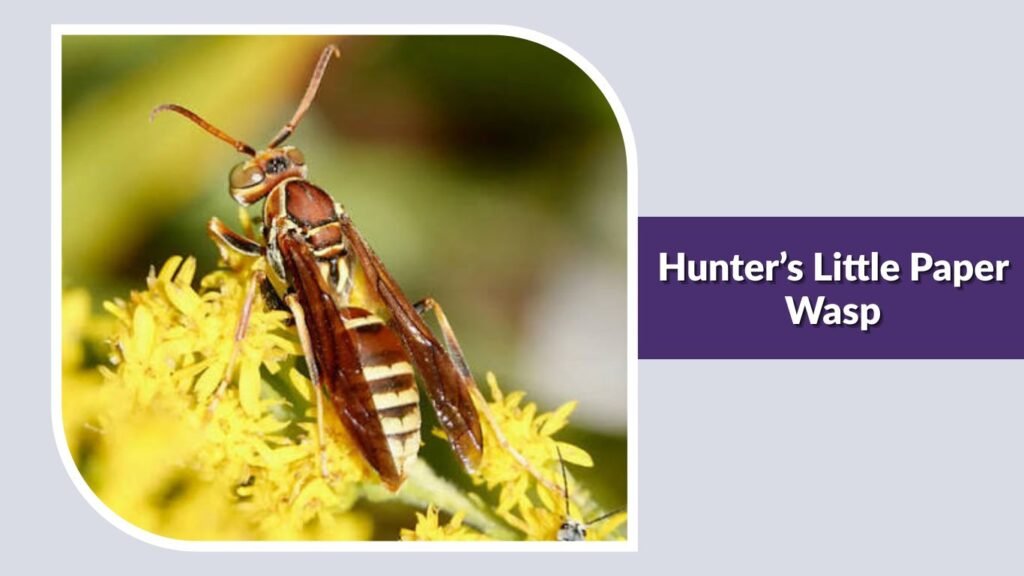
Hunter’s little paper wasp is a relatively small member of the paper-wasp group. Despite its smaller appearance, it has the characteristic narrow waist, long legs, and exposed paper nest associated with paper wasps. It is primarily an insect hunter and can provide natural pest control by capturing caterpillars and other small insects around vegetation.
Identification
- Common name: Hunter’s Little Paper Wasp
- Body size: Small compared with many larger paper wasps
- Color: Usually brown to dark brown with lighter markings
- Body shape: Slim and elongated
- Waist: Narrow
- Legs: Long in proportion to the body
- Wings: Clear to lightly smoky
- Nest: Small exposed paper comb
Habitat and Distribution
These paper wasps are associated with warm areas containing shrubs, trees, flowering plants, and abundant insect prey. They may occupy woodland edges, gardens, open forests, fields, and areas around buildings.
Small colonies can establish nests beneath leaves, branches, roofs, sheds, and other overhead surfaces. A sheltered position helps protect the delicate paper structure from heavy rain.
Behavior and Diet
Hunter’s little paper wasps actively search vegetation for small caterpillars and insect larvae. Their hunting behavior is particularly important during the colony’s breeding period because developing larvae require protein-rich food.
Adults obtain most of their energy from nectar and other sugary plant liquids. They generally avoid confrontation when feeding but can become defensive around an occupied nest.
Life Cycle
The colony begins when a reproductive female selects a secure surface and produces the first paper cells. After laying eggs, she provides food to the developing larvae.
The earliest adults normally become workers and begin performing most colony duties. They gather food, maintain the nest, and care for new larvae while the dominant female continues laying eggs.
Later, males and reproductive females are produced. These individuals eventually leave to mate, and fertilized females become responsible for starting the next generation.
9. Guinea Paper Wasp
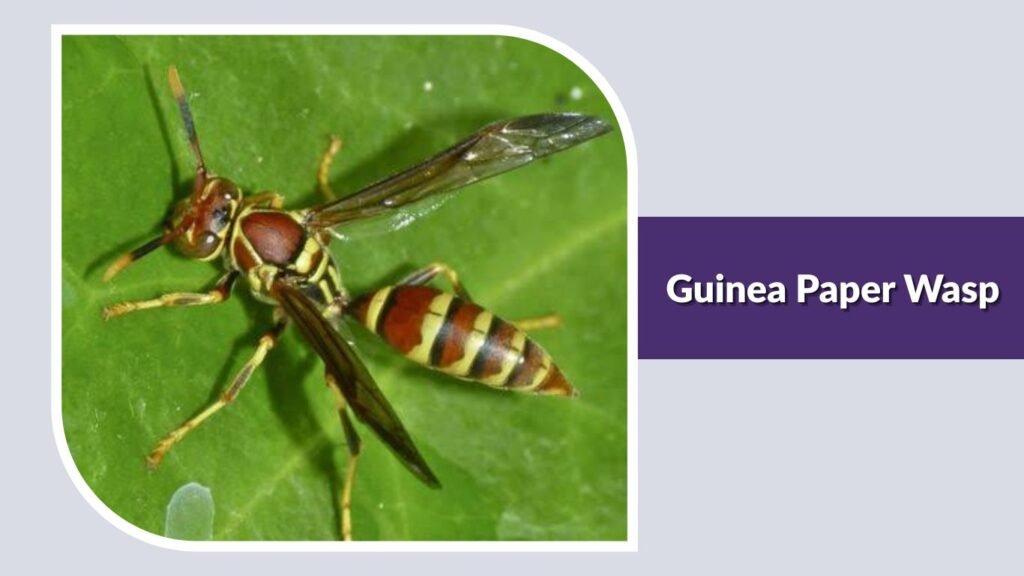
The Guinea paper wasp is a social paper wasp known for its slender body and characteristic open-comb nest. It belongs to the same general group as many familiar backyard paper wasps. Although people may notice them around buildings, these wasps have an important ecological role because their workers capture numerous plant-feeding insects for their larvae.
Identification
- Common name: Guinea Paper Wasp
- Body length: Approximately 0.6–0.8 inches
- Color: Dark brown to black with yellow markings
- Body shape: Narrow and elongated
- Waist: Thin
- Antennae: Long
- Legs: Slender and noticeable in flight
- Nest: Umbrella-shaped exposed paper comb
Habitat and Distribution
Guinea paper wasps can occupy a variety of warm, open environments. Gardens, farms, woodland margins, fields, and residential properties may all provide suitable conditions.
They frequently choose sheltered nesting locations such as underneath roof overhangs, porch ceilings, branches, sheds, or similar structures. Access to nearby vegetation is especially useful because workers depend on insects and flowering plants for food.
Behavior and Diet
Workers are active predators of caterpillars and other small insects. They search leaves and stems, capture suitable prey, and return portions to the nest.
Adults themselves prefer carbohydrate-rich foods such as nectar and sweet plant secretions. They may regularly visit flowering plants while searching for energy.
Guinea paper wasps usually do not pursue people without reason. Defensive reactions are most likely when someone approaches or disturbs their nest.
Life Cycle
A fertilized female establishes a colony by constructing a small nest from plant fibers mixed with saliva. Eggs develop into larvae that remain inside individual cells.
The queen initially performs hunting and brood-care duties. After the first workers mature, they perform most of these tasks and allow colony growth to accelerate.
Toward the end of the colony cycle, males and reproductive females are produced. After mating, fertilized females survive in protected locations and later establish new nests.
10. Dominulus Paper Wasp

The dominulus paper wasp (Polistes dominula) is commonly known as the European paper wasp. It is a highly adaptable social wasp with bold black-and-yellow markings that can sometimes cause it to be confused with yellowjackets. Its open nest and long dangling legs are useful identification features. The species frequently lives around homes, gardens, farms, and other human-modified environments.
Identification
- Common name: Dominulus Paper Wasp
- Scientific name: Polistes dominula
- Body length: About 0.5–0.7 inches
- Color: Black with bright yellow markings
- Antennae: Yellow-orange toward the ends
- Body shape: Slender with a narrow waist
- Legs: Long and visible while flying
- Nest: Open comb without an outer covering
Habitat and Distribution
Dominulus paper wasps occur across a broad geographic range and have successfully established populations in many areas outside their original distribution.
They thrive in gardens, farms, woodland edges, cities, and suburban neighborhoods. Human structures provide numerous protected nesting locations, including roof eaves, decks, pipes, sheds, fences, and outdoor equipment.
Behavior and Diet
These wasps are efficient predators, particularly of caterpillars. Workers search plants for prey and carry processed pieces back to feed the colony’s larvae.
Adults depend largely on nectar, fruit juices, and other sugary substances for energy. They may frequently be seen around flowering plants during warm weather.
Dominulus paper wasps normally focus on foraging when away from the colony. Near the nest, however, they may sting repeatedly if they perceive a serious disturbance.
Life Cycle
Fertilized females emerge from winter shelters and begin nesting when temperatures rise. A founding female constructs the first cells and raises the earliest larvae.
The resulting workers take over foraging, nest maintenance, and brood care. Colonies continue growing throughout the warm season.
Later, the nest produces males and future queens. After mating, newly fertilized females search for sheltered overwintering sites. The original colony usually dies as colder weather develops.
11. Apache Paper Wasp

The Apache paper wasp is a striking paper wasp associated mainly with warm regions of the southwestern United States and nearby areas. Its reddish or brownish body often carries contrasting yellow markings. Like other Polistes wasps, it builds an exposed paper nest and contributes to natural insect control by hunting caterpillars for its larvae.
Identification
- Common name: Apache Paper Wasp
- Body length: Around 0.7–1 inch
- Color: Reddish-brown with yellow markings
- Body shape: Long and narrow
- Waist: Thin and distinct
- Legs: Long and slender
- Wings: Brownish or smoky
- Nest: Open umbrella-shaped paper comb
Habitat and Distribution
Apache paper wasps are most closely associated with warm and relatively dry environments. They may occur around desert vegetation, scrublands, canyons, gardens, farms, and residential landscapes.
They often take advantage of shaded areas for nesting. Colonies may appear beneath roof eaves, porch coverings, branches, sheds, and other protected surfaces. Nearby vegetation provides both prey insects and nectar-producing flowers.
Behavior and Diet
Apache paper wasps spend much of the warmer part of the day foraging. Workers capture caterpillars and other soft-bodied insects and transport them back to the colony for developing larvae.
Adult wasps primarily consume nectar and other sweet liquids. Their regular flower visits may also contribute to pollination.
They are usually less interested in people when away from the nest. However, approaching an active colony too closely can trigger defensive behavior and stinging.
Life Cycle
New colonies are founded by reproductive females after they emerge from protected resting sites. The female creates the first cells, lays eggs, and personally cares for the developing brood.
Once workers mature, they begin collecting food and expanding the paper comb. Colony activity and population increase during warm weather.
Later in the season, reproductive males and females develop. After mating, fertilized females locate sheltered places where they can survive until conditions are suitable for founding new colonies.
12. Caribbean Paper Wasp

The Caribbean paper wasp is a slender social wasp found in warm tropical and subtropical environments. Like other paper wasps, it builds exposed, umbrella-shaped nests from chewed plant fibers. These wasps are valuable insect predators because workers collect caterpillars and other small prey for their larvae. They may also be seen visiting flowers for nectar.
Identification
- Common name: Caribbean Paper Wasp
- Body length: Usually around 0.6–1 inch
- Color: Brown, reddish-brown, black, or yellow-marked
- Body shape: Long and slender
- Waist: Narrow and clearly defined
- Legs: Long and often hang during flight
- Wings: Clear to smoky brown
- Nest: Open paper comb with visible cells
Habitat and Distribution
Caribbean paper wasps are associated with warm islands and coastal regions of the Caribbean. They thrive in gardens, woodland edges, shrublands, agricultural areas, and residential environments.
Their nests are commonly attached beneath branches, roof overhangs, porches, sheds, and other sheltered surfaces. Warm temperatures allow these wasps to remain active for long periods, particularly where flowers and insect prey are abundant.
Behavior and Diet
Workers spend much of their time searching leaves and stems for caterpillars and other soft-bodied insects. These prey items are chewed and carried back to the colony as food for developing larvae.
Adults feed mainly on nectar, fruit juices, and sugary plant secretions. They are usually calm while foraging but may become defensive if a person or animal disturbs the nest.
Life Cycle
A colony begins when a reproductive female constructs the first few paper cells and lays eggs. She initially performs all nest-building, hunting, and feeding duties.
Once the first workers mature, they take over most colony maintenance and food collection. The nest gradually expands as additional generations develop. Reproductive males and females appear later in the colony cycle. After mating, new reproductive females establish future colonies when conditions are suitable.
13. Mischocyttarus Paper Wasp
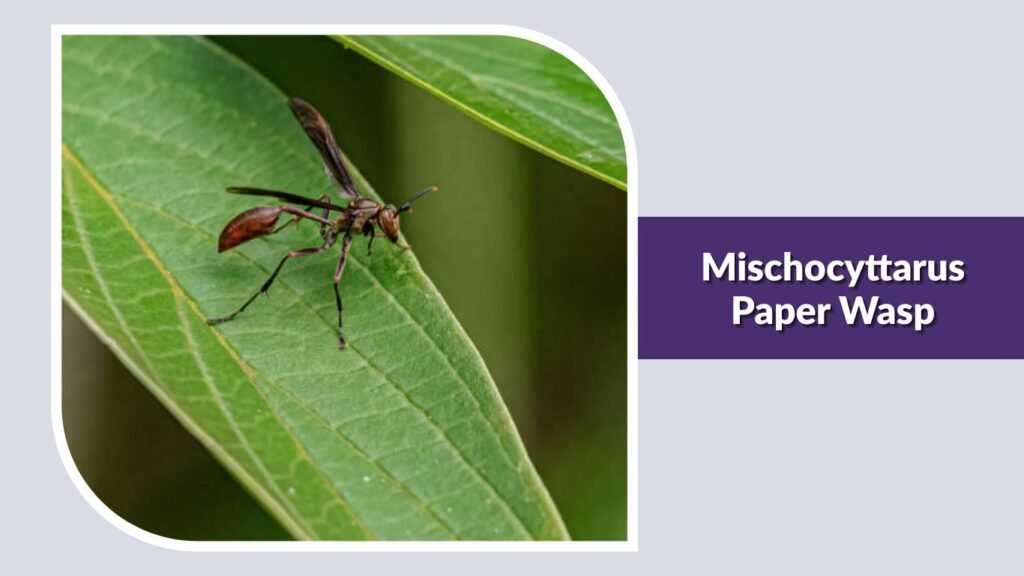
Mischocyttarus paper wasps belong to a large group of slender social wasps found mainly in tropical and subtropical regions of the Americas. They are often more delicate in appearance than many typical Polistes paper wasps. Their nests consist of uncovered paper cells attached to vegetation or sheltered structures by a narrow stalk.
Identification
- Common name: Mischocyttarus Paper Wasp
- Genus: Mischocyttarus
- Body size: Usually small to medium
- Color: Brown, black, reddish, or yellow-marked
- Body shape: Very slender
- Waist: Thin and elongated
- Legs: Long and delicate
- Nest: Small exposed comb supported by a stalk
Habitat and Distribution
Mischocyttarus paper wasps are especially diverse in Central and South America, although some species occur farther north. They inhabit tropical forests, woodland edges, gardens, grasslands, and urban areas.
Nests may be attached beneath leaves, thin branches, rocks, roofs, or other protected surfaces. Many species select concealed locations that provide protection from rain and predators while remaining close to vegetation used for hunting.
Behavior and Diet
These wasps are active predators of small caterpillars and other soft-bodied insects. Workers search nearby plants and return captured prey to the nest, where it is fed to developing larvae.
Adults depend mainly on flower nectar and other sugar-rich liquids for energy. Mischocyttarus wasps are generally not considered highly aggressive when away from their nests. However, females are capable of stinging when the colony is threatened.
Life Cycle
A reproductive female begins the nest by forming a small number of cells. Eggs hatch into larvae that remain inside the cells while being fed by adult females.
As workers emerge, they take over foraging, nest construction, and brood care. Colonies vary greatly in size depending on the species and environment.
Reproductive males and females are produced later. After mating, females disperse and eventually begin new colonies, continuing the social cycle.
14. Australian Paper Wasp

The Australian paper wasp is a general name applied to several social paper wasps native to Australia. These wasps are known for their open, papery nests and slender bodies. They are often seen around gardens and homes, where they hunt caterpillars and other insects. Their predatory activity can make them useful natural pest controllers.
Identification
- Common name: Australian Paper Wasp
- Body length: Commonly around 0.5–1 inch
- Color: Brown, reddish, black, or yellow-marked
- Body shape: Slender and elongated
- Waist: Narrow
- Legs: Long
- Wings: Clear to brownish
- Nest: Exposed cluster of hexagonal paper cells
Habitat and Distribution
Australian paper wasps occur across many parts of Australia, particularly in warmer regions. They may inhabit forests, woodland edges, gardens, farms, parks, and suburban areas.
Their nests are frequently constructed under roof eaves, verandas, branches, fences, outdoor furniture, and sheds. They usually prefer locations that provide shelter from heavy rain while offering easy access to surrounding vegetation.
Behavior and Diet
Workers hunt caterpillars and other insects to feed the colony’s larvae. They often patrol leaves carefully, capturing prey with their jaws and legs before transporting it back to the nest.
Adult wasps mainly consume nectar and other sweet liquids. They may regularly visit garden flowers and flowering shrubs.
Most individuals will not attack people while foraging. Nest defense is different, and females may sting if someone touches or closely disturbs an active colony.
Life Cycle
The colony is usually started by one or more reproductive females. Early in the season, the founding female builds cells, lays eggs, and feeds the first larvae.
After workers emerge, they become responsible for hunting, nest expansion, and brood care. The colony becomes more active as temperatures rise.
Later, males and reproductive females develop. New females mate and eventually disperse to establish colonies of their own, while the original nest declines as conditions become less favorable.
15. Asian Paper Wasp

The Asian paper wasp is a broad common name used for several paper-wasp species found throughout Asia. These social wasps share the familiar narrow-waisted body and exposed paper nest typical of the group. Many species live close to people and can commonly be encountered in gardens, farms, parks, and around buildings.
Identification
- Common name: Asian Paper Wasp
- Body length: Usually around 0.5–1 inch
- Color: Black, brown, reddish, or yellow-patterned
- Body shape: Long and narrow
- Waist: Thin
- Antennae: Long and curved
- Legs: Slender and visible during flight
- Nest: Open paper comb without an outer envelope
Habitat and Distribution
Asian paper wasps occur across a wide variety of climates, from temperate East Asia to tropical Southeast Asia. Suitable habitats include forests, agricultural fields, orchards, gardens, villages, and cities.
They commonly build nests beneath tree branches, roof edges, balconies, sheds, and other protected structures. Species living in warmer climates may have longer active seasons than those in cooler regions.
Behavior and Diet
Like other paper wasps, they are active predators. Workers capture caterpillars, insect larvae, and other small arthropods and use them as protein-rich food for their young.
Adults obtain most of their energy from nectar, ripe fruit, honeydew, and other sugar sources. Their flower-visiting activity can also contribute to pollination.
Asian paper wasps are usually focused on feeding and hunting when away from the nest but may defend their colony vigorously when threatened.
Life Cycle
A reproductive female establishes a nest and lays eggs inside individual paper cells. During the earliest stage, she provides food and protection for the brood.
After the first workers emerge, they assume most colony duties. The nest expands steadily, and additional generations develop throughout the active season.
Reproductive males and females are eventually produced. After mating, future queens disperse or enter sheltered resting sites until conditions become suitable for starting another colony.
16. Yellow Paper Wasp
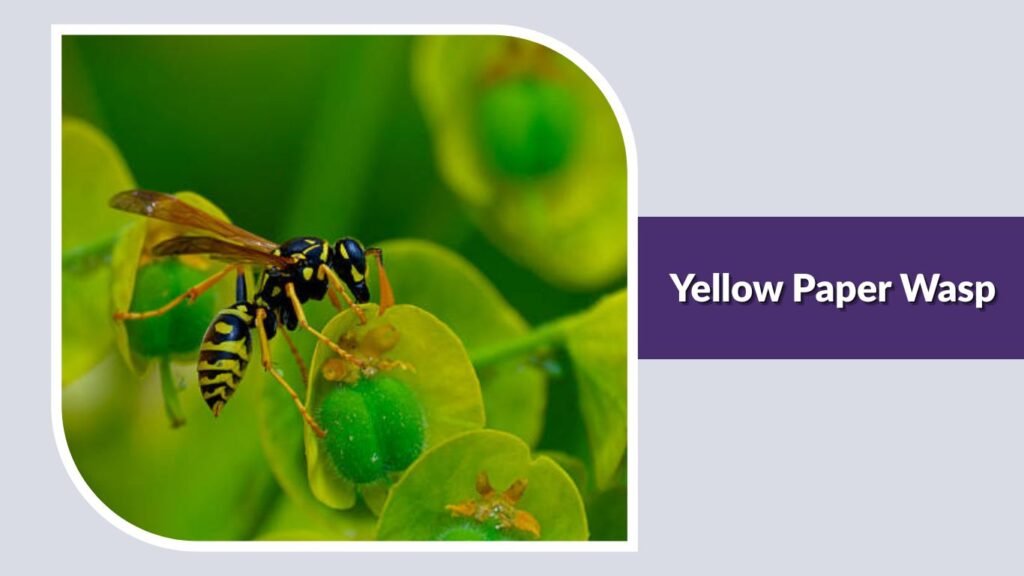
The yellow paper wasp is a name commonly used for paper wasps with strong yellow coloration or prominent yellow markings. Their appearance can sometimes resemble yellowjackets, but paper wasps typically have a slimmer body, longer legs, and a more obvious narrow waist. They are beneficial predators and frequently hunt caterpillars around gardens and vegetation.
Identification
- Common name: Yellow Paper Wasp
- Body length: Usually about 0.6–1 inch
- Color: Yellow with black or brown markings
- Body shape: Thin and elongated
- Waist: Narrow
- Legs: Long and often visible while flying
- Wings: Clear or slightly smoky
- Nest: Open umbrella-shaped paper comb
Habitat and Distribution
Yellow-colored paper wasps can occur in warm and temperate areas where suitable nesting surfaces and insect prey are available. They are often found around gardens, woodland borders, fields, orchards, farms, and suburban properties.
Protected structures make attractive nesting sites. Colonies may develop under eaves, porches, decks, tree branches, sheds, and fences. Their exposed nests are usually relatively easy to recognize because the individual cells remain visible.
Behavior and Diet
Workers are effective hunters of caterpillars and other soft-bodied insects. Captured prey is processed and carried back to developing larvae.
Adults mainly feed on nectar, plant secretions, and other sugary substances. They may spend considerable time around flowering plants during warm, sunny weather.
Yellow paper wasps generally avoid unnecessary conflict when away from the nest. Near the colony, however, sudden movement or physical disturbance can trigger defensive stinging.
Life Cycle
A reproductive female begins by constructing a small nest and laying eggs in the first cells. She raises the earliest larvae until they become adult workers.
Workers then take responsibility for expanding the nest, gathering food, and feeding new larvae. Colony size increases through the favorable season.
Toward the end of the cycle, males and reproductive females are produced. After mating, fertilized females survive to establish new colonies, while the old nest gradually becomes inactive.
17. Black Paper Wasp

The black paper wasp is a common name used for several dark-colored paper wasps with mostly black or deep brown bodies. Like other paper wasps, they have slender bodies, narrow waists, and long legs that often hang below them during flight. They build exposed paper nests and are useful predators because they hunt caterpillars and other insects that can damage plants.
Identification
- Common name: Black Paper Wasp
- Body length: Usually around 0.6–1 inch
- Color: Mostly black or dark brown, sometimes with yellow or reddish markings
- Body shape: Slender and elongated
- Waist: Narrow and clearly visible
- Legs: Long and thin
- Wings: Smoky brown or dark transparent
- Nest: Open, umbrella-shaped paper comb with visible cells
Habitat and Distribution
Black-colored paper wasps can be found in a variety of warm and temperate habitats, depending on the particular species. They commonly occur around woodland edges, gardens, farms, fields, parks, and residential properties.
Their nests are usually built in sheltered locations that protect the colony from rain and strong wind. Common nesting sites include roof eaves, porches, sheds, fences, tree branches, decks, and other covered structures. Some colonies may also be found inside unused buildings or cavities.
Behavior and Diet
Black paper wasps are active hunters that search leaves, shrubs, and garden plants for caterpillars and other small insects. Workers capture prey and chew it into smaller pieces before feeding it to developing larvae.
Adult wasps mainly consume nectar, honeydew, fruit juices, and other sugary substances. They are usually not aggressive while foraging away from the nest. However, females can sting if they believe their colony is being threatened.
Life Cycle
The life cycle usually begins when a fertilized female establishes a new nest during warm weather. She creates several paper cells, lays eggs, and cares for the first larvae.
Once the first workers emerge, they take over hunting, nest construction, and brood care. The colony continues expanding through the warmer months.
Later in the season, males and reproductive females are produced. After mating, fertilized females seek protected places to survive unfavorable weather and later begin new colonies, while the original colony gradually dies out.
FAQs
1. What are paper wasps?
Paper wasps are social wasps that build open, umbrella-shaped nests from chewed wood fibers mixed with saliva. They usually have slender bodies, narrow waists, and long legs. Most species hunt caterpillars and other insects to feed their developing larvae.
2. Are paper wasps dangerous?
Paper wasps are not usually aggressive when they are away from their nest. However, females can sting if they feel threatened or if their colony is disturbed. Their stings can be painful, and people with severe insect-sting allergies should be especially cautious.
3. Where do paper wasps build their nests?
Paper wasps commonly build nests beneath roof eaves, porches, decks, tree branches, sheds, railings, and other sheltered surfaces. Their nests usually consist of exposed hexagonal cells without the enclosed outer covering found on many hornet and yellowjacket nests.
4. What do paper wasps eat?
Adult paper wasps mainly feed on nectar, fruit juices, honeydew, and other sugary substances. Workers also hunt caterpillars, insect larvae, and other small prey. They chew these insects into smaller pieces and bring them back to feed the colony’s larvae.
5. Are paper wasps beneficial?
Yes, paper wasps can be highly beneficial in gardens and natural environments. They help control populations of caterpillars and other plant-feeding insects. Adults also visit flowers for nectar, which means they may contribute to pollination while moving between flowering plants.