
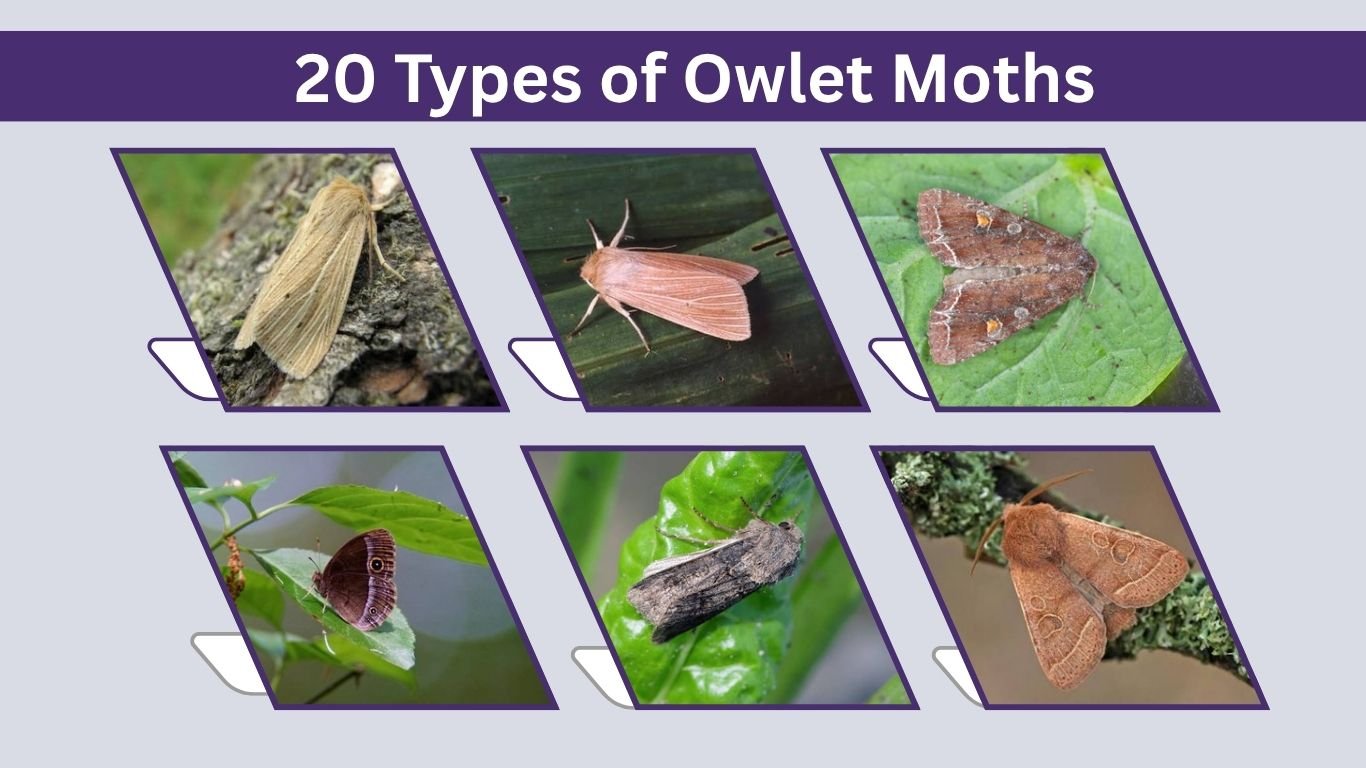
Owlet moths are a large and diverse group of mostly nocturnal moths known for their sturdy bodies, patterned wings, and excellent camouflage. Many species are brown, gray, or straw-colored, helping them blend into bark, leaves, grass, and soil during the day. Their caterpillars can feed on grasses, trees, garden plants, and crops, while adults are often attracted to flowers and lights at night. In this guide, you’ll discover 20 types of owlet moths, along with their identification features, habitat, behavior, diet, and life cycle.
1. Large Yellow Underwing

The Large Yellow Underwing is one of the most widespread and recognizable owlet moths. Known scientifically as Noctua pronuba, it is native to Europe and parts of Asia but has also become established in North America. Its dull brown forewings provide excellent camouflage, while the bright yellow-orange hindwings create a sudden flash of color when the moth takes flight.
Identification
- Wingspan: Usually about 50–60 mm.
- Forewings: Brown, reddish-brown, or grayish with variable darker markings.
- Hindwings: Bright yellow-orange with a broad black border.
- Body: Thick and generally brown or gray.
- Caterpillar: Smooth-bodied, usually brownish or greenish with faint markings.
- Key feature: Bright yellow hindwings are normally hidden when the moth is resting.
Habitat
Large Yellow Underwing moths can live in a wide variety of habitats, including gardens, grasslands, farmland, woodland edges, parks, and urban areas. They are highly adaptable and often occur close to homes. Their caterpillars are especially common in places with grasses, weeds, and cultivated plants.
Behavior
Adults are mainly nocturnal and become active after sunset. They are strong fliers and are frequently attracted to outdoor lights. During the daytime, they hide in vegetation, under leaves, or in other sheltered locations. When disturbed, the moth suddenly opens its wings and exposes the brightly colored hindwings, which may startle predators and provide time to escape.
Diet and Life Cycle
The caterpillars feed on many types of low-growing plants, including grasses, weeds, vegetables, and garden plants. Because they sometimes cut young plants near ground level, the larvae are often called cutworms. Females lay numerous eggs on vegetation. After hatching, the caterpillars feed and grow through several stages before pupating in the soil. Adults later emerge and continue the reproductive cycle.
2. Lesser Yellow Underwing

The Lesser Yellow Underwing is a common owlet moth recognized by its muted forewings and bright yellow-orange hindwings. Known scientifically as Noctua comes, it is widespread across Europe and has also become established in parts of North America. At rest, it can look quite plain, but when disturbed, the colorful hindwings become obvious.
Identification
- Wingspan: Usually about 38–45 mm.
- Forewings: Brown, reddish-brown, or gray with variable markings.
- Hindwings: Yellow or orange with a dark outer border.
- Body: Thick and brownish.
- Caterpillar: Usually brown or gray with subtle stripes.
- Key feature: Smaller size than the Large Yellow Underwing.
Habitat
Lesser Yellow Underwings are found in gardens, grasslands, hedgerows, woodland edges, farmland, and urban areas. They are adaptable and can thrive wherever suitable low-growing plants are available for the caterpillars.
Behavior
Adults are mainly nocturnal and fly during warm evenings and nights. They are often attracted to lights and may also visit flowers for nectar. During the day, they remain hidden among vegetation or leaf litter. When disturbed, they may flash their yellow hindwings before quickly flying away.
Diet and Life Cycle
The caterpillars feed on many herbaceous plants, grasses, and weeds. They usually feed close to the ground and may sometimes damage garden plants. Females lay eggs on vegetation, and the larvae feed through several growth stages before pupating in the soil. Adults emerge later in the season.
3. Broad-Bordered Yellow Underwing
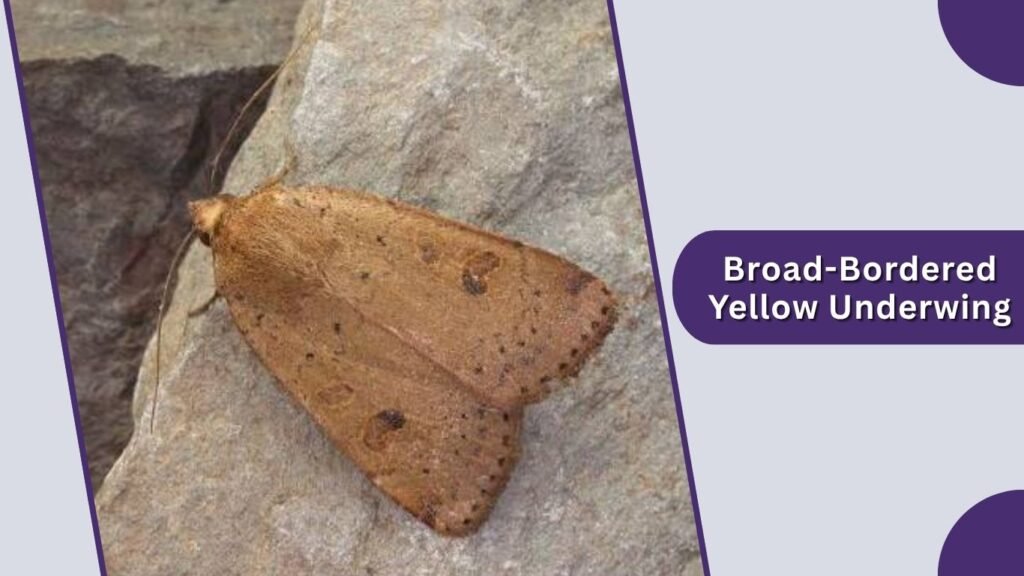
The Broad-Bordered Yellow Underwing is an attractive owlet moth known for its orange-yellow hindwings edged with a broad dark band. Its scientific name is Noctua fimbriata. The moth is widely distributed across Europe and parts of Asia and is often encountered in wooded or shrubby habitats.
Identification
- Wingspan: Approximately 45–55 mm.
- Forewings: Brown, reddish, or greenish-brown.
- Hindwings: Bright orange-yellow with a broad dark border.
- Body: Stout and usually brown.
- Caterpillar: Greenish or brownish with pale lines.
- Key feature: Wide black border around the hindwings.
Habitat
This species occurs in woodland edges, hedgerows, gardens, parks, meadows, and scrubland. It prefers areas with shrubs and leafy vegetation where both adults and caterpillars can find suitable shelter.
Behavior
Adults are active mainly after dark and are often attracted to light and sugary substances. They usually remain concealed during the daytime. Their bright hindwings can act as a distraction when the moth suddenly takes flight from its resting place.
Diet and Life Cycle
The caterpillars feed on numerous plants, including grasses, docks, nettles, and other broadleaf vegetation. Females lay eggs during the warmer months, and the young larvae begin feeding shortly after hatching. They develop through several molts, eventually pupating in the soil before adults emerge.
4. Heart and Dart

The Heart and Dart is one of the most familiar owlet moths in Europe. Its scientific name, Agrotis exclamationis, refers to the distinct dark markings on the forewings that resemble a heart and a dart. Although its coloration is generally plain, the unusual pattern makes it easy to recognize.
Identification
- Wingspan: Usually about 35–44 mm.
- Forewings: Grayish-brown with dark markings.
- Markings: One resembles a heart and another resembles a dart.
- Hindwings: Pale gray or whitish.
- Body: Thick and gray-brown.
- Caterpillar: Smooth, grayish-brown, and cutworm-like.
Habitat
Heart and Dart moths are common in gardens, fields, farmland, parks, grasslands, and disturbed habitats. They adapt well to developed areas and are frequently encountered near homes.
Behavior
Adults fly mainly at night and are strongly attracted to artificial lights. They also visit flowers and sugary substances. During the day, they hide in vegetation, cracks, or other sheltered spots.
Diet and Life Cycle
The caterpillars live close to or beneath the soil surface and feed on grasses, roots, seedlings, and garden plants. They are commonly referred to as cutworms because they may chew through young stems. Eggs hatch into larvae that feed and grow before pupating in the soil. Adults later emerge to mate.
5. Turnip Moth

The Turnip Moth is a widespread owlet moth whose caterpillar is an important agricultural cutworm. Known scientifically as Agrotis segetum, it is common in Europe, Asia, and parts of Africa. Adults are relatively plain, but the larvae are well known for feeding on the roots and stems of cultivated plants.
Identification
- Wingspan: Usually 35–45 mm.
- Forewings: Gray, brown, or reddish-brown.
- Markings: Dark kidney-shaped and oval spots.
- Hindwings: Pale or whitish.
- Body: Brownish and robust.
- Caterpillar: Smooth, gray-brown, and usually curls when disturbed.
Habitat
Turnip Moths inhabit farmland, gardens, grasslands, open fields, and areas with cultivated crops. They are especially common where soil conditions allow caterpillars to hide during the day.
Behavior
Adults are nocturnal and often come to lights. They are strong fliers and may travel considerable distances. During daylight hours, they remain hidden among vegetation or in sheltered places.
Diet and Life Cycle
The caterpillars feed on many crops and garden plants, including turnips, potatoes, beets, cereals, and vegetables. Young larvae may feed above ground, while older caterpillars often hide in soil and attack stems and roots. After completing several larval stages, they pupate underground. Adult moths emerge and lay eggs on suitable vegetation.
6. Setaceous Hebrew Character

The Setaceous Hebrew Character is a common owlet moth known for the dark, curved marking on its forewings. Its scientific name is Xestia c-nigrum. The species occurs widely across Europe, Asia, and North America and can be found in a variety of open habitats.
Identification
- Wingspan: Usually around 35–45 mm.
- Forewings: Brown or reddish-brown.
- Key marking: Pale-edged dark mark resembling a curved Hebrew character.
- Hindwings: Grayish or pale brown.
- Body: Stout and furry.
- Caterpillar: Brownish or greenish with faint markings.
Habitat
This moth can be found in gardens, grasslands, woodland edges, meadows, farmland, parks, and urban areas. It is highly adaptable and often occurs wherever low-growing plants are abundant.
Behavior
Adults are mainly active at night and are regularly attracted to light. They also visit flowers for nectar and may feed on sugary substances. During the day, they remain hidden in vegetation.
Diet and Life Cycle
The caterpillars feed on a wide variety of herbaceous plants, including docks, nettles, grasses, and garden plants. Females lay eggs on vegetation, and the larvae hatch and feed through several stages. They eventually pupate in or near the soil, after which the adults emerge.
7. Hebrew Character

The Hebrew Character is a familiar spring-flying owlet moth named for the distinctive black marking on each forewing. Known scientifically as Orthosia gothica, it is widely distributed across Europe and is commonly seen in gardens, woodland, and hedgerows.
Identification
- Wingspan: Generally about 30–40 mm.
- Forewings: Gray-brown, reddish-brown, or purplish.
- Marking: Bold black shape resembling a Hebrew letter.
- Hindwings: Pale gray.
- Body: Furry and brownish.
- Caterpillar: Green with pale longitudinal lines.
Habitat
Hebrew Character moths inhabit woodland, hedgerows, gardens, parks, scrubland, and countryside habitats. They are particularly common in places with deciduous trees and shrubs.
Behavior
Adults are primarily nocturnal and are among the moths commonly seen early in the year. They are attracted to light and may also feed on nectar from spring flowers. During daytime, they hide among leaves and bark.
Diet and Life Cycle
The caterpillars feed on leaves of many trees and shrubs, including willow, oak, hawthorn, and birch. Eggs are laid on suitable plants during spring. The caterpillars feed and grow before pupating in the soil. The species usually spends much of the year in the pupal stage before adults emerge the following season.
8. Dark Sword-Grass

The Dark Sword-Grass is a migratory owlet moth recognized by the dark, sword-shaped marking on its forewings. Its scientific name is Agrotis ipsilon. It occurs across many parts of the world and is also known as the black cutworm because of the feeding habits of its larvae.
Identification
- Wingspan: Usually 35–50 mm.
- Forewings: Grayish-brown to dark brown.
- Markings: Narrow black streaks resembling small swords.
- Hindwings: Whitish or pale gray.
- Body: Thick and gray-brown.
- Caterpillar: Smooth, dark gray or brown with subtle stripes.
Habitat
Dark Sword-Grass moths live in farmland, grasslands, gardens, open countryside, and disturbed habitats. Because adults migrate, they can appear in regions where they are not permanently established.
Behavior
Adults are strong nighttime fliers and may migrate over long distances. They are attracted to lights, nectar-rich flowers, and sugary substances. During daylight hours, they usually rest in sheltered vegetation.
Diet and Life Cycle
The caterpillars feed on many crops, grasses, and vegetable plants. They are often called black cutworms because larger larvae may cut seedlings near ground level. Eggs are laid on vegetation, and larvae feed mostly at night. They later pupate in the soil, producing adult moths capable of dispersing widely.
9. Flame Shoulder

The Flame Shoulder is a distinctive owlet moth named for the pale flame-like streak running along the front edge of each forewing. Scientifically known as Ochropleura plecta, it is common in many open habitats and can often be seen around gardens and outdoor lights.
Identification
- Wingspan: Approximately 28–35 mm.
- Forewings: Reddish-brown or dark brown.
- Shoulder stripe: Creamy-white streak along the front edge.
- Hindwings: Pale gray or whitish.
- Body: Small, thick, and brownish.
- Caterpillar: Brown or gray with subtle darker markings.
Habitat
Flame Shoulder moths are found in gardens, fields, grasslands, woodland clearings, roadsides, and coastal habitats. They tolerate a wide variety of environments and are particularly common in places with grasses and low vegetation.
Behavior
Adults fly mainly at night and are often attracted to lights. They may also visit flowers to feed on nectar. Their flight can be quick and active, especially on warm evenings.
Diet and Life Cycle
The caterpillars feed on grasses and various low-growing plants, including docks and plantains. Females deposit eggs on host vegetation, and the larvae begin feeding after hatching. After several molts, the mature caterpillars enter the soil to pupate. Adults emerge during the warmer parts of the year.
10. Bright-Line Brown-Eye

The Bright-Line Brown-Eye is a common owlet moth known for the contrasting pale line and kidney-shaped brown marking on its forewings. Its scientific name is Lacanobia oleracea. It is widespread in gardens, farmland, and other habitats where its caterpillars can find a variety of food plants.
Identification
- Wingspan: Usually around 35–45 mm.
- Forewings: Reddish-brown or dark brown.
- Bright line: Pale wavy line near the outer edge of the forewing.
- Brown eye: Dark kidney-shaped central marking.
- Hindwings: Grayish-brown.
- Caterpillar: Green or brown with yellowish stripes and dark markings.
Habitat
Bright-Line Brown-Eye moths inhabit gardens, farmland, allotments, woodland edges, parks, and meadows. They are particularly common where cultivated vegetables and herbaceous plants are abundant.
Behavior
Adults are nocturnal and often come to artificial lights. They may also feed on nectar or sugary liquids. During daylight hours, the moths rest in sheltered places where their brown coloration provides camouflage.
Diet and Life Cycle
The caterpillars feed on many plants, including tomatoes, cabbages, lettuce, and various weeds. Because of this broad diet, they can occasionally become garden pests. Females lay eggs in groups on leaves. Caterpillars feed actively before eventually pupating in the soil. The adults later emerge and reproduce, completing the life cycle.
11. Cabbage Moth

The Cabbage Moth is a widespread owlet moth commonly found in gardens, farmland, and other areas where leafy plants grow. Known scientifically as Mamestra brassicae, it is especially familiar because its caterpillars feed on many cultivated vegetables. The adult moth has a mottled brown appearance that provides excellent camouflage during the daytime.
Identification
- Wingspan: Usually about 35–50 mm.
- Forewings: Dark brown or grayish with mottled markings.
- Hindwings: Grayish-brown and relatively plain.
- Body: Thick and covered with fine hairs.
- Caterpillar: Green, brown, or gray with darker markings.
- Key feature: Complex forewing pattern with a pale kidney-shaped mark.
Habitat
Cabbage Moths are found in gardens, vegetable plots, farmland, meadows, parks, and woodland edges. They thrive in areas where leafy plants and crops are readily available.
Behavior
Adults are primarily nocturnal and often visit flowers or come to artificial lights. During the day, they remain hidden among vegetation or in sheltered places. Their mottled wings help them blend into bark, soil, and dry plant material.
Diet and Life Cycle
The caterpillars feed on a wide range of plants, especially cabbage, broccoli, lettuce, peas, and other vegetables. Females lay clusters of eggs on leaves. After hatching, the larvae feed actively and pass through several growth stages. Mature caterpillars usually pupate in the soil, where they remain until adult moths emerge.
12. Angle Shades
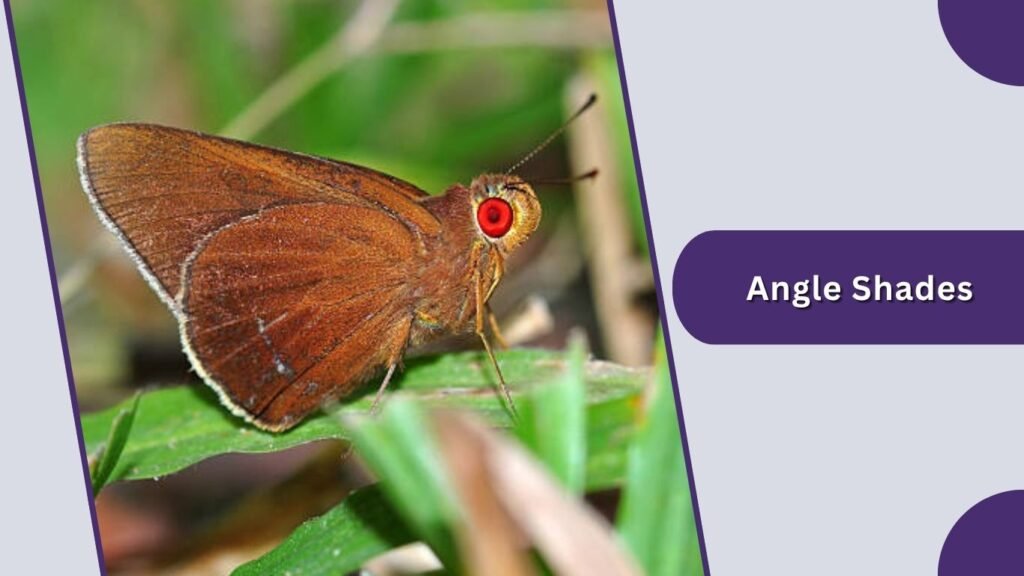
The Angle Shades is one of the most distinctive owlet moths because of its unusual folded-wing appearance. Its scientific name is Phlogophora meticulosa. When resting, its sharply angled wings resemble a dry or curled leaf, providing excellent camouflage. It is widespread in gardens, woodland, and other vegetated habitats.
Identification
- Wingspan: Approximately 45–55 mm.
- Forewings: Pinkish-brown, greenish, or olive with angular markings.
- Pattern: Distinctive V-shaped or triangular patches.
- Hindwings: Pale brown or cream.
- Body: Stout and slightly furry.
- Resting posture: Wings appear folded and crumpled like a dead leaf.
Habitat
Angle Shades moths occur in gardens, parks, woodland edges, hedgerows, fields, and urban areas. They are adaptable and can live wherever suitable host plants are available.
Behavior
Adults are mainly nocturnal and frequently visit flowers after dark. They may also be attracted to artificial lights. During daylight hours, their unusual wing shape and pattern make them difficult to spot among fallen leaves and vegetation.
Diet and Life Cycle
The caterpillars feed on many herbaceous plants, including nettles, docks, plantains, and garden plants. Eggs are deposited on suitable vegetation. The larvae feed through several developmental stages before pupating in a loose cocoon near or within the soil. Adults emerge when conditions are favorable and may produce more than one generation in warmer regions.
13. Green Arches

The Green Arches is an attractive owlet moth named for the greenish coloration and curved markings across its forewings. Scientifically known as Anaplectoides prasina, it is mainly associated with woodland and other cool, well-vegetated environments.
Identification
- Wingspan: Usually about 40–50 mm.
- Forewings: Greenish-gray or olive with darker curved lines.
- Hindwings: Gray-brown and less strongly patterned.
- Body: Thick and hairy.
- Caterpillar: Brown or gray with subtle striping.
- Key feature: Green-toned forewings with arch-like markings.
Habitat
Green Arches moths favor woodland, forest margins, hedgerows, damp meadows, and well-vegetated gardens. They are usually associated with areas that remain relatively cool and moist.
Behavior
Adults are active at night and may be attracted to lights or sweet substances. During the daytime, their green and brown coloration helps them remain hidden against moss, bark, and foliage.
They are generally most noticeable during the warmer months when adult flight activity peaks.
Diet and Life Cycle
The caterpillars feed on various low-growing plants and shrubs. Their diet may include grasses and broadleaf vegetation found in woodland habitats. Females lay eggs on or near suitable food plants. The larvae feed through several stages before pupating in sheltered locations near the soil. Adults later emerge and reproduce.
14. Clouded Drab
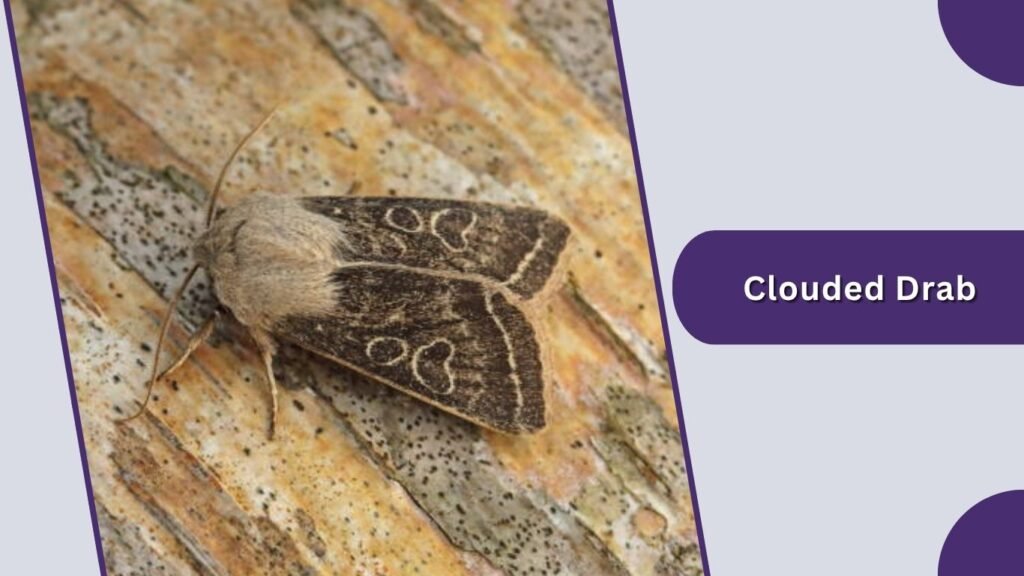
The Clouded Drab is an early-season owlet moth recognized by its muted brown and gray coloration. Its scientific name is Orthosia incerta. Although its appearance is understated, the variable patterns on its wings make it an interesting species. It is commonly associated with woodland and areas containing deciduous trees.
Identification
- Wingspan: Usually around 35–45 mm.
- Forewings: Gray, brown, reddish-brown, or mixed in color.
- Markings: Variable dark and pale patches.
- Hindwings: Pale grayish-brown.
- Body: Furry and robust.
- Caterpillar: Greenish with pale stripes.
Habitat
Clouded Drab moths inhabit deciduous woodland, gardens, parks, hedgerows, scrubland, and forest margins. They are especially common in places where mature trees and shrubs provide food for the larvae.
Behavior
Adults fly primarily at night and are particularly active in early spring. They visit flowers, tree sap, and sugary food sources. They may also be attracted to lights. During the daytime, they remain hidden against bark or within vegetation.
Diet and Life Cycle
The caterpillars feed on leaves from several trees and shrubs, including oak, willow, birch, and hawthorn. Females lay eggs during spring, and the larvae emerge as new foliage becomes available. After feeding and growing, mature caterpillars pupate in the soil. The species generally spends a long period as a pupa before adults emerge the following spring.
15. Common Quaker
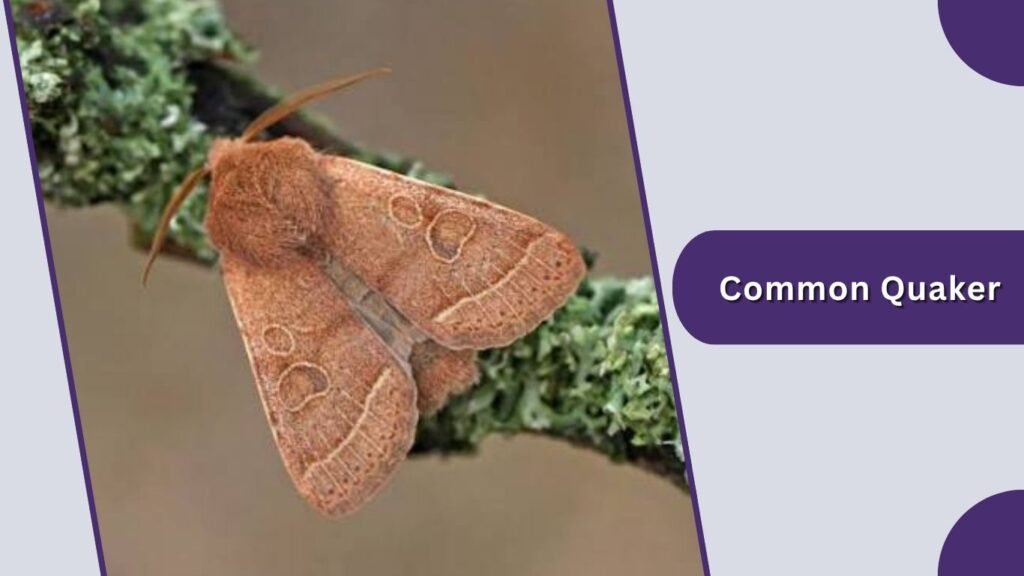
The Common Quaker is a familiar spring-flying owlet moth with soft brown coloration and rounded wings. Known scientifically as Orthosia cerasi, it is widely found in woodland, gardens, parks, and hedgerows. Its subdued appearance allows it to blend easily with bark and dry vegetation.
Identification
- Wingspan: Usually about 35–40 mm.
- Forewings: Light brown, reddish-brown, or grayish.
- Markings: Rounded pale-edged central spots.
- Hindwings: Pale gray or brownish.
- Body: Furry and brown.
- Caterpillar: Green with pale or yellowish lines.
Habitat
Common Quakers occur in woodland, hedgerows, gardens, parks, orchards, and countryside habitats. They are particularly associated with areas containing deciduous trees and shrubs.
Behavior
Adults are mainly nocturnal and are among the owlet moths that appear early in spring. They often visit willow blossoms and other early flowers for nectar. Artificial lights can also attract them.
During the day, they usually remain motionless on tree trunks or sheltered vegetation.
Diet and Life Cycle
The caterpillars feed on the foliage of numerous deciduous trees and shrubs, including oak, willow, hawthorn, and birch. Eggs are laid during spring, and the larvae develop while fresh leaves are plentiful. Once mature, the caterpillars enter the soil and pupate. They usually remain underground until adults emerge the following year.
16. Small Quaker

The Small Quaker is a compact owlet moth that appears during early spring. Its scientific name is Orthosia cruda. It resembles the Common Quaker but is noticeably smaller and often has a simpler wing pattern. The species is closely associated with deciduous woodland, especially areas containing oak trees.
Identification
- Wingspan: Usually around 25–32 mm.
- Forewings: Pale brown, gray-brown, or reddish-brown.
- Markings: Small, subtle central spots and fine lines.
- Hindwings: Pale gray.
- Body: Small, stout, and furry.
- Key feature: Smaller size than other common Quaker moths.
Habitat
Small Quakers inhabit deciduous woodland, parks, large gardens, hedgerows, and forest edges. They are especially common where mature oak trees grow.
Behavior
Adults fly mainly during spring nights and often visit flowering willow or other nectar sources. They may also be attracted to artificial lights. Their muted coloration helps them remain well camouflaged against bark during daytime resting periods.
Diet and Life Cycle
The caterpillars feed mainly on oak leaves, although they may use other deciduous trees. Females lay eggs close to developing foliage. The caterpillars hatch in spring and feed while leaves are fresh and abundant.
After completing their growth, mature larvae drop to the ground and pupate in the soil. The species spends much of the year underground in the pupal stage before the next generation of adults emerges in spring.
17. Powdered Quaker

The Powdered Quaker is a spring-flying owlet moth named for the dusty or powdered appearance of its wings. Scientifically known as Orthosia gracilis, it has soft gray-brown coloration and subtle markings. It is often found in damp habitats with plenty of shrubs and deciduous trees.
Identification
- Wingspan: Approximately 35–45 mm.
- Forewings: Pale gray, brown, or buff with a powdery appearance.
- Markings: Fine dark lines and pale central spots.
- Hindwings: Light gray.
- Body: Furry and pale brown.
- Caterpillar: Green with lighter longitudinal lines.
Habitat
Powdered Quakers prefer damp woodland, wet meadows, marsh edges, hedgerows, gardens, and areas with willow or other moisture-loving plants. They are often associated with habitats that remain relatively humid.
Behavior
Adults are mainly active at night during spring. They feed at flowers and may visit sugary substances or artificial lights. During daylight hours, their pale, mottled appearance provides good camouflage among dry vegetation and tree bark.
Diet and Life Cycle
The caterpillars feed on several trees and shrubs, including willow, sallow, oak, and other deciduous plants. Females lay eggs in spring, and the young larvae begin feeding on fresh foliage.
As the caterpillars mature, they eventually leave the host plant and enter the soil. Pupation occurs underground, and the moth remains in this stage for much of the year. Adults emerge the following spring.
18. Common Wainscot

The Common Wainscot is a slender, straw-colored owlet moth that blends remarkably well with dry grasses. Its scientific name is Mythimna pallens. It is widely distributed in grassy habitats and is frequently encountered in meadows, fields, and gardens.
Identification
- Wingspan: Usually around 30–38 mm.
- Forewings: Pale straw, cream, or light brown.
- Markings: Fine dark veins and small central dots.
- Hindwings: Whitish or pale gray.
- Body: Slender compared with many other owlet moths.
- Caterpillar: Brownish or greenish with longitudinal stripes.
Habitat
Common Wainscots live in grasslands, meadows, farmland, gardens, roadside verges, marshy areas, and woodland clearings. They are particularly common where grasses grow densely.
Behavior
Adults are nocturnal and often fly low over grassy vegetation. They may be attracted to lights and visit flowers for nectar. During the daytime, their pale coloration allows them to blend closely with dry grass stems.
Diet and Life Cycle
The caterpillars feed primarily on grasses. Different species of wild and cultivated grasses may serve as food plants. Females lay eggs among grass blades, and the larvae begin feeding after hatching.
Caterpillars usually remain low in vegetation, where they are difficult to see. When fully developed, they pupate near the base of grasses or within the soil. Adults later emerge, with more than one generation possible in favorable climates.
19. Smoky Wainscot

The Smoky Wainscot is a pale grassland owlet moth that resembles several other wainscot species. Known scientifically as Mythimna impura, it gets its name from the darker, smoky coloration visible on parts of the wings, especially the hindwings.
Identification
- Wingspan: Usually about 30–38 mm.
- Forewings: Pale cream, straw-colored, or light brown.
- Markings: Fine dark streaks running along the veins.
- Hindwings: Gray or smoky brown.
- Body: Slender and pale.
- Caterpillar: Brown or grayish with longitudinal stripes.
Habitat
Smoky Wainscots are commonly found in damp grasslands, meadows, marsh edges, woodland clearings, roadside vegetation, and gardens. They favor habitats containing tall or dense grasses.
Behavior
Adults are primarily nocturnal and usually fly during warm summer evenings. They can be attracted to artificial lights and may visit flowering plants for nectar.
During the day, they hide among grass stems, where their narrow shape and pale coloration provide effective camouflage.
Diet and Life Cycle
The caterpillars feed on a range of grasses. They usually remain close to the ground during the day and become more active while feeding at night.
Females place eggs on or near grasses. After hatching, the larvae pass through several developmental stages before becoming fully grown. Mature caterpillars pupate close to the soil surface or among dense vegetation. Adults later emerge and continue the reproductive cycle.
20. White-Point

The White-Point is a distinctive owlet moth named for the small but noticeable white spot on each forewing. Its scientific name is Mythimna albipuncta. The moth has warm reddish or brown coloration and is frequently found in grassy areas, gardens, and open countryside.
Identification
- Wingspan: Usually about 30–38 mm.
- Forewings: Reddish-brown, orange-brown, or warm tan.
- Key marking: Small bright white spot near the center of each forewing.
- Hindwings: Pale grayish-brown.
- Body: Slender and brown.
- Caterpillar: Brownish with darker longitudinal lines.
Habitat
White-Point moths occur in grasslands, meadows, gardens, farmland, coastal areas, woodland edges, and roadside vegetation. They are strongly associated with habitats containing abundant grasses.
Behavior
Adults are active mainly at night and may be attracted to porch lights and other artificial lighting. They also visit flowers for nectar. In warmer conditions, adults may remain active for an extended part of the year.
During daytime hours, they rest within grass or other vegetation, where their brown wings help provide camouflage.
Diet and Life Cycle
The caterpillars feed mainly on grasses, including various common wild species. Females lay eggs among grass blades, giving newly hatched larvae easy access to food.
The caterpillars feed and molt several times as they grow. Mature larvae eventually form pupae in sheltered locations near the ground. Adult moths emerge after metamorphosis, mate, and lay eggs to begin another generation.
FAQs
1. What are owlet moths?
Owlet moths are moths belonging mainly to the family Noctuidae, one of the largest moth families in the world. Most have sturdy bodies, muted brown or gray wings, and nocturnal habits. Many species are commonly seen around gardens, fields, forests, and outdoor lights.
2. Are owlet moths harmful to humans?
Owlet moths are generally harmless to people. Adults do not sting and usually do not bite. However, the caterpillars of some species, especially cutworms, can damage garden plants, vegetables, and agricultural crops by feeding on leaves, stems, or roots.
3. What do owlet moths eat?
Adult owlet moths commonly feed on flower nectar, tree sap, and other sugary liquids. Their caterpillars have a much broader diet and may eat grasses, weeds, tree leaves, vegetables, and cultivated crops. The exact diet depends on the species.
4. Why are owlet moths attracted to lights?
Many owlet moths are nocturnal and use natural light sources, such as the moon, to help with navigation. Artificial lights can interfere with this behavior, causing moths to fly toward porch lights, lamps, and other illuminated areas at night.
5. How long do owlet moths live?
The adult stage of an owlet moth generally lasts a few weeks, while the complete life cycle may take several months or longer. Owlet moths develop through four main stages: egg, caterpillar, pupa, and adult. Some species overwinter as caterpillars or pupae before becoming adults.