

Leafcutter ants are remarkable social insects best known for cutting pieces of leaves and carrying them back to their nests. Instead of eating the leaves directly, they use the plant material to cultivate fungus, which serves as an important food source for the colony. Found mainly across the Americas, leafcutter ants include species adapted to forests, grasslands, farms, and gardens. This guide covers 17 types of leafcutter ants, along with their identification features, habitats, behavior, diet, and life cycle.
1. Texas Leafcutter Ant

The Texas Leafcutter Ant is one of the best-known leaf-cutting ants in North America. These ants are famous for clipping pieces of leaves and carrying them back to enormous underground colonies. Rather than eating the leaves directly, they use plant material to cultivate a special fungus that serves as their primary food source.
Identification
- Workers are reddish-brown to rusty brown.
- Worker size varies greatly within the same colony.
- Larger workers have noticeably broad heads.
- The body has a spiny appearance.
- Long trails of workers carrying leaf fragments are easy to recognize.
Habitat and Distribution
Texas Leafcutter Ants are mainly found in Texas and nearby parts of the southern United States and northern Mexico. They prefer warm habitats with sandy or well-drained soil. Colonies commonly occur in open woodland, grassland, farms, gardens, and rural landscapes.
Behavior and Diet
Workers cut leaves, grasses, flowers, and other plant materials before carrying them underground. The vegetation is processed into a growing medium for fungus. The ants depend heavily on this fungus for nutrition and carefully maintain their underground fungus gardens.
Lifespan and Life Cycle
Colonies begin when a fertilized queen establishes a nest after mating. Eggs develop into larvae, pupae, and adults. Mature colonies may contain thousands or even millions of workers. Queens can survive for many years when colony conditions remain favorable.
2. Town Ant

Town Ant is a common name used for certain leafcutter ants in parts of the Caribbean and tropical Americas. These ants can build very large colonies and may remove substantial amounts of vegetation from gardens, farms, and plantations. Their organized leaf-carrying trails are among their most noticeable characteristics.
Identification
- Workers are usually reddish-brown or dark brown.
- Individuals vary considerably in body size.
- Larger workers have enlarged heads.
- Workers often travel in clearly defined trails.
- Many individuals may be seen carrying freshly cut leaves.
Habitat and Distribution
Town Ants occur mainly in tropical environments, particularly in the Caribbean and nearby regions. They prefer warm, humid habitats and can be found around forests, agricultural areas, plantations, gardens, and villages where vegetation is abundant.
Behavior and Diet
These ants harvest leaves and other soft plant material to support fungus gardens inside the nest. Different worker sizes perform different jobs, including cutting vegetation, transporting leaf pieces, defending trails, and caring for fungus and larvae.
Lifespan and Life Cycle
A new colony begins with a reproductive queen. She lays eggs that develop into workers and later into reproductive ants. As colonies mature, they become increasingly complex and may produce winged males and females that leave the nest during mating flights.
3. Cuban Leafcutter Ant
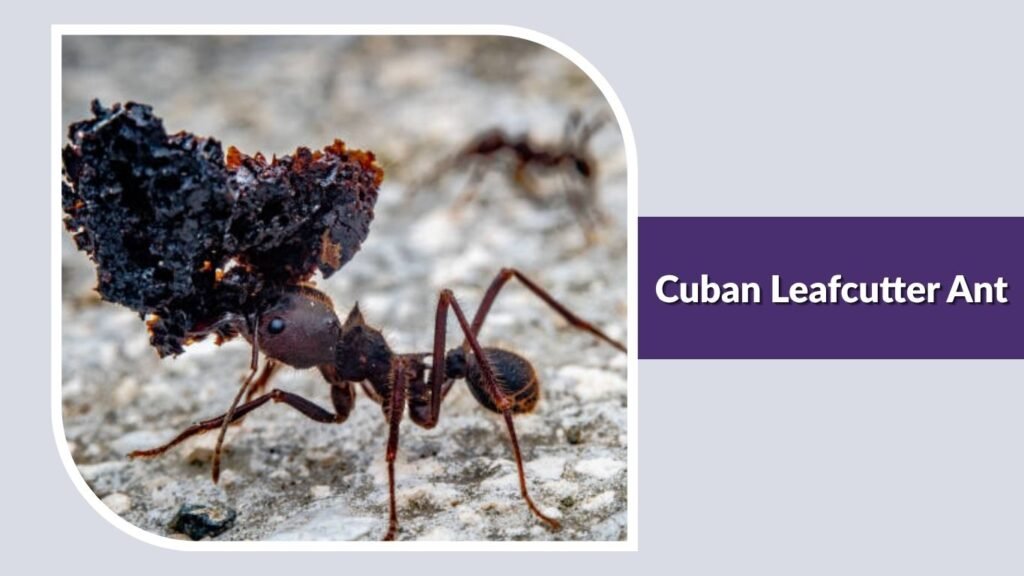
The Cuban Leafcutter Ant is associated with the warm tropical habitats of Cuba and surrounding regions. Like other leafcutter ants, it plays an important ecological role by removing vegetation, mixing soil, and recycling nutrients, although large colonies can sometimes damage cultivated plants.
Identification
- Workers may be reddish-brown to dark brown.
- Worker size varies from small gardeners to large defenders.
- Larger individuals have powerful jaws.
- The body may show small spines on the thorax.
- Workers often carry leaf pieces above their heads.
Habitat and Distribution
Cuban leafcutter ants thrive in tropical forests, open woodland, agricultural fields, orchards, and gardens. Their nests are generally constructed underground in locations where moisture and temperature remain suitable for fungal growth.
Behavior and Diet
Workers cut leaves, flowers, and tender plant parts. These materials are carried underground and used to grow fungus. The colony depends on the cultivated fungus, while workers carefully remove contaminants and maintain suitable conditions inside the nest.
Lifespan and Life Cycle
The queen starts a colony after mating and brings fungal material with her to establish the first garden. The colony grows as eggs develop through larval and pupal stages. Mature colonies may eventually produce large numbers of winged reproductive ants.
4. Brazilian Leafcutter Ant

Brazil is home to several species of leafcutter ants, including some of the largest and most ecologically important members of the group. Brazilian Leafcutter Ants are particularly well known for harvesting huge quantities of vegetation and maintaining enormous underground fungus-growing colonies.
Identification
- Workers range from reddish to dark brown.
- Colonies contain multiple worker size classes.
- Major workers often have very large heads.
- Strong mandibles are adapted for cutting vegetation.
- Long foraging trails may extend far from the nest.
Habitat and Distribution
Brazilian Leafcutter Ants occur throughout many tropical and subtropical parts of Brazil. They occupy rainforests, savannas, plantations, grasslands, gardens, and agricultural areas. Colonies often prefer deep soils where extensive underground chambers can be constructed.
Behavior and Diet
These ants harvest leaves from a wide variety of plants. Workers do not normally consume the leaves themselves. Instead, they use chopped vegetation to cultivate their symbiotic fungus, which provides food for developing larvae and adult colony members.
Lifespan and Life Cycle
After mating, a young queen establishes a nest and begins producing her first workers. As the colony expands, different worker castes develop specialized roles. Mature colonies produce reproductive males and females, while long-lived queens continue laying eggs for many years.
5. Colombian Leafcutter Ant

The Colombian Leafcutter Ant represents the impressive fungus-growing leafcutters found throughout Colombia. These ants are major herbivores in tropical ecosystems and may influence plant growth, soil structure, and nutrient cycling through their constant harvesting and underground activity.
Identification
- Workers are usually reddish-brown or brown.
- Different worker castes vary greatly in size.
- Major workers have large heads and powerful mandibles.
- Workers frequently carry green leaf fragments in trails.
- The thorax may have visible spines.
Habitat and Distribution
Colombian leafcutter ants occur in rainforests, forest edges, grasslands, farms, plantations, and disturbed habitats. Warm temperatures and abundant vegetation allow colonies to remain active for much of the year.
Behavior and Diet
Workers follow established trails between food plants and their nests. They cut leaves into manageable pieces and carry them underground. Smaller workers process the material and add it to fungus gardens, while other workers protect the colony from predators and competing ants.
Lifespan and Life Cycle
Queens mate during reproductive flights and later establish new nests. Early colonies are small, but successful nests can expand dramatically over several years. Eggs develop into larvae, pupae, and adults, with mature colonies eventually producing winged reproductive individuals.
6. Mexican Leafcutter Ant

Mexican Leafcutter Ants are fungus-growing ants found in various parts of Mexico. Their carefully organized colonies contain workers specialized for harvesting vegetation, defending the nest, maintaining fungus gardens, and caring for developing young.
Identification
- Workers are often reddish-brown.
- Worker size ranges from very small to relatively large.
- Large workers have powerful cutting jaws.
- The body may have several small spines.
- Foraging trails often contain workers carrying leaf pieces.
Habitat and Distribution
Mexican leafcutter ants occupy tropical forests, dry forests, scrublands, farms, orchards, and gardens. Different species tolerate different levels of moisture, allowing leafcutters to survive in a variety of Mexican ecosystems.
Behavior and Diet
Workers harvest leaves, petals, grasses, and other vegetation. The material is processed underground and used as a substrate for growing fungus. The colony maintains the fungus carefully because it serves as the central food source for the ants.
Lifespan and Life Cycle
A colony begins when a newly mated queen digs a chamber and starts a small fungus garden. She raises the first workers, which gradually take over foraging and brood care. Successful colonies may persist for many years and eventually produce reproductive ants.
7. Central American Leafcutter Ant

Central American Leafcutter Ants are among the most conspicuous ants in tropical forests. Their long trails can contain hundreds of workers carrying freshly cut leaves toward underground nests. They are important ecosystem engineers because their activities alter vegetation and soil structure.
Identification
- Workers are usually reddish, reddish-brown, or dark brown.
- Worker size varies considerably.
- Major workers have enlarged heads.
- Thoracic spines may be visible.
- Leaf-carrying columns can stretch for long distances.
Habitat and Distribution
These leafcutters occur throughout much of Central America, including tropical forests, forest margins, plantations, grasslands, farms, and gardens. They generally prefer warm conditions and access to abundant vegetation.
Behavior and Diet
Leafcutter colonies maintain complex systems of trails and underground chambers. Workers gather vegetation for cultivating fungus rather than eating it directly. Smaller ants tend the fungus gardens, while larger workers defend trails and nesting areas.
Lifespan and Life Cycle
Following mating flights, queens establish new underground nests. The first worker generation is small, but colony size increases rapidly when food and environmental conditions are favorable. Mature colonies may contain enormous populations and regularly produce winged reproductives.
8. Trinidad Leafcutter Ant

The Trinidad Leafcutter Ant is a prominent leaf-cutting ant found in Trinidad and nearby tropical regions. Large colonies can collect considerable amounts of plant material each day, making these ants highly visible in forests, gardens, and agricultural landscapes.
Identification
- Workers may be reddish-brown to dark brown.
- Colonies contain several worker sizes.
- Larger soldiers possess broad heads and strong jaws.
- Workers commonly move along established trails.
- Cut leaf fragments are frequently carried vertically.
Habitat and Distribution
Trinidad leafcutter ants thrive in warm, humid tropical habitats. They may inhabit rainforests, plantations, agricultural land, gardens, roadsides, and areas surrounding settlements. Underground nests can cover substantial areas when colonies become mature.
Behavior and Diet
Workers harvest vegetation from many kinds of plants and transport it to underground chambers. There, smaller workers prepare the leaves for fungal cultivation. Colonies regulate their gardens carefully by removing waste and unhealthy fungal material.
Lifespan and Life Cycle
Queens establish colonies after seasonal mating flights. Eggs become larvae, pupae, and adults, with worker specialization becoming more complex as the colony grows. A successful mature colony may continue functioning for many years under favorable conditions.
9. Argentine Leafcutter Ant
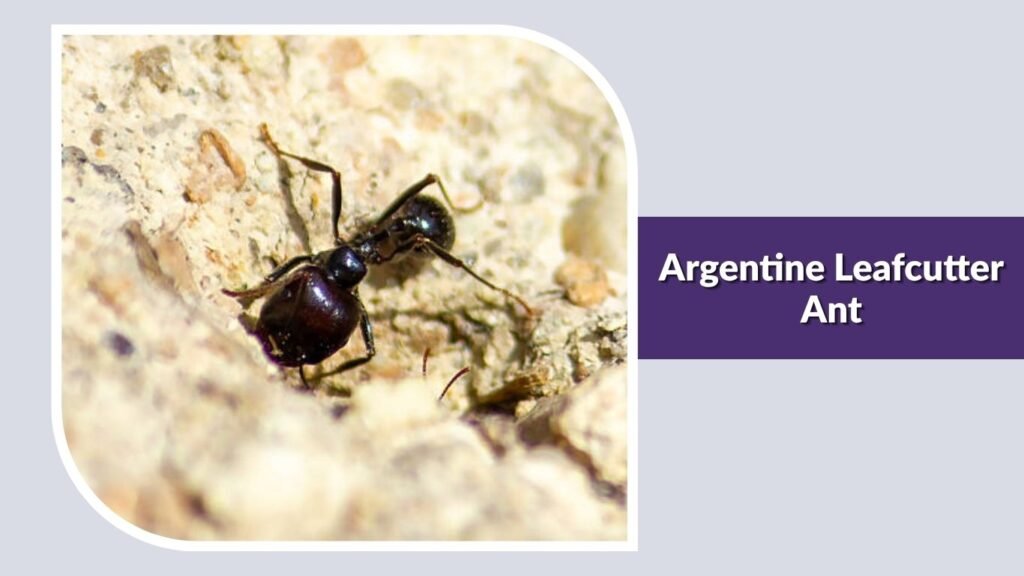
Argentine Leafcutter Ants are part of the diverse leaf-cutting ant fauna of South America. Argentina supports several fungus-growing ants adapted to habitats ranging from warm forests to grasslands and agricultural landscapes.
Identification
- Workers may range from reddish-brown to dark brown.
- Worker body size differs significantly within colonies.
- Larger workers have broad heads and strong mandibles.
- Some species possess noticeable thoracic spines.
- Organized foraging trails often lead back to underground nests.
Habitat and Distribution
These ants occur in suitable parts of Argentina, particularly warmer northern and central regions. Colonies may inhabit woodland, grassland, agricultural fields, pastures, plantations, and disturbed areas with sufficient vegetation.
Behavior and Diet
Argentine leafcutters remove sections of leaves, grasses, flowers, and other vegetation. The harvested material is transported underground and used to cultivate fungus. Workers maintain specific tasks depending on their size, including cutting, carrying, gardening, brood care, and nest defense.
Lifespan and Life Cycle
Reproductive queens leave mature colonies during mating flights and later establish new nests. The queen initially cares for the first fungus garden and brood. As workers emerge, they assume most colony duties. Established colonies may persist for years and produce new reproductive generations annually.
10. Paraguayan Leafcutter Ant

Paraguay is home to several species of leaf-cutting ants that thrive in warm subtropical habitats. These ants are notable for their highly organized colonies, where thousands of workers cooperate to harvest vegetation and maintain underground fungus gardens.
Identification
- Workers are usually reddish-brown to dark brown.
- Colonies contain workers of several different sizes.
- Larger workers have broad heads and powerful mandibles.
- Small spines may be visible on the thorax.
- Workers commonly travel in organized leaf-carrying trails.
Habitat and Distribution
Paraguayan leafcutter ants occur in forests, grasslands, agricultural areas, plantations, and disturbed landscapes. Their underground nests are often built in well-drained soil where humidity and temperature can remain relatively stable.
Behavior and Diet
Workers cut leaves, grasses, flowers, and other fresh vegetation. Instead of eating this material directly, they transport it to underground chambers and use it to cultivate fungus. Smaller workers maintain the fungal gardens, while larger workers harvest vegetation and defend the colony.
Lifespan and Life Cycle
New colonies begin when fertilized queens leave their original nests after mating. The queen starts a fungus garden and raises the first generation of workers. As the colony expands, workers take over foraging, gardening, nest maintenance, and brood care.
11. Black Leafcutter Ant

Black Leafcutter Ant is a descriptive name sometimes used for darker species or populations of leaf-cutting ants. These ants belong primarily to the genera Atta and Acromyrmex, which are famous for maintaining complex agricultural societies based on fungus cultivation.
Identification
- Workers may be dark brown to nearly black.
- Worker size varies significantly within mature colonies.
- Major workers often have noticeably enlarged heads.
- The thorax may have prominent spines.
- Strong jaws are adapted for cutting plant material.
Habitat and Distribution
Dark-colored leafcutter ants occur in parts of Central and South America. Depending on the species, they may live in tropical forests, dry woodland, savannas, agricultural land, and suburban landscapes.
Behavior and Diet
Workers form trails between their nests and selected plants. They remove small sections of vegetation and carry them underground. The harvested material supports a cultivated fungus, which provides nutrients for the colony, particularly the developing larvae.
Lifespan and Life Cycle
Queens may live for many years in successful colonies. Eggs develop into larvae, pupae, and adults. Mature nests contain different worker castes that perform specialized duties. Winged males and females are produced periodically for reproductive flights.
12. Red Leafcutter Ant
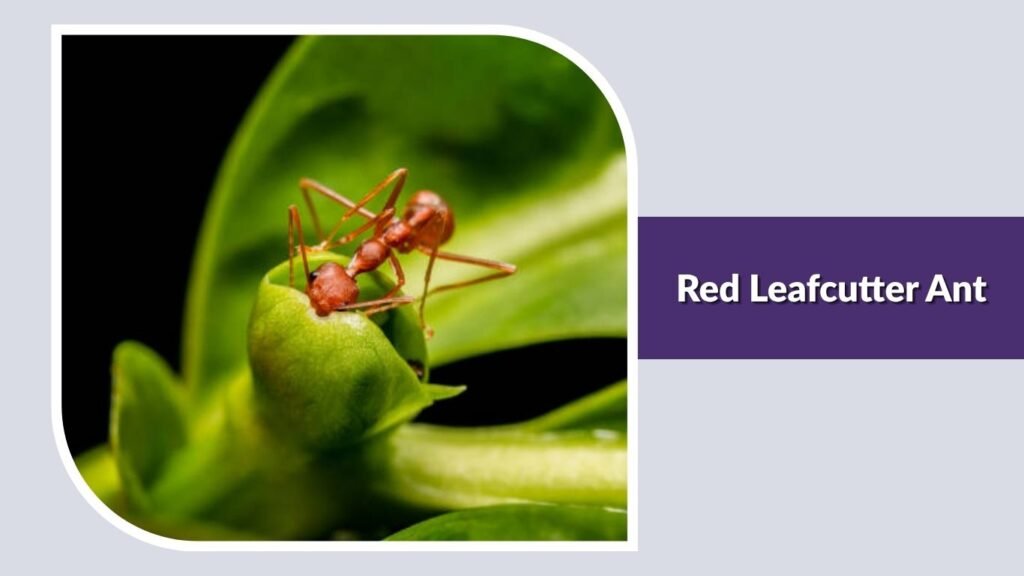
Red Leafcutter Ant is a general descriptive name for reddish species of Atta and Acromyrmex. Their reddish coloration and habit of carrying green leaf sections make them easy to notice when large numbers of workers are moving along established trails.
Identification
- Workers are reddish, rusty-red, or reddish-brown.
- Different worker sizes occur within the same colony.
- Major workers possess broad heads.
- The thorax commonly has several spines.
- Workers frequently carry plant fragments larger than their bodies.
Habitat and Distribution
Red-colored leafcutter ants are widespread throughout tropical and subtropical parts of the Americas. They occupy forests, grasslands, savannas, farms, plantations, gardens, and other areas with abundant vegetation.
Behavior and Diet
Leaf harvesting is divided among different workers according to size and ability. Large workers may cut tough leaves, medium workers transport them, and small workers process the vegetation inside the nest. The resulting material is used to grow their essential fungal food.
Lifespan and Life Cycle
After mating, young queens establish new underground colonies and begin fungus cultivation. The first workers are relatively small. Over time, the colony produces increasingly diverse worker castes and eventually develops reproductive males and females.
13. Giant Leafcutter Ant
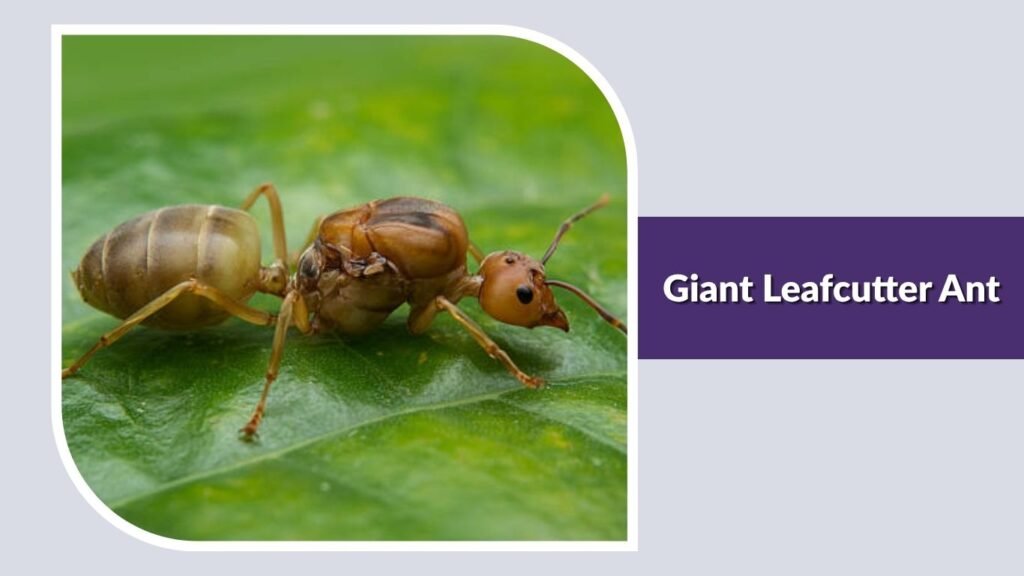
Giant Leafcutter Ant is a descriptive term commonly associated with some of the largest members of the genus Atta. Their massive colonies and large soldier workers make them particularly impressive among fungus-growing ants.
Identification
- Major workers can be considerably larger than ordinary workers.
- Soldiers have exceptionally broad heads.
- Body coloration is commonly reddish-brown or dark brown.
- Powerful mandibles are capable of cutting tough vegetation.
- Mature nests may have numerous large entrances.
Habitat and Distribution
Large Atta species occur across tropical Central and South America. They are common in forests, savannas, plantations, agricultural fields, and disturbed landscapes where large quantities of vegetation are available.
Behavior and Diet
Giant leafcutter colonies maintain extensive foraging networks. Workers may travel considerable distances to suitable plants and carry leaf fragments back to the nest. Their fungus gardens are kept inside carefully maintained underground chambers.
Lifespan and Life Cycle
A mature colony may contain hundreds of thousands or even millions of ants. Queens can survive for many years and continually produce eggs. Colony members develop into specialized workers, soldiers, or reproductive individuals depending on nutritional and developmental conditions.
14. Grass-Cutting Ant
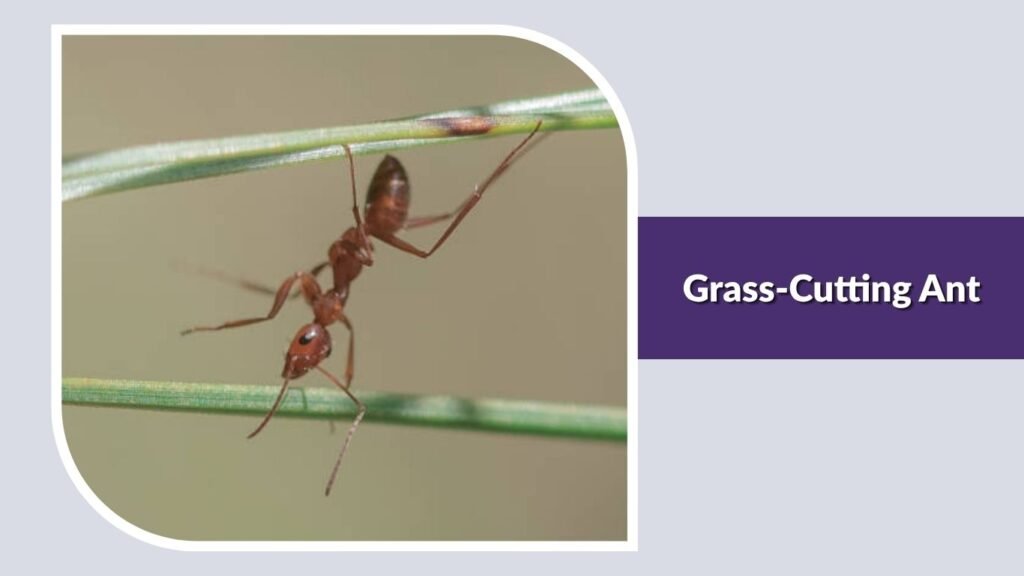
Grass-Cutting Ant is a common descriptive name for leafcutter species that specialize heavily in collecting grasses. Some Atta species are especially well known for removing grass blades rather than broad leaves and can have a noticeable impact on pastures and agricultural land.
Identification
- Workers are generally brown to reddish-brown.
- Worker size varies according to colony role.
- Strong mandibles help cut grass blades.
- Workers may carry narrow pieces of grass vertically.
- Well-defined trails often lead into large nest entrances.
Habitat and Distribution
Grass-cutting leafcutter ants are particularly associated with open habitats in South America. They may occur in grasslands, savannas, grazing areas, roadside vegetation, and agricultural landscapes where grasses are abundant.
Behavior and Diet
Workers cut pieces of grass and transport them to underground chambers. The grass is chopped and processed into material suitable for fungal growth. This fungus, rather than the grass itself, provides much of the colony’s nutrition.
Lifespan and Life Cycle
Queens establish colonies following mating flights and initially tend the fungus garden themselves. Once workers appear, they assume most responsibilities. Successful colonies gradually expand their underground nests and eventually produce reproductive males and females.
15. Spiny Leafcutter Ant
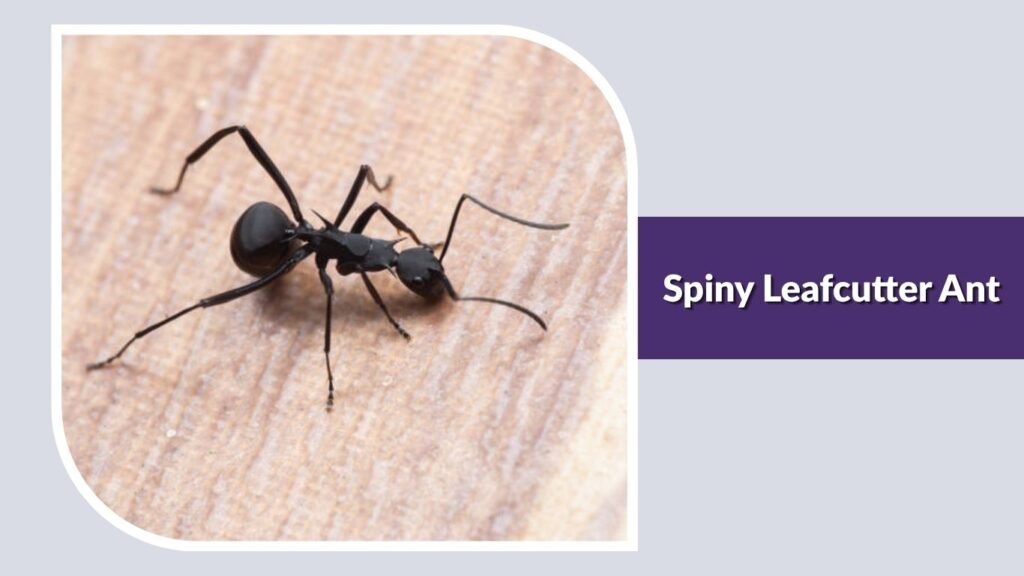
Spiny Leafcutter Ant is a useful descriptive name for members of the genus Acromyrmex, many of which have conspicuous spines on their thorax. These ants are generally smaller than the largest Atta leafcutters but share the same remarkable fungus-growing lifestyle.
Identification
- The thorax has several prominent spines.
- Workers are usually reddish-brown or dark brown.
- Worker size varies within the colony.
- The body often has a rough or textured appearance.
- Strong mandibles are used to cut plant material.
Habitat and Distribution
Spiny leafcutters occur throughout much of Central and South America. They inhabit tropical forests, dry woodland, grassland, savannas, agricultural areas, and disturbed habitats. Some species tolerate cooler or drier environments than many Atta species.
Behavior and Diet
Workers gather pieces of leaves, grass, flowers, and other vegetation. They transport these materials to the nest and use them to cultivate a specialized fungus. Colonies carefully remove waste and contaminated material to protect their fungal crop.
Lifespan and Life Cycle
New colonies are usually founded by mated queens carrying a small portion of fungus from their original nest. The queen raises her first workers, which gradually expand the nest. Mature colonies produce reproductive ants during suitable seasons.
16. Garden Leafcutter Ant
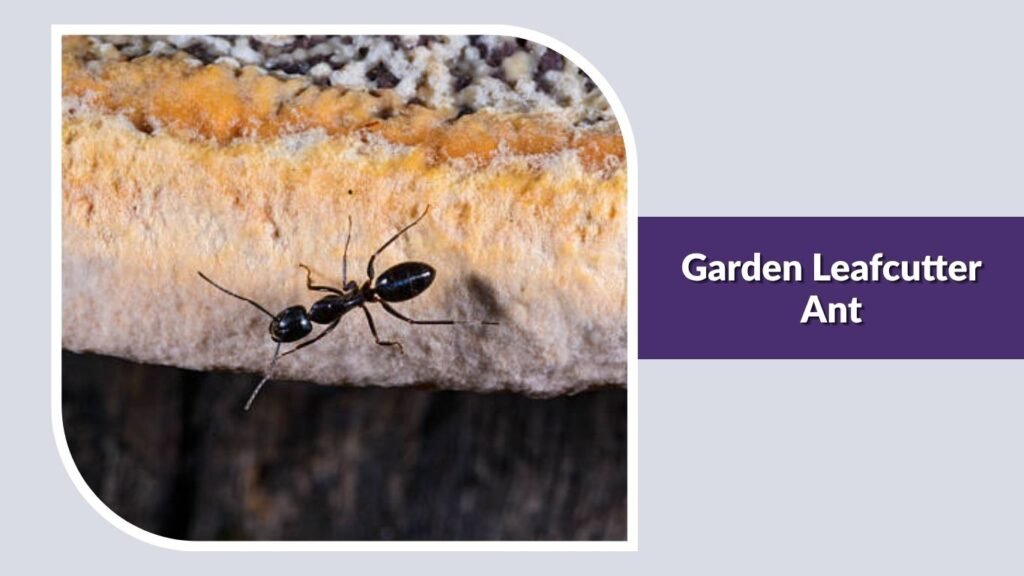
Garden Leafcutter Ant is a general name for leaf-cutting ants frequently encountered in gardens, orchards, and landscaped areas. Their ability to remove large amounts of foliage can make them important garden pests, although they are also valuable components of natural ecosystems.
Identification
- Workers are commonly reddish-brown or dark brown.
- Several worker sizes may occur in one colony.
- Large workers have powerful jaws.
- Workers frequently carry fresh leaf pieces.
- Trails may connect the nest with garden plants.
Habitat and Distribution
Garden-associated leafcutters occur throughout tropical and subtropical parts of the Americas. They may establish nests in lawns, flower beds, orchards, vegetable gardens, plantations, and other areas containing abundant vegetation.
Behavior and Diet
These ants can remove leaves from ornamental plants, fruit trees, vegetables, and shrubs. The collected foliage is transported underground and used to feed their fungus gardens. Individual workers may repeatedly visit favored plants.
Lifespan and Life Cycle
Colonies start with a single reproductive queen or, depending on species, occasionally more than one founding queen. Workers emerge after the queen establishes her fungus garden. Colonies become larger and more complex over time, eventually producing winged reproductives.
17. Tropical Leafcutter Ant
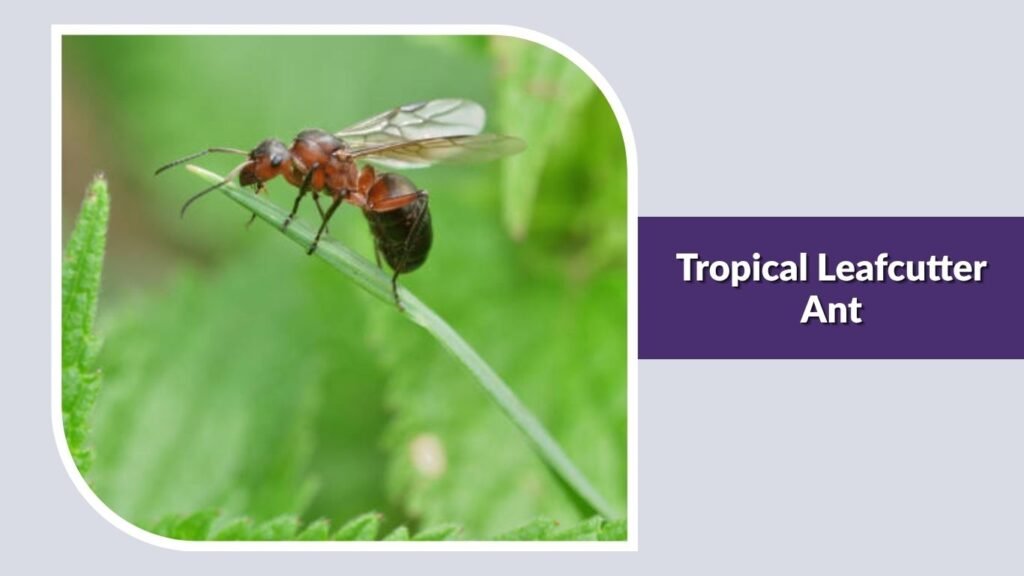
Tropical Leafcutter Ant is a broad term for the numerous Atta and Acromyrmex species found in warm tropical regions of the Americas. They are among the most important plant-harvesting insects in tropical ecosystems and can remove large amounts of vegetation.
Identification
- Workers range from reddish-brown to dark brown.
- Colonies contain different worker castes and sizes.
- Many species have spines on the thorax.
- Major workers may possess very large heads.
- Leaf-carrying trails are a characteristic sign.
Habitat and Distribution
Tropical leafcutter ants occur from parts of Mexico and Central America through much of South America. They thrive in rainforests, woodland, savannas, farms, plantations, parks, and gardens.
Behavior and Diet
Workers harvest fresh vegetation and carry it into complex underground nests. Inside, smaller workers clean, chew, and prepare the material for fungus cultivation. The ants protect their fungus from contamination and depend on it as a major source of nutrition.
Lifespan and Life Cycle
A young queen typically begins a colony after a reproductive flight. She carries fungal material from her original nest and uses it to establish a new garden. Successful colonies expand for years and can eventually support huge populations of workers and reproductive ants.
FAQs
1. Why do leafcutter ants cut leaves?
Leafcutter ants do not primarily eat the leaves they collect. Instead, workers carry vegetation underground, where it is processed and used to grow a specialized fungus. The ants depend on this cultivated fungus for food, especially for their larvae.
2. Where are leafcutter ants found?
Leafcutter ants are native to the Americas. They occur from parts of the southern United States and Mexico through Central America, the Caribbean, and much of South America. Most species prefer tropical or subtropical climates.
3. Are leafcutter ants harmful to plants?
Large colonies can remove considerable amounts of foliage from trees, crops, vegetables, and ornamental plants. Healthy wild plants often recover, but heavy harvesting can damage young plants, crops, and garden vegetation.
4. How large can a leafcutter ant colony become?
Some Atta colonies can contain hundreds of thousands or even millions of workers. Their underground nests may include numerous chambers connected by extensive tunnel systems and can remain active for many years.
5. Do leafcutter ants bite humans?
Leafcutter ants can bite when handled or when their colony is disturbed. Larger workers and soldiers have powerful mandibles capable of producing a painful pinch or cut. However, they generally focus on gathering vegetation and defending their nest rather than seeking out people.