
Chalcid wasps are a remarkably diverse group of tiny insects known for their metallic colors, unusual body shapes, and important ecological roles. Most species are parasitoids that develop on or inside other insects, helping naturally control populations of aphids, caterpillars, beetles, flies, and other pests. Some, such as fig wasps, also have specialized relationships with plants. In this guide, you will discover 13 types of chalcid wasps, along with their identification features, habitats, diets, life cycles, and ecological importance.
1. Torymid Wasp
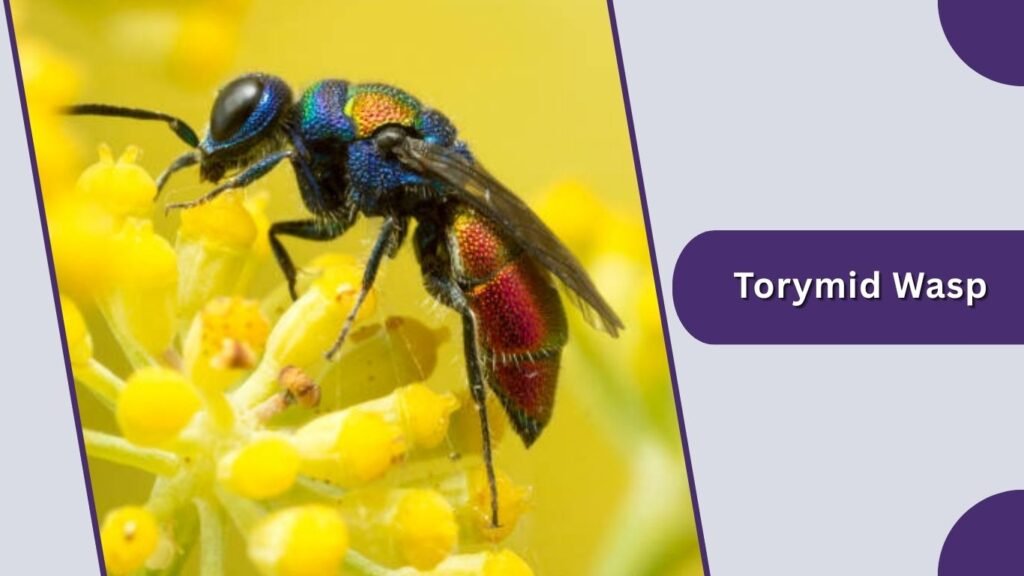
Torymid wasps are small parasitic wasps belonging mainly to the family Torymidae. They are part of the diverse chalcid wasp group and are usually found around trees, shrubs, flowers, and plant galls. Many species develop as parasitoids of insects living inside plant tissues, while a few are associated directly with seeds. Their small size and metallic appearance often make them easy to overlook in gardens and natural habitats.
Identification
Torymid wasps can be recognized by several distinctive physical features:
- Size: Usually about 2–8 mm long, depending on the species.
- Color: Often metallic green, bronze, blue, or black.
- Body: Slender body with a narrow waist.
- Legs: Hind legs are often noticeably enlarged or strong.
- Antennae: Long, segmented antennae are clearly visible.
- Wings: Transparent wings with relatively simple vein patterns.
- Ovipositor: Females of many species have a long, visible egg-laying organ extending behind the abdomen.
Habitat and Distribution
Torymid wasps occur in many parts of the world, particularly in areas where their insect hosts are abundant. They are commonly found in forests, gardens, orchards, grasslands, and around shrubs. Adults may be seen resting on leaves or visiting flowers for nectar. Many species are closely associated with plant galls because their larvae attack gall-forming insects developing inside them.
Diet and Feeding Behavior
Adult torymid wasps generally feed on nectar, pollen, honeydew, and other sugary plant substances. Their larvae have a very different diet. Many are parasitoids that feed on the larvae of gall wasps, flies, beetles, or other insects. Some species develop inside seeds and consume plant material instead of insect hosts.
Life Cycle and Importance
Female torymid wasps locate a suitable host and use their ovipositor to place eggs near or inside it. After hatching, the larvae feed and develop before pupating and emerging as adults. Because many torymid wasps naturally control populations of gall-forming and plant-feeding insects, they can play an important ecological role and may benefit gardens, forests, and agricultural environments.
2. Fig Wasp
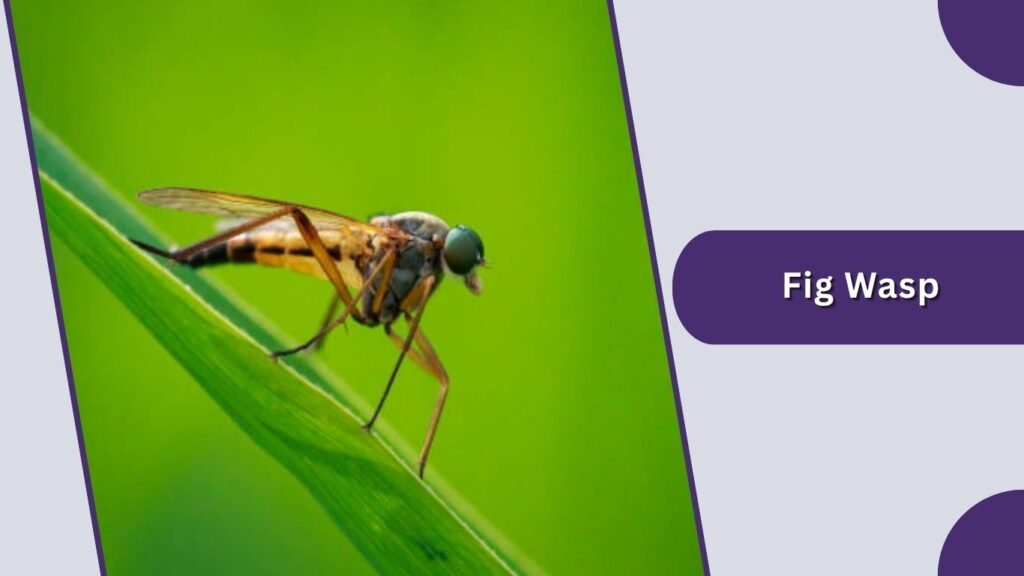
Fig wasps are tiny chalcid wasps closely associated with fig trees. Many species have a remarkable relationship with figs, especially those involved in pollination. Female fig wasps enter developing figs to lay eggs and, in many cases, pollinate the flowers inside at the same time. Other fig wasps may act as parasites or competitors rather than pollinators.
Identification
Fig wasps have several features that help distinguish them:
- Size: Usually about 1–3 mm long.
- Color: Commonly black, brown, or dark reddish.
- Body: Compact and slender with a narrow waist.
- Head: Often flattened, especially in females that enter figs.
- Wings: Females usually have transparent wings; males of many species are wingless.
- Antennae: Short to moderately long and segmented.
- Legs: Strong legs help females move through the tight interior of figs.
Habitat and Distribution
Fig wasps occur wherever their associated fig trees grow. They are especially diverse in tropical and subtropical regions, although some species occur in warmer temperate areas. Most of their lives are closely connected to fig fruits, where mating, egg laying, and larval development occur.
Diet and Feeding Behavior
Adult fig wasps generally live for only a short time and may feed very little. Their larvae develop inside fig flowers, consuming plant tissue or resources provided by the developing flower. Some non-pollinating species attack other insects living within figs.
Life Cycle and Importance
A female enters a receptive fig, lays eggs, and may pollinate its flowers. Larvae develop inside individual flowers before pupating. Newly emerged males often mate with females inside the fig. Pollinating fig wasps are extremely important because many fig species depend on them for successful reproduction.
3. Eucharitid Wasp
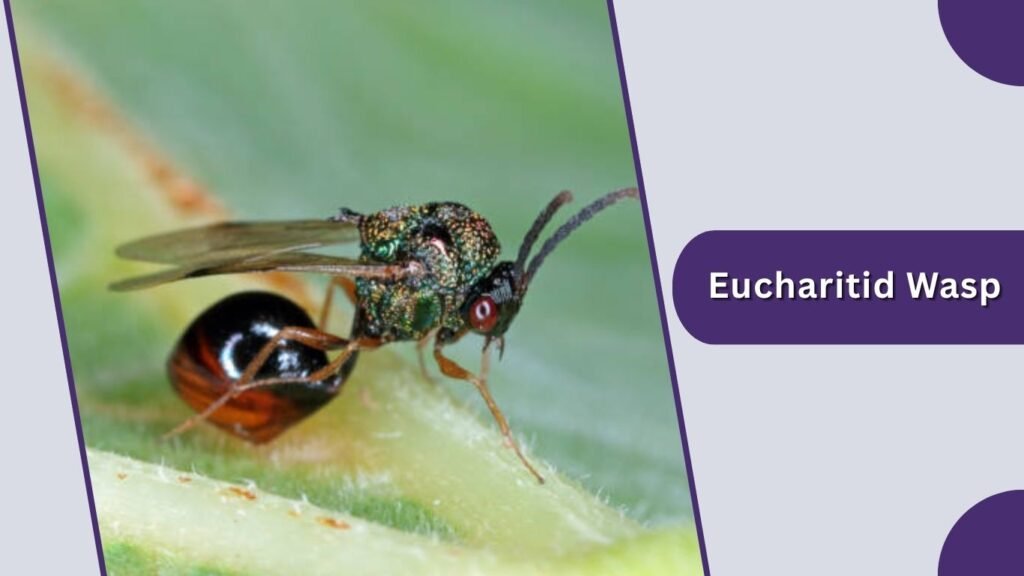
Eucharitid wasps are unusual chalcid wasps in the family Eucharitidae. They are best known as specialized parasitoids of ants. Unlike many other parasitic wasps, females usually do not enter ant nests to lay eggs. Instead, they deposit eggs on vegetation, allowing newly hatched larvae to attach themselves to passing ants and gain transport into the colony.
Identification
Eucharitid wasps often have a striking and distinctive appearance:
- Size: Commonly around 3–8 mm long.
- Color: Black, metallic green, blue, or bronze.
- Body: Compact body with a strongly narrowed waist.
- Thorax: Often enlarged, sculptured, or unusually shaped.
- Antennae: Segmented and sometimes club-shaped.
- Wings: Clear to slightly smoky wings.
- Abdomen: Usually rounded or triangular and connected by a slender stalk.
Habitat and Distribution
These wasps occur worldwide, with especially high diversity in tropical and subtropical regions. They are usually found near plants visited by ants because their life cycle depends on contact with suitable ant hosts.
Diet and Feeding Behavior
Adult eucharitid wasps may feed on nectar or other plant sugars. Their larvae are parasitoids of immature ants. Once transported into an ant nest, the larva attaches to an ant larva or pupa and feeds on it while completing development.
Life Cycle and Importance
Females lay eggs on leaves, flowers, or other plant surfaces. Tiny first-stage larvae hatch and wait for contact with foraging ants or other insects that interact with ants. After reaching the nest, they parasitize ant brood. Their unusual strategy makes eucharitid wasps important examples of highly specialized host-parasite relationships.
4. Encyrtid Wasp
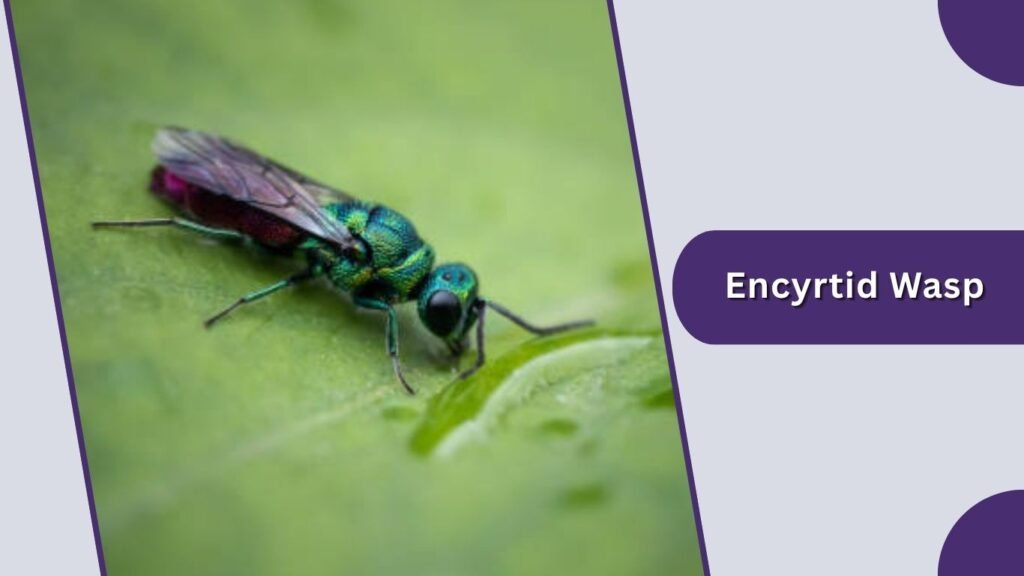
Encyrtid wasps belong to the large family Encyrtidae, which contains thousands of species of tiny parasitoid wasps. Many attack scale insects, mealybugs, aphids, and other small plant pests. Because of this behavior, several encyrtid species have been used successfully in biological pest-control programs.
Identification
Encyrtid wasps are small but can be recognized by several features:
- Size: Usually about 0.5–3 mm long.
- Color: Black, brown, yellow, or metallic green and blue.
- Body: Compact and often somewhat robust.
- Antennae: Distinctly segmented, sometimes with a clubbed tip.
- Wings: Broad, transparent wings with reduced venation.
- Legs: Middle legs often have enlarged spurs used for jumping.
- Surface: Body may appear smooth, shiny, or lightly sculptured.
Habitat and Distribution
Encyrtid wasps are found worldwide in gardens, forests, grasslands, agricultural fields, orchards, and greenhouses. They are especially common where scale insects, mealybugs, and other suitable hosts occur.
Diet and Feeding Behavior
Adults often consume nectar, honeydew, or other sugary substances. Their larvae develop as parasitoids inside or on insect hosts. Many species attack scale insects and mealybugs, while others parasitize caterpillars, beetles, flies, or insect eggs.
Life Cycle and Importance
A female locates a suitable host and deposits one or more eggs in or near it. The larvae feed on the host and eventually kill it before emerging as adults. Encyrtid wasps are especially valuable in agriculture because they can naturally suppress pest populations without damaging plants.
5. Eulophid Wasp
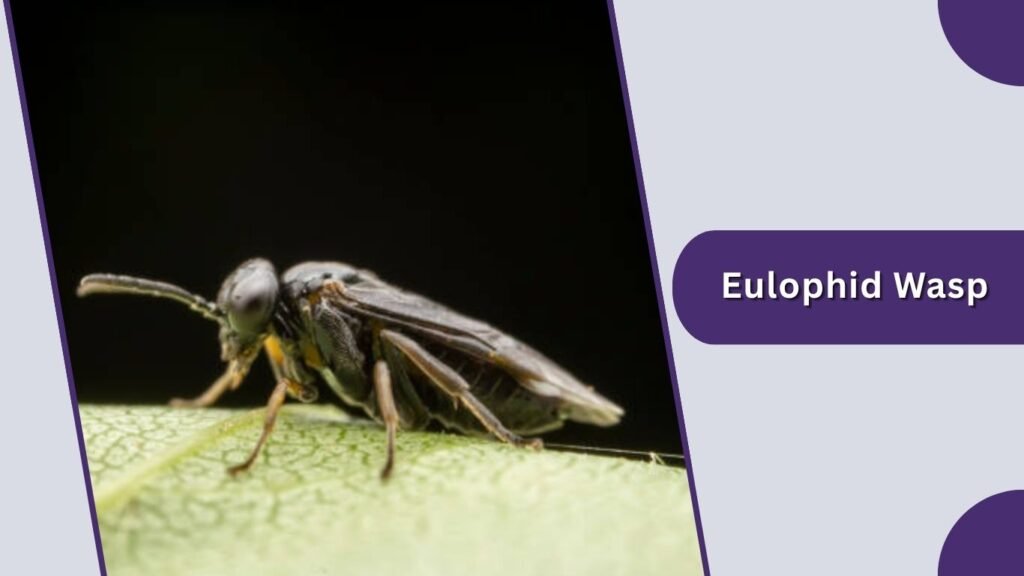
Eulophid wasps are members of the family Eulophidae, one of the largest groups of chalcid wasps. These tiny insects parasitize a wide variety of hosts, including leaf miners, caterpillars, beetle larvae, flies, and other small insects. Some species are particularly useful as natural enemies of crop and garden pests.
Identification
Eulophid wasps typically show the following characteristics:
- Size: Usually between 1–4 mm long.
- Color: Metallic green, blue, bronze, black, or yellowish.
- Body: Small and slender with a narrow waist.
- Antennae: Relatively short with only a few obvious segments.
- Wings: Clear wings with very reduced venation.
- Legs: Thin and well adapted for walking over leaves.
- Eyes: Usually large compared with the size of the head.
Habitat and Distribution
Eulophid wasps are distributed throughout most of the world. They can be found in forests, fields, gardens, orchards, wetlands, and agricultural areas. Many occur directly on leaves because their hosts live inside plant tissue.
Diet and Feeding Behavior
Adults commonly feed on nectar, honeydew, and plant secretions. Some females may also feed on fluids from hosts after puncturing them. Their larvae are primarily parasitoids and may develop inside a host or feed externally on its body.
Life Cycle and Importance
Females locate host insects using chemical and physical cues. Eggs are placed inside or next to the host, and the developing larvae gradually consume it. Many eulophid wasps attack serious agricultural pests, making them important contributors to natural and commercial biological control.
6. Pteromalid Wasp

Pteromalid wasps are a diverse group of small chalcid wasps historically associated with the family Pteromalidae. Many are parasitoids of beetles, flies, caterpillars, gall-forming insects, and other arthropods. Their varied lifestyles make them important members of food webs in both natural and agricultural habitats.
Identification
Pteromalid wasps generally have several recognizable features:
- Size: Most are about 1–6 mm long.
- Color: Frequently metallic green, blue, bronze, or black.
- Body: Compact with a clearly narrowed waist.
- Head: Broad, often wider than the thorax when viewed from above.
- Antennae: Elbowed and distinctly segmented.
- Wings: Transparent with simple chalcid-style venation.
- Legs: Usually slender, though some species have enlarged hind legs.
Habitat and Distribution
These wasps are found worldwide in forests, grasslands, gardens, farms, and urban environments. They often occur around decaying organic material, galls, seeds, or plants containing the insects they parasitize.
Diet and Feeding Behavior
Adults usually obtain energy from nectar, honeydew, and other sugary liquids. The larvae are more specialized and typically feed on insect hosts. Depending on the species, they may parasitize fly pupae, beetle larvae, caterpillars, or gall-forming insects.
Life Cycle and Importance
A female searches for a suitable host and uses her ovipositor to lay eggs on or inside it. The larva consumes the host during development before pupating. Many pteromalid wasps help regulate pest insects naturally, while some species are deliberately used in biological-control programs.
7. Aphelinid Wasp

Aphelinid wasps belong to the family Aphelinidae and are among the most important tiny parasitoid wasps used in pest management. They commonly attack whiteflies, scale insects, aphids, and similar plant-feeding insects. Several species are released commercially in greenhouses and crop systems to control damaging pests.
Identification
Aphelinid wasps can be identified by the following characteristics:
- Size: Usually only 0.5–2 mm long.
- Color: Yellow, black, brown, or a combination of dark and pale markings.
- Body: Very small and compact.
- Antennae: Short with relatively few segments.
- Wings: Clear or slightly smoky with greatly reduced veins.
- Legs: Thin and usually pale or yellowish.
- Movement: Adults often walk quickly across leaves while searching for hosts.
Habitat and Distribution
Aphelinid wasps occur worldwide and are especially common in areas with populations of whiteflies, scales, and aphids. They inhabit gardens, farms, orchards, greenhouses, and natural vegetation.
Diet and Feeding Behavior
Adult wasps feed on nectar, honeydew, and other sugary substances. Some females also practice host feeding by puncturing pest insects and consuming their body fluids. Their larvae develop as parasitoids inside or beneath their hosts.
Life Cycle and Importance
Females search plant surfaces for suitable insects and insert eggs into or under them. The larva develops by consuming the host from within, eventually killing it. Because aphelinid wasps can significantly reduce populations of whiteflies and scale insects, they are widely regarded as beneficial insects in agriculture and horticulture.
8. Trichogramma Wasp

Trichogramma wasps are extremely small chalcid wasps best known as parasitoids of insect eggs. They belong to the family Trichogrammatidae and are widely used in biological pest control. Although they are almost impossible to notice without close inspection, these tiny wasps can help suppress populations of moths and other crop pests before the damaging larvae even hatch.
Identification
Trichogramma wasps can be recognized by these characteristics:
- Size: Usually only about 0.3–1 mm long.
- Color: Yellowish, brown, black, or dark-bodied.
- Body: Extremely tiny and compact.
- Antennae: Short and segmented.
- Wings: Clear with distinctive fringes of fine hairs.
- Eyes: Relatively large compared with the head.
- Movement: Often seen walking over leaves while searching for insect eggs.
Habitat and Distribution
Trichogramma wasps occur across much of the world in agricultural fields, gardens, forests, grasslands, and orchards. They are especially common wherever moths and butterflies lay their eggs. Different species are adapted to particular hosts and environmental conditions.
Diet and Feeding Behavior
Adults may obtain energy from nectar, honeydew, and moisture on plant surfaces. Their larvae develop inside the eggs of other insects. A female locates a suitable host egg and inserts her own egg into it. The developing wasp larva consumes the contents of the host egg.
Life Cycle and Importance
After completing development inside the host egg, the adult wasp creates a small exit hole and emerges. Because the pest is killed before reaching the caterpillar stage, Trichogramma wasps can prevent plant damage early. They are commonly used against corn borers, armyworms, fruit moths, and other agricultural pests.
9. Perilampid Wasp

Perilampid wasps are small chalcid wasps belonging to the family Perilampidae. Many have shiny metallic bodies and an unusually compact appearance. Their life cycles can be complex, with larvae often parasitizing caterpillars, beetles, sawflies, or other insects. Some species use a specialized strategy in which newly hatched larvae must locate and attach to a suitable host.
Identification
Common identification features include:
- Size: Usually about 2–6 mm long.
- Color: Metallic green, blue, bronze, purple, or black.
- Body: Short, compact, and heavily built.
- Thorax: Often strongly rounded or arched.
- Surface: Frequently shiny with noticeable sculpturing.
- Antennae: Segmented and moderately short.
- Wings: Transparent, sometimes with a slight smoky tint.
Habitat and Distribution
Perilampid wasps are found in many regions worldwide, particularly in forests, woodlands, grasslands, and gardens. They are usually associated with vegetation where their insect hosts feed or develop. Adults may be noticed on flowers or foliage during warm weather.
Diet and Feeding Behavior
Adults mainly consume nectar and other sugary liquids. Their larvae are parasitoids. In many species, the first-stage larva is highly mobile and searches for a host or attaches to another insect that transports it to the correct host.
Life Cycle and Importance
Females may lay eggs on plants rather than directly on a host. After hatching, the mobile larva finds an appropriate insect and eventually begins feeding on it. This unusual life cycle allows perilampid wasps to reach hosts that might otherwise be difficult to access. By attacking other insects, they contribute to natural population control within ecosystems.
10. Ormyrid Wasp

Ormyrid wasps belong to the family Ormyridae and are small chalcid wasps commonly associated with plant galls. Many species develop as parasitoids of gall-forming insects, especially gall wasps. Their often metallic, strongly sculptured bodies make them attractive under magnification, although their tiny size means they are rarely noticed by casual observers.
Identification
Ormyrid wasps typically show these features:
- Size: Usually about 2–5 mm long.
- Color: Metallic green, blue, bronze, or dark brown.
- Body: Compact with a narrow connection between thorax and abdomen.
- Abdomen: Often heavily sculptured with pits or raised patterns.
- Antennae: Elbowed and segmented.
- Wings: Clear with reduced venation.
- Females: May have a visible ovipositor used to reach hosts inside galls.
Habitat and Distribution
These wasps are distributed in many temperate and warmer regions. They are commonly found around oak trees, shrubs, and other plants that support gall-forming insects. Adults often remain close to the vegetation containing suitable hosts.
Diet and Feeding Behavior
Adult ormyrid wasps may feed on nectar, honeydew, and other plant sugars. Their larvae usually develop inside plant galls, where they feed on gall-forming insects or other inhabitants. Some species may interact with more than one type of insect within a gall community.
Life Cycle and Importance
A female detects a suitable gall and inserts her ovipositor through the plant tissue to deposit an egg near or on the host. After hatching, the larva consumes the host and later pupates within the gall. Adults eventually emerge by chewing or using an existing opening. Ormyrid wasps help regulate gall-forming insect populations and contribute to the complex ecological communities found inside plant galls.
11. Leucospid Wasp
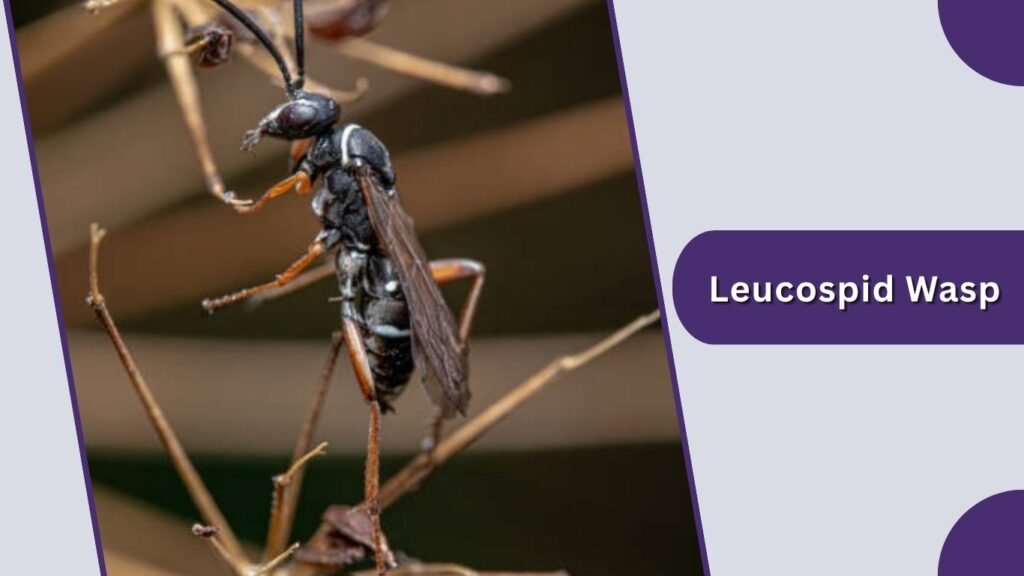
Leucospid wasps are distinctive chalcid wasps in the family Leucospidae. Unlike many chalcids, they are relatively large and robust, sometimes resembling small potter wasps. They are parasitoids mainly of solitary bees and wasps, developing inside the nests of their hosts. Their enlarged hind legs and unusual curved ovipositor make them especially recognizable.
Identification
Leucospid wasps can often be identified by the following traits:
- Size: Commonly about 4–17 mm long.
- Color: Usually black with yellow, red, or orange markings.
- Body: Strong, compact, and heavily armored in appearance.
- Hind Legs: Femora are greatly enlarged and often toothed.
- Wings: Fold lengthwise over the abdomen when resting.
- Antennae: Short, elbowed, and segmented.
- Ovipositor: In females, it often curves forward along the upper surface of the abdomen.
Habitat and Distribution
Leucospid wasps occur in many warm and temperate regions worldwide. They are often found near dead wood, hollow stems, walls, or soil where solitary bees and wasps construct nests. Adults may also visit flowers for nectar.
Diet and Feeding Behavior
Adults mainly feed on nectar and other plant sugars. Their larvae are parasitoids of solitary bees and wasps. Females use their ovipositor to penetrate nest walls and place eggs near developing host larvae or pupae.
Life Cycle and Importance
After hatching, the leucospid larva attacks the immature host and consumes it during development. It later pupates within the host nest and emerges as an adult. These wasps naturally regulate populations of solitary bees and wasps, although they are generally uncommon and do not usually cause significant harm to healthy pollinator communities.
12. Agaonid Fig Wasp

Agaonid fig wasps belong to the family Agaonidae and include many of the specialized wasps responsible for pollinating fig trees. Their relationship with figs is one of the best-known examples of insect-plant mutualism. In many cases, a particular fig species depends on one or a small number of specialized fig wasps for successful pollination.
Identification
Agaonid fig wasps have several distinctive characteristics:
- Size: Commonly about 1–3 mm long.
- Color: Usually dark brown, black, or reddish brown.
- Body: Tiny and adapted for entering narrow fig openings.
- Head: Often flattened or specially shaped.
- Antennae: Short and segmented.
- Females: Usually winged when leaving one fig to search for another.
- Males: Often wingless and very different in appearance from females.
Habitat and Distribution
Agaonid fig wasps occur wherever their associated fig species grow, with greatest diversity in tropical and subtropical regions. Their lives are closely tied to fig trees because the enclosed flowers inside figs provide places for pollination, egg laying, and larval development.
Diet and Feeding Behavior
Adult wasps generally live briefly and may eat little or nothing. Developing larvae obtain nutrition from fig flowers where their eggs were laid. Females carrying pollen enter receptive figs and move among the internal flowers while searching for suitable egg-laying sites.
Life Cycle and Importance
Female wasps enter figs through a small opening called the ostiole. As they move inside, pollen carried from their birth fig may fertilize flowers. Eggs are laid in some flowers, and the larvae develop within them. After maturation, the next generation emerges and continues the cycle. This relationship is essential to the reproduction of many fig species and supports ecosystems that rely on figs as food.
13. Golden Chalcid Wasp

Golden chalcid wasps are small metallic chalcid wasps recognized for their brilliant yellow-gold, bronze, green, or coppery appearance. The name may be applied informally to brightly colored species from several chalcid groups rather than representing one single taxonomic family. Like many other chalcids, these wasps are usually parasitoids of insects and can play useful ecological roles.
Identification
Golden chalcid wasps may show the following features:
- Size: Usually only a few millimeters long.
- Color: Metallic gold, bronze, green, copper, or a mixture of these shades.
- Body: Compact with a clearly defined waist.
- Surface: Shiny and often strongly reflective.
- Antennae: Elbowed and divided into several segments.
- Wings: Transparent with simple, reduced venation.
- Legs: Slender, although some species may have enlarged hind legs.
Habitat and Distribution
These metallic chalcid wasps can occur in gardens, meadows, forests, orchards, agricultural fields, and other vegetated habitats. Their exact distribution depends on the species and the presence of suitable hosts. Adults are frequently encountered around flowers, leaves, plant galls, or areas where other insects develop.
Diet and Feeding Behavior
Adults commonly feed on nectar, honeydew, or other sugary plant secretions. Their larvae are often parasitoids of insect eggs, larvae, or pupae. Different species may attack flies, beetles, moths, scale insects, gall-forming insects, or other small arthropods.
Life Cycle and Importance
Females search carefully for suitable hosts before laying eggs. Once an egg hatches, the larva develops by feeding on or inside the host, eventually killing it in most parasitoid species. After pupation, the adult emerges to reproduce. Golden-colored chalcid wasps contribute to natural pest regulation and insect biodiversity, making these tiny metallic insects valuable components of healthy ecosystems.
FAQs
1. Are chalcid wasps dangerous to humans?
No. Most chalcid wasps are extremely small and do not pose a threat to people. They generally do not behave aggressively and are more interested in finding insect hosts, flowers, or plant sugars.
2. Do chalcid wasps sting?
Most chalcid wasps do not sting humans. Females have an ovipositor used mainly for laying eggs in or near insect hosts rather than for defense.
3. Are chalcid wasps beneficial?
Yes. Many chalcid wasps are beneficial because their larvae parasitize pest insects such as aphids, scale insects, whiteflies, caterpillars, beetles, and flies. Some species are used in biological pest-control programs.
4. Where do chalcid wasps live?
Chalcid wasps occur worldwide in gardens, forests, farms, grasslands, orchards, and other habitats. They are often found wherever their preferred insect hosts or associated plants are present.
5. What do chalcid wasps eat?
Adult chalcid wasps commonly feed on nectar, honeydew, and other sugary substances. Their larvae usually feed on or inside other insects, although a few species develop in seeds or other plant tissues.