

Black wasps come in many shapes and sizes, ranging from tiny parasitoid species to large, powerful hunters. Although their dark appearance can seem intimidating, most black wasps are solitary and rarely aggressive toward humans. Many are also beneficial because they control spiders, caterpillars, beetle grubs, crickets, and other insects. In this guide, you’ll discover 20 types of black wasps, along with their identification features, habitats, feeding habits, nesting behavior, and whether they pose any real danger to people.
1. Great Black Wasp

The Great Black Wasp (Sphex pensylvanicus) is a large, solitary digger wasp recognized by its entirely dark body and smoky, blue-iridescent wings. It is commonly seen around gardens, meadows, and flowering areas during warmer months. Although its impressive size can look intimidating, this wasp is generally not aggressive toward people and plays a useful role as both a pollinator and a hunter of plant-feeding insects.
Identification
- Scientific name: Sphex pensylvanicus
- Body color: Deep black to slightly blue-black
- Length: About 22–35 mm
- Wings: Smoky black with a blue or violet iridescent sheen
- Body shape: Long body with a noticeably narrow waist
- Antennae: Long and segmented
- Legs: Long, strong, and completely dark
- Female: Usually slightly larger and equipped with a functional stinger
- Male: Generally smaller and unable to sting
Habitat and Distribution
Great Black Wasps occur across much of North America and are frequently found in open, sunny habitats. Gardens, fields, woodland edges, parks, and meadows provide suitable places for adults to find nectar and prey. Females construct underground burrows in loose or workable soil. These burrows contain individual chambers where their offspring develop.
Hunting and Feeding Behavior
Adult Great Black Wasps visit flowers for nectar and can contribute to pollination while moving between blossoms. Females are also skilled hunters. They primarily capture insects such as katydids, crickets, and grasshoppers. After locating prey, the female uses her sting to paralyze it and transports it to an underground nest. The stored prey becomes a fresh food supply for developing wasp larvae.
Are Great Black Wasps Dangerous?
Despite their large size, Great Black Wasps are normally peaceful around humans. Females can deliver a painful sting, but they generally sting only when handled, trapped, or strongly threatened. Males do not possess a functional stinger. When left undisturbed, these solitary wasps are valuable garden visitors because they help reduce populations of grasshoppers and related insects while also visiting flowers for nectar.
2. Organ-Pipe Mud Dauber

The Organ-Pipe Mud Dauber is a slender, dark-colored solitary wasp known for constructing distinctive tube-shaped mud nests that resemble the pipes of an organ. It is frequently found around buildings, bridges, barns, sheds, and other sheltered structures. Unlike social wasps, it does not defend a colony aggressively, making it relatively harmless when its nest is left alone.
Identification
- Body color: Mostly black or very dark blue-black
- Length: Usually around 20–25 mm
- Wings: Dark and slightly smoky
- Waist: Extremely long and narrow
- Legs: Long, thin, and dark
- Nest: Parallel mud tubes attached to walls or sheltered surfaces
- Behavior: Solitary rather than colony-forming
- Female: Capable of stinging when seriously threatened
Habitat and Nesting
Organ-Pipe Mud Daubers prefer sheltered places protected from heavy rain. They commonly attach their mud nests beneath roof overhangs, bridges, porches, garages, and rocky ledges. Females collect moist soil and carry small balls of mud back to the nesting site. Over time, they build several narrow tubes positioned close together, creating their characteristic organ-pipe appearance.
Hunting and Feeding Behavior
Adult wasps feed mainly on flower nectar, while females hunt spiders for their developing larvae. A female searches vegetation, walls, and other spider-rich areas, stings prey to paralyze it, and transports the spider back to her mud nest. Several spiders may be placed inside one chamber before an egg is laid and the entrance is sealed.
Are Organ-Pipe Mud Daubers Dangerous?
These wasps are generally non-aggressive toward people. They do not swarm or aggressively defend their nests like yellowjackets. Stings are uncommon and usually occur only when a female is trapped or handled. Their spider-hunting behavior can also help reduce local spider populations, making them useful predators around homes and gardens.
3. Blue Mud Dauber

The Blue Mud Dauber is a striking solitary wasp with a metallic blue or blue-black body. Although it is called a mud dauber, females often reuse abandoned nests built by other mud-dauber species rather than constructing their own from scratch. These wasps are especially important predators of spiders and are regularly seen around gardens, buildings, and sunny open areas.
Identification
- Body color: Metallic blue, blue-black, or violet-black
- Length: Commonly 13–23 mm
- Wings: Dark and often iridescent
- Body: Slender with a narrow waist
- Legs: Long and dark
- Surface: Smooth, shiny appearance
- Behavior: Solitary and usually calm around humans
- Nest: Often reuses existing mud nests
Habitat and Nesting
Blue Mud Daubers occur around gardens, fields, woodland edges, and human structures. Females frequently inspect old mud nests on walls, bridges, sheds, and protected overhangs. Instead of investing large amounts of time in nest construction, they may clean out abandoned chambers and prepare them for their own offspring.
Spider Hunting Behavior
Females are highly efficient spider hunters. They search vegetation and sheltered corners for suitable prey, immobilize spiders with their sting, and transport them back to the nest. The spiders remain alive but paralyzed, providing fresh food for developing larvae. Adults, by contrast, depend largely on nectar for their own energy.
Are Blue Mud Daubers Dangerous?
Blue Mud Daubers rarely show aggression toward humans. Their stinger is mainly used for paralyzing spiders rather than defending a social colony. A sting is possible when one is squeezed or handled, but ordinary encounters are usually harmless. Their ability to control spiders makes them beneficial insects around many outdoor environments.
4. Grass-Carrying Wasp

The Grass-Carrying Wasp is a slender, mostly black solitary wasp named for its unusual habit of collecting blades of grass and dried plant material for its nests. These wasps often use narrow cavities, window tracks, hollow stems, and small openings in buildings. Their nesting activity is fascinating to observe, and they are usually peaceful unless directly disturbed.
Identification
- Body color: Mostly black
- Length: Often around 15–20 mm
- Wings: Smoky or translucent dark wings
- Waist: Narrow and elongated
- Legs: Slender and dark
- Nest material: Grass, stems, and dried plant fibers
- Behavior: Solitary
- Common clue: Seen carrying pieces of grass while flying
Habitat and Nesting
Grass-Carrying Wasps commonly live around gardens, yards, woodland edges, and residential areas. Females search for existing cavities rather than digging their own nests. Door frames, window channels, hollow plant stems, and small structural gaps may all be used. The female stuffs grass into the cavity to divide and protect individual brood chambers.
Hunting and Larval Food
Females mainly hunt tree crickets and similar small insects. After locating prey, they paralyze it with a sting and carry it back to the nesting cavity. Each chamber receives enough prey to support a developing larva. Adults themselves typically feed on nectar and may frequently visit flowers during warm, sunny weather.
Are Grass-Carrying Wasps Dangerous?
Grass-Carrying Wasps pose little threat to people. Because they live alone and have no large colony to defend, they are much less defensive than hornets or yellowjackets. They may sting when trapped against the skin, but this is unusual. In most cases, they can be safely observed from a short distance.
5. Four-Toothed Mason Wasp

The Four-Toothed Mason Wasp is a solitary wasp with a mostly black body and contrasting pale or ivory markings. Despite being darker than many familiar wasps, it can often be recognized by its patterned abdomen and compact body shape. It commonly nests in small cavities and is especially valuable because its larvae are supplied with caterpillars.
Identification
- Body color: Mainly black
- Markings: Pale white, ivory, or yellowish bands and spots
- Length: Usually around 12–18 mm
- Body shape: Compact with a narrow waist
- Wings: Smoky and folded lengthwise when resting
- Antennae: Dark and moderately long
- Nest: Cavities in wood, stems, or abandoned insect burrows
- Behavior: Solitary
Habitat and Nest Sites
Four-Toothed Mason Wasps are often found in gardens, woodland edges, meadows, and areas with dead wood or hollow stems. Females take advantage of preexisting cavities such as beetle holes and natural cracks. They use mud or other materials to divide the cavity into separate brood cells before sealing the completed nest.
Caterpillar Hunting
Females hunt small caterpillars to provide food for their young. A captured caterpillar is paralyzed and carried back to the nest, where several prey items may be stored in one brood chamber. An egg is placed inside, and the developing larva later feeds on the stored caterpillars. Adults generally feed on nectar.
Are Four-Toothed Mason Wasps Dangerous?
These wasps are not considered aggressive. A female can sting, but she normally focuses on hunting and nesting rather than interacting with people. Because they help reduce caterpillar numbers, they can benefit gardens where plant-feeding larvae might otherwise damage leaves and flowers.
6. Black Potter Wasp

The Black Potter Wasp is a dark solitary wasp associated with the potter and mason wasp group. It earns its name from the small mud structures that females create as nesting chambers. Some species make rounded, pot-like cells, while others use cracks or existing cavities. Their dark coloration and narrow waist can make them appear intimidating, but they are generally calm insects.
Identification
- Body color: Black to dark brown-black
- Markings: May have small pale or yellow patches
- Length: Varies, often around 10–20 mm
- Waist: Narrow between thorax and abdomen
- Wings: Dark or smoky
- Nest: Mud cells or mud-lined cavities
- Behavior: Solitary
- Female: Hunts caterpillars for larvae
Habitat and Nest Construction
Black Potter Wasps may occur in gardens, fields, woodland margins, and around buildings. Females collect mud from moist soil and shape it into small nesting cells. Depending on the species, nests may be attached to stones, stems, walls, or sheltered surfaces. Other individuals use natural holes and reinforce them with mud.
Feeding and Hunting
Adult potter wasps obtain energy from flower nectar. Females hunt caterpillars and other soft-bodied insect larvae, paralyzing them with their sting before carrying them to the nest. Several prey items may be placed inside each chamber. Once the chamber is adequately stocked, the female lays an egg and seals it.
Are Black Potter Wasps Dangerous?
Black Potter Wasps are generally harmless to humans when left undisturbed. They do not form large colonies or aggressively guard a communal nest. Stings are uncommon and typically associated with handling. Their caterpillar-hunting behavior makes them useful natural pest controllers in gardens and landscapes.
7. Black Spider Wasp

The Black Spider Wasp refers to dark-colored members of the spider-wasp family, a group of solitary hunters specialized in capturing spiders. Many have long legs, smoky wings, and glossy black bodies. They are active hunters that can often be seen running rapidly across the ground, vegetation, or walls while searching for spider prey.
Identification
- Body color: Black or blue-black
- Length: Commonly 10–30 mm, depending on species
- Legs: Very long and well developed
- Wings: Dark, smoky, or partially transparent
- Waist: Narrow and flexible
- Movement: Fast running combined with short flights
- Prey: Primarily spiders
- Behavior: Solitary
Habitat and Nesting
Black Spider Wasps occupy many habitats, including gardens, forests, fields, sandy areas, and rocky landscapes. Females may dig burrows in soil or use existing holes and crevices as nests. Their long legs help them move effectively over uneven terrain while dragging or carrying captured spiders.
Spider Hunting Strategy
A female searches actively for a suitable spider, sometimes entering webs or ground retreats. Once she attacks, she delivers a precisely placed sting that paralyzes the spider. The prey is then transported to a prepared nest chamber. The female lays a single egg on the spider, and the larva uses the immobilized prey as food after hatching.
Are Black Spider Wasps Dangerous?
Spider wasps can sting, and larger species may deliver a painful sting when seriously provoked. However, they usually avoid humans and use their venom primarily for immobilizing spiders. They are not naturally aggressive and will often fly or run away rather than attack when given space.
8. Steel-Blue Cricket Hunter

The Steel-Blue Cricket Hunter is a sleek solitary wasp recognized by its metallic blue-black coloration. As its name suggests, this wasp specializes in hunting crickets, which are captured and stored as food for developing larvae. Adults may be seen around flowers, lawns, woodland edges, and places where crickets are abundant.
Identification
- Body color: Metallic steel-blue to blue-black
- Length: Usually medium-sized and slender
- Wings: Smoky with a slight iridescent appearance
- Waist: Narrow and elongated
- Legs: Dark, long, and suited for ground hunting
- Surface: Smooth and somewhat shiny
- Prey: Primarily crickets
- Behavior: Solitary
Habitat and Nesting Behavior
Steel-Blue Cricket Hunters favor sunny areas where prey is plentiful. Gardens, grasslands, fields, woodland edges, and open yards can all provide suitable habitat. Females may use soil burrows or protected cavities for nesting, depending on the species and available conditions.
Cricket Hunting and Feeding
Females actively search for crickets on the ground and among vegetation. After locating one, the wasp stings it to cause paralysis and then transports it to the nest. The cricket becomes a food reserve for the developing larva. Adult wasps generally feed on nectar, giving them an additional ecological role as flower visitors.
Are Steel-Blue Cricket Hunters Dangerous?
These wasps are rarely dangerous to humans. Although females possess a stinger, their primary goal is capturing prey rather than defending territory. They usually ignore people unless handled or trapped. Their predation on crickets can help naturally regulate insect populations in gardens and other outdoor areas.
9. Great Black Digger Wasp

The Great Black Digger Wasp is a large, dark solitary wasp known for its powerful flight, long legs, and habit of nesting in the ground. It is often seen visiting flowers or searching through grassy areas for prey. Although its size and deep black coloration can make it look threatening, this wasp is generally calm around people and focuses mainly on hunting and nesting.
Identification
- Body color: Entirely black or blue-black
- Length: Usually about 20–35 mm
- Wings: Dark and sometimes slightly iridescent
- Waist: Narrow and elongated
- Legs: Long, black, and strong
- Body shape: Slender but robust
- Nest: Underground burrows
- Behavior: Solitary
Habitat and Nesting
Great Black Digger Wasps prefer warm, open areas with loose or sandy soil. They can be found in gardens, fields, lawns, meadows, and along woodland edges. Females dig individual underground burrows with several chambers. Each chamber is prepared for one developing larva and supplied with captured insects.
Hunting and Feeding
Females hunt insects such as katydids, grasshoppers, and crickets. The prey is stung and paralyzed before being transported to the underground nest. Once enough food has been stored, the female lays an egg and seals the chamber. Adult wasps mainly drink nectar from flowers and may frequently visit milkweed, goldenrod, and other flowering plants.
Are Great Black Digger Wasps Dangerous?
Despite their intimidating appearance, these wasps are not normally aggressive. Females can sting if they are grabbed, stepped on, or trapped, but they usually avoid conflict. Because they hunt plant-feeding insects and visit flowers, they can be beneficial additions to gardens and natural landscapes.
10. Black-and-Red Mason Wasp
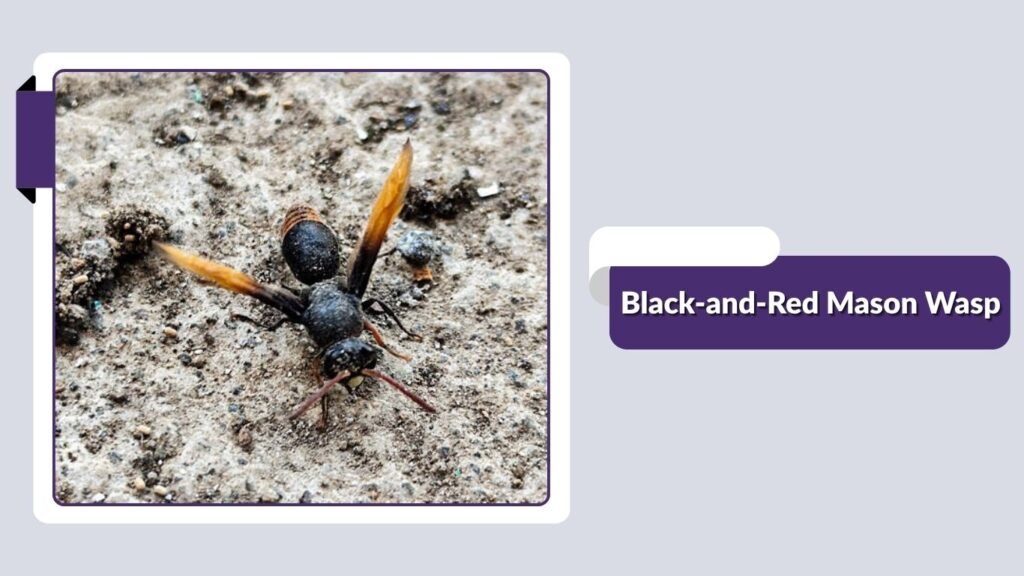
The Black-and-Red Mason Wasp is a solitary wasp recognized by a predominantly black body accented with reddish markings. Like other mason wasps, it uses existing holes, crevices, or hollow stems as nesting sites and may seal chambers with mud. These compact wasps are skilled caterpillar hunters and can help naturally control plant-feeding pests.
Identification
- Body color: Mostly black
- Markings: Red or reddish-brown areas on the abdomen or thorax
- Length: Commonly around 10–18 mm
- Wings: Smoky or translucent
- Waist: Narrow
- Body shape: Compact and sturdy
- Nest: Cavities sealed or divided with mud
- Behavior: Solitary
Habitat and Nesting
Black-and-Red Mason Wasps may be found in gardens, meadows, woodland borders, and around wooden structures. Females often choose beetle holes, hollow plant stems, cracks in wood, or other narrow spaces. Mud is used to separate the brood cells and eventually close the nest entrance.
Hunting and Feeding Behavior
Caterpillars are an important source of food for the larvae. A female searches leaves and stems for small caterpillars, paralyzes them with her sting, and carries them to the nest. Multiple prey items may be stored in each chamber. Adults feed mainly on nectar and can often be noticed visiting small flowers.
Are Black-and-Red Mason Wasps Dangerous?
These wasps are generally peaceful because they do not have a large colony to protect. A female is capable of stinging, but attacks on humans are uncommon. Their caterpillar-hunting habits make them useful garden predators, especially where leaf-chewing larvae are common.
11. Black Thread-Waisted Wasp

The Black Thread-Waisted Wasp is easily recognized by its extremely narrow connection between the thorax and abdomen. Many species have mostly black bodies with long legs and a lightweight appearance. These solitary hunters spend much of their time searching for insects or spiders that can be used as food for their developing young.
Identification
- Body color: Mostly black or dark brown-black
- Length: Around 15–30 mm, depending on species
- Waist: Extremely thin and thread-like
- Legs: Long and slender
- Wings: Clear, smoky, or darkened
- Antennae: Long and narrow
- Nest: Ground burrows or sheltered cavities
- Behavior: Solitary
Habitat and Nesting
Thread-waisted wasps occur in many open habitats, including gardens, grasslands, sandy areas, fields, and woodland edges. Some species excavate soil nests, while others use natural holes or protected cavities. Females carefully prepare brood chambers and stock them before laying their eggs.
Hunting and Prey
Depending on the species, these wasps may hunt caterpillars, crickets, grasshoppers, cockroaches, or spiders. Prey is immobilized with a sting and transported to the nest. Adults do not normally eat the captured insects themselves; instead, they obtain energy from nectar and other sugary plant sources.
Are Black Thread-Waisted Wasps Dangerous?
Their long body can make them look unusual or intimidating, but most thread-waisted wasps are not aggressive toward humans. They sting mainly as a hunting tool. Unless a female is handled or trapped, she will generally fly away rather than attack.
12. Black Sceliphron Wasp

The Black Sceliphron Wasp belongs to a group of slender mud-nesting wasps known for building protective cells from wet soil. Many have a dark or nearly black body with very long legs and an extended waist. They are solitary insects and are particularly useful as predators because females collect spiders for their larvae.
Identification
- Body color: Black to dark blue-black
- Length: Usually around 15–25 mm
- Waist: Long and thread-like
- Legs: Noticeably long
- Wings: Smoky or translucent
- Body: Slender and smooth
- Nest: Constructed from mud
- Prey: Spiders
Habitat and Nesting
These wasps often occur close to homes and other structures because sheltered surfaces offer good nesting locations. Females may build mud cells beneath roof edges, bridges, sheds, porches, rock overhangs, and walls. Each nest is composed of individual chambers that are filled with prey before being sealed.
Spider Hunting
A female spends considerable time searching for spiders among plants, walls, and sheltered areas. After capturing one, she paralyzes it and carries it to the mud nest. Several spiders can be packed into one brood cell. An egg is then laid inside, giving the larva a ready supply of food after it hatches.
Are Black Sceliphron Wasps Dangerous?
Black Sceliphron Wasps are usually reluctant to sting people. Because they are solitary, they do not defend a large colony in the way social wasps do. Their spider-hunting behavior makes them beneficial predators, although their mud nests can sometimes be considered inconvenient when built on houses.
13. Black Ichneumon Wasp

The Black Ichneumon Wasp represents dark-colored members of the large ichneumon wasp family. These insects are often slender, long-legged, and equipped with noticeably long antennae. Females of many species also have a prominent ovipositor used for laying eggs in or near host insects. They are important natural enemies of numerous caterpillars and other insect larvae.
Identification
- Body color: Black or dark brown-black
- Length: Varies widely by species
- Antennae: Very long and slender
- Waist: Narrow
- Legs: Long and thin
- Wings: Usually transparent or slightly smoky
- Female: May have a long ovipositor
- Lifestyle: Mostly parasitoid
Habitat and Distribution
Black Ichneumon Wasps can be found in forests, gardens, farms, meadows, and other habitats where suitable host insects occur. They are often noticed on leaves, tree trunks, flowers, or around areas containing caterpillars. Many species are active during the day, although some may also fly at dusk or night.
Feeding and Parasitic Behavior
Adult ichneumon wasps may feed on nectar, honeydew, or other sugary substances. Females search carefully for host insects, especially caterpillars, beetle larvae, or pupae. Eggs are deposited on or inside the host, and the developing wasp larva eventually consumes it. This behavior helps naturally regulate many insect populations.
Are Black Ichneumon Wasps Dangerous?
Most are harmless to humans. The long ovipositor of some females can resemble a frightening stinger, but it is primarily an egg-laying structure. They rarely interact aggressively with people and are generally considered highly beneficial because of their role in controlling insect pests.
14. Black Braconid Wasp

The Black Braconid Wasp is a small to medium-sized parasitoid wasp that may appear completely black or dark brown. Braconid wasps are especially important in natural pest control because their larvae develop in or on other insects. Many gardeners may never notice them because of their small size, yet they play an important ecological role.
Identification
- Body color: Black, dark brown, or brown-black
- Length: Usually small, often only a few millimeters
- Waist: Clearly narrowed
- Antennae: Long and thread-like
- Wings: Transparent with visible veins
- Female: May have a visible ovipositor
- Body: Slender and delicate
- Lifestyle: Parasitoid
Habitat and Where They Are Found
Black Braconid Wasps are found in gardens, farms, forests, grasslands, and other places with abundant insect hosts. Adults may rest on foliage or visit flowers for nectar. Because many species target crop pests, they are particularly valuable around vegetable gardens and agricultural areas.
Parasitic Behavior
Females locate caterpillars, aphids, beetle larvae, flies, and other suitable hosts. Eggs are laid inside or on the host insect. After hatching, the young wasps develop by feeding on the host. In some cases, multiple larvae emerge and form small pale cocoons nearby, a common sign of braconid parasitism.
Are Black Braconid Wasps Dangerous?
Braconid wasps pose virtually no danger to humans. Most are too small to sting people effectively and have no reason to behave aggressively. Their greatest value is biological pest control, as they naturally reduce populations of insects that can damage crops and ornamental plants.
15. Black Tiphiid Wasp
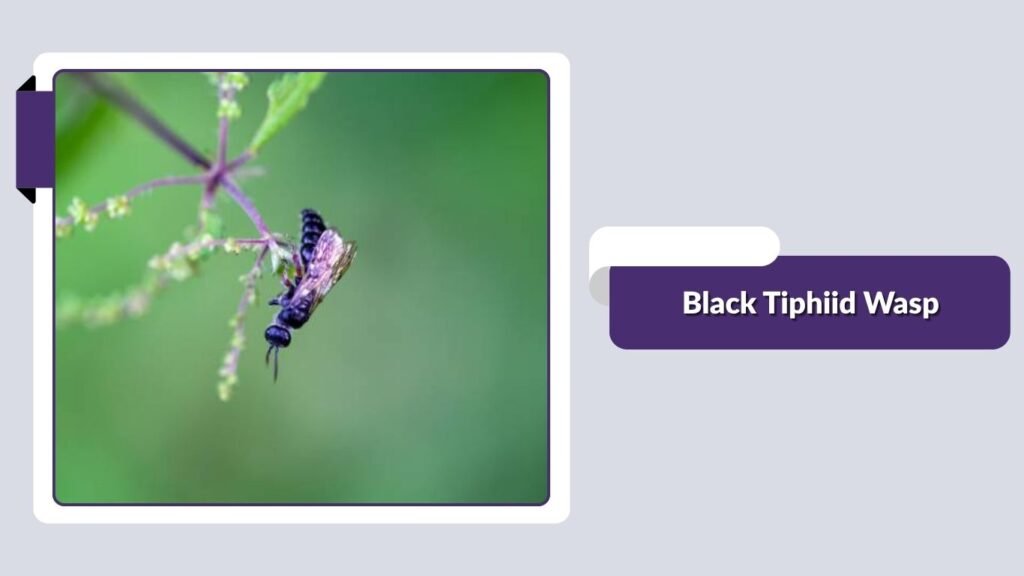
The Black Tiphiid Wasp is a dark, usually medium-sized solitary wasp commonly associated with lawns, gardens, and open areas. Tiphiid wasps are important underground hunters because females seek out beetle larvae living in the soil. Their dark bodies and active flight may attract attention, but they are typically uninterested in people.
Identification
- Body color: Predominantly black
- Length: Often around 10–20 mm
- Wings: Clear to smoky
- Body shape: Sturdy and slightly elongated
- Legs: Strong and suited for moving on soil
- Antennae: Medium to long
- Behavior: Solitary
- Prey: Primarily beetle grubs
Habitat and Activity
Black Tiphiid Wasps are commonly found in grassy areas, gardens, fields, lawns, and woodland clearings. Adults may gather around flowers to drink nectar. Females spend more time near the ground because they must locate beetle larvae hidden beneath the soil surface.
Hunting Beetle Grubs
A female searches the soil until she finds a suitable beetle grub. She digs down, stings the grub, and lays an egg on or near it. The developing wasp larva then feeds on the beetle larva. This makes tiphiid wasps valuable natural enemies of some root-feeding beetles.
Are Black Tiphiid Wasps Dangerous?
Black Tiphiid Wasps are generally non-aggressive and pose little risk to people. Females may be able to sting when handled, but they do not normally attack humans. Their ability to target underground beetle larvae can make them especially useful in lawns, gardens, and other planted areas.
16. Black Scoliid Wasp

The Black Scoliid Wasp is a robust, ground-hunting wasp often seen flying low over lawns, gardens, and open fields. Many species have predominantly black bodies, sometimes with faint yellow, orange, or reddish markings. Although they may appear intimidating because of their size and heavy build, these solitary wasps are usually calm and spend most of their time searching for beetle grubs beneath the soil.
Identification
- Body color: Mostly black or blue-black
- Length: Commonly 15–30 mm
- Body shape: Thick, sturdy, and somewhat hairy
- Wings: Dark, smoky, or slightly iridescent
- Legs: Strong and adapted for digging
- Antennae: Short to medium in length
- Behavior: Solitary
- Typical prey: Beetle grubs
Habitat and Distribution
Black Scoliid Wasps favor sunny places with loose soil and abundant beetle larvae. They are frequently found in lawns, gardens, meadows, pastures, and agricultural areas. Adults may also visit flowers for nectar, especially during warm summer days. Females often fly close to the ground while searching for underground prey.
Hunting and Feeding Behavior
Females locate beetle grubs beneath the soil and dig down to reach them. After finding a suitable grub, the wasp stings and paralyzes it before laying an egg on its body. The larva later feeds on the immobilized grub. Adults feed mainly on flower nectar rather than prey.
Are Black Scoliid Wasps Dangerous?
Black Scoliid Wasps are generally not aggressive toward humans. Females can sting if handled or trapped, but they usually prefer to escape. Their habit of attacking beetle larvae makes them useful natural pest controllers, especially where root-feeding grubs are damaging lawns or garden plants.
17. Black Sand Wasp
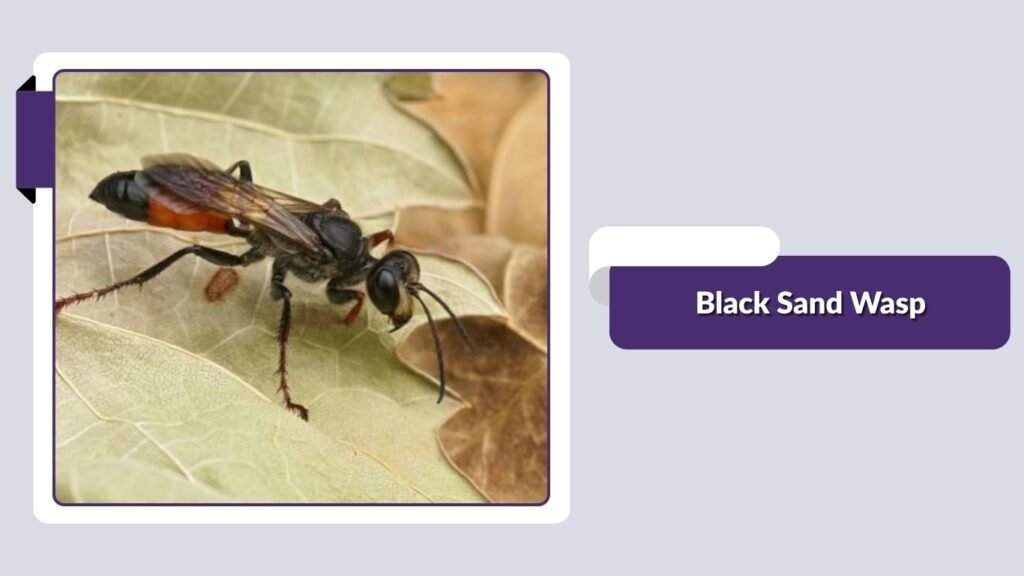
The Black Sand Wasp is a fast-moving solitary wasp commonly associated with dry, sandy, and sunny environments. Its mostly black body, narrow waist, and quick flight make it easy to recognize when it is hunting near the ground. These wasps are skilled predators and often capture flies or other small insects to provision underground nests.
Identification
- Body color: Predominantly black
- Length: Usually 12–25 mm
- Waist: Narrow and clearly defined
- Wings: Clear to smoky
- Legs: Long and suited for running
- Nest: Burrows dug in sandy soil
- Behavior: Solitary
- Prey: Flies and other small insects
Habitat and Nesting
Black Sand Wasps prefer beaches, dunes, sandy trails, dry gardens, riverbanks, and open fields. Females excavate burrows in loose soil, creating chambers beneath the surface. Several individuals may sometimes nest close together when suitable sandy ground is limited, but each female maintains her own nest.
Hunting and Feeding
Females are active hunters that capture flies and other insects in flight or from vegetation. The prey is paralyzed and transported to an underground chamber, where it becomes food for a developing larva. Adults feed mainly on nectar and are often seen visiting flowers near nesting areas.
Are Black Sand Wasps Dangerous?
These wasps pose little danger to people. Even when many are nesting in the same sandy area, they are not usually defensive like social wasps. Females may sting if physically restrained, but normal activity around their nesting sites rarely results in aggression.
18. Black Crabronid Wasp

The Black Crabronid Wasp belongs to a diverse group of solitary hunting wasps that includes many small to medium-sized black species. They may nest in soil, wood, hollow stems, or existing cavities depending on the species. Their prey can include flies, aphids, beetles, leafhoppers, and other insects, making them useful predators in gardens and natural habitats.
Identification
- Body color: Black or dark brown-black
- Length: Usually 5–20 mm
- Body shape: Compact to moderately slender
- Waist: Narrow
- Wings: Clear or slightly smoky
- Antennae: Short to moderately long
- Behavior: Solitary
- Nest: Soil burrows, wood holes, or hollow stems
Habitat and Nesting
Black Crabronid Wasps occur in gardens, grasslands, forests, farms, and urban landscapes. Ground-nesting species dig small tunnels in loose soil, while others use abandoned beetle holes or hollow stems. Females prepare individual chambers where eggs and captured prey are stored.
Hunting and Feeding Behavior
Different species specialize in different prey. Some hunt flies, while others capture aphids, true bugs, beetles, or small grasshoppers. A female paralyzes her prey with a sting and carries it to the nest. Adults generally feed on nectar and may regularly visit small flowers.
Are Black Crabronid Wasps Dangerous?
Black Crabronid Wasps are usually harmless to humans because they are solitary and have no colony to defend. Their small size and shy behavior make stings uncommon. They are valuable predators because they remove many insects that can become pests around gardens and crops.
19. Black Cuckoo Wasp
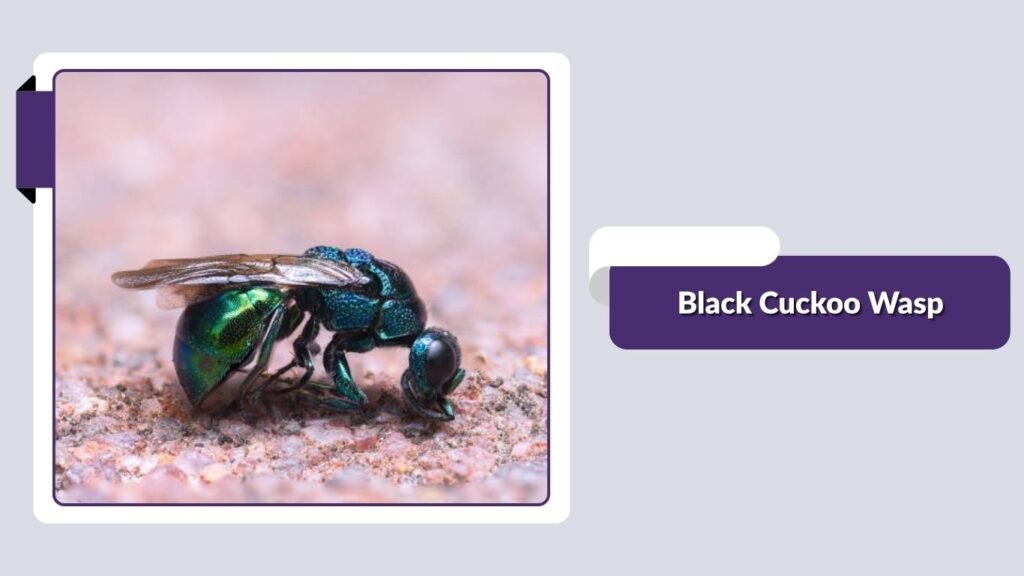
The Black Cuckoo Wasp is a dark or metallic-looking solitary wasp known for its unusual reproductive strategy. Instead of building and provisioning its own nest, a female typically lays eggs in the nests of other solitary wasps or bees. Many cuckoo wasps have hard, sculptured bodies that protect them when entering the nests of potential hosts.
Identification
- Body color: Black, dark blue, or metallic blue-black
- Length: Usually 5–15 mm
- Body surface: Hard, shiny, and textured
- Wings: Clear or lightly tinted
- Body shape: Compact
- Antennae: Short to medium
- Behavior: Nest parasite
- Movement: Often quick and active
Habitat and Where They Live
Black Cuckoo Wasps are commonly found wherever their host species nest. Gardens, sandy areas, dead wood, walls, and old structures may attract them. Adults may be seen inspecting holes, mud nests, and burrows while searching for an opportunity to enter an unattended host nest.
Reproductive Behavior
A female cuckoo wasp slips into the nest of another solitary wasp or bee and deposits an egg. After hatching, the cuckoo wasp larva consumes either the host’s stored food or the developing host larva. Adults themselves generally feed on nectar and other sugary substances.
Are Black Cuckoo Wasps Dangerous?
Cuckoo wasps are not considered dangerous to people. Many species have limited ability to sting humans, and they usually rely on defensive body armor rather than aggression. Their fascinating parasitic lifestyle makes them one of the more unusual groups of dark-colored wasps found around gardens.
20. Black Tarantula Hawk
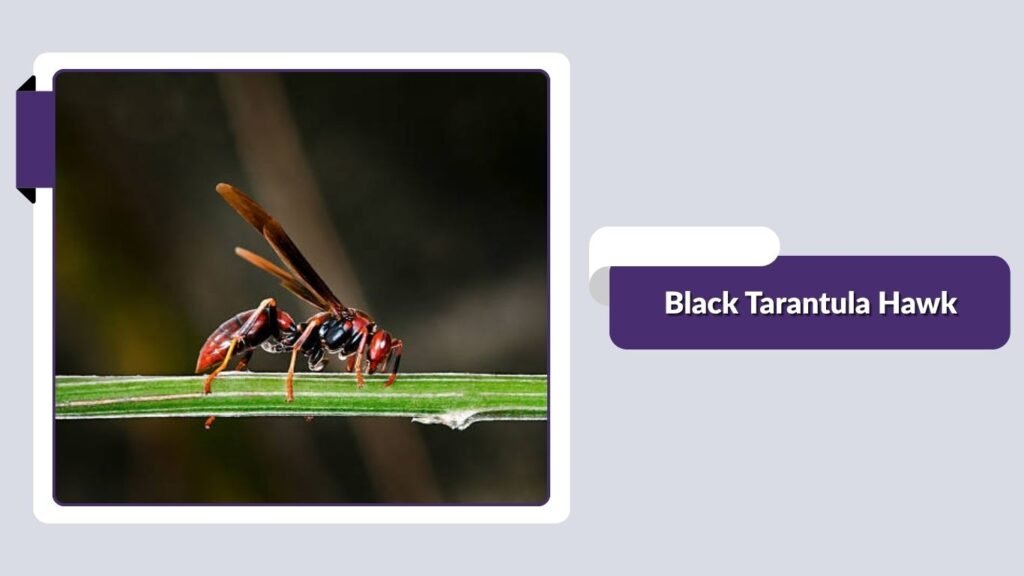
The Black Tarantula Hawk is a large spider wasp with a dark blue-black body and powerful legs. Members of this group are famous for hunting tarantulas, which females paralyze and use as food for their offspring. Their impressive size and strong sting make them intimidating, but they are usually non-aggressive unless handled or severely threatened.
Identification
- Body color: Black to metallic blue-black
- Length: Commonly 25–50 mm
- Wings: Dark, smoky, or sometimes brightly tinted
- Legs: Long, strong, and often spiny
- Antennae: Long and curved
- Body shape: Large and robust
- Prey: Tarantulas and other large spiders
- Behavior: Solitary
Habitat and Distribution
Black Tarantula Hawks are typically associated with warm, dry regions where large spiders are abundant. They may be found in deserts, scrublands, grasslands, and open woodland. Adults frequently visit flowers for nectar, while females spend considerable time searching the ground for tarantula burrows.
Tarantula Hunting Behavior
A female approaches a tarantula carefully and attempts to deliver a sting to its underside. Once paralyzed, the spider is dragged into a burrow or suitable shelter. The female lays an egg on the spider, and the developing larva later feeds on it. Adult wasps rely mainly on nectar for energy.
Are Black Tarantula Hawks Dangerous?
Tarantula Hawks generally avoid people, but their sting is exceptionally painful when they are handled or stepped on. They do not normally chase or attack humans. The safest approach is simply to leave them undisturbed and allow them to continue their natural role as specialized spider predators.
FAQs
1. Are black wasps dangerous to humans?
Most black wasps are not aggressive toward people. Solitary species such as Great Black Wasps, mud daubers, and mason wasps usually sting only when trapped, handled, or directly threatened. However, some larger species can deliver painful stings, so it is best to observe them without touching them.
2. Do black wasps sting?
Yes, females of many black wasp species are capable of stinging. They primarily use their stingers to paralyze prey such as spiders, caterpillars, crickets, and grasshoppers. Stings to humans are usually defensive rather than aggressive. Male wasps generally cannot sting.
3. Where do black wasps build their nests?
Nesting habits vary by species. Some black wasps dig underground burrows, while others build nests from mud or use hollow stems, wood holes, cracks, and existing cavities. Solitary species usually create individual brood chambers rather than large communal nests.
4. What do black wasps eat?
Adult black wasps commonly feed on flower nectar and other sugary plant sources. Females of predatory species capture insects or spiders to feed their larvae. Depending on the species, common prey includes caterpillars, beetle grubs, crickets, grasshoppers, flies, and spiders.
5. Are black wasps beneficial to gardens?
Yes. Many black wasps are highly beneficial because they help control insects that may damage plants. Some hunt caterpillars, beetle larvae, grasshoppers, or flies, while others prey on spiders. Adults also visit flowers for nectar and may contribute to pollination while moving between blooms.