
A red wasp sting usually causes immediate burning pain, redness, itching, and swelling around the affected area. “Red wasp” commonly refers to reddish paper wasps such as Polistes carolina or Polistes metricus, although other red-and-black wasps may also sting. Most reactions can be managed at home, but spreading symptoms, infection, numerous stings, or signs of a severe allergy require medical attention. Questions about treatment, swelling, pain, stinger removal, allergic reactions, and recovery time are especially common.
Do Red Wasps Sting?
Yes. Female red wasps possess stingers and may use them repeatedly. Paper wasps generally sting when trapped, struck, handled, or when they believe their nest is threatened. They are usually less defensive while searching for nectar or insect prey away from the colony.
Carolina paper wasps are large orange-red wasps with dark wings. They frequently nest inside eaves, pipes, sheds, and other protected cavities. Guards may fly near an entrance when people approach, and this species can be more defensive around its nest than some other paper wasps.
What Does a Red Wasp Stinger Look Like?
The stinger is a small, sharp structure at the tip of a female wasp’s abdomen. It may not be visible unless the abdomen is closely examined, which should not be attempted on a live wasp.
Unlike a honeybee’s barbed stinger, a paper wasp’s stinger normally does not remain embedded in human skin. The wasp can withdraw it and sting again without dying. Therefore, finding no stinger after an attack is normal.
What Does a Red Wasp Sting Look Like?
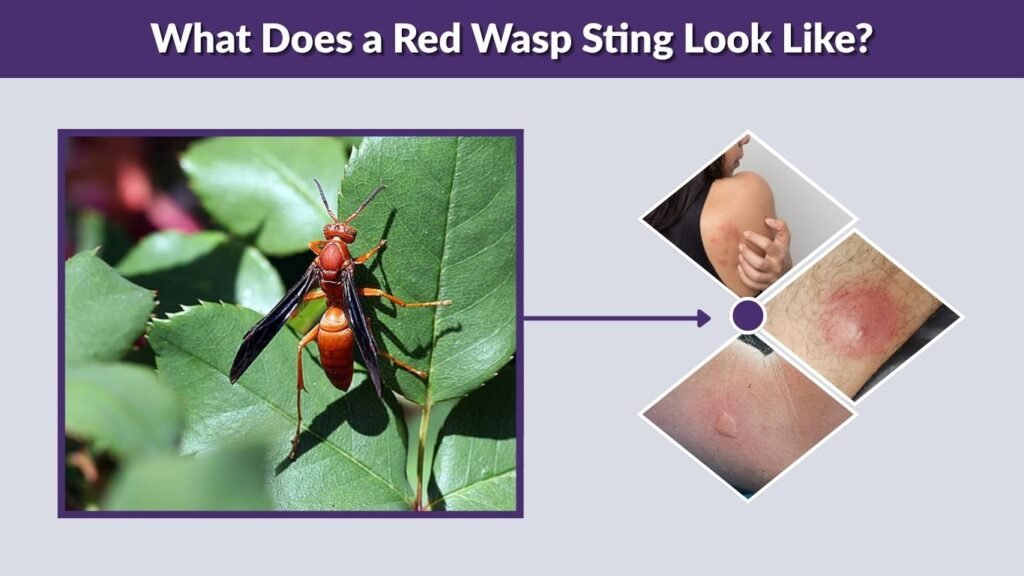
The first sign is usually sudden, sharp, or burning pain. A raised welt may develop, surrounded by an area of redness and swelling. The affected skin can also become warm, itchy, and tender.
Common symptoms include:
- Immediate burning or stabbing pain
- A raised red welt
- Itching or tenderness
- Local warmth and swelling
- A small puncture mark
- Redness around the sting site
The amount of swelling does not always reflect the wasp’s size or the sting’s danger. Reactions vary according to the location of the sting, the amount of venom delivered, the number of stings, and the individual’s sensitivity.
Red Wasp Sting Reactions
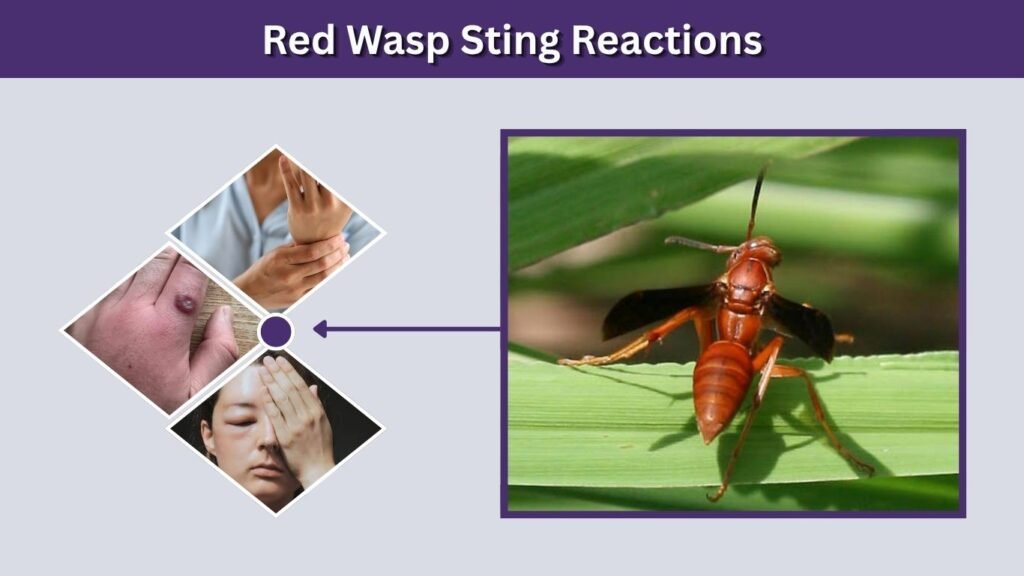
A red wasp sting can produce a normal local reaction, a large local reaction, or a systemic allergic reaction.
| Type of reaction | Typical signs | Recommended response |
| Mild local reaction | Pain, small welt, limited redness | Home care and observation |
| Large local reaction | Swelling extending beyond the sting area | Contact a pharmacist or healthcare professional |
| Possible infection | Increasing warmth, pain, pus, or red streaking | Seek medical advice |
| Severe allergic reaction | Breathing trouble, facial swelling, faintness, widespread hives | Emergency treatment |
Normal Local Reaction
A normal reaction remains concentrated around the sting site. Pain may improve within several hours, while mild redness, swelling, or itching can continue for a few days. Most uncomplicated insect stings clear without medical treatment.
Large Local Reaction
Some people develop swelling that becomes larger over several hours and extends well beyond the original welt. For example, a sting on a finger could cause much of the hand to swell.
A large local reaction can look alarming without necessarily being anaphylaxis. Strong swelling may worsen during the first day or two and sometimes last for up to a week. Medical advice is appropriate when swelling continues to increase, becomes very painful, affects movement, or involves the eye, mouth, or throat.
Allergic Reaction
Anaphylaxis is a rapidly developing, potentially life-threatening reaction to insect venom. Warning signs include difficulty breathing, throat tightness, swelling of the lips or tongue, widespread hives, dizziness, faintness, vomiting, diarrhoea, or a weak and rapid pulse.
Call emergency services immediately when these symptoms occur. A prescribed epinephrine auto-injector should be used according to the person’s emergency plan, but using it does not replace emergency medical care.
How to Treat a Red Wasp Sting

Move away from the nest or attack area first. Paper wasps can sting repeatedly, and nearby colony members may become defensive if the nest remains disturbed.
1. Check for a Stinger
A red paper wasp normally does not leave its stinger behind. However, when the insect was not clearly identified, inspect the site for a small dark object. Remove any visible stinger promptly without digging deeply into the skin.
2. Wash the Area
Clean the sting gently with soap and water. This helps remove dirt and reduces the chance of bacteria entering through scratched or damaged skin.
3. Apply a Cold Compress
Place a clean cold cloth or an ice pack wrapped in fabric over the area for 10–20 minutes. Never place ice directly against bare skin. Repeat as needed, allowing the skin to return to its normal temperature between applications.
4. Raise the Affected Limb
When the sting is on an arm, hand, leg, or foot, keeping it elevated may help control swelling. Remove rings, bracelets, watches, or tight shoes before swelling increases.
5. Consider Symptom Relief
A pharmacist or healthcare professional may recommend an oral antihistamine for itching, a suitable pain reliever, or hydrocortisone cream for local inflammation. Product suitability depends on age, pregnancy, allergies, existing conditions, and other medications, so follow the label and seek professional advice when uncertain.
Redness and Swelling After a Wasp Sting
Some redness spreading gradually around a sting during the first several hours can be part of a large local inflammatory reaction. It does not automatically indicate an infection.
Marking the outer edge with a pen and noting the time can help you monitor whether the affected area is continuing to expand. Avoid scratching, since broken skin allows bacteria to enter and may cause a secondary infection.
Contact a healthcare professional when the area becomes increasingly hot and painful, swelling worsens after several days, pus appears, or a red line travels away from the sting. These can be signs of infection or another complication.
How Long Does a Red Wasp Sting Last?

Sharp pain often begins immediately and may settle within a few hours. Mild redness and itching commonly last one to several days. A large local reaction can worsen over the following one or two days and may take up to a week to resolve.
Recovery may take longer after multiple stings, repeated scratching, infection, or a strong local reaction. Seek medical advice when symptoms are not improving, pain becomes severe, or the affected area continues expanding.
Red Wasp Sting Home Remedies to Avoid
Do not apply petrol, bleach, soil, toothpaste, undiluted essential oils, or harsh chemicals. Such substances may irritate the wound, contaminate the skin, or delay appropriate treatment.
The safest immediate measures are washing, cold compression, elevation, and approved symptom-relief products. Some health authorities advise avoiding unproven household remedies because their effectiveness is uncertain and they may worsen irritation.
Red Wasp Sting vs Yellowjacket Sting
Both red paper wasps and yellowjackets can sting more than once. The pain and reaction depend more on the individual and the number and location of stings than on colour alone.
Yellowjackets are generally stockier and may defend underground or concealed nests aggressively. Red paper wasps are longer-legged and commonly protect open combs or nests inside eaves and other sheltered spaces. Paper wasps are generally considered less aggressive than yellowjackets, although colonies can still respond forcefully when disturbed.
FAQs
Do red wasps die after stinging?
No. Red paper wasps can usually withdraw their smooth stingers and sting repeatedly without dying. Honeybees are more likely to leave a barbed stinger and venom sac in the skin.
Does a red wasp leave its stinger?
Usually not. When a stinger remains visible, the insect may have been a honeybee or the wasp’s stinger may have broken off unusually. Remove any visible stinger promptly without digging into the wound.
Why is my wasp sting red and hot?
Local inflammation can make the area red, warm, swollen, and painful. Increasing heat, worsening pain, pus, red streaking, or symptoms that develop several days later could indicate infection and should be professionally assessed.
Are red wasp stings dangerous?
Most produce only local pain and swelling. They become dangerous when numerous stings occur or when venom triggers anaphylaxis, which can cause breathing difficulty, throat swelling, faintness, and other body-wide symptoms.
When should I see a doctor?
Seek medical advice for worsening swelling, signs of infection, severe or persistent pain, multiple stings, or a sting inside the mouth or near the eye. Breathing trouble, facial swelling, widespread hives, dizziness, or fainting requires emergency care.