
The red paper wasp is a large, reddish-brown wasp commonly seen around gardens, homes, sheds, and wooded areas. It is especially familiar in warm parts of the United States, including Texas and other southern states. Red paper wasps help control caterpillars and other plant-feeding insects, but they may sting repeatedly when their nest is threatened. Their color also causes them to be called red wasps or red hornets, even though they are generally paper wasps rather than true hornets. Understanding their appearance, behavior, nesting habits, and sting risk can help you respond safely.
What Is a Red Paper Wasp?
Red paper wasps are social wasps belonging to the genus Polistes. They live in colonies organized around a queen, female workers, males, and developing larvae.
Their common name comes from their reddish coloration and the paper-like nests they build from chewed wood fibers. Red paper wasps are beneficial predators that collect caterpillars and other soft-bodied insects to feed their larvae.
Adults commonly visit flowers for nectar and may be seen searching plants, wooden structures, and sheltered areas for food or nesting material.
What Does a Red Wasp Look Like?
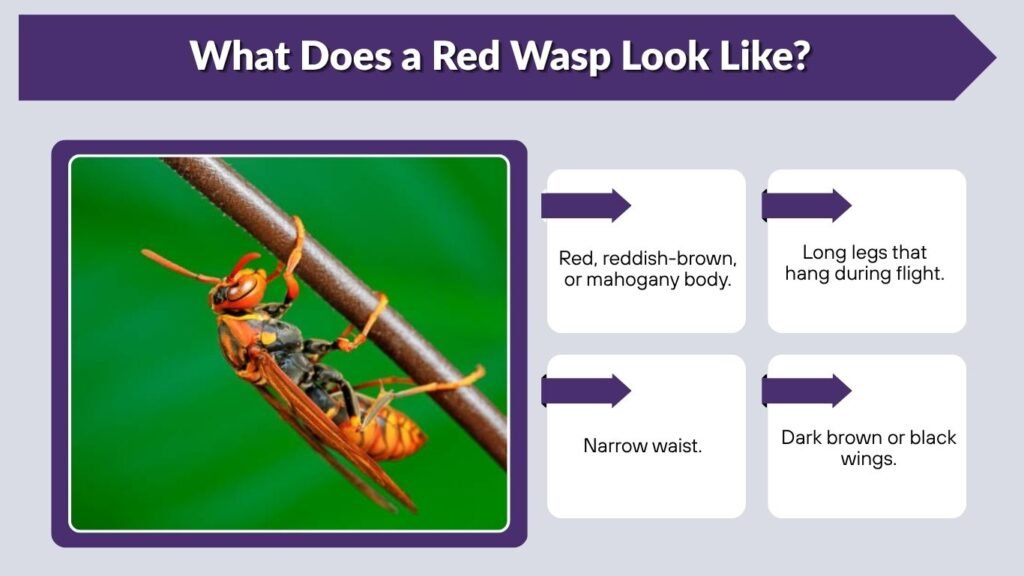
A typical red paper wasp has a slender body, narrow waist, long antennae, and long legs. Its body may appear bright red, dark red, reddish brown, mahogany, or partly black.
The wings are usually dark or smoky and fold lengthwise against the body when the wasp is resting.
Red Paper Wasp Identification
Look for these common characteristics:
- Red, reddish-brown, or mahogany body
- Narrow waist
- Long legs that hang during flight
- Dark brown or black wings
- Long, slightly curved antennae
- Smooth or lightly textured body
- Slender abdomen
- Approximately ¾ to 1¼ inches long
- Slow, deliberate flight around structures and plants
Color varies between species and individuals. Some red wasps have black wings, black markings, yellow areas, or a darker abdomen.
Red Paper Wasp vs. Red Hornet
“Red hornet” is often an informal regional name for a red paper wasp. True hornets and paper wasps differ in body shape, nesting style, and classification.
| Feature | Red paper wasp | True hornet |
| Body shape | Slender with long legs | Thick and robust |
| Nest | Open comb with visible cells | Usually enclosed paper nest |
| Flight | Legs often hang below body | Legs usually held closer |
| Common color | Red or reddish brown | Varies by species |
| Colony behavior | Defensive around nest | Often strongly defensive |
An open, umbrella-shaped nest is one of the clearest signs that the insect is a paper wasp rather than a hornet.
Red and Black Wasps
Several wasps can appear red and black. A red paper wasp may have a dark abdomen, black wings, or black areas on the thorax. Spider wasps, digger wasps, and other solitary species may also display this color combination.
A red wasp with long hanging legs and an open paper nest is likely a paper wasp. A red and black wasp running across the ground or dragging a spider may be a solitary spider wasp.
Color alone is therefore not enough for accurate identification.
Where Are Red Wasps Found?

Red paper wasps are especially common in warm regions of North America. They are frequently reported in:
- Texas
- Oklahoma
- Arkansas
- Missouri
- Tennessee
- Alabama
- Georgia
- Florida
- Other southern and southeastern states
The exact species varies by region. Warm temperatures and long growing seasons allow colonies to remain active for extended periods.
Red wasps may live in forests, gardens, farms, suburban yards, and cities as long as sheltered nesting sites and insect prey are available.
What Does a Red Wasp Nest Look Like?
A red paper wasp nest consists of exposed hexagonal cells arranged in a single paper comb. It often resembles a small upside-down umbrella attached to a surface by a narrow stalk.
Unlike the enclosed nests of many hornets and yellowjackets, a paper wasp nest has no protective outer envelope. Eggs, larvae, and capped cells may be visible from below.
Common Nesting Locations
Red wasps may build nests:
- Beneath roof eaves
- Inside sheds and barns
- Under decks and porches
- Behind shutters
- Beneath outdoor furniture
- Inside garages
- Around window frames
- On tree branches
- Inside birdhouses
- Under playground equipment
- In attics and wall openings
- Beneath mailboxes and utility covers
Nests are often small early in the season but expand as the colony produces more workers.
How Does a Red Wasp Colony Develop?
A fertilized queen survives the cold season in a protected location. During spring, she emerges, selects a nesting site, and begins constructing the first cells.
The queen lays eggs and initially performs all tasks herself, including hunting, feeding larvae, and defending the nest. Once the first female workers become adults, they take over foraging and nest expansion.
The colony grows through summer. New queens and males are produced later in the season. Workers and old queens eventually die as temperatures fall, while fertilized new queens seek shelter for the next year.
What Do Red Wasps Eat?

Adult red wasps primarily consume nectar, plant sap, fruit juices, and other sugary liquids. They visit flowers and may contribute to pollination while feeding.
Their larvae require protein. Adult workers hunt caterpillars and other soft-bodied insects, chew the prey into small pieces, and carry it back to the nest.
Common food sources include:
- Caterpillars
- Moth and butterfly larvae
- Beetle larvae
- Flies
- Other small insects
- Flower nectar
- Plant sap
- Overripe fruit
- Sugary liquids
This insect-hunting behavior makes red paper wasps beneficial in gardens and natural habitats.
Do Red Paper Wasps Sting?
Yes, female red paper wasps can sting. Their stingers are used for defense and are not usually left behind in the skin, allowing them to sting more than once.
A wasp searching for nectar or prey normally has little reason to attack. Most stings happen when someone approaches a nest, blocks the flight path, traps a wasp against clothing, or attempts to remove the colony.
Situations That Increase Sting Risk
A sting is more likely when someone:
- Touches or shakes the nest
- Swats at a nearby wasp
- Uses a mower close to the colony
- Reaches beneath furniture containing a nest
- Opens a shed or utility box near the comb
- Blocks the nest entrance
- Traps the wasp inside clothing
- Attempts removal without protection
Move away calmly if several wasps begin flying around you. Avoid striking or crushing them near the colony.
Are Red Wasps Aggressive?
Red paper wasps are best described as defensive rather than constantly aggressive. Foraging adults generally ignore people, but colony members may respond strongly when they believe their nest is threatened.
Their level of defensiveness can depend on:
- Distance from the nest
- Colony size
- Time of year
- Weather conditions
- Repeated disturbance
- Nest location
- Individual species
A nest beside a doorway creates greater risk than one high in an unused tree because people repeatedly pass through its defensive area.
Are Red Wasps Dangerous?
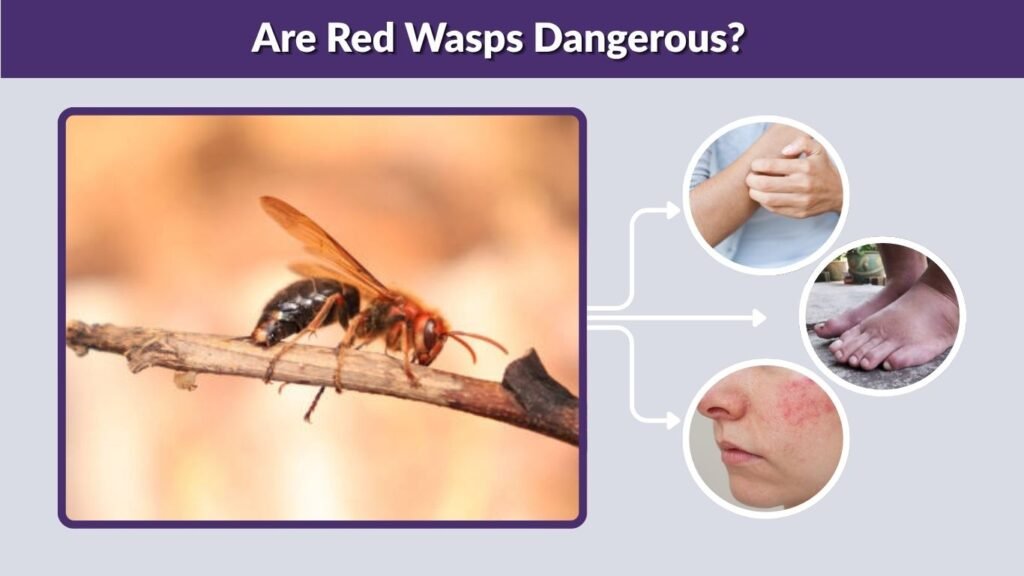
Red wasps can be dangerous to people who are allergic to insect venom or who receive numerous stings. For most individuals, one sting causes immediate pain, redness, itching, and localized swelling.
Seek urgent medical help when a sting is followed by difficulty breathing, swelling of the face or throat, widespread hives, dizziness, fainting, confusion, or rapidly worsening symptoms.
Stings inside the mouth or throat and multiple stings may also require prompt medical evaluation.
What to Do After a Red Wasp Sting
Move away from the nest first to prevent additional stings. Wash the area gently with soap and water, then apply a cold pack wrapped in cloth for short periods.
Avoid scratching the sting site because broken skin can become infected. Follow the label directions when considering an over-the-counter product, and consult a medical professional when symptoms are severe, unusual, or persistent.
Paper wasps rarely leave their stingers behind, but inspect the area if the insect was not clearly identified.
Red Wasp Queen vs. Worker
Queens and workers generally have similar colors and body shapes, making visual separation difficult. A queen is usually larger and has a more developed abdomen, but size alone is not always reliable.
Behavior and season provide stronger clues. A solitary red paper wasp building a new nest in spring is likely a queen. During summer, most wasps hunting around plants or expanding an established nest are workers.
Only females can sting. Male paper wasps lack functional stingers.
How to Get Rid of Red Wasps

The safest approach depends on the nest’s location, size, and level of activity. A distant nest that does not interfere with people may sometimes be left alone because the colony helps control garden pests.
Removal becomes more important when the nest is near a doorway, playground, pet area, walkway, mailbox, or frequently used structure.
Safe Management Steps
- Keep children and pets away from the nest.
- Do not strike, burn, flood, or knock down an active colony.
- Avoid blocking the wasps’ flight path.
- Keep food and sugary drinks covered outdoors.
- Seal structural openings after the nest is inactive.
- Inspect eaves and furniture early in spring.
- Remove abandoned nests when no insects remain.
- Contact a pest professional for large or difficult nests.
Professional help is especially appropriate when someone nearby has a sting allergy, the colony is inside a wall, or the nest cannot be reached without climbing.
How to Prevent Red Wasp Nests
Inspect sheltered areas during spring, when queens begin constructing small nests. An early nest may contain only a few cells, but it should still be approached cautiously.
Seal cracks around siding, vents, rooflines, windows, and utility openings. Store outdoor furniture carefully and inspect it before use.
Keep garbage covered and clean up sugary drinks, ripe fruit, and other foods that may attract adult wasps. Regularly examine sheds, porches, decks, and playground equipment for new combs.
FAQs
Are red wasps and red paper wasps the same?
“Red wasp” is a broad common name, but it often refers to red paper wasps in the southern United States. Other red-colored wasp species also exist, so body shape and nest type should be considered.
What does a red paper wasp nest look like?
It is an exposed paper comb with visible hexagonal cells. The comb usually hangs from a narrow stalk beneath an eave, branch, railing, piece of furniture, or another protected surface.
Are red paper wasps more aggressive than other wasps?
They can defend their nests strongly, but adults away from the colony usually avoid conflict. Risk depends largely on nest location, colony size, season, and the amount of disturbance.
Can a red wasp sting multiple times?
Yes. A red paper wasp’s stinger normally does not remain embedded in the skin, allowing the insect to sting repeatedly while defending itself or its colony.
Should I remove a red wasp nest?
Remove or professionally manage nests that create a realistic sting risk. A distant nest in an unused area may sometimes be left alone because red wasps prey on many garden pests.