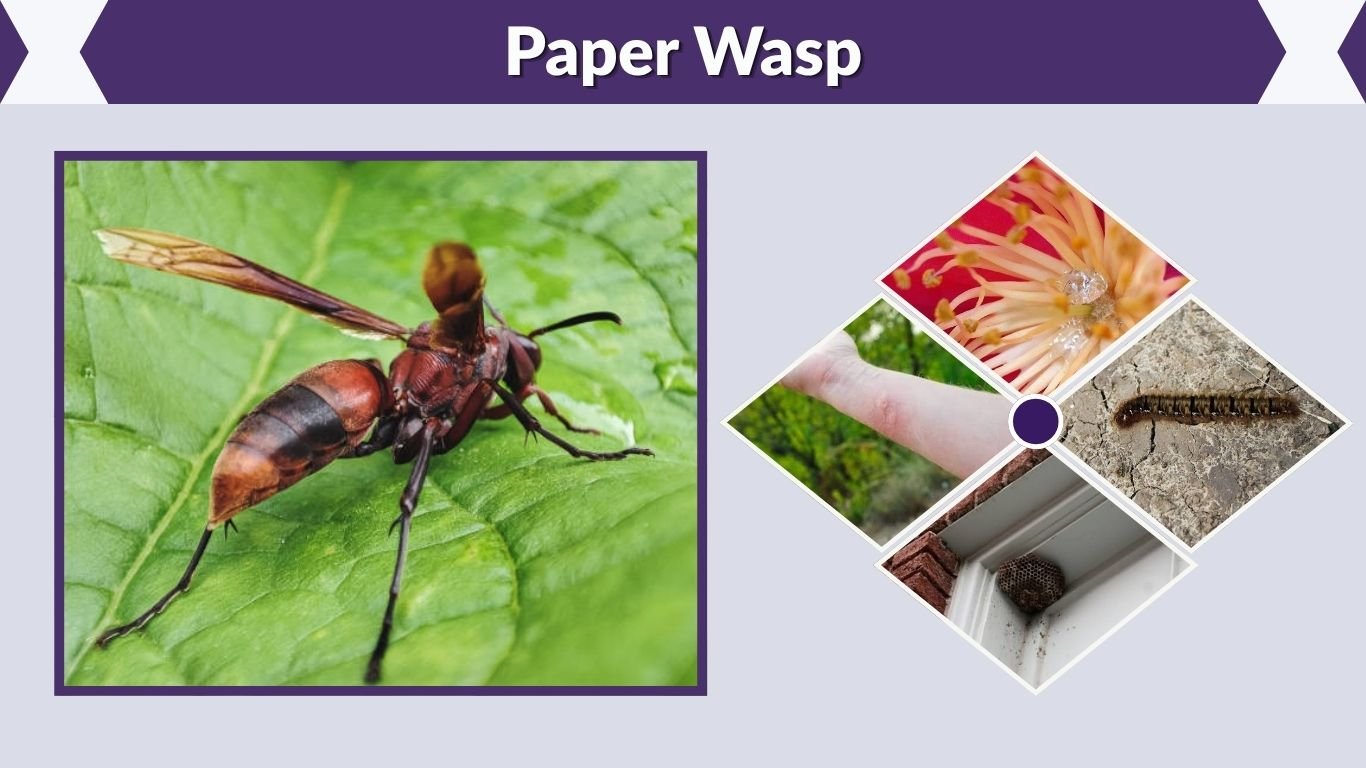
A paper wasp is a slender social wasp recognized by its narrow waist, long dangling legs, and exposed, umbrella-shaped nest. Most belong to the genus Polistes. They are beneficial predators that capture caterpillars and other garden pests, but females can sting repeatedly when their nest is threatened. Paper wasps are usually less troublesome away from the colony, so removal is mainly necessary when a nest is close to doors, walkways, play areas, or other frequently used spaces.
Paper Wasp Quick Facts
| Feature | Description |
| Scientific group | Primarily the genus Polistes |
| Family | Vespidae |
| Typical size | Approximately ½–1 inch |
| Colors | Brown, red, black, yellow, or combinations |
| Body shape | Slender with a narrow waist and long legs |
| Nest | Exposed paper comb with visible hexagonal cells |
| Adult diet | Nectar and other sugary liquids |
| Larval diet | Chewed caterpillars and soft-bodied insects |
| Sting | Females can sting repeatedly |
| Colony type | Seasonal social colony |
The supplied topics emphasize identification, nests, stings, aggression, control, queens, diet, and comparisons with yellowjackets.
What Does a Paper Wasp Look Like?
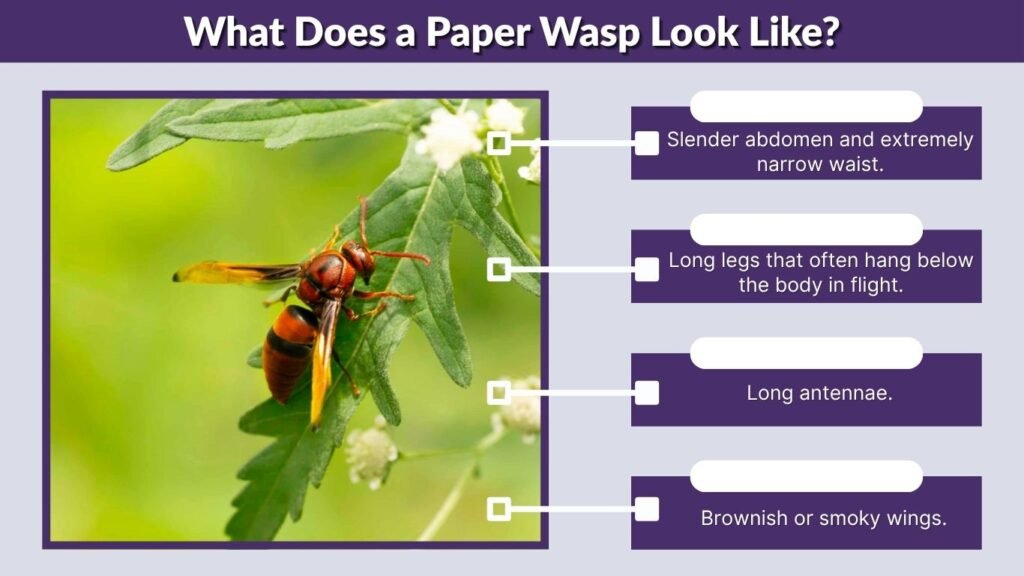
Paper wasps have elongated bodies, narrow waists, long antennae, and relatively smooth bodies with little visible hair. Their coloration varies widely among species. Some are reddish brown, while others are black with bright yellow bands.
Paper Wasp Identification
- Slender abdomen and extremely narrow waist
- Long legs that often hang below the body in flight
- Long antennae
- Brownish or smoky wings
- Black, yellow, red, or brown body markings
- Wings folded lengthwise while resting
- Open paper nest with exposed cells
The long legs and slim body distinguish paper wasps from the shorter, stockier yellowjackets. Some species, especially the European paper wasp, have strong black-and-yellow markings and may initially resemble yellowjackets.
Red, Brown, and Black Paper Wasps
“Paper wasp” refers to a broad group rather than one color. Red paper wasps, including the Carolina paper wasp, are mainly rusty red. Northern and European paper wasps commonly display brown, black, or yellow markings. Color alone is not enough for precise identification because several species have overlapping patterns.
What Does a Paper Wasp Nest Look Like?
A paper wasp nest consists of one exposed layer of hexagonal brood cells. It resembles a small upside-down umbrella and hangs from a short stalk called a petiole.
The wasps create the nest by scraping weathered wood and plant fibres, chewing them, and mixing them with saliva. The dried material forms a lightweight, gray or brown paper-like structure. Unlike most yellowjacket and hornet nests, it has no outer envelope covering the cells.
Common Nesting Locations
Paper wasps frequently build beneath:
- Roof eaves and porch ceilings
- Decks and railings
- Window ledges
- Sheds and carports
- Outdoor furniture
- Grills and unused equipment
- Tree branches and shrubs
- Mailboxes and utility boxes
They prefer protected locations that provide support and shelter from heavy rain. The exposed cells may contain eggs, white larvae, or capped pupae.
Paper Wasp Queen and Life Cycle
A paper wasp colony normally lasts for one warm season. A mated queen survives winter inside a protected location and emerges during spring to start a new nest.
The Founding Queen
The queen initially works alone. She constructs a small group of cells, lays eggs, hunts prey, and feeds the first larvae. Once the first female workers mature, they take over most nest construction, feeding, and defense while the queen concentrates on egg production.
Queen vs Worker
Paper wasp queens and workers often look remarkably similar. The queen may be somewhat larger, but size alone is unreliable. Her reproductive role and dominant behavior provide stronger identification clues.
Workers are also females and possess functioning stingers. Males generally have longer antennae with curved tips, often show more yellow on the face, and cannot sting.
End of the Colony
Later in the season, colonies produce males and future queens. After mating, new queens seek shelter for winter. Workers, males, and the old queen normally die as temperatures fall, and the abandoned nest is generally not reused. A new queen may nevertheless build another nest in the same sheltered area the following year.
What Do Paper Wasps Eat?
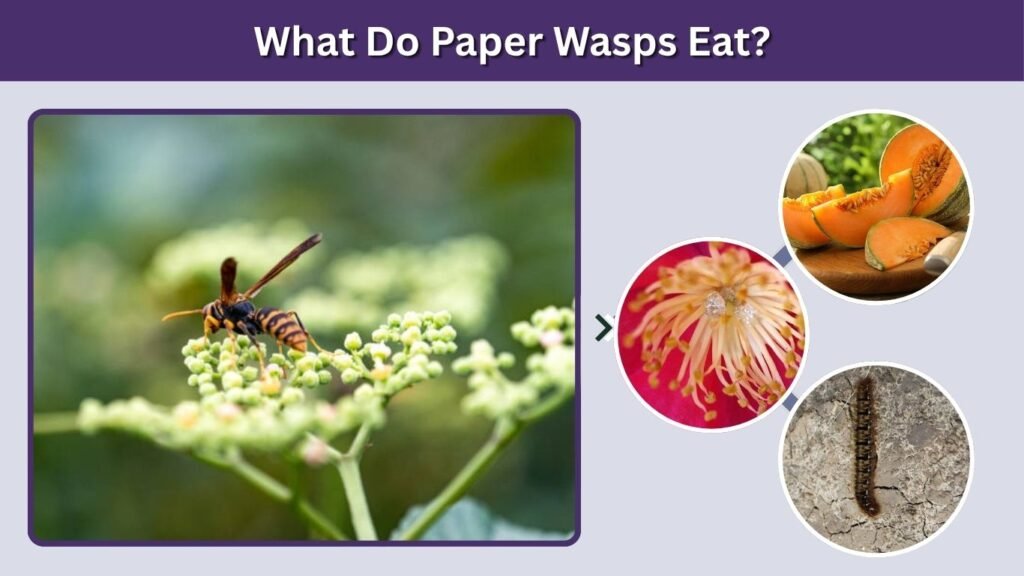
Adult paper wasps consume nectar and other sugar-rich liquids for energy. They also visit flowers and may contribute to pollination.
Workers hunt caterpillars and other soft-bodied insects for the larvae. They chew captured prey into small portions and carry it back to the nest. This feeding behavior makes paper wasps useful predators in gardens, orchards, and vegetable plots.
A nest located away from people can therefore provide natural pest control. Removing every paper wasp colony is unnecessary when it presents no meaningful sting risk.
Are Paper Wasps Aggressive?
Paper wasps are generally not aggressive while flying between flowers or searching for prey. They are most likely to sting when handled, trapped against the skin, or defending their colony.
Risk increases when someone:
- Touches or strikes the nest
- Moves equipment containing a nest
- Creates vibration near the colony
- Opens a door or shutter beside the nest
- Mows or trims vegetation extremely close to it
Different species and colonies vary in defensiveness. Red paper wasps may respond forcefully to close disturbance, but even they usually sting because the nest appears threatened rather than because they are actively hunting people.
Do Paper Wasps Bite or Sting?
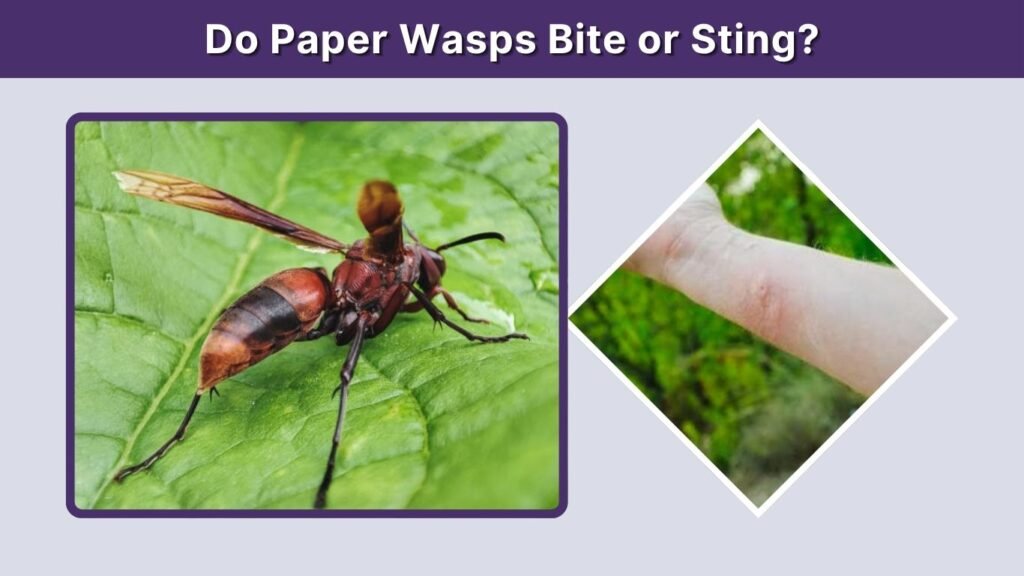
Paper wasps possess jaws that help them gather nest material and handle prey, but their primary defense against people is a sting. Female queens and workers have smooth stingers and can sting multiple times.
A typical sting may cause immediate sharp pain, redness, itching, tenderness, and localized swelling. Most reactions are mild, but wasp venom can trigger a severe allergic reaction in sensitive individuals.
Paper Wasp Sting Treatment
For a mild reaction:
- Move away from the nest to prevent additional stings.
- Wash the affected skin with soap and water.
- Apply a wrapped cold pack for 10–20 minutes.
- Elevate the affected arm or leg when practical.
- Use an appropriate antihistamine, pain reliever, or anti-itch treatment according to its label and medical guidance.
Seek emergency help for breathing difficulty, throat or facial swelling, faintness, widespread hives, vomiting, or other symptoms of anaphylaxis. Use a prescribed epinephrine auto-injector immediately when available and follow the person’s emergency plan.
Paper Wasp vs Yellowjacket
Paper wasps and yellowjackets are social wasps, but their appearance, nests, and habits differ.
| Feature | Paper Wasp | Yellowjacket |
| Body | Long and slender | Short and stocky |
| Legs in flight | Often hang downward | Held closer to the body |
| Nest | Exposed single comb | Covered nest with multiple combs |
| Common location | Eaves, branches, and structures | Ground cavities, walls, or enclosed spaces |
| Colony size | Usually relatively small | Frequently much larger |
| Foraging | Hunts caterpillars and visits flowers | Hunts insects and scavenges food |
| Defensiveness | Mainly near the exposed nest | Often strongly defensive around the colony |
A nest with fully visible hexagonal cells is probably a paper wasp nest. A concealed entrance in soil or a wall is more consistent with a yellowjacket colony.
Paper Wasps in the House
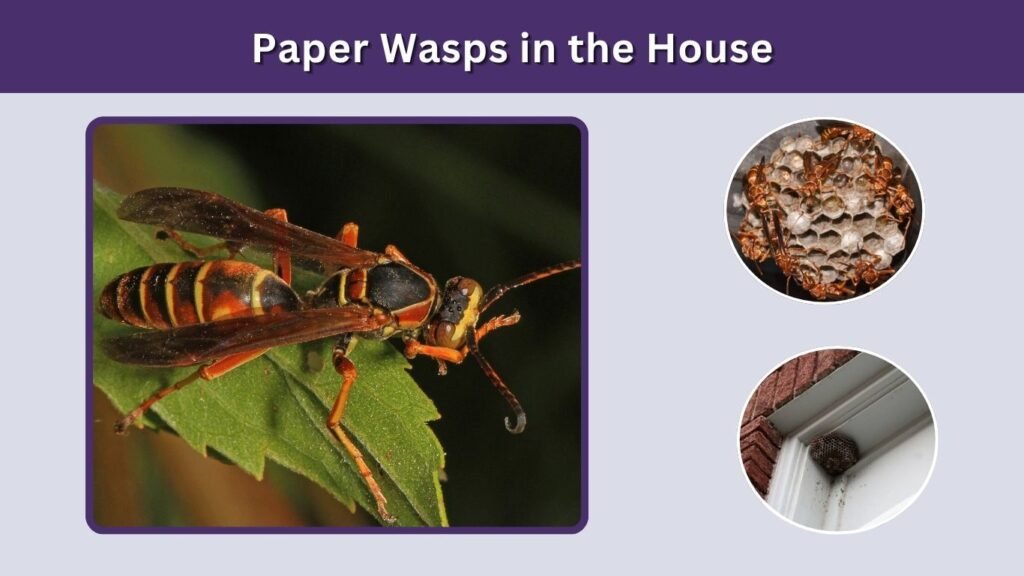
An individual paper wasp indoors may have entered through an open window or door. Queens may also overwinter in attics, sheds, wall gaps, and other protected structures.
A single wasp does not necessarily mean an active indoor nest. Repeated activity around one crack, vent, ceiling opening, or window frame may indicate a nearby colony and should be inspected carefully from a safe distance.
How to Get Rid of Paper Wasps
Leave an isolated nest alone when it does not interfere with people. Consider removal when it is beside an entrance, playground, balcony, walkway, frequently used equipment, or an area occupied by someone with a serious sting allergy.
Safe Nest Removal
Do not strike, burn, crush, or spray a nest with a garden hose. These actions may provoke multiple wasps without eliminating the colony.
For a small, accessible nest, use only a pesticide specifically labelled for wasp and hornet nests and follow all distance, protective-clothing, ventilation, and re-entry instructions. Keep children and pets away. Once activity has completely stopped, the inactive nest can be removed and the attachment area cleaned.
Professional pest control is the safer choice when the nest is large, difficult to reach, inside a wall, or near someone with a known allergy. Early-season nests are easier to manage because they contain fewer workers than mature colonies.
FAQs
Are paper wasps dangerous?
They are not usually dangerous when left undisturbed, but females can sting repeatedly while defending a nest. People with venom allergies face the greatest medical risk.
How painful is a paper wasp sting?
A sting normally causes immediate sharp or burning pain. The intensity varies according to the species, sting location, number of stings, and individual sensitivity, so a pain-index number cannot predict every experience.
Should I remove a paper wasp nest?
Removal is mainly necessary when the nest creates a realistic chance of accidental contact. An isolated nest can often be tolerated because the wasps prey on garden pests.
Can paper wasps sting more than once?
Yes. Their smooth stingers normally remain attached to the wasp, allowing a female to sting repeatedly.
Do paper wasps return every year?
The old colony generally dies and its nest is not reused. However, a newly emerged queen may choose the same protected structure and build a fresh nest nearby the following spring.