
The Guinea paper wasp (Polistes exclamans) is a slender, reddish-brown and yellow social wasp found mainly in the southern and central United States, Mexico, and some introduced locations. It builds exposed, umbrella-shaped paper nests beneath eaves, railings, signs, branches, and other sheltered surfaces. Although it can deliver a painful sting, it usually avoids people unless its nest is approached or disturbed.
Guinea Paper Wasp Quick Facts
The Guinea paper wasp belongs to the same group as other umbrella paper wasps. The name “Guinea wasp” is a regional common name for Polistes exclamans, not a separate type of wasp.
| Feature | Description |
| Common name | Guinea paper wasp |
| Scientific name | Polistes exclamans |
| Phylum | Arthropoda |
| Class | Insecta |
| Order | Hymenoptera |
| Family | Vespidae |
| Subfamily | Polistinae |
| Nest type | Exposed, open paper comb |
| Diet | Nectar and soft-bodied insects |
| Sting risk | Mainly when the nest is threatened |
What Does a Guinea Paper Wasp Look Like?

Guinea paper wasps have narrow waists, long legs, folded wings, and reddish-brown bodies decorated with yellow markings. Females have forewings measuring approximately 13–16.5 millimeters, while males have forewings measuring around 12–15 millimeters.
Identification Features
Common characteristics include:
- Reddish-brown head and thorax
- Yellow bands across the abdomen
- Yellow markings on the face and body
- Dark antennae with orange tips
- Long, dangling legs
- Narrow waist
- Brownish, translucent wings
- A slim body rather than the compact shape of a yellowjacket
The amount of yellow may vary among individual wasps and populations. Florida specimens, for example, may show less extensive yellow coloration than wasps found elsewhere.
Male vs Female Guinea Paper Wasp
Female paper wasps perform most colony work and possess a functional stinger. They build the nest, collect food, care for larvae, and defend the colony.
Males appear later in the colony cycle and do not have stingers. They can often be distinguished by differences in their antennae, faces, and abdominal tips, although close examination may be necessary.
Guinea Wasp vs Paper Wasp
A Guinea wasp and a Guinea paper wasp are the same insect when the name refers to Polistes exclamans. It is one species within the broader paper-wasp group.
| Feature | Guinea Paper Wasp | Paper Wasps Generally |
| Scientific classification | Polistes exclamans | Numerous Polistes species |
| Color | Reddish brown with yellow bands | Brown, red, black, or yellow |
| Nest | Open, exposed comb | Usually an exposed paper comb |
| Social behavior | Small annual colony | Similar colony structure |
| Sting ability | Females can sting | Females can sting |
The term “paper wasp” includes European paper wasps, northern paper wasps, red paper wasps, Guinea paper wasps, and many related species.
Where Do Guinea Paper Wasps Live?
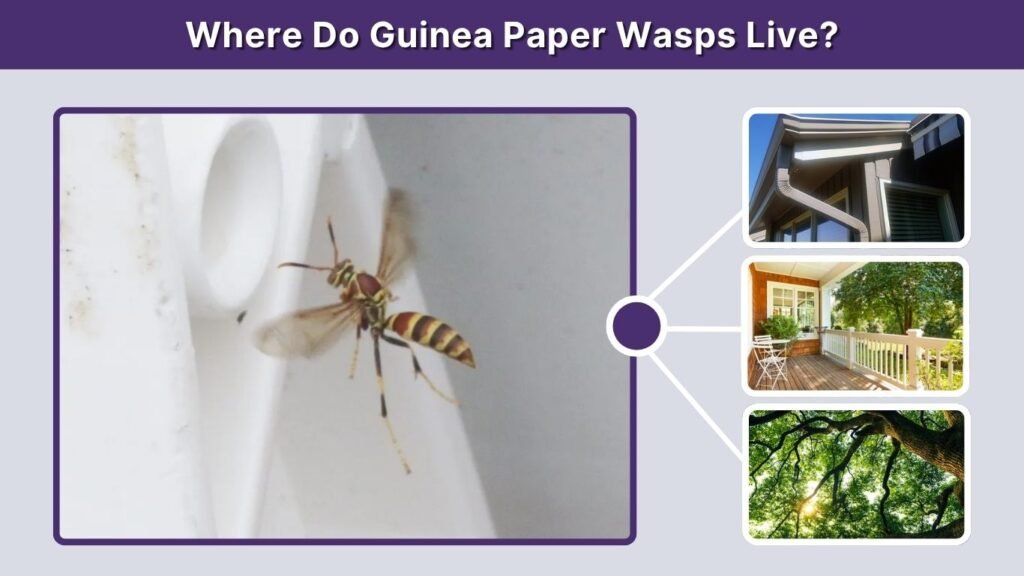
The species occurs from parts of the eastern and central United States into Mexico. Records extend from New Jersey and Florida west through Nebraska, Colorado, and Texas. It has also been introduced into some western states and Hawaii.
Guinea Paper Wasp Habitat
Guinea paper wasps prefer open, warm environments with sheltered nesting surfaces and nearby vegetation. They are frequently associated with yards, gardens, agricultural areas, woodland edges, and human-made structures.
They may forage around flowers and vegetation but build nests where the comb receives protection from heavy rain and direct disturbance.
Common Nesting Locations
Nests may be found beneath:
- Roof eaves
- Porch ceilings
- Deck railings
- Window frames
- Outdoor signs
- Bridges
- Palm fronds
- Tree branches
- Shrubs
- Outdoor furniture
- Sheds and garages
The species often accepts well-lit, open sites on buildings but may also nest on leaves, twigs, trees, and other natural supports.
What Does a Guinea Paper Wasp Nest Look Like?
A Guinea paper wasp nest consists of a single exposed layer of hexagonal cells. It hangs from a short stalk called a petiole and usually resembles a small umbrella.
Unlike a hornet or yellowjacket nest, it has no protective paper envelope surrounding the comb. Eggs, larvae, and capped cells may therefore be visible from below. Paper wasps create the structure by chewing plant fibers and combining them with saliva.
How Large Is the Colony?
Paper-wasp colonies are generally much smaller than large yellowjacket colonies. Many contain fewer than 100 adults, although nest and colony size can vary with the season, food availability, predation, and the success of the queen.
Some Guinea paper wasp colonies establish nearby satellite nests. Research suggests that dividing brood among separate nests may reduce the chance that a single predator destroys the colony’s entire reproductive effort.
Guinea Paper Wasp Queen and Colony Cycle
A fertilized queen survives the colder season in a protected location and becomes active in spring. She selects a nesting site, creates the first paper cells, lays eggs, and feeds the first larvae herself.
From Queen to Worker Colony
After the first female workers emerge, they take over most nest construction, foraging, larval care, and defense. The queen then concentrates primarily on egg production.
Later in the season, the colony produces males and new reproductive females. The workers, males, old queen, and exposed nest generally do not survive prolonged cold weather. Newly mated females seek protected places where they can remain until spring.
What Do Guinea Paper Wasps Eat?
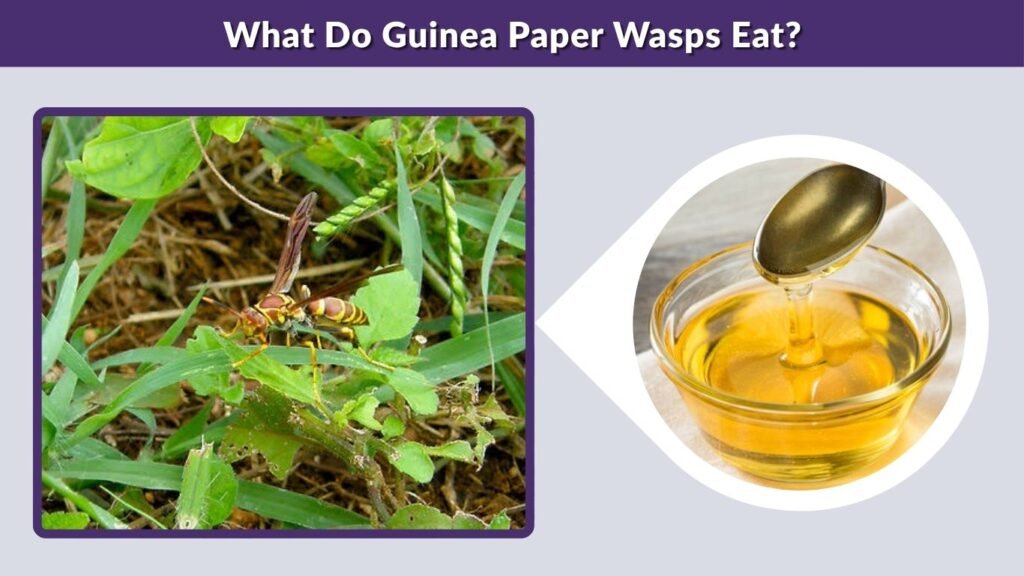
Adult Guinea paper wasps obtain energy from nectar and other sugary liquids. Workers also hunt caterpillars and other soft-bodied insects, chew the prey into smaller pieces, and carry it back to feed developing larvae.
This hunting behavior makes paper wasps beneficial around gardens and crops because they remove insects that may damage foliage. Paper wasps also visit flowers and can contribute to pollination while collecting nectar.
Are Guinea Paper Wasps Dangerous?
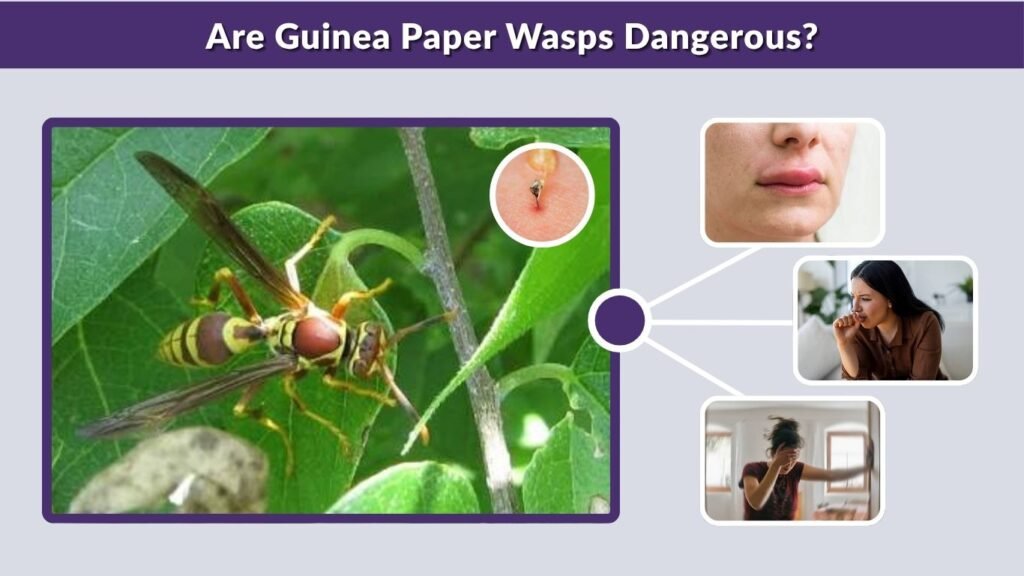
Guinea paper wasps are capable of stinging, but they do not normally seek out people to attack. The risk increases when someone touches the nest, creates strong vibrations nearby, traps a wasp against the skin, or performs yard work close to an unseen colony.
Social wasps cooperate in defending their nests, so disturbing an occupied comb may cause more than one worker to respond. Away from the nest, a wasp gathering nectar or hunting insects is usually less defensive.
Guinea Paper Wasp Sting
A sting typically causes immediate pain followed by localized redness, itching, warmth, and swelling. Female paper wasps can sting repeatedly because their stingers do not normally remain embedded in the skin.
Wash the area with soap and water and apply a cold compress for 10–20 minutes. Avoid scratching the site because damaged skin may become infected.
When a Sting Is an Emergency
Call emergency services immediately if a sting is followed by:
- Difficulty breathing
- Tightness in the chest or throat
- Swelling of the lips, tongue, face, or throat
- Widespread hives
- Dizziness or fainting
- Repeated vomiting
- Weakness or collapse
These symptoms may indicate anaphylaxis. Multiple stings and stings inside the mouth or throat also require prompt medical assessment.
Should You Remove a Guinea Paper Wasp Nest?
A small nest in an unused area may be left alone, particularly when people and pets are unlikely to approach it. The wasps can provide natural caterpillar control.
Removal is more appropriate when the nest is beside a doorway, playground, frequently used deck, mailbox, or area where someone with a sting allergy may encounter it.
Do not strike, burn, flood, or handle an occupied nest. Large, elevated, concealed, or difficult-to-reach colonies are best handled by a pest-management professional.
FAQs
Are Guinea wasps and paper wasps the same?
The name Guinea wasp commonly refers to Polistes exclamans, which is a species of paper wasp. However, not every paper wasp is a Guinea paper wasp because the group contains many different species.
Do Guinea paper wasps sting?
Females can sting when handled, trapped, or defending their nest. They are usually less likely to sting while feeding away from the colony, but an occupied nest should not be approached or disturbed.
Where do Guinea paper wasps build nests?
They build exposed paper combs beneath eaves, railings, signs, branches, palm leaves, porches, and other sheltered surfaces. They commonly use human-made structures in open, warm locations.
What does the Guinea paper wasp queen look like?
The queen resembles a female worker and is not dramatically larger. Her role and behavior usually identify her more reliably than size: she starts the spring nest and becomes the colony’s primary egg layer.
Are Guinea paper wasps beneficial?
Yes. They hunt caterpillars and other soft-bodied insects to feed their larvae. Adults also visit flowers for nectar, allowing safely located colonies to contribute to insect control and some pollination.