
Yes, paper wasps sting. Female paper wasps—including workers and queens—have venomous stingers and may sting repeatedly because they can withdraw the stinger without injuring themselves. Males cannot sting. Paper wasps are generally calm while feeding or flying away from their colony, but they may defend an active nest when it is approached, shaken, touched, or disturbed.
Why Do Paper Wasps Sting?
Paper wasps primarily sting to defend themselves or their colony. They do not hunt humans or normally fly around looking for opportunities to attack.
Stings are most likely when someone:
- Touches or knocks an active nest
- Trims a branch containing a hidden nest
- Opens a shutter, box, or shed containing wasps
- Uses power equipment near the colony
- Traps a wasp inside clothing
- Steps on or grabs a wasp
- Attempts to remove the nest
Paper wasps visiting flowers are generally not aggressive. A foraging wasp may still sting when trapped, crushed, or handled, but it will usually leave people alone when given space.
Do Paper Wasps Sting for No Reason?
Paper wasps rarely sting without a trigger. What appears to be an unprovoked attack may happen because a nest was nearby but hidden beneath an eave, railing, outdoor chair, shrub, or structural opening.
Vibration can also trigger colony defense. Opening a gate, moving furniture, mowing nearby, or striking the surface supporting the nest may alarm the wasps even when no one touches the comb directly.
A paper wasp repeatedly flying close to your face may be investigating or warning you away from its colony. Back away calmly rather than swatting at it.
Do Paper Wasps Bite or Sting?
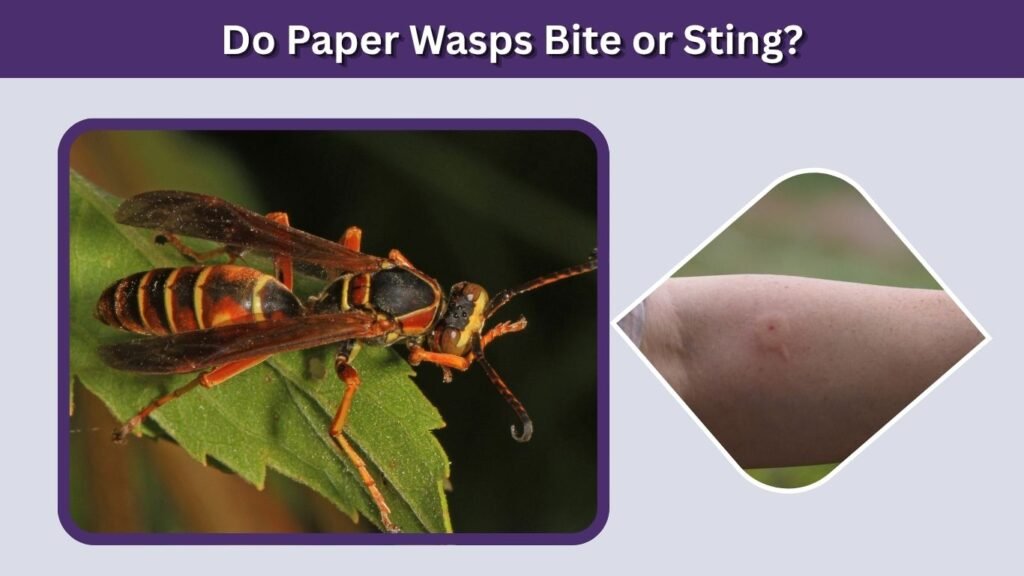
Paper wasps sting with a modified egg-laying organ located at the end of the abdomen. This is why only females sting.
They also have strong jaws used for scraping wood, constructing nests, capturing prey, and feeding larvae. A wasp may use its jaws when defending itself, but the sharp pain and venom reaction associated with an encounter come mainly from the sting.
Do Paper Wasps Die After Stinging?
Paper wasps usually do not die after stinging. Their stingers can be pulled back out of human skin, allowing the same wasp to sting more than once.
Honeybee workers have barbed stingers that commonly remain embedded in the skin. When a honeybee pulls away, the stinger and associated tissues may tear from its body, causing the bee to die. Paper wasps normally leave no stinger behind.
| Feature | Paper wasp | Honeybee |
| Can sting repeatedly? | Yes | Usually no |
| Leaves a stinger? | Usually not | Often |
| Dies after stinging? | Usually not | Usually |
| Main reason for stinging | Self-defense or nest defense | Colony defense |
Do Paper Wasp Stings Hurt?

A paper wasp sting can be sharply painful. Most people feel immediate burning, stinging, or throbbing at the puncture site.
Common local symptoms include:
- Sharp or burning pain
- A raised red welt
- Tenderness
- Warmth
- Itching
- Localized swelling
Pain is often strongest immediately after the sting and gradually improves. Mild redness and itching may remain for one or two days. A larger local reaction can expand during the following 24–48 hours and may take several days to resolve.
What Does a Paper Wasp Sting Look Like?
The sting may produce a small puncture surrounded by a red, swollen area. Unlike a honeybee sting, there is normally no stinger visible in the center.
Appearance alone cannot identify the insect responsible. Bee stings, yellowjacket stings, ant stings, biting insects, and skin infections may produce similar marks.
Paper Wasp Sting Symptoms
Most stings cause a normal local reaction. More serious responses include large local swelling, infection caused by scratching, and systemic allergy.
| Reaction | Possible symptoms | Recommended action |
| Mild local reaction | Pain, redness, itching, small welt | Home first aid |
| Large local reaction | Swelling extending beyond the sting area | Seek medical advice if severe |
| Infection | Increasing warmth, pus, worsening pain, fever | Contact a healthcare professional |
| Anaphylaxis | Breathing trouble, throat swelling, dizziness | Emergency care immediately |
| Multiple stings | Numerous welts, nausea, weakness, headache | Prompt medical evaluation |
How to Treat a Paper Wasp Sting
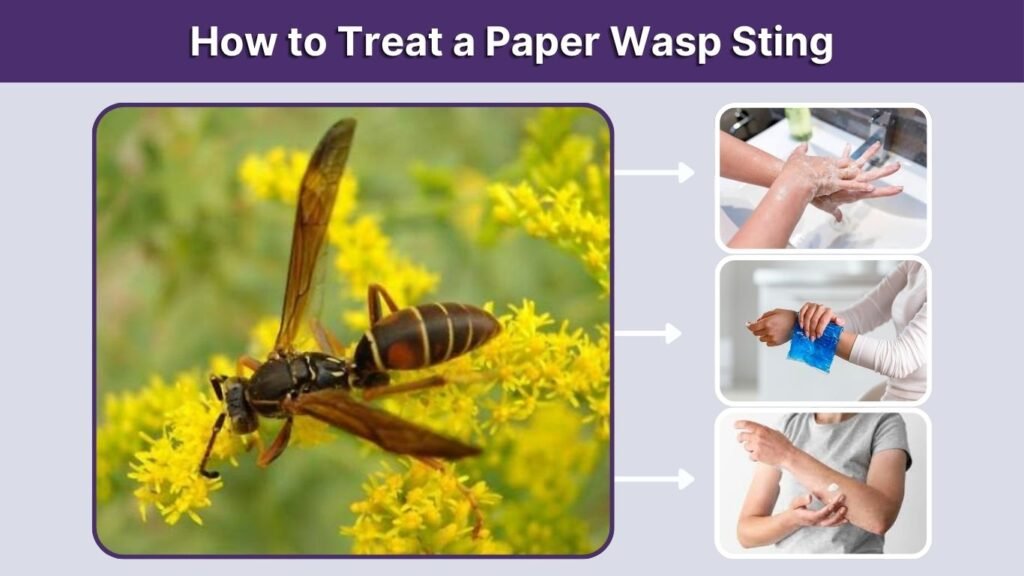
Move away from the colony before treating the injury. If several wasps are pursuing you, enter a building or closed vehicle.
Immediate First Aid
- Wash the area gently with soap and water.
- Check for a stinger, although paper wasps normally do not leave one.
- Remove rings, bracelets, or tight clothing before swelling increases.
- Apply a cloth-wrapped cold pack for 10–20 minutes.
- Elevate a stung arm or leg when practical.
- Avoid scratching or squeezing the area.
- Monitor the reaction for several hours.
A suitable nonprescription pain reliever, oral antihistamine, calamine lotion, or low-strength hydrocortisone may help some people when used according to the product label. Ask a healthcare professional before treating young children, pregnant people, or anyone with medical conditions or other medications.
Do not cut the skin, attempt to suck out venom, apply a tourniquet, or use gasoline, bleach, essential oils, or other harsh substances.
When Is a Paper Wasp Sting an Emergency?
Call emergency services immediately when the sting is followed by:
- Difficulty breathing or wheezing
- Swelling of the tongue, lips, face, or throat
- Trouble swallowing
- Widespread hives
- Chest tightness
- Severe dizziness
- Fainting or collapse
- Repeated vomiting
- Confusion or sudden weakness
These symptoms may indicate anaphylaxis, a potentially fatal allergic reaction. A person with prescribed epinephrine should use it immediately according to their emergency plan and then obtain emergency medical treatment. Antihistamines should not replace epinephrine during anaphylaxis.
Medical advice is also appropriate for a sting inside the mouth or throat, a sting close to the eye, multiple stings, rapidly spreading swelling, or symptoms that continue worsening.
Do Different Paper Wasps Sting?
All commonly encountered social paper wasps have females capable of stinging.
Red Paper Wasps
Red paper wasps can deliver painful repeated stings when their colony is disturbed. Their red coloration does not necessarily mean they are more aggressive than other paper wasps.
European Paper Wasps
European paper wasps can sting and frequently nest around homes, equipment, eaves, and other sheltered structures. They are relatively calm while foraging but may defend their nests.
Northern Paper Wasps
Northern paper wasps also sting when threatened. Their brown, red, black, and yellow markings vary, so identification should not rely only on color.
Yellow Paper Wasps
Yellow or black-and-yellow paper wasps can sting repeatedly. They are often confused with yellowjackets, but paper wasps have slimmer bodies, longer legs, and exposed umbrella-shaped nests.
How to Avoid Paper Wasp Stings
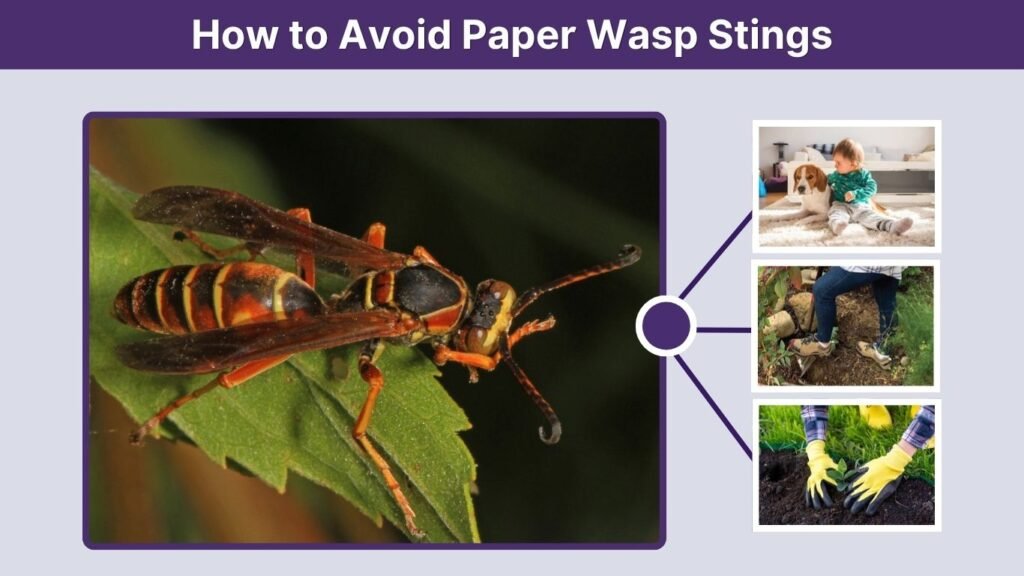
Inspect eaves, porch ceilings, railings, outdoor furniture, sheds, shrubs, and utility boxes before working nearby.
Reduce your risk by:
- Keeping away from visible nests
- Wearing gloves and closed shoes during yard work
- Looking before reaching into sheltered spaces
- Avoiding swatting at foraging wasps
- Keeping children and pets away from colonies
- Hiring a professional for large or hidden nests
- Never using a ladder to approach an active nest
Professional removal is especially important when someone nearby has a known sting allergy. Even protective clothing cannot completely eliminate the possibility of being stung during nest treatment.
FAQs
Can paper wasps sting more than once?
Yes. Paper wasps can withdraw their stingers without seriously injuring themselves, so one female may sting repeatedly. Several colony members may also join the defense when an active nest is disturbed.
Do male paper wasps sting?
No. Male paper wasps do not have stingers. The stinger developed from a female egg-laying structure, so workers, queens, and other females can sting, while males cannot.
How long does a paper wasp sting last?
The sharp pain may improve within minutes or hours, while mild redness, tenderness, and itching can last one or two days. Large local reactions may remain for several days or approximately a week.
Do paper wasps leave a stinger?
Paper wasps normally do not leave a stinger in the skin. A visible embedded stinger is more commonly associated with a honeybee. Wash the area and monitor it even when no stinger is present.
Is a paper wasp sting dangerous?
Most single stings cause only temporary local symptoms. However, any wasp sting can trigger life-threatening anaphylaxis in an allergic person. Multiple stings and stings inside the mouth or throat also require urgent medical attention.