
A black paper wasp is usually a dark-colored member of the paper wasp genus Polistes. It is not the official common name of one specific species. Depending on its location and markings, a black paper wasp may be a northern paper wasp, European paper wasp, metric paper wasp, or another related species. These slender wasps construct exposed paper nests and generally avoid people while foraging, but they may sting repeatedly when their colony is threatened.
What Is a Black Paper Wasp?
“Black paper wasp” is an informal description applied to several dark paper wasps. Color alone is rarely enough for a precise species identification because some species vary considerably between individuals and geographic regions.
One common North American candidate is the northern paper wasp, Polistes fuscatus. Its scientific name refers to its dark or smoky coloration, but the species can appear black, brown, reddish, or yellow-marked. Adults generally measure approximately 15–21 millimeters long.
The European paper wasp, Polistes dominula, is another frequently encountered black species. It has a shiny black body with bright yellow markings and mostly orange antennae.
Black Paper Wasp Identification
Look for the following characteristics:
- Slender body with a narrow waist
- Predominantly black, dark brown, or smoky coloration
- Long legs that may hang beneath the body during flight
- Narrow wings folded lengthwise over the abdomen
- Black, yellow, red, brown, or white markings
- Body length commonly between ½ and 1 inch
- Association with an exposed, open-celled paper nest
Paper wasps generally have longer legs and a slimmer body than yellowjackets. Their yellow markings are often less extensive, although European paper wasps can look remarkably similar to yellowjackets.
Can Paper Wasps Be All Black?
Some paper wasps can appear almost entirely black from a distance. However, closer inspection often reveals brown wings, reddish legs, pale facial marks, or narrow yellow bands.
A completely black wasp may also be a solitary species rather than a paper wasp. The best identification feature is the combination of body shape and nest type—not coloration alone.
Black Paper Wasp Color Variations
Paper wasps display considerable variation. Even members of the same species can have different combinations of black, brown, red, yellow, and white.
Black and Yellow Paper Wasp
A shiny black wasp with bright yellow markings may be a European paper wasp. This species has a narrow body, orange antennae, and long legs. It builds open paper combs under eaves and inside other protected spaces.
Red and Black Paper Wasp
Several native North American paper wasps have reddish-brown and black bodies. Depending on the species, the abdomen may have a yellow band, while the wings appear dark brown or nearly black.
Southern populations of the northern paper wasp can resemble other red-and-black species, demonstrating why identification from color alone is difficult.
Black and White Paper Wasp
A black-and-white wasp is not automatically a paper wasp. Bald-faced hornets, potter wasps, mason wasps, and other insects may have similar coloring.
Check the nest carefully. A paper wasp produces a flat, exposed comb. Bald-faced hornets produce a much larger enclosed nest with a complete paper covering, while many solitary wasps use mud or existing cavities.
What Does a Black Paper Wasp Nest Look Like?

A black paper wasp nest resembles a small umbrella made from gray or brown paper. It consists of exposed hexagonal cells attached to a structure by a narrow stalk. Unlike hornet nests, it has no protective outer envelope.
Paper wasps scrape weathered wood from fences, branches, decks, and buildings. They chew the fibers, mix them with saliva, and shape the resulting pulp into cells.
Common Nesting Locations
Black paper wasps may build nests:
- Beneath roof eaves
- Inside sheds or garages
- Under decks and porch railings
- Behind shutters
- Beneath outdoor furniture
- Inside grills or unused equipment
- On sheltered tree branches
- In attics and wall openings
- Around door and window frames
Protected overhangs and structural corners are especially attractive because they shield the comb from rain and strong wind.
Black Paper Wasp Nest in an Attic
Paper wasps may enter attics through damaged vents, gaps around the roofline, or openings beneath siding. An active nest should not be sealed inside the structure because trapped wasps may find another route into living areas.
Avoid entering a confined attic containing an active colony. A pest-control professional can identify the entry point, treat or remove the nest, and recommend when the opening can be safely sealed.
Are Black Paper Wasps Aggressive?
Black paper wasps are generally defensive rather than naturally aggressive. A wasp gathering nectar or hunting insects is unlikely to attack someone who keeps a reasonable distance.
Behavior changes near the nest. Workers may fly toward, chase, or sting a person who approaches too closely, strikes the structure, operates vibrating equipment, or attempts to remove the comb. Paper wasps are more likely to sting when their colony is threatened.
| Situation | Typical sting risk |
| Wasp visiting a flower | Low |
| Wasp resting away from its nest | Low |
| Small nest far from activity | Usually low |
| Nest above a doorway | Moderate to high |
| Nest struck or sprayed | High |
| Large colony in an attic | High |
Do Black Paper Wasps Sting?

Female paper wasps can sting and may do so more than once because their stingers do not normally remain lodged in human skin. Males lack functional stingers.
A sting usually causes immediate sharp or burning pain, redness, tenderness, itching, and localized swelling. Symptoms may last from several hours to a few days, depending on the person and number of stings.
Are Black Paper Wasps Poisonous?
Paper wasps are venomous, not poisonous. They inject venom through a stinger rather than harming people who touch or swallow them.
For most individuals, a single sting causes a temporary local reaction. However, venom can trigger a severe allergic reaction in susceptible people. Difficulty breathing, widespread hives, facial or throat swelling, dizziness, fainting, or trouble swallowing requires immediate emergency medical assistance.
What Do Black Paper Wasps Eat?
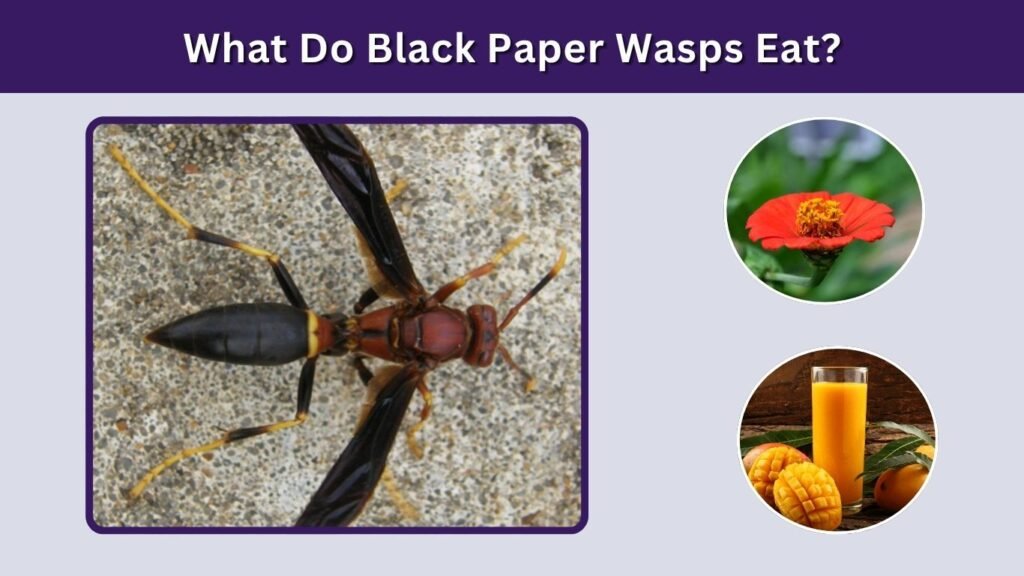
Adult paper wasps obtain energy from flower nectar, plant secretions, and other sugary liquids. They may also visit ripe fruit or sugary drink spills.
Workers hunt caterpillars and other soft-bodied insects for their larvae. They chew captured prey into small portions and carry it back to the nest. This makes paper wasps beneficial predators that can help reduce garden caterpillars, including some crop pests.
Black Paper Wasp vs Other Black Wasps
Several black wasps are commonly confused with paper wasps.
| Wasp | Main identification feature | Nest type |
| Black paper wasp | Slender body and dangling legs | Exposed paper comb |
| Great black wasp | Large, solid-black solitary wasp | Underground burrow |
| Black-and-yellow mud dauber | Thin threadlike waist | Mud tubes |
| Bald-faced hornet | Black with white markings | Enclosed aerial paper nest |
| Potter or mason wasp | Compact solitary wasp | Mud cells or cavities |
| Yellowjacket | Shorter legs and stockier body | Ground or concealed paper nest |
Solitary wasps generally do not form defensive colonies. They may sting when trapped or handled, but they are less likely to defend a nesting area collectively.
What to Do About Black Paper Wasps Around the House
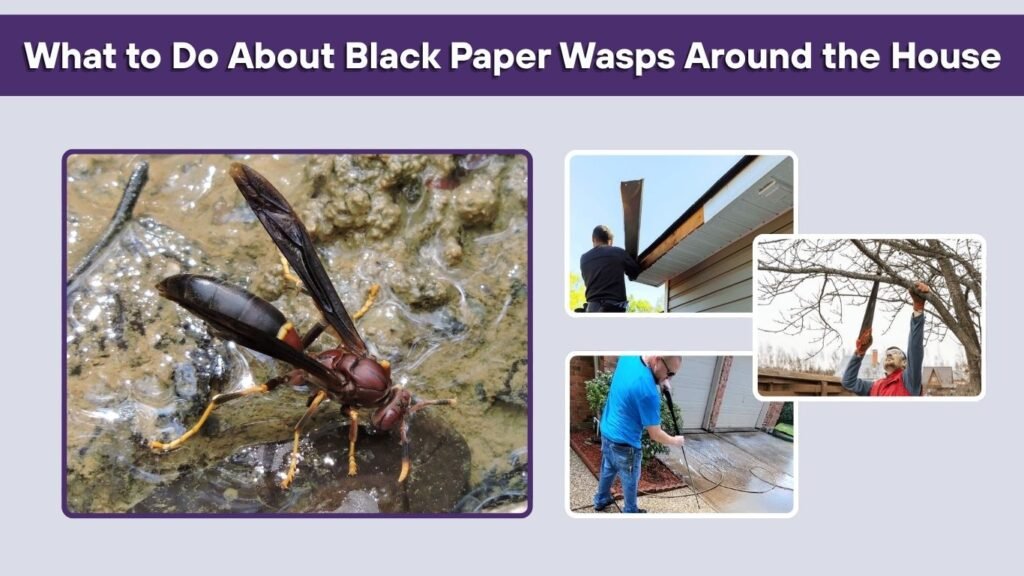
A nest positioned far from doors, walkways, play areas, or routine yard work can often be left alone. Paper wasps provide natural pest control, and most colonies last only one season.
Removal may be appropriate when a nest is:
- Above a frequently used entrance
- Inside an attic or wall
- Beside a patio or children’s area
- Large or heavily populated
- Accessible only by ladder
- Near someone with a venom allergy
Do not strike, burn, hose down, or seal an active nest. Professional treatment is safer for elevated, concealed, or established colonies. Nests close to regular human activity present a greater sting risk and may need to be eliminated.
FAQs
What is the scientific name of the black paper wasp?
There is no single scientific name because “black paper wasp” describes several species. In North America, it often refers to a dark northern paper wasp, Polistes fuscatus, or a black-and-yellow European paper wasp, Polistes dominula.
Are black paper wasps dangerous?
They are usually not dangerous while feeding away from their colony. However, females can sting repeatedly when their nest is threatened. A colony near a doorway or occupied area presents a greater risk, especially for anyone allergic to wasp venom.
Do black paper wasps reuse their nests?
Most paper wasp colonies are annual, and old nests are generally not reused the following year. Newly mated queens survive winter in sheltered locations and normally establish new colonies when warm weather returns.
Why are black paper wasps in my house?
They may enter accidentally through open doors, damaged screens, vents, siding gaps, or attic openings. Queens may also shelter inside buildings during cold weather. Repeated indoor sightings can indicate an attic, wall, or roofline entry point.
How can I identify a queen black paper wasp?
A founding queen is usually larger and appears alone at a small spring nest. Later in the season, physical differences between queens and workers may be difficult to see. Behavior, colony timing, and nest development are often more useful than body size alone.