
Bagworm moths are unusual insects best known for the protective cases their caterpillars build from silk, leaves, twigs, bark, and other natural materials. Belonging to the Psychidae family, these moths occur in many habitats around the world and vary greatly in size, appearance, and host plants. Some species can damage ornamental trees, while others feed on lichens or native vegetation. Here are 13 types of bagworm moths, along with their identification features, habitats, behaviors, diets, and life cycles.
1. Evergreen Bagworm Moth

The Evergreen Bagworm Moth (Thyridopteryx ephemeraeformis) is one of the best-known bagworm species in North America. Its caterpillar constructs a portable silken case covered with pieces of leaves and twigs. It is especially common on ornamental evergreens and can become a serious plant pest when populations are high.
Identification
- Larvae live inside elongated, cone-shaped bags.
- Bags may grow to more than 2 inches long.
- Plant fragments, needles, and small twigs cover the outside of the case.
- Adult males are dark, hairy moths with partly transparent wings.
- Females are wingless, grub-like, and remain inside their bags.
- Caterpillars have dark heads and lighter, softer bodies.
Habitat
Evergreen Bagworms are common in gardens, landscaped properties, parks, nurseries, and woodland edges. They are particularly noticeable where arborvitae, juniper, cedar, spruce, and similar evergreen plants are grown. The species is widespread through much of the eastern and central United States.
Behavior
The caterpillar carries its protective bag everywhere it goes. Only its head and front legs extend from the opening when it feeds or moves. When disturbed, it quickly pulls its body back inside. As the larva grows, it continually enlarges the bag and adds fresh pieces of plant material.
Adult females never develop functional wings and remain within their cases. Males fly in search of females during the breeding season.
Diet and Life Cycle
The caterpillars eat numerous trees, shrubs, and herbaceous plants but are particularly damaging to arborvitae, juniper, cedar, and other evergreens. Heavy infestations can remove large quantities of foliage.
There is typically one generation each year. Eggs spend winter inside the female’s old bag and hatch during late spring or early summer. Caterpillars feed throughout summer before attaching their cases to branches and pupating. Adults appear later in the season, mate, and females deposit hundreds of eggs inside their bags.
2. Common Bagworm Moth
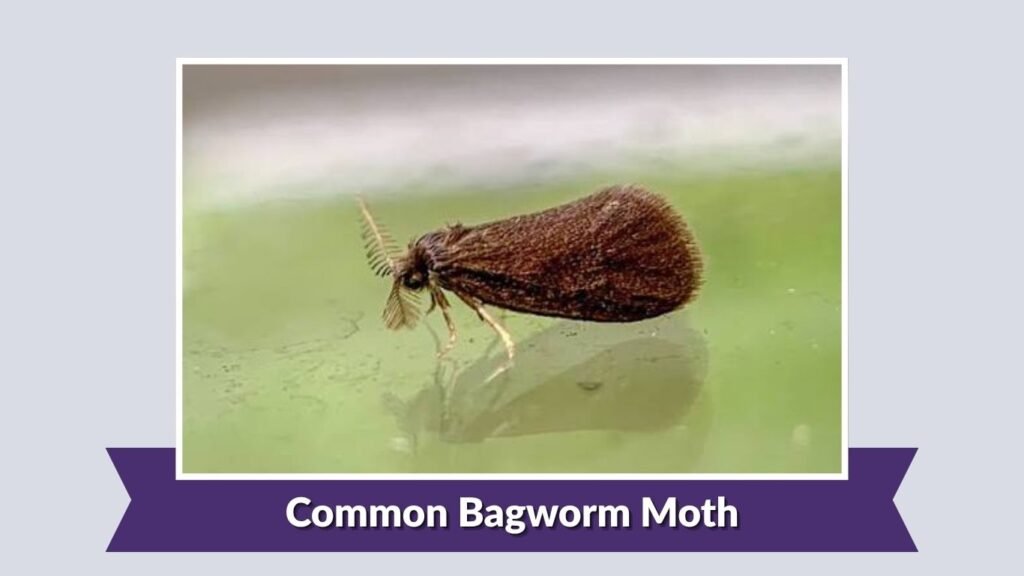
The Common Bagworm Moth (Psyche casta) is a small bagworm species originally associated with the Old World and now also recorded in North America. Its caterpillar constructs a narrow case from pieces of grass and other plant material. Like many members of the Psychidae family, males and females look dramatically different as adults.
Identification
- Male wingspan is approximately 12–15 mm.
- Adult males have brownish, somewhat metallic-looking wings.
- Females are yellowish to light brown and completely wingless.
- Larvae live inside portable cases made largely from short grass pieces.
- Cases are narrow and covered with plant fragments.
- Adult females have a grub-like appearance rather than resembling typical moths.
Habitat
Common Bagworm Moths occur in grassy places, woodland edges, scrub, gardens, and other areas containing suitable vegetation. The caterpillar’s habit of covering its case with grass makes it especially well camouflaged among low-growing plants.
The species occurs widely across parts of Europe and has also become established in portions of North America.
Behavior
The larvae rarely expose their entire bodies. Instead, they extend their head and front legs from the bag and drag the case along while searching for food. When threatened, they retreat completely inside.
Adult males are nocturnal and capable of flight. Females remain wingless and relatively inactive. Chemical scents released by females help males locate them for mating.
Diet and Life Cycle
The caterpillars have a varied diet. Recorded foods include grasses as well as birch, willow, poplar, and Vaccinium species. They may also consume lichens and other materials in some habitats.
Larvae spend much of their development protected inside their cases. When fully grown, they secure the case to a surface and pupate within it. Adults generally appear from late spring into summer, with males flying in search of females to complete the reproductive cycle.
3. Snailcase Bagworm

The Snailcase Bagworm (Apterona helicoidella) is named for its remarkably unusual larval case, which resembles a tiny coiled snail shell. Native to Europe and nearby regions, it was accidentally introduced into the United States during the twentieth century and has since become established in several areas.
Identification
- The case forms a distinctive spiral or snail-shell shape.
- Cases are usually grayish, brown, or soil-colored.
- Soil particles and tiny debris may cover the exterior.
- Larvae remain mostly concealed inside their cases.
- The cases may be noticed attached to walls, fences, rocks, and plants.
- Their unusual circular form separates them from most elongated bagworm cases.
Habitat
Snailcase Bagworms occupy dry grassy areas, gardens, disturbed locations, roadsides, agricultural landscapes, and areas around buildings. Their cases frequently appear on walls, sheds, fences, and other hard surfaces.
The species is widespread across portions of Europe and was accidentally introduced into North America during the 1940s. Populations have subsequently been reported in several regions of the United States and Canada.
Behavior
The caterpillar carries its spiral case while moving and feeding. Its head and front portion emerge when active, but the larva quickly withdraws when disturbed.
One reason people notice this bagworm is its tendency to attach cases to buildings and other structures. Although it does not eat the building material, numerous firmly attached cases may become an aesthetic nuisance.
Diet and Life Cycle
Snailcase Bagworms are able to feed on a variety of low-growing plants and vegetation. Their flexible feeding habits help them survive in disturbed and human-modified environments.
The larva spends virtually its entire immature life protected by its case. Once development is complete, the case is attached firmly to a surface and serves as the pupation site. A new generation eventually emerges and begins constructing fresh cases soon after hatching.
4. Abbot’s Bagworm Moth
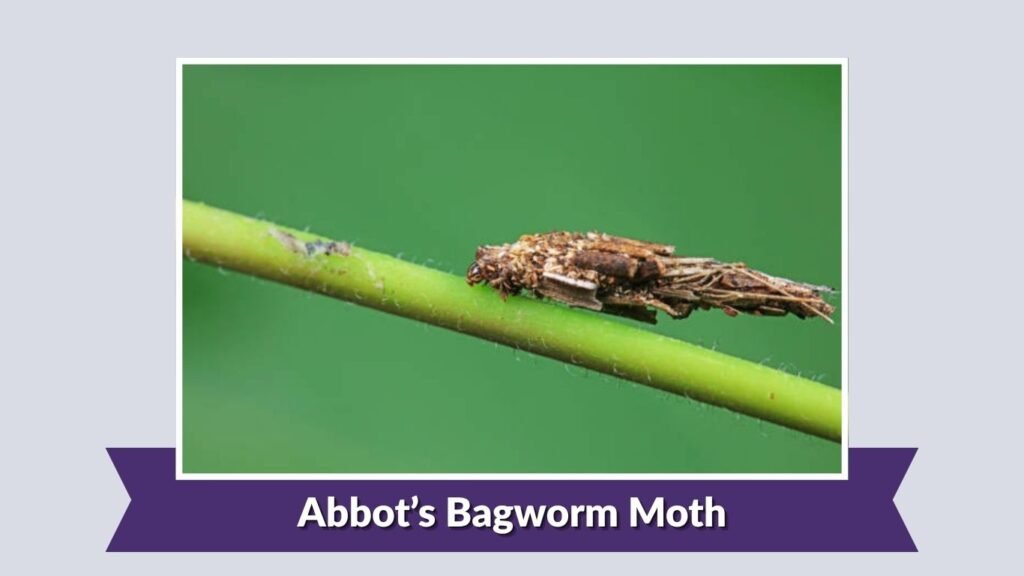
The Abbot’s Bagworm Moth (Oiketicus abbotii) is a relatively large bagworm native to southeastern North America. It is especially notable for the impressive cases constructed by its caterpillars. These can reach around 70 mm long and are decorated with short twigs arranged around the outside.
Identification
- Larval bags can reach approximately 70 mm in length.
- Small twigs are attached around the outside of the case.
- The bag is elongated and often noticeably larger than those of many other species.
- Adult males are winged and capable of flight.
- Adult females are highly reduced and remain associated with their cases.
- Males and females look dramatically different from one another.
Habitat
Abbot’s Bagworm Moths occur primarily across the southeastern United States, especially throughout Atlantic and Gulf Coastal Plain habitats. Records include states such as Florida, Louisiana, Texas, Missouri, and neighboring areas.
They can inhabit forests, swamps, woodland edges, coastal vegetation, parks, and areas containing a diversity of broadleaf trees.
Behavior
The caterpillar spends its life carrying a sturdy protective bag. Pieces of twigs placed around the case help disguise it as dead plant material. While feeding, the larva extends from the upper opening but remains ready to retreat quickly.
When mature, it secures the bag to vegetation and pupates. Adult males emerge and actively search for females, while females remain much more restricted.
Diet and Life Cycle
Abbot’s Bagworm caterpillars feed on many kinds of trees. Recorded hosts include bald cypress, live oak, bayberry, sycamore, elm, hackberry, sweetgum, and willow.
Young larvae begin constructing their cases soon after emerging. They enlarge them throughout development while feeding on host foliage. Eventually, the mature larva attaches the case securely and pupates inside. Mating and egg laying then take place in association with the protective bag, beginning the next generation.
5. Nigrita Bagworm Moth
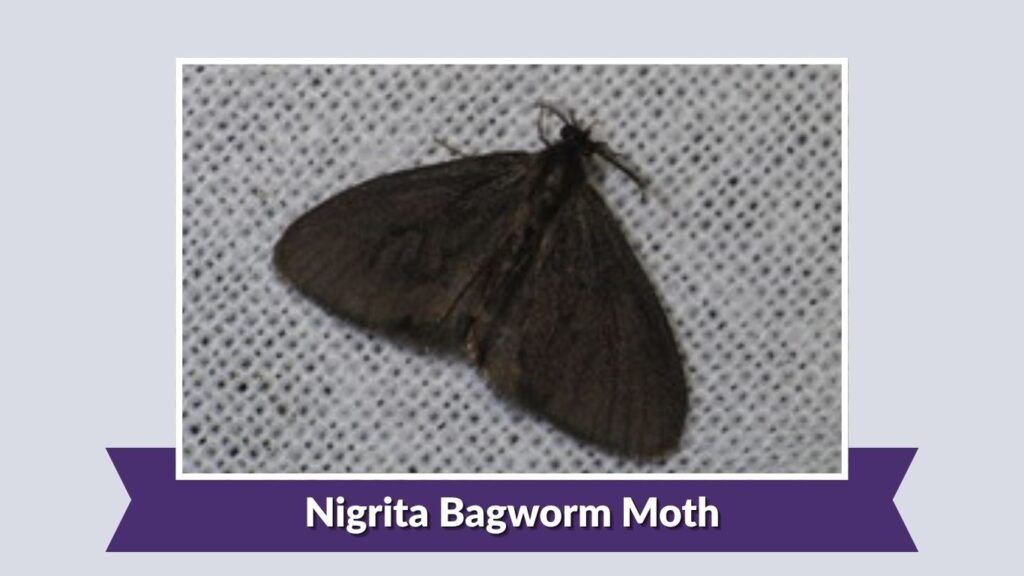
The Nigrita Bagworm Moth (Cryptothelea nigrita) is a relatively little-known member of the Psychidae family found mainly in warmer portions of North America. As with other bagworms, its larval stage is far more noticeable than the adult because the caterpillar constructs and carries a protective case throughout development.
Identification
- Adult males are small, dark-colored moths.
- Males possess functional wings and featherlike antennae.
- Females are wingless and remain closely associated with the larval case.
- Caterpillars construct portable silken bags.
- Pieces of surrounding plant material and debris help disguise the case.
- It can be difficult to distinguish from closely related Cryptothelea species without careful examination.
Habitat
Nigrita Bagworm Moths are associated primarily with warm woodland and subtropical environments. Verified records are especially concentrated in the southeastern United States, including Florida and nearby regions, although observations have occurred farther north.
The species can occur around forest vegetation, woodland edges, gardens, and other places where suitable caterpillar food plants grow.
Behavior
Larvae remain protected inside their portable cases while moving between feeding sites. Their covering of plant fragments provides both physical protection and camouflage.
Adult males become active when searching for females and may be attracted to lights at night; a verified Florida observation, for example, recorded an adult attracted to ultraviolet light.
Diet and Life Cycle
Recorded host plants include members of the grass family and spurge family, with Aleurites and Vernicia among documented host genera. Caterpillars consume foliage while remaining partly concealed within their bags.
As larvae grow, they enlarge their cases to accommodate their increasing size. Mature individuals eventually secure the bag and pupate within it. Adult males emerge as free-flying moths, whereas females follow the highly reduced, wingless form characteristic of many bagworm species.
6. Saunders’ Case Moth
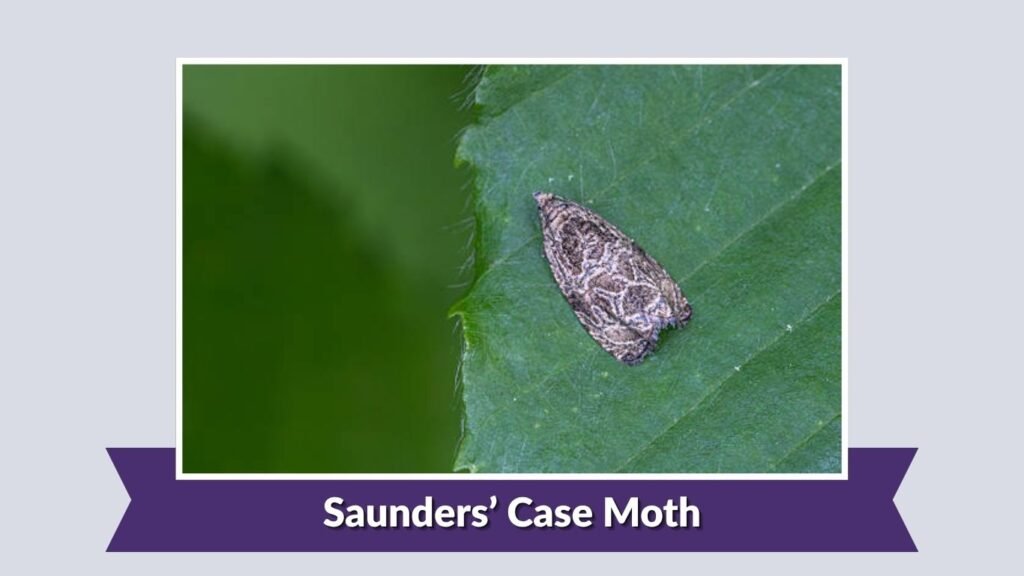
The Saunders’ Case Moth (Metura elongatus), also called the Large Bagworm, is one of Australia’s striking bagworm moths. Its large caterpillar lives inside an elongated silken case decorated with leaves and short pieces of sticks. The unusual case often attracts attention long before the insect itself is noticed.
Identification
- Caterpillars construct large, elongated hanging cases.
- Young cases are initially covered with pieces of leaves.
- Older larvae add numerous short twigs arranged along the case.
- The caterpillar can extend its head and front legs from the opening.
- Adult males are winged moths.
- Females have greatly reduced wings or are effectively wingless.
- Large mature cases may be seen hanging from trees, shrubs, walls, and fences.
Habitat
Saunders’ Case Moths are found in the eastern half of Australia, including Tasmania. They inhabit forests, woodlands, gardens, parks, suburban landscapes, and other vegetated environments.
Their broad choice of host plants means they can survive in both natural bushland and urban gardens.
Behavior
The caterpillar drags its case wherever it travels. It extends the front portion of its body to crawl and feed while the abdomen remains protected inside. If threatened, it retreats rapidly and closes itself safely within the case.
As it grows, the larva modifies its shelter. Younger caterpillars use leaf fragments, while larger individuals attach short sticks to the outside, producing the characteristic rugged appearance.
Diet and Life Cycle
Saunders’ Case Moth caterpillars feed on a wide variety of plants, including native and introduced species. Their broad diet is one reason they can occur in many different Australian habitats.
The caterpillar feeds and grows while continuously enlarging its portable shelter. When fully developed, it anchors the case firmly to a branch or another surface and pupates inside. Adult males eventually leave their cases and fly in search of females. After reproduction, eggs provide the next generation of caterpillars, which soon begin constructing their own protective bags.
7. Australian Bagmoth

The Australian Bagmoth (Cebysa leucotelus), also called the Australian Lichen Bag-moth, is a small and distinctive member of the bagworm family. Native to Australia, it has also established populations in New Zealand. Unlike many bagworms that decorate their cases with twigs and leaves, its larvae commonly use tiny pieces of lichen and other debris.
Identification
- Larval cases are flattened, oval, and usually brownish.
- Cases may reach about 2 cm long.
- Small pieces of lichen and debris cover the silken case.
- Adult females can have an attractive metallic appearance.
- Adult males are smaller and less brightly colored.
- Caterpillars have hardened dark-brown head and thoracic segments.
Habitat
Australian Bagmoths occur mainly in southern Australia, including Tasmania, Victoria, and Western Australia. They can also be found in New Zealand, where the species was first recorded around Auckland in the early 1980s.
They favor places where lichens are abundant, including parks, gardens, tree trunks, walls, rocks, fences, and older structures. Urban environments can therefore provide surprisingly suitable habitat.
Behavior
The caterpillar carries its portable case while moving across lichen-covered surfaces. When feeding, it extends its head and front body segments but quickly retreats when disturbed.
Adult males are capable of active flight and search for females. Females are more limited in movement and may be seen close to the places where they developed.
Diet and Life Cycle
The larvae mainly eat lichens and algae growing on rocks, walls, fences, and tree trunks. Lichen fragments are also incorporated into their cases, helping them blend with their surroundings.
Larvae continue enlarging their cases as they grow. When mature, they pupate inside the same protective shelter. In some populations, pupation occurs toward the end of summer, followed by adult emergence during autumn.
8. Buloke Bagworm

The Buloke Bagworm (Bathromelas hyaloscopa) is a rare Australian bagworm with an unusually specialized relationship with Buloke trees. The species attracted scientific interest after being rediscovered following decades with very few records. Its caterpillar constructs a cigar-shaped case covered with bark and plant fragments, often adding several longer twigs toward one end.
Identification
- Larvae construct elongated, cigar-shaped silken cases.
- Small bark and vegetation fragments cover the outside.
- Around one to four longer twigs may project from the case.
- Caterpillars have black-and-white markings on the hardened head and thorax.
- Adult males have mostly transparent wings.
- Male wingspan is approximately 3 cm.
- Adult females are flightless and remain associated with the case.
Habitat
Buloke Bagworms inhabit dry woodland environments in inland Australia. Records are known from Queensland, New South Wales, Victoria, and South Australia.
Many documented populations occur in woodland dominated by Buloke (Allocasuarina luehmannii) and cypress species. Larvae may occur on both young and mature Buloke trees, often resting among dense outer foliage.
Behavior
The caterpillar carries its case while feeding and typically remains concealed when inactive. It may travel along the narrow foliage of its host tree before beginning to feed from the tip backward.
The female remains flightless, while the winged male provides most of the dispersal during the adult stage.
Diet and Life Cycle
Unlike many bagworms that eat numerous plant species, the Buloke Bagworm appears highly specialized. Its primary recorded host is Buloke, although captive larvae have also accepted another member of the Casuarinaceae family.
Larvae feed while enlarging their cases and eventually secure them before pupating. Males later emerge as winged adults, while females remain much more closely connected to their cases.
9. Scruffy Case Moth
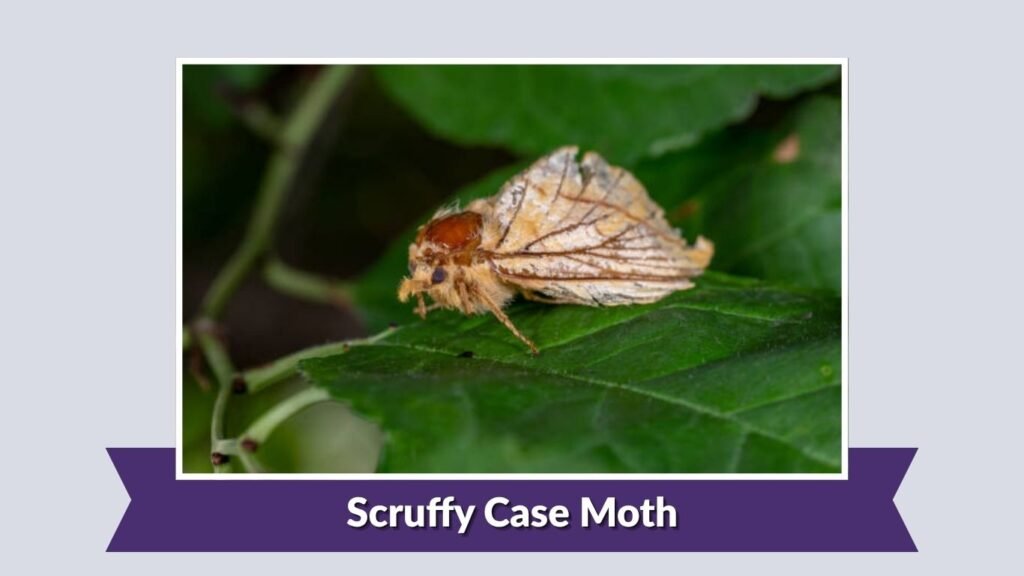
The Scruffy Case Moth (Ardiosteres moretonella) is an Australian member of the Psychidae family. Its common name refers mainly to the adult male’s untidy-looking scales, which can give the wings and body a rough or slightly spiky appearance. It is smaller than many of the large stick-covered bagworms seen in Australian forests.
Identification
- Adult males have a wingspan of roughly 2 cm.
- Forewings are primarily black.
- Four irregular pale-yellow bands cross the forewings.
- Wing fringes contain additional pale-yellow streaks.
- Hindwings are mostly black.
- A noticeable crest of black scales occurs on the thorax.
- Protruding scales give the adult its characteristic scruffy appearance.
Habitat
The Scruffy Case Moth has been recorded in several parts of Australia, particularly Queensland, New South Wales, and South Australia. It may occur in woodland, shrubland, gardens, and other vegetated habitats supporting the immature stages.
Because it is relatively small and inconspicuous, adults can easily be overlooked unless attracted to lights or specifically searched for.
Behavior
Adult males are capable of flight and are the more readily observed adult stage. Their dark coloring and small size help them remain inconspicuous while resting.
As a member of the bagworm family, the larval stage develops in association with a protective case. This basic behavior helps shield the soft-bodied caterpillar from environmental conditions and many predators.
Diet and Life Cycle
Detailed published information about the natural host plants and larval diet of the Scruffy Case Moth remains comparatively limited. This makes it less well understood than species such as the Leafy Case Moth or Faggot Case Moth.
Development follows the characteristic Psychidae pattern, with the larval and pupal stages protected by a case before the adult moth emerges. Adult males are the winged dispersal stage and search for females during reproduction.
10. Faggot Case Moth

The Faggot Case Moth (Clania ignobilis) is an Australian bagworm named for the bundle of sticks attached to its larval case. The caterpillar’s shelter is one of its most recognizable characteristics, with several strong twigs arranged lengthwise around the silken center. The species occurs across a broad portion of southern and eastern Australia.
Identification
- Cases are usually around 40–50 mm long.
- Numerous sturdy twigs run parallel with the case.
- Some attached sticks may extend considerably beyond the main case.
- Adult males have a wingspan of around 30 mm.
- Males are winged and capable of flight.
- Adult females are wingless.
- The protective case has openings that allow feeding and waste removal.
Habitat
Faggot Case Moths occur in Queensland, New South Wales, Victoria, South Australia, and Tasmania. They can be encountered in forests, woodland, gardens, parks, plantations, and areas containing suitable host trees.
The stick-covered case provides particularly effective camouflage among branches and dead vegetation.
Behavior
The caterpillar remains partly protected even while feeding. Its head and front body emerge from the case while the soft abdomen remains inside. The entire shelter can be moved from one feeding location to another.
When threatened, the larva retreats completely into the case. Mature larvae eventually secure their shelters before pupation.
Diet and Life Cycle
Caterpillars feed on a variety of woody plants. Recorded hosts include Eucalyptus, pine, cypress relatives, and birch. They consume foliage while continuously enlarging their cases.
Pupation occurs inside the bag. Adult males emerge and fly in search of females, while wingless females remain protected. After mating, eggs begin the next generation, and newly hatched larvae construct their own miniature cases.
11. Parallel Stick Case Moth

The Parallel Stick Case Moth, commonly associated with Clania lewinii and closely related Clania species, is named for the neat sticks arranged lengthwise along its larval shelter. It is also widely known as the Stick Case Moth. These decorative cases are among the easiest bagworm structures to notice on shrubs and trees in southern Australia.
Identification
- The larval case can reach around 3 cm long.
- Approximately a dozen small twigs may be attached to the case.
- Twigs are positioned parallel to the central silken bag.
- Caterpillars have a hardened, mottled brown-and-white head and thorax.
- The abdomen is softer and remains protected inside.
- Adult males are black with translucent gray wings.
- Males may show four pale stripes on the thorax.
Habitat
These case moths occur across much of the southern half of Australia, including Queensland, New South Wales, the Australian Capital Territory, Victoria, South Australia, and Tasmania.
They inhabit forests, woodland, heath, gardens, and shrub-rich environments. Their host range allows them to occur in both natural vegetation and landscaped areas.
Behavior
Larvae carry their stick-covered shelters everywhere they travel. The carefully arranged plant material makes the cases resemble loose pieces of vegetation rather than living insects.
While feeding, only the hardened front of the caterpillar is exposed. If disturbed, it immediately retreats into the bag.
Diet and Life Cycle
Larvae commonly feed on plants in the myrtle family, including eucalyptus, tea tree, and bottlebrush. Some individuals have also accepted wattles and other plants.
The larva enlarges its case as it grows, adding new silk and plant material. Eventually it secures the bag and pupates within it. Adult males emerge with functional wings and search for females, completing the bagworm life cycle.
12. Leafy Case Moth
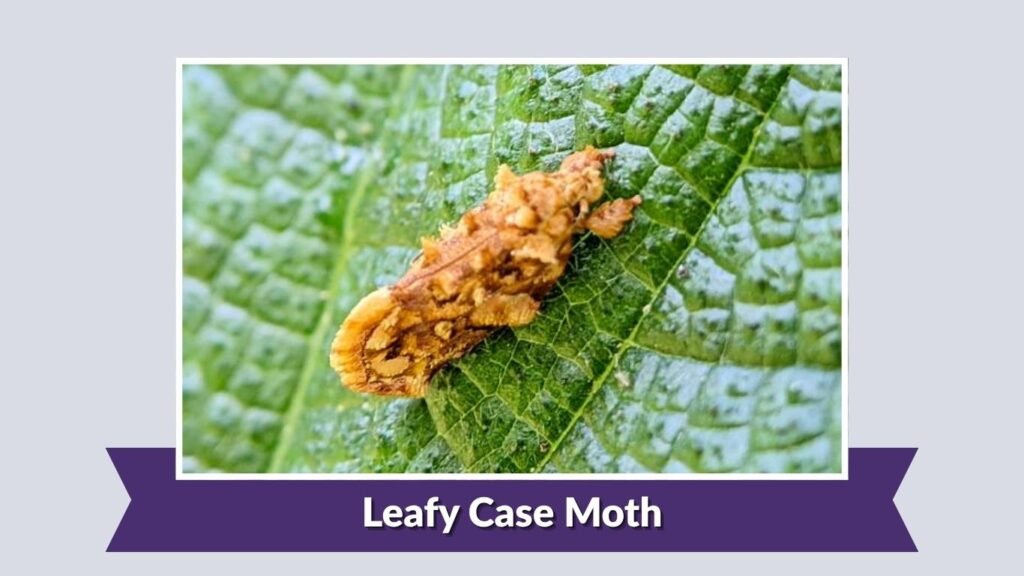
The Leafy Case Moth (Hyalarcta huebneri) is one of Australia’s widespread and highly adaptable bagworms. Its caterpillar decorates its silken shelter with pieces of leaves, bark, or twigs collected from nearby plants. Because the species feeds on many different plants, individual cases can vary considerably in color and appearance.
Identification
- Cases may grow to approximately 5 cm long.
- Leaves, bark, and small twigs completely cover the silk.
- The case’s appearance changes depending on available materials.
- The caterpillar’s head and thorax are protected by hardened skin.
- Adult males have bluish transparent wings.
- Male wingspan is approximately 2 cm.
- Adult females are wingless and remain inside their cases.
Habitat
Leafy Case Moths are widespread across much of mainland Australia and also occur in New Guinea. They can inhabit forests, woodland, parks, gardens, plantations, agricultural landscapes, and suburban areas.
Their ability to use numerous host plants allows them to survive in a much broader range of habitats than specialist bagworm species.
Behavior
Caterpillars constantly modify their portable shelter. Pieces of nearby vegetation are attached with silk, providing excellent camouflage. Only the hardened head and thorax emerge when the larva moves or feeds.
Adult females remain inside their cases even after emerging from the pupal stage. Winged males locate them and mate through an opening in the case.
Diet and Life Cycle
Leafy Case Moth larvae are highly polyphagous, meaning they eat many kinds of plants. Recorded hosts come from numerous families and include eucalyptus, pine, legumes, ornamentals, and other trees and shrubs.
The caterpillar spends its larval life enlarging the case before pupating inside. Males partly push their pupae from the rear of the case before emerging, while adult females remain protected within their shelters.
13. Ribbed Case Moth
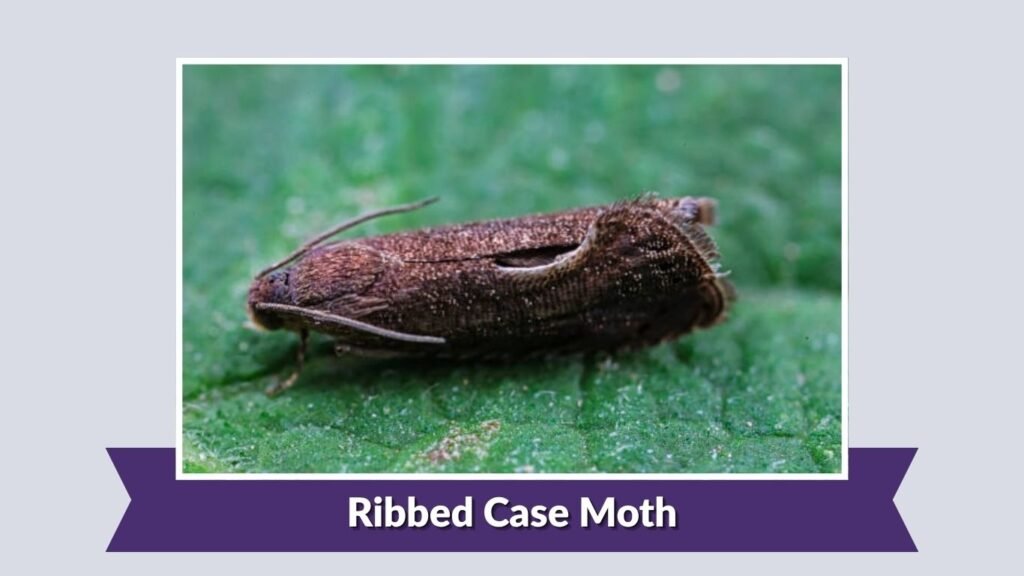
The Ribbed Case Moth (Hyalarcta nigrescens) is easily recognized by its unusual silken shelter. Unlike most bagworms, mature caterpillars do not cover their cases heavily with sticks or leaves. Instead, the case becomes relatively bare and develops several strong longitudinal ribs, creating its characteristic ridged appearance.
Identification
- Mature cases are made primarily from tough silk.
- Several obvious longitudinal ribs run along the case.
- Cases can approach 5 cm in length.
- Young cases may initially have small pieces of debris attached.
- Caterpillars expose only the hardened head and thorax while feeding.
- Adult males have functional wings.
- The species can often be identified from its distinctive ribbed shelter.
Habitat
Ribbed Case Moths occur in several parts of Australia, including Queensland, New South Wales, Victoria, South Australia, and the Australian Capital Territory.
They are frequently associated with eucalyptus woodland, gardens, parks, and other places containing gum trees. The species appears particularly comfortable in comparatively dry environments.
Behavior
The ribbed case provides both protection and camouflage. Caterpillars drag the shelter along while feeding but can withdraw completely when disturbed.
As pupation approaches, the caterpillar firmly attaches its case to a twig, leaf, trunk, or another stable surface using silk. Numerous cases may sometimes be found on the same tree.
Diet and Life Cycle
The caterpillars primarily feed on eucalyptus foliage. Sugar gum and other eucalyptus species are important recorded hosts. They chew distinctive holes in leaves and may cause noticeable defoliation when numerous larvae occur together.
After reaching maturity, the larva attaches its ribbed case and pupates inside. Winged adult males later emerge to locate females. The abandoned cases can remain attached to trees for some time, making them easier to notice than the adult moths themselves.
FAQs
1. What is a bagworm moth?
A bagworm moth is a member of the Psychidae family. Its caterpillar builds a protective portable case from silk and materials such as leaves, twigs, bark, or lichen. The larva carries this case while feeding and growing.
2. Are bagworm moths harmful to plants?
Some bagworm species can damage trees and shrubs when their populations become large. Evergreen Bagworms, for example, may heavily defoliate arborvitae, juniper, cedar, and other ornamental plants.
3. What do bagworm moth caterpillars eat?
Their diet depends on the species. Many feed on leaves from trees and shrubs such as eucalyptus, oak, cedar, juniper, pine, willow, and birch. Others may consume grasses, lichens, algae, or low-growing vegetation.
4. Can female bagworm moths fly?
In many bagworm species, adult females are wingless or have greatly reduced wings and remain inside or close to their larval cases. Adult males usually have functional wings and fly in search of females.
5. Where are bagworm moths commonly found?
Bagworm moths occur in forests, woodlands, gardens, parks, grasslands, and suburban landscapes. They are found in many parts of the world, including North America, Europe, Australia, New Zealand, and parts of Asia.