
Velvet ants are fascinating insects known for their colorful, fuzzy bodies and powerful defensive abilities. Despite their name, they are actually wasps belonging to the family Mutillidae. Females are wingless and resemble large hairy ants, while males usually have wings. These solitary insects occur in deserts, grasslands, forests, and sandy habitats around the world. In this guide, we explore 20 types of velvet ants, along with their identification features, habitats, feeding habits, behavior, and defensive characteristics.
1. Common Eastern Velvet Ant

The common eastern velvet ant is one of the most recognizable velvet ants in North America. Despite its name, it is actually a type of wingless female wasp rather than a true ant. Its bright red-orange and black coloration serves as a warning to predators. Females are famous for delivering an extremely painful sting when handled or threatened.
Identification
- Females have dense red-orange or reddish hairs on the thorax and abdomen.
- The head and parts of the abdomen are usually black.
- Females are wingless and resemble large, hairy ants.
- Males have wings and look more like traditional wasps.
- Adults can reach roughly 13–20 mm in length.
- Females have strong legs and move quickly across open ground.
Habitat and Distribution
Common eastern velvet ants are widespread across the eastern and central United States. They favor open, sunny habitats such as lawns, pastures, woodland edges, sandy fields, and gardens. Females are often seen walking rapidly over the ground while searching for nests of other insects.
Diet and Feeding Behavior
Adult velvet ants primarily consume nectar from flowers and other sugary liquids. Females spend considerable time searching for underground nests of bees and wasps. After locating a suitable nest, the female enters it and lays an egg near the developing host. The velvet ant larva later feeds on the host larva or pupa.
Sting and Behavior
Female common eastern velvet ants possess a powerful sting used mainly for defense. They generally do not attack people unless they are trapped, stepped on, or handled. Their tough body, warning coloration, and ability to produce defensive sounds provide additional protection from predators.
2. Pacific Velvet Ant
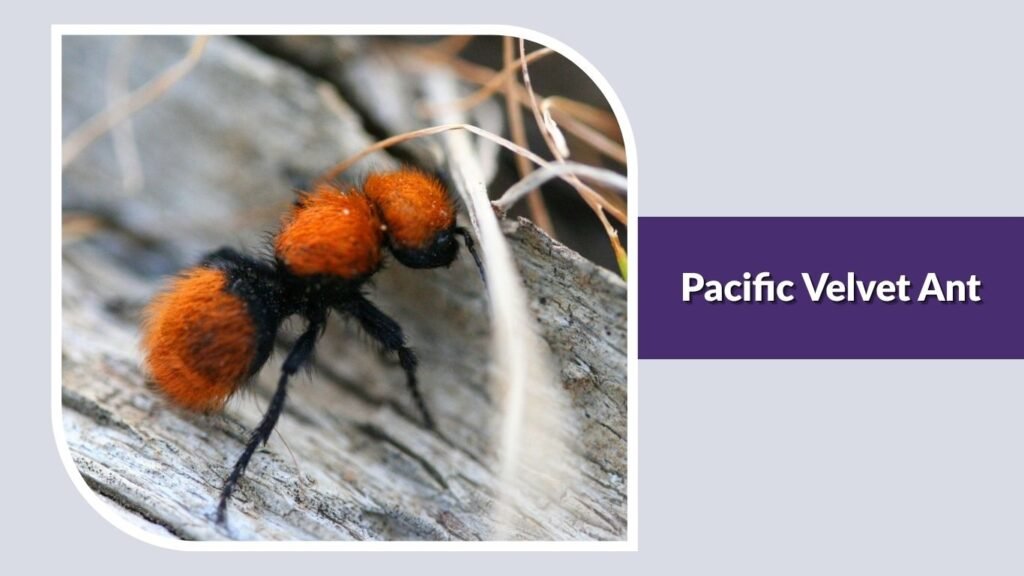
The Pacific velvet ant is a colorful solitary wasp found mainly in western North America. Females are wingless and spend much of their time walking over sandy or dry ground in search of host nests. Their dense hair and contrasting coloration make them easy to notice, although their exact appearance can vary between individuals and populations.
Identification
- Females are wingless with a distinctly ant-like appearance.
- The body is covered with dense orange, reddish, or pale hairs.
- Dark markings commonly appear on the abdomen.
- Males possess wings and are usually less ant-like.
- Females have strong legs adapted for walking across open ground.
- The body is compact and heavily armored.
Habitat and Distribution
Pacific velvet ants inhabit dry grasslands, coastal areas, scrublands, sandy habitats, and open woodland in western North America. They are particularly associated with areas containing abundant ground-nesting bees and wasps. Females may be spotted crossing trails, gardens, or patches of bare soil during warm weather.
Diet and Feeding Behavior
Adults feed mainly on flower nectar and other available sugars. Females search for nests of solitary bees and wasps, which serve as hosts for their offspring. After entering a host nest, the female lays an egg near a larva or pupa. The developing velvet ant then consumes the host.
Sting and Behavior
Like other velvet ants, females can sting when threatened. Their defensive strategy relies heavily on bright coloration, a hard exoskeleton, and rapid movement. They usually attempt to escape rather than confront humans, so observing them without touching is the safest approach.
3. Thistledown Velvet Ant

The thistledown velvet ant is famous for its striking white or cream-colored covering of long hairs. This unusual appearance can make the female resemble a small piece of thistledown blowing across the desert floor. It is especially well adapted to hot, dry environments and is commonly associated with arid parts of the southwestern United States.
Identification
- Females are densely covered with long white or cream-colored hairs.
- The body underneath the hairs is darker.
- Females lack wings and walk across the ground.
- Their fluffy appearance resembles cotton or thistledown.
- Males have wings and may look quite different from females.
- The body is relatively sturdy and compact.
Habitat and Distribution
Thistledown velvet ants are primarily found in deserts, sandy flats, dunes, dry scrublands, and other arid habitats of the southwestern United States. Their pale coloration is particularly well suited to these hot environments. Females are often active on exposed ground where they search for nests of potential host insects.
Diet and Feeding Behavior
Adults obtain energy from nectar and other sugary plant sources. Females spend much of their active period searching for nests belonging to solitary bees or wasps. When an appropriate nest is found, the female enters and lays an egg. Its offspring develops as a parasitoid of the host’s immature stage.
Adaptations and Behavior
The pale, shaggy coat of the thistledown velvet ant may help reflect sunlight and reduce heat absorption in extreme desert conditions. Females can move quickly over hot ground and are protected by a very hard exoskeleton. They can also sting if grabbed or pressed against the skin.
4. Magnificent Velvet Ant

The magnificent velvet ant is a large and visually impressive member of the velvet ant family. Females are wingless and display bold combinations of bright hair and dark body markings. Their appearance provides an effective warning to potential predators. Like other velvet ants, they are solitary parasitoid wasps rather than social ants.
Identification
- Females are wingless and strongly resemble hairy ants.
- The body may display bright red, orange, or golden coloration.
- Contrasting dark markings occur across the head and abdomen.
- Females have powerful legs and a sturdy body.
- Males are winged and differ noticeably in appearance.
- The dense body hairs give the insect a velvety texture.
Habitat and Distribution
Magnificent velvet ants occur primarily in warm, dry habitats where suitable host wasps and bees are abundant. They may inhabit deserts, grasslands, scrublands, sandy areas, and open woodland. Females are usually seen walking alone across the ground rather than gathering in colonies.
Diet and Feeding Behavior
Adults visit flowers to obtain nectar. Female magnificent velvet ants search for the nests of other solitary wasps and bees. Once a suitable host chamber is located, they deposit an egg inside. The velvet ant larva develops by feeding on the host’s immature stage.
Defense and Behavior
Magnificent velvet ants depend on several defenses to survive. Their bright coloration warns predators, while their unusually hard exoskeleton makes them difficult to crush or bite. Females can also deliver a painful sting. Despite these defenses, they are generally nonaggressive and prefer to run away when disturbed.
5. Klug’s Velvet Ant

Klug’s velvet ant is a distinctive wingless wasp recognized by its hairy body and contrasting coloration. Females spend most of their lives on the ground, where they search for the nests of other insects. As with other velvet ants, the species is solitary and does not create organized colonies like true ants.
Identification
- Females lack wings and have an ant-like body shape.
- The body is covered with dense reddish, orange, or pale hairs.
- Dark areas provide strong contrast with the brighter hairs.
- Females have thick legs designed for rapid ground movement.
- Males possess wings and are typically more wasp-like.
- The body has a tough, heavily armored appearance.
Habitat and Distribution
Klug’s velvet ants are associated with warm, open environments, particularly dry grasslands, sandy soils, scrublands, and desert margins. Their presence depends greatly on the availability of suitable host insects. Females may be encountered running over bare soil during the warmest parts of the year.
Diet and Feeding Behavior
Adult Klug’s velvet ants feed on nectar and other naturally occurring sugars. Reproduction depends on locating nests made by suitable solitary bees or wasps. A female enters the nest and deposits an egg near the developing host. After hatching, the velvet ant larva consumes the host before eventually pupating.
Sting and Behavior
Female Klug’s velvet ants are equipped with a defensive stinger. The sting can be painful, but these insects do not normally pursue people or sting without provocation. Their preferred response to danger is rapid escape, reinforced by warning coloration, a tough exoskeleton, and other defensive adaptations.
6. Sacken’s Velvet Ant

Sacken’s velvet ant is a striking member of the velvet ant family known for its dense hairs and strong contrasting coloration. Like other velvet ants, it is actually a solitary wasp rather than a true ant. Females are wingless and spend much of their time moving across the ground in search of nests belonging to other solitary bees and wasps.
Identification
- Females are wingless and strongly resemble hairy ants.
- The body is usually covered with reddish, orange, or pale hairs.
- Dark markings may occur on the head, thorax, and abdomen.
- Males possess wings and appear more wasp-like.
- Females have a compact, strongly armored body.
- Their legs are well developed for fast movement over the ground.
Habitat and Distribution
Sacken’s velvet ants are generally associated with dry, open habitats where ground-nesting bees and wasps are common. Sandy areas, grasslands, scrublands, desert margins, and open woodland can provide suitable conditions. Females are usually encountered alone as they search across exposed ground for potential host nests.
Diet and Feeding Behavior
Adults mainly obtain energy from flower nectar and other sugary substances. Females do not hunt prey directly for themselves. Instead, they locate the nests of suitable host insects and lay eggs near developing larvae or pupae. The young velvet ant then develops by feeding on the immature host.
Sting and Behavior
Females can deliver a painful defensive sting if they are handled or trapped. They are not naturally aggressive toward people and usually attempt to escape when disturbed. Their bright coloration, tough exoskeleton, and rapid movement all help protect them from predators.
7. Four-Spotted Velvet Ant

The four-spotted velvet ant gets its name from the noticeable spots or patches found on its body. Females are wingless and move rapidly across the soil, while males possess wings. Their colorful appearance makes them easy to notice in open habitats, but they are solitary insects and are rarely seen gathered together.
Identification
- Females are wingless with an ant-like body shape.
- Distinct pale or brightly colored spots occur on the abdomen.
- Dense hairs cover much of the body.
- Dark areas contrast strongly with the lighter markings.
- Males have functional wings.
- Females are sturdy and fast-moving.
Habitat and Distribution
Four-spotted velvet ants are commonly associated with dry grasslands, sandy soils, woodland openings, scrub habitats, and other sunny environments. They are most likely to occur where solitary bees and wasps nest in the ground or in protected cavities.
Diet and Feeding Behavior
Adult four-spotted velvet ants feed primarily on nectar. Females spend considerable time searching for host nests rather than remaining in one location. Once a suitable nest is located, a female enters it and lays an egg near the host’s developing young. The velvet ant larva later feeds on that host.
Defense and Behavior
Females rely on warning coloration and a durable exoskeleton to discourage predators. If grasped or stepped on, they can use their stinger for defense. They normally avoid conflict and quickly run away when exposed or approached.
8. Minute Thistledown Velvet Ant

The minute thistledown velvet ant is a small, pale-colored velvet ant adapted to hot and dry environments. Its long whitish hairs give it a soft, fluffy appearance that resembles a tiny piece of thistledown. Despite its delicate look, it is a tough solitary wasp with several effective defenses against predators.
Identification
- Females are very small and wingless.
- Long white or cream-colored hairs cover much of the body.
- The dark body may be partly hidden beneath the dense hairs.
- Their appearance can resemble a tiny piece of cotton.
- Males are winged and usually less fluffy.
- Females have a compact and durable body.
Habitat and Distribution
Minute thistledown velvet ants are most closely associated with desert and semi-desert habitats. Sandy flats, dunes, dry washes, scrublands, and open areas with sparse vegetation provide suitable environments. Their light body covering is particularly useful in places exposed to strong sunlight and high temperatures.
Diet and Feeding Behavior
Adults feed on nectar and other plant-based sugars when available. Wingless females move over the ground searching for nests of solitary bees or wasps. After locating an appropriate host, the female deposits an egg near its immature stage, which provides food for the developing velvet ant larva.
Adaptations and Behavior
Their pale hair covering may help them cope with intense heat by reflecting some sunlight. Females move quickly across hot surfaces and usually avoid direct confrontation. If handled, however, they can defend themselves with a sting and a remarkably tough outer body.
9. Desert Velvet Ant

The desert velvet ant is well adapted to life in hot, dry environments. Females are wingless and may be seen running quickly over sandy ground during warm weather. Their hairy bodies and bold patterns provide protection and warning coloration. As parasitoid wasps, their reproduction depends on locating the nests of other insects.
Identification
- Females are wingless and covered with dense hairs.
- Colors may include red, orange, yellow, white, and black.
- The body is compact and strongly armored.
- Males have wings and appear more like conventional wasps.
- Females possess strong walking legs.
- Bright coloration makes many species highly noticeable.
Habitat and Distribution
Desert velvet ants occur in deserts, dry grasslands, sandy plains, scrublands, and rocky open areas. They are especially diverse in warm regions where solitary ground-nesting bees and wasps are abundant. Females are frequently seen crossing exposed soil while searching for host nests.
Diet and Feeding Behavior
Adults commonly visit flowers for nectar. Females search for burrows and nests made by suitable host insects. Once inside, they lay eggs near a host larva or pupa. The velvet ant larva then consumes the host during development before eventually becoming an adult.
Sting and Behavior
Female desert velvet ants may sting if caught or pressed against the skin. Their first response to danger is normally to run away. In addition to their sting, they possess a very hard exoskeleton and conspicuous warning coloration that can discourage many predators.
10. California Velvet Ant
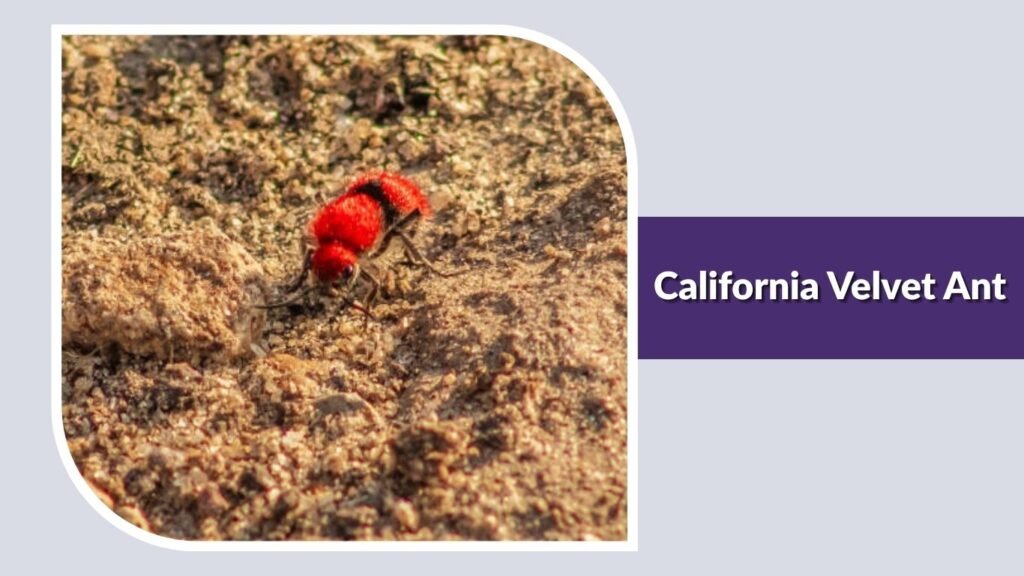
The California velvet ant is a ground-dwelling solitary wasp found in western North America. Females lack wings and resemble large, brightly colored ants. They are usually seen alone on sandy or dry soil, where they search for nests of other wasps and bees. Their tough body provides excellent protection from predators.
Identification
- Females are wingless and ant-like.
- The body is covered with dense red, orange, yellowish, or pale hairs.
- Black areas often contrast with the brighter hairs.
- Males are winged and more obviously wasp-like.
- Females have strong legs for rapid running.
- The body is thick and heavily armored.
Habitat and Distribution
California velvet ants can occur in deserts, coastal areas, grasslands, scrublands, gardens, and open woodland. They are particularly associated with dry locations containing exposed soil where potential host insects build their nests.
Diet and Feeding Behavior
Adults mainly consume flower nectar. Females wander over the ground while searching for bee and wasp nests. After finding one, the female enters the nest and places an egg near the developing host. The resulting velvet ant larva feeds on the host before completing its growth.
Defense and Behavior
Females can sting and should not be handled. However, they generally do not approach people aggressively. Their defensive system combines warning colors, fast movement, a hard exoskeleton, and a powerful sting, making them difficult prey for many animals.
11. European Velvet Ant
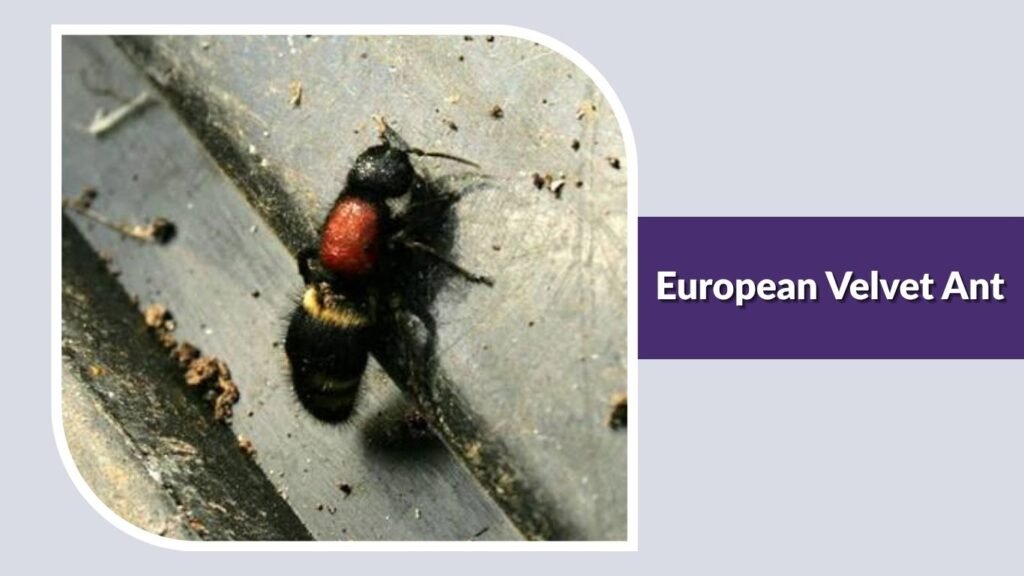
The European velvet ant is a solitary parasitoid wasp found across parts of Europe. Females are wingless and can easily be mistaken for unusually hairy ants, while males have functional wings. Their coloration varies, but many individuals display contrasting patches of red, orange, black, or pale hairs.
Identification
- Females lack wings and have an ant-like appearance.
- Dense hairs cover much of the head, thorax, and abdomen.
- Coloration may include reddish, black, orange, or pale areas.
- Males possess wings.
- Females have sturdy legs and a strongly hardened body.
- The abdomen often displays contrasting hair patterns.
Habitat and Distribution
European velvet ants occur in dry grasslands, sandy areas, heathlands, woodland clearings, and other warm open habitats. They are more likely to be found where populations of solitary bees and wasps provide suitable hosts for their young.
Diet and Feeding Behavior
Adults may visit flowers for nectar and other sugary food. Females actively search the soil and vegetation for nests of potential host insects. Their larvae develop as parasitoids, consuming a host larva or pupa before pupating and emerging as adults.
Sting and Behavior
Wingless females possess a defensive sting and can use it when restrained. They usually avoid direct contact with larger animals. Their strong outer skeleton makes them difficult to crush, while their warning coloration may help predators recognize them as unpleasant or dangerous prey.
12. Panda Ant
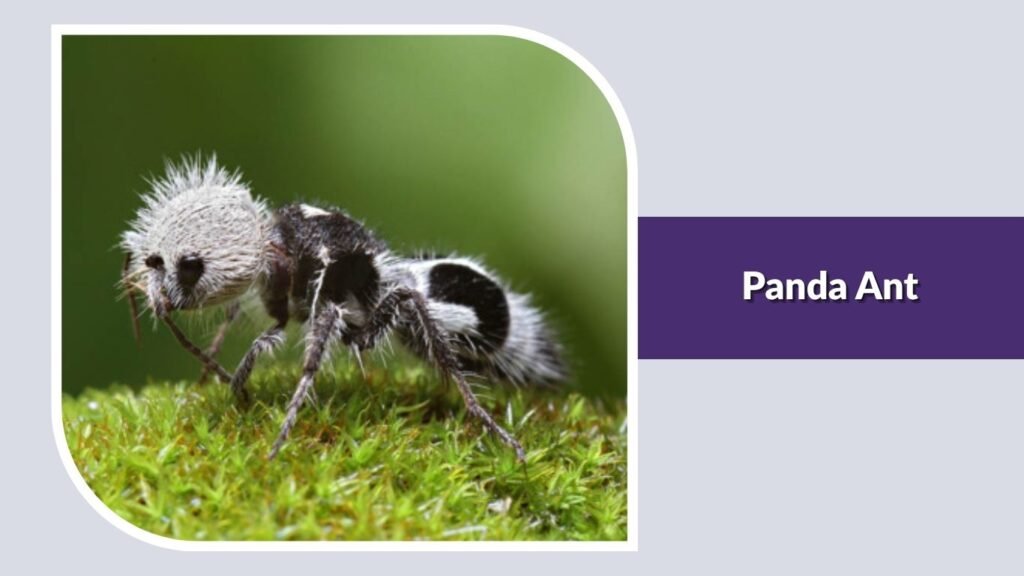
The panda ant is one of the most unusual-looking velvet ants, named for its contrasting black and white appearance. Despite the name, it is not an ant but a wingless female wasp. Its distinctive pattern has made it widely recognizable, although it spends much of its life moving through dry habitats in search of suitable host nests.
Identification
- Females are wingless and have a compact ant-like shape.
- Dense white hairs contrast with black areas of the body.
- The head often appears mostly white with darker markings.
- The abdomen displays bold black-and-white patterning.
- Males possess wings.
- Females have strong legs and a hardened exoskeleton.
Habitat and Distribution
Panda ants are associated with dry, open habitats in South America, especially areas containing sandy or loose soil. They may occur in scrubland, grassland, and other environments where ground-nesting solitary insects are available.
Diet and Feeding Behavior
Adult panda ants primarily depend on nectar and other sugary liquids for energy. Females search for underground bee or wasp nests and deposit eggs near the host’s immature stages. Their larvae develop by feeding on the host before completing metamorphosis.
Sting and Behavior
Female panda ants can sting when threatened, although they normally prefer to escape. Their striking black-and-white appearance may function as warning coloration. A hard exoskeleton also provides significant protection against predators and physical injury.
13. Red Velvet Ant
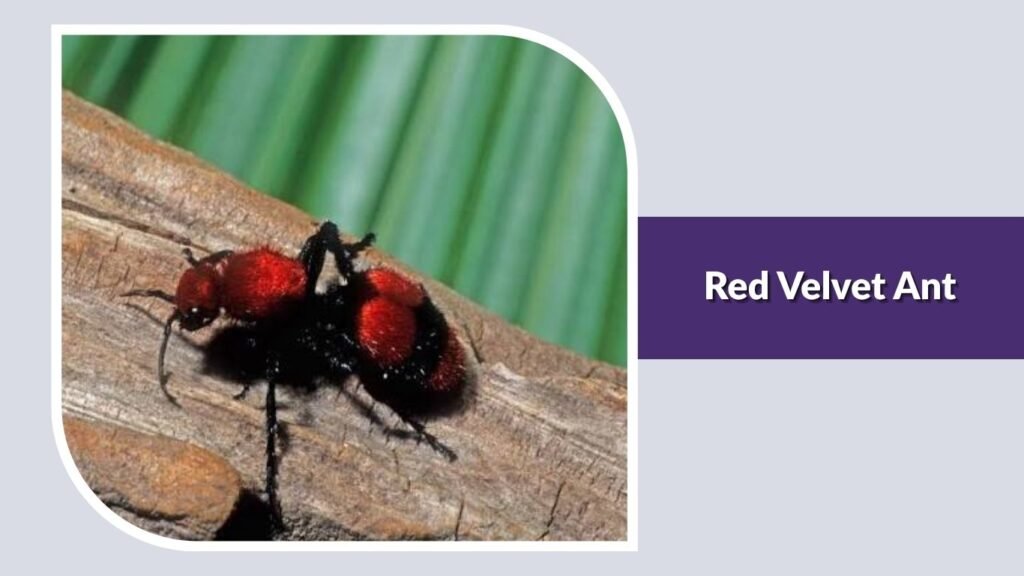
The red velvet ant is a general common name often applied to brightly colored velvet ants with red or reddish-orange hairs. These insects are actually solitary wasps, and females lack wings. Their vivid coloration makes them conspicuous on the ground and acts as an effective warning that they possess strong defensive abilities.
Identification
- Females have extensive red or reddish-orange hairs.
- Black markings commonly occur on the head and abdomen.
- Females are wingless and look similar to large hairy ants.
- Males possess wings.
- The body is compact and very strongly armored.
- Females usually move rapidly across the ground.
Habitat and Distribution
Red velvet ants can be found in sunny grasslands, sandy areas, pastures, gardens, scrublands, and woodland openings. Different species carrying this general common name occur in various warm and temperate regions, particularly where ground-nesting bees and wasps are abundant.
Diet and Feeding Behavior
Adults feed mainly on nectar from flowering plants. Females search for nests of solitary bees and wasps, entering suitable nest chambers to lay their eggs. After hatching, the young velvet ant uses the host’s developing larva or pupa as its food source.
Sting and Behavior
Females can deliver a painful sting when physically threatened. They do not normally chase or attack people and are best left undisturbed. Their bright red coloration, tough body covering, rapid movements, and defensive sting collectively make them difficult targets for predators.
14. White Velvet Ant

The white velvet ant is recognized for the pale or whitish hairs covering much of its body. Like other velvet ants, it is actually a solitary wasp rather than a true ant. Wingless females are often seen running across dry ground while searching for nests of other insects. Their light coloration can help them blend into sandy environments.
Identification
- Females are wingless and ant-like.
- Dense white or cream-colored hairs cover much of the body.
- Dark areas may be visible beneath the pale hairs.
- Males possess wings and look more like typical wasps.
- Females have strong legs for rapid movement.
- The body is compact and heavily armored.
Habitat and Distribution
White velvet ants are generally associated with sandy, dry, and open habitats. They may occur in deserts, grasslands, scrublands, dunes, and other areas containing loose soil. These habitats often support the ground-nesting bees and wasps that velvet ants depend upon for reproduction.
Diet and Feeding Behavior
Adults mainly feed on flower nectar and other sugary plant secretions. Females spend considerable time searching for underground nests belonging to solitary bees and wasps. After finding a suitable host, the female enters the nest and lays an egg near the developing larva or pupa.
Sting and Behavior
Female white velvet ants can sting when trapped or handled. They normally avoid people and attempt to escape from threats. Their tough exoskeleton, warning coloration, and rapid running ability provide additional protection against predators in exposed habitats.
15. Western Velvet Ant

The western velvet ant is a colorful solitary wasp found primarily in western regions of North America. Females are wingless and can easily be mistaken for large hairy ants. They are most often encountered walking across open soil, sandy paths, or grasslands while searching for nests of potential host insects.
Identification
- Females are wingless with a hairy, ant-like appearance.
- Body colors can include red, orange, yellow, black, or white.
- Males have wings and a more typical wasp shape.
- Females possess strong, well-developed legs.
- Dense hairs create a velvety texture.
- The abdomen often has contrasting bands or patches.
Habitat and Distribution
Western velvet ants inhabit deserts, grasslands, scrublands, woodland openings, and sandy areas throughout western North America. Their abundance is often linked to the availability of solitary ground-nesting bees and wasps.
Diet and Feeding Behavior
Adults may visit flowers to drink nectar. Females travel over the soil searching for host nests. Once one is located, they enter the burrow and deposit an egg near an immature bee or wasp. The velvet ant larva later feeds on that host.
Sting and Behavior
Females possess a defensive sting and may use it if captured. They generally do not behave aggressively toward humans. Their hard exoskeleton and conspicuous coloration help discourage predators, while their speed allows them to escape quickly when disturbed.
16. Yellow Velvet Ant
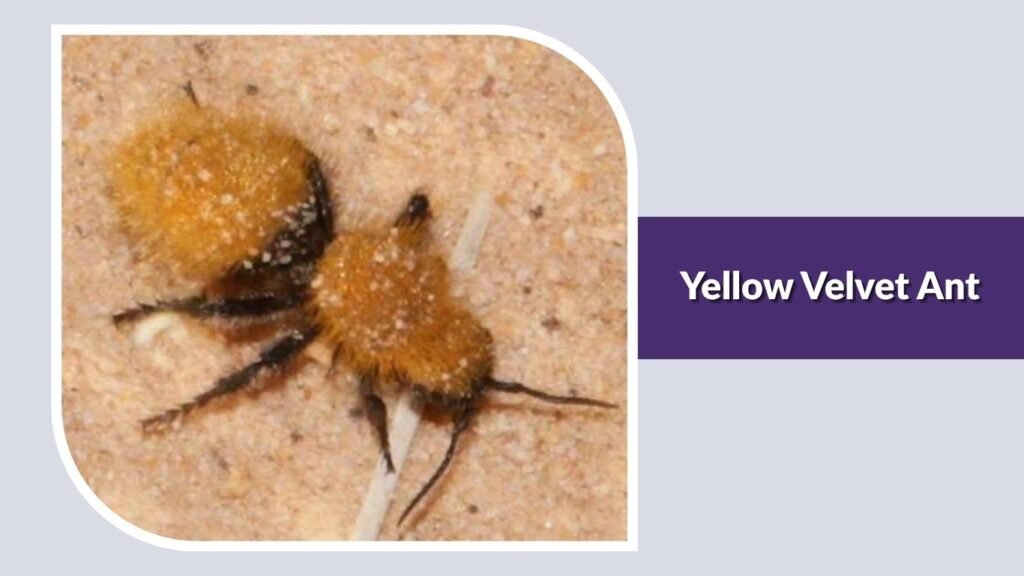
The yellow velvet ant is named for the yellow or golden hairs that cover portions of its body. Females lack wings and spend most of their time on the ground. Their bright coloration can make them highly noticeable, particularly when they move across bare soil in sunny, warm habitats.
Identification
- Females are wingless and resemble hairy ants.
- Yellow, golden, or pale hairs cover much of the body.
- Black or dark brown areas create contrasting patterns.
- Males possess functional wings.
- Females have a compact and strongly hardened body.
- Their legs are adapted for quick movement.
Habitat and Distribution
Yellow velvet ants are usually found in grasslands, sandy fields, deserts, scrublands, and open woodland. Warm locations with exposed soil are particularly suitable because many potential host bees and wasps build nests in these areas.
Diet and Feeding Behavior
Adult yellow velvet ants obtain energy primarily from nectar. Females search the ground for suitable bee or wasp nests. After entering a nest chamber, they deposit an egg near the host’s immature stage. The developing velvet ant larva then uses the host as its food source.
Sting and Behavior
Females can deliver a painful sting if handled or squeezed. They usually rely on escape rather than confrontation. Their yellow and dark warning patterns, tough exoskeleton, and ability to move quickly make them difficult prey for many predators.
17. Little Velvet Ant
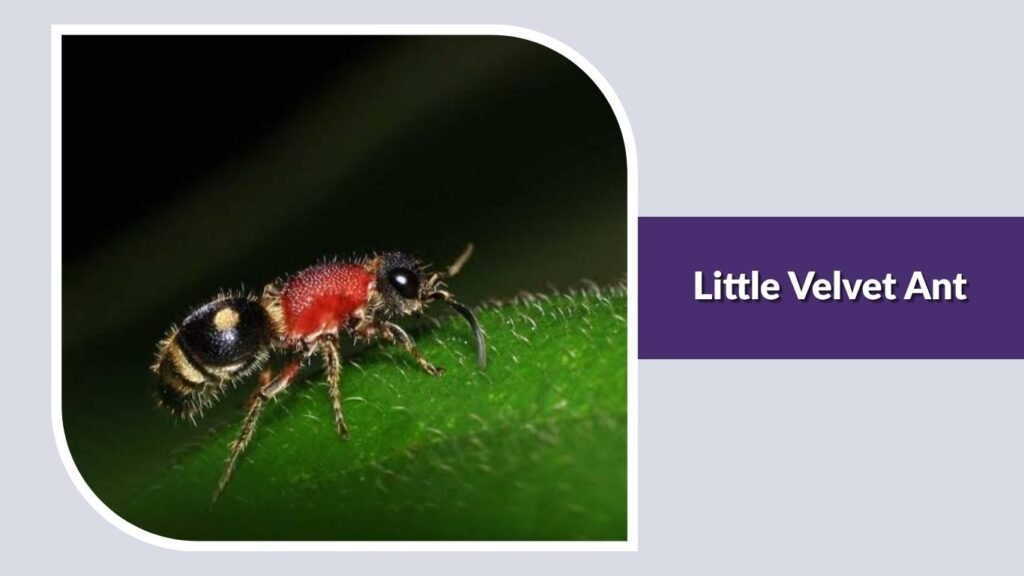
The little velvet ant is a smaller member of the velvet ant family with the same distinctive lifestyle as its larger relatives. Females are wingless, while males possess wings. Despite their small size, these insects are well protected by a tough exoskeleton and can defend themselves effectively if threatened.
Identification
- Females are relatively small and wingless.
- The body is covered with fine, dense hairs.
- Colors may include red, orange, yellow, black, or white.
- Males are winged and generally more slender.
- Females resemble tiny, hairy ants.
- The abdomen may have contrasting patches or bands.
Habitat and Distribution
Little velvet ants occur in open areas such as grasslands, sandy soils, gardens, woodland edges, and scrublands. Their preferred habitats often contain nests of solitary bees and wasps, which provide essential hosts for their developing young.
Diet and Feeding Behavior
Adults feed on nectar and other natural sugar sources. Wingless females explore the ground in search of host nests. After finding one, a female deposits an egg near the immature host. The velvet ant larva later develops by consuming the host larva or pupa.
Sting and Behavior
Despite their small size, females should not be handled because they may sting in defense. They are solitary and do not form colonies. Most individuals attempt to flee when approached and only rely on their sting when escape is difficult.
18. Cow Killer Velvet Ant
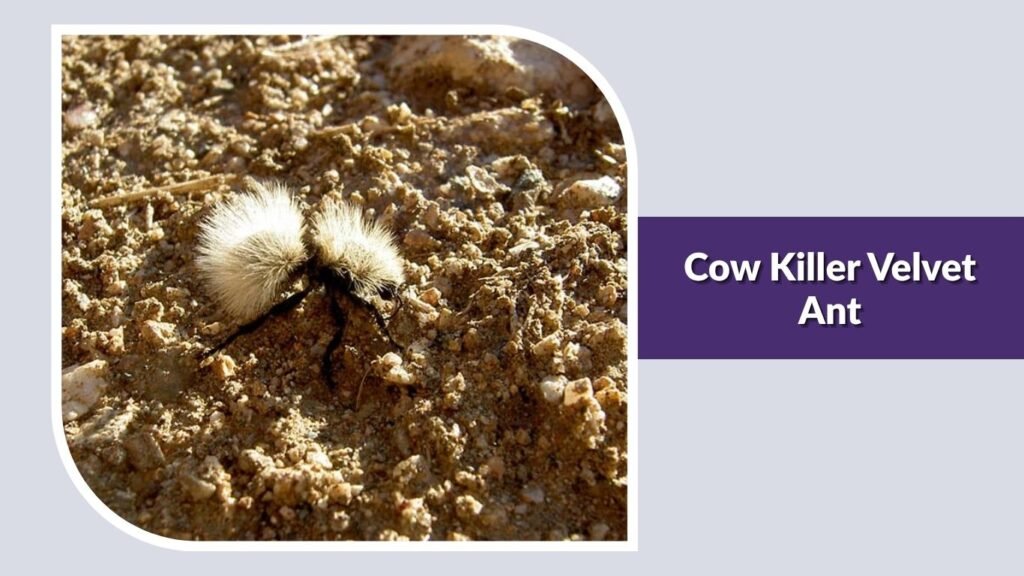
The cow killer velvet ant is a famous nickname for a large red-and-black velvet ant known for the powerful sting of the female. Despite the dramatic name, its sting does not actually kill cows. It is a solitary wasp, and females are wingless while males have fully developed wings.
Identification
- Females are large, wingless, and ant-like.
- Bright red or orange hairs cover much of the thorax and abdomen.
- Black areas strongly contrast with the red coloration.
- Females commonly reach around 13–20 mm long.
- Males have dark wings and a more wasp-like appearance.
- The body is extremely hard and difficult to crush.
Habitat and Distribution
Cow killer velvet ants are commonly found in the eastern and central United States. They inhabit lawns, fields, pastures, woodland edges, gardens, and sandy areas. Females are frequently seen crossing open ground during warm summer weather.
Diet and Feeding Behavior
Adults mainly feed on nectar. Females search for nests of ground-nesting bees and wasps, particularly cicada killers and other suitable hosts. They enter the nest and lay an egg near the host’s immature stage, which is later consumed by the velvet ant larva.
Sting and Behavior
The female’s sting is extremely painful and is responsible for the dramatic “cow killer” nickname. However, these insects are not aggressive and do not seek out humans. They sting mainly when stepped on, trapped, or deliberately handled.
19. Eastern Red Velvet Ant

The eastern red velvet ant is a large, brightly colored velvet ant widely recognized in the eastern United States. Females are wingless and have vivid red-orange and black coloration, while males are winged. It is one of the most conspicuous velvet ants and is frequently encountered walking across lawns, fields, and sandy ground.
Identification
- Females are wingless with red-orange and black coloration.
- Dense hairs cover the thorax and portions of the abdomen.
- Adults may reach around 13–20 mm in length.
- Males have wings and are generally darker.
- Females have powerful legs for running.
- The body is thick, tough, and heavily armored.
Habitat and Distribution
Eastern red velvet ants occur throughout much of the eastern and central United States. Open grasslands, lawns, fields, forest edges, sandy areas, and gardens provide suitable habitat. They are most noticeable during warm summer months.
Diet and Feeding Behavior
Adult eastern red velvet ants feed primarily on flower nectar. Females search for underground nests belonging to solitary bees and wasps. Once a suitable nest is found, the female enters and lays an egg near the developing host. The larva later feeds on that host.
Sting and Behavior
Female eastern red velvet ants are capable of delivering an intensely painful sting. Their vivid coloration serves as a warning to predators. Despite their strong defensive abilities, they are solitary and generally try to avoid contact rather than attack humans.
20. Large Velvet Ant

The large velvet ant is a general name used for some of the bigger members of the velvet ant family. These robust insects are notable for their dense hairs, bright warning colors, and heavily armored bodies. Wingless females may look like oversized ants, but they are actually solitary parasitoid wasps.
Identification
- Females are relatively large and completely wingless.
- Dense hairs may be red, orange, yellow, white, or black.
- Males possess wings and usually have a slimmer appearance.
- Females have powerful legs and a sturdy body.
- The abdomen often displays contrasting markings.
- Their hard exoskeleton provides strong physical protection.
Habitat and Distribution
Large velvet ants can occur in grasslands, deserts, sandy fields, scrublands, woodland openings, and other sunny habitats. Different species are distributed across many warm and temperate regions. They are most common in locations where solitary bees and wasps provide suitable hosts.
Diet and Feeding Behavior
Adults usually feed on nectar and other sugary liquids. Females travel across the ground searching for bee and wasp nests. Once an appropriate nest is discovered, the female lays an egg near a developing host. The young velvet ant then feeds on that host before pupating.
Sting and Behavior
Large female velvet ants may have powerful defensive stings, so they should be observed without handling. They generally run away when threatened instead of attacking. Bright warning coloration, a remarkably tough exoskeleton, and defensive sounds can also help discourage potential predators.
FAQs
1. Are velvet ants actually ants?
No. Velvet ants are actually wasps in the family Mutillidae. Females are wingless, which gives them an ant-like appearance, while males usually have wings.
2. Do velvet ants sting?
Yes. Female velvet ants can sting, and some species are known for producing a very painful sting. They generally sting only when handled, trapped, or threatened.
3. Are velvet ants dangerous to humans?
Velvet ants are not usually aggressive toward humans. Their sting can be painful, but they normally try to escape rather than attack. It is best to avoid touching them.
4. What do velvet ants eat?
Adult velvet ants mainly feed on flower nectar and other sugary substances. Their larvae develop as parasitoids of other insects, especially solitary bees and wasps.
5. Where do velvet ants live?
Velvet ants are commonly found in grasslands, deserts, sandy areas, gardens, woodland edges, and open fields. They are especially common in warm areas where ground-nesting bees and wasps are abundant.