
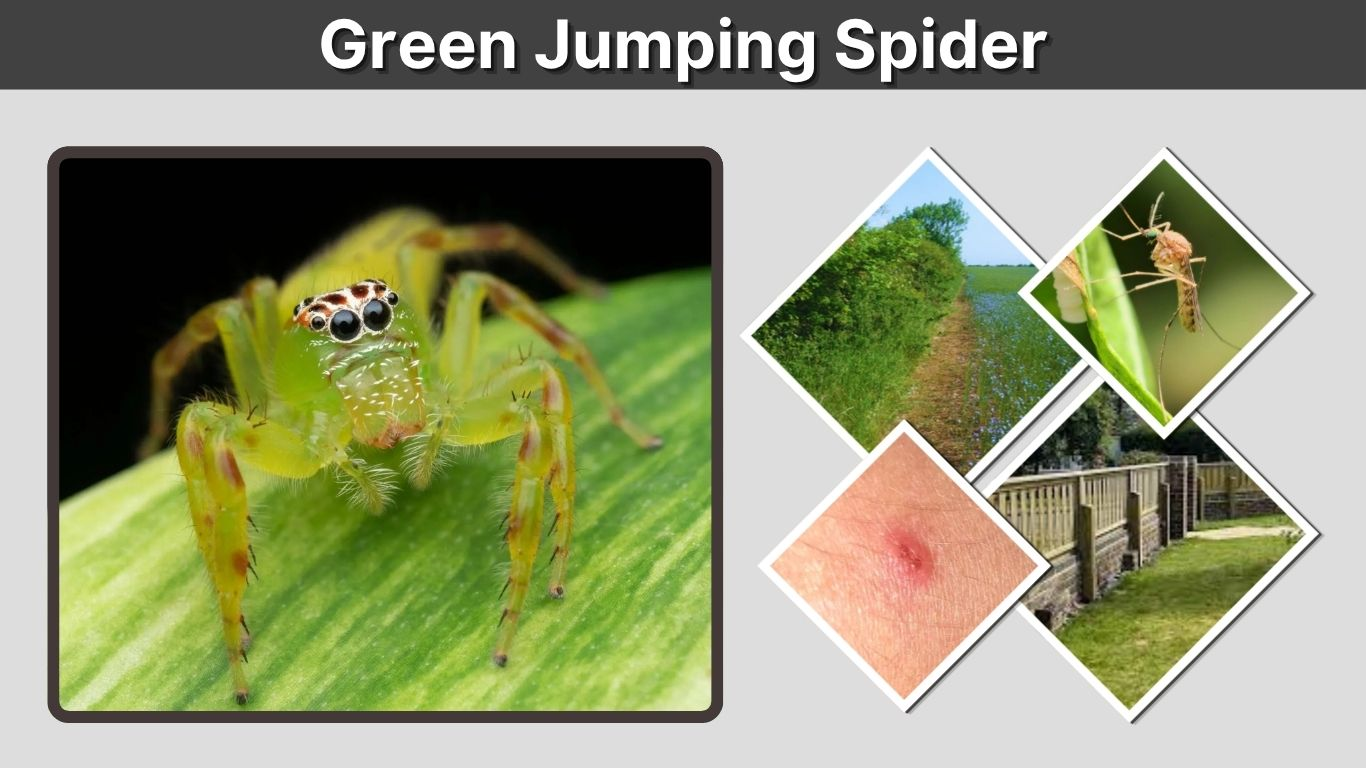
A green jumping spider can refer to more than one spider. Some people mean a truly green species, such as the magnolia green jumping spider. Others mean a black jumping spider with metallic green fangs, which are actually iridescent mouthparts called chelicerae. In both cases, these spiders are usually small, active hunters with excellent vision and the quick, controlled jumps that make jumping spiders so easy to recognize.
What Is a Green Jumping Spider?
A green jumping spider is usually a small spider from the jumping spider family, Salticidae. These spiders are known for their large front-facing eyes, compact bodies, sharp vision, and ability to leap short distances while hunting. They do not build sticky webs to trap prey. Instead, they stalk insects and pounce when close enough.
The phrase “green jumping spider” can describe two common search meanings. The first is the magnolia green jumping spider, also called the magnolia green jumper. This spider is pale green or bright green and blends well with leaves. The second is a darker jumping spider, often black or black and white, with shiny green chelicerae. These are often called “green fangs” in casual searches, although they are not technically teeth.
Because the keyword has mixed meaning, the best way to identify your spider is to look at where the green color appears. If the whole body is green, it may be a magnolia green jumping spider or another green species. If the body is black and only the mouthparts look green, it may be a bold jumping spider or another Phidippus species.
Magnolia Green Jumping Spider
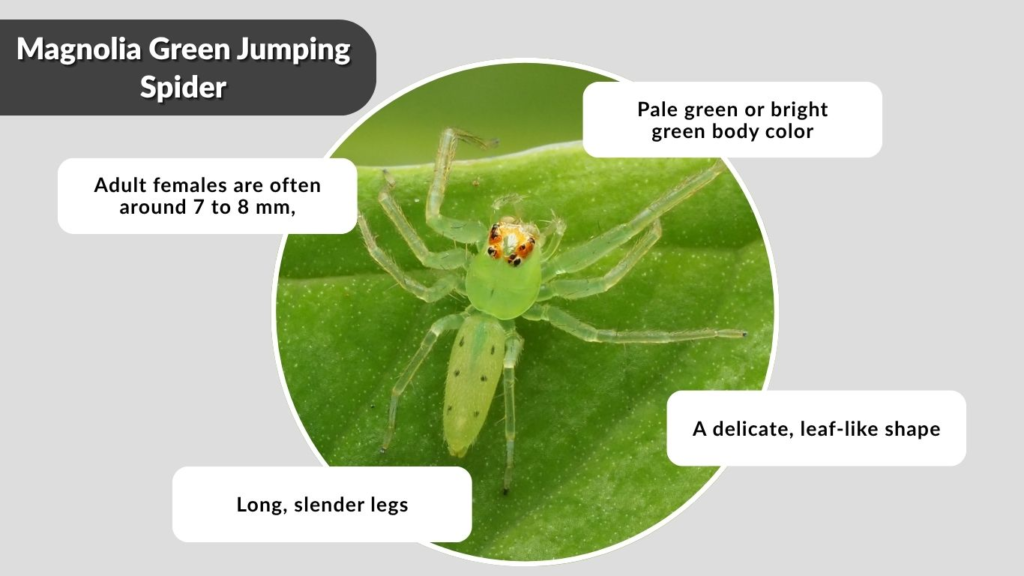
The magnolia green jumping spider is one of the best matches for people searching for a green jumping spider. Its scientific name is Lyssomanes viridis. It is a slender, delicate jumping spider with a translucent green body, long legs, and a leaf-like appearance.
Unlike the chunky, furry look of many familiar jumping spiders, the magnolia green jumping spider looks more delicate. It often appears light green, lime green, or yellow-green. Its body can look semi-transparent, and it may have small dark spots on the abdomen. The eyes can appear striking because they contrast against the pale green body.
This spider is often found on broadleaf plants, shrubs, and trees. The name “magnolia” comes from its association with magnolia leaves, but it can occur on other vegetation as well. Its green coloring helps it blend into leaves while hunting small insects.
Magnolia Green Jumping Spider Size
The magnolia green jumper is a small spider. Adult females are often around 7 to 8 mm, while males may be slightly smaller, around 5 to 6 mm. This makes it easy to miss unless it moves across a leaf or wall. A tiny green jumping spider on a plant may be a juvenile or a naturally small adult.
Magnolia Green Jumping Spider Appearance
A magnolia green jumping spider usually has:
- Pale green or bright green body color
- Long, slender legs
- A delicate, leaf-like shape
- Dark spots on the abdomen
- Noticeable eyes with orange, black, or reddish tones
- A body that may look partly translucent
This spider does not look like the bold, black-and-white jumping spiders people often see on windowsills. It has a softer, more plant-like appearance.
Black Jumping Spider With Green Fangs
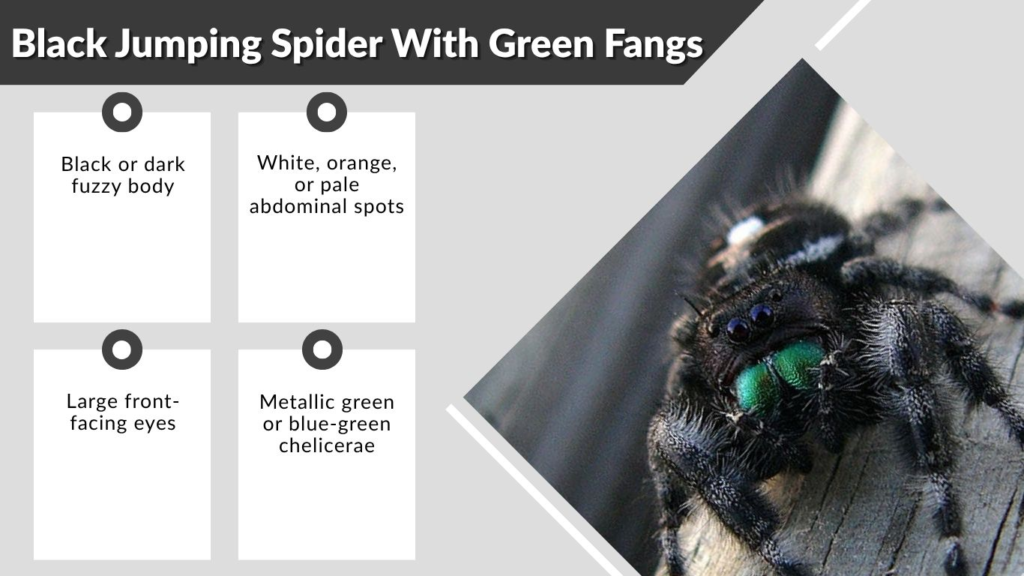
Many people searching for a green jumping spider are actually looking at a black jumping spider with green fangs. In most cases, the “fangs” are not the true fangs but the spider’s chelicerae. Chelicerae are mouthpart structures near the front of the face. In some jumping spiders, they shine metallic green, blue, teal, or violet.
The bold jumping spider, Phidippus audax, is a common example. It is usually black with white or orange markings and has iridescent green or blue-green chelicerae. It is common in North America and often appears on walls, fences, gardens, fields, and around houses. Bold jumping spiders are known for large eyes, active hunting, and visible metallic mouthparts.
A black jumping spider with green fangs may have:
- Black or dark fuzzy body
- White, orange, or pale abdominal spots
- Large front-facing eyes
- Metallic green or blue-green chelicerae
- Strong, compact legs
- Quick jumping movement
This type of spider is not green all over. Only the mouthparts appear green, which is why searchers often describe it as a black and green jumping spider, black jumping spider green fangs, or black and white jumping spider with green fangs.
Green Fangs, Green Teeth, or Green Chelicerae?
Searches like “jumping spider green fangs,” “green fang jumping spider,” and “jumping spider green teeth” usually refer to chelicerae. These are not teeth. They are paired mouthparts that sit near the fangs and help the spider hold prey.
In several jumping spiders, especially species in the genus Phidippus, the chelicerae can be iridescent. That means they reflect light in metallic colors. Depending on the angle, the same spider may show green, blue, violet, or teal shine.
This feature can look dramatic in close-up photos. It may also make the spider seem more dangerous than it is. In reality, green chelicerae do not mean the spider is more venomous or aggressive. They are simply part of the spider’s appearance.
Is a Green Jumping Spider Poisonous?
A green jumping spider is not considered dangerous to humans. Like most spiders, jumping spiders have venom, but venom is used to subdue small prey. They are venomous in a biological sense, but they are not medically important for most people.
“Poisonous” is also not the best word for spiders. Poison is harmful when swallowed, touched, or absorbed. Venom is injected through a bite. Jumping spiders are venomous because they can bite prey, but they are not poisonous to touch.
Washington State University Extension explains that jumping spiders do not use webs to catch prey. They stalk prey and pounce, and bite symptoms are generally less pronounced than yellowjacket stings, with larger species being the main concern for biting humans.
Green Jumping Spider Bite
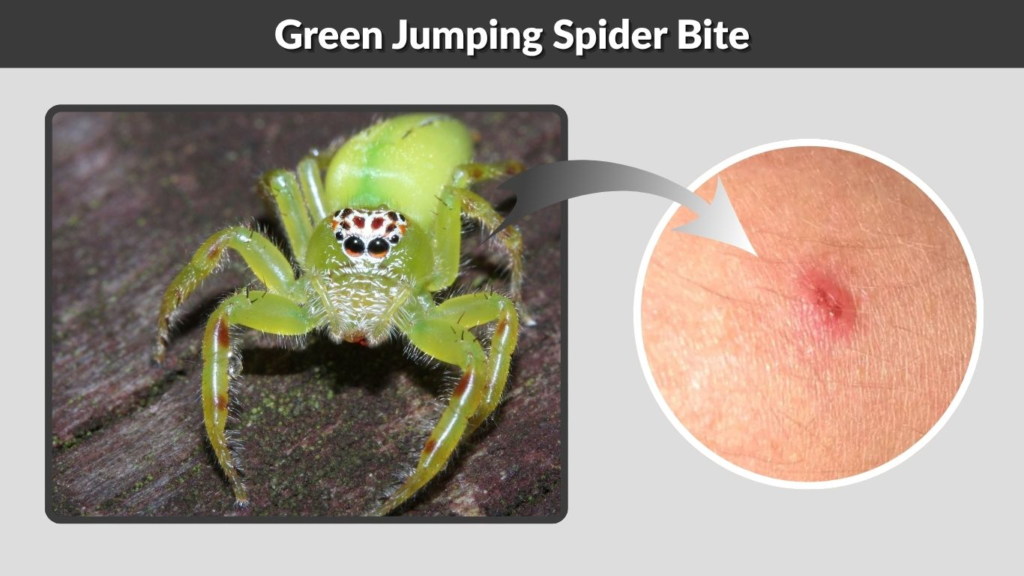
A green jumping spider bite is uncommon. These spiders usually jump away or hide when disturbed. A bite may happen if the spider is trapped against skin, squeezed, or handled roughly.
A bite may cause:
- Mild pain or a pinching feeling
- Redness
- Itching
- Slight swelling
- Temporary tenderness
Most mild bite reactions can be handled with basic first aid. Wash the area with soap and water, apply a cool compress, and avoid scratching. If symptoms become severe, spread quickly, or include breathing trouble, dizziness, fever, or intense swelling, seek medical advice.
A suspected spider bite is not always caused by a spider. Mosquito bites, skin irritation, allergies, and minor infections can look similar. Seeing the spider bite is the only clear confirmation.
Where Do Green Jumping Spiders Live?
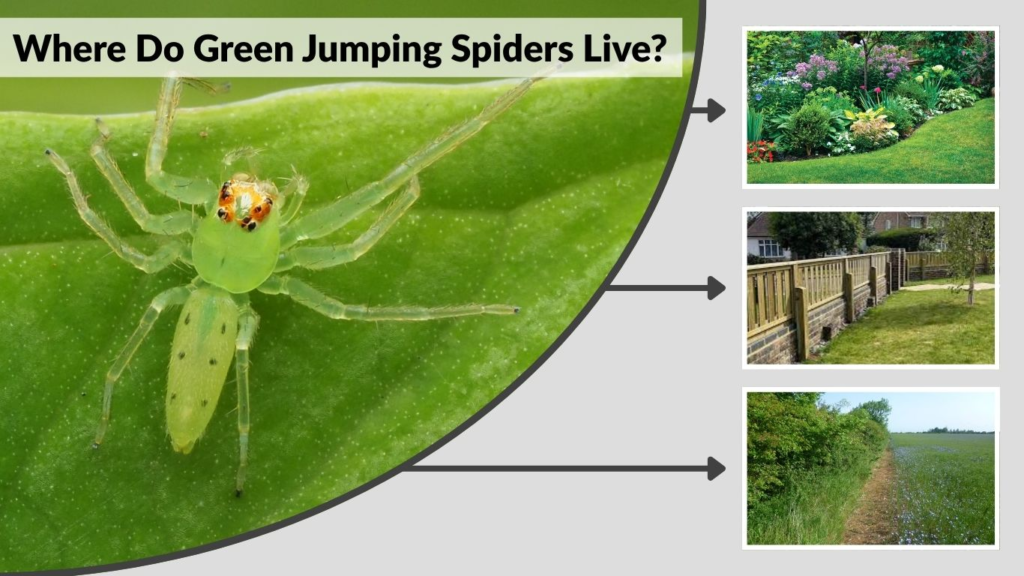
Green jumping spiders and green-fanged jumping spiders can be found in different regions depending on the species. The magnolia green jumping spider is associated with the southeastern United States and nearby warm regions. It is often seen on leafy plants, shrubs, and trees.
Bold jumping spiders and related black jumping spiders with green chelicerae are common across much of North America. They are frequently found in open habitats, gardens, fields, yards, fences, walls, and around homes.
Common places to find green or green-fanged jumping spiders include:
- Leaves and shrubs
- Magnolia trees and other broadleaf plants
- Garden plants
- Fences and outdoor walls
- Windowsills
- Field edges
- Sunny surfaces
- Around outdoor lights where insects gather
Location-based searches such as “green jumping spider Florida” or “magnolia green jumping spider Florida” usually point toward green-bodied species like Lyssomanes viridis. Searches like “black jumping spider with green fangs California” may point toward bold jumping spiders or related species.
Green Jumping Spider in Florida
Florida is a strong location for green jumping spider searches because the magnolia green jumping spider occurs in warm, plant-rich habitats. The state also has several other jumping spiders, including large and colorful Phidippus species. A green spider found on leaves in Florida may be a magnolia green jumper, while a black spider with green mouthparts may be a bold or regal jumping spider.
If you find one in Florida, take a clear photo from above and from the front. The top view helps show body color and pattern. The front view helps show eye arrangement and chelicerae.
Green Jumping Spider in Australia
Australia has many jumping spiders, including colorful and metallic species. A search for “Australian green jumping spider” may refer to several different spiders rather than one single species. Some Australian jumping spiders have metallic green scales, greenish bodies, or bright green chelicerae.
Because common names vary by region, a photo and location are important for identification. A green jumping spider in Australia is not necessarily the same as a magnolia green jumping spider in the United States.
Metallic Green Jumping Spiders
A metallic green jumping spider may be green because of body scales, reflective mouthparts, or both. Some spiders appear emerald, blue-green, or gold-green in bright light. Others look duller in shade.
Metallic color in jumping spiders is often structural. That means it comes from how surfaces reflect light, not just from pigment. This is why a spider may look green from one angle and blue or violet from another.
Terms like “shiny green jumping spider,” “emerald green jumping spider,” and “iridescent green jumping spider” often describe this reflective effect. The exact species depends on body shape, markings, and location.
Green Jumping Spider vs Green Lynx Spider
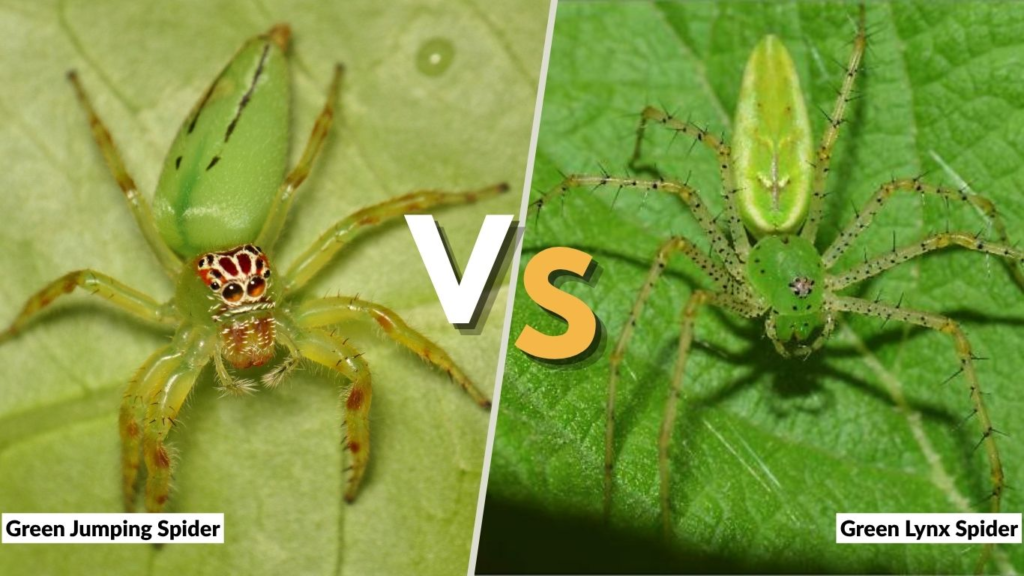
Some people confuse green jumping spiders with green lynx spiders. A green lynx spider is not a jumping spider. It belongs to a different spider family and has a different shape and hunting style.
A green lynx spider usually has long spiny legs, a larger body, and a more stretched appearance. It is often found on plants and flowers. A jumping spider has a more compact body, larger front-facing eyes, and controlled jumping movement.
Quick differences:
- Jumping spiders have large forward-facing eyes
- Lynx spiders have long spiny legs
- Jumping spiders are usually compact
- Lynx spiders look longer and leggier
- Jumping spiders often turn to face movement
- Lynx spiders may wait on flowers or foliage for prey
If the spider is bright green with long spiky legs, it may be a green lynx spider rather than a green jumping spider.
Are Green Jumping Spiders Good for Gardens?
Green jumping spiders are beneficial predators. They eat small insects and help support natural pest balance in gardens and landscapes. They do not damage leaves, chew wood, infest food, or harm plants.
A green spider on a plant may actually be helping by hunting tiny flies, gnats, leafhoppers, or other small arthropods. Jumping spiders are especially useful because they actively search for prey rather than waiting in one place.
Reasons to leave them alone:
- They eat small insects
- They do not harm plants
- They do not build messy prey-catching webs
- They are not aggressive toward people
- They support biodiversity
If one appears indoors and you do not want it there, use a cup and paper to move it outside.
Green Jumping Spider as a Pet
Some searches for “green jumping spider for sale” or “magnolia green jumping spider for sale” show transactional interest. Jumping spiders can be kept as pets, but not every species is equally beginner-friendly.
Magnolia green jumping spiders are delicate and may not be as commonly kept as larger pet species such as regal jumping spiders or bold jumping spiders. Their smaller size and leaf-dwelling habits can make care more challenging. They need suitable ventilation, safe humidity, climbing space, and tiny prey.
Before buying any jumping spider, check:
- Whether it is captive-bred
- Whether the seller identifies the species correctly
- The spider’s age and sex
- Feeding requirements
- Temperature and humidity needs
- Local laws or shipping rules
- Whether you can provide tiny live prey
Avoid buying wild-caught spiders from questionable sellers. Captive-bred spiders are usually better for both the keeper and wild populations.
What Do Green Jumping Spiders Eat?
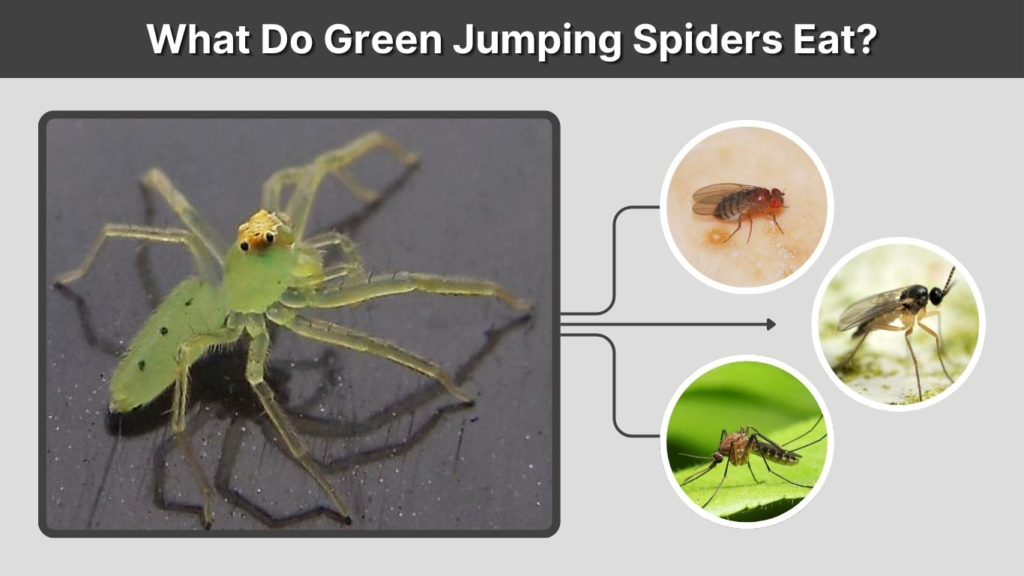
Green jumping spiders eat small live prey. Outdoors, they hunt insects and tiny arthropods on plants, walls, and other surfaces. Their prey may include small flies, gnats, mosquitoes, aphids, leafhoppers, moths, and other spiders.
A pet jumping spider should be fed prey that is appropriately sized. The prey should not be much larger than the spider. Tiny spiders need very small food, such as fruit flies. Larger jumping spiders can take small flies, small crickets, or other suitable feeder insects.
Never feed insects collected from pesticide-treated areas. Pesticide exposure can kill or weaken a pet spider.
How to Identify a Green Jumping Spider Safely
You do not need to touch a spider to identify it. Take a photo instead. For jumping spiders, front-facing and top-down photos are the most useful.
Look for:
- Green body or green mouthparts
- Large front-facing eyes
- Compact jumping-spider shape
- Short, controlled jumps
- Leaf habitat or wall habitat
- Body markings and leg color
- Location where it was found
Do not handle unknown spiders with bare hands. Even harmless spiders can bite when squeezed. If you need to move one, use a cup and paper.
FAQs
What is a green jumping spider?
A green jumping spider may be a truly green species such as the magnolia green jumping spider, or it may be a dark jumping spider with metallic green chelicerae. The magnolia green jumping spider is pale green and leaf-like, while green-fanged jumping spiders are usually black or dark with shiny mouthparts.
Is the magnolia green jumping spider poisonous?
The magnolia green jumping spider is not considered dangerous to humans. Like other jumping spiders, it has venom for catching small prey, but it is not medically significant for most people. It is better described as venomous but harmless, not poisonous. Avoid handling it roughly to prevent accidental bites.
Why does my jumping spider have green fangs?
The green “fangs” are usually iridescent chelicerae, not true teeth. Chelicerae are mouthparts near the fangs. In bold jumping spiders and related species, they can reflect metallic green, blue, or violet light. This color does not mean the spider is especially dangerous or aggressive.
Can a green jumping spider bite?
Yes, a green jumping spider can bite, but bites are uncommon. A bite is most likely if the spider is trapped or squeezed. Symptoms are usually mild, such as brief pain, redness, itching, or slight swelling. Wash the area, use a cool compress, and seek medical help if symptoms become unusual.
Can I keep a green jumping spider as a pet?
You can keep some jumping spiders as pets, but green species like the magnolia green jumper may be more delicate than common beginner species. They need secure ventilation, climbing space, proper moisture, and tiny live prey. Captive-bred spiders from responsible sellers are better than wild-caught individuals.
