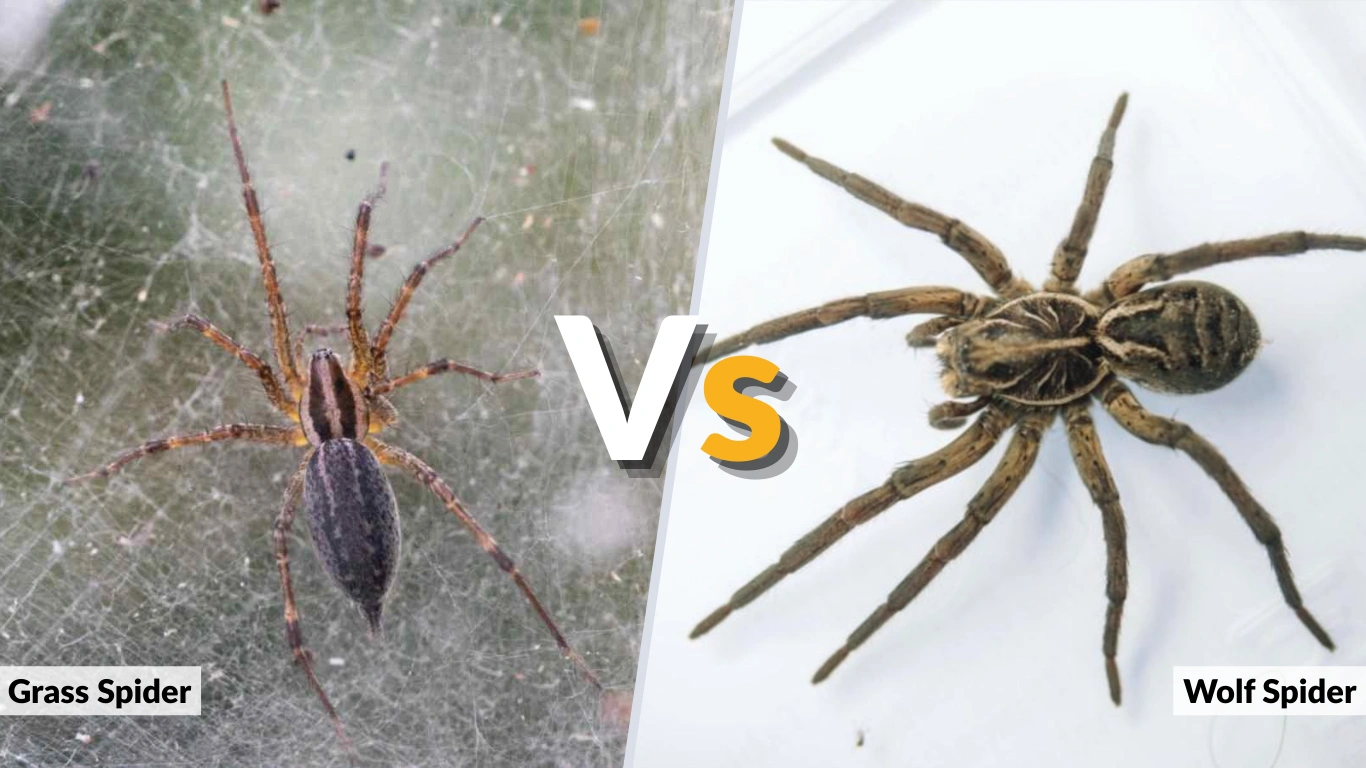
Spiders often trigger fear at first glance, but not all spiders are the same. Two species commonly confused with one another are the grass spider and the wolf spider. While they may share similar colors and body shapes, their behaviors, habitats, and hunting styles are quite different. Understanding these differences can help you identify which spider you’re seeing and determine whether it poses any risk.
In this article, we’ll compare grass spiders and wolf spiders in detail, including their appearance, habitat, behavior, venom, and how to tell them apart.
Overview of Grass Spiders
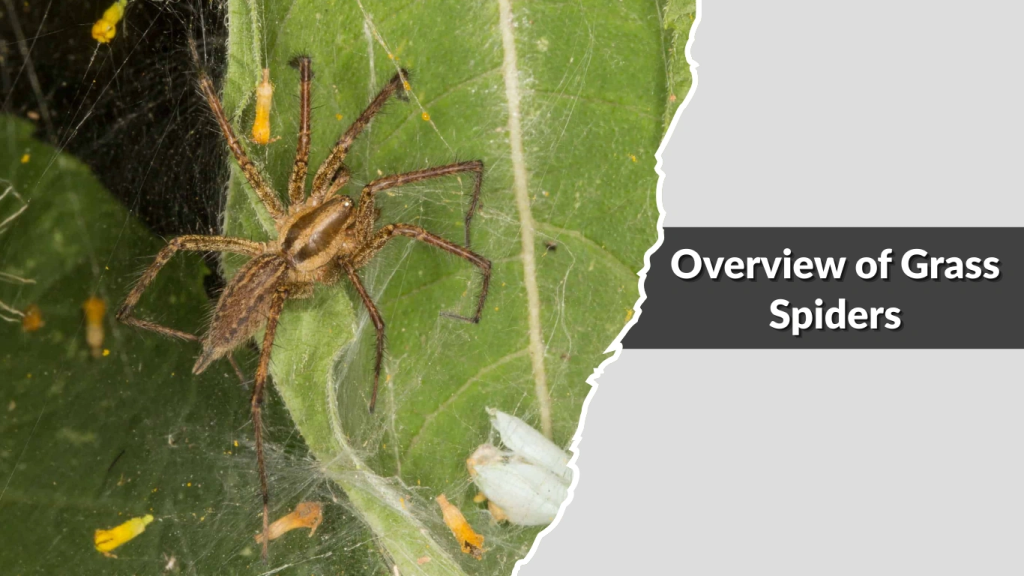
Grass spiders belong to the genus Agelenopsis and are part of the funnel-weaver family (Agelenidae). They are common throughout North America and are often found in lawns, shrubs, and gardens.
Appearance
Grass spiders are typically light to medium brown with two darker stripes running lengthwise down their cephalothorax (the front body section). Their abdomen may have subtle chevron or herringbone patterns.
One of their most noticeable features is their long spinnerets—the silk-spinning organs at the rear of the abdomen. These spinnerets are clearly visible and extend beyond the body, which helps distinguish them from other spiders.
Grass spiders are medium-sized, with body lengths ranging from about ½ to ¾ inch. Including their legs, they can appear much larger.
Web Structure
Grass spiders are known for building funnel-shaped webs. These webs are flat and sheet-like with a narrow funnel retreat at one end. The spider waits inside the funnel until prey lands on the web, then quickly rushes out to capture it.
You’ll often see these webs covered in morning dew, making them especially visible in grassy areas.
Overview of Wolf Spiders
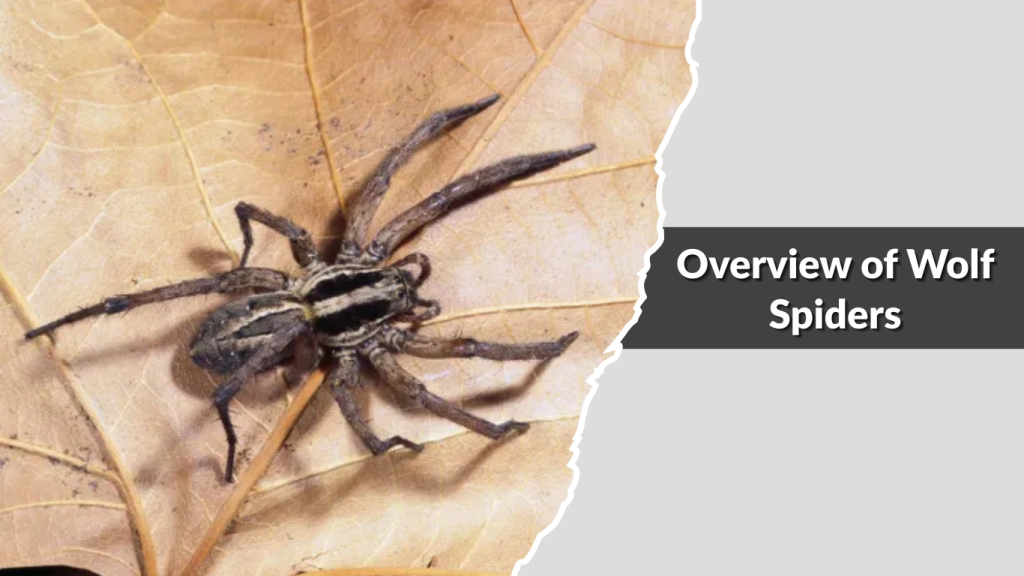
Wolf spiders belong to the family Lycosidae. They are robust, fast-moving hunters found worldwide. Unlike grass spiders, wolf spiders do not rely on webs to catch prey.
Appearance
Wolf spiders are typically darker brown, gray, or black with bold patterns or stripes. They have a stocky, muscular build and thick legs.
One of their defining characteristics is their eye arrangement. Wolf spiders have eight eyes arranged in three rows:
- Four small eyes on the bottom row
- Two large, forward-facing eyes in the middle
- Two medium-sized eyes on top
This unique eye pattern gives them excellent vision and a reflective “glow” when light shines on them at night.
Adult wolf spiders range in body size from about ½ inch to over 1 inch, depending on the species.
Hunting Style
Wolf spiders are active hunters. Instead of spinning webs, they roam the ground and chase down prey like insects and other small arthropods. Their speed and agility make them efficient predators.
They are often seen scurrying across floors, patios, or yards, especially at night.
Key Differences Between Grass Spiders and Wolf Spiders
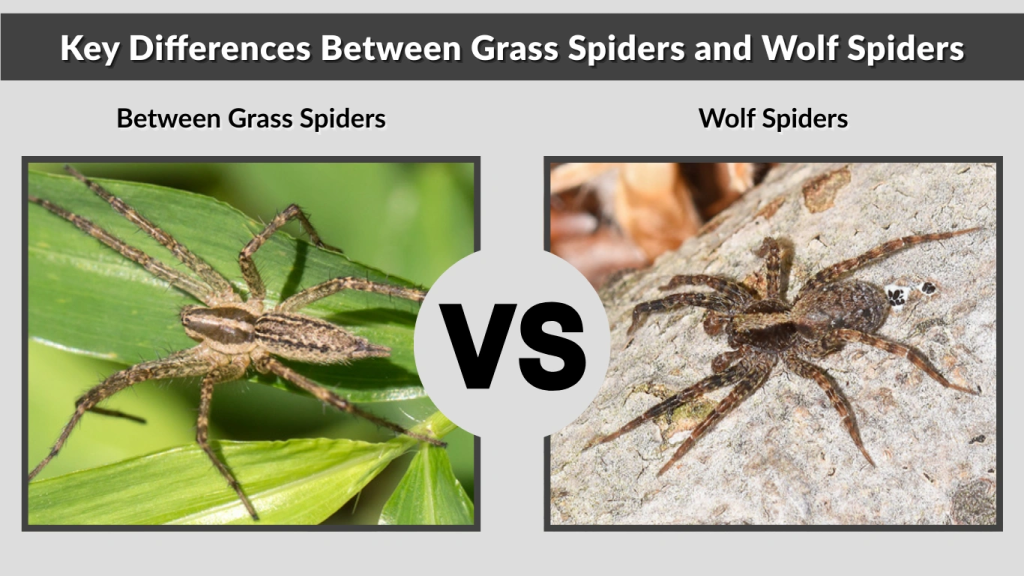
Although these spiders can look similar at first glance, several features set them apart.
1. Web Use
- Grass Spider: Builds a funnel-shaped web and waits for prey.
- Wolf Spider: Does not build a web to catch prey; actively hunts.
If you see a spider sitting in a funnel web in your lawn, it’s almost certainly a grass spider.
2. Spinnerets
- Grass Spider: Long, clearly visible spinnerets extending from the abdomen.
- Wolf Spider: Short spinnerets that are not easily visible.
This is one of the easiest ways to tell them apart.
3. Eye Arrangement
- Grass Spider: Smaller, less prominent eyes arranged more evenly.
- Wolf Spider: Distinct three-row eye pattern with two large central eyes.
If you can see the eyes clearly and notice two large, forward-facing ones, you’re likely looking at a wolf spider.
4. Body Shape
- Grass Spider: Slender body and long legs.
- Wolf Spider: Stocky, robust body and thicker legs.
Wolf spiders appear heavier and more muscular compared to the more delicate grass spider.
5. Behavior
- Grass Spider: Stays near its web and retreats quickly into the funnel when disturbed.
- Wolf Spider: Runs rapidly across surfaces and does not rely on a web for protection.
Habitat and Distribution
Grass Spiders
Grass spiders prefer grassy areas, shrubs, and garden spaces. They are common in suburban lawns and fields. Their webs are usually low to the ground and attached to vegetation.
They may occasionally wander indoors, but they are primarily outdoor spiders.
Wolf Spiders
Wolf spiders are highly adaptable. They can live in forests, grasslands, deserts, and even urban environments.
Some species burrow into the ground, while others roam freely. Wolf spiders are more likely than grass spiders to be found inside homes, especially during colder months.
Are They Dangerous?
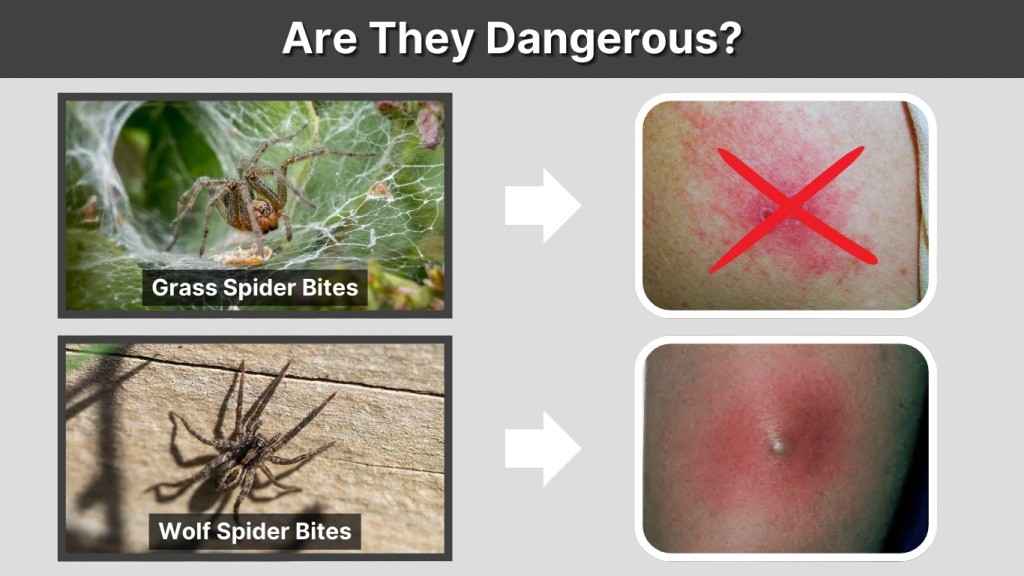
Grass Spider Bites
Grass spiders are not considered dangerous to humans. They are shy and rarely bite unless handled or trapped against the skin.
Their venom is designed to immobilize insects and typically causes only mild irritation in humans, if any symptoms occur at all.
Wolf Spider Bites
Wolf spiders can bite if threatened, but their venom is not medically significant for most people.
A wolf spider bite may cause:
- Mild pain
- Redness
- Swelling
- Itching
Severe reactions are rare and usually related to individual allergic responses rather than the venom itself.
Reproduction and Life Cycle
Grass Spiders
Female grass spiders lay egg sacs in late summer or early fall. The eggs hatch in the spring. Most grass spiders live about one year.
Wolf Spiders
Wolf spiders have a unique maternal behavior. After laying eggs, the female carries the egg sac attached to her spinnerets.
Once the spiderlings hatch, they climb onto the mother’s back and stay there for several days until they are ready to disperse. This behavior is exclusive to wolf spiders and is a key identifying trait.
How to Identify Them in Your Yard
If you’re trying to determine whether the spider in your yard is a grass spider or a wolf spider, follow these steps:
- Look for a web. If there’s a funnel web, it’s likely a grass spider.
- Check the spinnerets. Long and visible spinnerets suggest a grass spider.
- Observe the body shape. A bulky body points to a wolf spider.
- Notice the behavior. If it runs freely without a web, it’s probably a wolf spider.
Using these clues together will give you the most accurate identification.
Ecological Importance
Both grass spiders and wolf spiders play beneficial roles in the ecosystem.
They help control insect populations by feeding on flies, mosquitoes, beetles, and other pests. In gardens and lawns, they act as natural pest control agents.
Rather than being harmful, these spiders contribute to a balanced and healthy environment.
Should You Remove Them?
In most cases, there’s no need to remove grass spiders or wolf spiders from your yard. They are not aggressive and rarely pose any risk to humans or pets.
If a spider enters your home and you prefer not to keep it there, gently capturing and releasing it outside is usually sufficient.
To reduce indoor encounters:
- Seal cracks and gaps in walls and windows
- Keep outdoor lights away from doors (lights attract insects, which attract spiders)
- Maintain tidy landscaping near your home’s foundation
FAQs
What is the easiest way to tell a grass spider from a wolf spider?
The easiest way is to look for long spinnerets and a funnel web. Grass spiders have visible, extended spinnerets and build funnel-shaped webs. Wolf spiders do not build webs to catch prey and have shorter spinnerets that are harder to see.
Are wolf spiders more aggressive than grass spiders?
Wolf spiders are not aggressive, but they are more active hunters and may appear bold because they run openly across surfaces. Grass spiders tend to stay hidden in their webs and retreat quickly when disturbed.
Can grass spiders and wolf spiders live indoors?
Both species can wander indoors, especially during seasonal changes. However, wolf spiders are more commonly found inside homes. Neither species prefers indoor living and usually enters accidentally.
Do wolf spiders always carry their babies on their backs?
Yes, female wolf spiders are known for carrying their egg sacs and later their spiderlings on their backs. This behavior is unique to wolf spiders and helps protect their young during early development.