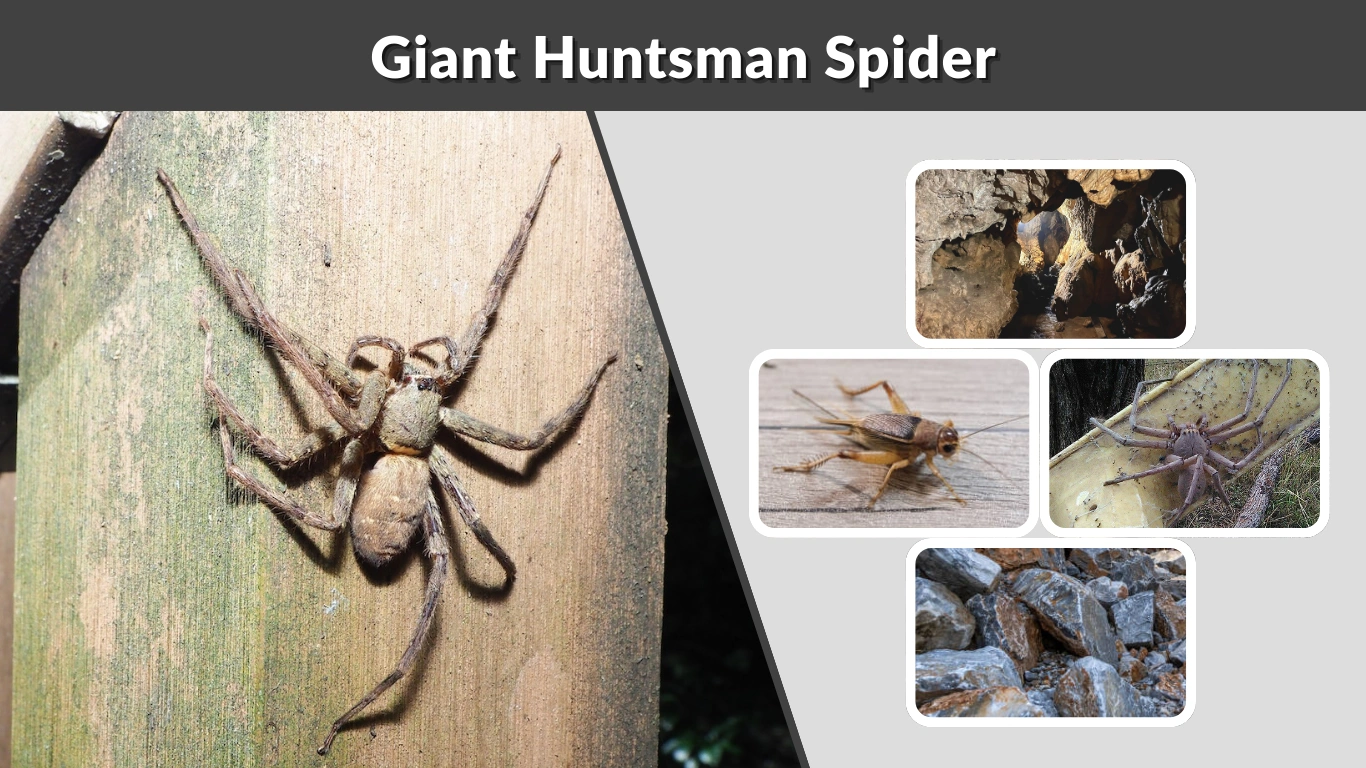
The giant huntsman spider is widely known for holding the record as the largest spider in the world by leg span. Its enormous size, crab-like appearance, and rapid movement have made it one of the most feared spiders on the planet. Despite its intimidating reputation, this rare species is not dangerous to humans and prefers to avoid contact whenever possible. Learning about its size, behavior, and natural habitat helps clear common misconceptions and explains why this spider is more fascinating than frightening.
What Is the Giant Huntsman Spider?
The giant huntsman spider is a species of huntsman spider scientifically known as Heteropoda maxima. It belongs to the family Sparassidae, a group of fast-moving spiders that actively hunt their prey instead of building webs.
This species was formally described in 2001 and quickly gained global attention due to its extraordinary leg span. While it shares many traits with common huntsman spiders, the giant huntsman spider is significantly larger and far rarer. It is not commonly encountered by humans and lives in very specific environments.
Giant Huntsman Spider Appearance and Size
Body Shape and Physical Features
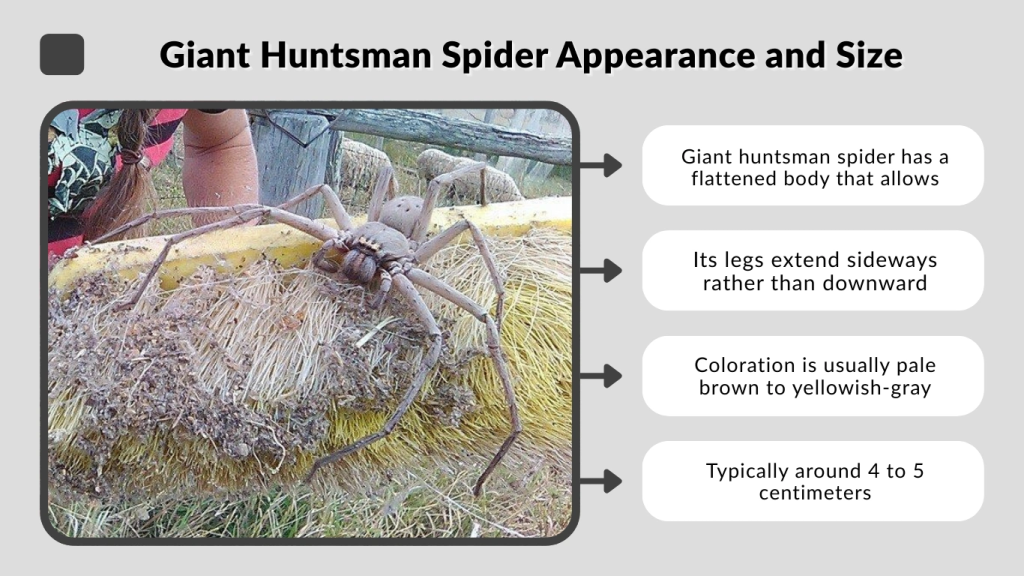
The giant huntsman spider has a flattened body that allows it to hide in narrow crevices, especially inside caves and rock formations. Its legs extend sideways rather than downward, giving it a crab-like stance and wide reach.
Coloration is usually pale brown to yellowish-gray, often with darker markings on the legs. This coloring provides excellent camouflage against cave walls, tree bark, and rocky surfaces. Unlike tarantulas, the giant huntsman spider has relatively little body hair and appears smoother and slimmer.
How Big Is the Giant Huntsman Spider?
What truly sets the giant huntsman spider apart is its size. While its body length is modest—typically around 4 to 5 centimeters—its leg span can reach up to 30 centimeters, making it the largest spider in the world by leg length.
This record-breaking span surpasses that of tarantulas and other large spiders. However, despite its size, the spider is lightweight and relies on speed rather than strength. Its long legs allow it to move quickly across surfaces, including walls and ceilings.
Habitat and Distribution
Where the Giant Huntsman Spider Lives
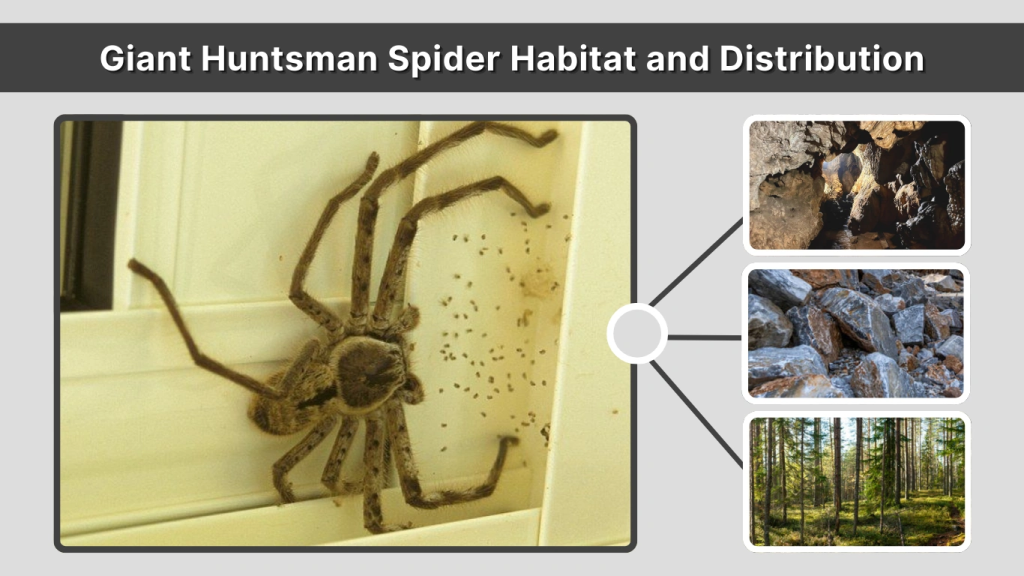
The giant huntsman spider is native to Southeast Asia, with confirmed sightings primarily in Laos. It inhabits limestone caves and nearby forested areas, where humidity and temperature remain stable.
Caves provide ideal shelter, offering darkness, protection from predators, and access to insect prey. Unlike many spiders that adapt well to urban environments, the giant huntsman spider remains closely tied to its natural habitat.
Why It Is Rarely Seen
This species is rarely encountered due to its limited geographic range and reclusive lifestyle. It is nocturnal, spending daylight hours hidden in cracks and emerging at night to hunt.
Because it does not commonly enter human dwellings and lives in relatively inaccessible cave systems, sightings are uncommon. Most people will never encounter a giant huntsman spider outside of photographs or documentaries.
Giant Huntsman Spider Behavior
Hunting Style and Speed
Like other huntsman spiders, the giant huntsman spider does not build webs to catch prey. Instead, it actively hunts insects, relying on speed, sharp eyesight, and vibration sensitivity.
It ambushes prey by pinning it with its long legs and delivering a quick bite to immobilize it. Its movement is extremely fast, which often adds to the fear it causes when seen unexpectedly.
Is the Giant Huntsman Spider Aggressive?
Despite its intimidating size, the giant huntsman spider is not aggressive toward humans. It prefers to flee when disturbed and will only bite if directly threatened or handled.
Most defensive displays involve rapid movement rather than confrontation. Bites are extremely rare and are not considered medically dangerous.
Giant Huntsman Spider Diet and Ecological Role
What Does the Giant Huntsman Spider Eat?
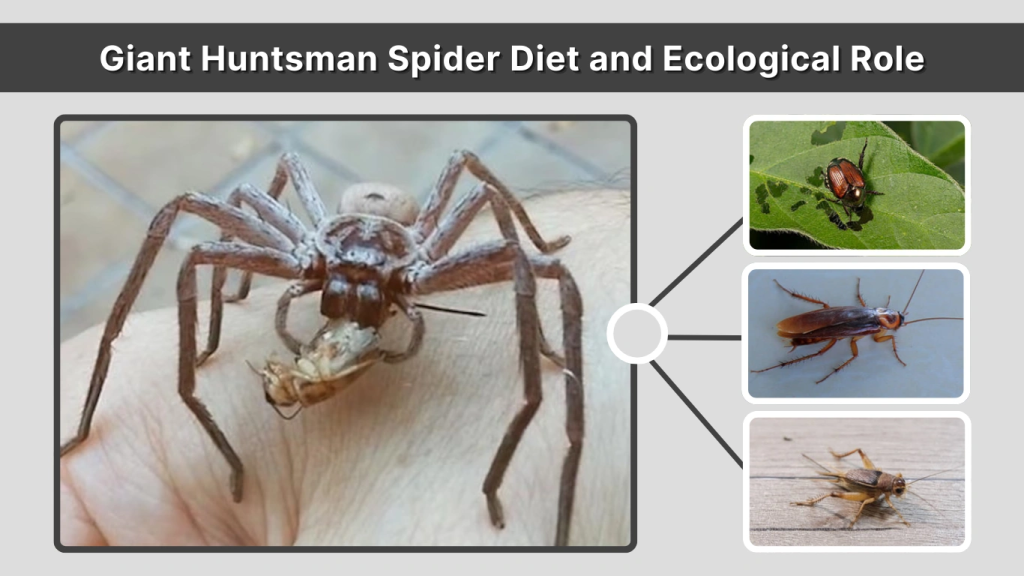
The giant huntsman spider is a carnivorous predator that feeds mainly on insects and other small invertebrates. Its diet typically includes cave-dwelling insects, cockroaches, beetles, moths, and crickets. Using its speed and long legs, the spider ambushes prey rather than trapping it in webs.
Once prey is captured, the spider delivers a venomous bite that immobilizes the victim before feeding. This hunting method makes the giant huntsman spider an efficient predator within its environment.
Role in the Ecosystem
The giant huntsman spider plays an important role in maintaining ecological balance in cave and forest ecosystems. By controlling insect populations, it helps prevent overpopulation of pests that could disrupt fragile cave habitats. Its presence is an indicator of a healthy, stable environment.
Giant Huntsman Spider Bite and Venom
Is the Giant Huntsman Spider Dangerous?
Although the giant huntsman spider possesses venom, it is not dangerous to humans. The venom is mild and designed for subduing insects rather than causing harm to people. Bites are extremely rare and usually occur only when the spider is handled or threatened.
Symptoms of a bite may include mild pain, redness, or swelling at the site. Serious medical complications are very uncommon.
What to Do If Bitten
If bitten, clean the area with soap and water to reduce the risk of infection. Applying a cold compress can help relieve swelling and discomfort. Pain usually subsides within a short time.
Seek medical attention if symptoms worsen, signs of infection appear, or if an allergic reaction such as difficulty breathing occurs.
Lifespan and Reproduction
Giant Huntsman Spider Lifespan
The average lifespan of the giant huntsman spider is estimated to be between two and three years, depending on environmental conditions and food availability. Females generally live longer than males.
Like other spiders, this species grows through a series of molts before reaching maturity.
Mating and Egg Sacs
After mating, the female produces a flat egg sac that may contain several hundred eggs. She guards the egg sac aggressively and may refuse to eat during this time.
Once the spiderlings hatch, they disperse and receive no further parental care. Only a small number survive to adulthood due to predators and environmental challenges.
Giant Huntsman Spider vs Other Large Spiders
Giant Huntsman Spider vs Tarantula
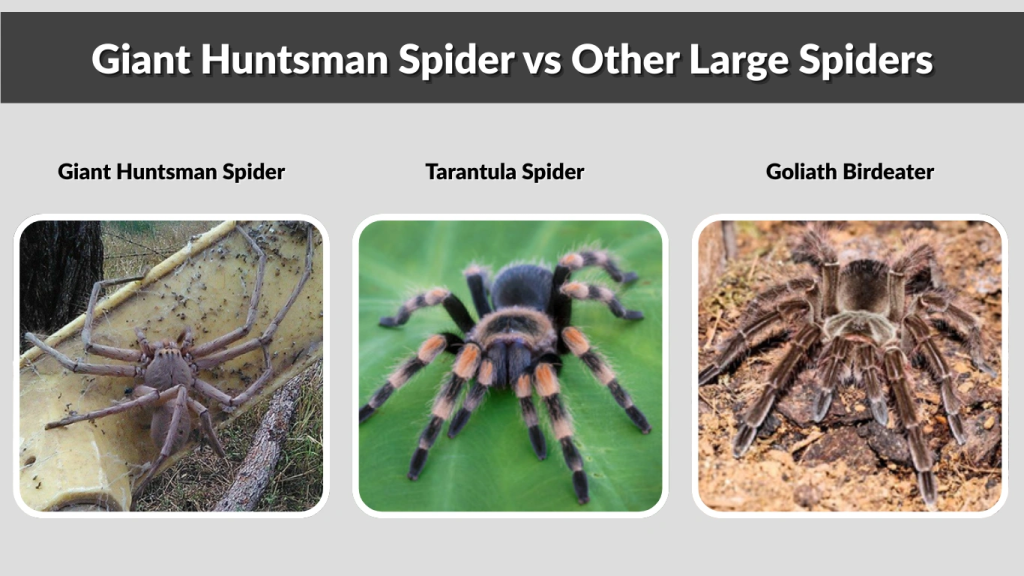
While tarantulas are known for their large, hairy bodies, the giant huntsman spider is flatter, faster, and less hairy. Tarantulas rely more on strength and burrowing, whereas the giant huntsman spider depends on speed and agility.
In terms of leg span, the giant huntsman spider often exceeds most tarantula species, though tarantulas may outweigh it due to bulkier bodies.
Giant Huntsman Spider vs Goliath Birdeater
The Goliath birdeater holds the title for the heaviest spider in the world, but the giant huntsman spider surpasses it in leg span. The birdeater appears bulkier and more intimidating, while the giant huntsman spider looks wider due to its extended legs.
Myths and Misconceptions
One common myth is that the giant huntsman spider is deadly. In reality, there are no recorded human deaths caused by this species. Another misconception is that it actively chases people, when in fact it is simply trying to escape perceived threats.
Media exaggeration and viral images often contribute to unnecessary fear surrounding this spider.
FAQs
Is the giant huntsman spider the biggest spider in the world?
The giant huntsman spider is the largest spider in the world by leg span, reaching up to 30 centimeters. However, it is not the heaviest spider.
Can the giant huntsman spider kill a human?
No, the giant huntsman spider cannot kill a human. Its venom is mild and not medically significant.
Where was the giant huntsman spider discovered?
The species was discovered in Laos and formally described in 2001 by arachnologists studying cave-dwelling spiders.
How fast is the giant huntsman spider?
The giant huntsman spider is extremely fast, capable of rapid bursts of movement that allow it to ambush prey and escape predators.
Conclusion
The giant huntsman spider is a remarkable arachnid that holds the record for the largest leg span of any spider in the world. Despite its fearsome appearance, it is shy, non-aggressive, and harmless to humans. Its rarity, speed, and unique habitat make it a fascinating subject of scientific study and a powerful example of how misunderstood some of nature’s most impressive creatures can be.