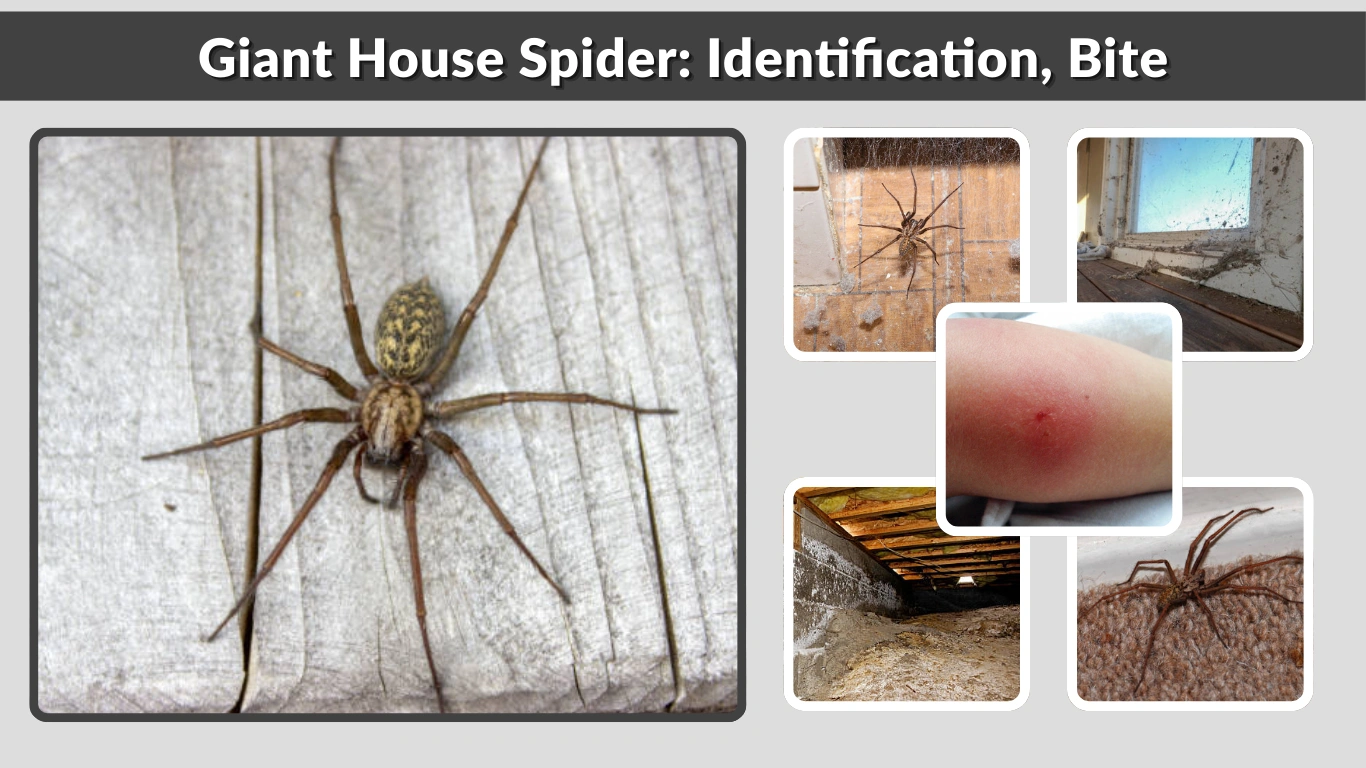
The giant house spider is one of the largest and fastest spiders commonly found inside homes. Its long legs and sudden bursts of speed can make it seem intimidating, especially when it appears in basements or scurries across the floor in the fall. However, despite its frightening size, this spider is generally harmless to humans. Often confused with the hobo spider, the giant house spider has distinct features and behaviors that set it apart. In this guide, you’ll learn how to identify it, whether it bites, and how long it typically lives.
What Is a Giant House Spider?
The term “giant house spider” refers to several closely related species in the genus Eratigena. These spiders belong to the funnel weaver family (Agelenidae), known for building flat sheet webs with a funnel-shaped retreat.
Scientific Classification
- Genus: Eratigena
- Common species: Eratigena duellica, Eratigena atrica, Eratigena saeva
- Family: Agelenidae (funnel weavers)
These species were once grouped under the name Tegenaria atrica but have since been reclassified. Despite the taxonomic updates, the common name “giant house spider” is still widely used.
Where Giant House Spiders Are Found
Giant house spiders are commonly found in:
- The Pacific Northwest (Washington, Oregon, parts of Idaho)
- Parts of western Canada
- Across much of Europe
They prefer cool, damp climates and are especially common in basements and garages. While they can survive outdoors, they frequently move indoors where temperatures are stable and food is available year-round.
Why They Enter Homes
There are several reasons why giant house spiders end up inside houses:
- Seeking shelter from cold or wet weather
- Hunting insects attracted by indoor lighting
- Searching for mates during late summer and early fall
Males are particularly noticeable indoors because they roam in search of females during mating season. This wandering behavior often leads to sudden sightings that alarm homeowners.
Giant House Spider Identification Guide
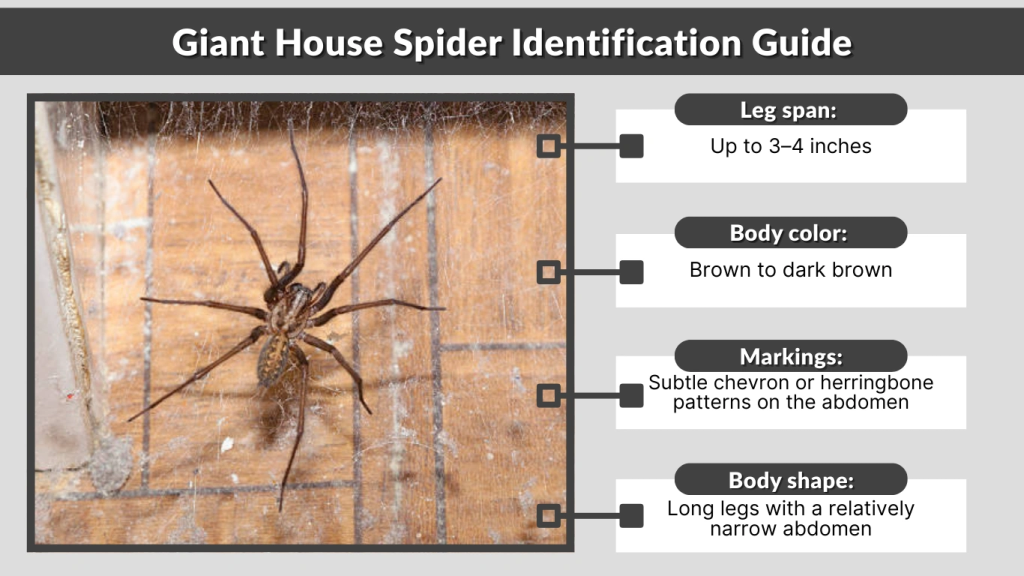
Correct identification is important, especially because giant house spiders are often mistaken for hobo spiders or wolf spiders.
Size and Physical Appearance
Giant house spiders are large compared to most household spiders.
- Leg span: Up to 3–4 inches
- Body color: Brown to dark brown
- Markings: Subtle chevron or herringbone patterns on the abdomen
- Body shape: Long legs with a relatively narrow abdomen
Their legs are long and slightly hairy, giving them a somewhat delicate appearance despite their size. The coloration tends to blend well with wood, carpet, and basement surfaces, making them hard to notice until they move.
One of their most striking features is their speed. Giant house spiders are considered among the fastest spiders, capable of quick, darting movements when disturbed.
Male vs Female Differences
There are noticeable differences between male and female giant house spiders:
- Males:
- Smaller bodies
- Longer legs relative to body size
- Frequently seen wandering indoors during fall
- Smaller bodies
- Females:
- Slightly larger and heavier-bodied
- Spend most of their time inside webs
- Less commonly seen roaming
- Slightly larger and heavier-bodied
If you spot a spider running across your floor, it is most likely a male searching for a mate rather than a female abandoning her web.
Giant House Spider Web Characteristics
Giant house spiders build funnel-shaped webs, a defining trait of the Agelenidae family.
Their webs typically include:
- A flat, sheet-like surface
- A tunnel or funnel retreat at one end
- Placement in undisturbed corners
You may find these webs in basements, garages, crawl spaces, or behind stored items. The spider usually waits inside the funnel and rushes out quickly when it senses vibrations from trapped prey.
Unlike orb-weaving spiders, giant house spiders do not build circular webs suspended in open air. Instead, their webs are anchored against surfaces like walls or floors.
Do Giant House Spiders Bite?
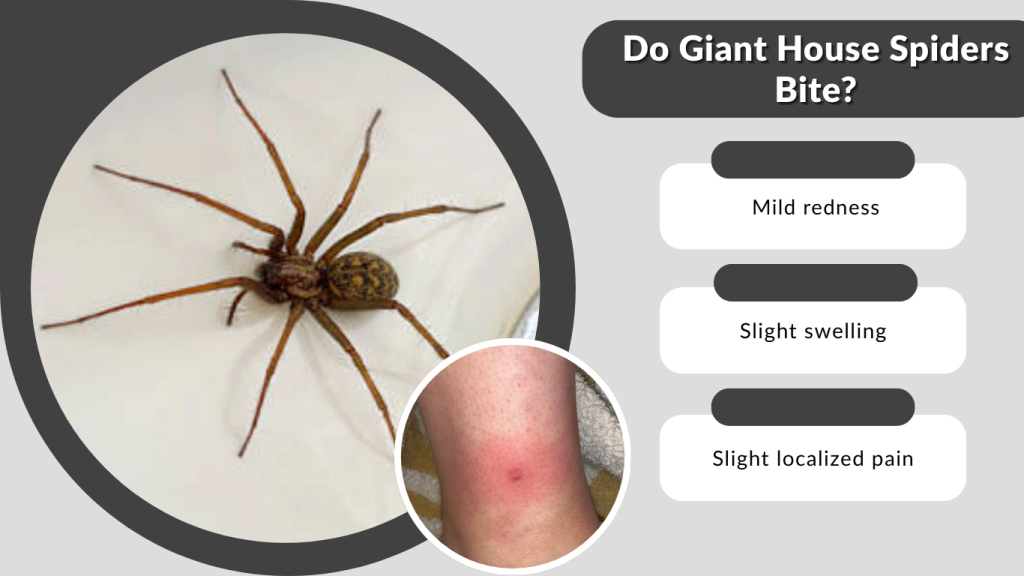
One of the most common concerns is whether giant house spiders pose a threat to humans.
Are Giant House Spiders Dangerous?
Giant house spiders are not aggressive and rarely bite. They prefer to flee rather than confront perceived threats. Their size may be alarming, but they do not actively seek out people.
Bites generally occur only if the spider is trapped against the skin or handled.
Giant House Spider Bite Symptoms
When bites do occur, symptoms are usually mild and short-lived.
Common reactions may include:
- Minor redness
- Mild swelling
- Slight localized pain
Serious reactions are extremely rare, and giant house spiders are not considered medically significant.
Giant House Spider Lifespan and Life Cycle
Understanding the lifespan of a giant house spider can help explain why they appear seasonally and how long they may remain in your home.
How Long Do Giant House Spiders Live?
Giant house spiders live longer than many other common house spiders.
- Females: Typically live 2 to 3 years
- Males: Usually live about 1 year
Females often survive multiple winters, especially in sheltered indoor environments. Males, on the other hand, tend to die shortly after mating, which is why they are most commonly seen in late summer and fall.
Mating and Reproduction
Mating season usually occurs in late summer to early fall. During this time, males leave their webs and wander in search of females. After mating:
- Females produce egg sacs containing dozens of eggs
- Egg sacs are hidden inside the web retreat
- Spiderlings hatch and disperse after a short period
Young spiders go through several molts as they grow, gradually increasing in size until reaching maturity.
Growth and Molting
Like all spiders, giant house spiders grow by molting. This means they shed their exoskeleton multiple times during development.
Each molt allows the spider to increase in size. You may occasionally find a shed exoskeleton near a web, which can look like a dead spider but is simply a molted skin.
Giant House Spider Behavior and Habitat
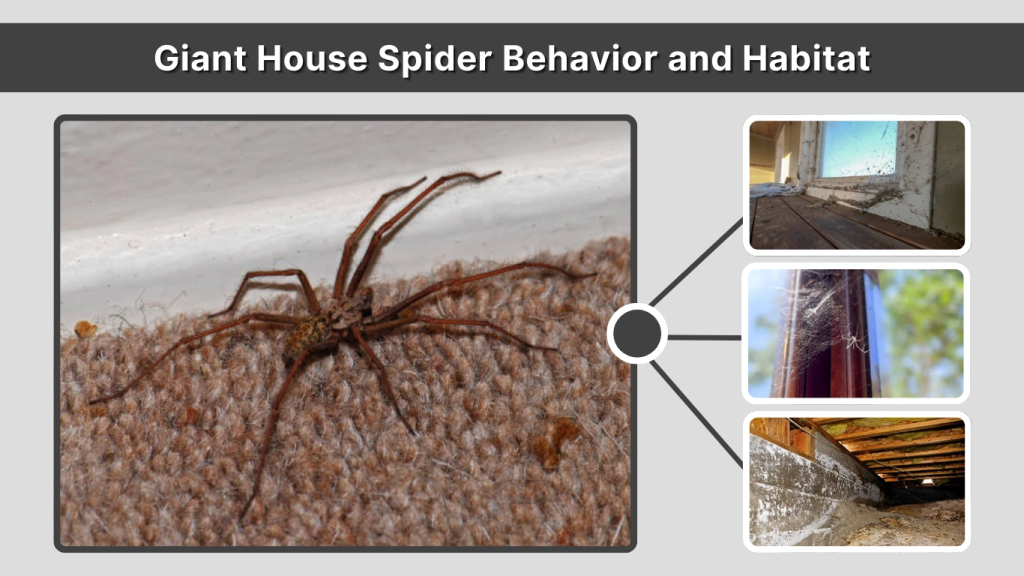
Giant house spiders are primarily nocturnal hunters. They rely heavily on vibrations rather than vision to detect prey.
Where They Hide Indoors
Inside homes, they prefer quiet, low-traffic areas such as:
- Basements
- Crawl spaces
- Garages
- Window wells
- Behind storage boxes
- Under furniture
They are less common in bright, frequently disturbed rooms.
Outdoor Habitats
Outdoors, giant house spiders may live:
- Under woodpiles
- In rock walls
- Around building foundations
- In garden sheds
They seek sheltered spaces that protect them from extreme weather.
Seasonal Activity Patterns
Sightings increase during late summer and fall due to male wandering behavior. During winter, they remain hidden in protected spaces and become less active.
Their sudden appearances often create the impression of an infestation, when in reality it may just be seasonal movement.
Giant House Spider vs Hobo Spider
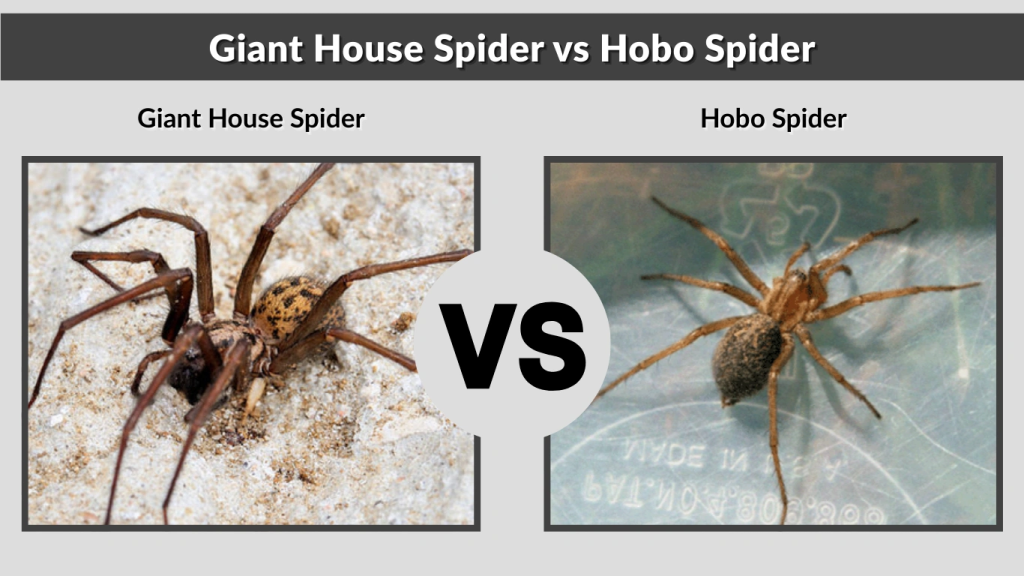
Because both species belong to the funnel weaver family (Agelenidae) and are found in similar regions, giant house spiders and hobo spiders are often confused. This confusion is especially common in the Pacific Northwest, where their habitats overlap.
While they share similarities in web structure and general body shape, there are important differences in size, markings, and medical significance. The giant house spider is typically much larger and is not considered medically significant. The hobo spider, on the other hand, has historically been associated with bite concerns—although modern research suggests its bite is not as dangerous as once believed.
Below is a clear side-by-side comparison to help with identification.
Giant House Spider vs Hobo Spider Comparison Table
| Feature | Giant House Spider (Eratigena spp.) | Hobo Spider (Eratigena agrestis) |
| Family | Agelenidae (Funnel weavers) | Agelenidae (Funnel weavers) |
| Size | Large; leg span up to 3–4 inches | Smaller; leg span about 1.5–2 inches |
| Body Color | Brown to dark brown | Light to medium brown |
| Abdomen Markings | Subtle chevron or herringbone patterns | Less distinct markings; often more uniform |
| Leg Appearance | Long, slightly hairy | Slightly shorter relative to body size |
| Web Type | Funnel-shaped sheet web | Funnel-shaped sheet web |
| Common Habitat | Basements, garages, crawl spaces | Foundations, window wells, ground-level areas |
| Geographic Range | Europe, Pacific Northwest | Pacific Northwest, parts of western U.S. |
| Aggression Level | Non-aggressive | Non-aggressive |
| Bite Risk | Rare, mild symptoms | Rare; not considered medically significant |
Giant House Spider Facts
Here are some interesting facts about giant house spiders:
- They are among the fastest spiders in the world.
- Their speed helps them quickly capture prey from their funnel webs.
- They have poor eyesight and rely mostly on vibration detection.
- They rarely climb smooth vertical surfaces like glass or polished walls.
- They help reduce insect populations inside homes.
- Despite myths, they are not considered dangerous to humans.
Their presence can actually be beneficial, as they naturally control flies, mosquitoes, and other small insects.
How to Prevent Giant House Spiders
If you prefer not to share your home with giant house spiders, simple prevention steps can reduce the chances of encounters.
Seal Entry Points
- Caulk cracks around windows and doors
- Install door sweeps
- Repair torn window screens
- Seal gaps around pipes and utility lines
Blocking entry points reduces the likelihood of wandering males entering during mating season.
Reduce Insect Prey
Spiders follow food sources. To limit insect attraction:
- Keep food sealed properly
- Clean up crumbs promptly
- Use outdoor lighting that attracts fewer insects
- Maintain trash bins securely
Fewer insects mean fewer spiders.
Control Moisture
Giant house spiders prefer damp environments.
- Use dehumidifiers in basements
- Improve ventilation
- Fix leaks promptly
Reducing moisture makes your home less inviting.
Regular Cleaning
- Vacuum corners and baseboards
- Remove webs promptly
- Declutter storage areas
Routine maintenance is one of the most effective ways to prevent long-term spider presence.
FAQs
Are giant house spiders dangerous to humans?
No, giant house spiders are not considered dangerous. They are non-aggressive and rarely bite. When bites occur, symptoms are usually mild and short-lived.
Do giant house spiders chase people?
They do not chase people. Their fast movements may appear threatening, but they are typically trying to escape rather than pursue humans.
How big can a giant house spider get?
Their leg span can reach up to 3 to 4 inches, making them one of the largest house spiders commonly encountered indoors.
How long do giant house spiders live?
Females can live up to 2–3 years, while males typically live about one year and often die after mating.
What is the difference between a giant house spider and a hobo spider?
Giant house spiders are larger and have subtle chevron markings on the abdomen. Both build funnel webs, but giant house spiders are generally not associated with medically significant bites.
Conclusion
Although their size and speed can be unsettling, giant house spiders are generally harmless and even beneficial. They help control insect populations and rarely bite humans. Correct identification is important, especially when distinguishing them from hobo spiders. By understanding their behavior, lifespan, and habitat preferences, you can respond calmly and take simple steps to prevent unwanted encounters. In most cases, coexistence is safe—and far less alarming than their appearance suggests.