

Jumping spiders are among the most commonly encountered spiders around homes, gardens, and outdoor spaces. With their large forward-facing eyes and quick, curious movements, they often attract attention rather than fear. Still, many people wonder the same question when they see one: Do jumping spiders bite? Understanding their behavior, how their venom works, and when bites actually happen can help clear up myths and reduce unnecessary worry.
Do Jumping Spiders Bite Humans?
Yes, jumping spiders can bite, but bites are very rare and almost never dangerous to humans. Like nearly all spiders, jumping spiders have venom, which they use to subdue insect prey. However, their venom is mild and designed for tiny insects, not people.
Jumping spiders are shy, alert, and non-aggressive. They rely on eyesight and speed to escape rather than defend themselves. In most situations, a jumping spider will run or jump away long before it considers biting.
Why Would a Jumping Spider Bite?
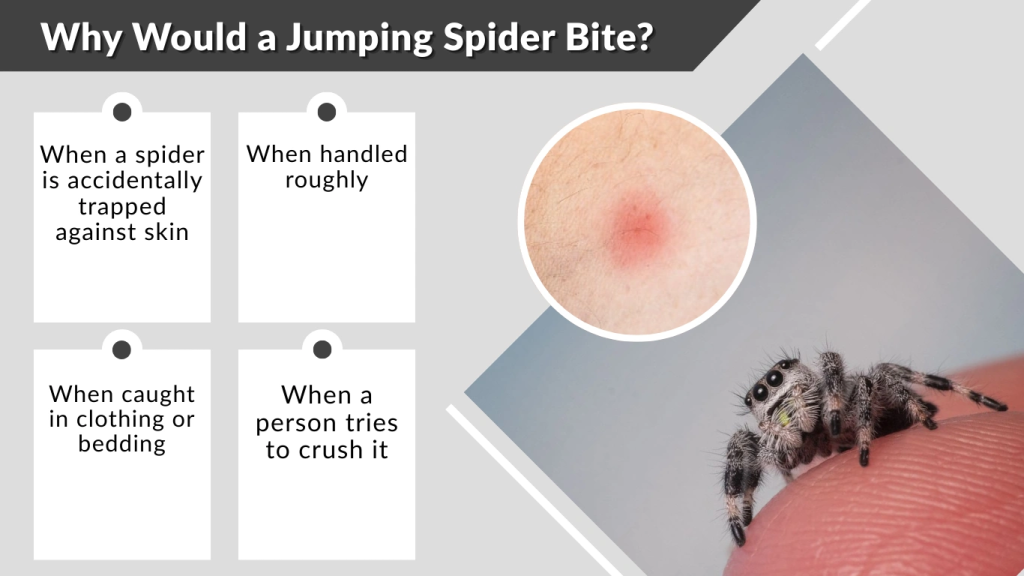
Jumping spiders do not bite out of aggression. Bites usually happen only under direct pressure or extreme threat, such as:
- When a spider is accidentally trapped against skin
- When handled roughly
- When caught in clothing or bedding
- When a person tries to crush it
In these situations, the spider may bite defensively as a last resort. They do not chase humans, guard nests aggressively, or attack without contact.
What Does a Jumping Spider Bite Feel Like?
Most reported jumping spider bites cause mild, short-lasting symptoms. People often describe the bite as similar to:
- A tiny pinprick
- A mild bee sting
- A mosquito bite
Typical bite symptoms include:
- Slight redness
- Minor swelling
- Mild itching or burning
- Occasional tenderness
Pain usually fades within minutes to a few hours. Severe reactions are extremely uncommon.
Are Jumping Spiders Venomous or Poisonous?
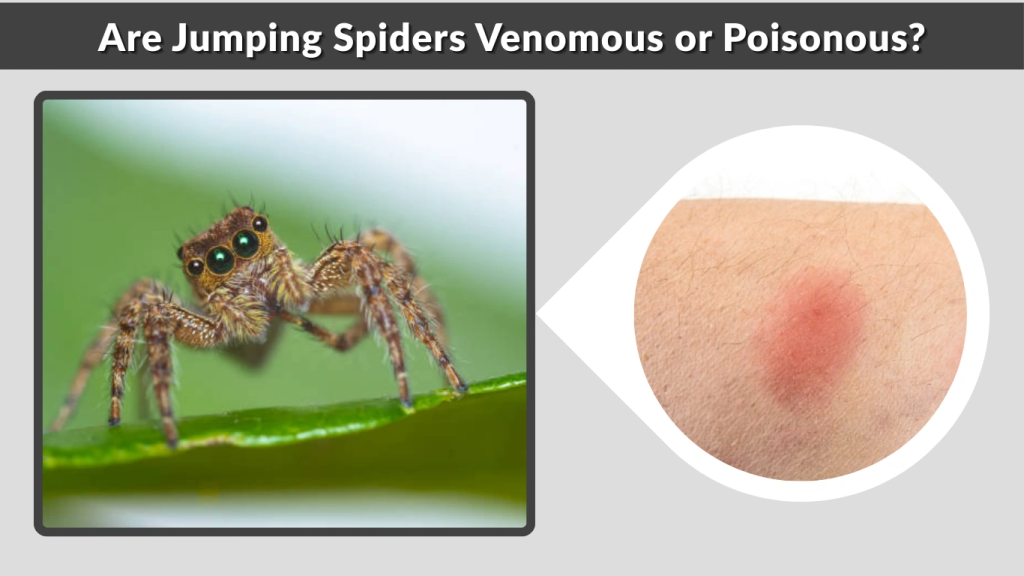
Jumping spiders are venomous, not poisonous. Venomous means they inject venom through fangs, while poisonous means harmful when eaten or touched. Jumping spiders use venom to immobilize insects, but this venom is not medically significant to humans.
Their small fangs often cannot even penetrate thick human skin. When they do, the venom amount is tiny and quickly neutralized by the body.
Can Jumping Spider Bites Be Dangerous?
For the vast majority of people, jumping spider bites are not dangerous. There are no confirmed deaths or serious medical cases attributed to jumping spider venom.
In rare cases, mild complications may occur:
- Localized skin irritation
- Minor infection if the bite is scratched
- Allergic sensitivity in highly reactive individuals
Anyone who experiences spreading redness, intense pain, fever, or signs of infection should seek medical advice, but such reactions are uncommon.
What Do Jumping Spider Bites Look Like?

A jumping spider bite usually appears as:
- A small red bump
- Slight swelling around a tiny puncture
- Sometimes two very small fang marks
Because the reaction is mild, many bites go unnoticed or are mistaken for insect bites. Unlike bites from medically significant spiders, jumping spider bites do not cause tissue damage, blisters, or necrosis.
How Jumping Spider Behavior Reduces Bite Risk
Understanding jumping spider behavior explains why bites are so rare.
Jumping spiders:
- Are active during the day
- Use vision instead of webs
- Avoid large animals
- Prefer to escape rather than defend
- Are solitary and non-territorial
They do not hide in dark crevices waiting to ambush and are not aggressive around eggs or webs like some spiders. Their survival depends on stealth and speed, not defense.
Jumping Spiders vs Dangerous Spiders
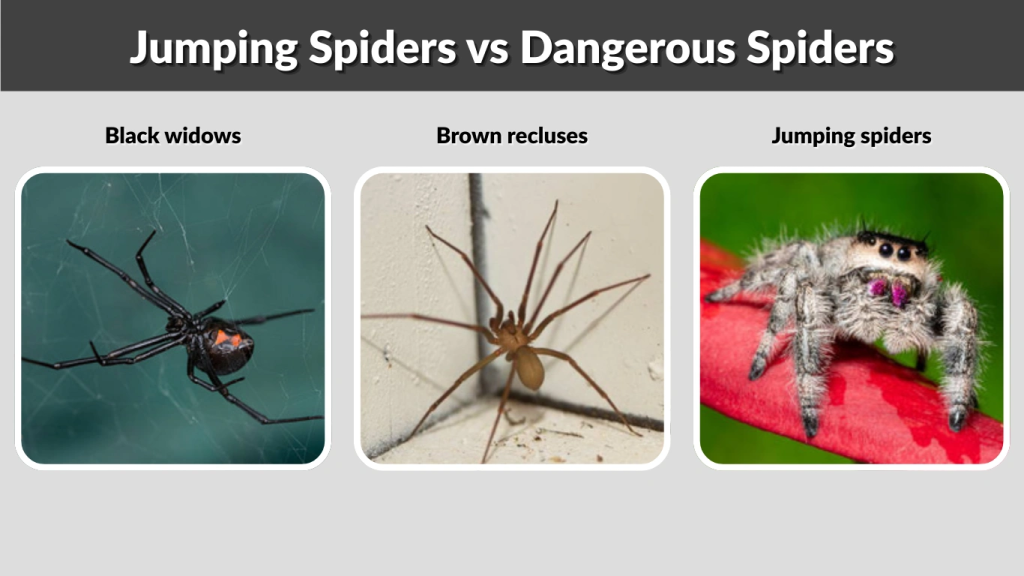
People sometimes confuse jumping spiders with more feared species. Compared to medically significant spiders:
- Black widows have neurotoxic venom and build messy webs
- Brown recluses have tissue-damaging venom and hide in dark spaces
- Jumping spiders actively hunt, have excellent eyesight, and mild venom
Their large eyes, fuzzy bodies, and daytime activity patterns also make them easier to identify and less likely to be mistaken for harmful spiders once you know what to look for.
What To Do If a Jumping Spider Bites You
If you believe a jumping spider has bitten you, basic first aid is usually sufficient.
Immediate Care
- Wash the area with soap and water
- Apply a cold compress to reduce swelling
- Avoid scratching
Symptom Relief
- Use hydrocortisone cream for itching
- Take an antihistamine if mild swelling occurs
- Apply a topical antiseptic if skin is broken
Most symptoms resolve quickly without further treatment.
When Should You See a Doctor?
Medical attention is rarely necessary, but you should seek advice if:
- Pain or swelling increases after 24 hours
- The bite becomes warm, oozing, or severely red
- You develop fever or flu-like symptoms
- You have a known history of severe insect or venom allergies
These signs are more often related to infection or allergic response rather than the spider venom itself.
How To Prevent Jumping Spider Bites
Because jumping spiders rarely bite, prevention is simple and mostly about avoiding accidental contact.
- Gently guide spiders outside instead of crushing them
- Shake out clothing left on floors
- Avoid handling spiders with bare hands
- Reduce insects that attract spiders indoors
- Seal gaps around windows and doors
Jumping spiders are beneficial predators and usually best left undisturbed.
Are Jumping Spiders Safe to Handle?
Many people handle jumping spiders without incident. These spiders often appear curious and may jump onto hands or objects while exploring. However, they are delicate animals and can bite defensively if stressed.
If someone chooses to handle a jumping spider:
- Let it walk onto your hand instead of grabbing it
- Avoid squeezing or cornering
- Keep movements slow and gentle
Even then, handling is not recommended, especially for children.
Benefits of Jumping Spiders in Homes and Gardens
Jumping spiders feed on flies, mosquitoes, moths, and other small pests. Their presence often reduces nuisance insects naturally. Because they do not build messy webs and are not dangerous, many people consider them one of the most welcome spiders to encounter.
FAQs
Do jumping spiders bite often?
No. Bites are extremely rare and usually happen only when a spider is accidentally trapped or handled roughly.
Can a jumping spider bite break skin?
Sometimes, but often their fangs cannot penetrate thick skin. When they do, the bite is mild.
Are jumping spider bites poisonous?
No. Their venom is not harmful to humans and causes only minor local reactions.
Should I worry if a jumping spider is in my house?
No. They are harmless, beneficial predators and usually leave on their own.
Can pets be harmed by jumping spiders?
No. Jumping spiders pose no known risk to cats, dogs, or other household pets.