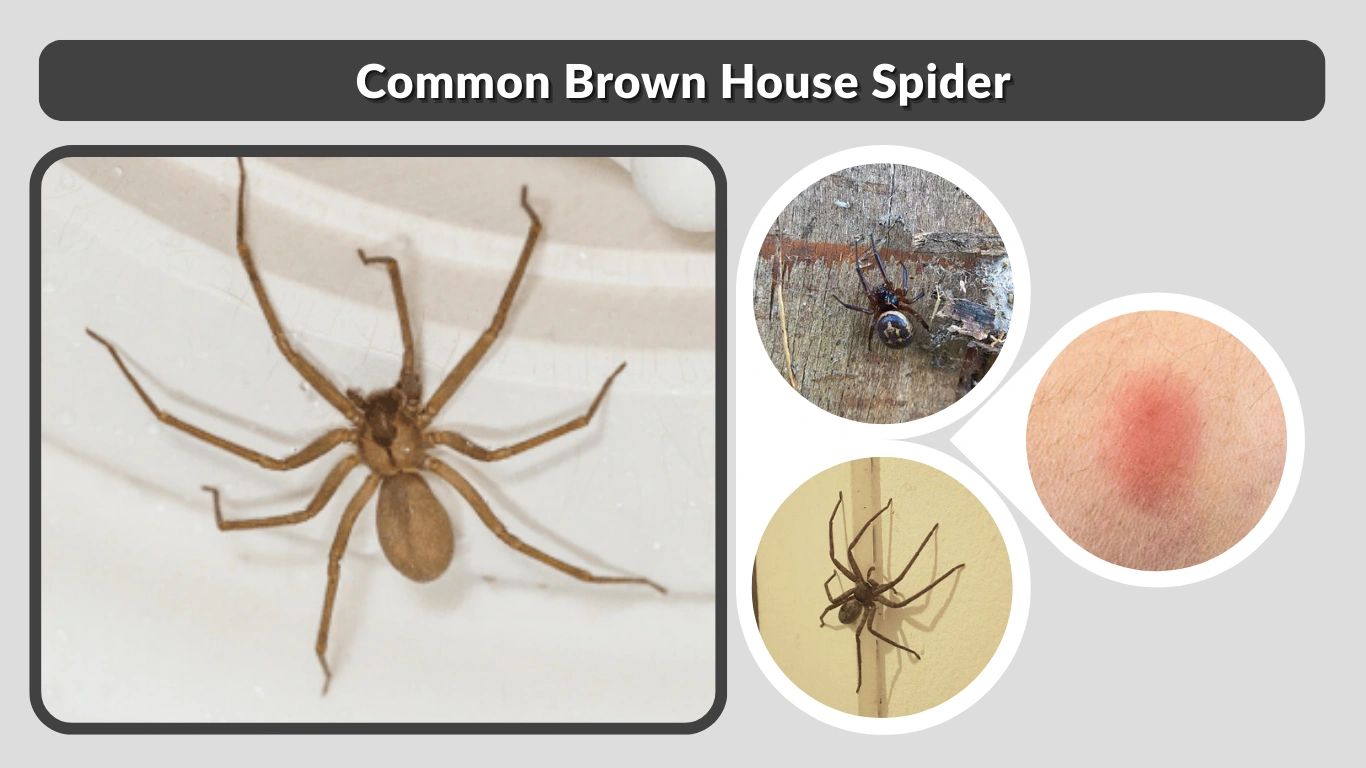
The common brown house spider is one of the most frequently encountered spiders inside homes, apartments, and garages. Its plain brown color and quiet behavior often cause confusion with more dangerous spiders, even though it poses little risk to humans. These spiders are well adapted to living near people and are usually more helpful than harmful. Understanding how to identify a common brown house spider can ease fear and help determine whether action is necessary.
Identification Features
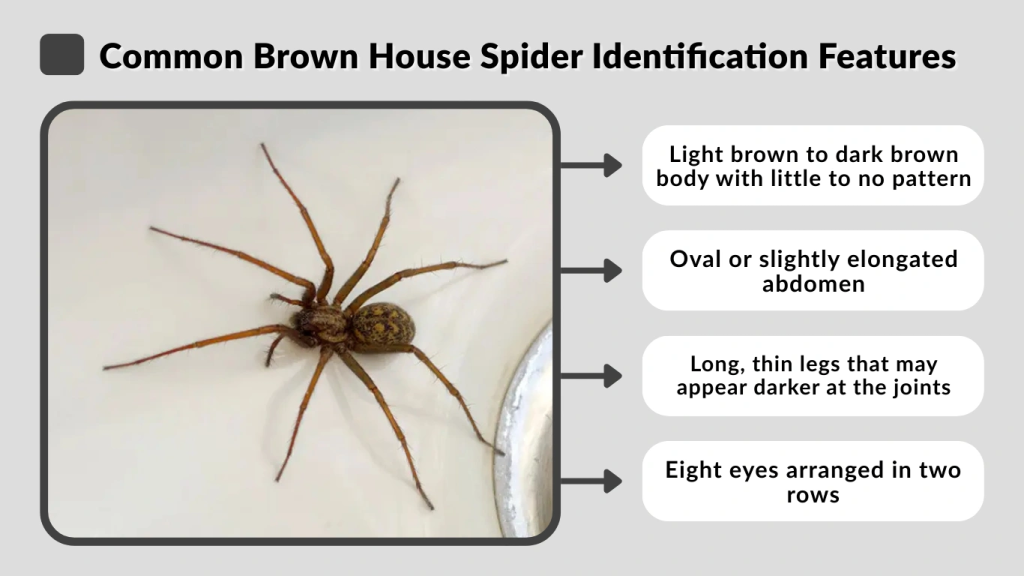
- Light brown to dark brown body with little to no pattern
- Oval or slightly elongated abdomen
- Long, thin legs that may appear darker at the joints
- Smooth body with minimal hair
- Small to medium size compared to outdoor spiders
- Eight eyes arranged in two rows
- No bright markings, stripes, or warning colors
What Is a Common Brown House Spider?
The term “common brown house spider” does not refer to a single species. Instead, it is a general name used for several spiders that commonly live indoors and share a similar brown appearance. These spiders have adapted to human environments where warmth, shelter, and insects are readily available.
Most brown house spiders belong to web-building families and create irregular webs in quiet corners. Their presence indoors is usually accidental or seasonal, rather than a sign of infestation. They are shy, non-aggressive, and prefer to remain hidden rather than interact with people.
Common Species Referred to as Brown House Spiders
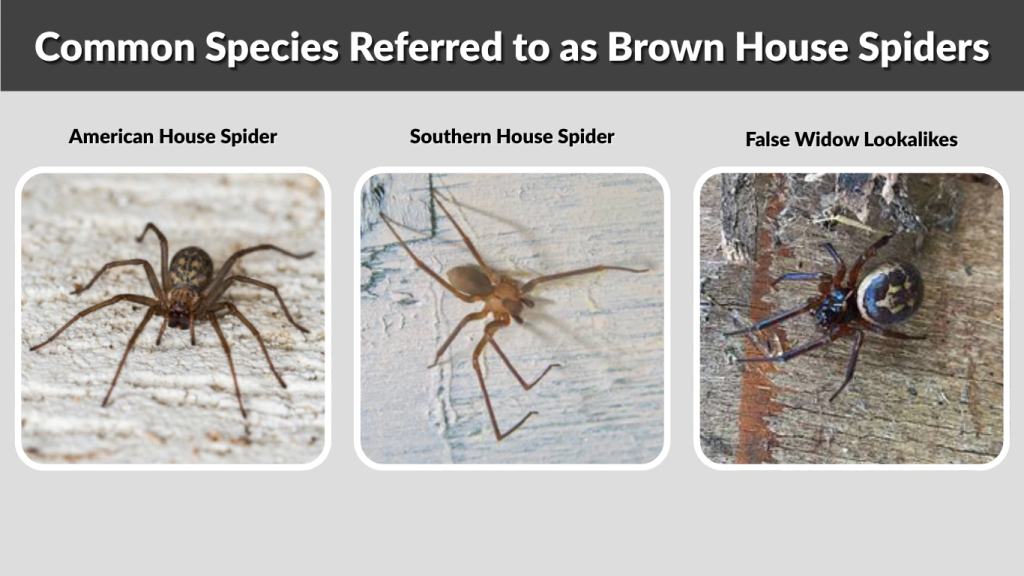
Several spider species are commonly labeled as brown house spiders due to their similar appearance and indoor habits.
American House Spider (Parasteatoda tepidariorum)
This is one of the most widespread house spiders in North America. It has a brown body with subtle mottling and long, slender legs. The American house spider builds messy, tangled webs in corners, ceilings, and basements. It feeds on flies, mosquitoes, and other small insects that wander into its web.
Southern House Spider (Kukulcania species)
Southern house spiders are often mistaken for more dangerous species due to their size and dark coloring. Females are larger with thick bodies, while males have longer legs and slimmer frames. These spiders are commonly found near doors, windows, and exterior walls and rarely bite unless provoked.
False Widow Lookalikes
Some false widow spiders are brown and occasionally found indoors, leading to misidentification. However, false widows typically have shinier bodies and more rounded abdomens. Their webs are also denser and more structured than those of typical brown house spiders.
Size and Physical Characteristics
Most common brown house spiders have a body length ranging from 5 to 12 millimeters, although their long legs can make them appear much larger. Females are generally bigger than males and have rounder abdomens, especially when carrying eggs.
Color can vary depending on age, lighting, and environment. Juveniles often appear lighter, while adults may darken over time. Indoor spiders tend to have more uniform coloring due to stable conditions and limited exposure to sunlight.
Geographic Range and Distribution
- Found throughout North America
- Common across Europe
- Present in Australia
- Widespread in parts of Asia
- Most frequent in urban and suburban homes
Brown house spiders thrive in human-made structures, making them one of the most widely distributed spiders in the world. Their ability to survive indoors year-round contributes to their frequent sightings.
Habitat and Living Environment
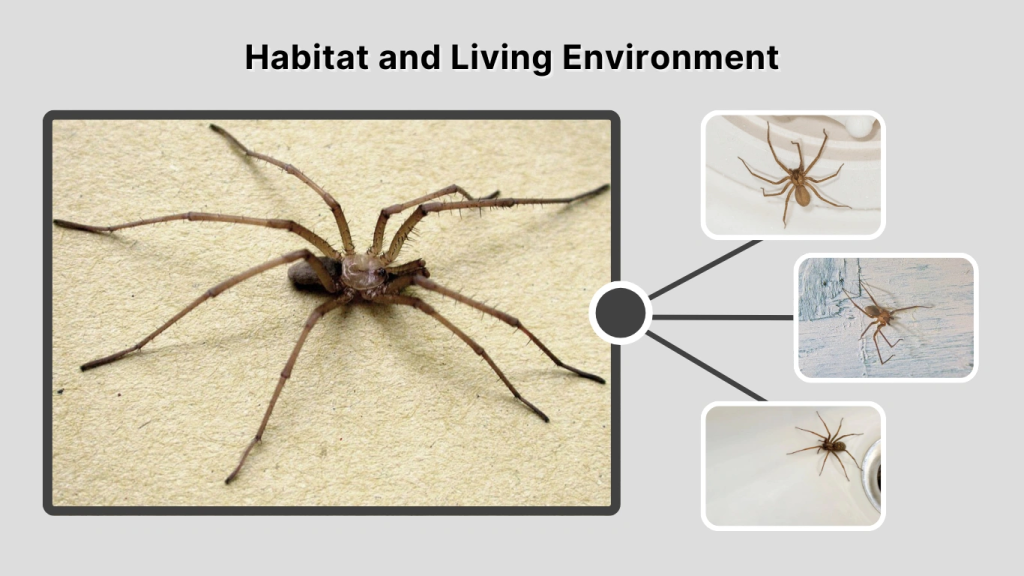
Common brown house spiders prefer quiet, undisturbed areas where they can build webs and avoid predators. Indoors, they are most often found in corners of rooms, behind furniture, in basements, attics, and garages. These locations provide protection and a steady supply of insects.
Outdoors, they may live near building foundations, under eaves, or inside sheds. As temperatures drop, they are more likely to move indoors, which explains the increase in sightings during fall and winter months.
Web Type and Hunting Behavior
- Builds irregular, tangled webs
- Webs are usually found in corners or high ceiling areas
- Uses a passive hunting strategy
- Waits for insects to become trapped
- Webs may remain in place for long periods
Common brown house spiders rely on their webs rather than active hunting. The web is sticky and chaotic, designed to catch flying and crawling insects such as flies, mosquitoes, and moths. Once prey is caught, the spider quickly immobilizes it with silk before feeding.
Behavior and Activity Patterns
- Mostly nocturnal
- Rarely leaves its web during the day
- Avoids light and human activity
- Moves slowly compared to hunting spiders
- May remain in the same location for weeks
These spiders are not aggressive and prefer to stay hidden. When disturbed, they usually retreat into a corner or drop from their web to escape. Bites are extremely rare and typically occur only if the spider is pressed against skin.
Is the Common Brown House Spider Dangerous?
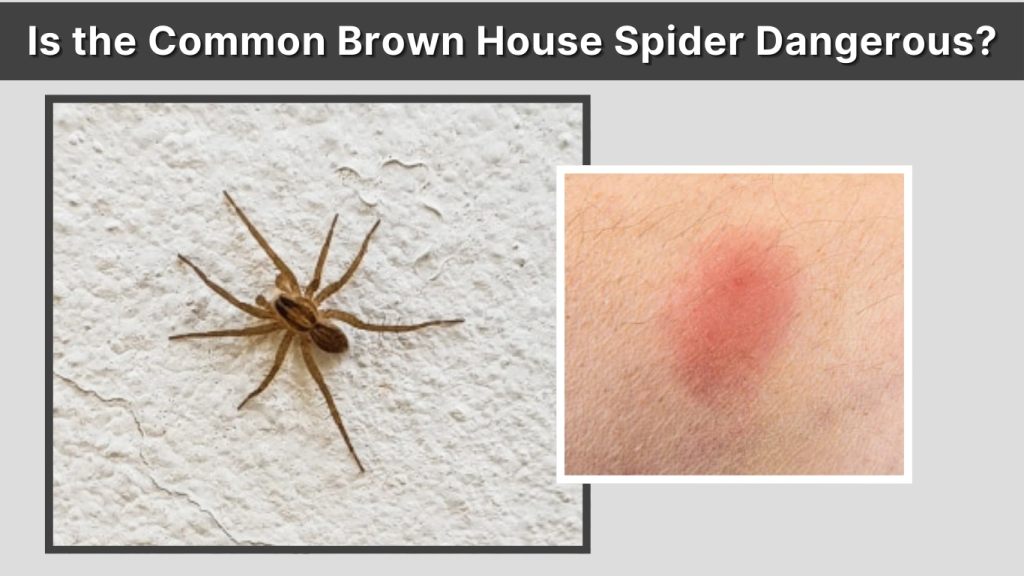
The common brown house spider is not dangerous to humans. Although it has venom, the venom is weak and used only to subdue small insects. The spider’s fangs are small, and it rarely attempts to bite people.
Most reported bites result in mild redness or irritation and resolve quickly without medical treatment. These spiders should not be confused with medically significant species such as the brown recluse, which has different markings, behavior, and habitat preferences.
Brown House Spider Bite Symptoms and Treatment
- Minor redness at the bite site
- Mild itching or swelling
- Slight tenderness
- Symptoms usually disappear within a few days
If a bite is suspected, washing the area with soap and water is usually sufficient. Applying a cold compress can help reduce swelling, and over-the-counter creams may relieve itching. Medical care is rarely required unless symptoms worsen or signs of infection appear.
Common Brown House Spider vs Similar Spiders
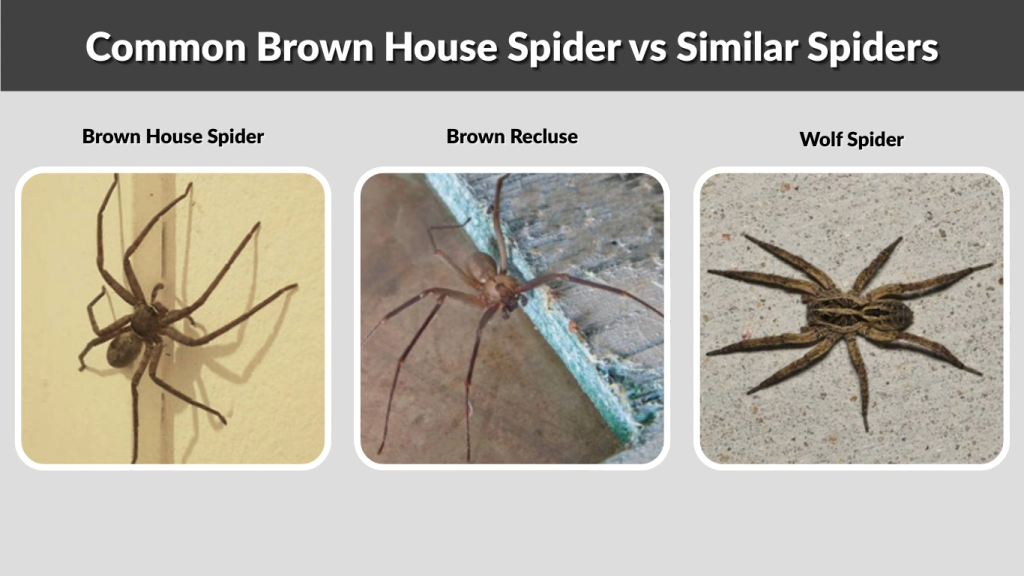
| Feature | Brown House Spider | Brown Recluse | Wolf Spider |
| Web use | Yes | Rare | None |
| Body color | Uniform brown | Brown with violin mark | Brown or gray |
| Leg type | Long and thin | Medium length | Thick and hairy |
| Behavior | Shy, sedentary | Reclusive | Active hunter |
| Medical risk | Low | Medically significant | Low |
This comparison helps clarify why brown house spiders are often misidentified. Web presence and body shape are more reliable indicators than color alone.
Why Brown House Spiders Enter Homes
Brown house spiders enter homes in search of food and shelter. Human structures provide stable temperatures, protection from predators, and abundant insects. Seasonal changes, especially cooler weather, often trigger increased indoor activity.
Open windows, doors, and small cracks allow easy entry. Once inside, spiders tend to settle in areas that are rarely disturbed, which is why they often go unnoticed for long periods.
How to Get Rid of Brown House Spiders Safely
- Seal cracks and gaps around windows and doors
- Remove webs regularly to discourage return
- Reduce indoor insect populations
- Keep storage areas clean and clutter-free
- Use sticky traps for monitoring
Chemical sprays are rarely necessary. Preventing entry and reducing food sources are the most effective long-term solutions.
Ecological Importance
Brown house spiders play a useful role by controlling indoor insect populations. They reduce numbers of flies, mosquitoes, and other pests without the need for chemicals.
In most cases, coexistence or gentle removal is preferable to extermination. Their presence usually indicates a healthy balance rather than a problem.
FAQs
Are common brown house spiders harmful?
No, common brown house spiders are harmless to humans. They are shy, non-aggressive, and their venom is too weak to cause serious effects. Bites are rare and typically result in only mild, temporary irritation.
How can I tell a brown house spider from a brown recluse?
Brown house spiders build messy webs and have uniform brown coloring. Brown recluse spiders do not build webs, have a violin-shaped marking, and prefer secluded, dry areas. Behavior and web presence are key differences.
Do brown house spiders infest homes?
They do not infest homes in the traditional sense. Most indoor spiders are solitary and remain in one location. Seeing multiple spiders usually means there are many insects, not a spider infestation.
How long do brown house spiders live?
Most brown house spiders live one to two years. Females generally live longer than males, especially when undisturbed indoors where conditions are stable.
Should I kill brown house spiders?
Killing is unnecessary in most cases. These spiders help control pests and pose little risk. Relocating them or preventing entry is a more effective and environmentally friendly option.