
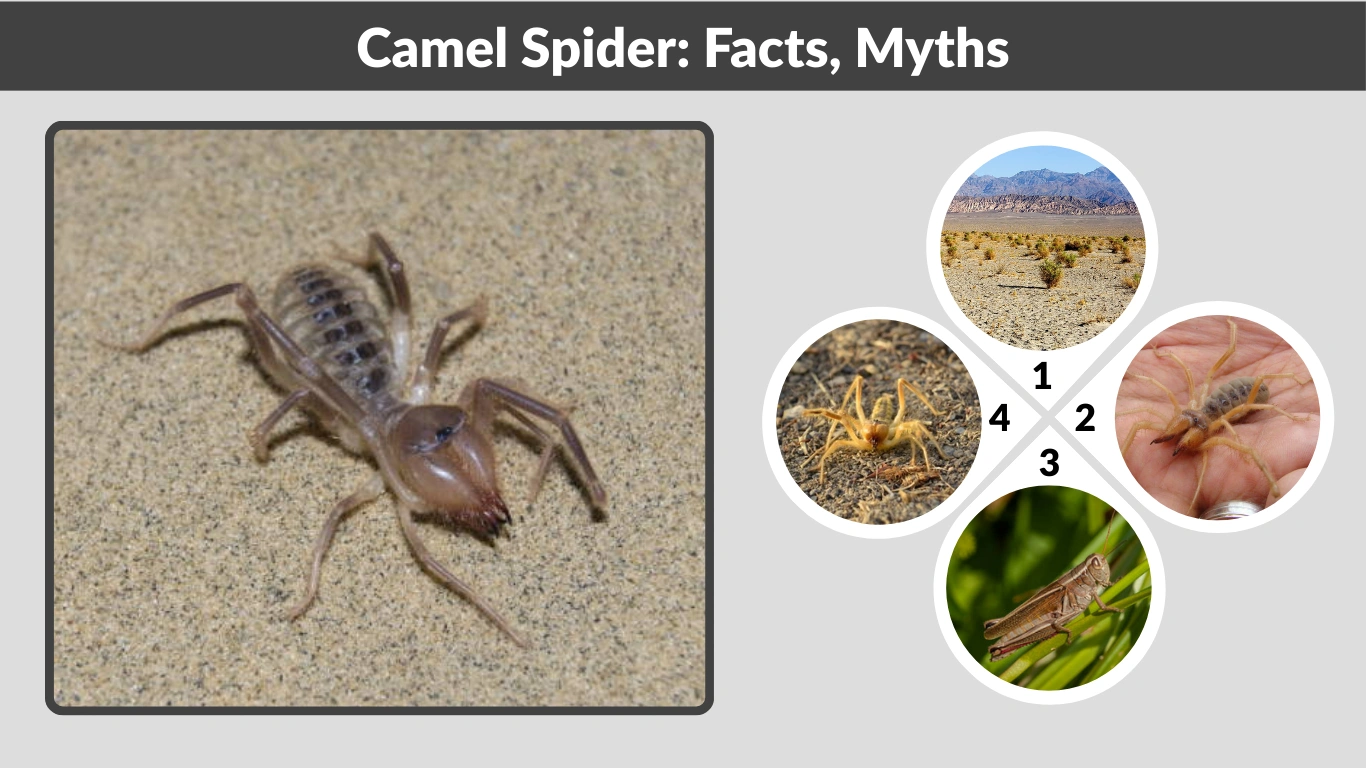
Camel spiders are one of the most misunderstood arachnids in the world, often surrounded by exaggerated stories and viral myths. Known for their large jaws, fast movement, and desert habitat, these creatures frequently spark fear despite posing little real danger to humans. Commonly encountered in arid regions, camel spiders have gained global attention due to misleading images and dramatic claims online. This article explores what camel spiders truly are, how they live, where they are found, and separates scientific facts from popular misconceptions.
What Is a Camel Spider?
A camel spider belongs to the order Solifugae, a group of arachnids distinct from true spiders and scorpions. Despite the name, camel spiders are not spiders at all. They earned their nickname due to their appearance and occasional presence near camels in desert environments.
Camel spiders are also known as sun spiders or wind scorpions, depending on the region. These names contribute to confusion, but scientifically, they represent a unique group with characteristics separate from other arachnids. Solifugae species have existed for millions of years and are well adapted to extreme desert conditions.
Scientific Background and Classification
Camel spiders are arthropods with eight legs, placing them in the arachnid class. However, unlike spiders, they lack silk-producing glands and venom sacs. Their most noticeable feature is their oversized chelicerae, or jaws, which they use for hunting and defense rather than venom injection.
Physical Characteristics of Camel Spiders
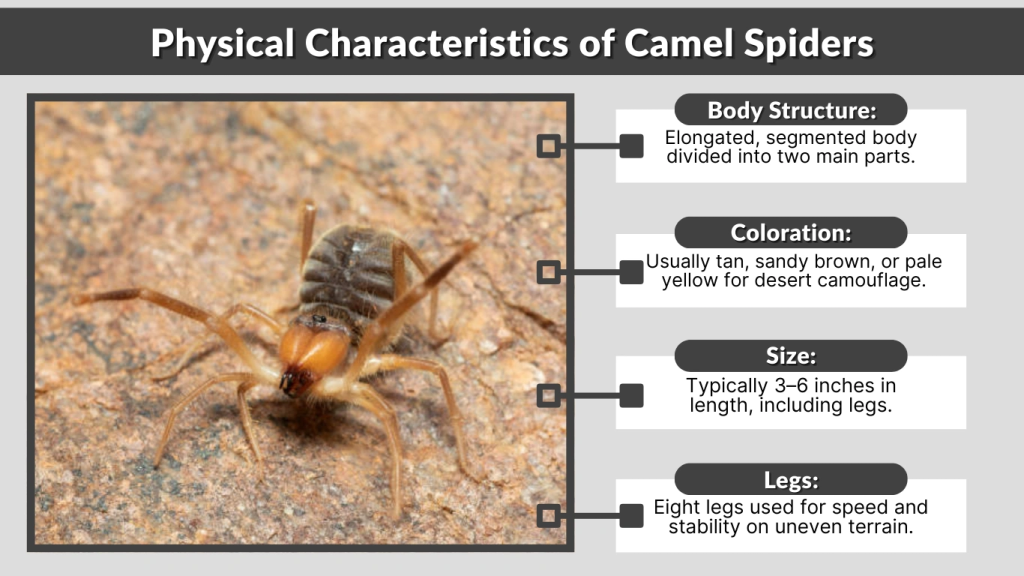
Camel spiders have a distinctive appearance that often makes them look more dangerous than they really are. Their bodies are specially adapted for survival in harsh desert environments, combining speed, sensory awareness, and powerful feeding tools. While they resemble spiders, their physical traits clearly set them apart from true spiders and scorpions.
- Body Structure: Elongated, segmented body divided into two main parts.
- Coloration: Usually tan, sandy brown, or pale yellow for desert camouflage.
- Size: Typically 3–6 inches in length, including legs.
- Weight: Lightweight body designed for rapid movement.
- Legs: Eight legs used for speed and stability on uneven terrain.
- Pedipalps: Leg-like appendages used for sensing, gripping, and navigation.
- Chelicerae (Jaws): Large, powerful jaws used for crushing prey.
- Body Hair: Fine hairs that detect vibrations and environmental changes.
- Eyes: Simple eyes with limited vision, relying more on sensory input.
- No Venom Glands: Lacks venom or silk-producing organs.
How Fast Are Camel Spiders?
Camel spiders are known for their speed and agility. They can run at speeds of up to 10 miles per hour, making them one of the faster arachnids in the desert. This speed helps them chase prey and escape predators in harsh environments.
Their quick movements, combined with erratic direction changes, often give the impression of aggressive behavior.
Do Camel Spiders Really Chase Humans?
One of the most common myths is that camel spiders chase people. In reality, they are attracted to shade, not humans. When a person moves, their shadow moves too, making it seem as though the camel spider is pursuing them. This behavior is purely survival-driven, as shade helps them regulate body temperature in extreme heat.
Camel Spider Habitat and Distribution
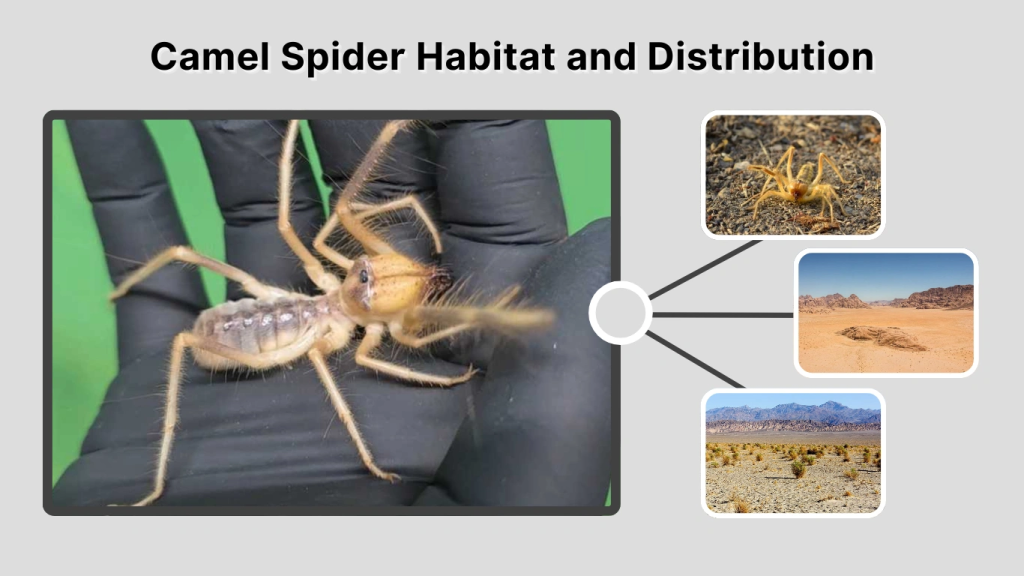
Camel spiders thrive in dry, arid climates, particularly deserts and semi-deserts. They are nocturnal creatures, spending the daytime hiding under rocks, in burrows, or beneath debris to avoid heat.
These arachnids are highly adaptable and can survive extreme temperature fluctuations that would be fatal to many other species.
Where Are Camel Spiders Found in the World?
Camel spiders are commonly found in:
- The Middle East
- Northern and Southern Africa
- Southwestern United States
- Parts of Central and South Asia
They gained widespread attention during military deployments in desert regions, where encounters with soldiers led to many exaggerated stories.
What Do Camel Spiders Eat?
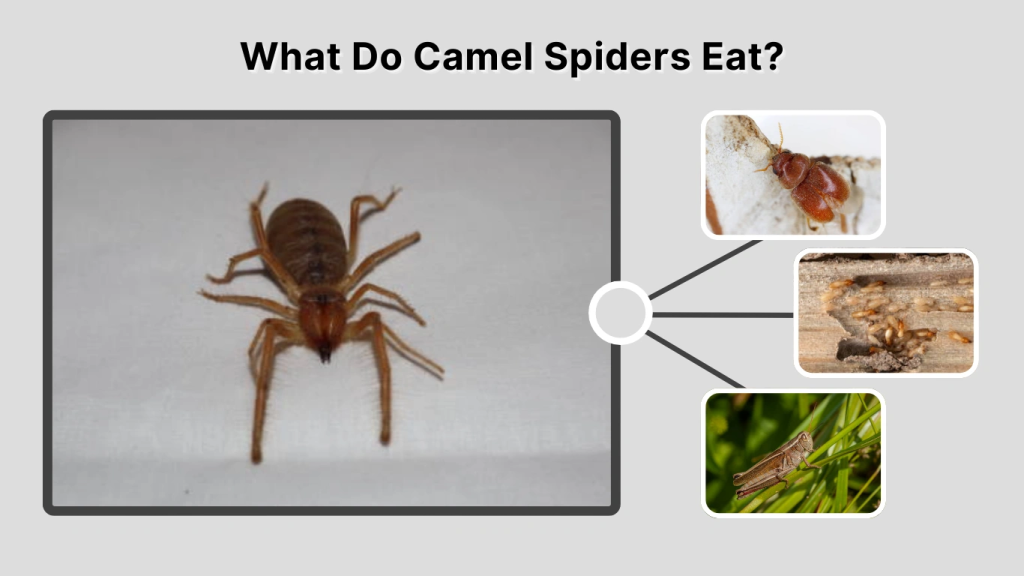
Camel spiders are carnivorous predators with a diverse diet. They primarily feed on insects such as beetles, termites, and grasshoppers but are also capable of hunting small lizards, rodents, and other arachnids.
Hunting and Feeding Behavior
These arachnids rely on speed and strong jaws rather than venom. They actively hunt at night, using vibration detection and keen sensory awareness to locate prey. Once captured, prey is crushed by the chelicerae and consumed efficiently.
Are Camel Spiders Dangerous to Humans?
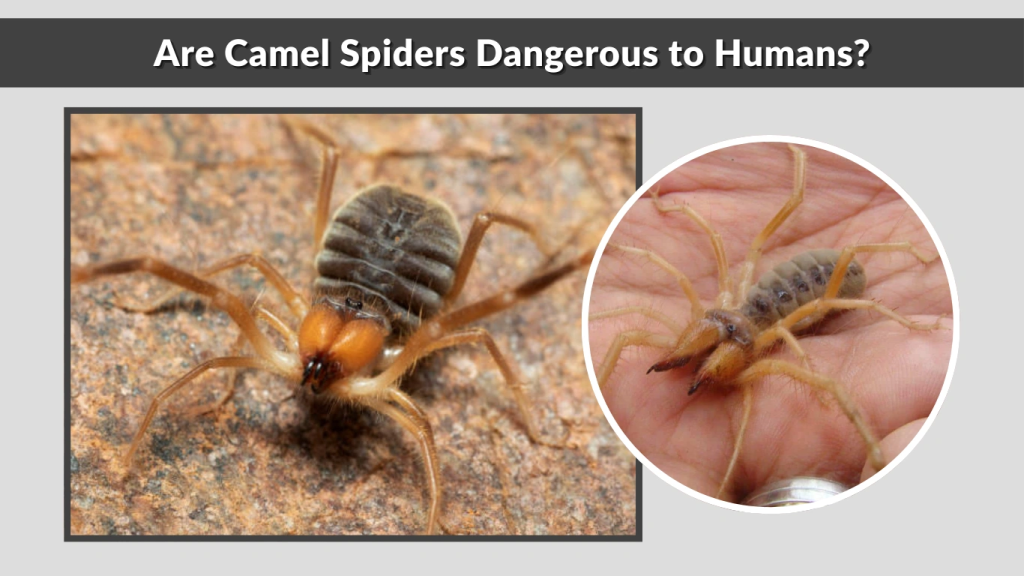
Despite their intimidating appearance, camel spiders are not considered dangerous to humans. They are not aggressive by nature and prefer to flee rather than confront larger creatures. Most encounters occur accidentally, especially when humans enter their habitat or disturb their hiding places.
Camel spiders do not attack humans intentionally. Any defensive behavior usually happens when they feel threatened or cornered.
Camel Spider Bite Explained
Camel spiders can bite, but bites are rare and usually occur only in self-defense. Unlike venomous spiders, camel spiders rely on their strong jaws rather than venom. A bite may cause localized pain, redness, or swelling, similar to a minor insect bite or scratch.
In some cases, bites can break the skin, which may lead to infection if not cleaned properly. Basic first aid—washing the area and applying antiseptic—is usually sufficient. Serious medical complications from camel spider bites are extremely uncommon.
Are Camel Spiders Venomous?
A common myth is that camel spiders inject venom or anesthetic substances. Scientifically, this is false. Camel spiders do not possess venom glands, nor do they produce toxins capable of harming humans. Any pain associated with a bite comes purely from mechanical injury caused by their jaws.
Common Camel Spider Myths and Misconceptions
Camel spiders have become internet legends due to viral photos and exaggerated military stories. These myths have significantly distorted public perception.
Debunking Popular Camel Spider Myths
- “They scream when attacking” – False. Camel spiders do not scream; some may make faint sounds by rubbing body parts together.
- “They jump at people’s faces” – False. They cannot jump and have no interest in targeting humans.
- “They are deadly predators” – False. Camel spiders are effective hunters of insects, not threats to humans.
Most myths originate from fear, poor lighting, and misleading photography.
Camel Spider Behavior and Survival Tactics
Camel spiders are primarily nocturnal, emerging at night to hunt when temperatures drop. During the day, they hide in cool, shaded areas to avoid overheating. Their survival depends on speed, camouflage, and sensory awareness rather than aggression.
Why Camel Spiders Enter Homes or Camps
In desert regions, camel spiders may wander into homes, tents, or camps searching for shade, cooler temperatures, or prey insects. Their presence does not indicate infestation and is usually temporary.
They are not attracted to humans themselves, but to environmental conditions created by human shelters.
FAQs
Are camel spiders actually spiders?
No, camel spiders are not true spiders. They belong to the order Solifugae, a separate group of arachnids. Unlike spiders, they do not produce silk or venom and have different body structures.
Are camel spiders dangerous to humans?
Camel spiders are not considered dangerous to humans. They may look intimidating, but they are generally non-aggressive and prefer to avoid people whenever possible.
Do camel spiders bite?
Yes, camel spiders can bite if they feel threatened or are handled, but bites are rare. A bite may cause temporary pain or mild swelling, but serious reactions are extremely uncommon.
Why do camel spiders run toward people?
Camel spiders are attracted to shade, not humans. When a person moves, their shadow moves as well, making it appear as though the camel spider is chasing them.
Where are camel spiders commonly found?
Camel spiders are most commonly found in desert and arid regions, including parts of the Middle East, Africa, and the southwestern United States.