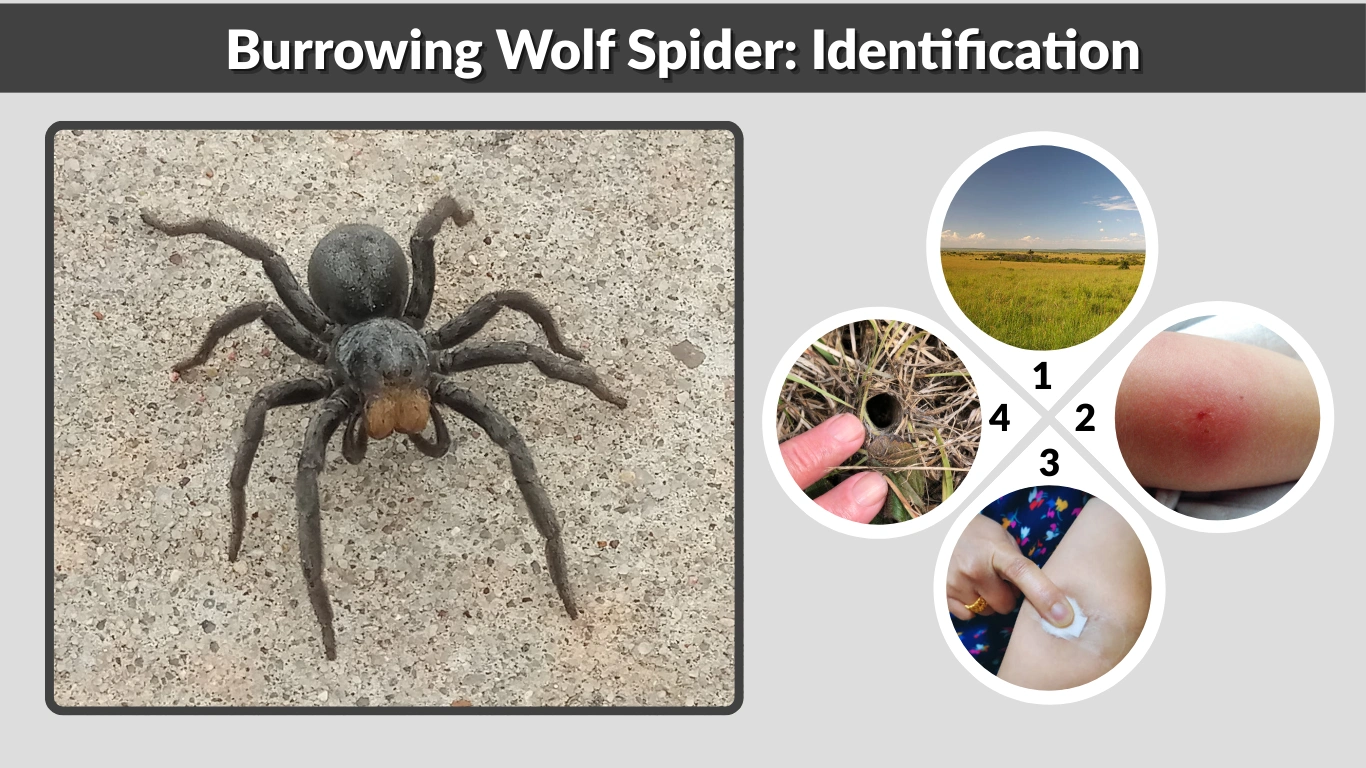
If you’ve noticed small, round holes appearing in your lawn or garden soil, a burrowing wolf spider may be the cause. These ground-dwelling spiders are known for digging vertical tunnels where they hide during the day and ambush prey at night. While their sudden movements and large size can be unsettling, burrowing wolf spiders are generally harmless to humans. In fact, they play an important role in controlling insect populations. In this guide, we’ll explore how to identify a burrowing wolf spider, what their burrows look like, where they are commonly found, and why they choose to live underground.
What Is a Burrowing Wolf Spider?
A burrowing wolf spider is a member of the Lycosidae family, a large group of hunting spiders found across Australia and many other parts of the world. Unlike web-building spiders that trap prey in silk, wolf spiders actively hunt insects. Some species take this strategy a step further by digging burrows in the ground and using them as ambush points.
These spiders are primarily nocturnal. During the day, they remain hidden inside their burrows to avoid predators and extreme temperatures. At night, they position themselves at the entrance of their tunnel, waiting for vibrations that signal nearby prey.
Burrowing wolf spiders are solitary creatures. Each spider typically occupies its own tunnel and defends it from intruders.
How to Identify a Burrowing Wolf Spider
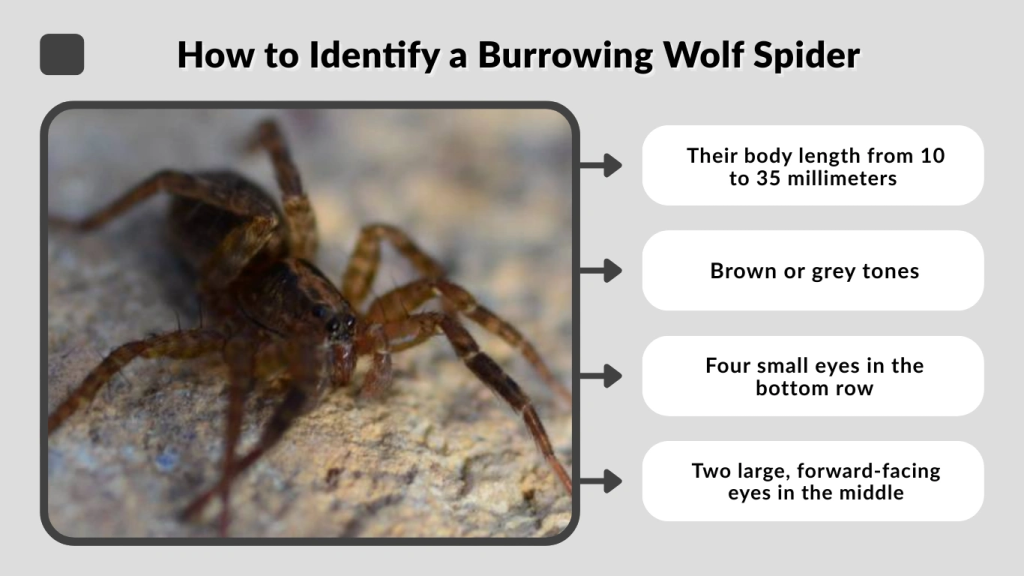
Correct identification is important, especially because burrowing wolf spiders are often confused with trapdoor spiders or other ground-dwelling species.
Size and Physical Appearance
Burrowing wolf spiders are medium to large in size. Their body length generally ranges from 10 to 35 millimeters, though their legs make them appear larger.
They have:
- A stocky, robust body
- Thick, hairy legs
- A low, ground-hugging posture
- Strong, fast-moving legs built for sprinting
Females are usually larger than males, particularly during breeding season.
Color and Camouflage
Their coloring is designed to blend seamlessly with soil and dry vegetation. Most burrowing wolf spiders display:
- Brown or grey tones
- Mottled or speckled patterns
- Faint stripes along the body
This camouflage makes them difficult to detect against dirt, sand, or lawn surfaces.
Distinctive Eye Pattern
One of the most reliable identification features is their eye arrangement.
Burrowing wolf spiders have eight eyes arranged in three rows:
- Four small eyes in the bottom row
- Two large, forward-facing eyes in the middle
- Two medium-sized eyes on top
The two large middle eyes are especially noticeable and often reflect light in the dark. If you shine a torch across your lawn at night, you may see tiny reflective glints — these could be wolf spiders at the entrance of their burrows.
Burrowing Wolf Spider vs Trapdoor Spider
These two spiders are commonly confused, but there are important differences.
- Burrow entrance: Wolf spider burrows are usually open holes. Trapdoor spiders build a hinged door made of soil and silk.
- Body shape: Trapdoor spiders tend to have thicker, heavier bodies.
- Hunting behavior: Wolf spiders wait at open entrances or roam nearby; trapdoor spiders rarely leave their concealed burrow.
- Silk structure: Trapdoor burrows are more heavily reinforced with silk.
If you see a clean, open hole without a door, it is more likely to belong to a burrowing wolf spider.
What Does a Burrowing Wolf Spider Burrow Look Like?
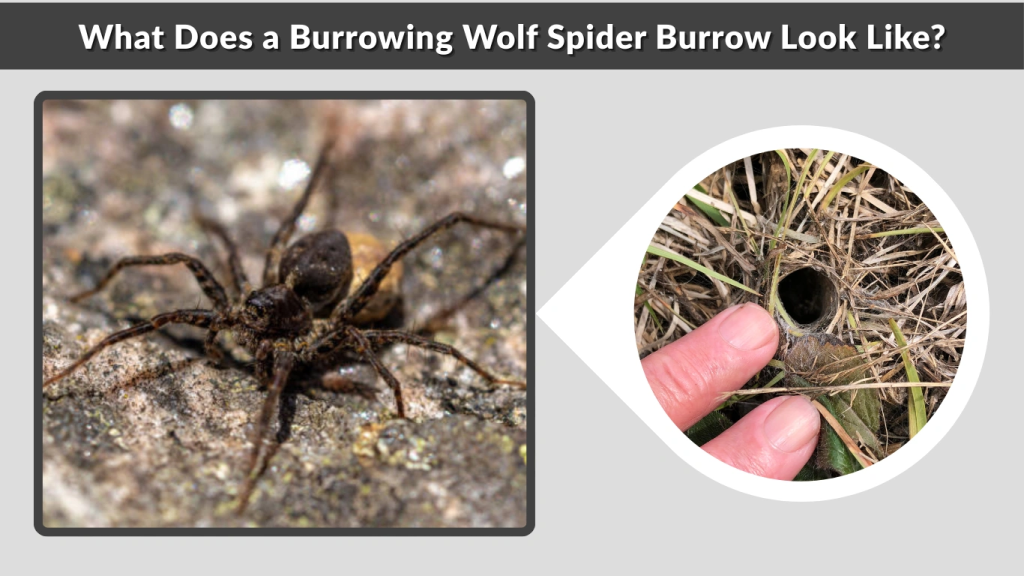
One of the biggest clues to their presence is the small hole they leave in lawns or garden beds.
Hole Appearance in Lawns
A burrowing wolf spider hole typically looks like:
- A small, round vertical opening
- About 1–2 centimeters wide
- Clean-edged and neatly formed
- Sometimes surrounded by a small ring of loose soil
Unlike ant nests, these holes do not usually have large soil mounds around them.
Homeowners often mistake these openings for signs of lawn damage or insect infestation.
Depth and Structure of the Burrow
Burrowing wolf spider tunnels can extend 10 to 30 centimeters deep, depending on soil type and species.
The inside of the burrow is often:
- Lined with silk for stability
- Reinforced to prevent collapse
- Designed to regulate temperature
This underground shelter protects the spider from predators, heavy rain, and extreme heat.
Why They Build Burrows
There are several reasons why these spiders live underground:
- Protection from birds and reptiles
- Shelter from harsh weather conditions
- A safe location for molting
- A secure place to guard egg sacs
The burrow acts as both a home and a hunting station. At night, the spider may sit partially inside the entrance, ready to rush out when prey passes by.
Where Are Burrowing Wolf Spiders Found?
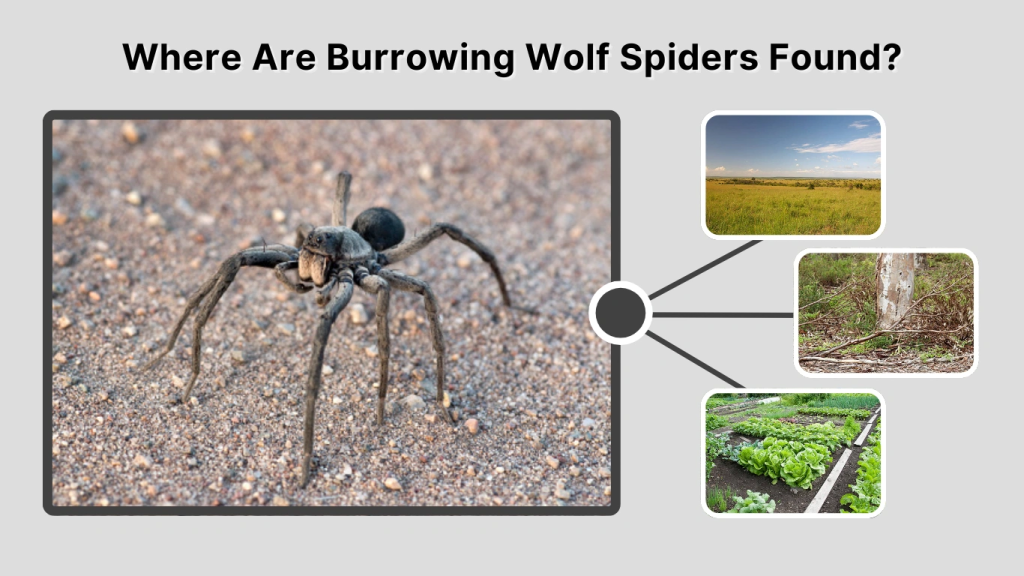
Burrowing wolf spiders are highly adaptable and thrive in various environments.
Natural Habitats
They are commonly found in:
- Grasslands
- Bushland
- Sandy or loose soils
- Semi-arid and desert regions
Loose soil makes it easier for them to dig and maintain tunnels.
Residential Areas
In suburban settings, they are often found in:
- Lawns
- Garden beds
- Along fence lines
- Under paving edges
- Near house foundations
Their presence usually indicates a healthy insect population, which provides them with food.
Behavior and Hunting Strategy
Burrowing wolf spiders are ambush predators. Rather than spinning webs, they rely on patience, speed, and excellent eyesight to capture prey.
At night, the spider typically positions itself at the entrance of its burrow with its front legs extended. It senses vibrations in the soil caused by passing insects. When prey comes within range, the spider rushes out, injects venom to immobilize it, and quickly drags it back into the burrow.
They are:
- Fast sprinters
- Highly sensitive to ground vibrations
- Solitary and territorial
- Quick to retreat when disturbed
If approached by humans, their first instinct is usually to retreat down their tunnel rather than confront a threat.
Maternal Behavior
One of the most fascinating traits of burrowing wolf spiders is their strong maternal instinct.
After mating, the female produces an egg sac and attaches it to her spinnerets, carrying it everywhere she goes. Once the eggs hatch, the spiderlings climb onto their mother’s back and remain there until they are large enough to survive independently.
This level of parental care is rare among spiders and significantly improves the survival rate of the young.
What Do Burrowing Wolf Spiders Eat?
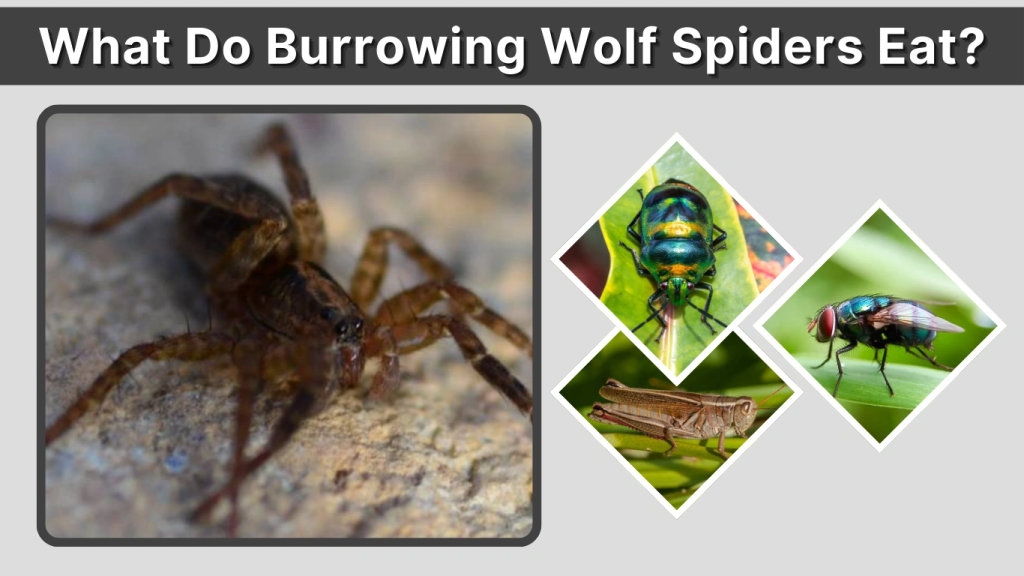
Burrowing wolf spiders are beneficial predators that feed primarily on ground-dwelling insects.
Their diet includes:
- Beetles
- Ants
- Crickets
- Cockroaches
- Grasshoppers
- Other small invertebrates
By controlling insect populations, they help maintain ecological balance in gardens and lawns. In many cases, their presence reduces the need for chemical pest control.
For homeowners, this means that while the burrows may be noticeable, the spiders themselves are quietly helping manage unwanted pests.
Are Burrowing Wolf Spiders Dangerous?
Despite their intimidating appearance, burrowing wolf spiders are not considered medically significant to humans.
Venom and Toxicity
Like all spiders, wolf spiders use venom to subdue prey. However, their venom is designed for insects, not large animals.
In humans, the venom typically causes only mild, localized symptoms. There are no verified reports of severe or life-threatening reactions in healthy individuals.
Do They Bite?
Bites are rare and usually occur only if the spider is:
- Handled directly
- Trapped against the skin
- Stepped on accidentally
- Provoked or threatened
Because they prefer to escape into their burrow, bites are uncommon in normal lawn or garden activity.
Bite Symptoms
If a bite does occur, symptoms may include:
- Mild to moderate pain
- Redness around the bite site
- Slight swelling
- Itching or irritation
These effects typically subside within a short period. Severe reactions are uncommon but possible in individuals with allergies.
Burrowing Wolf Spider Bite Treatment
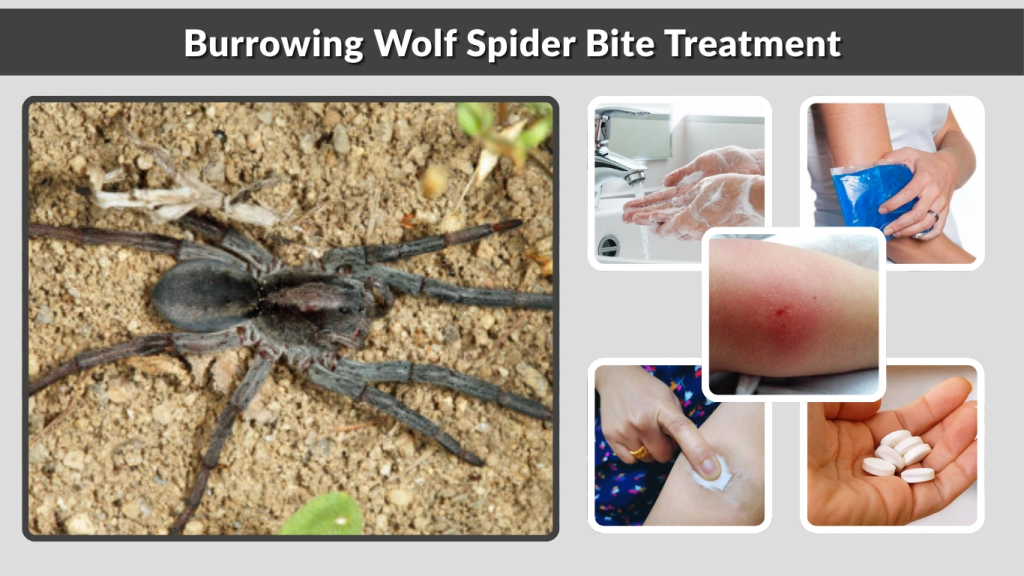
Most bites can be treated at home with basic first aid.
Recommended steps:
- Wash the area thoroughly with soap and water.
- Apply a cold compress to reduce swelling.
- Use over-the-counter pain relief if needed.
- Apply antihistamine cream if itching occurs.
Seek medical attention if:
- Swelling becomes severe
- Signs of infection develop
- The person experiences breathing difficulty
- An allergic reaction is suspected
In most cases, symptoms resolve quickly without complications.
Why Are There Holes in My Lawn?
Small holes in lawns often raise concern, but burrowing wolf spiders usually cause minimal damage.
Signs the Hole Is from a Wolf Spider
A wolf spider burrow typically:
- Is round and vertical
- Measures about 1–2 cm wide
- Has clean edges
- Lacks large soil mounds
You may occasionally spot the spider sitting at the entrance at night.
Do Burrowing Wolf Spiders Damage Lawns?
Generally, the damage is cosmetic rather than structural. The holes are small and do not significantly harm grass roots. In fact, their burrowing may slightly aerate the soil.
If holes are widespread, it may indicate a high insect population attracting multiple spiders.
How to Get Rid of Burrowing Wolf Spiders
If you prefer not to have them in your yard, there are several control options.
Natural Control Methods
- Reduce insect populations
- Keep grass trimmed short
- Remove yard debris
- Minimize outdoor lighting that attracts insects
Since wolf spiders follow food sources, reducing prey will naturally reduce spider numbers.
Lawn Maintenance Tips
- Maintain consistent watering schedules
- Improve soil density if extremely loose
- Fill abandoned burrows with soil
Good lawn care can make the environment less attractive for burrow construction.
Professional Pest Control
Consider professional assistance if:
- There are excessive numbers of burrows
- Spiders frequently enter the home
- The issue persists despite maintenance efforts
Targeted treatment is usually sufficient, as full infestations are uncommon.
Benefits of Burrowing Wolf Spiders
Although they may seem like pests, burrowing wolf spiders offer several ecological benefits:
- Natural insect population control
- Reduced need for pesticides
- Contribution to soil aeration
- Important role in the food chain
Birds, reptiles, and small mammals rely on them as a food source, making them an integral part of local ecosystems.
Conclusion
Burrowing wolf spiders are fascinating ground-dwelling hunters that create small, neat holes in lawns and gardens. While their presence can be surprising, they are generally harmless and play a valuable role in controlling insect populations. Their burrows rarely cause significant lawn damage, and bites are uncommon and mild. By understanding their behavior and habitat, homeowners can make informed decisions about whether to manage or simply coexist with these beneficial spiders.