
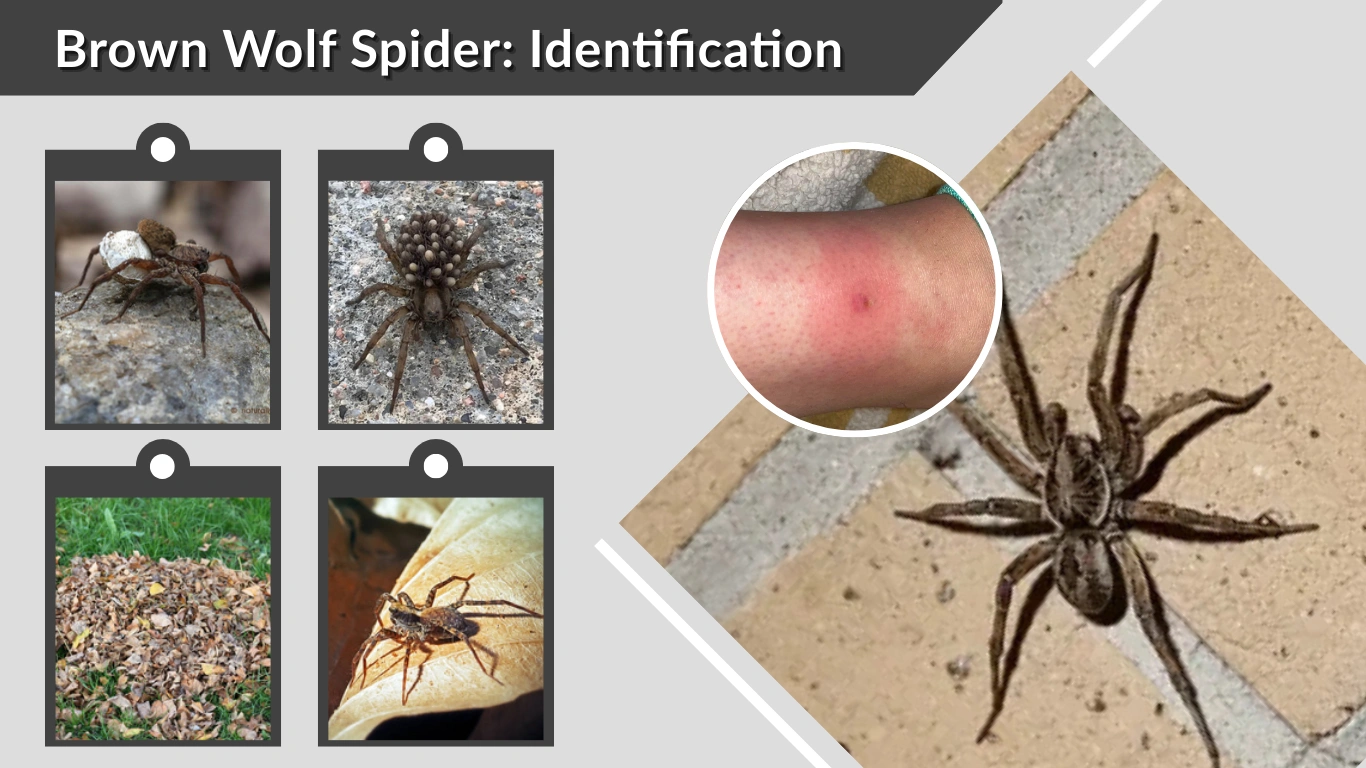
The brown wolf spider is a fast-moving, ground-dwelling spider commonly found in gardens, fields, and sometimes inside homes. Because of its size and brown coloration, it is often mistaken for the dangerous brown recluse spider. However, the brown wolf spider is far less harmful and plays an important role in controlling insect populations. In this guide, you’ll learn how to identify a brown wolf spider, where it lives, how it behaves, and whether its bite is something to worry about.
What Is a Brown Wolf Spider?
The term “brown wolf spider” refers to several species within the Lycosidae family that have predominantly brown coloring. Wolf spiders are found all over the world and are known for their active hunting style rather than web-building.
Unlike many spiders that spin webs to catch prey, wolf spiders chase and ambush insects on the ground. Their name comes from their wolf-like hunting behavior — stalking and pouncing on prey instead of trapping it.
Scientific Classification
- Family: Lycosidae
- Order: Araneae
- Common Name: Wolf spider
There are hundreds of wolf spider species worldwide. Many share similar brown or gray patterns that help them blend into soil, leaves, and tree bark.
Physical Characteristics
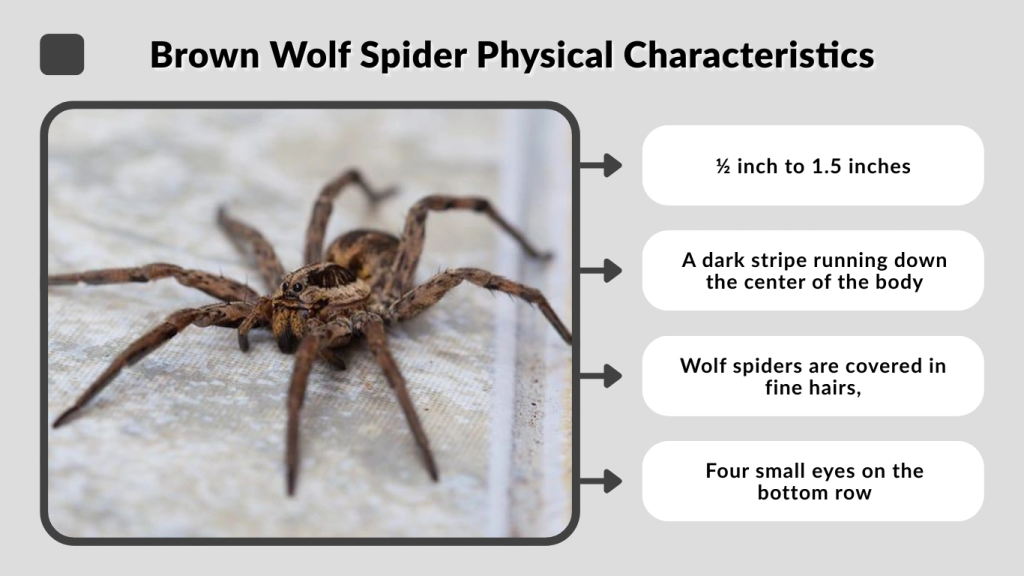
Brown wolf spiders can look intimidating due to their size and speed, but understanding their features makes identification easier.
Size
Most brown wolf spiders range from:
- Body length: ½ inch to 1.5 inches
- Leg span: Up to 2–3 inches in larger species
Females are usually larger than males and have a more robust abdomen.
Color and Markings
As the name suggests, these spiders are typically:
- Brown
- Gray-brown
- Tan with darker stripes
Many species have:
- A dark stripe running down the center of the body
- Lighter stripes along the sides
- Mottled or camouflaged patterns
Their coloration helps them blend into natural environments, making them hard to spot unless they move.
Hairy Appearance
Wolf spiders are covered in fine hairs, giving them a somewhat fuzzy appearance. These hairs help them detect vibrations in their surroundings, improving their ability to sense prey and predators.
Eye Arrangement (Key Identifier)
One of the most reliable ways to identify a brown wolf spider is by its eye pattern. They have eight eyes arranged in three rows:
- Four small eyes on the bottom row
- Two large, forward-facing eyes in the middle
- Two medium-sized eyes on the top row
The two large middle eyes are especially noticeable and reflect light at night, sometimes shining when illuminated by a flashlight.
Habitat and Distribution
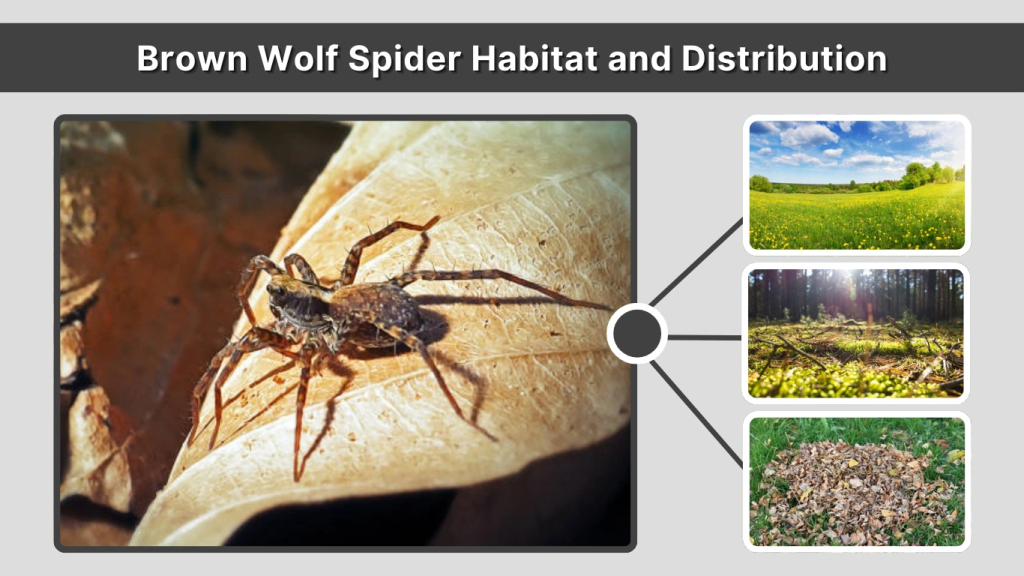
Brown wolf spiders are extremely adaptable and can live in a wide range of environments.
Geographic Range
They are found in:
- North America
- Europe
- Asia
- South America
- Parts of Africa
Different species exist in different regions, but their habits and appearance are generally similar.
Natural Habitats
Brown wolf spiders prefer ground-level environments where they can hunt easily. Common habitats include:
- Grasslands
- Forest floors
- Leaf litter
- Under rocks and logs
- Garden beds
Some species dig shallow burrows in soil, lining them with silk for stability.
Indoors vs Outdoors
Although they prefer outdoor environments, brown wolf spiders may enter homes accidentally. This often happens:
- During colder months
- When chasing prey
- Through cracks and gaps in doors or foundations
They do not build messy webs in corners like house spiders. If found indoors, they are usually roaming along floors or walls in search of insects.
Behavior and Hunting Style
Brown wolf spiders are active predators with impressive speed and strong vision.
Active Ground Hunters
Unlike web-building spiders, wolf spiders do not rely on sticky silk traps. Instead, they:
- Stalk their prey
- Use quick bursts of speed
- Pounce when close enough
Their powerful legs allow them to chase down insects efficiently.
Nocturnal Activity
Most brown wolf spiders are primarily nocturnal. They hunt at night when insect activity increases and temperatures are cooler. During the day, they hide under debris, rocks, or in burrows to avoid predators and heat.
Their excellent night vision, thanks to their large central eyes, gives them an advantage in low-light conditions.
Diet and Ecological Role
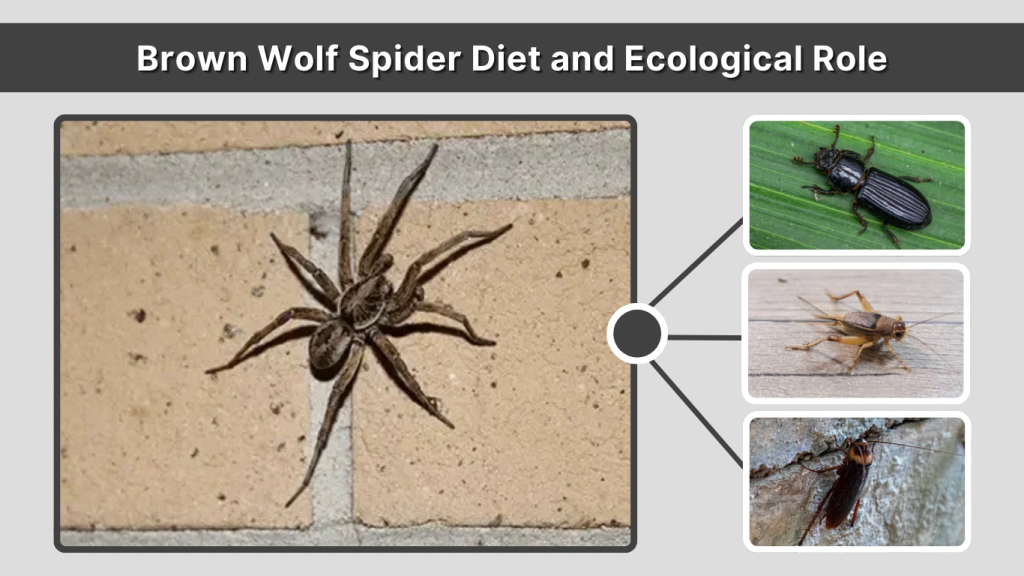
Brown wolf spiders are beneficial predators that help maintain ecological balance.
Common Prey
They primarily feed on:
- Beetles
- Crickets
- Ants
- Grasshoppers
- Roaches
- Other small spiders
Because they actively hunt rather than wait in webs, they can capture a wide variety of ground-dwelling insects.
Natural Pest Control
In gardens, lawns, and agricultural areas, brown wolf spiders help reduce pest populations naturally. By feeding on insects that damage crops or invade homes, they serve as a form of biological pest control.
For this reason, many gardeners and farmers consider them helpful rather than harmful.
Predators
Despite being skilled hunters, wolf spiders are also prey for other animals, including:
- Birds
- Lizards
- Frogs
- Small mammals
Their brown camouflage helps protect them from being easily spotted.
Reproduction and Life Cycle
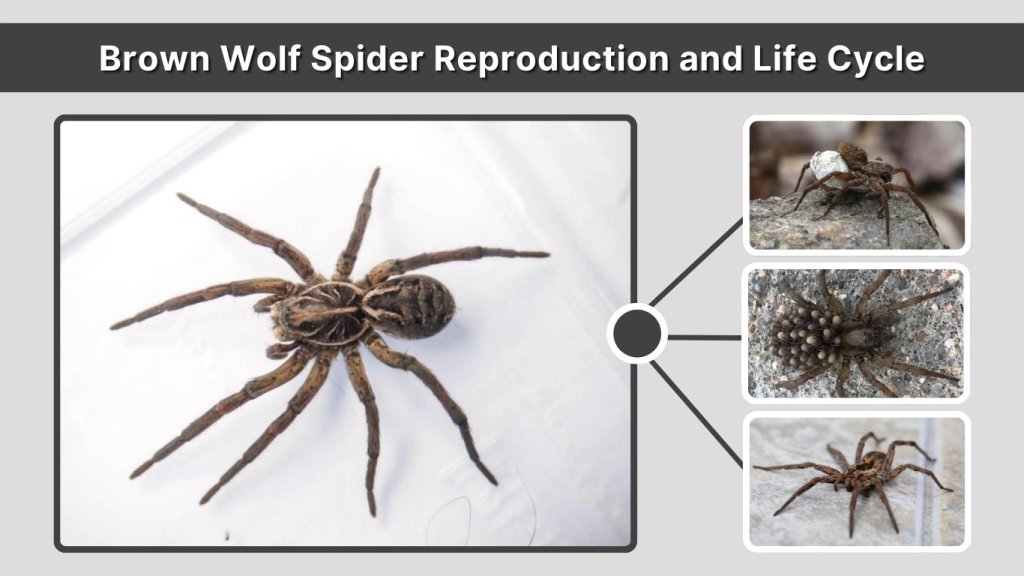
Wolf spiders are known for their unusual and attentive maternal behavior.
Courtship Behavior
Male wolf spiders perform courtship displays to attract females. These displays may include:
- Leg waving
- Body vibrations
- Rhythmic movements
These signals help ensure the female recognizes the male as a mate rather than prey.
Egg Sac Carrying
After mating, the female produces an egg sac containing dozens of eggs. Unlike many spiders that leave egg sacs in webs, the brown wolf spider carries the egg sac attached to her spinnerets at the rear of her abdomen.
She transports it everywhere, protecting it until the eggs hatch.
Spiderlings Riding on the Mother
Once the eggs hatch, the baby spiders climb onto their mother’s back. They remain there for several days to a couple of weeks before dispersing.
This behavior is one of the most recognizable traits of wolf spiders and sets them apart from many other species.
Lifespan
Most brown wolf spiders live about one to two years, depending on species and environmental conditions. Females often live slightly longer than males.
Is the Brown Wolf Spider Dangerous?
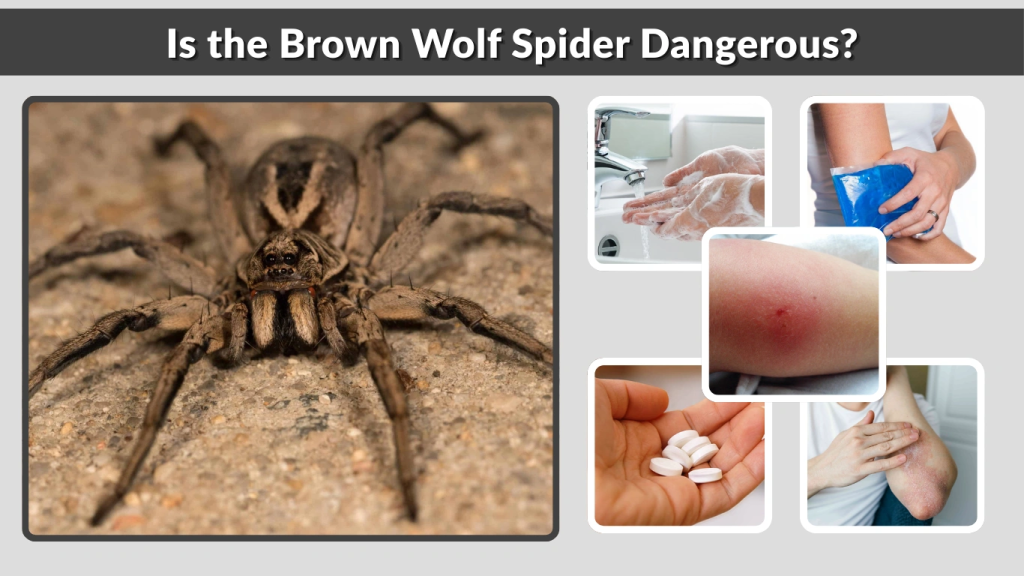
One of the biggest concerns people have is whether the brown wolf spider is harmful.
Venom Overview
Like nearly all spiders, brown wolf spiders possess venom to immobilize prey. However, their venom is not considered medically significant for most healthy individuals.
They are not aggressive and usually bite only when:
- Accidentally pressed against skin
- Stepped on
- Handled roughly
Bite Symptoms
A brown wolf spider bite may cause:
- Mild to moderate pain
- Redness
- Swelling
- Itching
Symptoms typically subside within a few days without serious complications.
Comparison to Brown Recluse Bite
Brown wolf spiders are often confused with brown recluse spiders, whose bites can cause tissue damage.
Key differences include:
- Wolf spiders have eight eyes, while brown recluses have six.
- Brown recluses may have a violin-shaped marking; wolf spiders do not have a clear violin pattern.
- Recluse venom can cause necrotic wounds; wolf spider bites rarely cause severe reactions.
Correct identification is important to avoid unnecessary panic.
First Aid Steps
If bitten:
- Clean the area with soap and water.
- Apply a cold compress to reduce swelling.
- Take over-the-counter pain relief if needed.
- Monitor for unusual symptoms.
Seek medical care if severe reactions or signs of infection develop.
Common Myths
“Brown Wolf Spiders Are Aggressive”
They may run quickly, which can appear aggressive, but they are usually trying to escape.
“They Infest Homes”
Wolf spiders do not form colonies or infest structures. Multiple sightings typically mean there is an insect food source nearby.
“All Brown Spiders Are Dangerous”
Color alone does not determine danger. Many harmless spiders are brown.
How to Prevent Encounters
If you prefer to reduce the chances of seeing wolf spiders indoors, simple prevention steps can help.
Home Maintenance Tips
- Seal cracks and gaps around windows and doors
- Reduce indoor insect populations
- Keep outdoor lighting away from entry points
- Remove yard debris and clutter
Safe Removal Methods
If you find one indoors:
- Place a cup over the spider
- Slide stiff paper underneath
- Release it outside away from the home
Avoid handling spiders directly.
FAQs
Are brown wolf spiders poisonous?
Brown wolf spiders have venom to subdue prey, but they are not considered dangerous to humans. Their bites typically cause mild pain, redness, and swelling. Serious reactions are rare and usually resolve without medical treatment.
How big do brown wolf spiders get?
Most brown wolf spiders have a body length between ½ inch and 1.5 inches, with a leg span reaching up to 2–3 inches in larger species. Females are generally larger than males.
Do brown wolf spiders jump?
Wolf spiders do not jump like jumping spiders, but they can lunge short distances when attacking prey. Their speed may make it seem like they are jumping.
How do I tell a brown wolf spider from a brown recluse?
Check the eyes. Wolf spiders have eight eyes arranged in three rows, including two large forward-facing eyes. Brown recluses have six eyes arranged in pairs and may show a violin-shaped marking.
Are brown wolf spiders good to have around?
Yes. They help control insect populations in gardens and outdoor spaces. While many people prefer not to see them indoors, they are generally beneficial predators.