
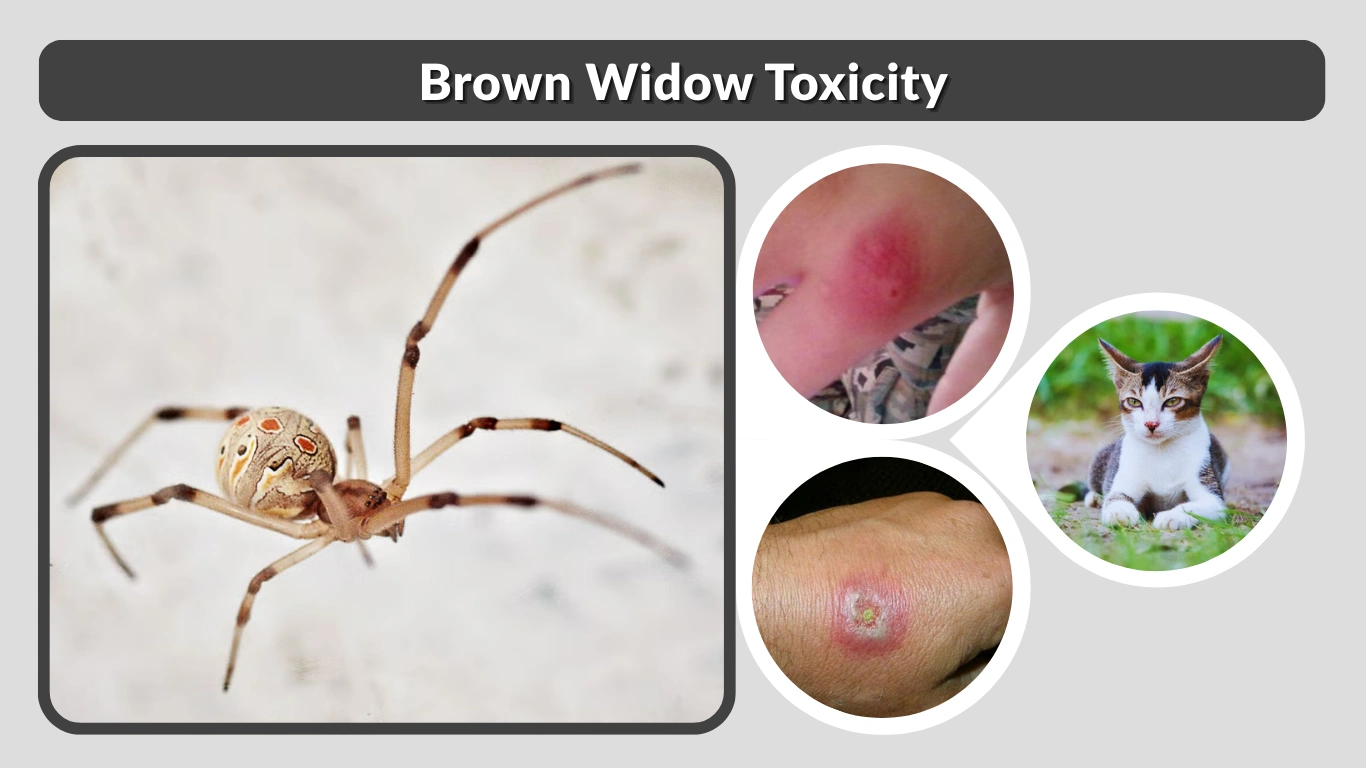
Brown widow spiders cause frequent confusion because of their similarity to black widows and general fear surrounding venomous spiders. Many people ask whether brown widows are poisonous, if their bites are as dangerous as black widows, and whether they pose a threat to humans, pets, or even children. This guide breaks down everything you need to know—including symptoms, comparisons with other venomous spiders, and how risky they truly are.
What Is a Brown Widow Spider?
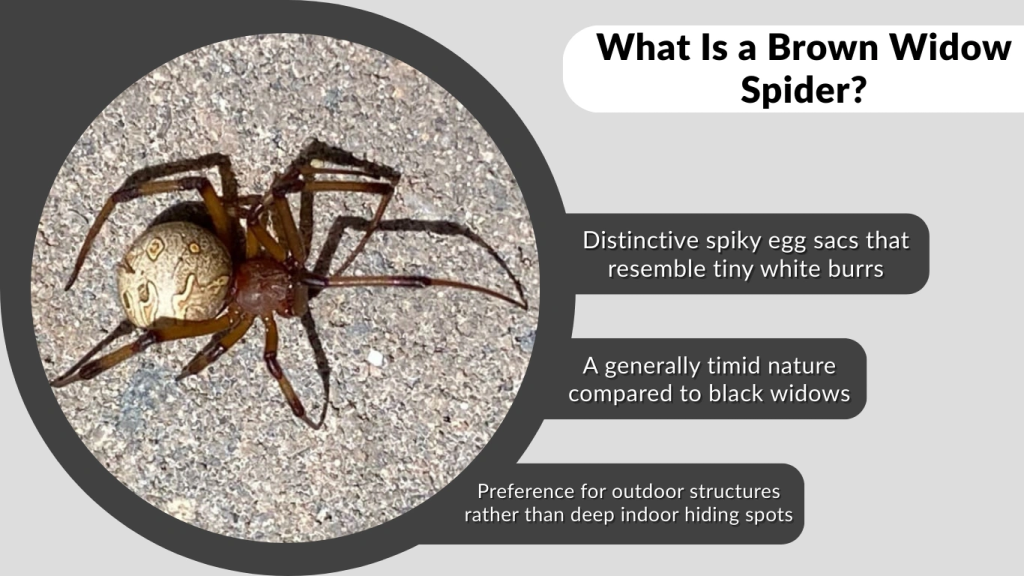
The brown widow (Latrodectus geometricus) is a close relative of the black widow. It has an orange or yellow hourglass shape on its abdomen, long legs, and a mottled brown body. Brown widows prefer quiet, sheltered areas such as patio furniture, mailboxes, sheds, under eaves, and the corners of garages. Although they avoid confrontation, they will bite if they feel trapped or threatened.
Key characteristics include:
- Distinctive spiky egg sacs that resemble tiny white burrs
- A generally timid nature compared to black widows
- Preference for outdoor structures rather than deep indoor hiding spots
Are Brown Widows Poisonous?
The first thing to clarify is that spiders aren’t technically “poisonous”; they are venomous. A poisonous animal harms you when you eat or touch it. A venomous one injects toxins through a bite. Brown widows fall into the venomous category.
Brown widow venom is medically significant but milder than that of black widows. The toxicity is real, but the amount of venom they inject is often smaller, and their bites are less aggressive. Most people experience localized symptoms rather than severe systemic reactions.
Are Brown Widow Spiders Poisonous to Humans?
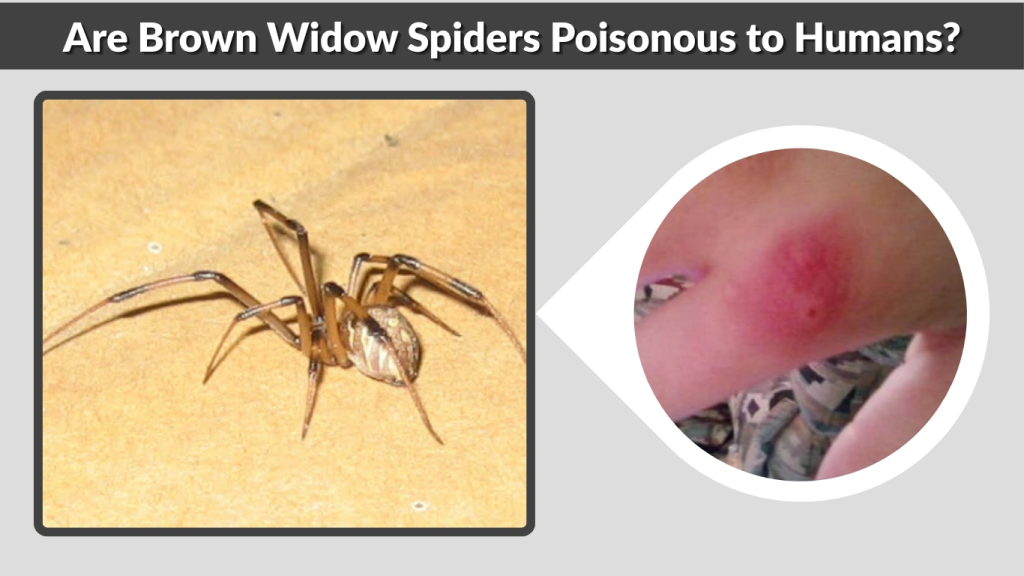
Yes, brown widows are venomous to humans, but they are usually less dangerous than their black widow counterparts. A bite can produce sharp, immediate pain followed by redness or swelling. Some individuals may experience minor muscle cramps or tingling sensations. Severe reactions are uncommon.
People who may experience stronger symptoms include:
- Young children
- Elderly adults
- Individuals with compromised immune systems
- Those allergic or sensitive to insect venoms
In most cases, symptoms fade within hours to a couple of days with basic home care.
Are Baby or Male Brown Widows Poisonous?
Baby (juvenile) brown widows are capable of producing venom, but their fangs are extremely small, making it unlikely they can pierce human skin effectively. Even when they do, the venom amount is minimal.
Male brown widows almost never bite. They are smaller, more passive, and less defensive, focusing mainly on reproduction and avoiding threats. While both males and juveniles possess venom glands, they pose very low risk to humans or pets.
Brown Widow Bite Symptoms
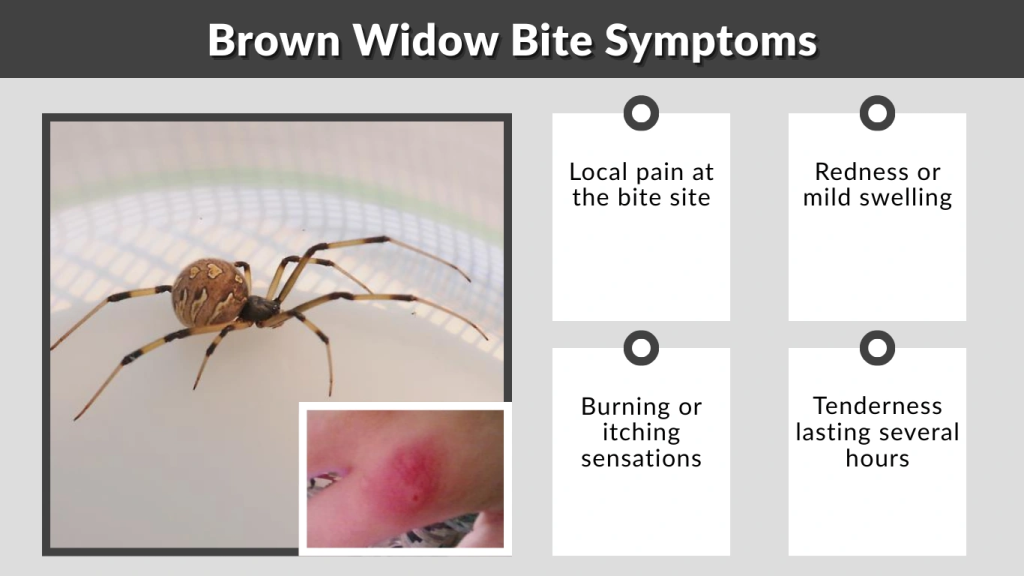
While most bites are mild, knowing the typical symptoms helps with quick recognition. Common reactions include:
- Local pain at the bite site
- Redness or mild swelling
- Burning or itching sensations
- Tenderness lasting several hours
More uncommon symptoms may include muscle cramps, nausea, headache, or increased sweating, though these are far less severe than typical black widow bite reactions. Seek medical attention if symptoms worsen or persist longer than expected.
Are Brown Widows Poisonous to Cats or Dogs?
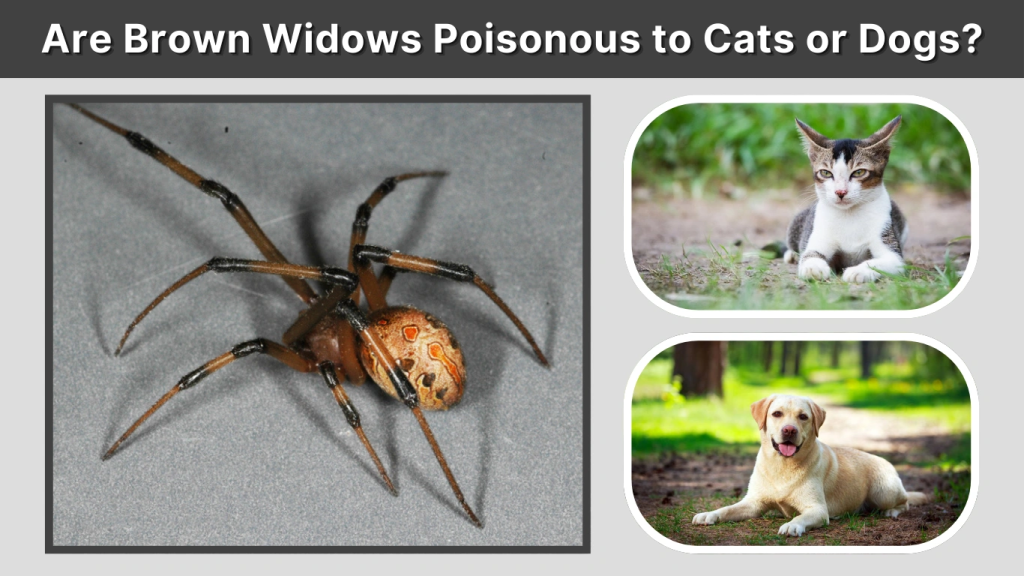
Pets can be more sensitive to spider venom than humans. Brown widow bites may cause discomfort in dogs or cats, such as swelling, limping, or restlessness. Although serious reactions are rare, small animals—especially kittens or puppies—may experience stronger effects.
Immediate steps for pet owners:
- Keep the pet calm
- Clean the bite area gently
- Monitor for vomiting, tremors, or unusual behavior
- Contact a veterinarian if symptoms escalate
Brown Widows vs. Black Widows
Many people assume brown widows are just as dangerous as black widows, but the two differ significantly in behavior and venom strength. Black widow spiders (Latrodectus mactans) have stronger neurotoxic venom and tend to be more defensive when disturbed. Their bites more frequently lead to severe muscle pain, cramping, or systemic symptoms.
In contrast, brown widows inject less venom, bite less often, and typically cause milder reactions. While both spiders belong to the widow family, black widows remain the more dangerous species in terms of medical impact.
Key differences include:
- Black widows deliver more potent venom
- Brown widows are more timid and less likely to bite
- Black widow bites cause more serious systemic symptoms
Brown Widows vs. Brown Recluses
The brown recluse is often compared with widow spiders, but its venom works differently. A recluse bite contains necrotic venom, which may cause tissue damage and ulceration. In rare cases, recluse bites develop into large lesions requiring medical care.
Brown widows do not cause tissue death. Their venom is neurotoxic, like other widows, but generally weaker in impact. Although both spiders can cause discomfort, the brown recluse presents a different type of danger entirely.
Key distinctions:
- Recluse venom breaks down tissue (necrotic)
- Widow venom affects nerves (neurotoxic)
- Recluse bites more commonly require medical intervention
Are Brown Widows More Poisonous Than Black Widows or Brown Recluses?
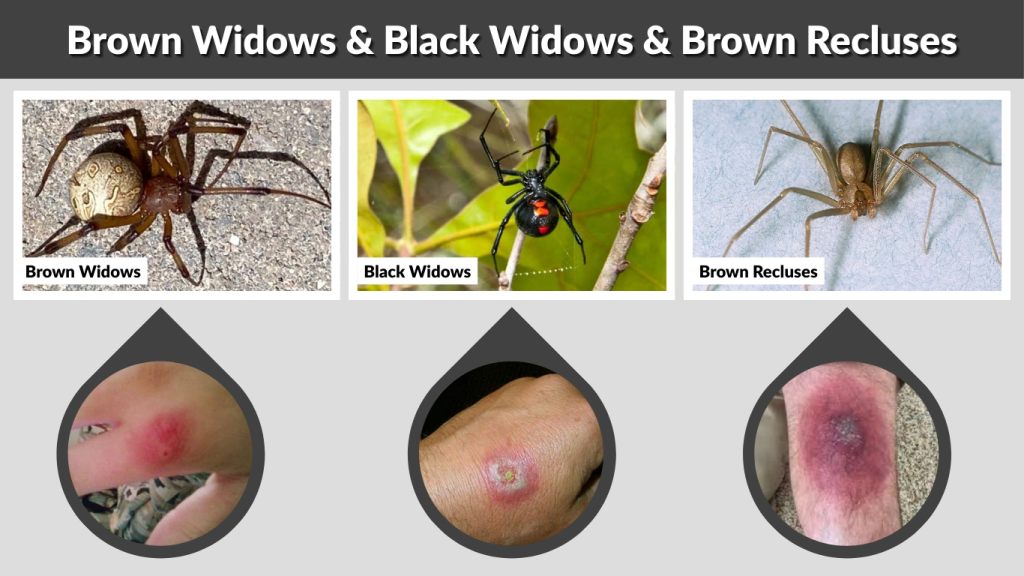
Despite the fear surrounding their name, brown widows are not more poisonous than black widows or brown recluses. Black widows hold the strongest widow venom, while brown recluses cause more destructive tissue reactions. Brown widow bites are typically mild and rarely escalate to medical emergencies.
In practical terms, brown widows sit at the bottom of the danger scale compared to these two well-known spiders.
Do Brown Widow Spiders Pose a Risk Indoors?
Although brown widows prefer outdoor areas, they occasionally move indoors—typically into rarely disturbed spots. They may hide in:
- Storage boxes
- Corners of garages
- Cluttered shelves
- Behind outdoor equipment brought into the home
You can reduce indoor risk by shaking out stored items, sealing gaps, and removing potential nesting areas. Spotting their spiked egg sacs early can also help prevent populations from spreading.
When to Seek Medical Attention
Most brown widow bites resolve on their own, but you should seek care if:
- Pain spreads beyond the bite area
- Severe muscle cramps develop
- You notice vomiting, dizziness, or difficulty breathing
- The person bitten is a child, elderly adult, or immunocompromised
Doctors may clean the wound, provide pain relief, or monitor for complications. Antivenom is typically unnecessary because brown widow reactions are usually mild.
Venom Comparison Table
| Spider Species | Venom Type | Bite Severity | Danger to Humans | Danger to Pets | Typical Treatment |
| Brown Widow | Neurotoxic (mild) | Mild–moderate | Low | Low–moderate | Home care, pain relief |
| Black Widow | Neurotoxic (strong) | Moderate–severe | Higher | Moderate–high | Medical care, antivenom in rare cases |
| Brown Recluse | Necrotic | Moderate–severe | Variable | Moderate | Wound care, monitoring, medical treatment |
FAQ
Are brown widow spiders dangerous to humans?
Brown widows are venomous but not highly dangerous. Most bites result in mild pain and irritation. Severe reactions are uncommon and usually affect only individuals who are sensitive or have underlying health issues.
Are brown widows more poisonous than black widows?
No. Black widows have significantly stronger venom and cause more severe systemic reactions. Brown widow bites are typically mild in comparison and are less medically concerning.
Can a brown widow bite kill a dog or cat?
It is extremely rare. While pets can be more sensitive to venom, brown widow bites usually cause only temporary discomfort. Still, small pets or very young animals may experience stronger symptoms, so veterinary guidance is recommended.
Are baby brown widows venomous like adults?
Yes, juveniles produce venom, but their fangs are so small that they rarely penetrate human skin. Even when they do, the venom amount is minimal and unlikely to cause significant effects.
How can I tell a brown widow from a black widow?
Brown widows have a mottled brown body and an orange or yellow hourglass marking. Their egg sacs are spiky and distinctive. Black widows are shiny black with a bright red hourglass and smoother egg sacs.