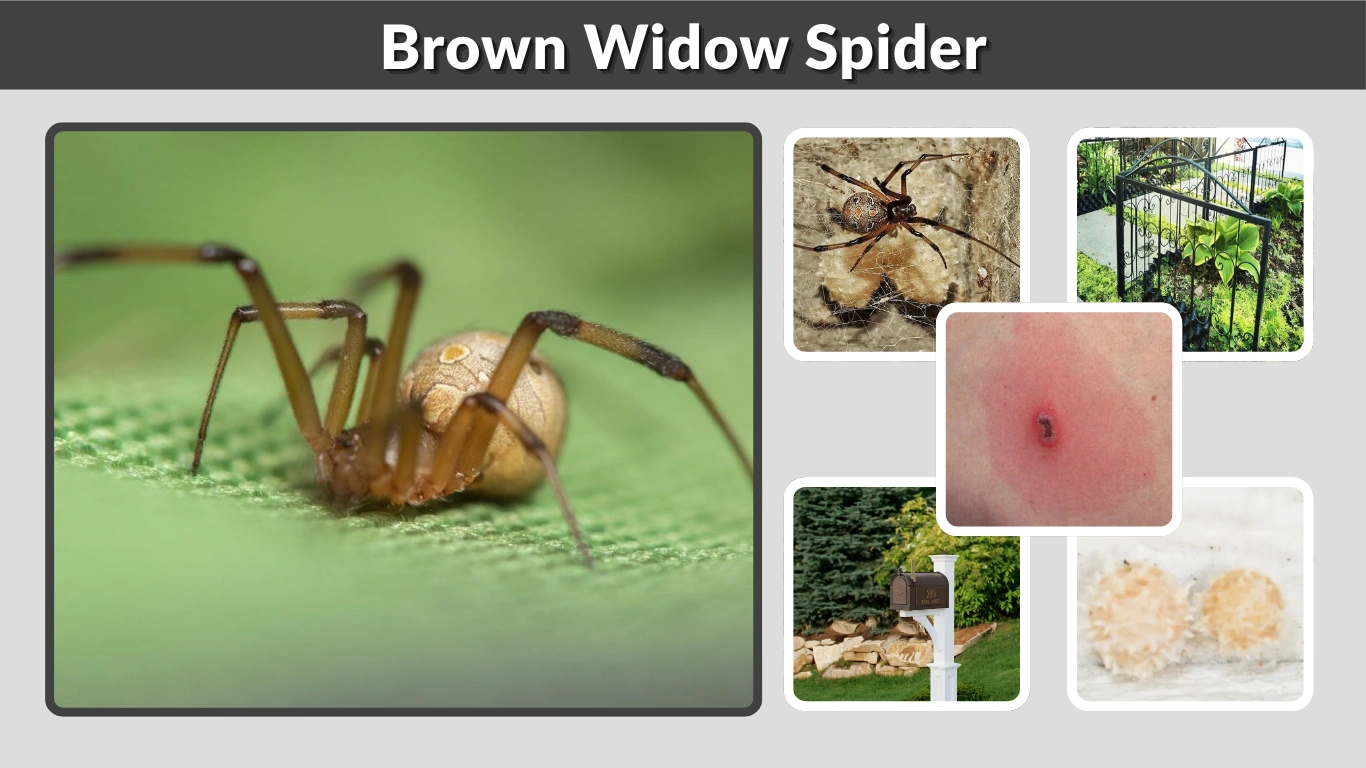
The brown widow spider (Latrodectus geometricus) has become increasingly common across the United States—especially in states like Texas and California—leading to a growing interest in its behavior, bite danger, egg sacs, and identification. Often confused with the more infamous black widow, the brown widow is generally less dangerous but still important to understand. This guide explains how to identify it, where it lives, what its bite feels like, how poisonous it is, and how its eggs and egg sacs differ from other widow species.
Identification & Size
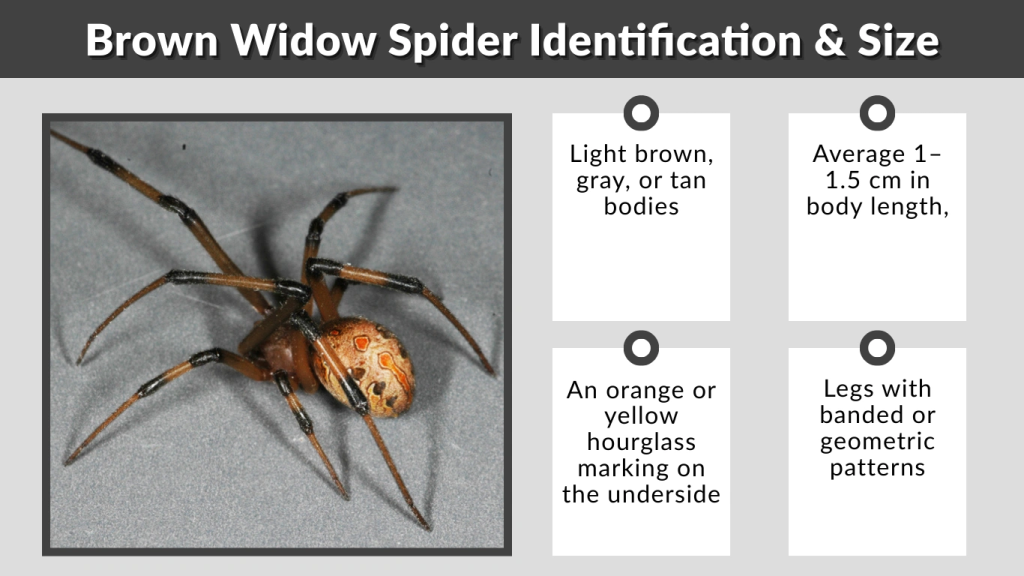
Correct identification helps prevent confusion with black widows or other harmless spiders.
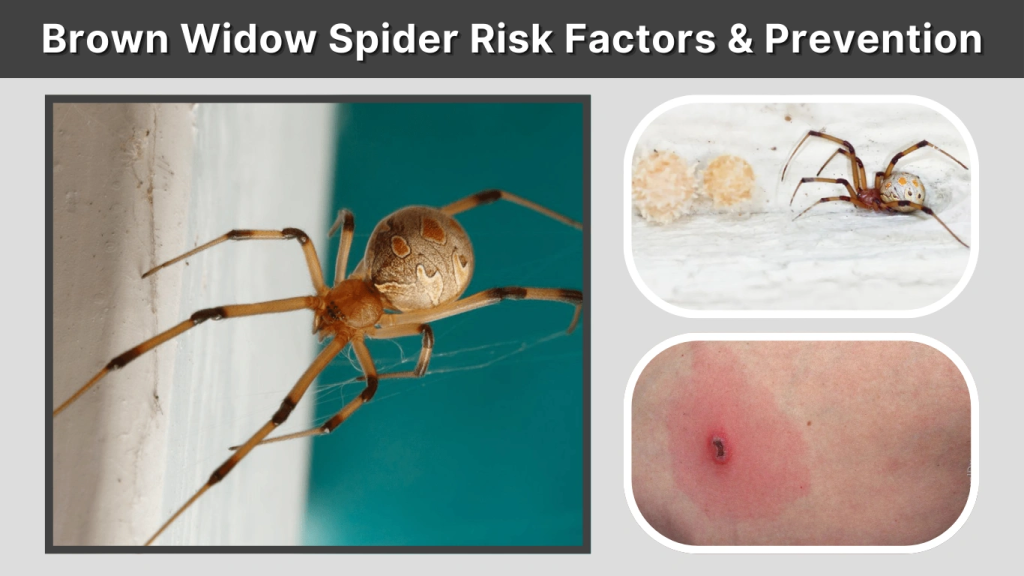
Physical Appearance
Brown widows have:
- Light brown, gray, or tan bodies
- An orange or yellow hourglass marking on the underside
- Legs with banded or geometric patterns
- A slightly spiky or textured abdomen
Unlike shiny, jet-black black widows, brown widows have a matte, patterned look that makes them easier to distinguish once you know what to look for.
Brown Widow Size
Female brown widows average 1–1.5 cm in body length, similar to black widows but often appearing thinner. Males are much smaller, usually only 3–5 mm, and are rarely seen by humans. Their small size means they usually remain unnoticed unless their web is disturbed.
Brown Widow Male vs Female
The most noticeable differences are:
- Females are larger, more colorful, and responsible for almost all medically significant bites.
- Males are smaller, lighter, and generally harmless to humans.
- Behaviorally, males are reclusive, while females stay near their egg sacs and webs.
Females tend to guard their spiky egg sacs aggressively, which increases the likelihood of human encounters.
Habitat & Locations
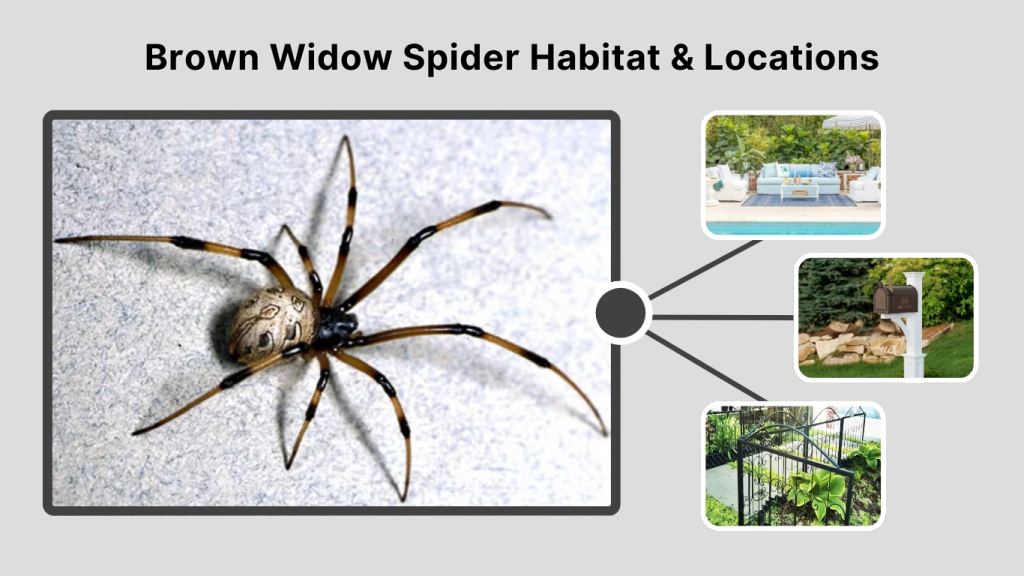
Brown widows thrive in warm environments and often live close to human structures. Their tendency to hide in everyday objects increases the risk of accidental contact.
Where Brown Widows Are Found
They prefer:
- Patios and outdoor furniture
- Mailboxes
- Garden tools and equipment
- Trash cans and recycling bins
- Fences, railings, and decorative yard pieces
- Corners of garages and sheds
They build messy, irregular webs in concealed, low-traffic areas—often below seating, inside containers, or under railings.
Brown Widow in Texas
Texas provides ideal warm conditions, allowing brown widow populations to grow quickly. Sightings are common in:
- Houston
- Dallas–Fort Worth
- San Antonio
- Coastal regions
The species often appears in residential areas where outdoor items are left undisturbed for long periods. Seasonal activity peaks in late spring through early fall.
Brown Widow in California
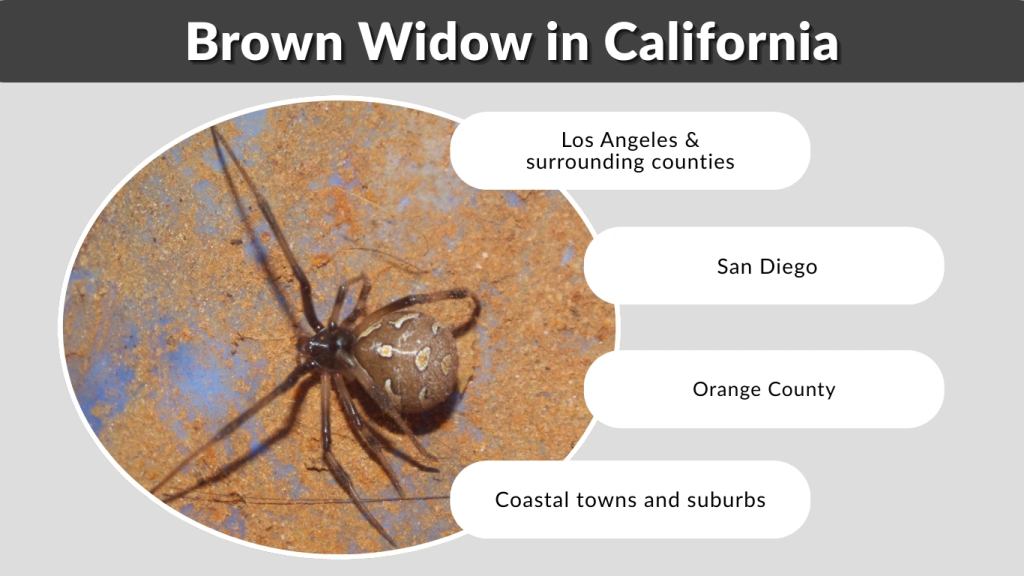
California is one of the most heavily populated regions for brown widows. They are primarily concentrated along the coast due to the mild climate.
Common hotspots include:
- Los Angeles & surrounding counties
- San Diego
- Orange County
- Coastal towns and suburbs
In many cities, brown widows have largely displaced black widows, reducing overall bite severity but increasing spider presence around homes.
Global Distribution
Originally believed to be from Africa or South America, the brown widow has spread worldwide. Today, it appears in:
- Southern United States
- South America
- Asia
- Australia
- Africa
- Caribbean countries
Their success is due to adaptability, global shipping, and their preference for man-made structures.
Brown Widow Web Structure
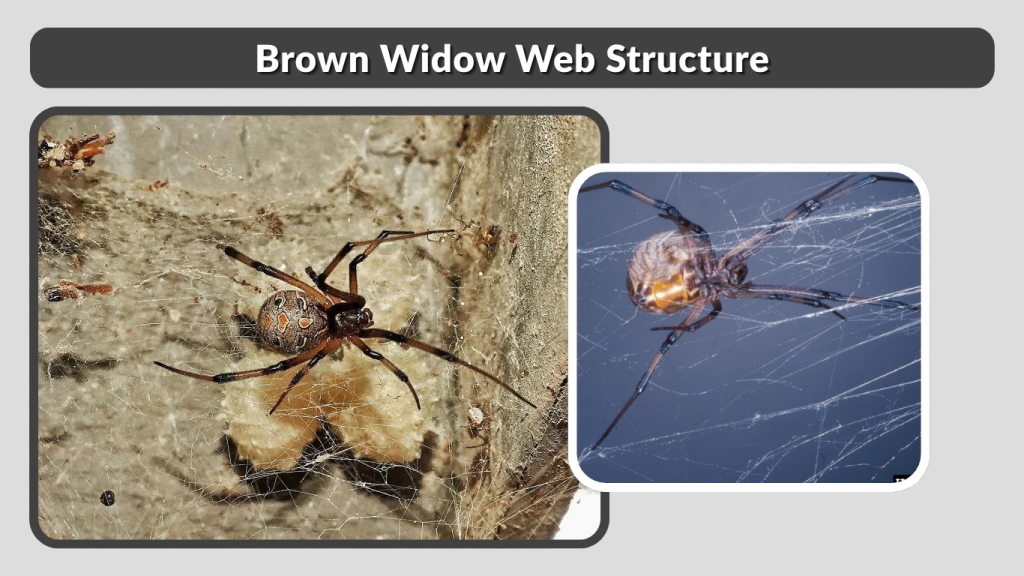
Brown widows weave messy, irregular webs, usually low to the ground or in sheltered corners. The web is sticky and disorganized, resembling that of black widows but often built in more visible or accessible locations.
Common web locations include:
- Under patio chairs and tables
- Inside storage bins
- Beneath mailboxes
- Around fence posts
- In the crevices of door frames
Their habit of nesting near outdoor seating makes accidental encounters common.
Eggs & Egg Sacs
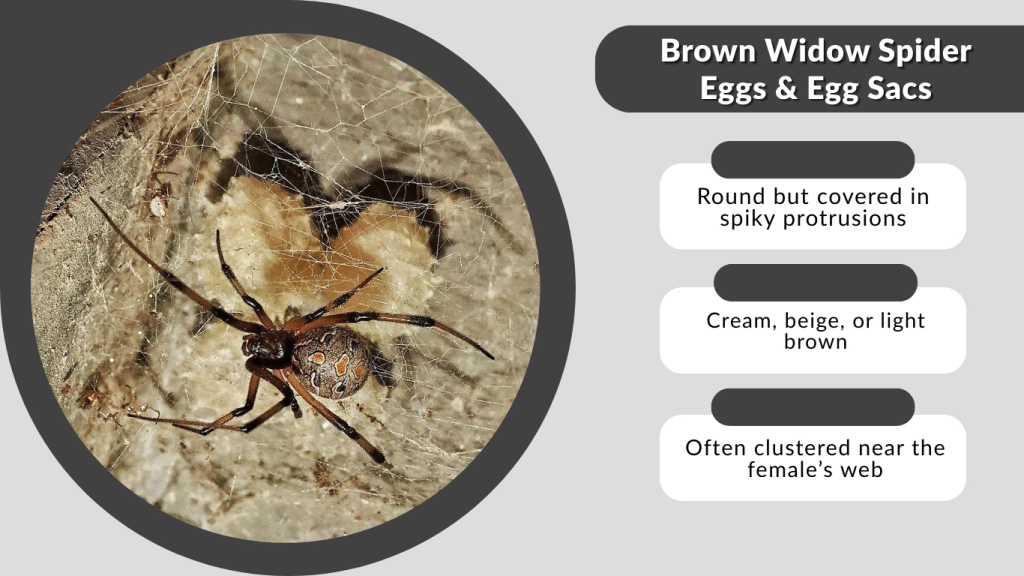
One of the most recognizable features of the brown widow is its unique egg sac. Unlike the smooth, round sacs of black widows, the brown widow’s egg sacs look spiky or tufted, giving them a star-like appearance.
Brown Widow Eggs
A single egg sac typically contains:
- 80–150 eggs
- Multiple sacs produced each season
- Eggs that hatch within 14–21 days, depending on temperature
Spiderlings disperse quickly, often seeking new hiding spaces within the same structure or yard.
Brown Widow Egg Sac Identification
Egg sacs are:
- Round but covered in spiky protrusions
- Cream, beige, or light brown
- Often clustered near the female’s web
These spiky sacs are one of the easiest ways to confirm the presence of brown widows. They are frequently found in outdoor furniture corners, under handrails, and inside storage containers.
Risks & What to Do If You Find Them
Although brown widows are less aggressive, they fiercely protect their egg sacs. If you find one:
- Wear gloves.
- Use a stick or tool to remove the sac.
- Place it in a sealed bag and dispose of it outdoors.
- Avoid crushing with bare hands.
If multiple sacs are present, more may be nearby.
Venom, Danger & Bite Information
Are Brown Widows Poisonous?
Yes—brown widows possess venom similar in composition to other widow spiders. They’re medically significant, but research shows their venom is less potent per bite compared to black widows due to smaller venom yield.
Their bites rarely cause severe systemic reactions in healthy adults.
Brown Widow Bite Symptoms
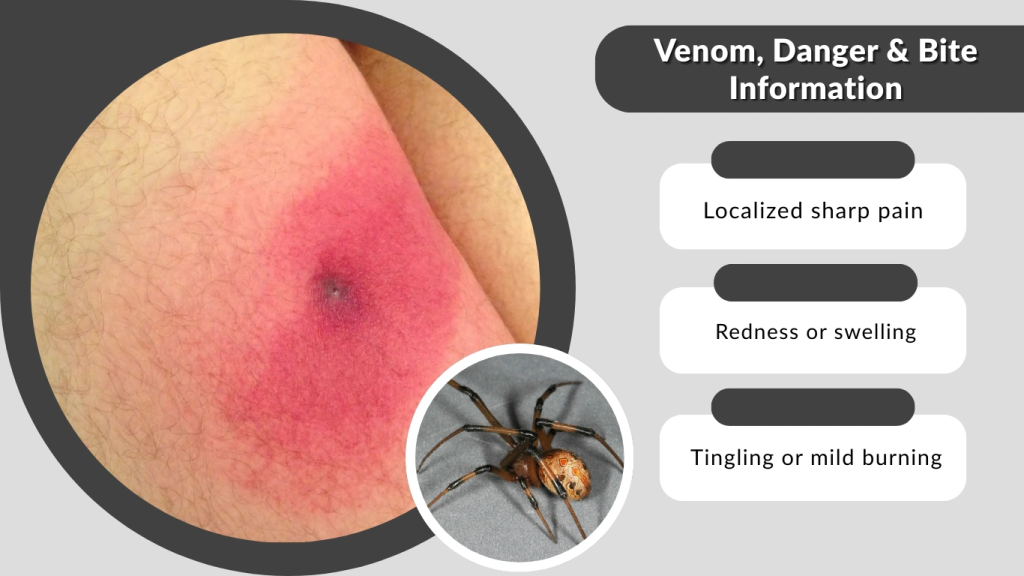
Symptoms may include:
- Localized sharp pain
- Redness or swelling
- Tingling or mild burning
- Muscle tightness (less common)
- Nausea or headache (rare)
Most bites are defensive and occur when the spider is accidentally pressed against the skin inside a glove, shoe, or piece of furniture.
Are Brown Widows Deadly?
Deaths from brown widow bites are extremely rare. Modern medical care and the spider’s lower venom output mean most victims recover quickly. Children, elderly adults, and immunocompromised individuals may experience stronger symptoms but still rarely face life-threatening effects.
Brown Widow vs Black Widow Bite
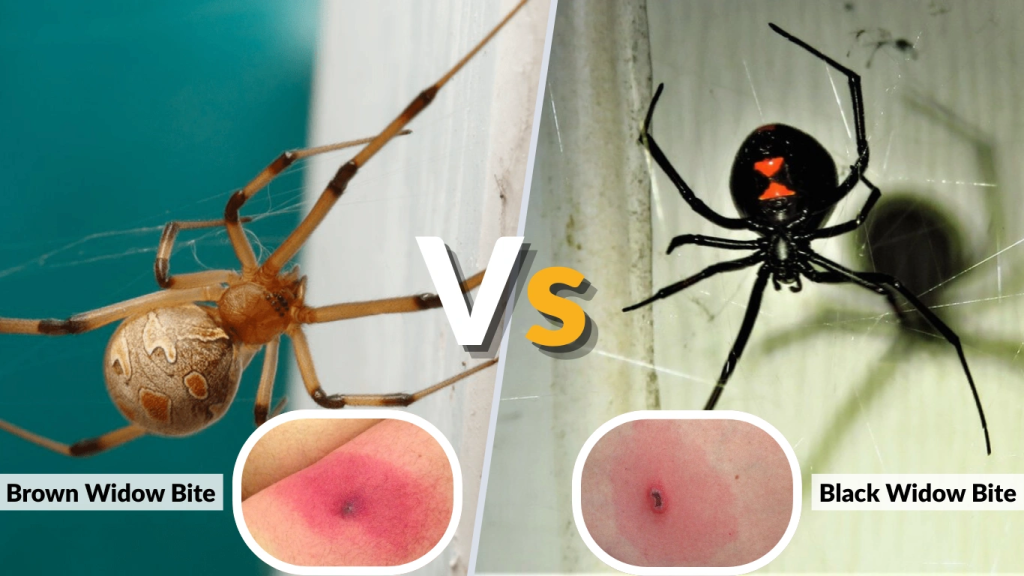
Widow spiders share similar venom components, but key differences exist.
Comparison Summary
- Black widow bites: More painful, higher venom yield, more systemic reactions.
- Brown widow bites: Milder, more localized symptoms, often compared to bee stings.
- Aggression: Brown widows are less defensive and avoid confrontation.
- Encounters: Brown widows frequent human-made structures, increasing accidental contact.
Severity Differences
While the venom toxicity at a chemical level is similar, the volume injected by brown widows is significantly lower, resulting in fewer medical emergencies.
Behavior & Reproduction
Brown widows are timid, preferring to retreat when disturbed. They become more defensive only when guarding egg sacs.
Reproductive Behavior
- Females can produce 10–20 egg sacs in one season.
- Males approach cautiously and often avoid danger.
- Spiderlings disperse after hatching, occasionally ballooning to new locations.
This high reproductive rate explains their rapid spread in many regions.
Risk Factors & Prevention
Where Humans Encounter Brown Widows
Common accidental contact points:
- Outdoor patio chairs
- Under plastic storage bins
- Around recycling containers
- Inside garden gloves or shoes
- Beneath mailbox openings
- Under porch railings and staircases
How to Prevent Encounters
You can greatly reduce sightings with regular maintenance:
- Shake out clothing, shoes, and towels left outdoors
- Keep patio furniture clean and moved periodically
- Reduce clutter in outdoor storage areas
- Seal cracks and gaps around doors and siding
- Use gloves when gardening or moving stored objects
- Install outdoor lighting to discourage insect prey
Brown widows thrive in still, undisturbed corners—cleaning and movement alone reduce their presence dramatically.
Ecological Role
Despite their reputation, brown widows are beneficial predators. They feed on:
- Ants
- Beetles
- Roaches
- Mosquitoes
- Other spiders (including black widows)
Interestingly, brown widows may outcompete black widows in many areas, reducing the number of highly dangerous widow bites overall. This shift has been documented in several U.S. cities where brown widows are now more common than black widows.
FAQs
Are brown widow spiders poisonous?
Yes. Brown widows have venom similar to other widow species, but they inject much less of it during a bite. This makes their bites medically significant but typically mild, especially compared to black widow bites.
How dangerous is a brown widow bite?
Most brown widow bites cause localized pain, redness, or swelling. Severe reactions are uncommon, and fatalities are nearly unheard of. Children and elderly individuals may experience stronger symptoms and should seek medical care if bitten.
What does a brown widow egg sac look like?
Brown widow egg sacs are spiky, tufted, and star-shaped, making them easy to identify. They are usually beige or cream-colored and found near the mother’s web in sheltered outdoor spaces.
Where are brown widows commonly found?
Brown widows live around homes, especially under patio furniture, in mailboxes, around garden equipment, and in storage areas. They are common in warm climates such as Texas, California, Florida, and coastal regions.
How are brown widows different from black widows?
Brown widows are lighter in color, have orange hourglass markings, and produce spiky egg sacs. Their venom yield is lower, making their bites less severe. They are also more likely to live around human structures than black widows.