
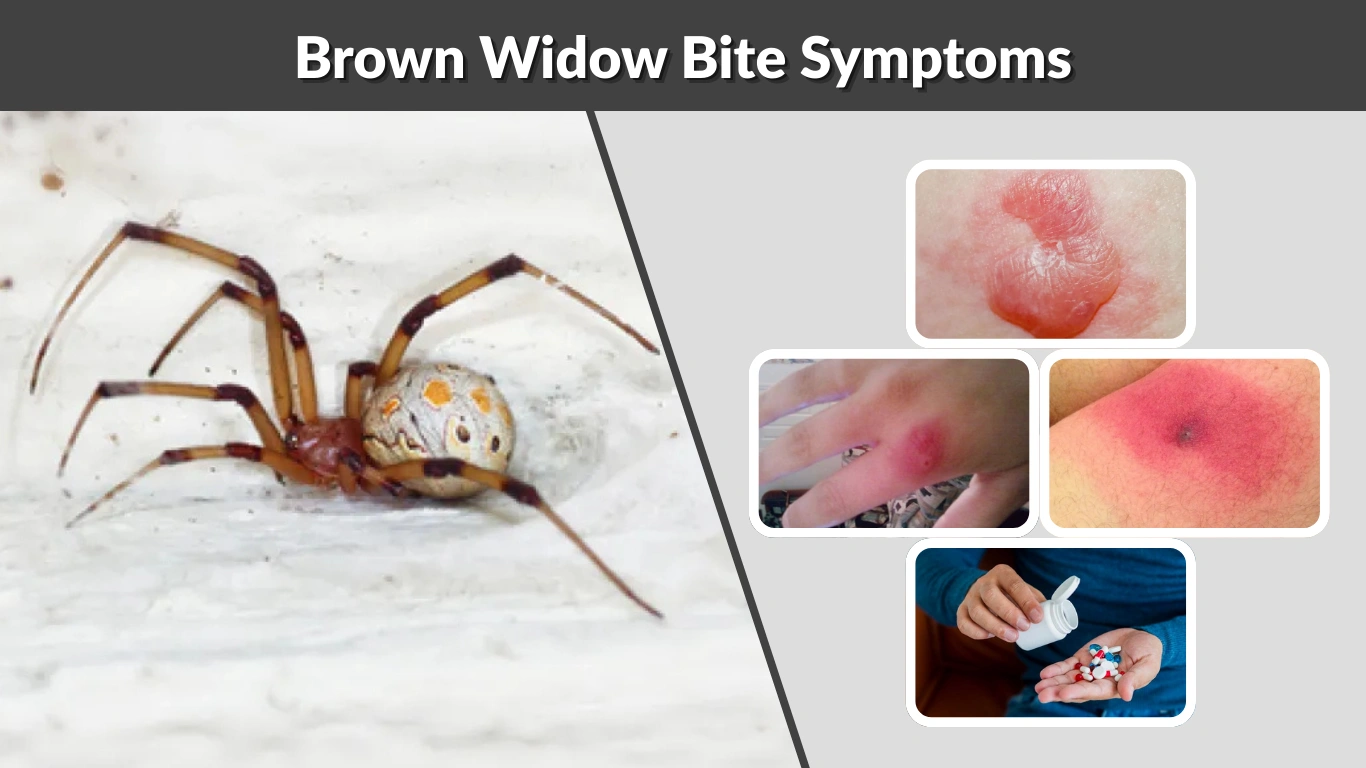
Brown widow spiders are increasingly found around homes, gardens, and warm coastal regions, making accidental encounters more common than many expect. While their venom is medically significant, brown widow bites are typically less dangerous than black widow bites and far less destructive than brown recluse bites. Still, their bites can cause pain, redness, and swelling—and in vulnerable individuals, systemic reactions may occur. Understanding how a brown widow bite looks, feels, and progresses can help you respond quickly and safely.
Do Brown Widow Spiders Bite?
Why Brown Widows Bite
Brown widows are defensive spiders, not hunters of humans. Nearly all bites occur when the spider feels threatened—such as when someone reaches into garden gloves, moves outdoor décor, or brushes against a hiding spot. They are less aggressive than the black widow and will usually attempt to flee before biting.
How Common Are Brown Widow Bites?
In warm coastal states and subtropical climates, bites are becoming more frequent simply because the spiders are spreading and adapt easily to human environments. Outdoor workers, gardeners, pest-control professionals, and homeowners in Florida, California, Texas, and Hawaii encounter them most often.
What Does a Brown Widow Bite Look Like?
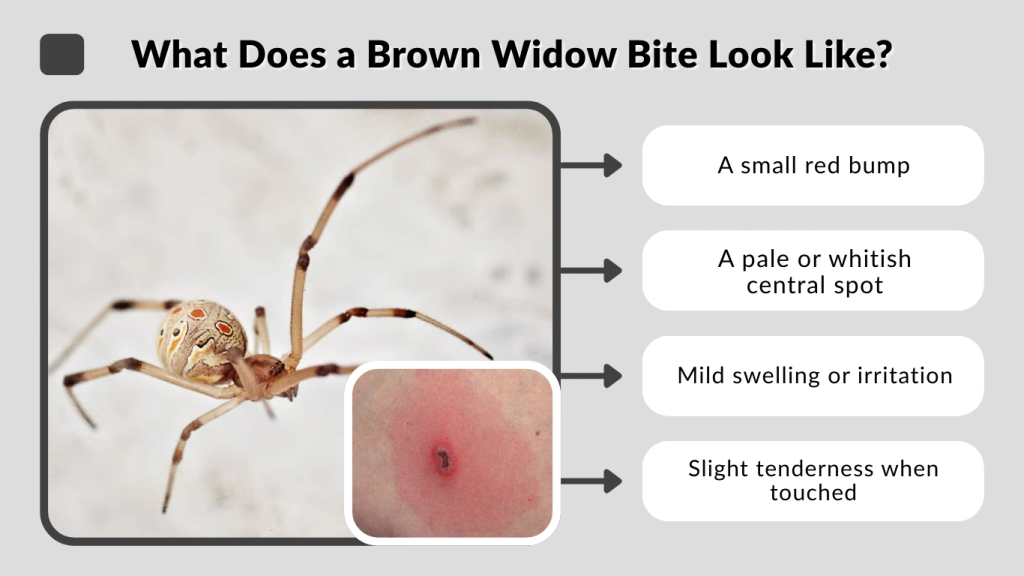
A brown widow bite does not create massive tissue destruction or dramatic skin necrosis. Instead, it tends to produce a localized reaction that develops through predictable stages.
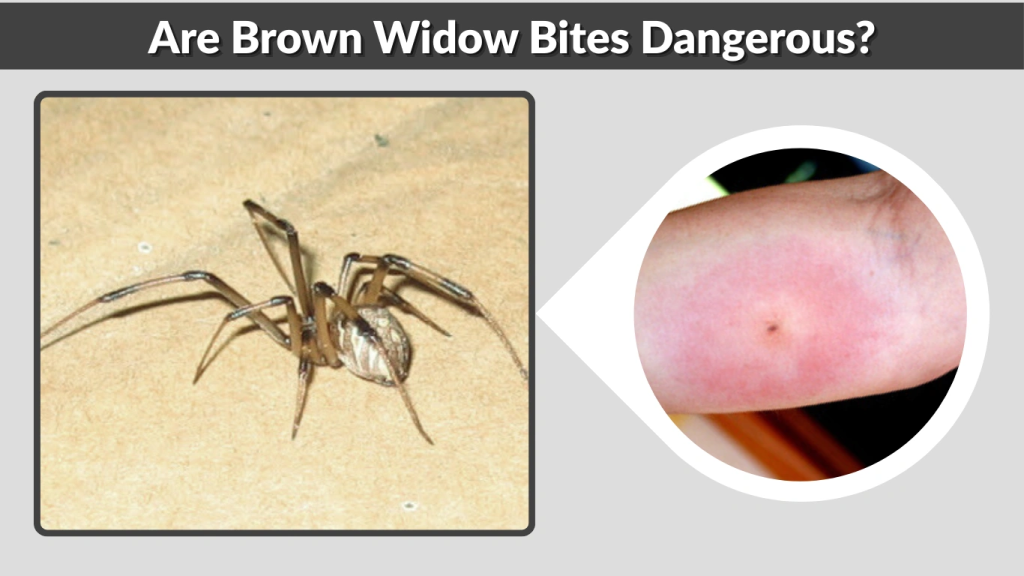
Early Appearance
In the first few minutes, the bite often looks like:
- A small red bump
- A pale or whitish central spot
- Mild swelling or irritation
- Slight tenderness when touched
Some people feel a quick, sharp sting—similar to a pinprick—while others may not notice immediately.
Progression Stages
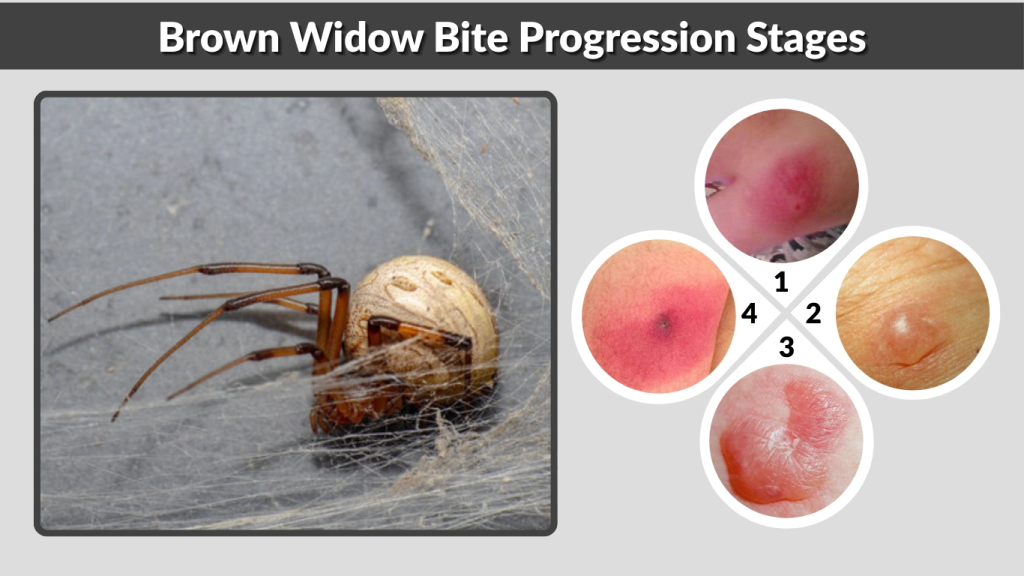
1. Minutes to 1 Hour
You may see mild redness, warmth, stinging, or tingling. Some people report a burning sensation at the bite site.
2. 1 to 6 Hours
A small blister may form, surrounded by a red halo. Pain becomes more noticeable but usually remains mild to moderate.
3. 6 to 24 Hours
Symptoms peak. The blister may enlarge slightly, and the area may feel sore or warm. Systemic symptoms at this stage are rare but possible.
4. 1 to 7 Days
The blister dries or scabs over. Redness fades, and the bite heals gradually without long-term scarring in most cases.
Common Visual Indicators
- Round red irritation
- Small blister (clear or slightly cloudy)
- Raised, warm bump
- Minor local inflammation
These appearances help differentiate the brown widow bite from more dangerous spider bites—such as the black widow’s intense systemic reaction or the brown recluse’s necrotic ulcer.
Symptoms of a Brown Widow Bite
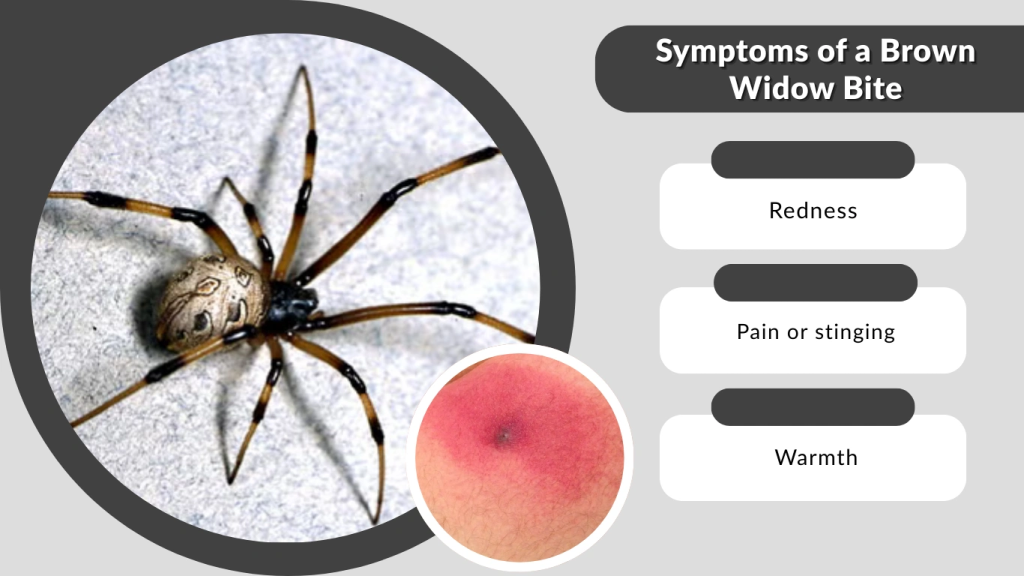
Local Symptoms (Most Common)
Most brown widow bites cause mild to moderate symptoms limited to the bite area, including:
- Redness
- Pain or stinging
- Warmth
- Tenderness
- Itching
- Slight swelling
These symptoms may last anywhere from a few hours to a few days.
Systemic Symptoms (Less Common)
In sensitive individuals—children, elderly adults, and those with allergies—symptoms may extend beyond the bite location. These can include:
- Muscle cramps (milder than those from black widow bites)
- Headache
- Mild nausea
- Fatigue
- Sweating
- Restlessness
Severe systemic reactions are rare but possible. If diffuse muscle pain, chest tightness, difficulty breathing, or severe sweating occurs, medical attention is necessary.
Symptoms Timeline Breakdown
0–1 Hour: Quick sting, redness, slight pain
1–6 Hours: Discomfort increases; possible small blister
6–24 Hours: Symptoms stabilize at peak intensity
24+ Hours: Noticeable improvement; irritation begins to fade
Are Brown Widow Bites Dangerous?
Risk Level for Adults
In healthy adults, brown widow bites are rarely dangerous. Pain is much milder compared to black widow bites, and systemic symptoms are uncommon. Most individuals recover without medical treatment beyond basic first aid.
Higher-Risk Groups
Certain groups may experience stronger reactions:
- Children (smaller body mass → stronger venom impact)
- Elderly individuals
- People with venom allergies
- Immunocompromised individuals
They may require medical evaluation if symptoms worsen or last longer than expected.
Rare but Possible Complications
Though uncommon, a brown widow bite can lead to:
- Muscle cramping
- Sweating
- Elevated heart rate
- Nausea
- Anxiety or restlessness
These symptoms are usually mild and short-lived, but professional care is advised if they occur.
Brown Widow Bite Effects on Pets
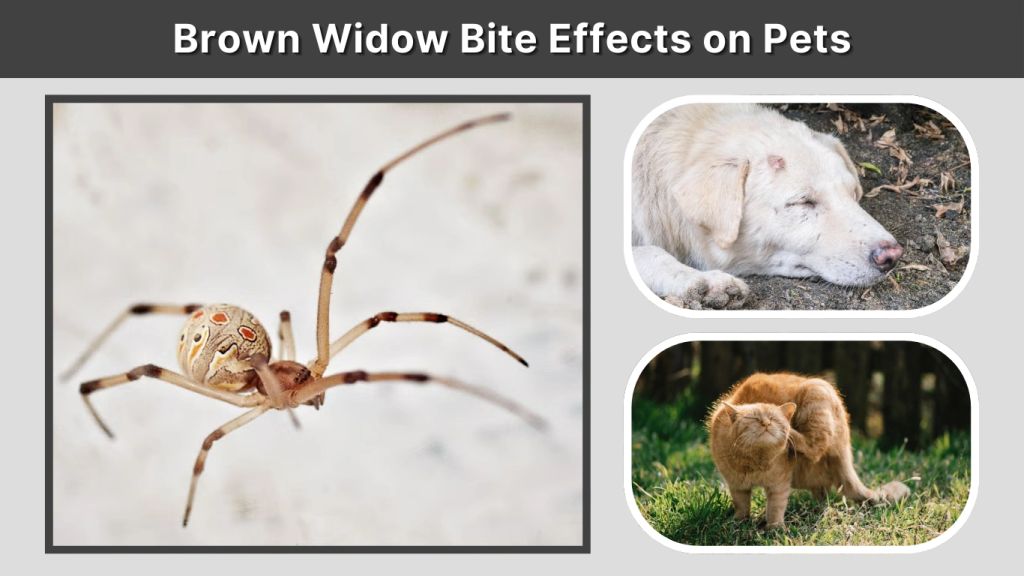
Dogs
Dogs may react more strongly than humans. Common symptoms include:
- Local swelling
- Shaking or trembling
- Whining or signs of pain
- Fever
- Lethargy
If the bite occurred near the mouth or paw, licking or limping may be noticeable. Dogs should receive veterinary attention if symptoms worsen, spread, or persist beyond a few hours.
Cats
Cats are more sensitive to widow venom. Signs may include:
- Muscle rigidity
- Vomiting
- Drooling
- Trouble walking
- Weakness or hiding behavior
Cat bites are more urgent and often require immediate veterinary evaluation.
Brown Widow Bite Treatment
First Aid Steps
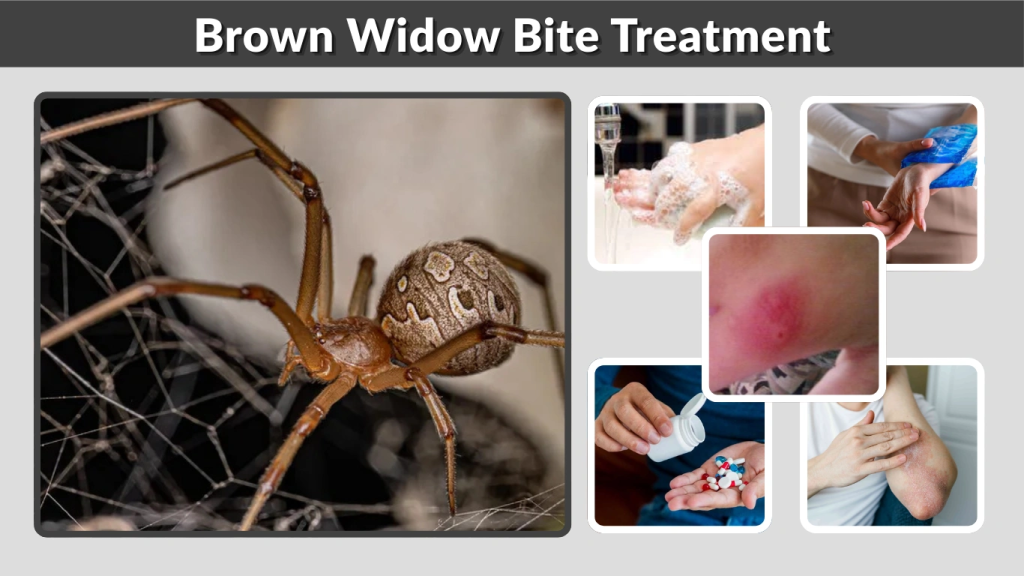
Start with simple home care to reduce pain and prevent infection:
- Wash the area thoroughly with soap and warm water.
- Apply an ice pack wrapped in a cloth for 10–15 minutes at a time.
- Elevate the limb if the bite is on an arm or leg.
- Use an antihistamine (like diphenhydramine) for itching.
- Avoid scratching to prevent secondary infection.
Most bites begin to improve within 12–24 hours.
Medical Treatment
Seek medical care if:
- Pain becomes severe
- Symptoms worsen after several hours
- Systemic reactions occur (cramps, sweating, nausea)
- The person bitten is a child, elderly, or immune-compromised
Doctors may recommend:
- Pain relievers
- Muscle relaxants (for cramping)
- Prescription antihistamines
- Rarely, antivenom (usually unnecessary for brown widow bites)
Treatment for Pets
If a dog or cat is bitten:
- Seek a vet visit as soon as possible
- Keep the pet calm and rested
- Prevent licking or scratching of the affected area
Vets may provide fluids, pain control, and monitoring.
What Happens If a Brown Widow Bites You?
Most people feel a mild to moderate sting followed by redness and slight swelling. Over the next few hours, discomfort may increase slightly, but it rarely becomes severe. A small blister may form, then dry out within a day or two. Most bites heal fully within 2–7 days and leave no scarring.
Can a Brown Widow Bite Kill You?
It is extremely rare. Fatal cases are almost unheard of in healthy adults. While the venom is medically significant, its effects are mild compared to the black widow, and the amount injected is generally small.
The greatest risk is in:
- Infants
- Very young children
- Frail elderly adults
- Small pets
Even then, timely treatment is highly effective.
Prevention & Safety Tips
How to Avoid Brown Widow Bites
Reduce risk by practicing simple precautions:
- Shake out shoes, gloves, and outdoor clothing before wearing.
- Check patio furniture, mailboxes, and yard equipment regularly.
- Wear gloves when gardening or moving debris.
- Seal cracks and gaps where spiders may nest.
- Reduce clutter in sheds and garages.
- Use caution around fencing, outdoor toys, and storage bins.
Brown widows prefer quiet, undisturbed spaces, so regular cleaning helps significantly.
FAQ
What are the symptoms of a brown widow bite?
Most brown widow bites cause localized pain, redness, swelling, and a small blister. Some people may experience mild muscle cramps, headache, or nausea, though these reactions are uncommon. Symptoms usually peak within 6–24 hours and improve steadily over the next few days.
What does a brown widow bite look like?
A brown widow bite typically appears as a small red bump with a pale center, sometimes accompanied by a tiny blister. As it progresses, the area may swell slightly or become warm and tender. It rarely causes skin necrosis or deep ulcers.
How dangerous is a brown widow bite?
Brown widow bites are generally mild and far less dangerous than black widow or brown recluse bites. Healthy adults usually recover with basic first aid. Children, elderly individuals, and pets may experience stronger reactions and should be monitored closely.
What should you do if you get bitten by a brown widow?
Clean the area, apply ice, and take over-the-counter pain relievers or antihistamines. Seek medical attention if symptoms worsen, systemic effects appear, or the person bitten belongs to a high-risk group such as a child or elderly adult.
How long does a brown widow bite take to heal?
Most brown widow bites heal within 2–7 days. Mild redness may linger briefly, but scarring is uncommon. If a blister breaks, keep the area clean to avoid infection.