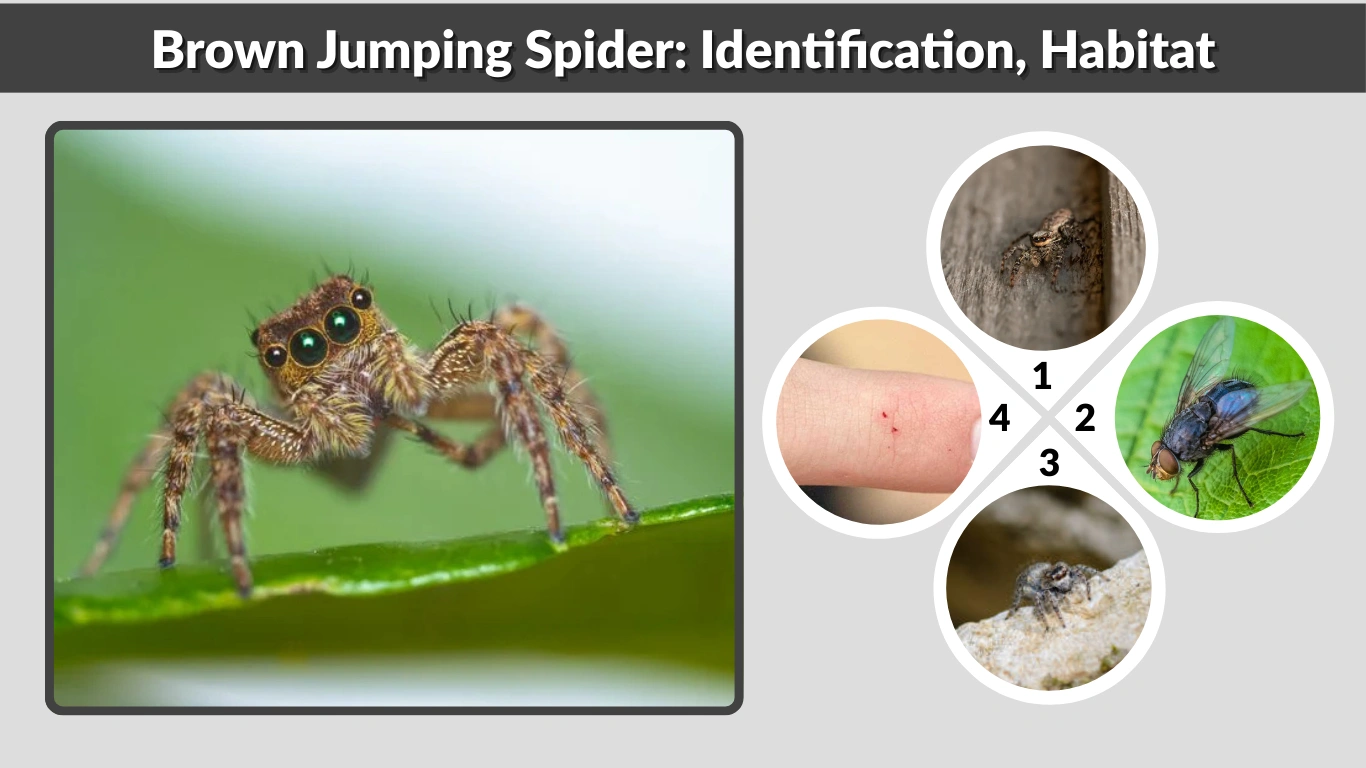
A brown jumping spider is one of the most commonly encountered members of the Salticidae family, often spotted on walls, tree bark, fences, and window frames. Their brown or tan coloring allows them to blend easily into natural and wooden surfaces, making them excellent ambush hunters. Unlike web-building spiders, brown jumping spiders actively stalk prey during the day, using sharp eyesight and powerful legs. Understanding brown jumping spiders helps with correct identification, indoor encounters, and knowing whether they are harmless visitors or beneficial predators.
What Is a Brown Jumping Spider?
The term “brown jumping spider” does not refer to a single species. Instead, it describes many jumping spiders that share brown, tan, or earth-toned coloration. These spiders belong to the Salticidae family, which contains more than six thousand species worldwide. Brown coloration is especially common because it provides natural camouflage, allowing spiders to blend into bark, soil, dried leaves, and wooden structures.
Because of their color, brown jumping spiders are often mistaken for wolf spiders, house spiders, or even recluse-type spiders. However, jumping spiders are easy to distinguish once you know what to look for. They have a compact, thick body, relatively short legs, and very large forward-facing eyes. Rather than running continuously or hiding in webs, brown jumping spiders rely on vision and jumping ability to hunt.
Brown jumping spiders are active during the daytime. This makes them more visible to people compared to nocturnal spiders. Their habit of exploring walls, window ledges, and plant leaves often brings them into close contact with humans, especially in warm seasons when insects are abundant.
Common Brown Jumping Spider Species
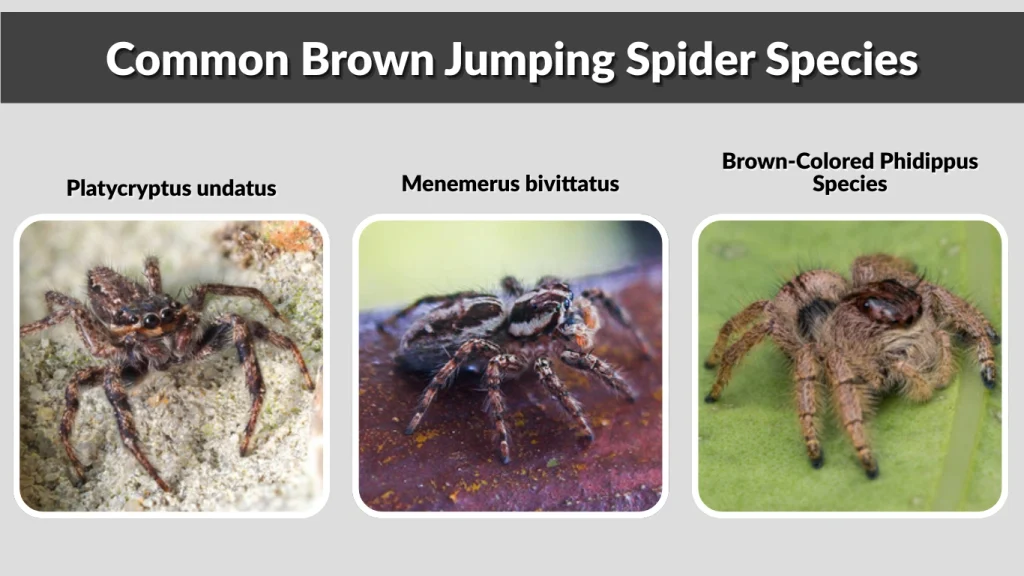
Platycryptus undatus (Tan or Brown Jumping Spider)
Platycryptus undatus is one of the most widespread brown jumping spiders in North America. It has a flattened body, mottled brown and gray coloring, and excellent camouflage that allows it to disappear against tree bark and wooden surfaces. This species is frequently found on fences, decks, and the outer walls of buildings.
Unlike brightly colored jumping spiders, Platycryptus undatus relies almost entirely on blending in rather than warning colors. It hunts flies, ants, and small beetles by stalking slowly and then leaping forward with sudden force. Because it often lives near homes, it is one of the brown jumping spiders people most commonly notice.
Menemerus bivittatus (Gray-Brown Wall Jumping Spider)
Menemerus bivittatus is a gray-brown jumping spider that has spread across many warm regions of the world. It is especially associated with human structures, often living on walls, ceilings, fences, and window frames. Its body is compact, slightly fuzzy, and marked with subtle striping.
This species is well adapted to urban life. Artificial lights attract insects at night, and during the day Menemerus bivittatus hunts around buildings where prey is plentiful. Although small, it is very alert and will often turn to face people or moving objects, a typical behavior of jumping spiders.
Brown-Colored Phidippus Species
The genus Phidippus includes many of the largest and most well-known jumping spiders. While some species are brightly colored, others appear mostly brown, especially females or juvenile individuals. These brown forms are often mistaken for completely different spiders.
Brown Phidippus spiders usually have thicker bodies than Platycryptus or Menemerus species. They are powerful jumpers and aggressive hunters of insects. Even when colored brown, they retain the fuzzy appearance and large eyes typical of jumping spiders.
Other Small Brown Salticidae Species
Beyond the well-known examples, there are many small brown jumping spiders found in forests, grasslands, and gardens. Some measure only a few millimeters long and spend their lives hunting tiny insects on leaves and stones. Although rarely identified to species by casual observers, these small brown Salticidae make up a large portion of the jumping spider diversity people encounter outdoors.
Identification Features of Brown Jumping Spiders
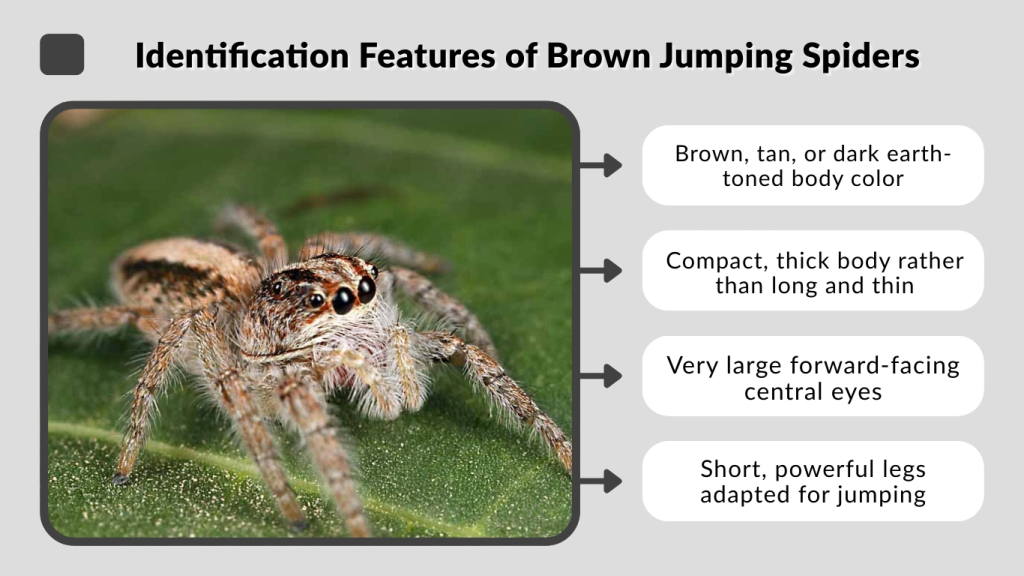
Brown jumping spiders share several features that help separate them from other small brown spiders.
- Brown, tan, or dark earth-toned body color
- Compact, thick body rather than long and thin
- Very large forward-facing central eyes
- Short, powerful legs adapted for jumping
- Hairy or fuzzy body texture
- Alert movements with frequent pauses and turns
These traits are especially useful when distinguishing brown jumping spiders from wolf spiders or house spiders, which usually have smaller front eyes and run continuously instead of jumping.
Size and Physical Appearance
Most brown jumping spiders are small to medium-sized. Depending on species and sex, adults usually range from about 4 to 15 millimeters in body length. Females are often larger and heavier-bodied than males, while males may show brighter markings or more noticeable facial features.
Their bodies are typically squat and muscular. The front of the body is large because it houses powerful jumping muscles and their advanced visual system. The abdomen is often rounded or slightly flattened, sometimes showing faint patterns or bands that enhance camouflage.
Habitat and Geographic Distribution
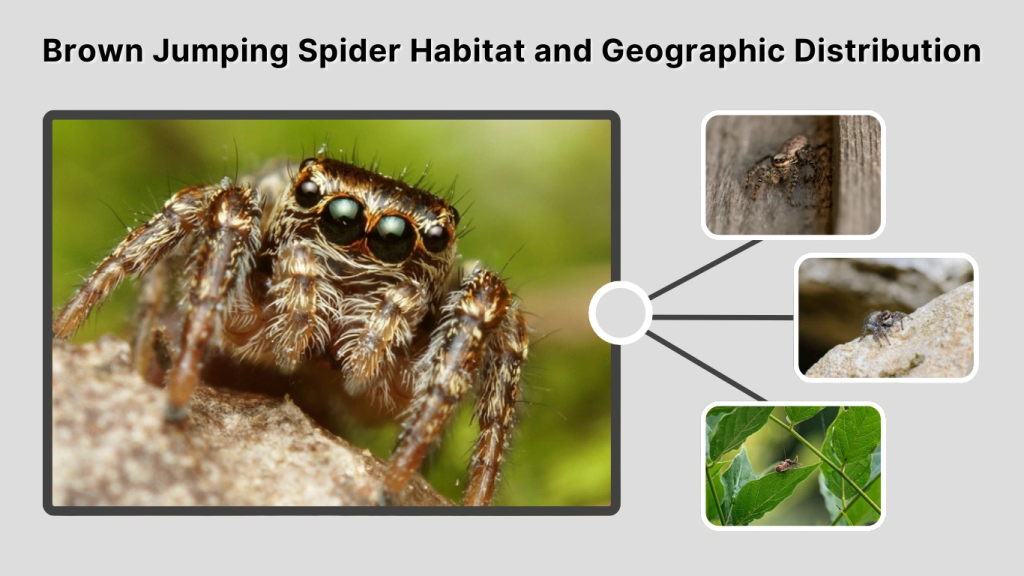
Brown jumping spiders are extremely adaptable. Outdoors, they are commonly found on tree trunks, wooden fences, rocks, garden plants, and leaf litter. Their brown coloring allows them to hide easily in these environments while hunting insects.
They are also frequent visitors to homes and buildings. Window frames, walls, ceilings, and doorways provide warm surfaces and attract insect prey. Brown jumping spiders do not build permanent webs indoors and do not form infestations. Instead, they wander individually while hunting.
These spiders occur worldwide, from tropical regions to temperate zones. Their success is linked to their flexible hunting style and ability to thrive wherever small insects are available.
Behavior and Daily Activity
Brown jumping spiders are active daytime hunters. Instead of building webs to catch prey, they rely on their excellent vision to locate insects. They often pause, turn their bodies, and shift their heads as if watching their surroundings. This behavior reflects their advanced eyesight, which allows them to track movement and judge distances accurately.
When hunting, a brown jumping spider slowly stalks its target, moving in short, controlled steps. Once close enough, it suddenly leaps forward with impressive precision. A thin silk thread is usually attached as a safety line, preventing the spider from falling if it misses its target. This combination of vision, patience, and jumping ability makes brown jumping spiders very effective predators.
Diet and Hunting Style
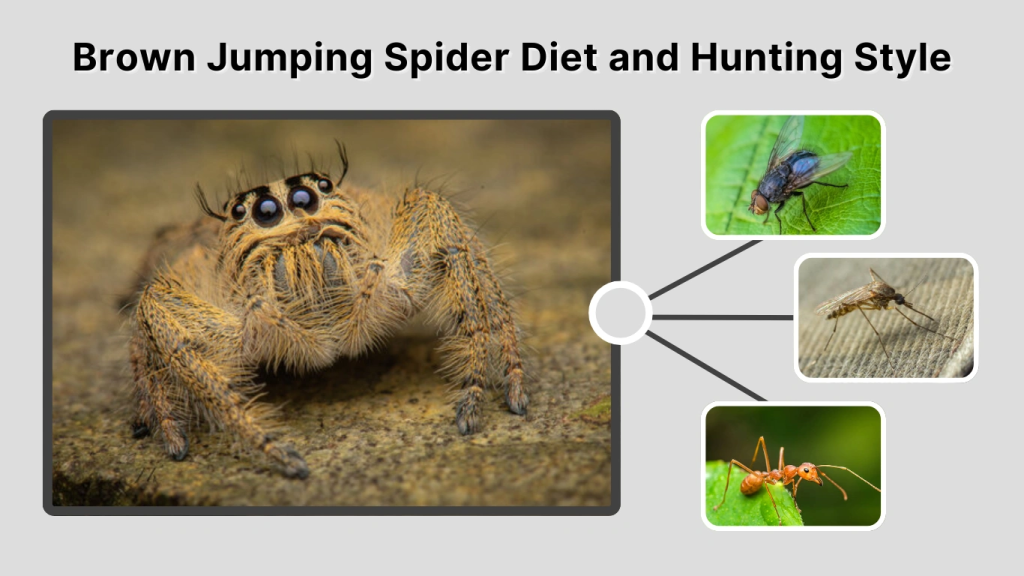
Brown jumping spiders feed on a wide variety of small arthropods. Their diet changes depending on location, season, and prey availability.
- Flies, mosquitoes, and gnats
- Moths and small butterflies
- Ants and tiny beetles
- Aphids and leaf-dwelling insects
- Other small spiders
- Occasionally newly hatched insects
Unlike web-building spiders, brown jumping spiders actively select prey. Their ability to evaluate size and movement helps them avoid dangerous targets while focusing on insects they can overpower.
Lifecycle and Growth Stages
Egg Sacs and Spiderlings
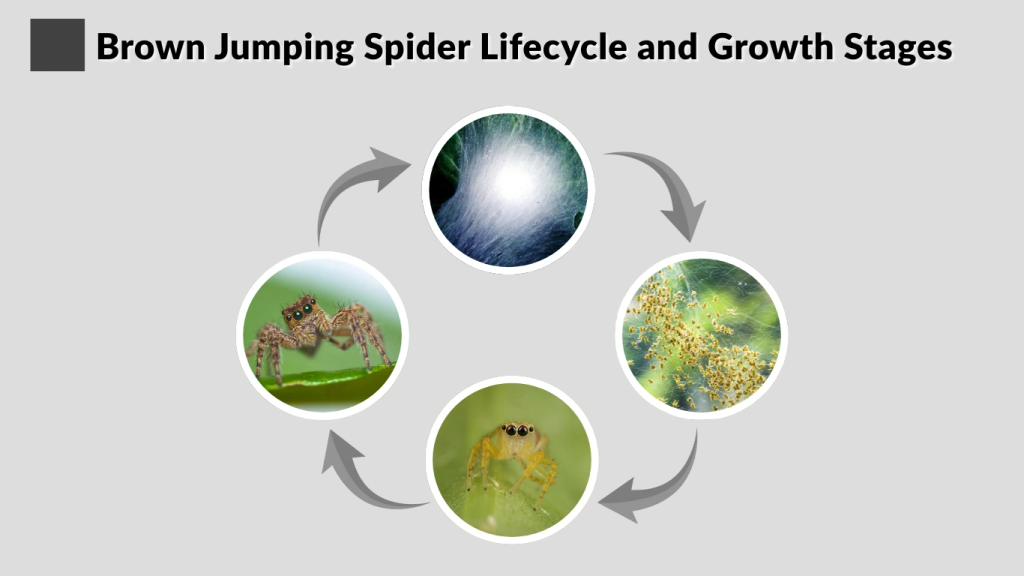
Female brown jumping spiders lay eggs in small silk sacs hidden under bark, leaves, or in cracks in walls and rocks. These egg sacs protect the developing spiderlings from dehydration and predators. After hatching, spiderlings remain close to the sac for a short time before dispersing to begin hunting on their own.
Molting and Development
As spiderlings grow, they shed their exoskeletons several times. Each molt allows the spider to increase in size and strengthen its body. During early molts, young jumping spiders may appear lighter in color. As they mature, their brown tones often deepen, improving camouflage.
Growth speed depends on temperature and food supply. In warm environments with abundant insects, brown jumping spiders may reach maturity within a few months.
Adult Stage and Lifespan
Adult brown jumping spiders focus on hunting and reproduction. Males perform visual courtship displays, using body movements and leg gestures to communicate with females. Most brown jumping spiders live between one and two years, although some individuals may survive longer under favorable conditions.
Brown Jumping Spider Indoors: What It Means
Seeing a brown jumping spider indoors usually means insects are present. These spiders often wander inside while hunting or following prey attracted to lights and warmth. They do not build webs in living spaces and do not reproduce in large numbers indoors.
A brown jumping spider inside a home is not a sign of infestation. It is typically a lone hunter that entered by accident. Many people choose to gently move them outdoors, although they are harmless and can help reduce indoor insect populations.
Are Brown Jumping Spiders Dangerous?
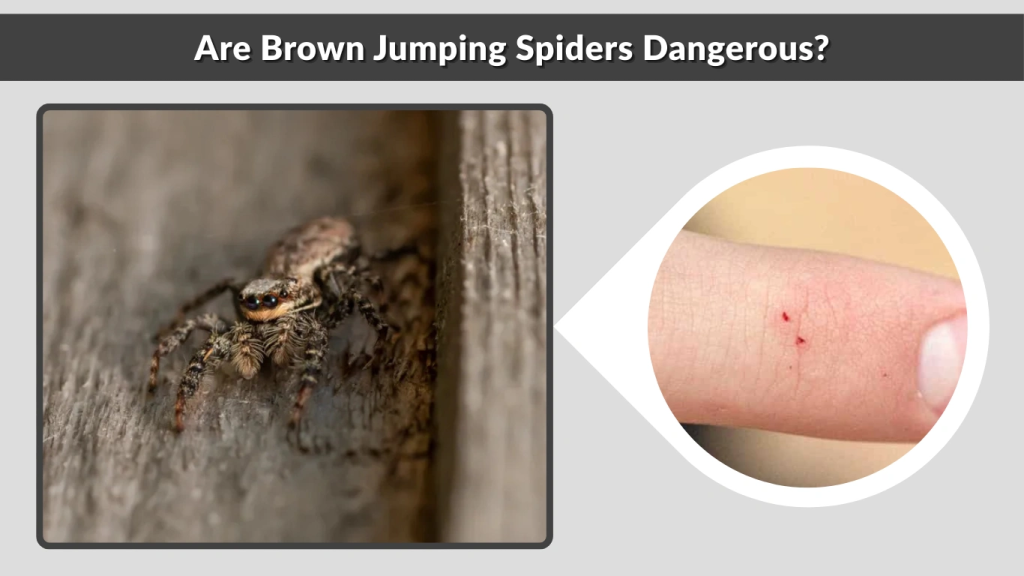
Brown jumping spiders are not dangerous to humans. Their venom is mild and intended for small insects. Bites are rare and usually occur only if a spider is trapped against skin.
When bites do happen, symptoms are generally limited to minor redness, slight swelling, and brief irritation. Serious reactions are extremely uncommon. Compared to many other spiders, brown jumping spiders are considered among the least medically significant.
Differences Between Brown Jumping Spiders and Other Brown Spiders
Although they are often confused with other spiders, brown jumping spiders have several unique traits.
- Much larger front-facing eyes
- Shorter, thicker legs than wolf spiders
- Jumping rather than continuous running
- Do not build capture webs
- More visually alert and responsive behavior
- Frequently turn to face movement
These features help distinguish brown jumping spiders from house spiders, wolf spiders, and recluse-type spiders.
Ecological Importance of Brown Jumping Spiders
Brown jumping spiders play a valuable role in ecosystems. By feeding on flies, mosquitoes, and plant pests, they help control insect populations. They also serve as prey for birds, reptiles, and other predators, contributing to food web balance.
In gardens and natural areas, brown jumping spiders support plant health by reducing herbivorous insects. Their presence is often a sign of a healthy, functioning environment.
FAQs
What is a brown jumping spider?
A brown jumping spider refers to several Salticidae species with brown or tan coloration. These spiders use camouflage to blend into bark, soil, and wooden surfaces while actively hunting insects during the day.
Are brown jumping spiders dangerous to humans?
Brown jumping spiders are not dangerous. Their venom is mild, and bites are rare. When they occur, symptoms are usually minor, such as slight redness or temporary irritation.
Why do brown jumping spiders come inside houses?
They often enter homes while hunting insects or following prey attracted to lights and warmth. Indoor sightings are usually accidental and do not indicate infestation.
How big do brown jumping spiders get?
Most brown jumping spiders range from about 4 to 15 millimeters in body length, depending on species and sex. Females are typically larger than males.
What do brown jumping spiders eat?
They mainly feed on flies, mosquitoes, moths, ants, aphids, and other small insects, making them beneficial natural pest controllers.