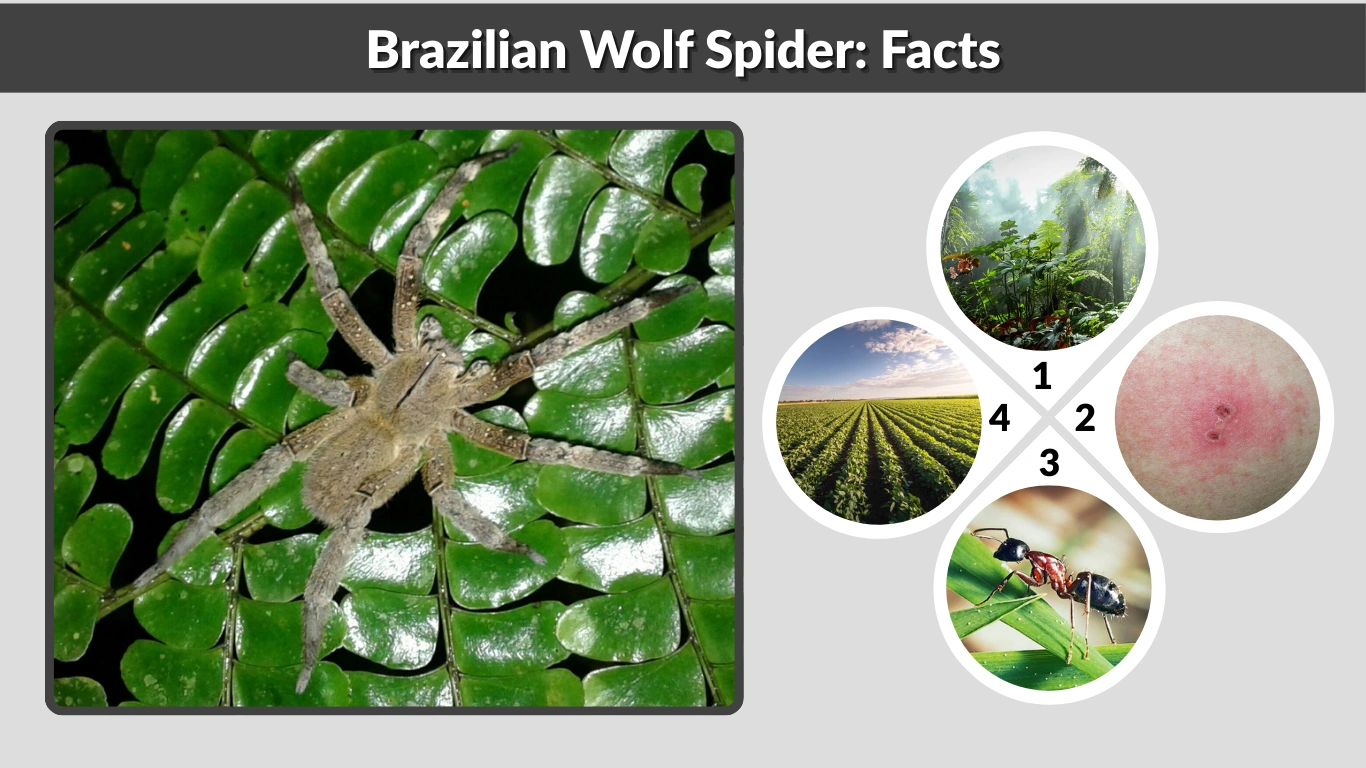
The Brazilian wolf spider is one of the most misunderstood spiders in South America. Often confused with the highly venomous Brazilian wandering spider, this fast-moving ground hunter is far less dangerous than many people assume. Known for its speed, sharp eyesight, and unique maternal behavior, the Brazilian wolf spider plays an important ecological role. In this guide, you’ll learn how to identify it, where it lives, how it hunts, and whether its bite poses any real threat to humans.
What Is the Brazilian Wolf Spider?
The term “Brazilian wolf spider” refers to several species within the Lycosidae family that live throughout Brazil. Wolf spiders are found worldwide, but Brazil’s warm climate and diverse ecosystems provide ideal conditions for many native species.
Scientific Classification
- Family: Lycosidae
- Common Name: Wolf spider
- Order: Araneae
Unlike web-building spiders, wolf spiders are active hunters. They do not rely on webs to catch prey. Instead, they roam the ground and chase down insects using speed and precision.
It is important not to confuse the Brazilian wolf spider with the Brazilian wandering spider (Phoneutria). While both are ground-dwelling and fast-moving, wandering spiders are significantly more venomous and medically important.
Physical Appearance
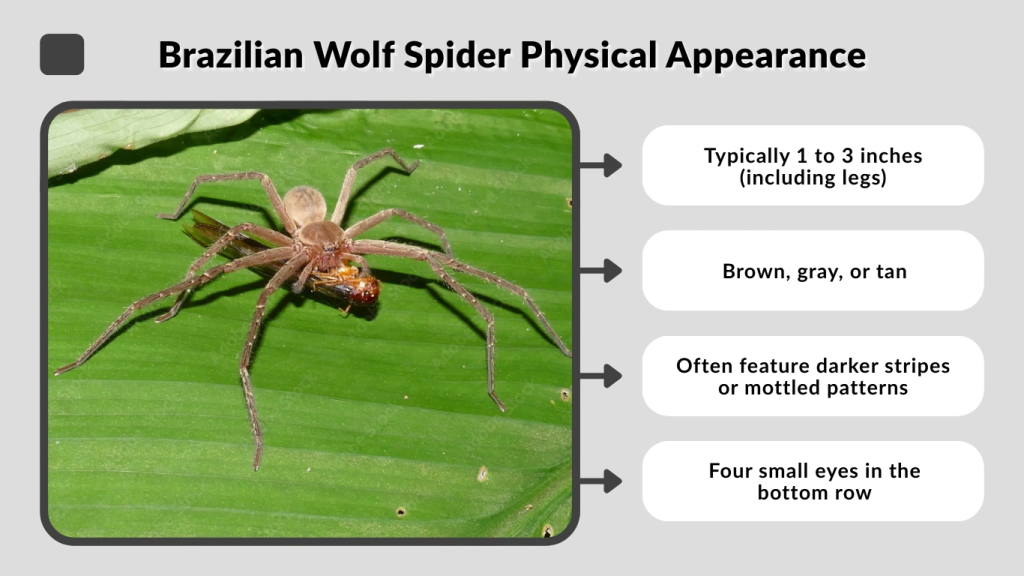
Brazilian wolf spiders are medium to large in size compared to many household spiders.
- Body length: Typically 1 to 3 inches (including legs)
- Color: Brown, gray, or tan
- Markings: Often feature darker stripes or mottled patterns
One of the easiest ways to identify a wolf spider is by its eye arrangement. They have eight eyes arranged in three distinct rows:
- Four small eyes in the bottom row
- Two large forward-facing eyes in the middle
- Two medium-sized eyes on top
This arrangement gives them excellent vision, especially at night.
Females are generally larger than males. During breeding season, females can often be seen carrying an egg sac attached to the rear of their abdomen — a distinctive wolf spider trait.
Habitat and Distribution
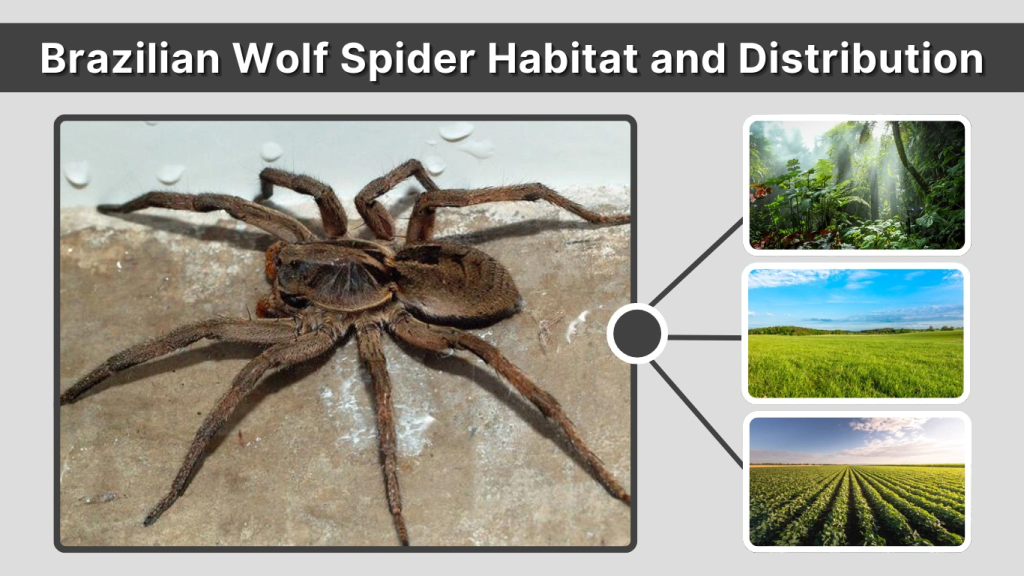
Wolf spiders are widely distributed across Brazil and thrive in a variety of environments.
Geographic Range
They are found throughout:
- Tropical rainforests
- Grasslands
- Agricultural fields
- Urban and suburban areas
Because Brazil has diverse ecosystems, different wolf spider species may prefer different habitats. However, most share similar ground-dwelling behaviors.
Natural Habitat
Brazilian wolf spiders prefer areas where they can hunt efficiently. Common habitats include:
- Leaf litter on forest floors
- Under rocks and logs
- Soil burrows
- Tall grass
- Garden beds
Some species dig shallow burrows lined with silk, which serve as a retreat during the day.
Adaptation to Human Environments
It is not uncommon to find wolf spiders in homes, garages, or gardens. However, they do not infest buildings in large numbers. If they enter homes, it is usually by accident while hunting insects.
Their presence often indicates a healthy insect population nearby, as they follow food sources rather than seeking shelter indoors.
Behavior and Hunting Style
Wolf spiders are active predators. Unlike web-building spiders that wait for prey to get trapped, wolf spiders stalk and ambush their targets.
No-Web Hunting Strategy
They rely on:
- Strong legs for speed
- Acute vision
- Vibrational sensitivity
Once they detect prey, they either slowly approach before lunging or chase it down in short bursts of speed. Their movements are quick and precise.
Nocturnal Activity
Most Brazilian wolf spiders are primarily nocturnal. They hunt at night when insect activity is higher and temperatures are cooler. During the day, they remain hidden in burrows, under debris, or within vegetation.
Their large central eyes help them see better in low-light conditions, making them highly effective nighttime hunters.
Diet and Role in the Ecosystem
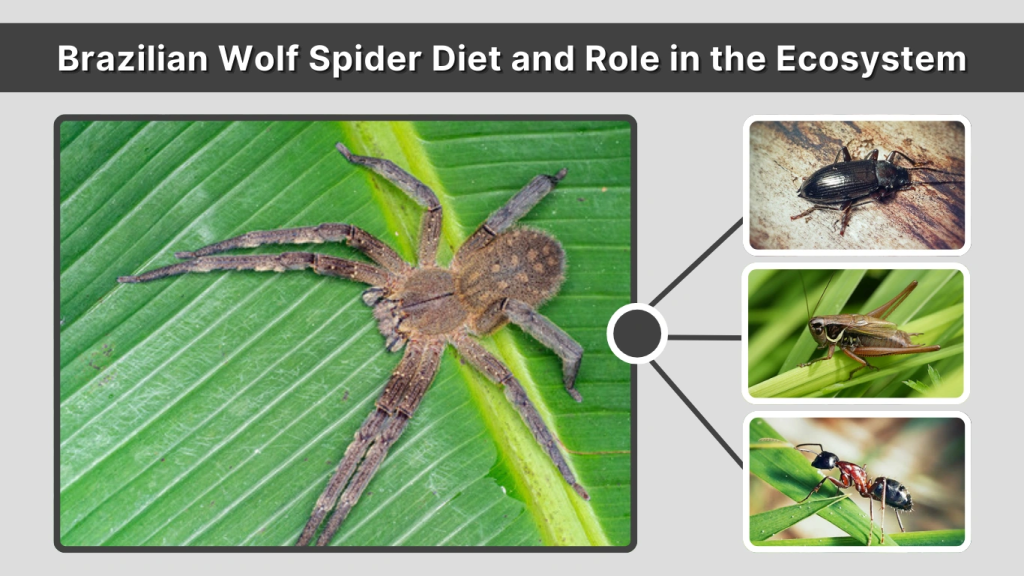
Brazilian wolf spiders are beneficial predators that help control insect populations.
Primary Diet
They commonly feed on:
- Beetles
- Crickets
- Ants
- Grasshoppers
- Other small arthropods
Larger individuals may even prey on smaller spiders.
Natural Pest Control
Because they consume agricultural pests and nuisance insects, wolf spiders play an important ecological role. In gardens and farms, they act as natural pest control agents, reducing the need for chemical pesticides.
Rather than being a threat, they are often a sign of a balanced ecosystem.
Reproduction and Life Cycle
Wolf spiders have one of the most fascinating reproductive behaviors among spiders.
Mating Behavior
Male wolf spiders perform courtship displays that may include leg waving, body vibrations, and specific movement patterns. These signals help prevent the female from mistaking the male for prey.
After mating, the female produces an egg sac containing dozens — sometimes over a hundred — eggs.
Egg Sac Carrying
Unlike many spider species that leave their egg sacs attached to webs, female wolf spiders carry the egg sac attached to their spinnerets (the silk-producing organs at the rear of the abdomen).
She transports it everywhere she goes, protecting it from predators and environmental threats.
Spiderlings on the Mother’s Back
Once the eggs hatch, the spiderlings climb onto their mother’s back. They remain there for several days to a couple of weeks until they are ready to disperse.
This level of maternal care is rare among spiders and is one of the defining characteristics of wolf spiders.
Lifespan
Most Brazilian wolf spiders live about one to two years, depending on species, climate, and predation risks. Females often live slightly longer than males.
Is the Brazilian Wolf Spider Dangerous?
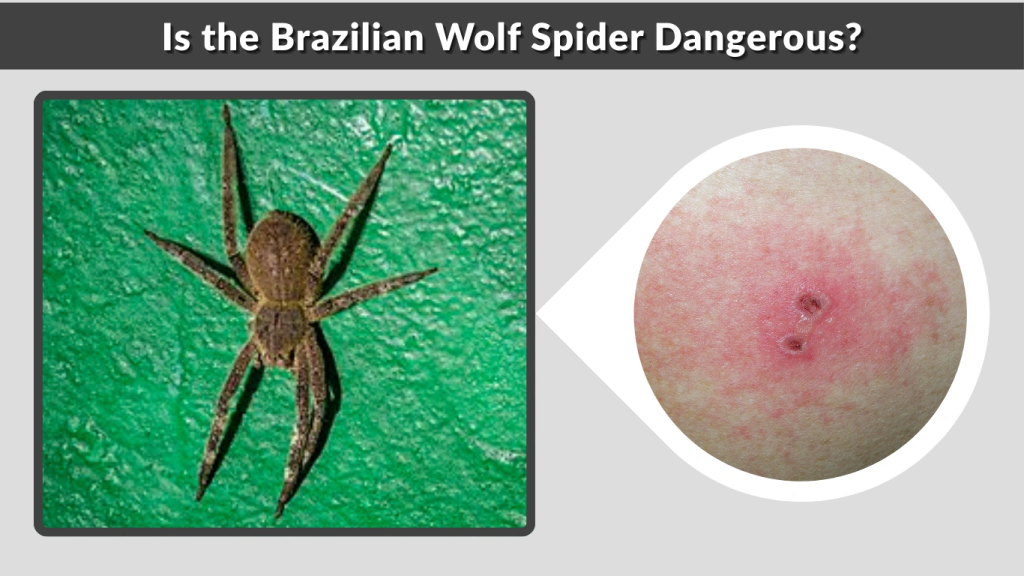
One of the most common concerns about the Brazilian wolf spider is whether it poses a serious threat to humans.
Venom Potency
Like almost all spiders, wolf spiders have venom used to immobilize prey. However, their venom is not considered medically significant for healthy adults.
They are not aggressive and typically bite only when:
- Trapped against skin
- Stepped on
- Provoked or handled
Symptoms of a Bite
A wolf spider bite may cause:
- Mild to moderate pain
- Redness
- Swelling
- Itching
In most cases, symptoms resolve within a few days without complications.
When to Seek Medical Attention
Medical care should be considered if:
- Severe pain develops
- Symptoms worsen over time
- Signs of infection appear
- The person has an allergic reaction
Children, elderly individuals, or people with compromised immune systems should be monitored more carefully.
First Aid for a Bite
If bitten:
- Wash the area with soap and water.
- Apply a cold compress to reduce swelling.
- Use over-the-counter pain relief if needed.
- Avoid scratching the area.
Serious complications are rare.
Brazilian Wolf Spider vs Brazilian Wandering Spider
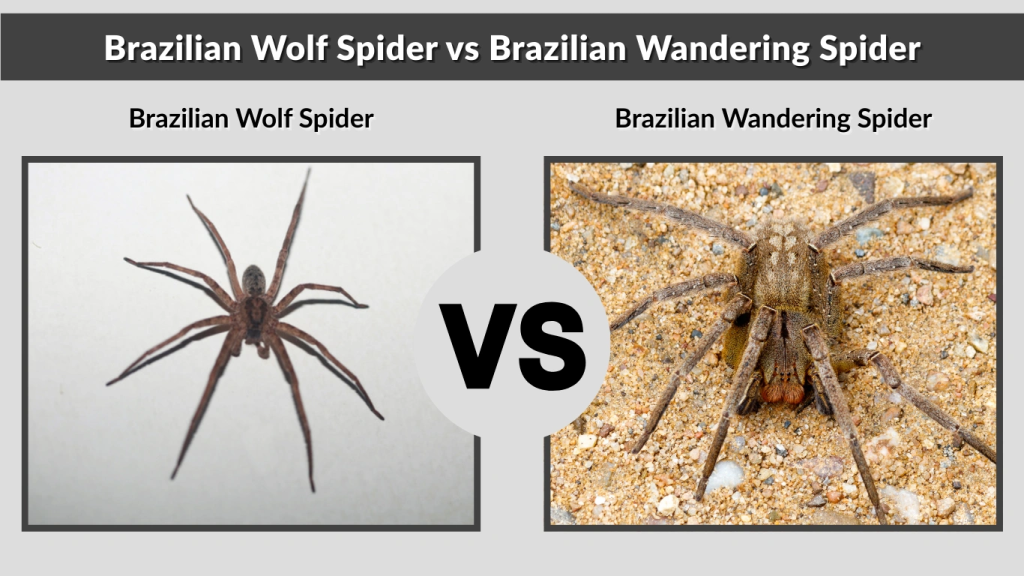
Because both spiders live in Brazil and move quickly on the ground, they are frequently confused.
Key Identification Differences
Wolf Spider:
- Stockier body
- Distinct three-row eye pattern
- Less defensive posture
Brazilian Wandering Spider (Phoneutria):
- Longer legs
- More aggressive defensive display (raises front legs)
- More potent venom
Venom Differences
The Brazilian wandering spider is considered medically significant and can cause severe symptoms. The wolf spider’s venom, in contrast, is typically mild.
Why Misidentification Happens
Large size, speed, and brown coloration often lead people to assume any big spider in Brazil is dangerous. Careful observation of eye arrangement is the most reliable way to distinguish them.
Common Myths and Misconceptions
“All Large Brazilian Spiders Are Deadly”
Brazil is home to many spider species, but only a small number are medically significant.
“Wolf Spiders Aggressively Attack Humans”
Wolf spiders do not hunt people. When they run toward someone, they are usually fleeing or seeking shelter.
“They Infest Homes”
They do not form colonies or infest buildings. If multiple spiders are seen, it often indicates an abundance of insects.
How to Prevent Encounters
Although wolf spiders are beneficial, many people prefer to avoid indoor encounters.
Home Prevention Tips
- Seal cracks and gaps around doors and windows
- Reduce clutter in garages and storage areas
- Keep outdoor lights away from entrances (lights attract insects, which attract spiders)
- Maintain yard vegetation
Safe Removal Methods
If one enters your home:
- Use a cup and stiff paper to capture and release it outside
- Avoid handling it directly
- Do not crush it unnecessarily
FAQs
Are Brazilian wolf spiders poisonous?
Brazilian wolf spiders have venom used to subdue prey, but they are not considered dangerous to humans. Their bites typically cause mild pain, redness, and swelling. Serious reactions are rare, and most cases resolve without medical treatment.
How big do Brazilian wolf spiders get?
Most species range from about 1 to 3 inches in total leg span. Females are usually larger than males. Their size can make them appear intimidating, especially when seen moving quickly across the ground.
Can a Brazilian wolf spider kill you?
No. Wolf spider venom is not potent enough to cause life-threatening effects in healthy adults. While bites may be uncomfortable, fatalities from wolf spider bites are virtually unheard of.
Do Brazilian wolf spiders jump?
Wolf spiders do not jump like jumping spiders, but they can lunge short distances when attacking prey. Their speed often gives the impression that they are jumping.
How do I identify a wolf spider in Brazil?
The most reliable feature is the eye arrangement: four small eyes on the bottom row, two large central eyes, and two medium eyes on top. They are typically brown or gray with striped or mottled patterns.