
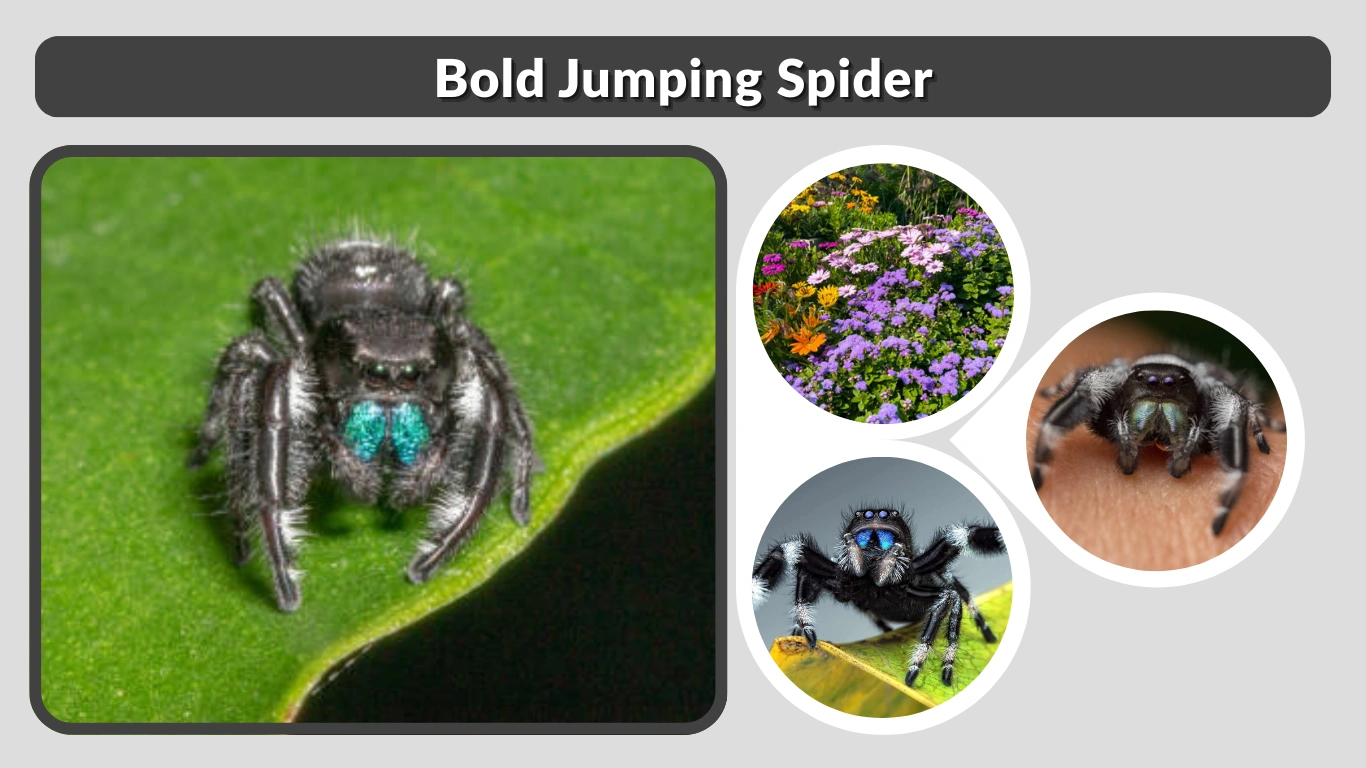
The bold jumping spider is one of the most recognizable and fascinating spiders in North America. Known for its compact black body, bright white spots, and metallic green mouthparts, this spider is often seen hunting on walls, fences, windows, and garden plants during the day. Unlike web-building spiders, bold jumping spiders actively stalk and pounce on their prey, using excellent vision and powerful legs. People frequently search about bold jumping spider bites, whether they are poisonous, how big they get, and how to care for them as pets. This guide explores their identification, behavior, habitat, and basic biology to help you understand them clearly.
What Is a Bold Jumping Spider?
The bold jumping spider (Phidippus audax) is a species of jumping spider in the family Salticidae. It is sometimes called the daring jumping spider due to its confident movements and fearless hunting style. It is well known for its strong eyesight, curious behavior, and frequent interactions with humans.
Unlike most spiders, bold jumping spiders rely more on vision than vibration. Their large front-facing eyes allow them to track movement, judge distance, and even appear to “look back” at people. Instead of building prey-catching webs, they use silk mainly to create small resting shelters and safety lines while jumping.
Bold Jumping Spider Identification
Physical Appearance
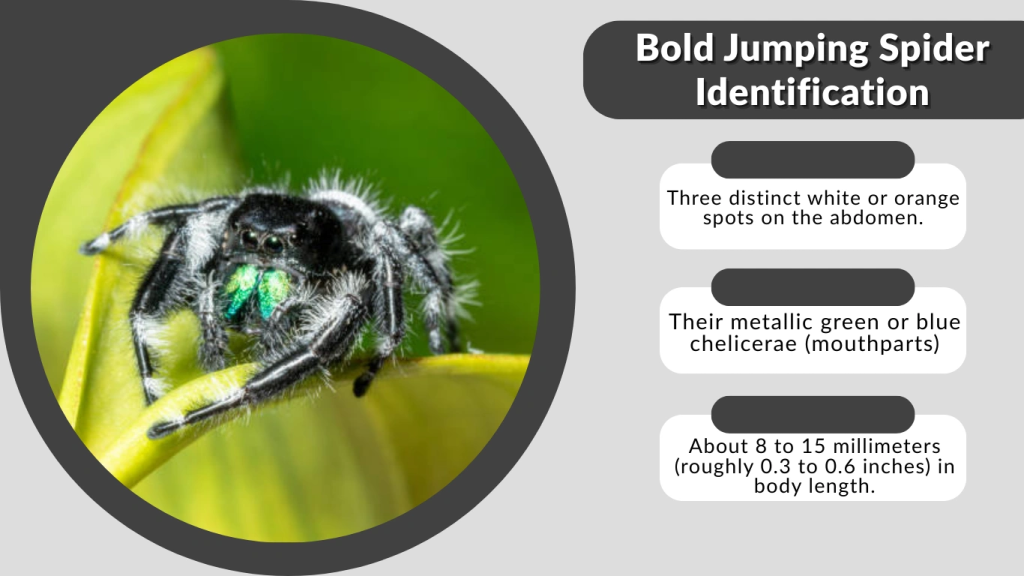
Bold jumping spiders usually have a black body with three distinct white or orange spots on the abdomen. Juveniles often show orange markings that fade to white as they mature. One of their most striking features is their metallic green or blue chelicerae (mouthparts), which shine in sunlight.
They have a compact, muscular build, short legs compared to long-legged spiders, and a fuzzy texture that gives them a soft appearance. Their large forward-facing eyes make their face appear expressive and are key to identification.
Bold Jumping Spider Size
Adult bold jumping spiders are small to medium in size. Most measure about 8 to 15 millimeters (roughly 0.3 to 0.6 inches) in body length. Females are generally larger and heavier than males, especially when carrying eggs. Spiderlings and juveniles are tiny, often no larger than a grain of rice, but already show the active jumping behavior of adults.
Compared to many house spiders, bold jumping spiders look stockier rather than long and thin.
Bold Jumping Spider Web
Bold jumping spiders do not build classic orb webs. Instead, they produce small silk shelters called retreats, which are used for resting, molting, and laying eggs. These silken sacs are often found under leaves, in wall corners, behind shutters, or inside crevices.
They also attach a thin silk dragline before jumping. This line acts as a safety tether, allowing them to climb back up if they miss a jump.
Male vs Female Bold Jumping Spider
Male Bold Jumping Spider
Male bold jumping spiders are usually smaller and slimmer than females. They often have more noticeable facial coloration and longer front legs, which are used during courtship displays. Males perform elaborate dances, waving their legs and vibrating their bodies to attract females and avoid being mistaken for prey.
Female Bold Jumping Spider
Female bold jumping spiders have larger abdomens and thicker bodies. They are responsible for laying eggs and guarding egg sacs. Females may remain inside their silk retreats for extended periods while protecting developing spiderlings. Because of this, females are more often found in hidden, protected locations.
How to Tell Male vs Female
The easiest way to distinguish males from females is by size and body shape. Females are bulkier, especially in the abdomen. Males often have enlarged pedipalps that look like small boxing gloves near the mouth. Behavior also differs: males roam more actively, while females tend to stay closer to secure retreats.
Bold Jumping Spider Habitat and Range
Where Bold Jumping Spiders Live
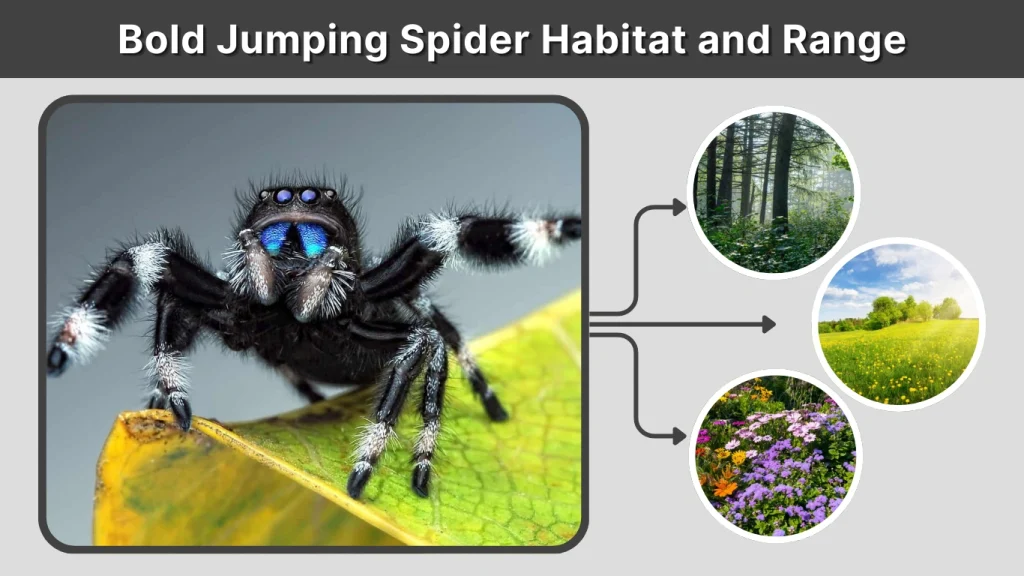
Bold jumping spiders are highly adaptable. They live in forests, grasslands, gardens, farms, and urban environments. They are commonly found on tree trunks, fences, walls, outdoor furniture, and window frames. Indoors, they may wander near sunny windows where insects gather.
They prefer well-lit areas because their hunting depends on strong vision.
Bold Jumping Spider Range
Bold jumping spiders are widespread across North America. Their range covers much of the United States, southern Canada, and parts of northern Mexico. They thrive in both rural and urban settings as long as insects are available.
State Sightings
They are frequently reported in states such as California, Texas, and Oregon, where warm seasons and abundant insect life support large populations. However, they are also common throughout the Midwest and eastern United States.
Bold Jumping Spider Behavior and Personality
Bold jumping spiders are active daytime hunters. They stalk prey slowly, stop to observe, and then leap with precision. They can jump many times their body length and often turn to face objects that move near them.
Many people describe them as “friendly” because they rarely run away immediately and sometimes appear curious. While they are wild animals, they are generally non-aggressive and prefer to retreat rather than bite. Their alert movements and head tilts give them a reputation as one of the most intelligent-looking spiders.
What Do Bold Jumping Spiders Eat?
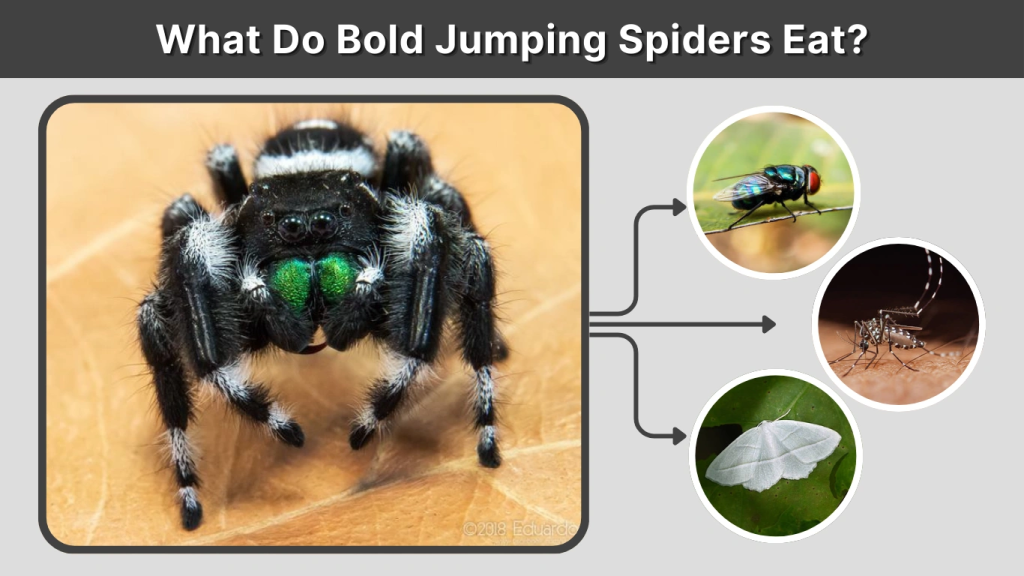
Bold jumping spiders are carnivorous predators.
Bold Jumping Spider Diet in the Wild
In nature, they feed on flies, mosquitoes, moths, small beetles, ants, and other spiders. They actively hunt instead of waiting in webs. Their excellent eyesight allows them to target moving insects with high accuracy.
They often approach prey slowly, pause, and then leap forward to grab it with their front legs before delivering a bite.
Bold Jumping Spider Food as Pets
In captivity, bold jumping spiders are commonly fed fruit flies, houseflies, small crickets, and tiny roach nymphs. Prey should always be smaller than the spider’s body to prevent injury. Most bold jumping spiders eat every two to three days, depending on age and temperature. Juveniles eat more frequently, while adults may feed less often.
They get most of their moisture from prey, but light misting of the enclosure or offering a tiny water droplet on a cotton swab helps prevent dehydration.
How Often They Eat
Young spiders may eat daily or every other day, while adults typically eat two to three times per week. Overfeeding can cause lethargy, while underfeeding leads to shrunken abdomens and reduced activity.
Bold Jumping Spider Bite and Venom
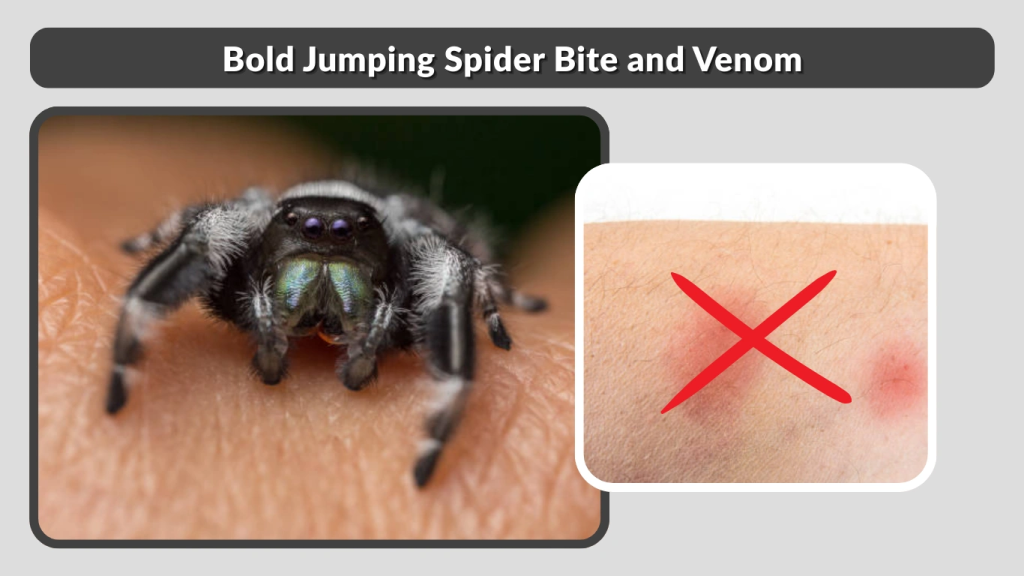
Do Bold Jumping Spiders Bite?
Bold jumping spiders rarely bite humans. Bites usually occur only if the spider is trapped against skin, squeezed, or handled roughly. They are more likely to jump away than defend themselves.
Are Bold Jumping Spiders Poisonous?
Bold jumping spiders do have venom, which they use to subdue prey. However, their venom is not medically significant to humans. In most cases, a bite causes mild redness, slight swelling, or a sensation similar to a small pinprick or minor bee sting.
Are Bold Jumping Spiders Dangerous to Humans?
No. Bold jumping spiders are not considered dangerous. Severe reactions are extremely rare and usually linked to individual allergies rather than venom toxicity. Basic cleaning of a bite area is typically sufficient.
Bold Jumping Spider Life Cycle
Female bold jumping spiders lay eggs inside a silk sac hidden in crevices, under leaves, or behind structures. A single sac can contain dozens of eggs. The female often guards the sac until spiderlings emerge.
Baby Bold Jumping Spider
Baby bold jumping spiders, called spiderlings, are tiny and pale at first. They remain in the silk retreat for a short time before dispersing. They already show jumping behavior and begin hunting very small insects almost immediately.
Molting and Growth
Bold jumping spiders molt several times as they grow. During molting, they hide and do not eat. After each molt, their coloration becomes stronger and body size increases.
Bold Jumping Spider Lifespan
Most bold jumping spiders live around one year in the wild. Some individuals in captivity may live slightly longer under stable conditions.
Bold Jumping Spider as a Pet
Bold Jumping Spider Care Guide
Bold jumping spiders are popular beginner pet spiders because they are active, visually engaging, and relatively easy to care for. They should be housed individually, as they are cannibalistic. Gentle observation is better than frequent handling.
Bold Jumping Spider Enclosure
A small, well-ventilated enclosure is ideal. Vertical space is important because they like to climb. Provide twigs, cork bark, fake plants, and textured surfaces. The enclosure should have good airflow, moderate humidity, and access to light but not direct sun.
Bold Jumping Spider Diet in Captivity
Feed appropriately sized live insects. Remove uneaten prey after 24 hours. Light misting every few days maintains hydration without soaking the habitat.
Bold Jumping Spider vs Regal Jumping Spider
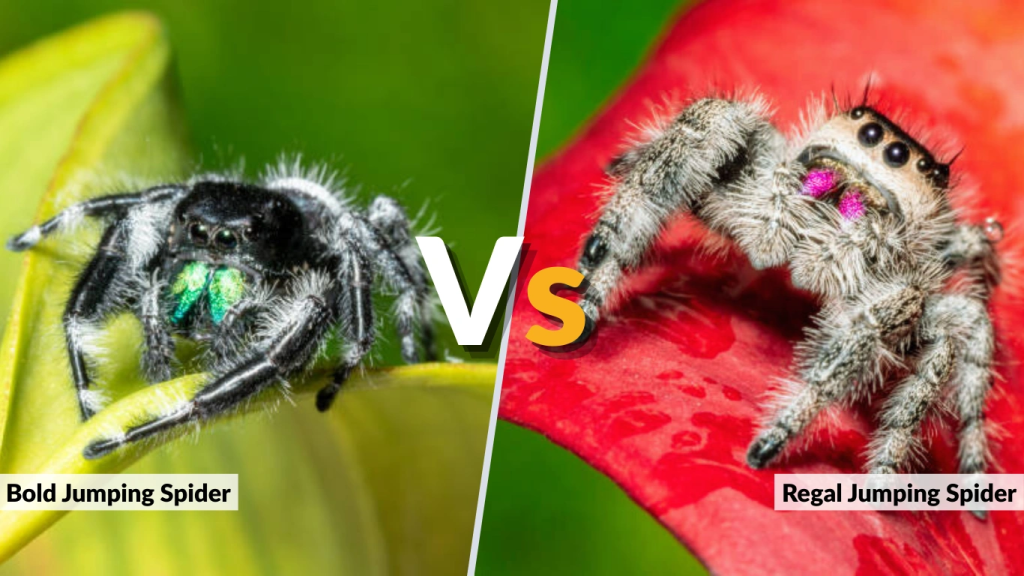
Bold and regal jumping spiders are often confused.
| Feature | Bold Jumping Spider | Regal Jumping Spider |
| Scientific name | Phidippus audax | Phidippus regius |
| Main color | Black with white spots | Black with white or orange markings |
| Chelicerae | Metallic green/blue | Often bright green, blue, or purple |
| Size | Slightly smaller | Often slightly larger |
| Distribution | Widespread across North America | Mostly southeastern United States |
Bold Jumping Spider Facts
- They can jump many times their body length
- They rely on excellent eyesight rather than webs
- Males perform courtship dances
- They can rotate their head region to track movement
- They often tilt their bodies as if “watching” observers
FAQs
Are bold jumping spiders poisonous?
Bold jumping spiders do have venom, but it is very mild and used only to subdue insect prey. Their venom is not medically significant to humans, and bites are rare, usually causing only slight redness or temporary irritation.
Are bold jumping spiders dangerous?
Bold jumping spiders are not considered dangerous. They are shy, non-aggressive, and prefer to escape rather than defend themselves. Even when bites occur, reactions are typically mild and comparable to a small pinprick or minor insect sting.
Do bold jumping spiders bite humans?
Bold jumping spiders rarely bite humans. Most bites only happen when the spider is accidentally trapped, pressed against skin, or handled roughly. Under normal circumstances, they avoid people and quickly move away instead of attacking.
How big do bold jumping spiders get?
Adult bold jumping spiders usually measure between 8 and 15 millimeters in body length. Females are generally larger and heavier than males, especially when mature or carrying eggs, while juveniles are much smaller and lighter.
Can you keep a bold jumping spider as a pet?
Yes, bold jumping spiders can be kept as pets and are popular due to their active behavior and excellent vision. They need a small, ventilated enclosure, live insect food, light humidity, and gentle, minimal handling for best results.