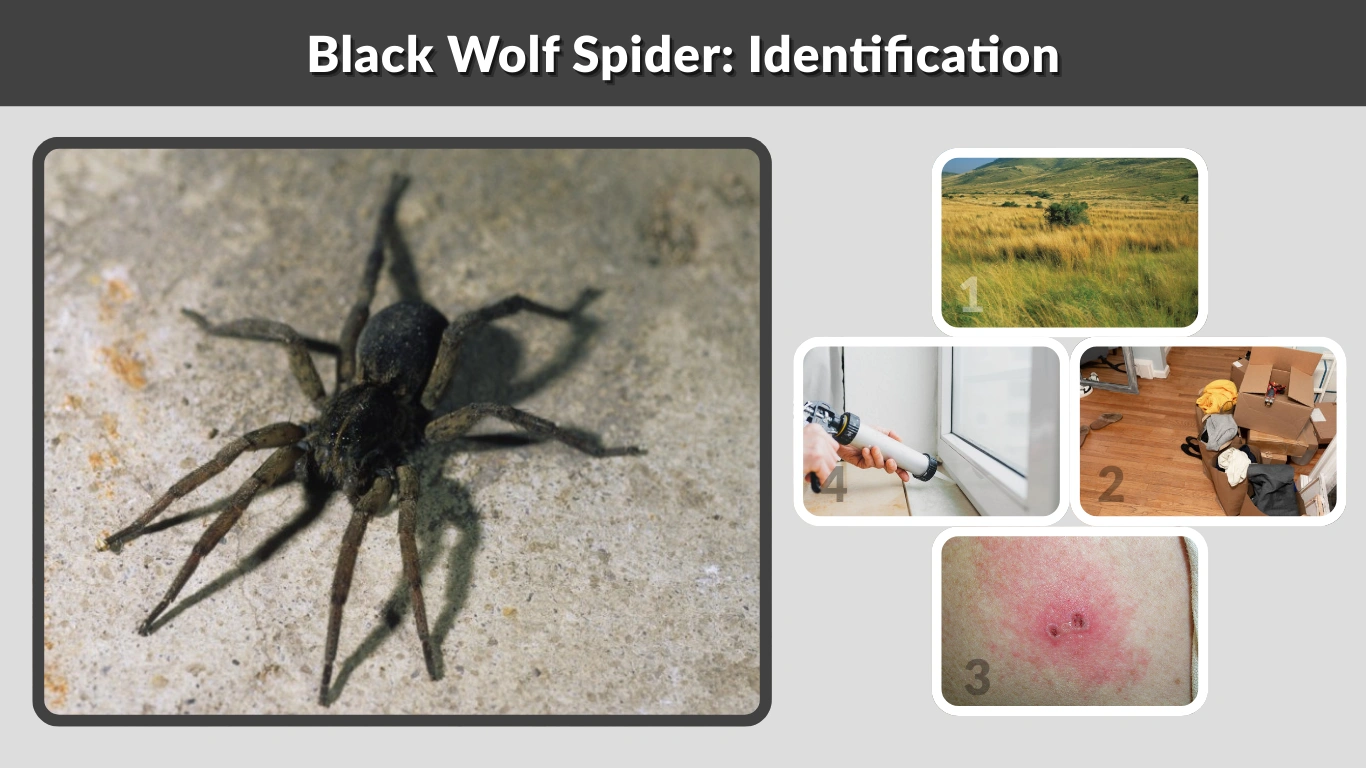
The black wolf spider is a fast-moving, ground-dwelling arachnid that often startles homeowners with its size and speed. Because of its dark coloring and hairy appearance, it’s frequently mistaken for more dangerous spiders like the brown recluse or even small tarantulas. However, despite its intimidating look, the black wolf spider is generally harmless to humans and plays an important role in controlling insect populations. In this guide, you’ll learn how to identify a black wolf spider, where it lives, how it behaves, and whether you should be concerned if you find one in your home.
What Is a Black Wolf Spider?
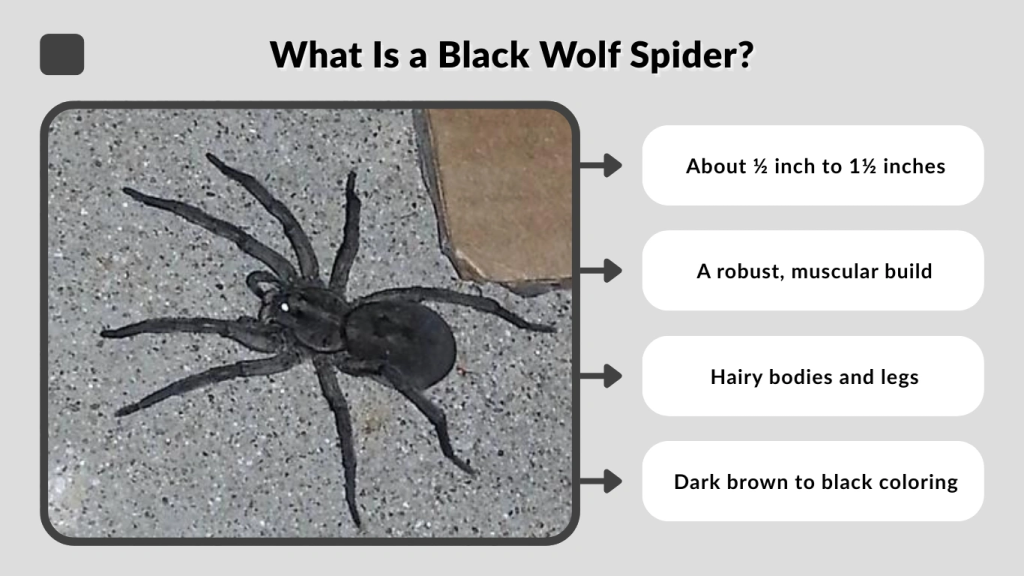
The term “black wolf spider” refers to darker-colored species within the Lycosidae family. Wolf spiders are a large group with more than 2,000 species worldwide. While not all wolf spiders are black, some species appear very dark brown or nearly solid black, leading to the common nickname.
Unlike web-building spiders, wolf spiders are active hunters. They rely on speed, strong vision, and stealth to capture their prey rather than spinning webs to trap it.
Physical Appearance
Black wolf spiders are typically medium to large in size. Their body length usually ranges from about ½ inch to 1½ inches, with a leg span that can make them appear even larger. They have:
- A robust, muscular build
- Hairy bodies and legs
- Dark brown to black coloring
- Subtle striping or markings in some species
One of their most distinctive features is their eye arrangement. Wolf spiders have eight eyes arranged in three rows:
- Four small eyes in the bottom row
- Two large forward-facing eyes in the middle
- Two medium-sized eyes on top
This eye pattern helps distinguish them from other spiders and gives them excellent night vision.
How to Identify a Black Wolf Spider
Correct identification is important, especially since many people confuse wolf spiders with venomous species. Here are a few key traits:
- They do not have a violin-shaped marking (which brown recluse spiders have).
- Their bodies are stocky rather than slender.
- They are usually seen running along the ground rather than sitting in a web.
- Their eyes may reflect light when illuminated by a flashlight at night.
Because they are fast runners, they may appear to “chase” people, but in reality, they are simply trying to escape.
Habitat and Distribution
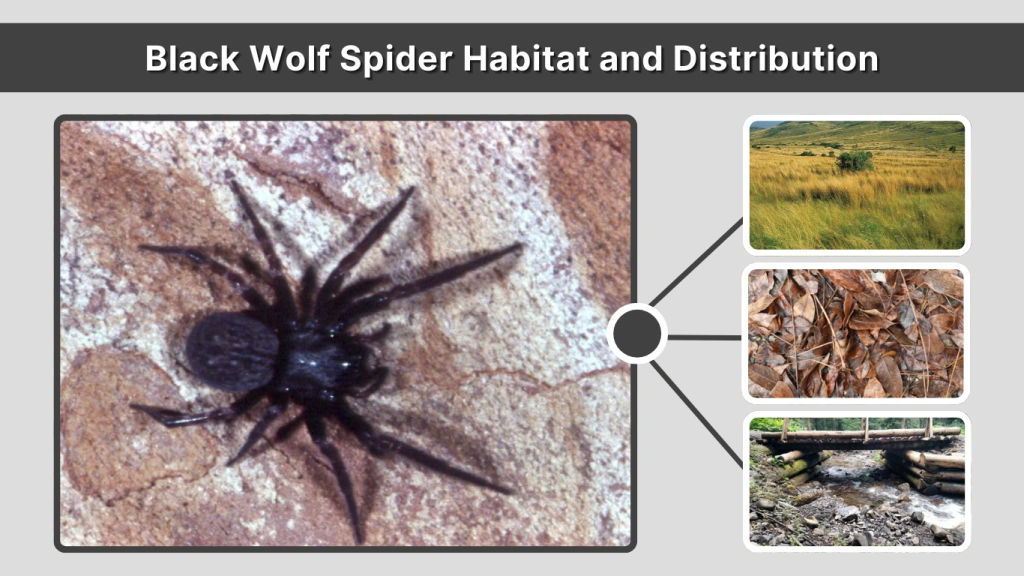
Wolf spiders are found on nearly every continent except Antarctica. In North America, they are especially common in fields, forests, gardens, and suburban yards.
Preferred Environments
Black wolf spiders prefer ground-level habitats. Outdoors, they are often found in:
- Grasslands
- Leaf litter
- Under rocks and logs
- Garden beds
- Woodpiles
They may also dig shallow burrows or use natural crevices for shelter.
Indoors, they are commonly seen in:
- Basements
- Garages
- Crawl spaces
- Ground-floor rooms
They typically enter homes accidentally while searching for prey or shelter.
Seasonal Activity
Wolf spiders are most active during warmer months, especially late spring through early fall. In autumn, they may wander indoors as temperatures drop. This seasonal movement often leads to an increase in sightings inside homes.
Behavior and Hunting Style
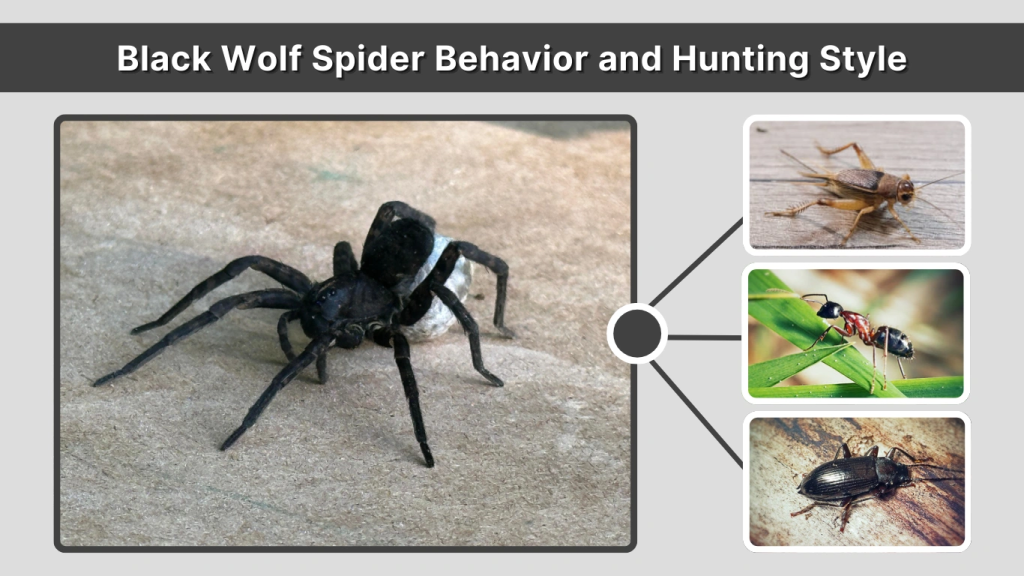
One of the defining characteristics of wolf spiders is that they do not build webs to catch food. Instead, they are agile hunters.
Active Hunters
Black wolf spiders stalk their prey much like wolves hunt—hence their name. They either:
- Chase down insects directly
- Ambush prey from short distances
Their diet mainly consists of:
- Crickets
- Ants
- Beetles
- Flies
- Other small insects
Because they consume many common pests, they are considered beneficial to gardens and natural ecosystems.
Speed and Movement
Wolf spiders are known for their impressive speed. They can move quickly across floors, soil, and other surfaces, which is why they often surprise people. Most species are nocturnal, meaning they hunt at night.
Their large central eyes provide strong forward vision, helping them detect movement in low light. When light hits their eyes in the dark, they may produce a faint reflective glow.
Are Black Wolf Spiders Dangerous?
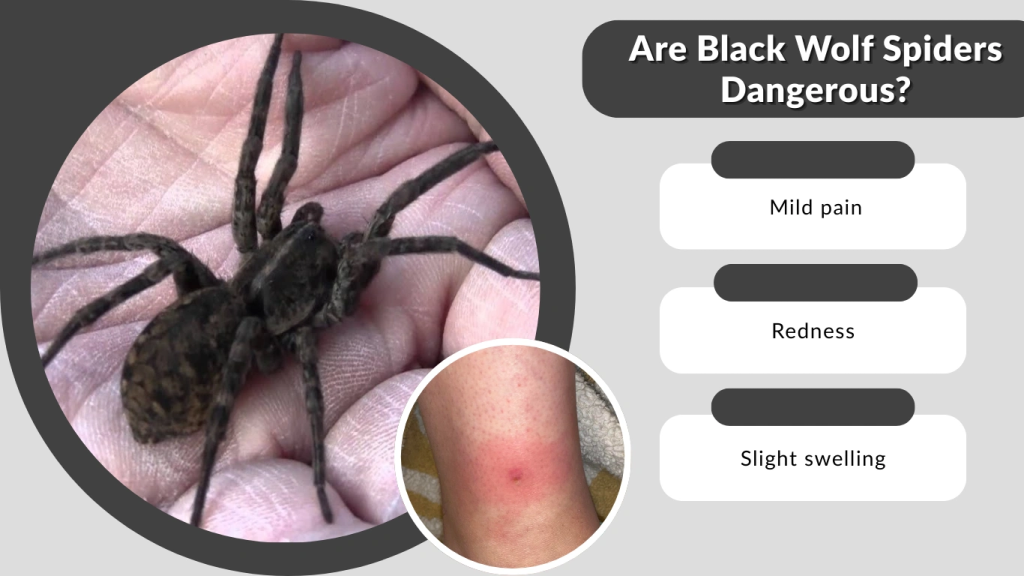
Despite their large size and intimidating appearance, black wolf spiders are not considered dangerous to humans.
Venom and Bites
Like nearly all spiders, wolf spiders have venom. However, their venom is designed to immobilize insects, not harm people. Bites are rare and usually occur only if the spider is trapped or pressed against the skin.
If bitten, a person may experience:
- Mild pain
- Redness
- Slight swelling
Symptoms are typically similar to a bee sting and resolve within a few days. Severe reactions are extremely rare.
In the vast majority of cases, black wolf spiders prefer to run away rather than bite. Their primary instinct is escape, not aggression.
Life Cycle and Reproduction
Black wolf spiders have a fascinating life cycle that sets them apart from many other spider species.
Mating Behavior
Mating usually occurs in the spring or early summer. Male wolf spiders often perform courtship displays to attract females. These displays may include rhythmic leg movements and body vibrations. The vibrations help signal to the female that the male is a potential mate rather than prey.
After mating, the female produces an egg sac that contains dozens to hundreds of eggs.
Egg Sac Carrying
One of the most recognizable behaviors of wolf spiders is how females carry their egg sacs. Unlike many spiders that attach egg sacs to webs, a female wolf spider attaches the round silk sac to her spinnerets at the back of her abdomen. She carries it with her wherever she goes.
This protective behavior increases the survival rate of her offspring.
Spiderlings
When the eggs hatch, the spiderlings climb onto their mother’s back and remain there for several days to weeks. During this time, the mother continues hunting while carrying her young.
Eventually, the spiderlings disperse and begin living independently. Most wolf spiders live about one to two years, depending on species and environmental conditions.
Black Wolf Spider vs Brown Recluse
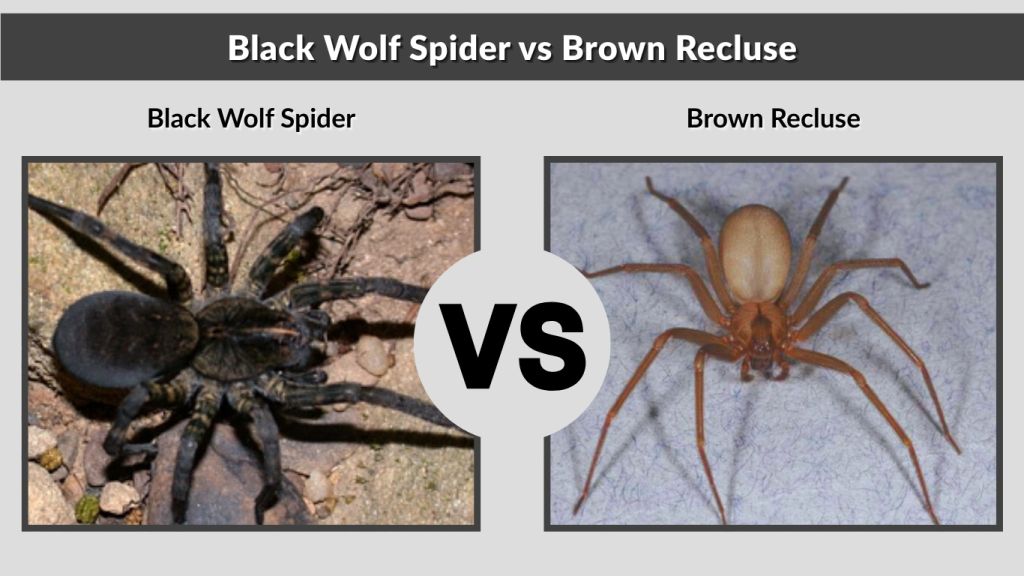
Because of their dark color and ground-dwelling habits, black wolf spiders are sometimes mistaken for brown recluse spiders. However, there are important differences.
Key differences include:
- Eye pattern: Wolf spiders have eight eyes arranged in three rows, while brown recluses have six eyes arranged in pairs.
- Body markings: Brown recluses typically have a violin-shaped marking on their back. Wolf spiders do not.
- Body shape: Wolf spiders are stocky and hairy. Brown recluses are more slender and smooth.
- Venom strength: Brown recluse bites can cause serious skin damage in rare cases. Wolf spider bites are mild and rarely medically significant.
Misidentification often causes unnecessary fear. Observing the eye arrangement is one of the most reliable ways to tell them apart.
Benefits of Black Wolf Spiders
Although many people find spiders unsettling, black wolf spiders provide valuable ecological benefits.
Natural Pest Control
Wolf spiders help control populations of:
- Roaches
- Ants
- Beetles
- Crickets
- Agricultural pests
By feeding on insects, they reduce the need for chemical pesticides in gardens and farms.
Ecological Importance
They are both predators and prey. While they hunt insects, they are also eaten by birds, reptiles, and small mammals. This makes them an important part of the food chain and a sign of a balanced ecosystem.
How to Prevent Them From Entering Your Home
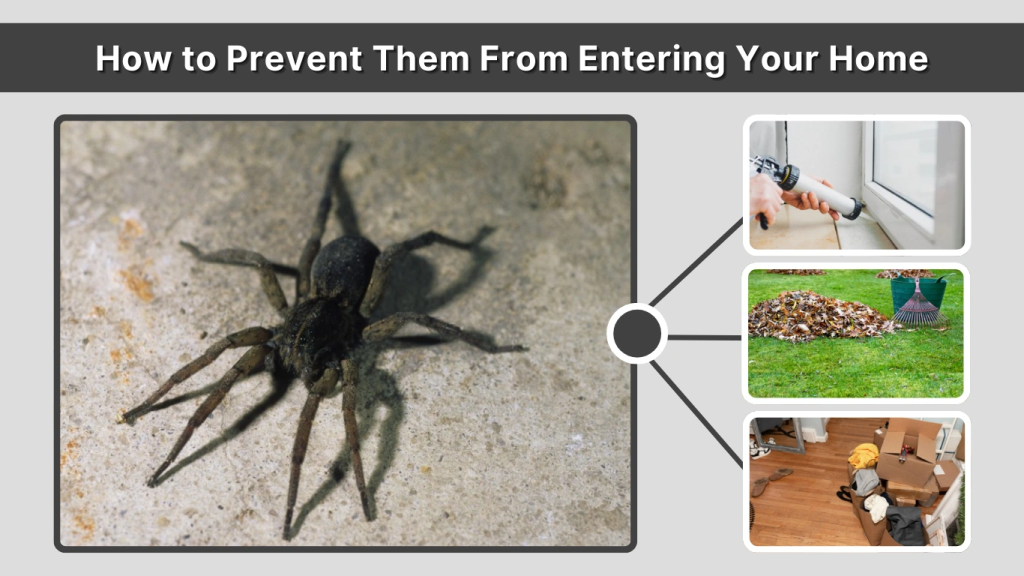
Even though black wolf spiders are not dangerous, many homeowners prefer to keep them outside.
Seal Entry Points
Inspect your home for:
- Cracks in foundations
- Gaps around windows and doors
- Torn window screens
- Openings around utility lines
Sealing these gaps reduces the chance of spiders entering.
Reduce Outdoor Attraction
To discourage wolf spiders near your home:
- Remove leaf litter and debris
- Store firewood away from the house
- Trim vegetation near exterior walls
- Reduce outdoor lighting that attracts insects
Since wolf spiders follow their prey, minimizing insect populations also reduces spider presence.
Indoor Prevention
Inside your home:
- Keep floors clutter-free
- Vacuum regularly
- Store items in sealed containers
- Use sticky traps for monitoring (not necessarily long-term control)
Maintaining a clean, dry environment makes your home less appealing to ground-dwelling spiders.
What To Do If You Find One
If you encounter a black wolf spider indoors, there is usually no need to panic.
Safe removal options include:
- Place a glass or container over the spider.
- Slide a stiff piece of cardboard underneath.
- Carry it outside and release it away from your home.
Avoid handling the spider directly. If you are uncomfortable removing it yourself, a local pest control professional can help.
Remember, wolf spiders typically run away rather than attack.
Interesting Facts About Black Wolf Spiders
- Their large middle eyes give them better vision than many other spider species.
- Their eyes can reflect light at night, similar to cats.
- Female wolf spiders display strong maternal care by carrying both eggs and spiderlings.
- Some species dig burrows and line them with silk.
- They can survive in a variety of climates, from deserts to forests.
FAQs
Is a black wolf spider poisonous?
Black wolf spiders are venomous, meaning they inject venom through a bite to subdue prey. However, they are not poisonous to touch or generally dangerous to humans. Their venom is mild and rarely causes more than minor irritation.
How big do black wolf spiders get?
Most black wolf spiders measure between ½ inch and 1½ inches in body length. With their legs extended, they can appear larger. Size varies depending on the specific species and region.
Do black wolf spiders jump?
Wolf spiders primarily run rather than jump. While they can make short lunging movements to catch prey, they are not known for dramatic jumping like jumping spiders.
Why do I keep seeing them in my house?
They often enter homes while hunting insects or seeking shelter, especially during cooler months. Reducing insect populations and sealing entry points can help limit sightings.
Can a black wolf spider kill a human?
No. Black wolf spiders are not capable of killing humans. Their bites are typically mild and rarely require medical attention.